


|
AC POWER CABLE BONSAI AUDIO
Manufacturer: BONSAI AUDIO |

 |
 |
 |
|
Review
text by WOJCIECH PACUŁA |

|
No 266 Julay 1, 2026 |
HUNGARIAN AUDIO EQUIPMENT IS NOT well known in Poland today, just like Hungarian music. But it used to be different. Hungarian equipment was valued for its reliability and served as an attractive alternative to Polish products; it was imported as part of trade exchanges between the countries of the CMEA (Council for Mutual Economic Assistance). 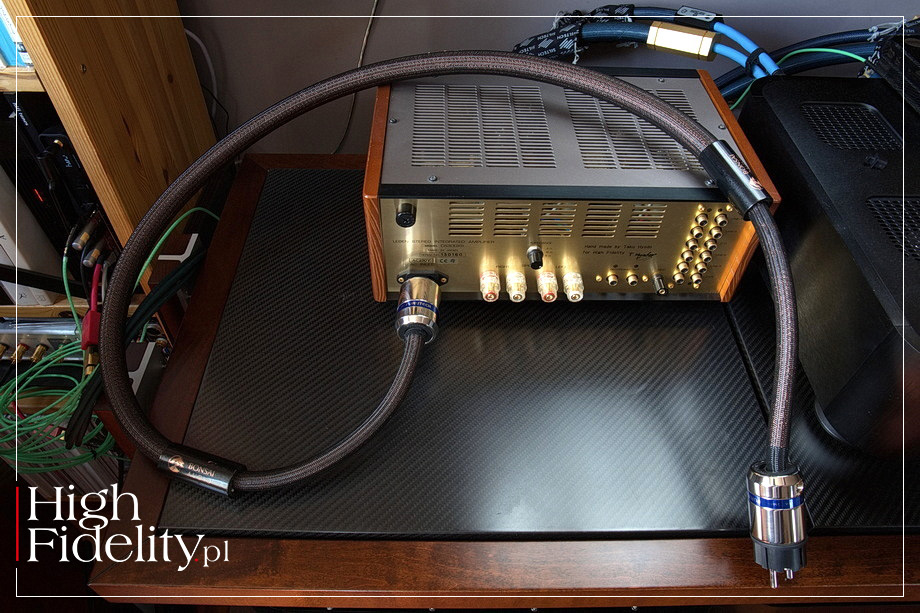
When we think about listening to music on high-quality equipment the most frequently mentioned brands are Videoton (often in collaboration with Akai) and Orion, and the music of the Hungarian prog-rock band Omega, with its Girl with Pearl Hair (Hungarian: Gyöngyhajú lány) was hummed not only by “the happiest barracks in the communist camp” - as Poland was called at the time - but by the entire Warsaw Pact, and reportedly even by the “rotten” West. But that’s all in the past. Today, audio brands from the country on the Danube are a rarity. That doesn’t mean, however, that new, interesting companies don’t pop up every now and then. Often, they’re downright fascinating. Let’s recall Heed Audio, well known in our country; the Flow by Allegro amplifiers we test from time to time (another test coming in July!); amplifiers from Qualiton; and the wonderful CD players from the now-defunct Human Audio; more → HERE. Three years ago, Bonsai Audio joined their ranks. ▲ A few simple words… ZOLTÁN FÁBIÁN 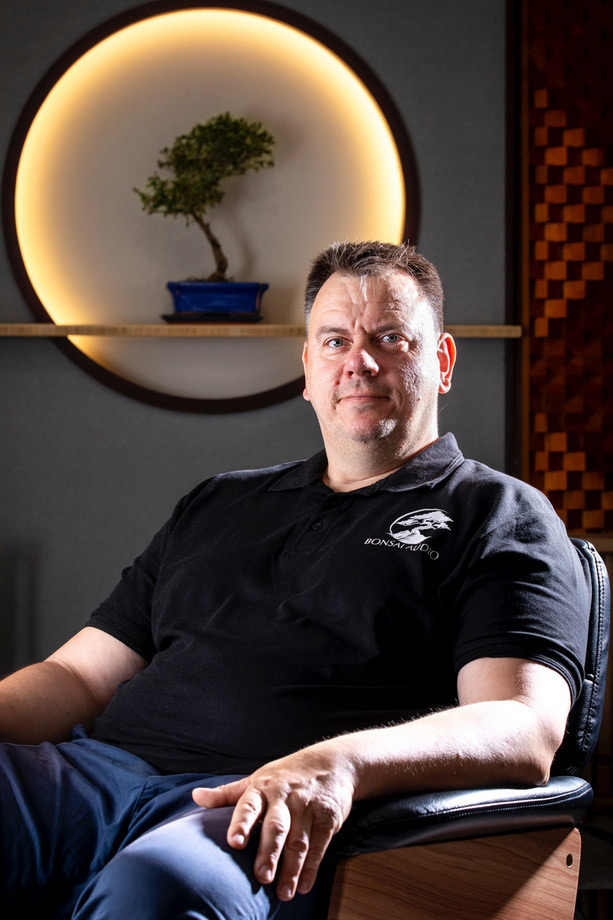
‖ The founder and chief designer of Bonsai Audio, Mr. Zoltán Fábián • photo courtesy of Bonsai Audio I'VE BEEN WORKING ON CABLES for about ten years now. At first, I did this mainly for myself and my friends, because I wanted to experience the natural sound, dynamics, and tonal qualities of instruments that I had always sought when listening to music at home. At a certain point, a significant change took place. Once I began to truly understand how cables affect a system, and once I had developed my own designs, it turned out that I no longer wanted to change my devices at all. I realized that my system offered far better sound quality than I had ever heard before. Instead of chasing after new components, I finally heard the full potential of what I already owned. I've since seen the same pattern with many of my customers. Quite a few of them had gone through the same "money-burning" cycle of constant upgrades. After working with my cables, they often realized that they had never truly heard their systems as a whole - that the components had never performed together as a coherent, unified system. That moment of realization is something I find incredibly meaningful. 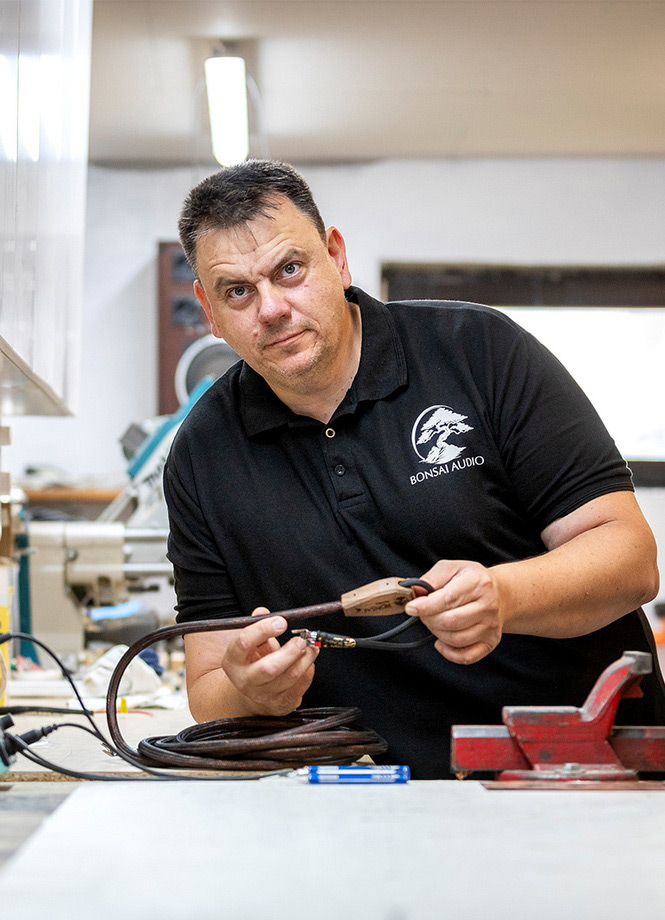
‖ Mr. Fábián in his workshop while building speaker cables • photo courtesy of Bonsai Audio This raised an important question for me: do cables only matter in extremely expensive systems? During the COVID period, I had more time to experiment and discovered that, with the right techniques and systematic thinking, even more modest systems can benefit significantly from high-quality cables. From there, I began developing technologies aimed at exceeding the performance of well-known brands within a more accessible price range. Over time, I expanded my work further, testing alongside systems using cables priced well above €10,000 per piece. I started to recognize consistent patterns and began implementing methods that modify the crystal structure of the materials I use - enhancing sound quality in a meaningful way. I spent about two years refining my understanding of these processes and their impact. Once I reached a level of knowledge and confidence I was comfortable with, after extensive testing and establishing reliable supplier partnerships, I founded Bonsai Audio. For several years, we have been testing and developing the cable lines currently available: Olive Tree and BlackWood. The Hyperion line is still in development. It is very likely that this series will also be completed in 2026. 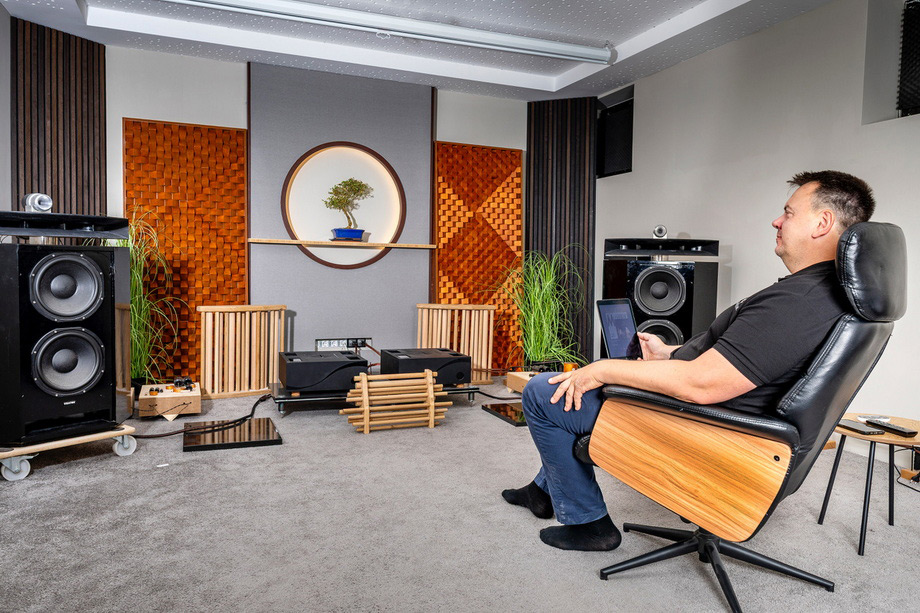
‖ Bonsai Audio’s chief and his listening system used to test prototype cables • photo courtesy of Bonsai Audio And the name? Bonsai, as a living, real, natural element in the home, requires care, attention, and dedication, just like audiophile, hi-fi, and high-end audio systems. Bonsai trees are meant to represent much larger trees found in nature on a smaller scale, yet still in a living form, inside the home. They carry the energy of life and nature and radiate it outward in such a way that they define the space, make the room healthier, and create a visual, emotional, and physical experience for everyone present. For me, this is also the essence of music. The goal of home listening is to define the atmosphere and energy of a room and to influence the person, the soul, and physical and mental well-being. To achieve this, it is essential to accurately reproduce the timbre and material character of sounds and instruments, their spatial placement, and to convey their natural energy. ‖ ZF ▒ Bonsai Audio THE MANUFACTURER’S WEBSITE reads:
Our journey began in a small workshop, where founder Zoltan Fabian, a lifelong music enthusiast, became increasingly dissatisfied with the mass-produced audio cables flooding the market. Frustrated by the extremely high cost of quality cables and still facing the lack of quality and nuance in these commercial options, Zoltan decided to take matters into his own hands, pouring his expertise and passion into crafting cables for himself that would enhance the richness of sound and life-like tonality. After countless hours of experimentation and refinement, Bonsai Audio was born out of a desire to provide discerning listeners with quality cable solutions that elevate their audio experience.
⸜ About Us, → www.BONSAIAUDIO.eu, accessed: 11.05.2026. So we have a founding myth - frustration stemming from the lack of suitable products on the market. There’s also a man who promises to change that - the company’s founder. And there’s the assurance that Bonsai Audio’s products are created out of passion - which is one of the key words in the luxury goods market. That’s exactly what Mr. Zoltán’s cables are - high-end cables crafted in such a way that you can immediately describe them as “luxurious.” And let’s add that this doesn’t happen very often in this industry. 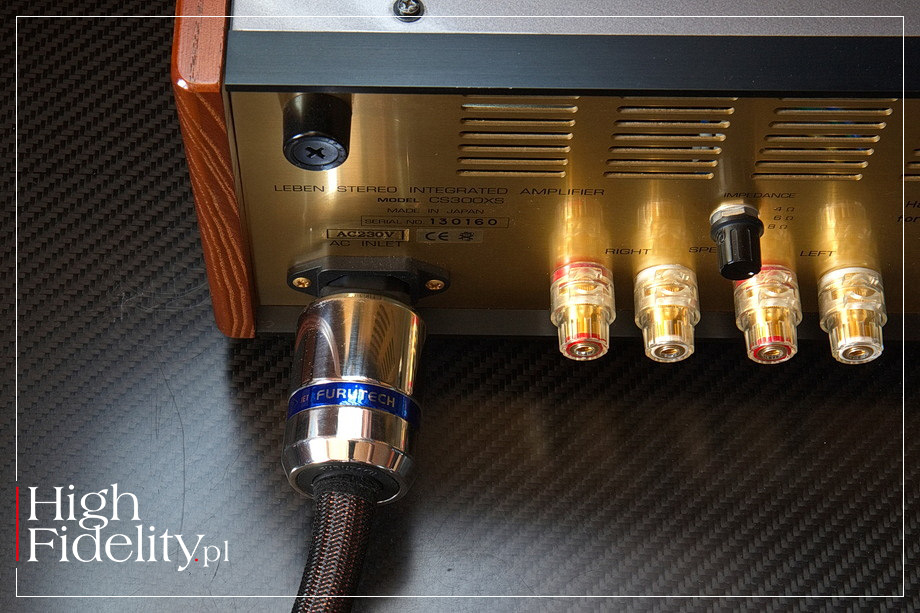
Mr. Zoltán is an architect by training - he began his studies in Denmark - but since childhood he has been passionate, as he writes to us in an email, about “music and high-end audio equipment.” Over the past ten years, he has delved deeper and deeper into understanding how audio systems work, especially in home listening environments. He focused, as he goes on to explain, on how factors such as soundstage, frequency response, room resonances, sound clarity, equipment placement, and even cable routing affect the sound. After devoting a significant amount of time and money to trying to achieve the sound he was looking for, he realized that he had often invested considerable resources in replacing components - amplifiers, speakers, sources - but had paid much less attention to cables. This was mainly because replacing the entire cabling system along with new equipment was simply too expensive. In many cases, this led to disappointing results, despite the upgrades to key components. And further:
This realization led me to study cables more seriously and to explore well-known high-end brands in a more systematic way. Around six years ago, I began building my own cables and conducting extensive measurements and listening tests across multiple systems. I was fortunate to work with systems in the €100K – €300K range, where the influence of cables became very clear.
Bonsai Audio specializes in cables. Its product lineup currently includes three series: OliveTree, BlackWood, and Hyperion. “Currently includes” may not be entirely accurate, though. Yes, their names and descriptions can be found on the manufacturer’s website, but only the middle one is “active”; the other two are in development. According to the information provided, OliveTree is intended to be the brand’s entry-level series, BlackWood is designed to offer “richer tone and more saturated sound,” and Hyperion is to be the “flagship, uncompromising product line,” aimed at “capturing the finest details and micro-dynamics of recordings.” ▒ Power Cable WHEN I ASKED MR. ZOLTÁN which cable I should test first, without hesitation he pointed to the power cable. If we were to ask an audiophile on the street - if we could find one - he would probably say that an interconnect or speaker cable is more important. In reality, it’s not like that. This counter-intuitive approach makes sense and is, in my opinion, the only correct one. The current flowing through the power cable is, in fact, the same current that appears at the output of a given device - the line output in the case of signal sources and preamps, and the speaker terminals in power amplifiers. It is rectified, filtered, and stabilized, and then modulated by the input signal, but it is the same current. Here is what the manufacturer wrote to us about his cable in an email:
Our goal was to achieve natural tones, natural dynamics, and a clear and unmistakable recognition of the key tones of the instruments, as well as the characteristic “presence” of various materials. For example, wood, bamboo, leather, etc., should have their own clearly recognizable character.
This was fundamental to me during the development process, because when composing music, artists did not choose these instruments, accessories, and materials at random. We wanted these sounds to be part of the work of art, elements of the composition that together create the mood and atmosphere envisioned by the composer, musician, or performer. Bonsai Audio cables arrive in a beautiful, truly luxurious wooden box with a gold logo - a bonsai tree - engraved on the lid. Inside is the cable and one of the nicest owner’s certificates I’ve ever seen. This isn’t some cheap printout from an office printer. The cable itself is quite flexible and has a dark brown color that shows through the black mesh. At both ends, there are black-lacquered brass sleeves that serve as mechanical terminations and provide mechanical damping. They also feature the logo. Everything has been tastefully selected, and I’ve seen a lot of cables. People are going to like these. 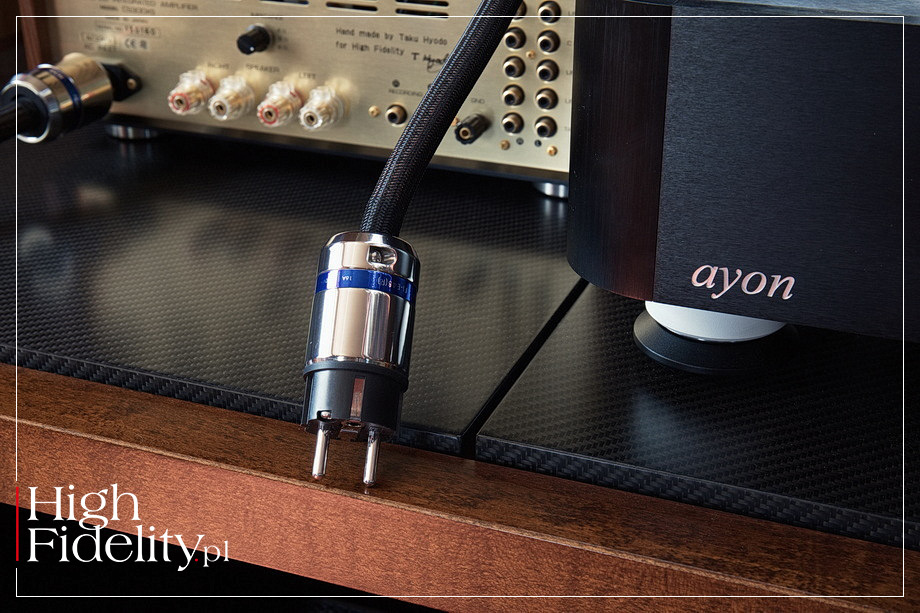
DESIGN • In the BlackWood and Hyperion series, the manufacturer uses copper conductors. They also claim to modify those “at the molecular level through a multi-stage process” in order to preserve “the natural character of copper,” while ensuring that “the dynamics and energy significantly surpass the familiar ‘ringing’ sound of copper and its typical character”. And further:
In this way, copper retains its useful and desirable properties, while, in terms of dynamics, resolution, and energy, the sound comes much closer to the sonic world of silver cables, surpassing them in certain respects.
The manufacturer says nothing about the conductor topology. The cable itself is quite thick, almost as thick as the Siltech Triple Crown, but more flexible than its Dutch counterpart. The cable’s thickness stems from the fact that air and PTFE (Teflon) were used as dielectrics. These are likely PTFE tubes in which individual copper wires are loosely housed. To reduce external interference, the company uses a copper braid, and a braided shield as additional protection. After the entire cable is assembled, the finished product also undergoes a “special process” in which the materials used are “harmonized”, according to the manufacturer. The manufacturer states that I cannot disclose further details about this procedure or the modification methods, but that they resemble crystallization. It is almost certainly some form of cryogenic treatment or heating - the former is used by most companies, such as Furutech, and the latter by Siltech. CONNECTORS • The cables are terminated with high-quality connectors from the first of the aforementioned companies. All conductive parts are made of non-magnetic materials (OCC copper) coated with rhodium using a new technique that has increased the coating’s durability. The conductive elements also undergo the Alpha process (demagnetization and cryogenic treatment). The Piezo Ceramic series connectors are constructed from nylon and fiberglass components, as well as poly-carbonate inserts for vibration damping, and the body is made of non-magnetic stainless steel. They also incorporate a material called Nano Crystal²-Nano Crystalline, which consists of carbon powder and NCF ceramic nanoparticles. |
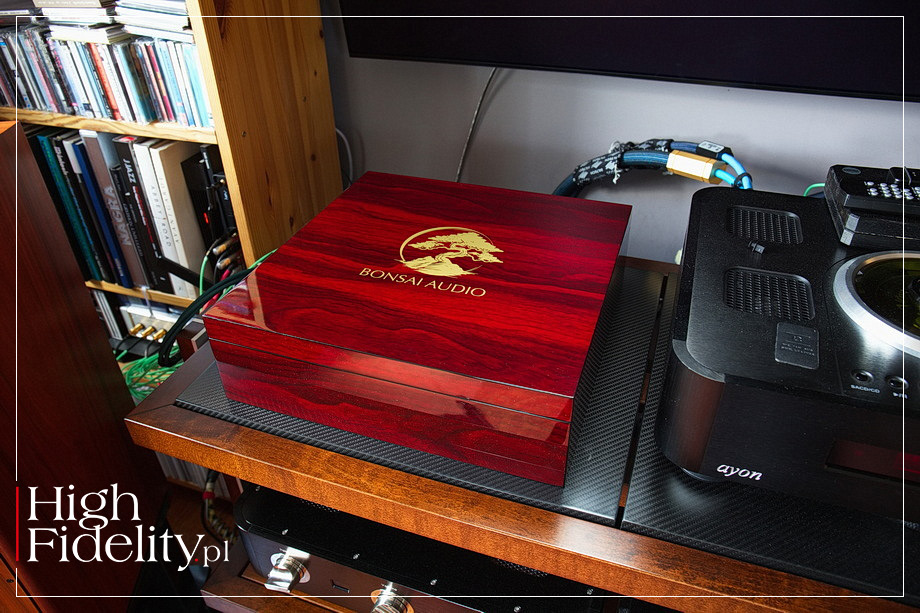
The cable looks very neat; there are no “loose ends” or unfinished details, and the box is simply beautiful. The color - brown - is very similar to the one Siltech used for its Master Crown cables. ▓ SOUND HOW WE LISTENED • During the listening session, the Bonsai Audio BlackWood power cable powered the Ayon Audio CD-35 HF Edition (No. 1/50) and was compared to my reference, the Siltech Triple Crown power cable. The test involved AA/BB/A comparisons with the familiar A and B, using short, two-minute samples from a given album. 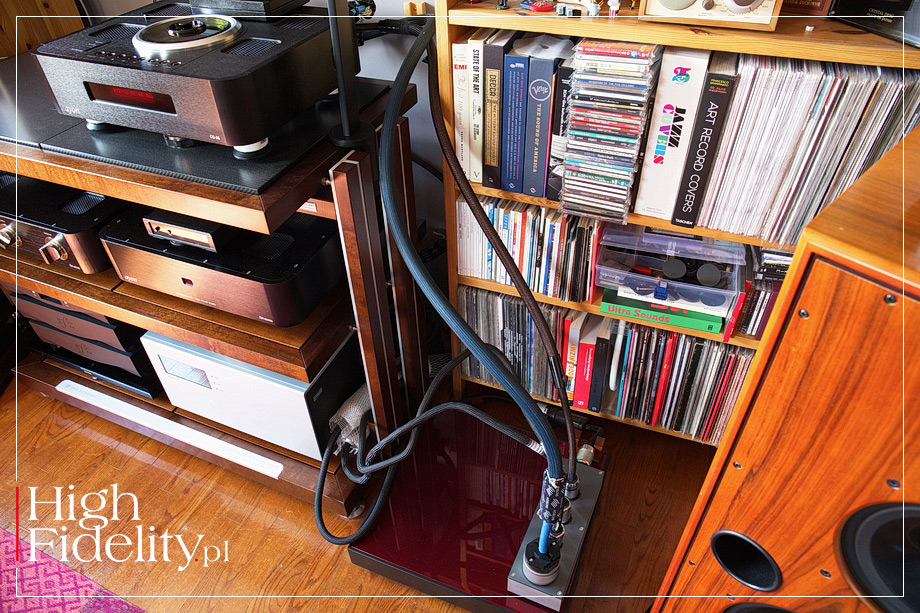
Both cables were plugged into the Acoustic Revive RPT-4EU Final AC power strip, which in turn was powered by a 2.5-meter Acoustic Revive Absolute Power Cord K. This, in turn, was connected to a Furutech NCF wall outlet, to which a separate power line with its own HPA fuse leads. This line consists of a 6-meter section of Oyaide Tunami Nigo cable. » ALBUMS USED FOR THE TEST ⸜ a selection
• BILL EVANS TRIO, Waltz For Debby, Riverside Records/Craft Recordings/Universal Classics & Jazz UCGO-9057, „Bill Evans Remaster Series”, SHM-SACD ⸜ 1961/2023. HIGH-END SOUND, such as the one I experienced with the Bonsai Audio cable, has characteristic qualities that make it almost instantly recognizable. These are: fullness, resolution, and smoothness. I experienced all of this right from the start, in the ˻ 1 ˺ My Foolish Heart from the BILL EVANS TRIO album Waltz For Debby. This live album by the trio, released in 1962, has an incredibly intimate feel. And it is precisely this intimacy that is emphasized here. 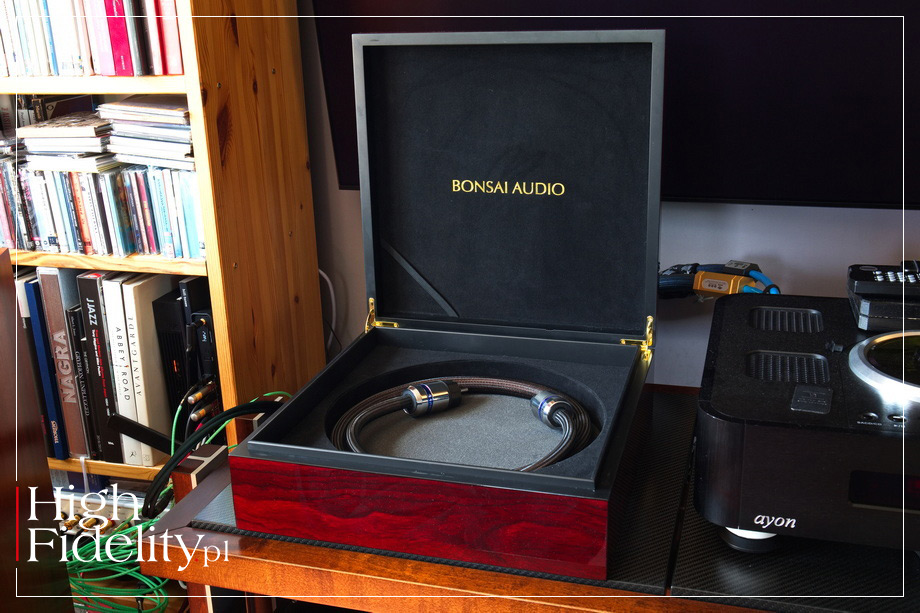
The Hungarian cable, in fact, produces a slightly dark sound, anchored in the lower midrange. The high frequencies are dense and have proper weight, and the drumming with brushes in this track is particularly notable in this regard. However, our attention is focused on their deeper layers. The same goes for the piano. It, too, was recorded in a very close, intimate manner and has a silky texture. The cable under review not only brought this out but even slightly deepened both the intimacy and the silkiness. All of this happened while maintaining high resolution. Selectivity and detail are very good with this cable, but they don’t stand out; they remain more in the background. The focus is on tonal quality and stereoscopic imaging. I’ve already mentioned the tonal quality, and as for the stereoscopic imaging - we get a wide soundstage with great depth. The background elements - in this case, the buzz of conversation in the club - are closer than with the Siltech, but in this respect - that is, in terms of soundstage depth - the Dutch cable is exemplary. Despite this, the subtle, quiet details that make this recording sound so natural have been preserved. I couldn’t resist the pleasure of playing the albums recorded at Black Forest Studio, in the villa of Hans Georg Brunner-Schwer, the founder of the MPS label. I’m talking about the recordings by OSCAR PETERSON, that he came there to record every year. Admittedly, BlackWood and Black Forest aren’t the same thing, but somehow it all blended together in my mind. ▲ Our albums OSCAR PETERSON MPS Records/Edel 0210325MSW 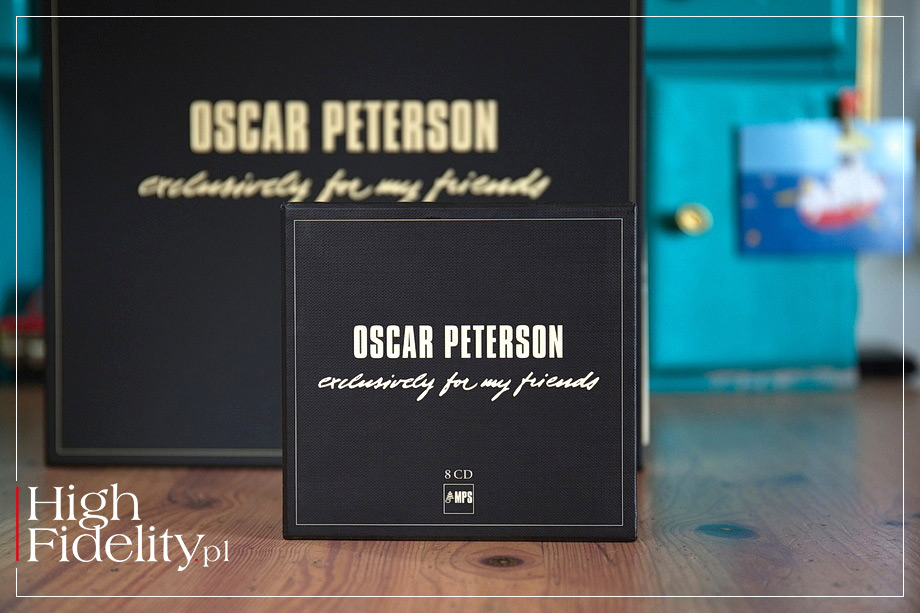
Exclusively for My Friends IS IS A SERIES OF ALBUMS by Canadian jazz pianist Oscar Peterson, originally released by the German label MPS. The tracks on these albums were recorded live by Hans Georg Brunner-Schwerer between 1963 and 1968 at his villa in Villingen in the Black Forest, during private concerts with a small audience in his home studio. Over the years, these albums have been compiled into various box sets. Initially released as a four-disc set, then expanded to six discs after two “lost” albums were discovered, and now available as an eight-disc set, supplemented with previously unreleased tracks. The recordings came about thanks to Hans George, the owner of the powerful company SABA Electronics and a fan of Peterson. Thanks to his influence and money, he managed to invite Peterson - along with double bassist Ray Brown and drummer Ed Thigpen - to his villa - the building where the recordings took place, after they played their concert in Zurich. The result of this impromptu meeting is the first album, titled Action, recorded without an audience. Peterson returned for subsequent sessions every year, changing up the lineup of musicians each time. Subsequent albums also featured Sam Louis Hayes and Bobby Durham, while The Lost Tapes included Milt Jackson. 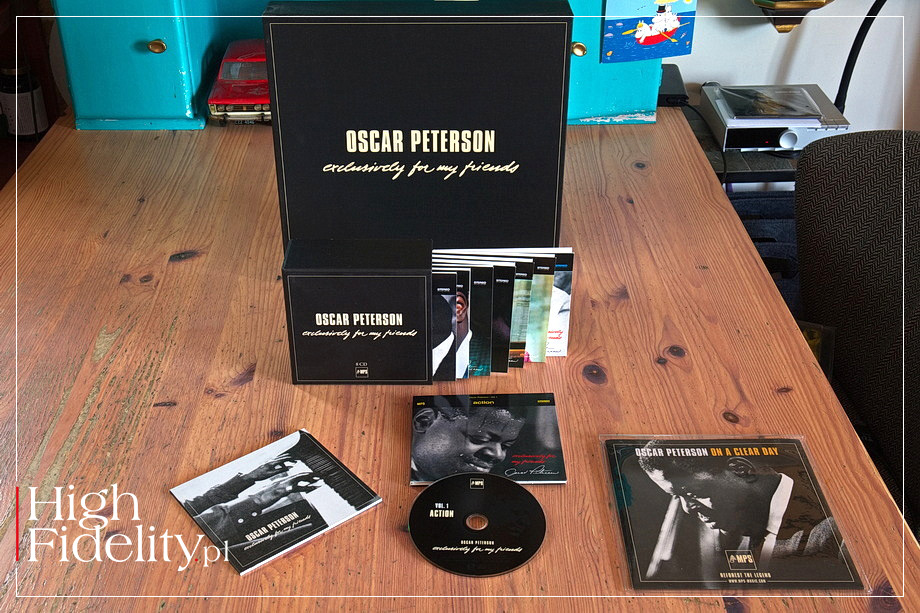
At that time, Oscar Peterson was signed to Verve Records, and it was only after his contract expired, in 1968, that these recordings could be released. Hans Georg Brunner-Schwerer founded the MPS label specifically for this purpose; the name is an acronym for Musik Produktion Schwarzwald. Everyone involved emphasizes that the recording system at the Villa was excellent - the best that could be found. It consisted of Telefunken M-15 tube tape recorders, Neumann microphones, and so on. Equally important is the piano - a powerful Bösendorfer Grand Imperial. These albums were initially released in box sets and later as individual albums; in recent years, they have also been released on SACDs. However, the best version to date was released in 2014. For this Edel release, the MSM studio in Munich took an unconventional approach: the project was prepared jointly by Dirk Sommer from the online magazine Hifistatement and Christoph Stickel, who was responsible for remastering many ECM reissues (including Keith Jarrett’s album Köln Concert), a Grammy Award nominee. 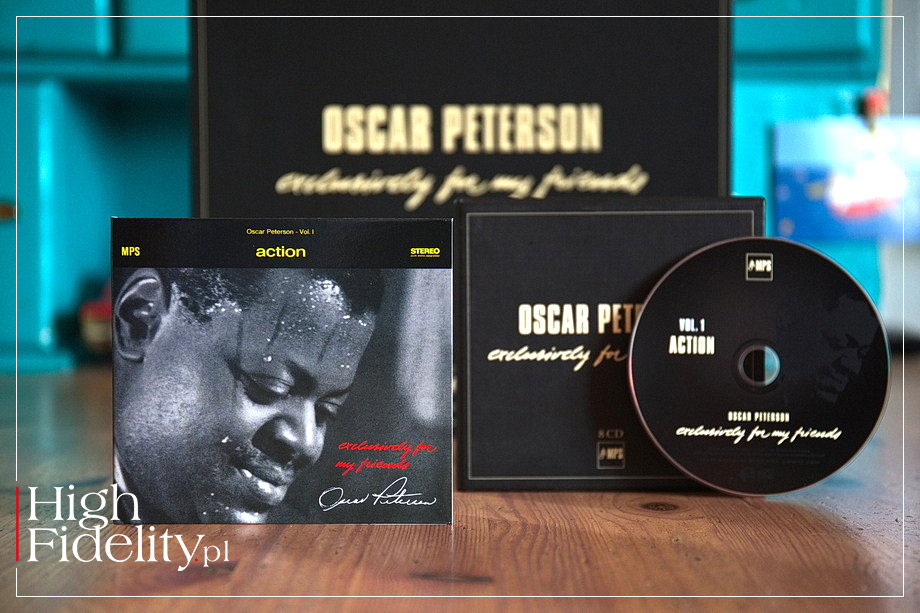
As a result of their efforts, two box sets were created - an analog and a digital one - as well as 24/88.2 WAV files. Both are excellent, beautifully produced, and these are the ones you simply must have. For friends, we should add, the label also released a unique 7” vinyl single. ● COMPARED TO Evans’ recording on the Riverside label, what we get on the Black Forest albums is less sonically refined, at least on the first album Action. Musically, it’s a blast, but the sound isn’t so much different - though it is - as it is simply less tangible and intimate. Even though Peterson plays a massive Bösendorfer Grand Imperial piano, the sound has been filtered to remove its lowest frequencies. Meanwhile, the drums and double bass, crammed into the left channel, have a “compressed” sound, as if they were playing behind a partition. 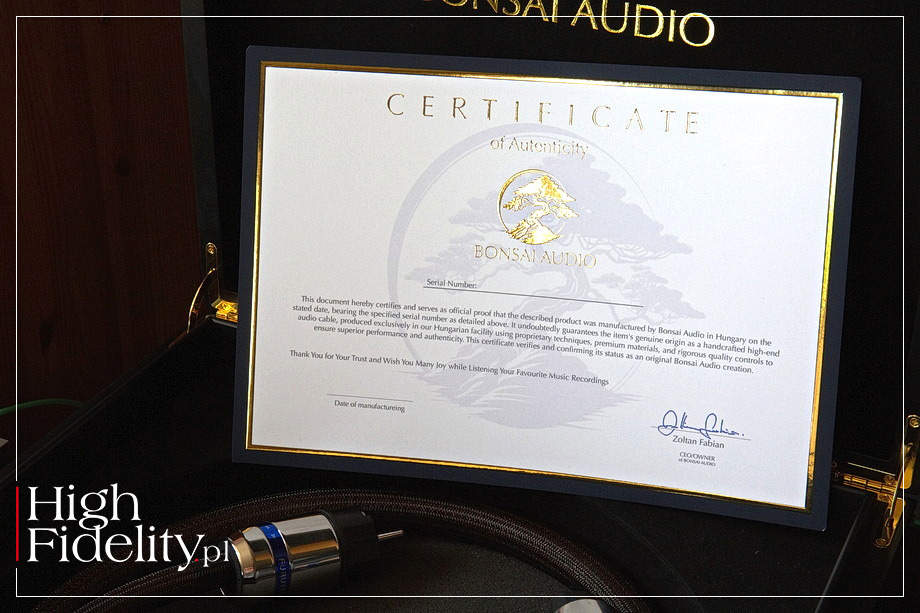
Dirk Sommer, who remastered this material for the Edel label did a fantastic job. This was evident with the Hungarian cable. Even more so as the cable in the test slightly “polished” this remaster. As I mentioned, it has a character that emphasizes the lower midrange. In this case, that produced a great effect, giving the instruments’ sound an extra boost. The sound was meatier and more robust. Still, from a certain perspective, it lacked the intimacy found in Evans’ recording, but it was simply highly enjoyable. So the cable under review offers a warm, slightly dark sound - a sound I like and consider accurate. It also offers excellent resolution. And that’s what makes us sit down and focus, only to let ourselves be carried away by the music after a while. In this case, resolution means perfectly clear soundstage layers, a wide soundstage, and very nice timbres. The instruments don’t have quite as distinct a 3D presence as with the reference cable. I didn’t have a problem with that, though, because I adapted to this new, different perspective fairly quickly. LOUIS ARMSTRONG’S vocals in the ˻ 2 ˺ Hello Dolly! as featured on the Wonderful World. The Best of Louis Armstrong album, a 2024 compilation, blended perfectly with the orchestra’s sound, even though his voice has such a long reverb and sounds a bit out of this world, as if it were taken from a different recording. The Hungarian cable has a special quality - the longer you listen to music with it, the more you can hear that it organizes the sound, blending it into a smooth, silky whole. ELLA FITZGERALD’S vocals on the next track on the aforementioned album ˻ 2 ˺ Dream a Little Dream of Me were warm, powerful, and rich. Armstrong’s trumpet, added to the background far back in the soundstage, was distinct and clear, even though it was so far away. The cable doesn’t blur the attack of the sound, and yet we get the impression that something has happened “there,” giving the sound a vivid quality. So we’re left with the impression that the Bonsai Audio cable has something special about it, which isn’t easy to capture in just a few words. It’s a combination of density, fullness, smoothness, and a slight lowering of the sound. This isn’t a cable that attacks with a wide frequency range. Its extremes are strong when needed and clear, but they aren’t what define how we perceive this power cable. When, in the second minute - at exactly 1:20 - of the ˻ 1 ˺ But Beautiful track from DIANA KRALL’s album This Dream of You, a sudden, powerful “pop” - that is, microphone clipping manifesting as a fast, low-frequency sound - suddenly struck, with the Hungarian cable, it was just as surprising as it was with the Siltech. It was low, powerful, and fast. It was also deep. At the same time, it was integrated into the music; it didn’t sound “beside” it. Thanks to the natural presentation of the music delivered by the Hungarian cable, I could almost see Diana Krall and Tommy LiPuma - who produced the material - turning toward each other with smiles and a look of understanding in their eyes as they listened: “Should we leave it in? – Sure, it’s wonderful!”, thus celebrating recordings from the 1950s, when engineers couldn’t hear such low frequencies, so they left them on the tapes - which is what comes through in modern reissues. Here, it’s an intentional choice; I’m certain of it. ▒ Summary BONSAI AUDIO ALLOWS for such musings because it delivers a professional sound, “delving” into the heart of the music without breaking it down into individual atoms. It rounds out the treble and doesn’t serve particularly deep bass, but it does deliver a meaty lower end. But it’s the midrange that matters most, and it’s what makes us take all this in stride, shrugging it off at most. The sibilants in Krall’s voice, which are generally quite pronounced, are smoothed out and warmed up here, although the last thing you’d say about this cable is that it warms up the sound. 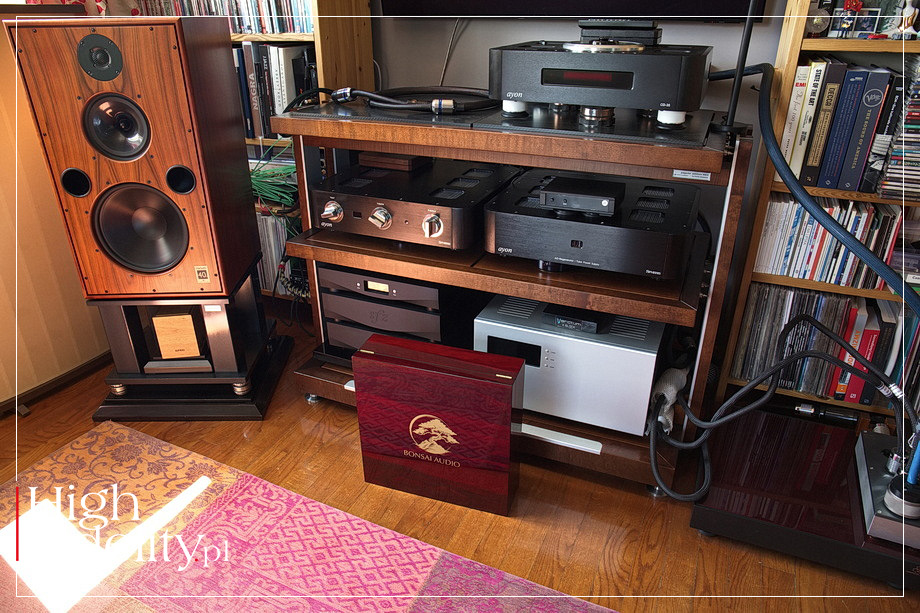
This is a cable that will add density to the system’s sound and smooth it out. In the sense that, without sacrificing details, it will make the music flow more pleasantly, in a more organic way. The ˻ 6 ˺ Sultans of Swing by DIRE STRAITS, from the 2013 Platinum SHM-CD release, flowed smoothly and with verve, filling the room with sound and energy. Bonsai Audio gave it a “kick” in terms of the organic blend of sounds, deepened the sound, and enriched it with harmonics and overtones. That’s exactly what this cable offers - organic, deep, and rich sound. But it’s also - perhaps above all -highly detailed. You’ll love it, you really will. It will prove its worth especially during long listening sessions, with entire albums, because it engages us in the listening experience not by overwhelming us or stirring up emotions, but through its inherent warmth and density, which put us in a positive frame of mind toward the music we’re listening to. ‖ WP 
THIS TEST HAS BEEN DESIGNED ACCORDING TO THE GUIDELINES adopted by the Association of International Audiophile Publications, an international audio press association concerned with ethical and professional standards in our industry, of which HIGH FIDELITY is a founding member. More about the association and its constituent titles → HERE. |
 |
|
Reference system 2026 |
|
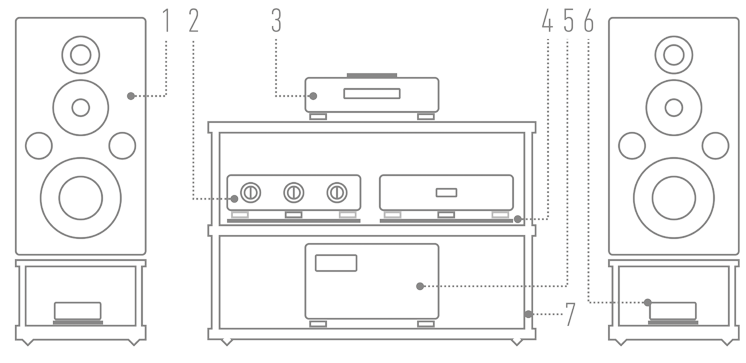 1) Loudspeakers: HARBETH M40.1 |REVIEW| 2) Line preamplifier: AYON AUDIO Spheris III Linestage |REVIEW| 3) Super Audio CD Player: AYON AUDIO CD-35 HF Edition No. 01/50 |REVIEW| 4) Stands (loudspeakers): ACOUSTIC REVIVE (custom) |ABOUT| 5) Power amplifier: SOULUTION 710 6) Loudspeaker filter: SPEC REAL-SOUND PROCESSOR RSP-AZ9EX (prototype) |REVIEW| 7) Hi-Fi rack: Hi-Fi rack: finite elemente MASTER REFERENCE PAGODE EDITION Mk II, more → HERE |
|

|
Cables Analog interconnect SACD Player - Line preamplifier: SILTECH Triple Crown (1 m) |ABOUT|» ANALOG INTERCONNECT Line preamplifier → Power amplifier: Siltech ROYAL SINLGE CROWN RCA; review → HERE Speaker cable: SILTECH Triple Crown (2.5 m) |ABOUT| |

|
AC Power Power cable | Mains Power Distribution Block - SACD Player: SILTECH Triple CrownPower (2 m) |ARTICLE| » POWER CABLE Mains Power Distribution Block → Line preamplifier: Acoustic Revive ABSOLUTE-POWER CORD, review → HERE » POWER CABLE Mains Power Distribution Block → Power amplifier: Acoustic Revive ABSOLUTE-POWER CORD, review → HERE Power cable | Power Receptacle - Mains Power Distribution Block: ACROLINK Mexcel 7N-PC9500 (2 m) |ARTICLE| Power Receptacle: Acoustic Revive RTP-4eu ULTIMATE |REVIEW| » ANTI-VIBRATION PLATFORM under Acoustic Revive RTP-4eu ULTIMATE: Graphite Audio CLASSIC 100 ULTRA, review → HERE Power Supply Conditioner: Acoustic Revive RPC-1 |REVIEW| Power Supply Conditioner: Acoustic Revive RAS-14 Triple-C |REVIEW| Passive filter EMI/RFI: VERICTUM Block |REVIEW| |

|
Anti-vibration Speaker stands: ACOUSTIC REVIVE (custom)Hi-Fi rack: finite elemente MASTER REFERENCE PAGODE EDITION Mk II, more → HERE Anti-vibration platforms: ACOUSTIC REVIVE RAF-48H |ARTICLE| » ANTI-VIBRATIONAL FEET: |

|
Analogue Phono preamplifier: Phono cartridges:
Clamp: PATHE WINGS Titanium PW-Ti 770 | Limited Edition Record mats:
|

|
Headphones » HEADPHONE AMPLIFIER: Leben CS-600X, review → HEREHeadphones: Headphone Cables: Forza AudioWorks NOIR HYBRID HPC |