


|
DIGITAL-TO-ANALOG CONVERTER IGS AUDIO
Manufacturer: IGS AUDIO |

 |
 |
 |
|
Review
text by WOJCIECH PACUŁA |

|
No 266 Julay 1, 2026 |
|
˻ FIRST TEST ˼
A SITUATION LIKE THIS happens quite often in the world of audio perfectionism (i.e., audiophile). Maybe not exactly “every day,” but every so often, quite regularly, a company that offers products for professionals offers something for us, people sitting on the other side of the “glass.” 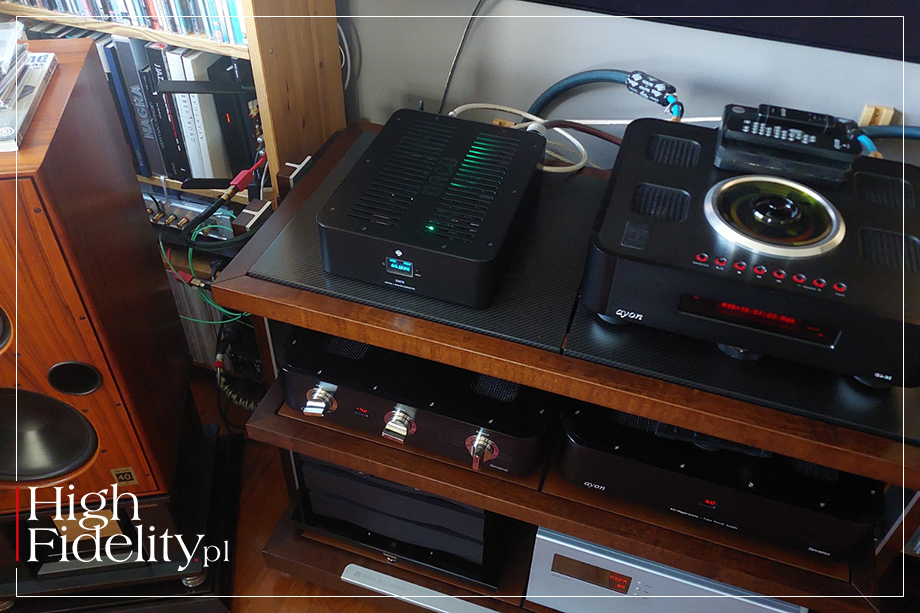
We then bring up well-known names, because among them are speaker manufacturers like ATC (Acoustic Transducer Company), PMC (Professional Monitor Company), and A.D.A.M. - to name just the most obvious ones - as well as headphone manufacturers like Audeze, Sennheiser, and Beyerdynamic, and electronics companies such as Bryston, Mytek Digital, Benchmark Audio Systems, and the American brand Manley. And I think the latter is the best point of reference for the Polish company IGS Audio, whose DAC we’re testing. This is because both are known in the pro audio world primarily for devices used for audio processing, such as EQs and compressors, but also because they use transformers to couple individual stages in their designs and - most importantly - vacuum tubes. ▓ IGS IGS IN THE COMPANY NAME is the alias that Igor Sobczyk, the company’s founder, head, and designer, is know under as a music producer. An automation engineer by training and a graduate of the Silesian University of Technology, he is also a musician, music producer, and sound engineer. In the 1990s, he founded and led the jazz-rock band Over Mind. Since 1999, he has been pursuing a solo career, and by 2006 he had released five albums as a producer. At the same time, he was designing studio equipment. The first IGS projects were created in 2003 out of - as stated in press materials - “the need and curiosity to have tube equipment in the studio.” He didn’t build them just for himself, however, as his products can also be found under the Imbir brand. The turning point came in 2008, when the brand unveiled as many as twelve new designs. In a profile published at that time in the magazine “Estrada i Studio,” we read:
He had been involved in studio recording and production for some time, so he had a pretty good idea of what he was looking for. The equipment had to be the real deal - heavy, sturdy, based on designs from the last century, and proven over the years in studio applications. He quickly recalled what he’d learned in school, back when he built his first stereo tuner.
Encouraged by his successes and the excellent sound quality of his designs, Igor opened a workshop and began producing equipment for his friends. However, the reputation of these devices quickly spread beyond his circle of friends, and more and more orders for handcrafted outboard gear began to pour in. The IGS was founded. ⸜ IGS Audio w MUSICTOOLZ, „Estrada i Studio”, 09.02.2010, → ESTRADAISTUDIO.pl, accessed: 28.04.2026. Since 2008, Mr. Sobczyk has also been the owner of the recording studio named IGS Studio in Mysłowice. This is where ideas are tested, refined, and prototypes are evaluated. For the professional audio industry, the company offers EQs, compressors, microphone preamps, power supplies, reverbs, and other products used for audio processing during recording and post-production. However, its lineup also includes three devices designed with audiophiles in mind: the Thermidt integrated amplifier, the Phom phono preamp, and a new addition, the Daco digital-to-analog converter. ▓ Daco DACO is a digital-to-analog converter (DAC) with four digital inputs. It also features a Bluetooth connection, and two analog outputs. It offers no volume control or headphone amplifier; it is a typical specialized product. At its heart is an AKM AK4493SEQ digital-to-analog converter chip (32-bit/385 kHz PCM, DSD512) and two NOS tubes: 6N6P-VI (Russian: 6Н6П-ВИ). This is a Soviet-era, reliable, and structurally reinforced double triode designed for low-frequency power amplification, industrial electronics, and pulse-mode operation. We read:
Unlike typical studio-oriented DACs, DACO is purpose-built for your living room, where emotion, space, and musicality matter most – sometimes all you need is a quiet night, a dim light, and music that feels just right. By combining a transformer-coupled tube output buffer, DACO delivers warmth, dimensionality, and effortless dynamics, making long listening sessions deeply engaging and fatigue-free.
⸜ DACO, → IGSAUDIO.com, accessed: 28.04.2026. The digital inputs support PCM or DSD signals - up to 24-bit and 384 kHz, as well as DSD512 (22.5 MHz) - via the USB port. The output provides an analog signal, either unbalanced (RCA) or balanced (XLR). The Daco is a medium-sized device, measuring 550 × 450 × 200 mm, with a narrower front panel, an aluminum chassis featuring characteristically rounded side edges, and, most notably, it is a “DAC” with a tube output stage and output transformers. ▲ A few simple words… IGOR SOBCZYK 
‖ Igor Sobczyk himself • photo courtesy IGS Audio THE IDEA TO BUILD my own converter first came to me in July 2025. As we do every year, we spend our entire summer vacation with the family on the Hel Peninsula. The summer was exceptionally rainy, so I decided to do something useful - namely, start designing. After about two weeks of gathering information on DACs, I2S protocols, and methods for interfacing digital circuits with a tube amplifier stage, an idea for the project slowly took shape on about a dozen A4 sheets of paper, filled with pencil notes. I based the digital section on off-the-shelf solutions, specifically the LHY AK4118, which supports most digital formats, and I don’t think there’s any need to build it from scratch. For the D/A converter, I also decided to use an AKM AK4493. These two well-matched and proven chips provided a fairly straightforward design foundation. I started designing the analog section while I was still on vacation. The goal was for the circuit at the input and output to be transformer-balanced. We have our own audio transformer winding shop that operates exceptionally well and is well known and highly regarded in the pro audio market. It’s a subsidiary of IGS Audio called UTM Industry. Why not take advantage of that? At this stage, the project’s name is also taking shape in my mind. The idea of the name DACO emerges. A short word, which means nothing, neither in Polish nor in English. Simply DAC+O - it ranks great on Google. I’m surprised no one thought of it before. 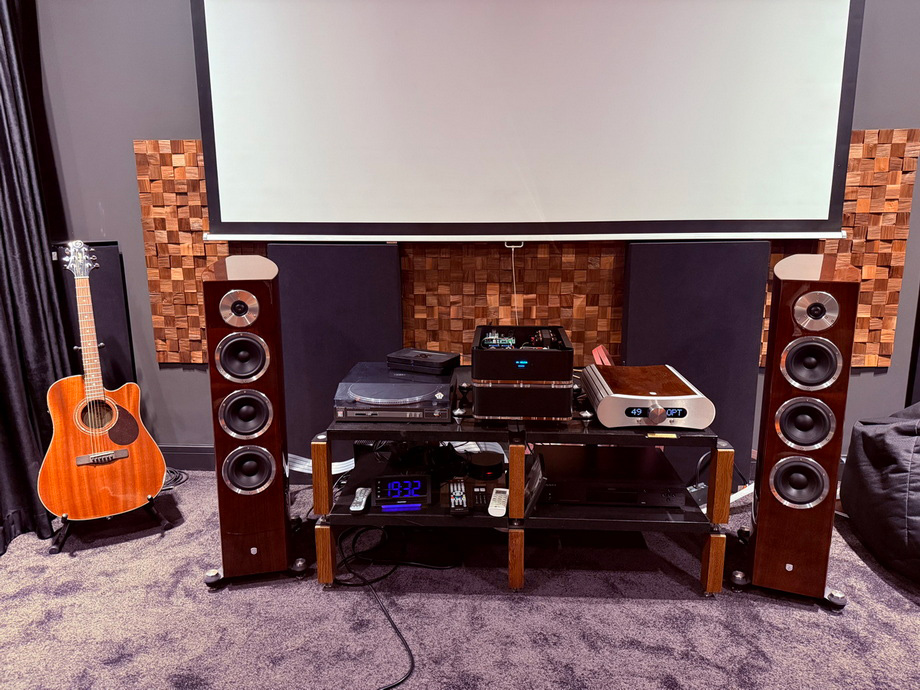
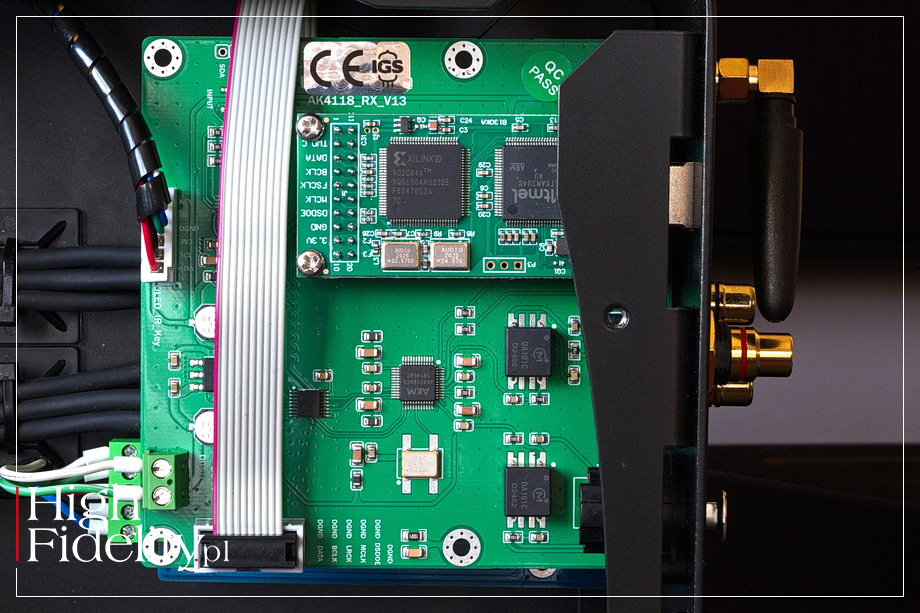
‖ Setup used for listening tests of the DAC • photo courtesy IGS Audio Now for the most important part: designing a tube stage. It seemed like a simple thing - or so I thought at the time. After all, I’ve been doing this for 22 years... For the first version, I used the schematic of our microphone preamp called the Double Triode Limiter, which is based on two gain stages implemented in a cascode configuration. A simple, obvious, and proven solution. Such a stage offers adequate gain, low distortion, and relatively low output impedance; it can also drive a balancing transformer. After some initial simulations, I drew up the schematic and several versions of the printed circuit boards. At this stage, the biggest challenge was the power supply design, which had to provide as many as five AC voltages with the highest degree of stabilization and filtering. I tried various solutions, but ultimately settled on a completely original design tailored perfectly to our circuit. The power supply for the digital section is based on ultra-low-noise LT3015 and LT1963 chips, while the analog stage’s power supply uses a GZ34 tube and a fairly large choke, which ensures soft start for the analog stage. These days, hardly anyone uses such solutions. 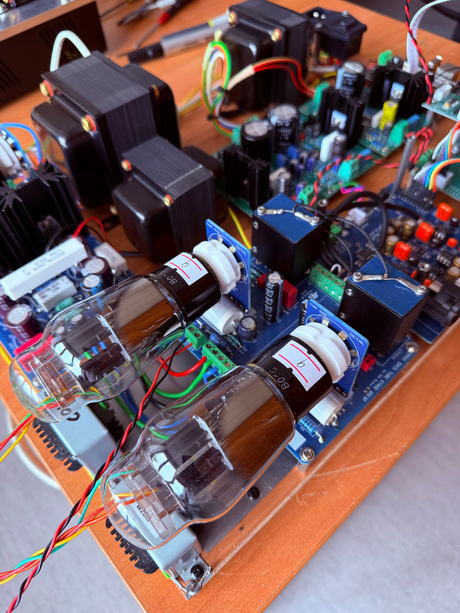
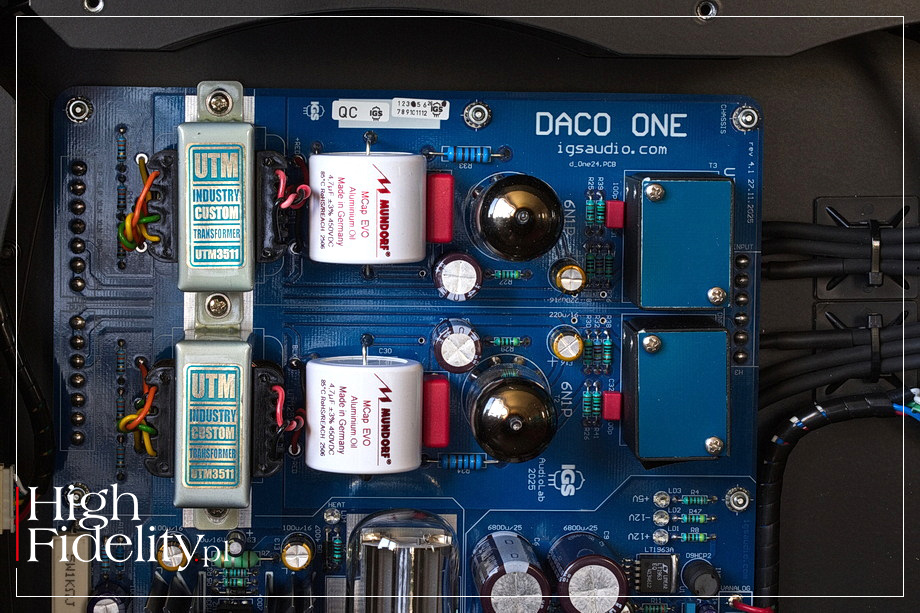
‖ Prototype versions of the converter - on the left, still on the board; on the right, already in the housing; the latter stands out due to the different arrangement of the coupling transformers • photo courtesy IGS Audio After my vacation, the finished printed circuit boards were already waiting for me at the office, so I eagerly set about soldering them. The first prototype was assembled on an IKEA particleboard panel. That’s how we build all our prototypes :) The assembly took a few hours, and after putting everything together, to my surprise, the circuit “worked” right away. It turned out then that my assumptions during the vacation had been correct. I was very happy. I connected the circuit to our APx, measured it, and it was good - pretty good, actually. And then I spent the next seven months refining the design... In concept and theory, this simple circuit hid an infinite number of nuances, pitfalls, and puzzles that were still waiting for me. I spent entire days on the APx, testing various tube and transformer configurations. Without delving too deeply into technical details, I’d like to highlight a few milestones here that influenced the sound and overall design. Early on, it quickly became clear that the 6N1P-EV tubes, which we use extensively in our pro audio equipment, didn’t deliver the best results in this application. I was looking for a lower bass extension, and it quickly became clear that the larger 6N6P-VI tubes provided it. I managed to achieve a response down to 8 Hz (-1 dB). This result was very satisfying. Another important issue is dealing with odd harmonics. It seems simple - we all know that tubes generate mostly even harmonics. But the situation changes depending on the transformer load - and is completely transformed by the type of core material used. It took some time to realize that, in this case, a core made of 79% nickel would reduce odd harmonics by over 30 dB. I also experimented with the coupling capacitor. Yes, indeed, there is one in the audio circuit. I knew it was important, but I didn’t know it was that important. Ultimately, I settled on the Mundorf Evo Oil. A huge capacitor with a beautiful sound. 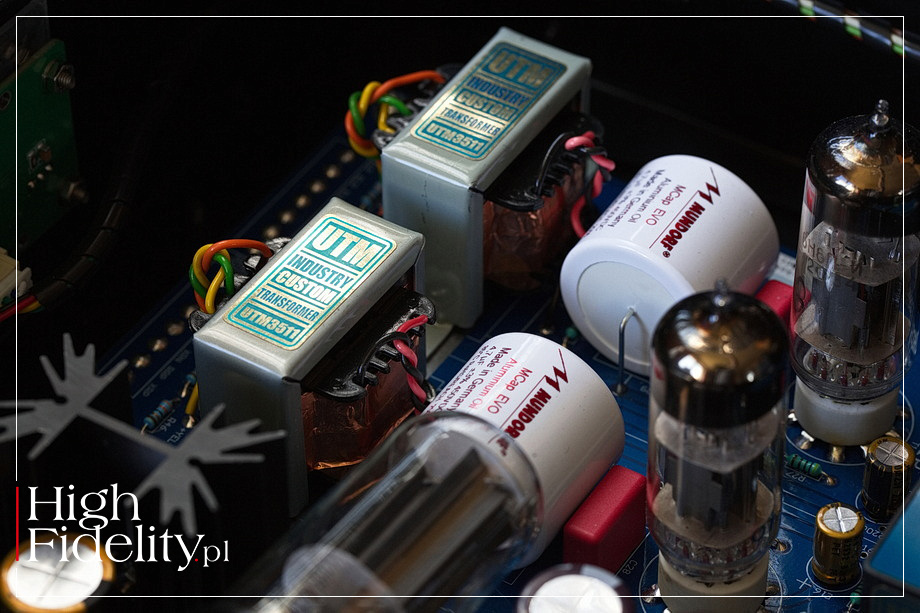
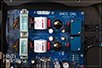
‖ The analog section of the converter – transformers and coupling capacitors, also includes tubes, including the rectifier. The final detail is fine-tuning the output levels. The DACO was designed to deliver 5 Vrms at the XLR output and half that voltage at the RCA outputs. As I mentioned earlier, the device features a transformer-balanced output, so the RCA outputs are tapped at 50% of the total output transformer winding. Careful selection of the output level required custom winding transformers that are not part of UTM Industry’s standard product line. The final challenge was housing. Mechanically assembling everything under rather rudimentary Polish conditions was quite a challenge (yes, we also manufacture the enclosures in Poland). I believe the seventh prototype enclosure was free of all defects, and we were able to assemble the first unit in it without any file-based adjustments. That’s how the first DACO unit came to be. 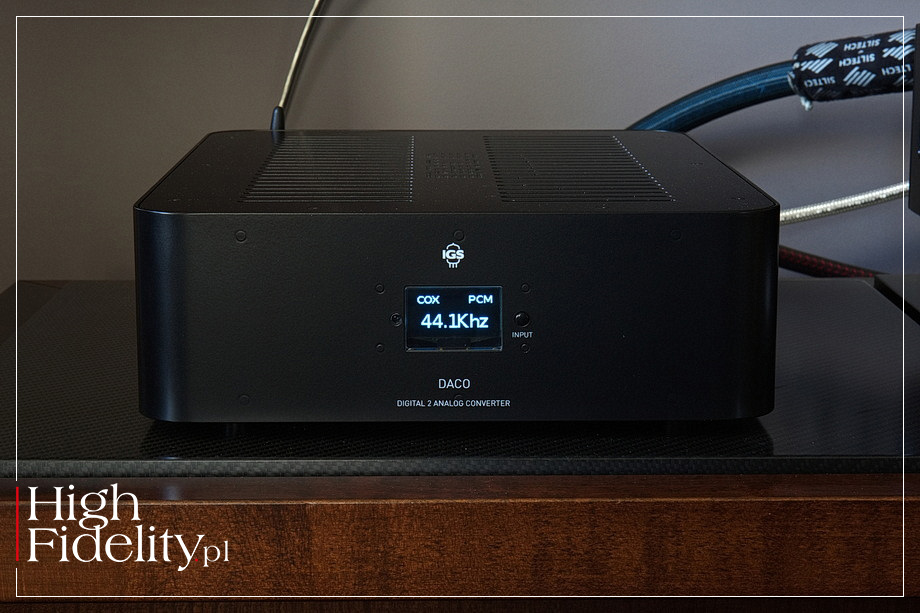
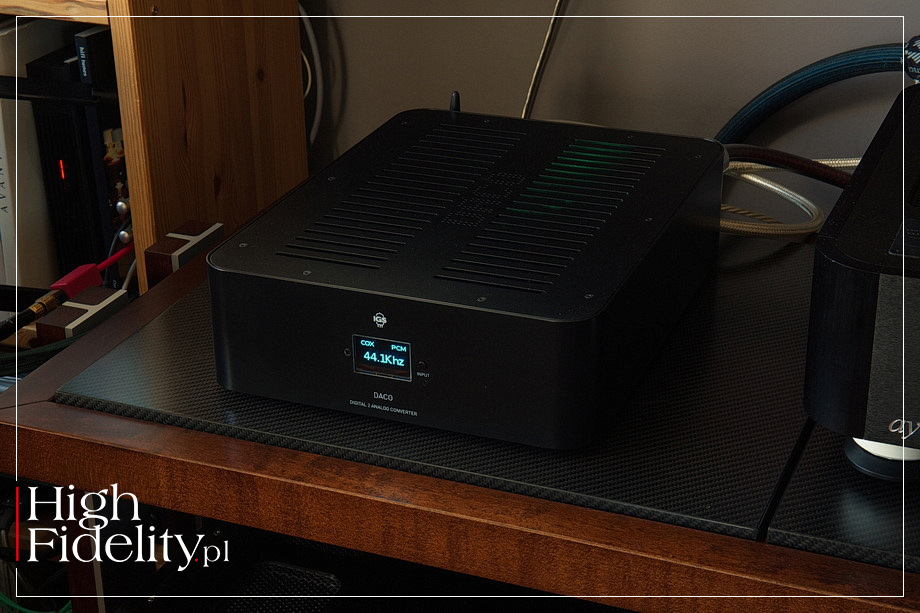
From concept to finished device, it took nine months. This is the longest project in the history of IGS Audio. Currently, we have a finished, refined, and complete device. The premiere took place at the “Wszystko Gra” Good Music Fair in Katowice in March 2026. In the MCK hall - which, despite its enormous size, offered pretty good sound - DACO sounded outstanding, especially after three days at the fair. I guess it had fully broken in. Now I know I’ve created something truly special. I’d like to take this opportunity to point out that this is a project carried out by one man. From A to Z. Without any pretension, a huge budget, a corporation, or an army of engineers and marketing people. I came up with and built everything myself, right here in Poland. Including the text above :) ‖ IS THE SHAPE OF THE Daco chassis is a design that has been tried and tested many times in home audio, though it has been seen less frequently in recent years, or a variation of such design. As you probably remember, products from the American company Classé’s Delta series, and also all contemporary Ayon Audio devices - including those found in the HIGH FIDELITY reference system, look similar. For a while, companies from China adopted this design style, so it’s nice to see it in a Polish product. FEATURES • The DAC is quite tall; this is not a toy device. On the front panel, there is a small but very high-contrast and easy-to-read 50 mm (2”) OLED display. It shows the sampling rate (in the largest font), the selected input, and the signal type - PCM or DSD. Interestingly, the frequency is not displayed in the Polish system; instead, it is shown as 44.1 kHz (for example). 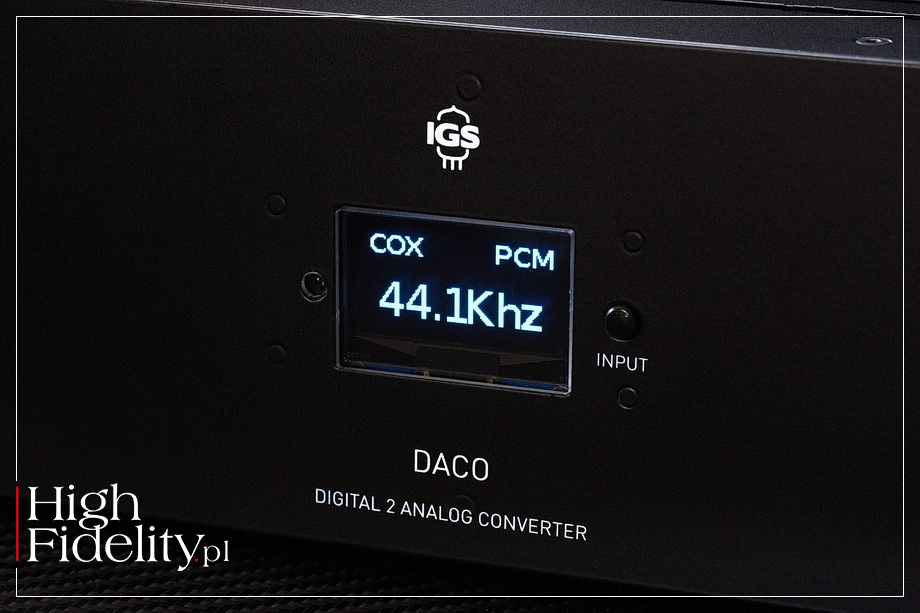
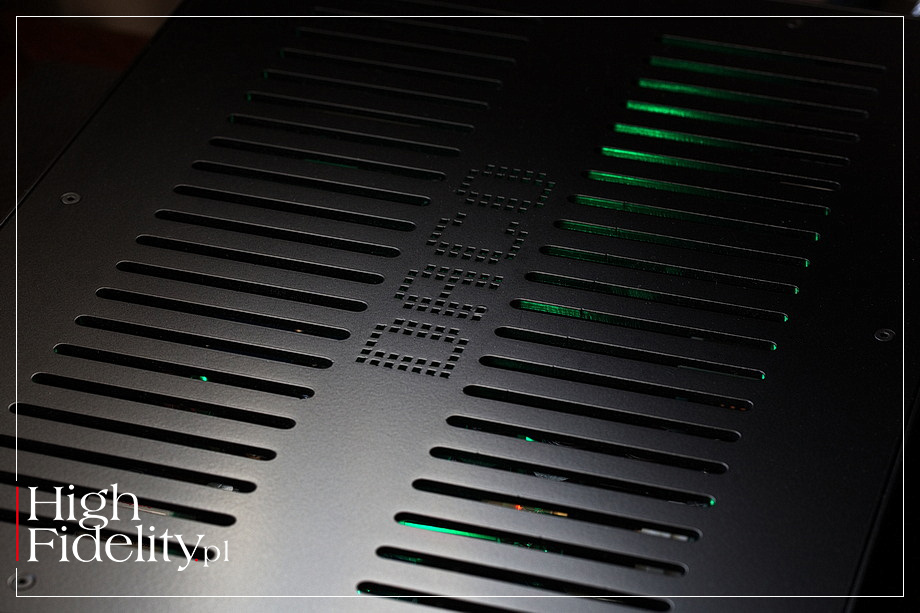
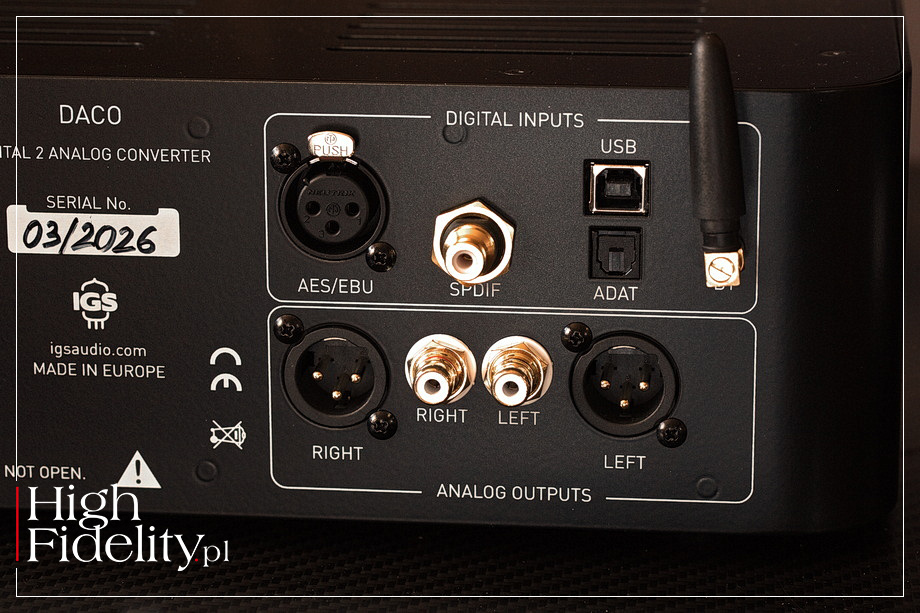
The display is blue, which contrasts sharply with the green glow emanating through the openwork top panel -where LEDs are illuminated. I would prefer it if there were an option to turn them off. Perhaps even using a remote control, which the device is equipped with (I did not have it at my disposal during the test). However, you can use the remote to switch between active inputs. The connectors on the back are sturdy and gold-plated; they’re components from the Swiss company Neutrik. The inputs and outputs are grouped on the right side. There are digital inputs: AES/EBU, RCA, ADAT (via Toslink), and USB. The Bluetooth antenna is located next to them. The manufacturer mentions the chip that works with it - the QCC5125 - but does not specify the supported codecs. |
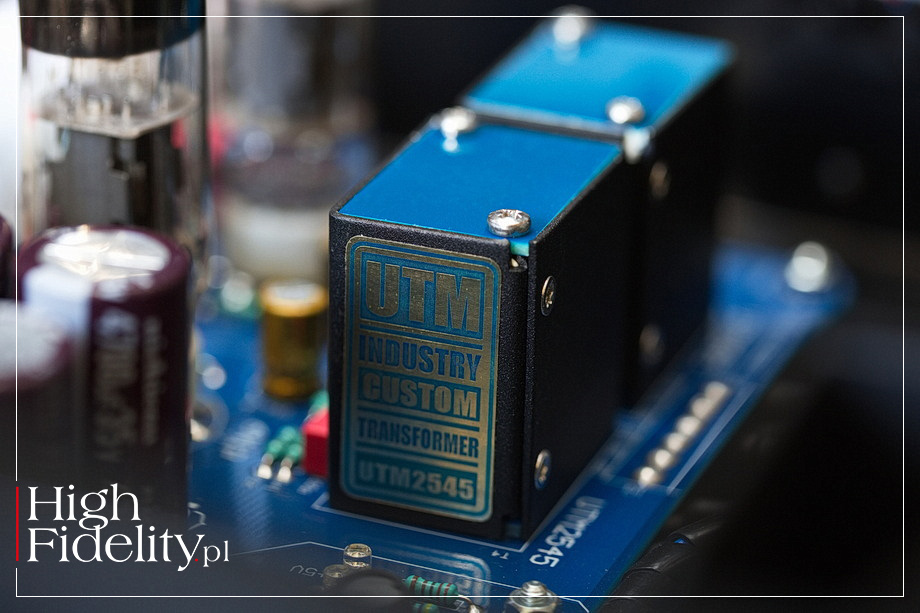
▲ ADAT ADAT (ALESIS DIGITAL AUDIO TAPE) is a digital audio recording technology and transmission standard introduced by Alesis in 1991. It enables the recording of 8 tracks on S-VHS tapes and currently functions primarily as an optical interface (Lightpipe) for transmitting digital audio between studio devices, supporting 8 channels of 24-bit/48 kHz audio via a single cable.Eight-track ADAT recorders recorded sound onto S-VHS tape and could be linked into larger, perfectly synchronized systems with a maximum of 128 tracks. Many top-selling albums were recorded this way, including JOHNNY CASH’s My Mother’s Hymn Book, PATRICIA BARBER’s Companion, ALANIS MORISSETTE’s Jagged Little Pill, as well as albums by Def Leppard, Aerosmith, and others. Today, the term ADAT refers to an optical interface, ADAT Lightpipe, that transmits digital audio data. It allows you to expand your recording studio setup by adding components rather than replacing equipment. The most common uses for an ADAT connection are to increase the number of inputs and/or outputs available on an audio interface without having to purchase a new one. ● » You can find more information regarding ADAT digital recorders in our articles from the: Alesis ADAT. 30 years of a digital recorder, that revolutionized the musical industry series: ˻ 1 ˺ → HERE, ˻ 2 ˺ → HERE, ˻ 3 ˺ → HERE ˻PL˺. TECHNOLOGY • The chip manufacturer, Qualcomm, states that this is a Bluetooth 5.1 chip capable of decoding the basic SBC codec, which ensures basic compatibility, as well as significantly better ones: aptX, aptX HD, aptX Adaptive, AAC (Apple devices), and LDAC (Sony). The latter two support the transmission of a (compressed) PCM signal up to 24-bit and 96 kHz. The signal from the digital inputs, except for USB, is received by the AKM AK4118 chip and forwarded to two AKM AK4493SEQ D/A converters, one per channel. As I assume, the I/U conversion is performed in semiconductor circuits, but the output stage is tube-based. Coupling transformers are installed between these stages and at the output. These transformers are hand-wound and sold under the UTM Industry brand. The manufacturer states:
The output stage is based on a pair of military-grade NOS 6N6P-VI tubes, selected for their exceptional linearity and reliability. This configuration allows for an extended low-frequency response, reaching down to 8 Hz.
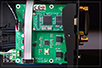
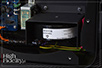
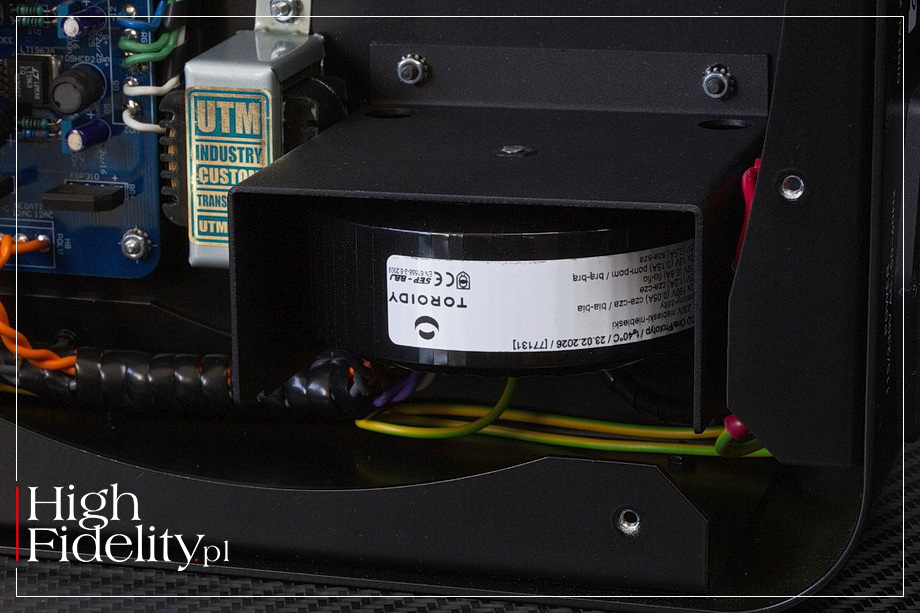
The tube buffer is transformer-balanced at both the input and output, with full galvanic isolation from the output stage. All transformers are custom-designed and supplied by UTM Industry, ensuring optimal performance, low noise, and excellent signal integrity throughout the entire audio path. (Ibid.) The circuit features some very nice capacitors, namely Mundorf Mcap Evo Oil, which are oil-filled polypropylene capacitors. The circuit also includes high-quality capacitors from Nichicon, Elna, and WIMA. These choices - unusual by pro audio standards - are more commonly found in audiophile equipment. It’s clear that the designer has broken free from the limitations of thinking of components as merely technical elements that make no contribution of their own to the sound. The power supply is quite complex. At its core is a toroidal transformer from the Polish company Toroidy.pl, which owns the Fezz Audio brand. It is mounted vertically behind the screen, positioned so that the axis of maximum electromagnetic radiation does not “hit” the audio circuits. Although this is common knowledge, manufacturers rarely opt for this transformer orientation. The solid-state section is powered by low-noise, solid-state circuits. The tube section, on the other hand, has its own tube power supply based on the popular GZ34 rectifier tube. In the Daco, it works in conjunction with a choke - by UTM Industry, of course. 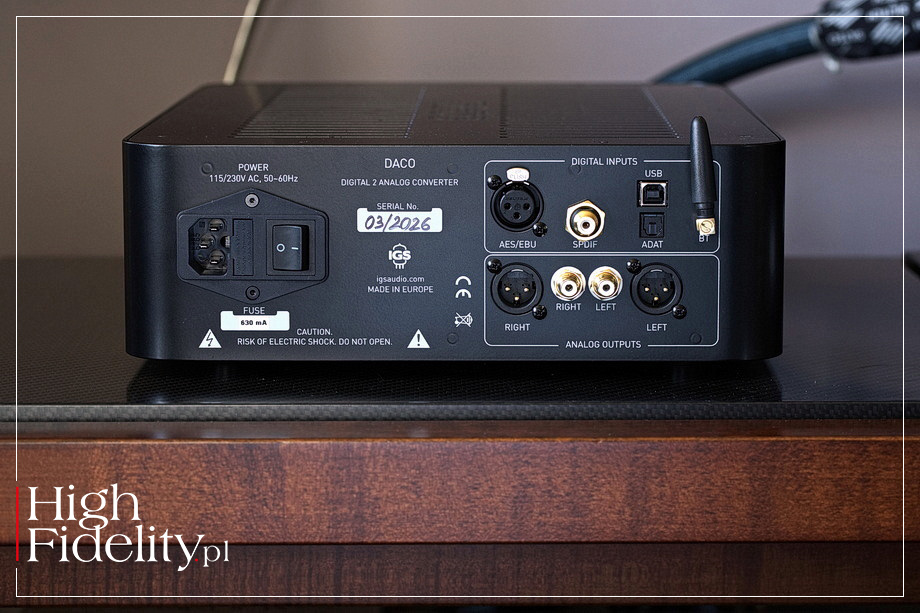
It must be said that the tested DAC is very well-built; it features high-end components and interesting design solutions. Aside from that green glow leaking from under the hood (and the blue color of the display - but that’s my problem), the only thing I’d change is the feet. The ones featured on the IGS Audio DAC are simply small, molded plastic pieces. We’ve known this for years, and big companies are only now realizing it - even manufacturers like JBL are equipping their products with feet from specialized companies; more → HERE. Maybe it would be worth offering a choice (for an additional fee) and providing custom feet selected by the customer and pre-installed by the manufacturer? Other than that, it is a great built and looking device. ▓ SOUND HOW WE LISTENED • The IGS Audio Daco digital-to-analog converter was tested in the HIGH FIDELITY reference system and compared to the D/A section of the SACD player Ayon Audio CD-35 HF Edition, which also served as a transport. At the same time, I conducted a listening test using the Sforzato DSP-05EX file player paired with the PMC-05EX clock, acting as a file transport. The signal from the Daco was sent via the RCA (unbalanced) outputs because in my system I use RCA cables. 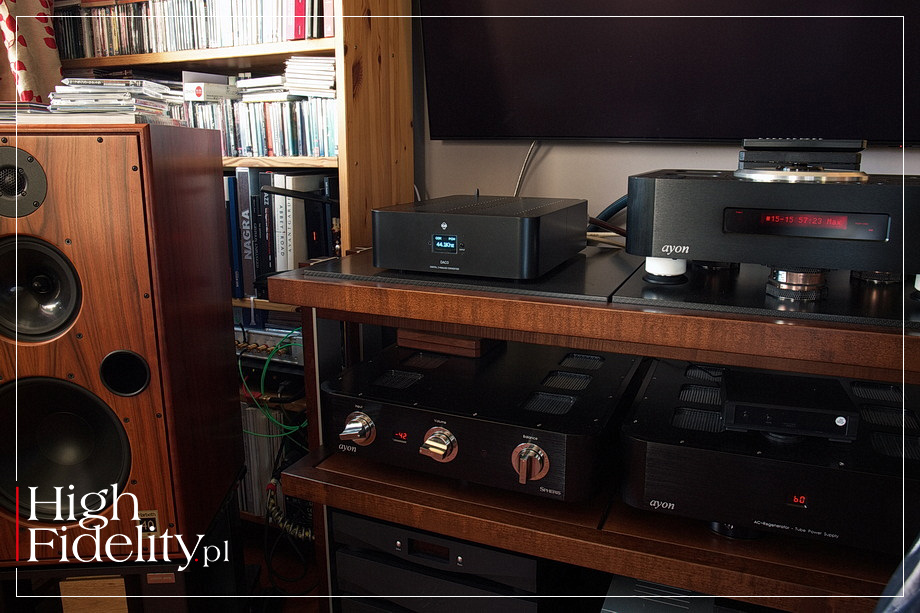
The Ayon’s digital output was connected to the DAC’s input via an Acrolink Mexcel 7N-DA6100 II RCA-to-RCA cable, and to the Sforzato via an Acoustic Revive USB-1.0 PL Triple-C USB cable. The DAC was powered by an Acrolink Mexcel 7N-P9100 cable and placed on the top shelf of a Finite Elemente Master Reference Pagode Edition Mk II rack, on its own feet. » RECORDINGS USED FOR THE TEST ⸜ a selection
• AKIRA TANA TRIO, A New Picture I, ShinRec SRCD-8030, UHQCD ⸜ 2024. EXCELLENT AUDIO COMPONENTS are made in Poland, truly outstanding. I take a simple recording - a two-microphone setup with no editing - for example, the AKIRA TANA TRIO’s A New Picture I - and I can immediately tell that this is a top-notch D/A converter. I reached for this album without even thinking about it; even though I’d already prepared a selection of recordings I wanted to listen to, I pulled it off the shelf guided by a hunch - and it didn’t let me down. My goal was to hear the essence of what this DAC is capable of. It’s precisely with such simple - and therefore uncompromising - recordings that everything is laid bare; nothing can be masked by production, because there is virtually none, and nothing can be edited or pieced together, because there’s no editing involved either. This particular recording was captured using two microphones connected to a tube preamp - handcrafted to order by Mr. Shunya Sato, onto two tracks of a Tascam digital recorder—in DSD128 (5.6 MHz). It sounded wonderfully energetic and authentic. I had a real soundstage in front of me, with depth and width, and on it three sound sources, blended by the reflections of the Ashiya Lina Hall’s interior. Blended, meaning combined into a coherent “image,” just like when listening live. Except without “cutting them out of the background,” without sharp contours. Distinctive imaging is the bane of good sound. Sometimes, if it follows from the logic of a given recording, it’s OK, I get it. Almost always, however, it’s a mistake stemming from the desire to highlight details in material that isn’t very resolving. Or in a device that isn’t resolving enough either. The Polish DAC does it very well. Maybe the sound isn’t quite as rich in detail as the one coming directly from the analog output of the Ayon Audio player - my reference - but I didn’t expect that either. But it’s precisely in this comparison that you can hear that the Daco is, in this regard - especially considering the price - an exceptionally mature product. Or perhaps we should even forget the “considering the price”? This is a guideline when discussing value for money - important and helpful. However, especially in the high-end segment - and this Polish DAC belongs to that segment - it’s a term that flattens the perception, as it suggests some sort of shortcomings. Yet these aren’t shortcomings at all, but rather a natural progression of sound as prices rise, at least for high-quality devices. That is why I will repeat myself, but differently: the IGS Audio DAC is an exceptionally mature product. Its sound is fresh, powerful, and open. The upper treble is more forward than in the reference player. It is also incredibly clear. It seems that the designer, Mr. Sobczyk, did not fall into the stereotypical “tube” sound, but instead utilized those characteristics that are responsible for energy transfer. 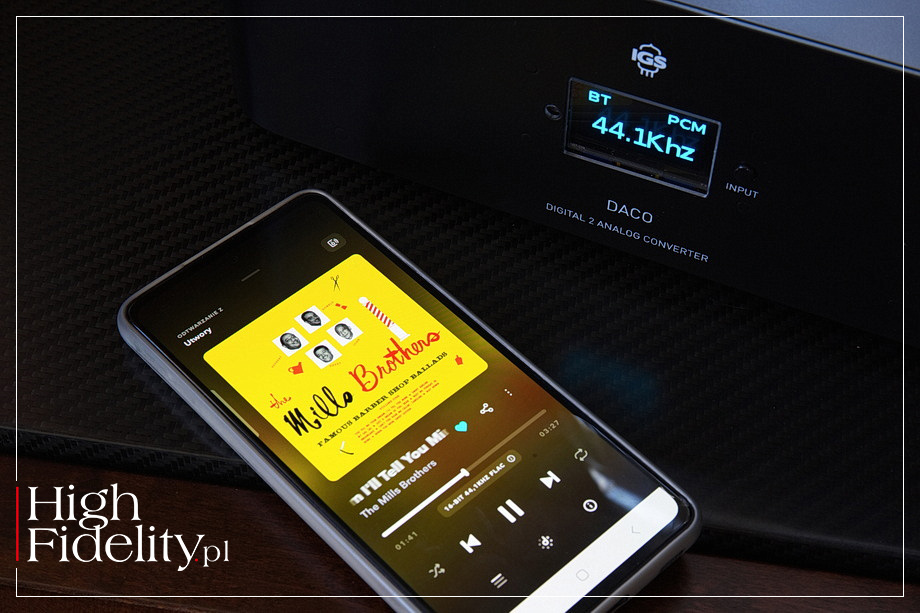
Let’s listen to the ˻ 4 ˺ Cedar’s Blues, a track by Cedar Walton that begins with a count-in, immediately joined by a powerful snare drum with a distinct snare sound. The Polish DAC delivered this with power and incredible intensity, if I may say so. It was strong in the upper end and dense in its resonance. The midrange sounded similar. The piano had a clean tone, with a strong attack and clear sustain. There was no trace of tube “warmth” in this sound - it’s simply not that kind of device. It’s tube-based, but it’s all about clarity and speed. That’s why I think you’ll be surprised by the ˻ 5 ˺ Relax (Come Fighting), a track from the latest version of the FRANKIE GOES TO HOLLYWOOD album Welcome To The Pleasure Dome. This album offers a fairly bright sound, with emphasis in the upper midrange. A lot of compression, plenty of effects, and heavy-handed production - all of which mean there isn’t much resolution here, so you have to rely on selectivity. And the easiest way to achieve that is by emphasizing the attack and brightening the overall sound a bit. With the Daco DAC, these elements were clear, yet nothing was brightened or sharpened. I’d even say that the whole thing sounded slightly smoothed out, as if it had been run through a dynamic compressor with preset bands in the treble and mid-range that it was “monitoring.” The way I understand it, the device under review perfectly captures the leading edge, sounds so clean, that it doesn’t need to “fudge” anything by emphasizing the edges and brightening them. Yes, it’s an open and energetic sound. Yet it’s also a “composed” sound, and one that’s “under control.” Perhaps this is also because - and this is another observation - everything here is perfectly timed. No blurring, no “big smears” - everything is spot on. The time (phase) alignment I’m referring to produces a sound that is very, or exceptionally well differentiated in terms of the size of the instruments, their volume, and their relative distance from us, the listener. The high-frequency-cut-off beginning of the ˻ 18 ˺ I Feel It Coming, the closing track of THE WEEKND’s album titled Starboy, recorded with the help of the Daft Punk duo, seemed to be placed at the back of the stage, yet it perfectly filled the soundstage; it could be heard from the sides as well as behind me. The beat, released slowly at the listening axis, followed immediately by the vocals, was big, beautiful, and pleasant. And it was on a completely different level than the aforementioned intro. By the way, the sound from the DAC has a lot of volume. And it shouldn’t have that much. Let me explain: as I listened to different tracks and played one CD after another, I noticed that this isn’t a device that emphasizes rich bass. It doesn’t “massage” anything, nor does it go “down to the basement” or “to the very depths of hell”to, a few terms I still remember from my 20s, when I used to devour equipment reviews in the Polish audio press, which was just getting started back then. The DACO is a converter that reproduces this range in a controlled and precise manner. It’s selective and fast. Above all, however, the DAC is balanced. Yes, of course, when in the ˻ 2 ˺ Party Monster from the aforementioned CD, that low, massive, distorted bass generated on the pad hits, the DAC follows it, reproducing it in exactly such - exaggerated - way, because that’s what this track is all about; that’s its “core.” But even this bass is under control and doesn’t affect the vocals any more than was intended during production. In other words, it doesn’t modulate them on our end during playback. However, I did mention balanced performance. The IGS unit is tonally balanced, even if the bass energy isn’t quite as strong as that of the treble and midrange. The designer opted for clarity and a dynamic response during signal build-up, rather than “meaty” or “silky” bass - to use two terms that describe soft and rich bass. You won’t find that here. I don’t think that was the designer’s intention; that wasn’t what he was aiming for. And yet, when playing, for example, the DONALD BYRD’S ˻ 1 ˺ The Cat Walk, in the XRCD24 version, the leader’s low, muted trumpet comes through beautifully. Pepper Adams’s baritone saxophone, which comes in at 3:40 in the right channel, has a wide frequency range and “purrs” beautifully. But, to return to my initial point, this is an open sound rather than one that’s saturated in the bass range. It is saturated with information. That is - and I’ll say this once more - a well-defined sound. And clear. And selective. And always internally coherent - simply superbly composed as a whole. BLUETOOTH • Audiophiles consider Bluetooth to be their number-one enemy. Unreliable, with poor sound quality - yuck. And good riddance to Bluetooth! Just like drugs, endless Korean soap operas, idle chatter, and other misfortunes that befall us. In other words, everything that makes life bearable… That’s why it was with great pleasure that I immersed myself in the world of Daco with music streamed from my smartphone. It was a cool, warm, tangible experience. It didn’t have much of the resolution, speed, and energy that this DAC delivers with a “wired” signal - that much is clear. But there was music. I don’t know how, I don’t know why, but I listened to it calmly, without nervously glancing at the speakers. Hmm… ▒ Summary WHEN LISTENING TO THE DACO CONVERTER, we have the chance to feel like we’re in a top-tier restaurant. The kind of place where the food is exquisite, the lighting is tastefully chosen, the live music is classy, and we can actually afford it all. There’s a sense of fulfillment in that, but also inner peace. That’s exactly how the IGS Audio DAC sounds. It’s a device with an exceptionally detailed sound - a sound that is fantastically energetic. Its tonal character is open, and its focus is on presenting all that information in the most uncolored, pure way possible. To achieve this, it sacrifices a bit of fullness in the lower midrange and bass. When there’s a lot of that in a recording - to cite The Weeknd once again, but also FRANK SINATRA’s vocals in the ˻ 2 ˺ That Old Feeling from the Nice’N’Easy album - the sound will be deep and rich. In most cases, however, the sound will remain precise and open. 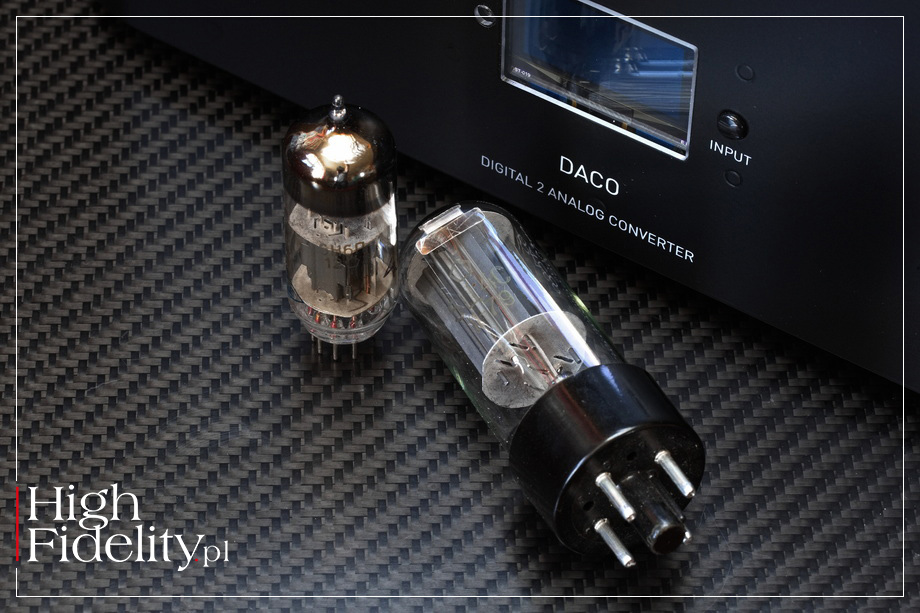
There’s something about this sound that exudes the calm of a professional. You can sense these things right away. They come across as reliability and a lack of tension, rather than a sense of “I have to.” It seems that the designer of the reviewed DAC did this more out of desire than necessity - he was having fun rather than struggling. And that’s exactly how we’ll enjoy music with it. Perhaps even in very expensive systems - this Polish DAC lets you play in the high-end league for non-high-end prices. An excellent product! ‖ WP ▒ Technical specifications (acc. to the manufacturer)
DAC chip: 2 x AK4493SEQ (AKM) 
THIS TEST HAS BEEN DESIGNED ACCORDING TO THE GUIDELINES adopted by the Association of International Audiophile Publications, an international audio press association concerned with ethical and professional standards in our industry, of which HIGH FIDELITY is a founding member. More about the association and its constituent titles → HERE. |
 |



|
Reference system 2026 |
|
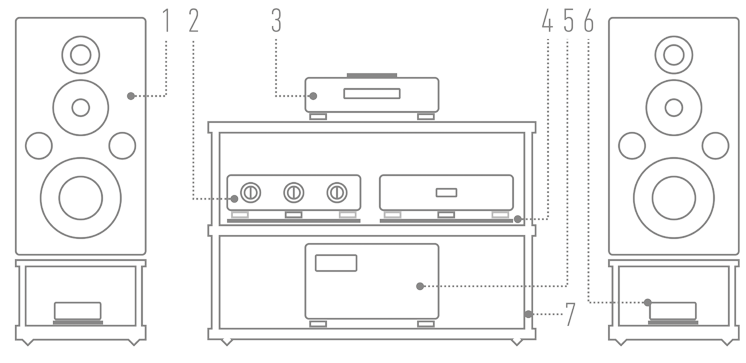 1) Loudspeakers: HARBETH M40.1 |REVIEW| 2) Line preamplifier: AYON AUDIO Spheris III Linestage |REVIEW| 3) Super Audio CD Player: AYON AUDIO CD-35 HF Edition No. 01/50 |REVIEW| 4) Stands (loudspeakers): ACOUSTIC REVIVE (custom) |ABOUT| 5) Power amplifier: SOULUTION 710 6) Loudspeaker filter: SPEC REAL-SOUND PROCESSOR RSP-AZ9EX (prototype) |REVIEW| 7) Hi-Fi rack: Hi-Fi rack: finite elemente MASTER REFERENCE PAGODE EDITION Mk II, more → HERE |
|

|
Cables Analog interconnect SACD Player - Line preamplifier: SILTECH Triple Crown (1 m) |ABOUT|» ANALOG INTERCONNECT Line preamplifier → Power amplifier: Siltech ROYAL SINLGE CROWN RCA; review → HERE Speaker cable: SILTECH Triple Crown (2.5 m) |ABOUT| |

|
AC Power Power cable | Mains Power Distribution Block - SACD Player: SILTECH Triple CrownPower (2 m) |ARTICLE| » POWER CABLE Mains Power Distribution Block → Line preamplifier: Acoustic Revive ABSOLUTE-POWER CORD, review → HERE » POWER CABLE Mains Power Distribution Block → Power amplifier: Acoustic Revive ABSOLUTE-POWER CORD, review → HERE Power cable | Power Receptacle - Mains Power Distribution Block: ACROLINK Mexcel 7N-PC9500 (2 m) |ARTICLE| Power Receptacle: Acoustic Revive RTP-4eu ULTIMATE |REVIEW| » ANTI-VIBRATION PLATFORM under Acoustic Revive RTP-4eu ULTIMATE: Graphite Audio CLASSIC 100 ULTRA, review → HERE Power Supply Conditioner: Acoustic Revive RPC-1 |REVIEW| Power Supply Conditioner: Acoustic Revive RAS-14 Triple-C |REVIEW| Passive filter EMI/RFI: VERICTUM Block |REVIEW| |

|
Anti-vibration Speaker stands: ACOUSTIC REVIVE (custom)Hi-Fi rack: finite elemente MASTER REFERENCE PAGODE EDITION Mk II, more → HERE Anti-vibration platforms: ACOUSTIC REVIVE RAF-48H |ARTICLE| » ANTI-VIBRATIONAL FEET: |

|
Analogue Phono preamplifier: Phono cartridges:
Clamp: PATHE WINGS Titanium PW-Ti 770 | Limited Edition Record mats:
|

|
Headphones » HEADPHONE AMPLIFIER: Leben CS-600X, review → HEREHeadphones: Headphone Cables: Forza AudioWorks NOIR HYBRID HPC |