


|
ANTI-VIBRATION PLATFORM DIVINE ACOUSTICS
Manufacturer: DIVINE ACOUSTICS |

 |
 |
 |
|
Review
text by WOJCIECH PACUŁA |

|
No 266 Julay 1, 2026 |
|
˻ THE FIRST TEST ˼
MASTER SYSTEM, REFERENCE SYSTEM, test system, and others - no matter what we call it, it is just as important to a reviewer as an instrument is to a musician, tools are to a mechanic, or shoes are to a runner. It is the foundation for operation and, at the same time, a reference point for evaluation. It faces a variety of requirements - sound is just one of them - but above all, it must ensure the reviewer’s comfort. It must, in and of itself, be highly responsive to the music while remaining transparent to all changes within the system itself. 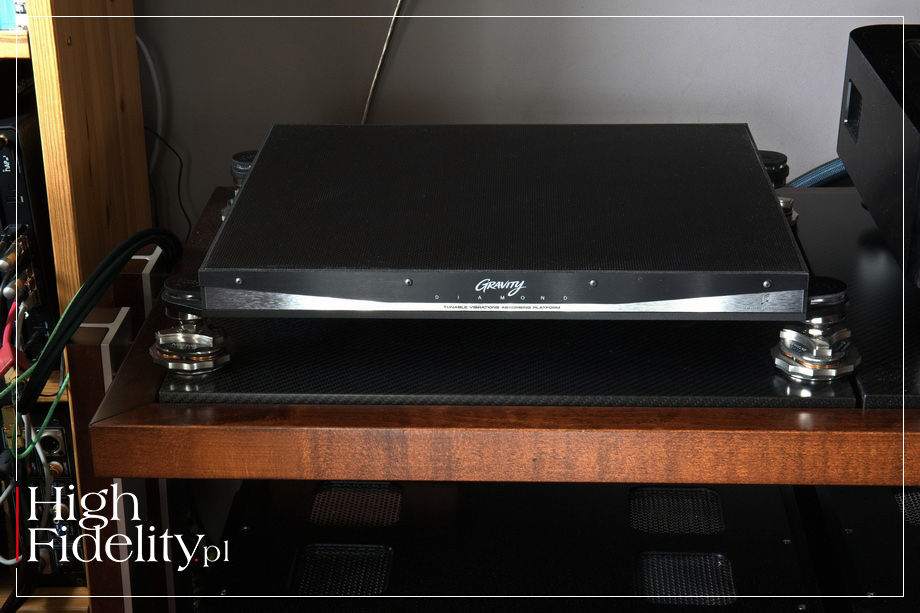
That is why serious journalists change its components so rarely. Even if they come across something objectively better, subjectively - in the context of their own systems and the requirements we’ve discussed - it must, above all, be “compatible” with the reviewer. Without that, it’s a non-starter. So when I first heard a Divine Acoustics anti-vibration product, even though it produced very beneficial changes on its own, I didn’t immediately decide to implement it in the “High Fidelity” reference system. That’s because it wasn’t quite what I needed at that particular moment. It wasn’t until the Galileo feet really hit the mark that they found a permanent place in the system, under the Ayon Audio CD-35 HF Edition SACD player. Since then - that is, since September 2023 - I’ve been comparing all other anti-vibration feet and platforms to them, including those that are significantly more expensive. Now, a platform I’ve been wanting to tell you about is joining their ranks. ▒ Gravity Diamond HOW IS IT POSSIBLE THAT IN OZIMEK, rather than in Warsaw, Kraków, Gdańsk, Wrocław, Poznań, or other major academic centers, such complex, technically and mechanically refined, and aesthetically superb anti-vibration products can be designed, remains a mystery to me. Unless, of course, we adopt a postmodernist perspective, with its sense of the “decline of the center” and the distribution of activity to small, often microscopic centers - take, for example, the Czarne publishing house, which operates in Wołowiec, a village with a population of about eighteen people. And Czarne publishes, among others, Nobel laureate László Krasznahorkai. My enthusiasm isn’t limited to the mere fact that a company with this profile and these products exists, or to the fact that it surprises us every so often with new improvements and solutions, as well as increasingly better designs. In a word: it’s growing. Moreover, in a situation where these types of products are also attractive, function well, and sell well, this adds another layer. That’s exactly what the company’s two latest models are: the Newton Diamond anti-vibration feet, which we’ll cover next month, and the Gravity Diamond anti-vibration platform, which we’ll discuss this time. ▲ A few simple words… PIOTR GAŁKOWSKI 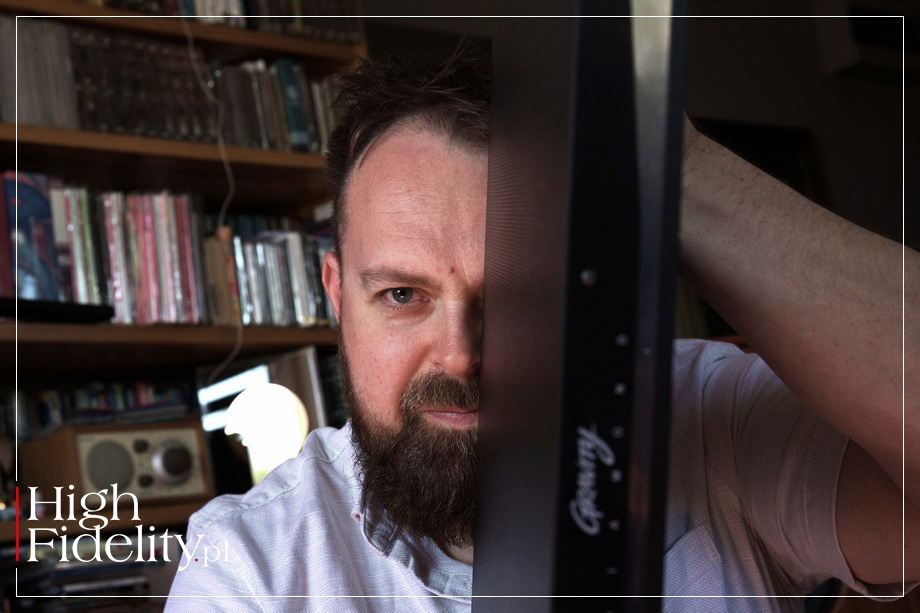
‖ Piotr Gałkowski and his Gravity Diamond at the „High Fidelity” In the spring and summer of 2026, we will gradually begin offering a new line of anti-vibration products, including feet, platforms, and complete modular racks. 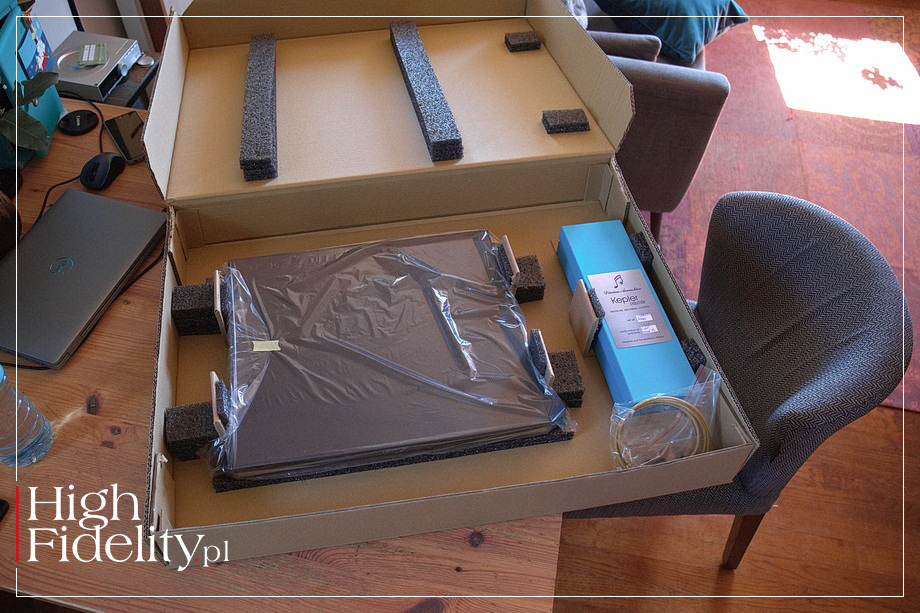
‖ One of the key elements of the new project was a proper box When designing them, I wanted the new line to be a visual continuation of the Mars line, which was introduced two years ago and was very well received by customers. However, it was meant to be more delicate and visually lighter. Let’s call it a “more feminine” line compared to the massive, masculine Mars. As with all my designs, I have repeatedly used the “golden ratio” when selecting the cross-sections, the shapes of individual elements, and the appearance of the front panel of the platforms, which also serve as the shelves of the new racks. The rear lights of sports cars served as a loose inspiration for the design of the front panel. 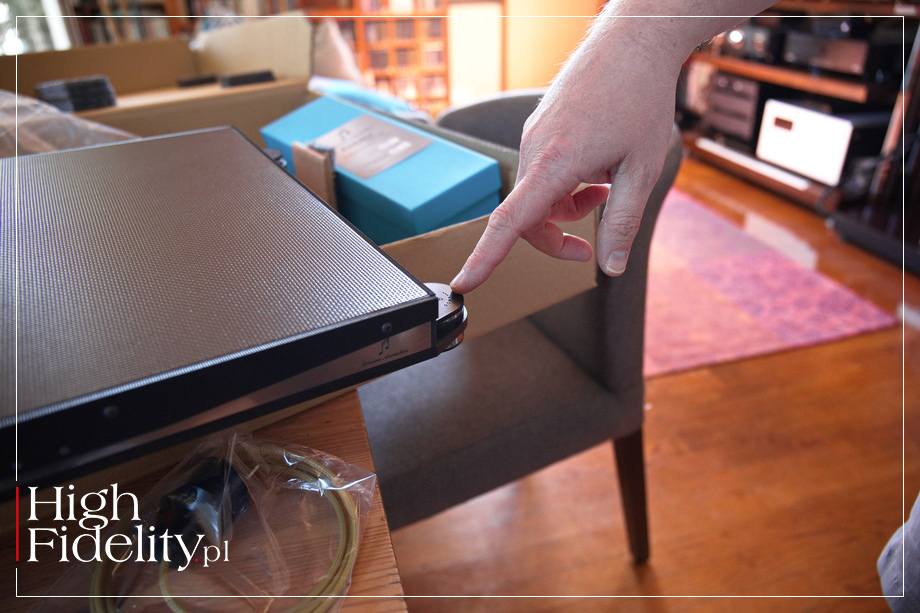
‖ The Gravity Diamond incorporates technological features that are also found in the Newton Diamond feet Although the entire new series is positioned at a lower price point, I still wanted it to be just as effective as the flagship series. The new product line also features new technology that I’ve been developing over the past two years. In addition to the materials used previously, CeraGem D utilizes diamond to combat vibrations. At the Vienna High End Show on June 4–7, 2026, in Room 1.78, I will be premiering the Newton Diamond anti-vibration feet, the Gravity Diamond platform, and the new Venus rack. 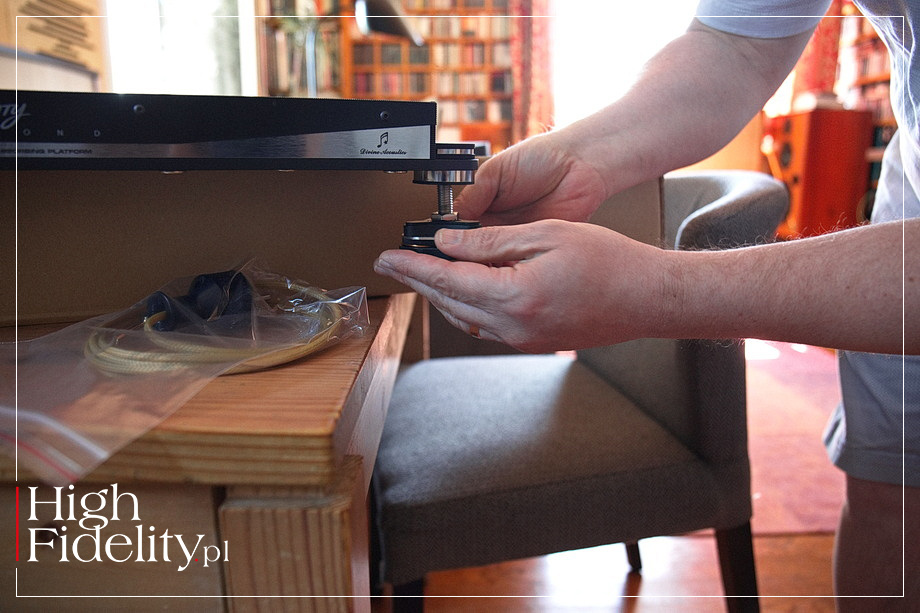
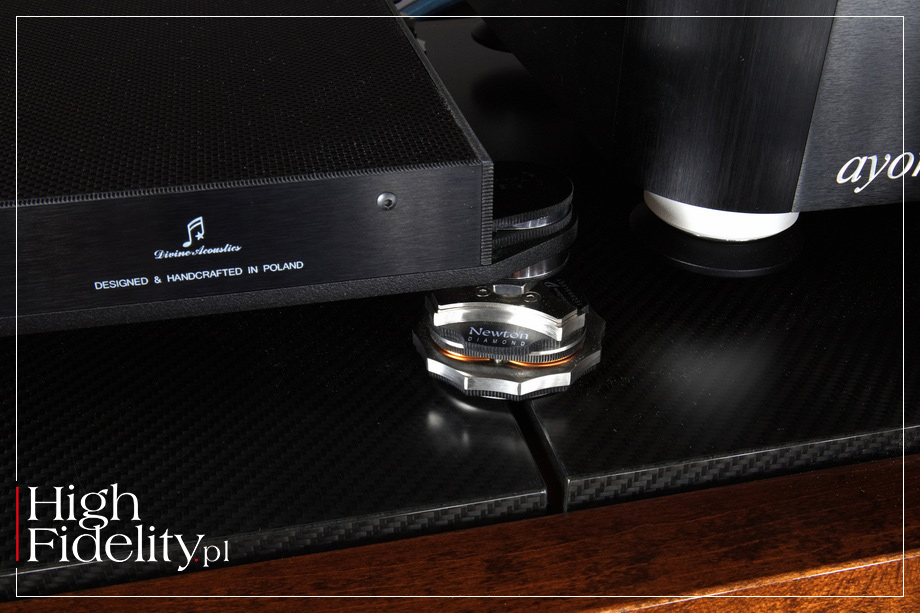
‖ The new platform can feature either Kepler Evolution or Newton Diamond feet Gravity was the first anti-vibration product offered by Divine Acoustics. Fourteen years after its launch, I am presenting its new, version designed from the ground up. The only thing it has in common with the previous version is its name, which to me is a bit like “Corolla” is to Toyota - it never goes out of style. ‖ PG THE FIRST ANTI-VIBRATION PRODUCT designed by Piotr Gałkowski that I tested was the Gravity platform. I liked it and even now, nearly thirteen years later, I remember the curiosity with which I began and the satisfaction with which I finished the test. It was a refined and well-thought-out product, featuring solutions that would soon evolve into something that would position this company on a completely different level. 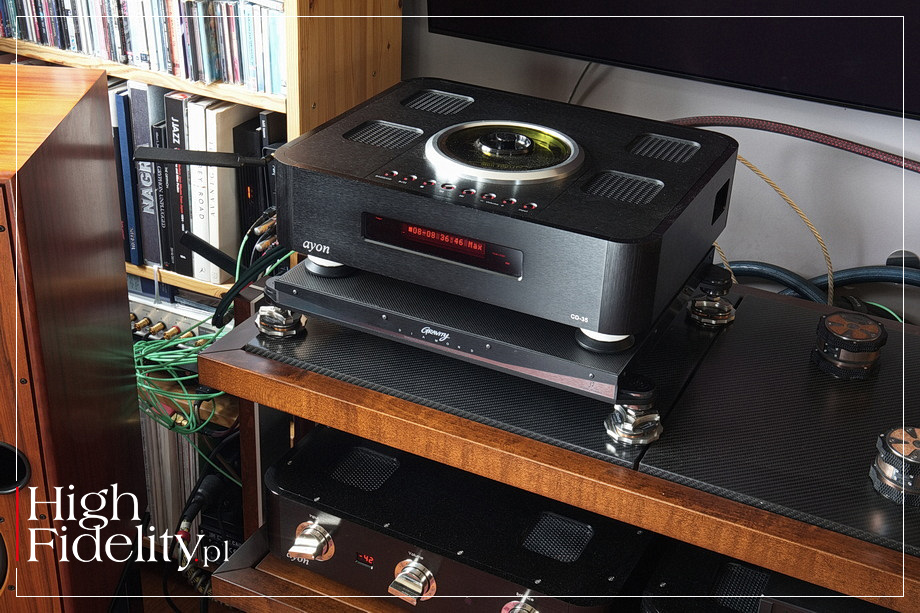
The new platform shares only its name with the older one. Everything about it is new. It was developed in response to requests from distributors for whom the fantastic - but large and expensive - Cassini platform was simply too big. The new platform comes in three versions: S, M, and L, but it is significantly smaller than Cassini. These three versions can be rotated ninety degrees if the units are deeper than they are long, offering three additional configuration options. Prices range from 1,500 for the smallest standard version to 2,000 euros for the smallest Supreme version. The manufacturer writes the following about the new platform:
In the Gravity Diamond model, we’ve incorporated solutions that work more precisely than the feet alone, creating an advanced vibration-damping system in both directions. Thanks to its multi-layered construction, the platform’s top surface absorbs and dampens micro-vibrations before they reach the feet or the equipment. At the same time, it reduces the impact of external vibrations that have nevertheless managed to penetrate the support system. As a result, the platform acts as a buffer and a barrier, stabilizing the operating conditions of the audio equipment and allowing it to reach its full sonic potential.
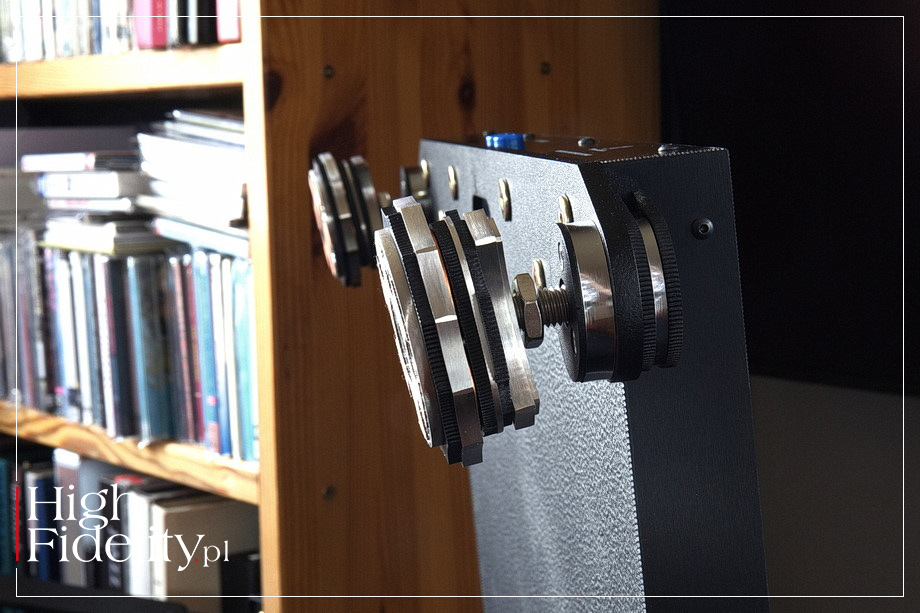
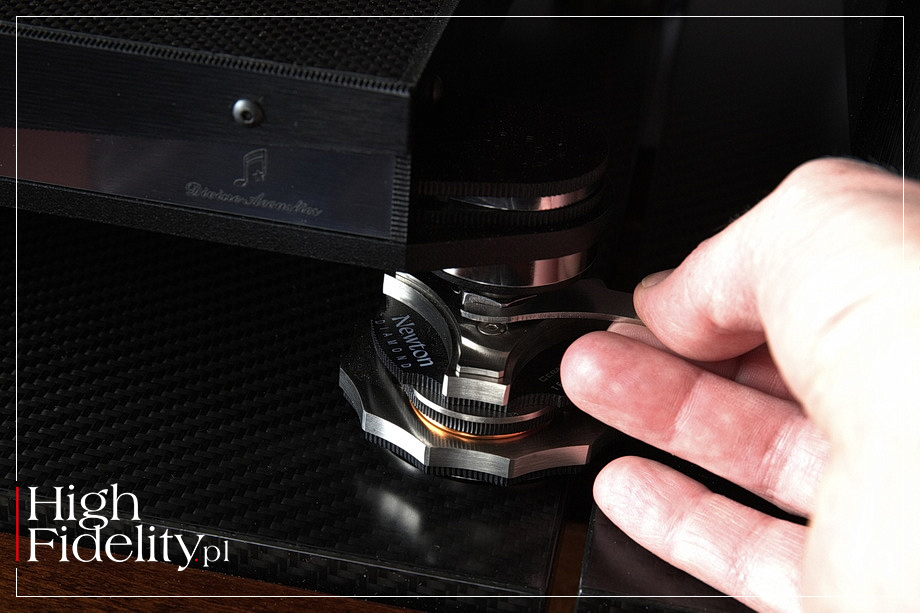
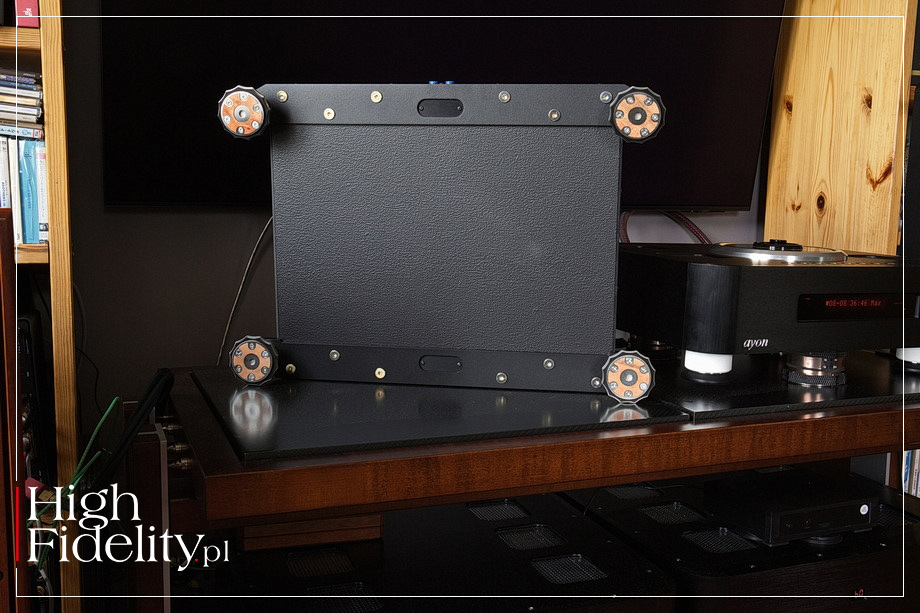
⸜ Platforma antywibracyjna klasy referencyjnej, → DIVINEACOUSTICS.com, accessed: 18.05.2026. TECHNOLOGY • In describing the platform’s construction, the manufacturer breaks it down into four main components: ① tabletop, ② structural beams, ③ anti-vibration mounts, and ④ anti-vibration feet. ① The top plate in Gravity Diamond platforms has eight layers and a sandwich-style construction. Its construction is similar to that of the flagship Cassini model. According to the manufacturer, it was designed as a “precisely tuned multi-material structure.” It combines MDF, HDF, and wood of varying thicknesses, enhanced with a metal layer that can be grounded. The top layer consists of carbon fiber with minimal resin saturation, ensuring “optimal sonic properties.” ② The steel beams transfer the load from the platform’s top directly to the anti-vibration feet and are designed to ensure high structural rigidity and a load capacity of up to 120 kilograms. Thanks to this feature, the platform is said to “work perfectly” with both lightweight and exceptionally heavy audio components. ③ The sockets integrated into the support beams allow for platform height adjustment and contain layers that dampen vibrations. They utilize the latest Ceragem D technology - the same as that used in Newton Diamond feet (name is stylized on “CeraGem”). Their design allows for micro-movements along both horizontal axes, which is intended to reduce lateral vibrations. Height adjustment allows the platform to be leveled and the resonant frequency of the platform-foot system to be tuned, which is intended to “tailor the platform’s performance characteristics to a specific audio component.” 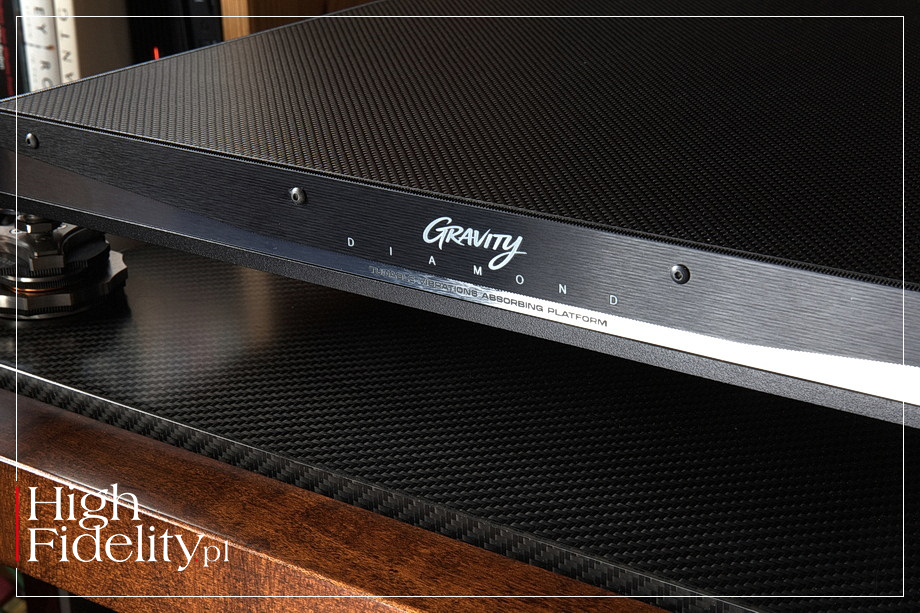
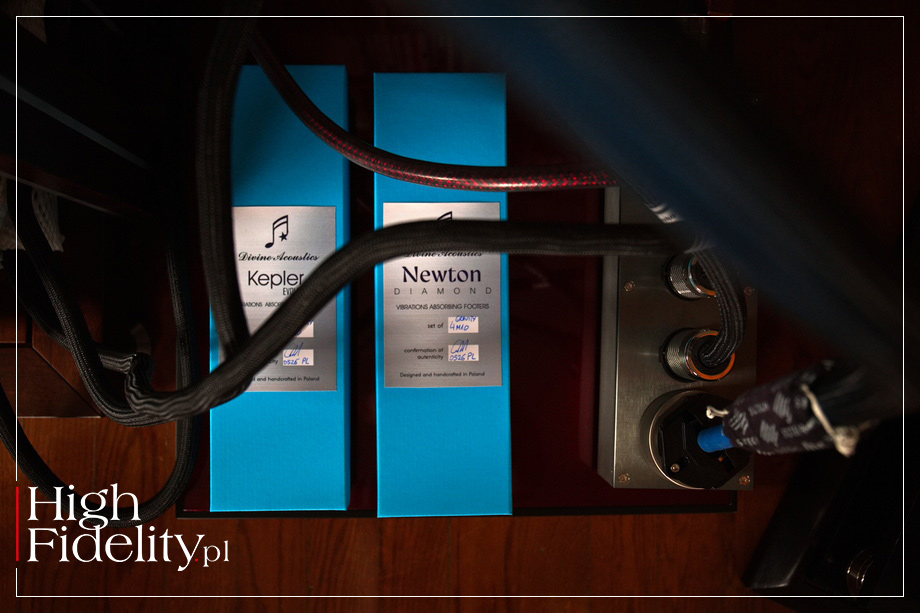
④ And finally - the anti-vibration feet. As standard, the platform is equipped with Kepler Evolution feet made using Ceragem technology. Each foot contains eleven damping layers made of materials with different physicochemical properties, designed to ensure “vibration control across a wide frequency range.” However, the Gravity Diamond platform can be upgraded to the Supreme version at any time. Simply replace the Kepler Evolution feet with Newton Diamond feet to:
(…) significantly increase the effectiveness of micro-vibration damping and achieve an even higher level of control and clarity in the system’s sound. (Ibid.)
The platform is delivered in nice, neat packaging, which includes the platform itself, a box with feet, and a grounding cable. One end of the cable is terminated with a banana plug, which you plug into the socket on the back of the platform, and the other end features a power plug, which you plug into a power outlet of your choice. In fact, the platform has two sockets. They are connected in parallel, allowing you to link several platforms together, for example, to form a rack. |
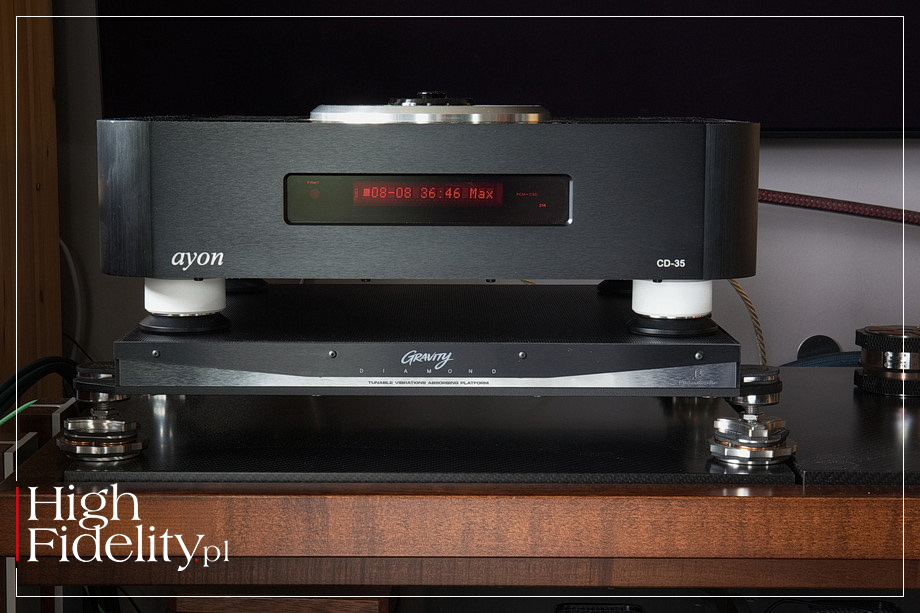
The Gravity Diamond looks fantastic and is also precision-crafted. It can be ordered in several color options for the metal strip visible on the front. It can be silver, gold, or copper. In summary - there aren’t too many other manufacturers in the world producing anti-vibration products of this caliber, a few of which are based in… Poland. ▓ SOUND HOW WE LISTENED • The Gravity Diamond anti-vibration platform was tested in the “High Fidelity” reference system. During the test, it stood on the top shelf of the Finite Elemente Master Reference Pagode Edition Mk II rack. The test involved listening to the CD Player placed on Galileo feet and on the full platform, and took the form of an AAA/BBB/AA comparative listening test, with A and B being known references. I listened to both short excerpts (about 1 minute) and entire tracks. 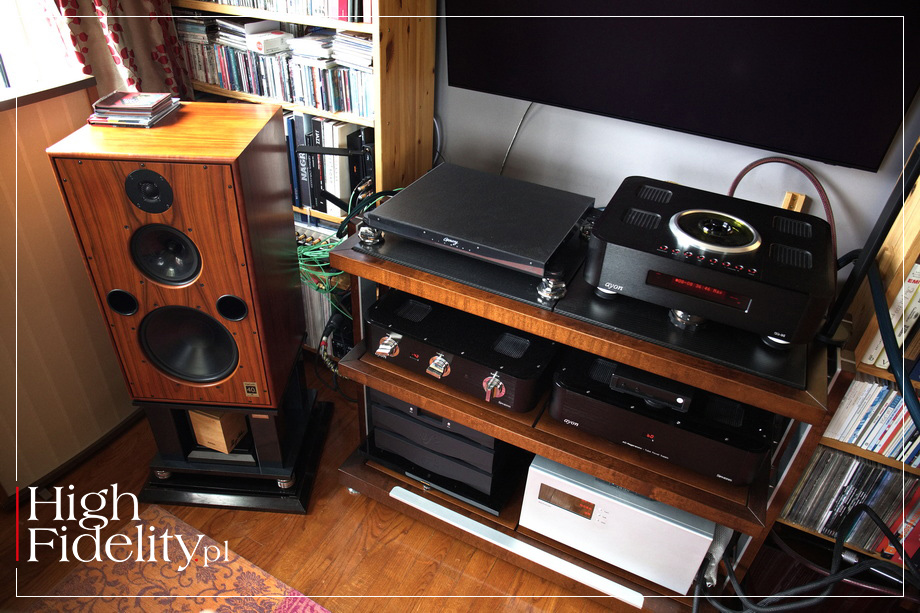
The dimensions of the reviewed platform (the S version) are 440×380 mm (top surface) and 540×380 mm (overall). I leveled it using a Bosch PLR 50 C. The test involved listening to the Ayon Audio CD-35 HF Edition SACD player, which was placed first on the test platform and then directly on the top shelf of the Finite Elemente. I also compared the standard Keppler Evolution feet with the new feet called Newton. I also listened to how the entire platform compares to the company’s Galileo feet, on which the Ayon Audio player sits on a daily basis. » ALBUMS USED FOR THE TEST ⸜ a selection
• JOHN COLTRANE, Coltrane’s Sound, Atlantic/Rhino R2 75588, Atlantic Jazz Gallery, CD ⸜ 1964/1999. IT’S NOT AT ALL THE CASE that a given audio product is meant to revolutionize the sound of the system. Sometimes that happens - the sound is great, but it is better if it’s more of an “enhancement” of what the system was already doing before. Something that helps the system shine in its current state, but as a whole, rather than just in its individual aspects. That’s what the Gravity Diamond platform seems to offer. 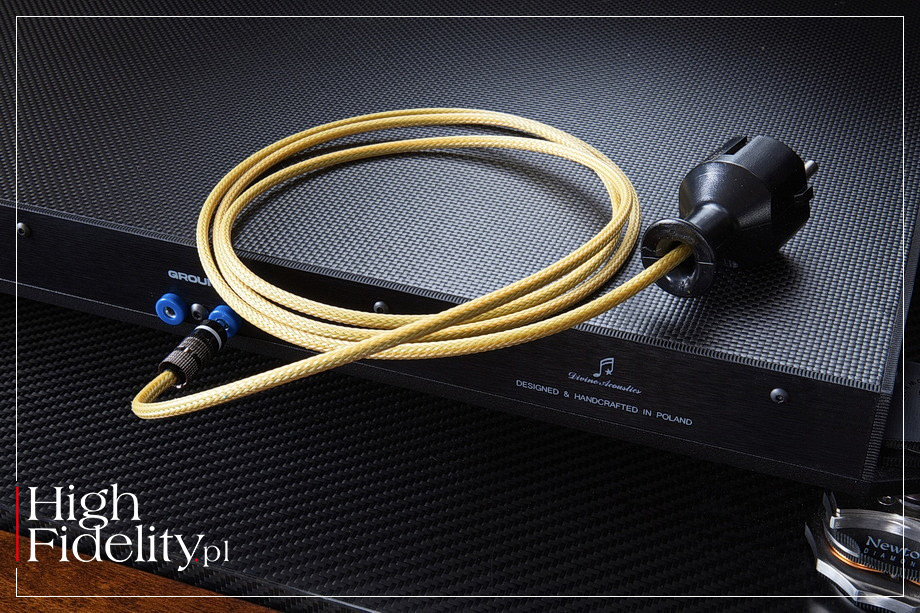
That’s why, when I listened to the ˻ 1 ˺ The Night Has a Thousand Eyes, the opening track of JOHN COLTRANE’s album Coltrane’s Sound, “with” and “without” the platform under the Ayon Audio player, I didn’t get the impression of a “breakthrough” or a “revolution”. The differences - which do exist and are significant - are, in fact, complementary to what I’ve already achieved with my system and what I already have in it. Perhaps in other setups, with different equipment, this will be more noticeable. But even there, I have a feeling it won’t “turn the tables upside down.” It will simply be a continuation. The changes I heard boil down to one thing: resolution. Yes, Piotr Gałkowski’s platform allows the music to breathe more fully, revealing various nuances, aspects, and details. As is always the case in high-end audio, neither the details nor the aspects are emphasized for their own sake. The details are clearer because they have more space around them and are better defined. From our perspective, such a listening experience requires less effort to reconstruct the musical event - it’s easier to grasp with the tested platform. The change I’m referring to manifested itself in the fact that this recording, in this particular “old-school” version - that is, rather dark and midrange-focused - was more vivid and smoother. The saxophone was shifted slightly to the rear, as was the percussion in the right channel. At the same time, both instruments were clearer and better defined - in terms of tone, dynamics, and spatial presence. The differences may not have been very large at first glance, but their effects were significant. The overall sound was much “firmer” and more pronounced in its impacts and dynamic changes. In the sense that more was happening “THERE,” it was all better differentiated, and thus more interesting. The same goes for the double bass, which the producers had placed in the left channel and which played rather sparingly. It doesn’t have a very high amplitude and is located quite far from us. In both versions - that is, with and without the platform - it was clear and pleasant. And yet, after placing the player on the Gravity Diamond it finally gained a sense of “presence”. It wasn’t as if anything major had happened or changed - it was still a quiet instrument. However, its attack and decay were better defined, and at the same time it sounded more “pastel” - that is, its sound contained more half-tones, nuances, and timbres. To better understand what’s going on down there, in the bass region, I reached for the album by LARS DANIELLSON and LESZEK MOŻDŻER Pasodoble. As it turns out, the platform “cleans up” the low-frequency range by removing excess duration. That’s how I see it. The first impression is that there’s simply less bass. But if we listen longer, we’ll hear that there’s actually more of it, though it has a different structure. With the Gravity Diamond, it’s faster and more precisely defined. What I previously took for “fullness” was actually some kind of residue - sound that hadn’t been fully dampened. The platform eliminates, or at least minimizes, a sort of “overhang,” that is, the „fatness” I noticed when playing the title track ˻ 5 ˺ Pasodoble without the platform. The player placed on it performed better than when placed directly on its own feet - which is, after all, the point - and as a result, it clarified its sound without making it thin. I would even say that only now, on the platform, did it sound both selective and deep. Before, I had the impression of strong bass and a full midrange, but that impression was caused by slight coloration. This observation stayed with me throughout my listening sessions, including with LIGHTNIN' HOPKINS’ Last Night Blues. It has a fairly bright tone, but it also has an extraordinary sense of presence and dynamics. With the platform, Hopkins’ vocals were clearer, more precise, but also more tangible, almost more intimate. Without it, the sound became slightly muddied and lost its clarity. It wasn’t the “sharpness” of the delivery, but precisely the smooth transitions between sounds, while maintaining a coherent structure. 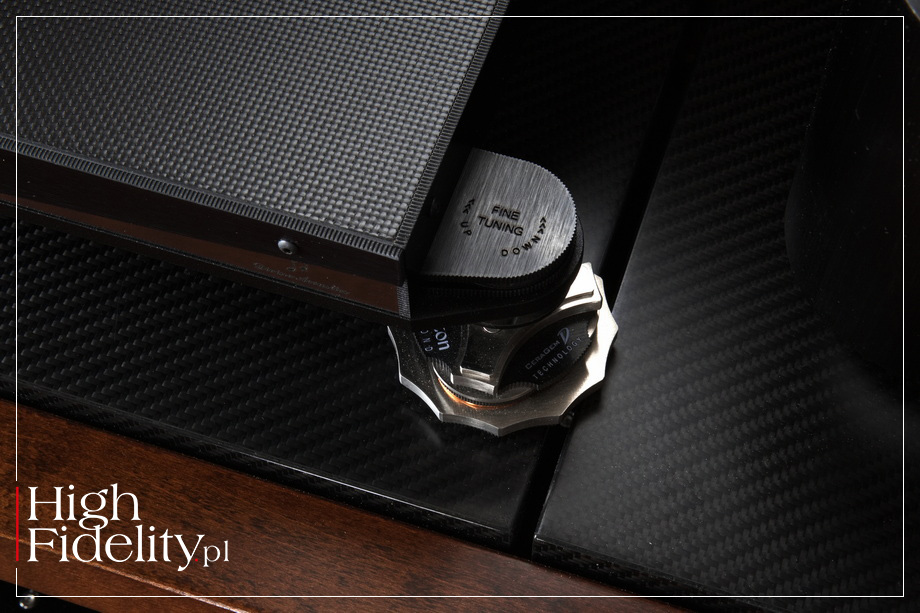
All of this produces an effect I would call “openness.” That is, a greater abundance of sounds. All while maintaining richness and tangibility. This isn’t about sharpening or brightening - it’s a completely different approach. A clearer sound in the treble means “more precise,” and thus “more natural.” And that is exactly what the sound from the Gravity Diamond platform is like. KEPLER vs NEWTON • The platform I tested incorporates a “patent” we know from the Galileo feet - namely, natural resonance adjustment - but with a modification introduced in the Newton Diamond feet: the replacement of rubies with diamonds. The manufacturer supplies the platform with Kepler feet, but we can swap them out for Newtons - which is exactly what I did. Changing the feet also alters the sound quite significantly. I’d even say - I know I’m going a bit overboard, but so be it - to a greater extent than the platform itself. I mean, the platform is great, but you can also hear that the Newton Diamond feet are something completely different from the previous generation. But - another “again” - they perform so well because of the platform. Replacing the “rubies” with “diamonds” resulted in a fuller, more powerful low-end response. All while maintaining the selectivity and dynamic range provided by the Kepler platform. It was clear to me while listening to ˻ 1 ˺ Zoo Station, the opening track of U2’s album titled Achtung Baby. Its sound is quite dark, “analog,” and not very selective. But it’s dense. With the platform mounted on Newton Diamond feet, the sound was clearer and more intelligible, while also warmer. Yes, the “diamonds” thicken the sound and steer it toward what we associate with turntable “warmth.” It’s not as selective as with the Kepler Evolution - that’s something to keep in mind. However, it’s tonally richer and more saturated. Simply better. But it’s also different enough that I wouldn’t rule out the cheaper feet from the equation. It may turn out that in specific systems with specific expectations, they’ll fit better into the setup - and coherence, the interaction between individual components, is, after all, the foundation, isn’t it? GRAVITY/NEWTON vs GALILEO • Comparing the platform with the Newton Diamond feet and the Galileo feet, which I’ve been using for quite some time, seemed like a natural way to wrap up my listening sessions. After all, it’s easy to imagine the choice we face: platform or feet? The differences are clear and very interesting. The Galileo feet are top-notch, so to speak. But you can also hear that adding the “diamonds” to the equation - in short, the different mechanical system of the Newton Diamond feet plus what the platform itself does - opens up the sound more than with the Galileo, and it also differentiates timbres and dynamics more distinctly. The Galileo delivers a wide soundstage and a broad panorama, while the platform with the Newtons defines points in space more precisely and outlines edges more clearly. And it’s more dynamic. It’s not as if we’ll shout, “Away with this monstrosity!” and sell the Galileo on eBay just to get our hands on the Gravity Diamond Supreme. The sound quality is on par. And in many systems, it’s precisely this slightly romantic presentation from the large Divine Acoustics feet - my reference system - that will be the right choice. However, it’s also true that what this company’s new diamond technology has to offer holds extraordinary potential. Clarity, selectivity, and resolution, combined with a warmer sound. Wow! ▒ Summary EACH NEW GENERATION of Divine Acoustics products brings something new, something interesting. The new platforms are another step forward, but a step - as I see it - bigger than the previous ones. Perhaps only the idea of adjusting the natural resonance in the Galileo feet would be of similar importance. 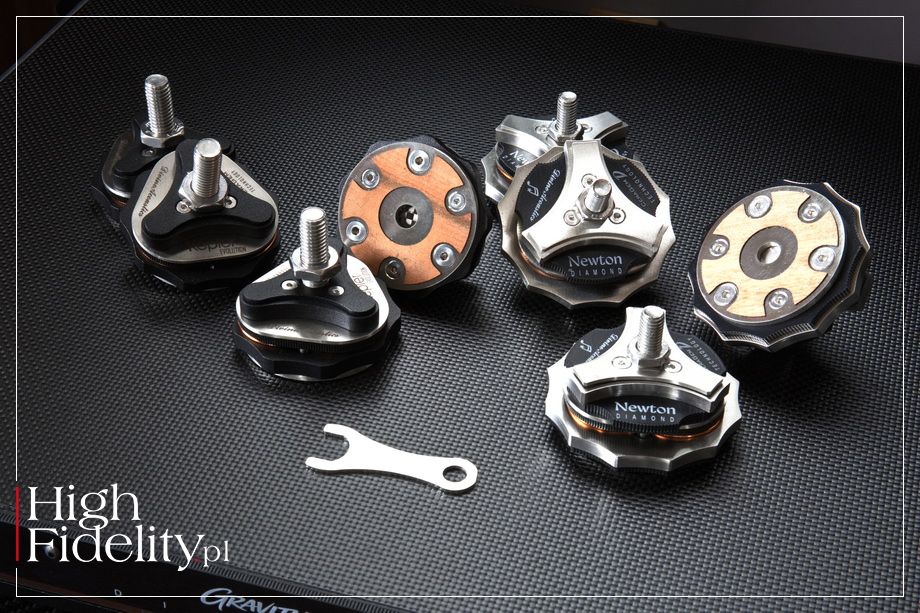
The Gravity Diamond platform is a special product. Not only is it attractive, and not only is it superbly -even perfectionistically - crafted, and it changes the sound in a way that even the company’s large feet cannot. It acts like a focusing lens, by cleaning up the attack and decay and improving resolution. It’s not that we hear more details, but that we hear more of everything. Adding the Newton Diamond feet to it boosts the lower midrange and smooths out the sound even further; the sound is smooth on its own with just the platform on the Keplers, but with the “diamond” feet, it has something special - a sort of “fourth dimension.” The sound from the Supreme version of the platform is richer, deeper, and more saturated. But the basic Gravity Diamond version is like that too; the Newton Diamond feet simply improve this and that. The platform is, after all, an exceptional product, truly a thoroughbred high-end piece. From us, with great satisfaction, a well-deserved ˻ RED FINGERPRINT ˺. ‖ WP 
THIS TEST HAS BEEN DESIGNED ACCORDING TO THE GUIDELINES adopted by the Association of International Audiophile Publications, an international audio press association concerned with ethical and professional standards in our industry, of which HIGH FIDELITY is a founding member. More about the association and its constituent titles → HERE. |
 |



|
Reference system 2026 |
|
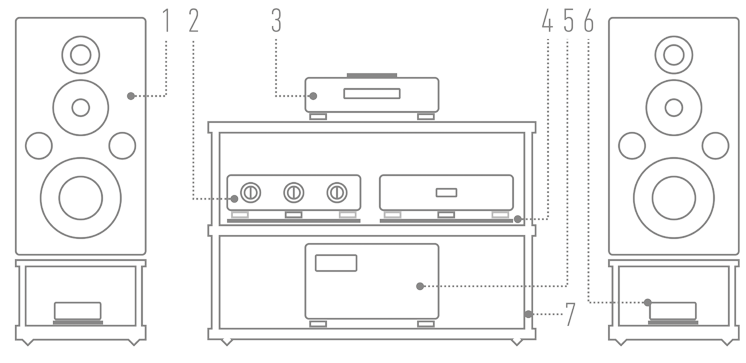 1) Loudspeakers: HARBETH M40.1 |REVIEW| 2) Line preamplifier: AYON AUDIO Spheris III Linestage |REVIEW| 3) Super Audio CD Player: AYON AUDIO CD-35 HF Edition No. 01/50 |REVIEW| 4) Stands (loudspeakers): ACOUSTIC REVIVE (custom) |ABOUT| 5) Power amplifier: SOULUTION 710 6) Loudspeaker filter: SPEC REAL-SOUND PROCESSOR RSP-AZ9EX (prototype) |REVIEW| 7) Hi-Fi rack: Hi-Fi rack: finite elemente MASTER REFERENCE PAGODE EDITION Mk II, more → HERE |
|

|
Cables Analog interconnect SACD Player - Line preamplifier: SILTECH Triple Crown (1 m) |ABOUT|» ANALOG INTERCONNECT Line preamplifier → Power amplifier: Siltech ROYAL SINLGE CROWN RCA; review → HERE Speaker cable: SILTECH Triple Crown (2.5 m) |ABOUT| |

|
AC Power Power cable | Mains Power Distribution Block - SACD Player: SILTECH Triple CrownPower (2 m) |ARTICLE| » POWER CABLE Mains Power Distribution Block → Line preamplifier: Acoustic Revive ABSOLUTE-POWER CORD, review → HERE » POWER CABLE Mains Power Distribution Block → Power amplifier: Acoustic Revive ABSOLUTE-POWER CORD, review → HERE Power cable | Power Receptacle - Mains Power Distribution Block: ACROLINK Mexcel 7N-PC9500 (2 m) |ARTICLE| Power Receptacle: Acoustic Revive RTP-4eu ULTIMATE |REVIEW| » ANTI-VIBRATION PLATFORM under Acoustic Revive RTP-4eu ULTIMATE: Graphite Audio CLASSIC 100 ULTRA, review → HERE Power Supply Conditioner: Acoustic Revive RPC-1 |REVIEW| Power Supply Conditioner: Acoustic Revive RAS-14 Triple-C |REVIEW| Passive filter EMI/RFI: VERICTUM Block |REVIEW| |

|
Anti-vibration Speaker stands: ACOUSTIC REVIVE (custom)Hi-Fi rack: finite elemente MASTER REFERENCE PAGODE EDITION Mk II, more → HERE Anti-vibration platforms: ACOUSTIC REVIVE RAF-48H |ARTICLE| » ANTI-VIBRATIONAL FEET: |

|
Analogue Phono preamplifier: Phono cartridges:
Clamp: PATHE WINGS Titanium PW-Ti 770 | Limited Edition Record mats:
|

|
Headphones » HEADPHONE AMPLIFIER: Leben CS-600X, review → HEREHeadphones: Headphone Cables: Forza AudioWorks NOIR HYBRID HPC |