


|
INTEGRATED AMPLIFIER SPEC
Manufacturer: SPEC CORPORATION |

 |
 |
 |
|
Review
text by WOJCIECH PACUŁA |

|
No 265 June 1, 2026 |
SPEC (San-ei Power Electronics Company) is one of those Japanese companies I have a personal connection with. I know and respect its engineers; I know and respect their products; I’ve been testing them for years; and I’ve been using the Real-Sound Processor - a circuit that minimizes the back-EMF of the speakers - in my system for a long time as well. It may seem like nothing, just a “little box,” but I can’t do without it (them, as there is one for each loudspeaker). My respect stems from the fact that these are excellent devices, offering a sound that - in my opinion - high-end products should be characterized by, for one thing. And secondly, SPEC is an example of how a company founded and run by “mainstream” engineers (TEAC, Pioneer) has translated their technical expertise into sound. They did so fully aware of the difficulties involved. Thus, they incorporated their “credo” into the names of their devices: Designer Audio, since these are not mass-produced products, but rather handcrafted ones, and RSA (Real Sound Amplifier), which speaks to their purpose. 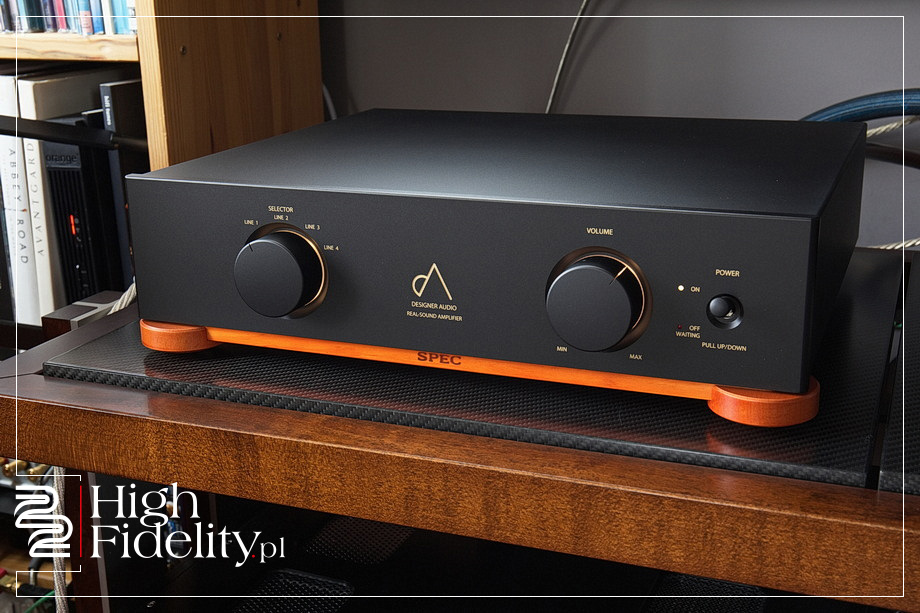
Their idea was technically very sound, though in the audio world it was fraught with many question marks - Class D amplifiers. An idea, let’s add, quite daring, considering that everyone at SPEC is a fan of tube amplifiers. Their products were meant to be, as I heard from them many times, a translation of the sound of esoteric, one-off devices into amplifiers that could be sold and didn’t cost a fortune; more about the company’s beginnings in the article My Personal Audio History → HERE. We can discover the latest chapter in this story by listening to the RSA-BW1EX integrated amplifier. ▓ RSA-BW1EX LIKE MANY OTHER JAPANESE AUDIO COMPANIES, SPEC has separate product lines for the domestic market and the international market. This is simply because they are typically small manufacturers that cannot afford to have their products certified in every country. A “domestic” certification is much cheaper, which is why more models from a given company are offered in Japan. The same goes for SPEC. First, a product is launched in Japan, and later, if the company decides to do so, an overseas version is developed. Interestingly, they differ from one another in details, namely in the selection of components and sound. The point is - and I’ve heard this from several companies - that audiophiles from Europe or the US have a slightly different “tuning” of sensitivity to high frequencies. In short, devices for export must be more refined in this regard. I don’t know if that’s true, but the fact is that the devices do differ from one another. ▲ A few simple words… BANNO TSUTOMU SPEC’S CORE PHILOSOPHY is the belief that “live performances are the most musical.” The RPA-MG1000 and RPA-EX1000 models best embody this philosophy. However, the sound of an audio system is based on personal preferences. These preferences may also vary by region. Although our company focuses on realistic sound (live sound), within this framework, we also seek sounds that are pleasant to the human ear. 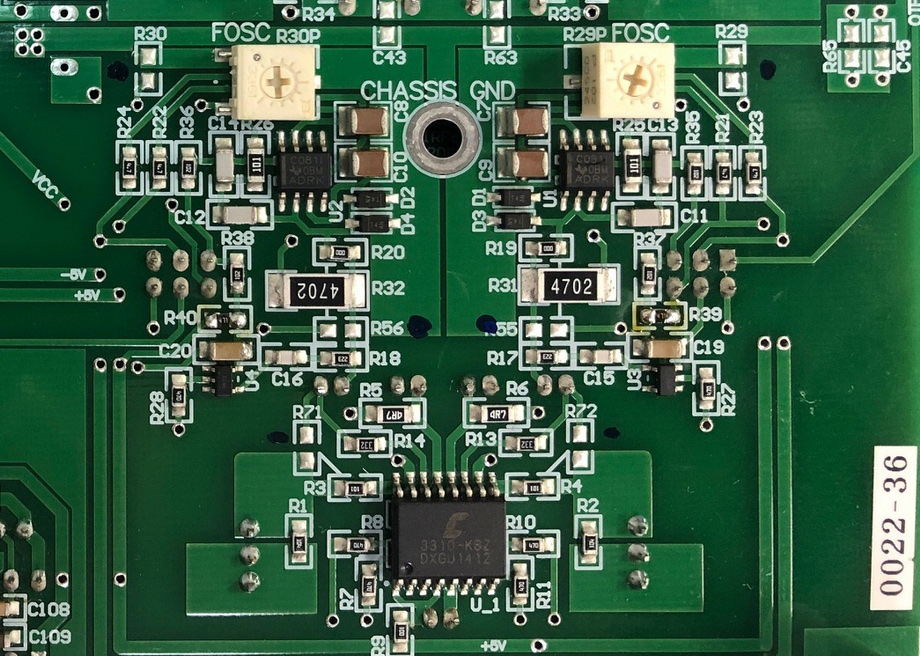
‖ Volume control section • photo courtesy of SPEC/原澤 直希 The Japanese BW1 version features a distinctive sound tailored to Japanese preferences, with a rich tone enhanced to achieve a “realistic” sound. The BW1EX model is designed to deliver a more energetic sound while maintaining our realistic tone. It is not tuned as heavily as the Japanese version. 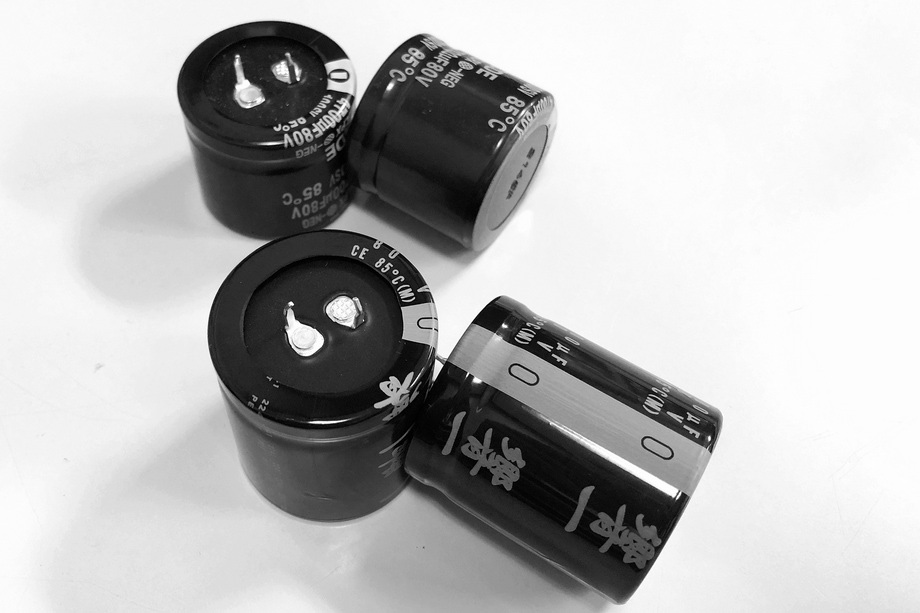
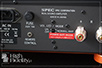
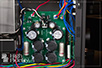
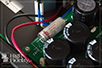
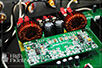
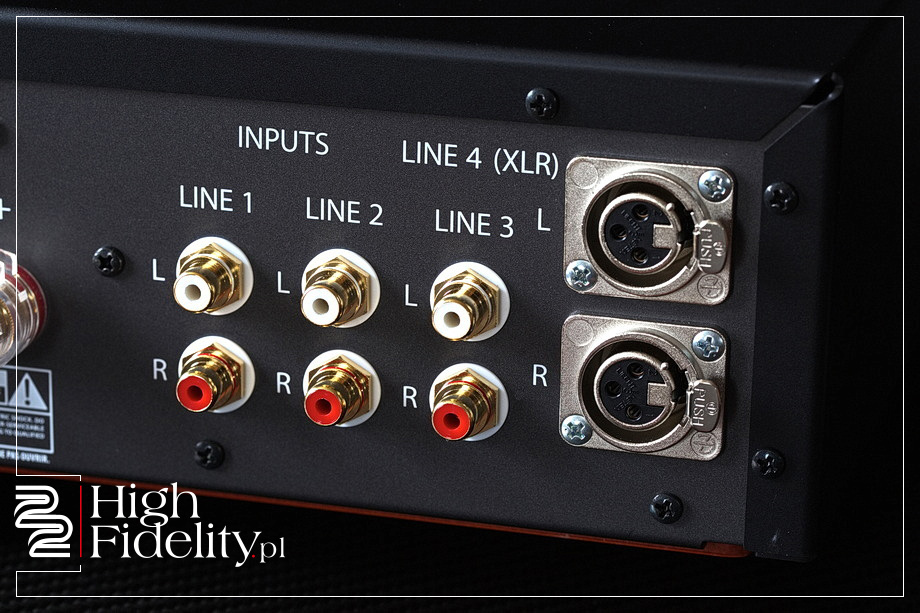
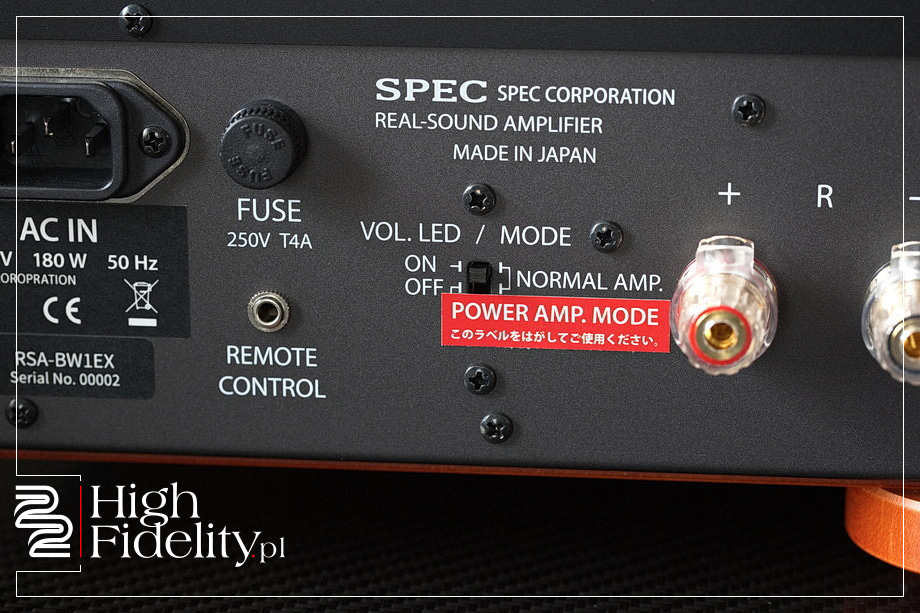
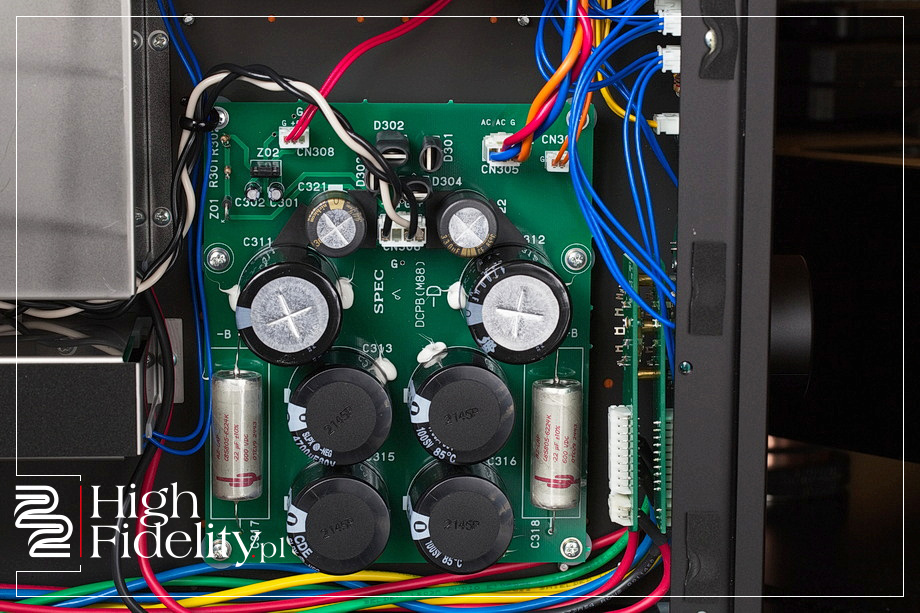
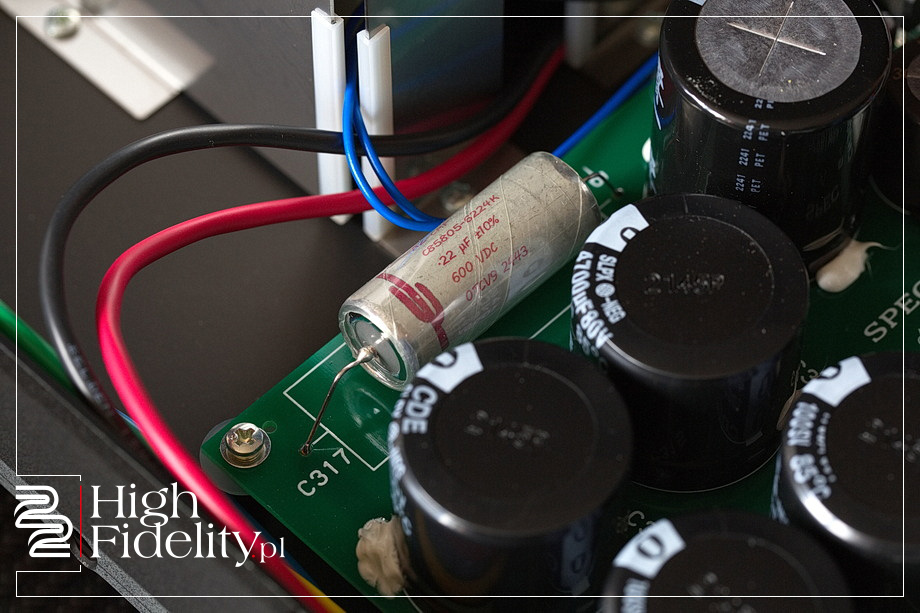
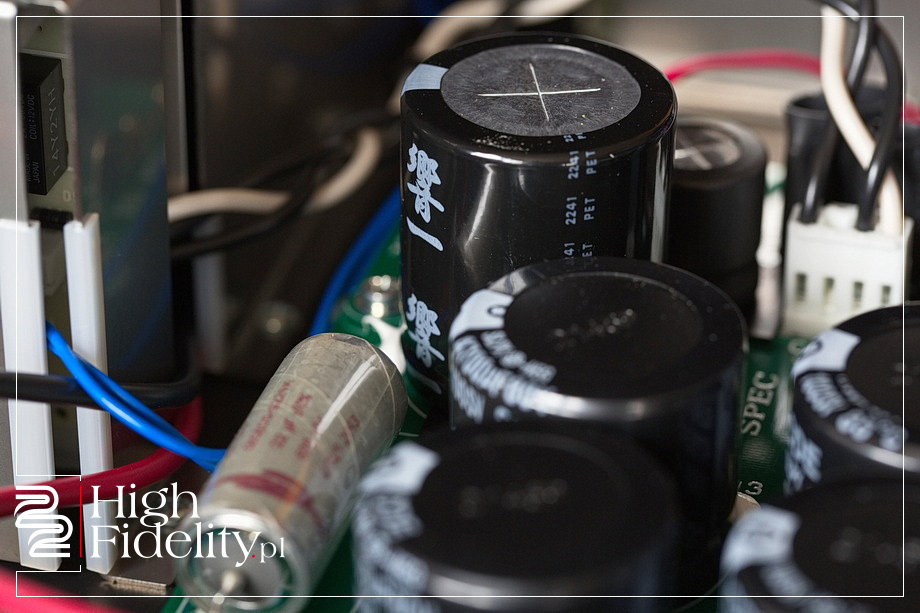
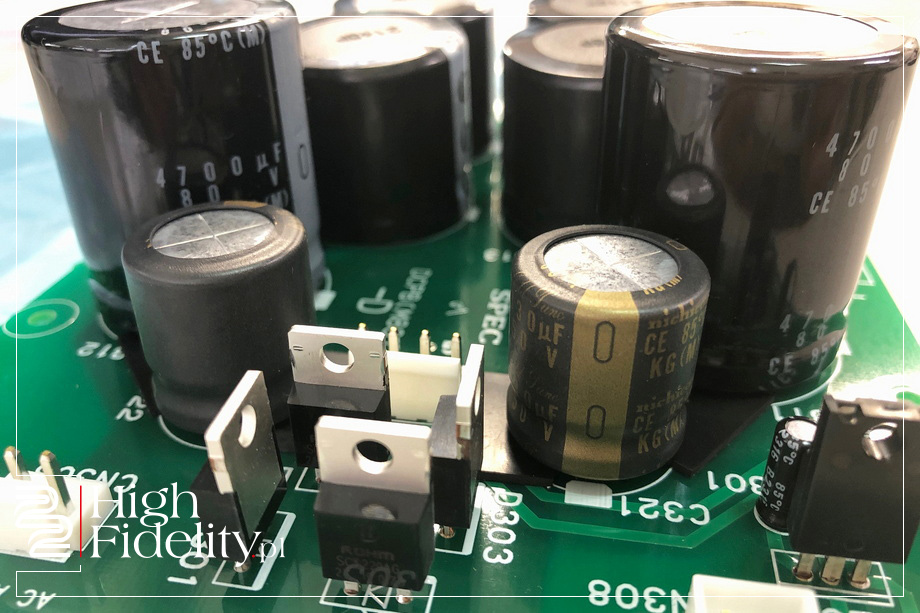
‖ The smoothing capacitor consists of a combination of the Cornell Dubilier and HIBIKIICHI models • Photo courtesy of SPEC/原澤 直希 These changes result from various combinations of capacitors in the output filter; however, the most important components in the BW1EX are the smoothing capacitors, which consist of Cornell Dubilier and HIBIKI-ICHI electrolytic capacitors. The smoothing capacitors are located downstream of the rectifier circuit, and the rectifier diodes are SiC diodes from ROHM. ‖ BT THE RSA-BW1EX amplifier was only recently released; it’s a new model. But only this version - the one with “EX” at the end of the model number (EX = Export). The model intended for Japan was unveiled as early as 2021. They do not differ in terms of the usual measurable parameters, appearance, or functionality, but they offer a slightly different sound. The tested amplifier is - unless I’m mistaken - the manufacturer’s entry-level amplifier. An entry-level model, yet one that benefits from all of its technologies. The fact is that SPEC amplifiers are extremely similar on the inside, with nearly identical architecture, but differ in output power, the components used, and functionality. FEATURES • The RSA-BW1EX is a stereo, solid-state integrated amplifier, operating in analog Class D. This distinction - analog vs. digital - is important. Contrary to popular belief, Class D amplifiers can be either a digital or an analog design. The former operate at precisely selected levels and feature negative feedback; they are usually integrated with the power supply. The amplifier offers considerable output, 50 W at 8 Ω, but rising to 100 W at 4 Ω. This means that the power supply has high current efficiency and that the device should handle sudden power surges well. SPEC is an extremely conservative company - class aside - when it comes to device features. The amplifier under review therefore, offers only line inputs, with no line outputs or a headphone amplifier. As for a build-in DAC and phono preamp - forget about it. On the front panel, made of black anodized aluminum, there are only two knobs: one for selecting the input and one for adjusting the volume. They are large in diameter and easy to use. Surrounding them is a discreet orange-and-white backlight. Previous generations of its amplifiers used blue LEDs in the name of “modernity,” but that has changed. I don’t usually like such design elements, but SPEC actually pulled this off really well. The intention was to emphasize warmth, which is why the description uses the term “warm yellow ring.” There are only four line inputs: three RCA jacks and one XLR; the device is an unbalanced design. On the back, there is another switch, the LED Vol/Mode. It has three positions, one of which is taped over. Using it, you can adjust the brightness of the backlighting for the volume and input selection knobs or switch the amplifier from integrated to power mode without volume control. In POWER AMP mode, the volume control knob is disabled, and the volume is set to a fixed level of approximately 20 dB. 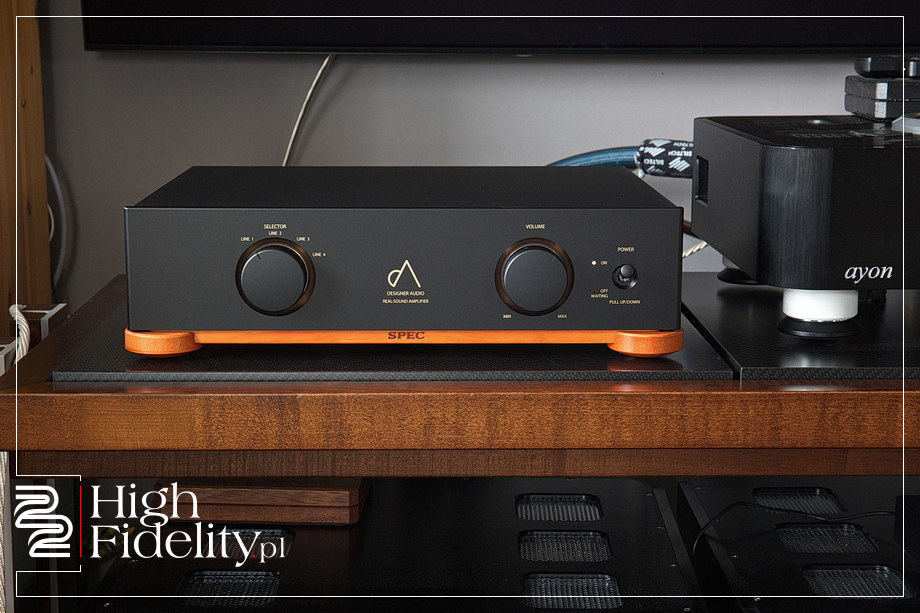
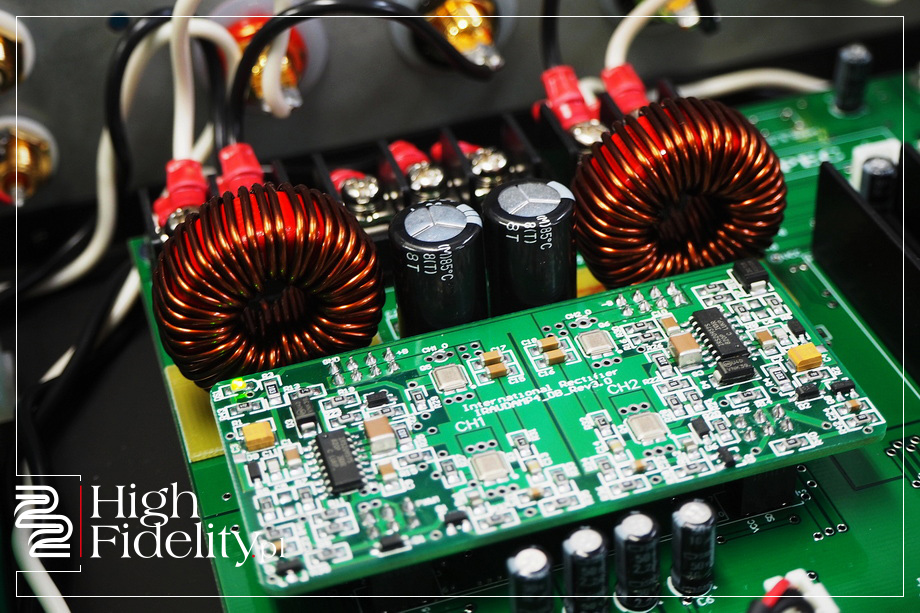
And then there is the matter of control. This is also characteristic of this manufacturer - they have moved the controls to the outside, citing the noise generated by the circuits that support such systems. This is important because minimizing and limiting noise are extremely important to SPEC. We therefore purchase the amplifier without external controls (remote control). We have only the two aforementioned knobs at our disposal. For an additional fee, however, we can purchase an external infrared receiver, which we connect to the amplifier via a cable; the set also includes an aluminum remote control. This system is called the RSR-11. TECHNOLOGY • As we already mentioned, all devices from this Japanese company share the same solutions and components. The RSA-BW1EX follows this pattern. At the heart of the device there is a proprietary PWM modulator, developed in collaboration with International Rectifier, model IRAUDAMP4 DB. The analog input signal is fed into it, and modulated pulses are output. It was developed jointly by Mr. Shirokazu Yazaki (the first chief engineer) and his friend, an engineer at International Rectifier, Mr. Honda (a younger colleague from Pioneer). It controls the FETs operating in a bridge configuration. These transistors are tiny, which - as the company notes - is an advantage. They do not heat up, so their thermal drift is negligible, and surface-mount technology eliminates the need for additional leads. In the company’s materials (though on the Japanese website), we read:
At the heart of this Class D analog amplifier is a high-efficiency FET transistor that consumes only about 1% of the electrical power and generates almost no heat. This small transistor directly controls the high power supplied by a large power transformer based on a delicate analog music signal, converting it into musical energy.
It is precisely thanks to the simple circuit with a short signal path and the virtually heat-free Class D analog amplifier that it has been possible to avoid the high-temperature distortion characteristic of traditional transistor amplifiers and achieve a fast and clean sound. ⸜ Real Sound RSA-BW1, → www.SPEC-CORP.co.jp, accessed: 15.04.2026. The output of Class D amplifiers must include an analog low-pass filter (reconstruction filter), consisting of two components: an inductor and a capacitor. As emphasized in the technical documentation, this is a particularly sensitive part of the design, and it is on this component that engineers spend the most time listening to music. SPEC uses sophisticated oil capacitors from Arizona Capacitors. These are exact replicas of the WEST-CAP CPV09 0.47 μF/600 V “Hermetic-seal” capacitors, originally manufactured for the U.S. military in 1967. It combines them with other capacitors - in the tested model, polypropylene and mica ones. The company calls this process “blending.” The power amplifier receives a signal from the input selector. In the circuit used by the company, which it has named Pure Direct, the signal level is adjusted directly before the power stage, so that “the musical signal, which arrives at maximum level, is regulated by this attenuator based on the volume control signal,” and then amplified by the transistors in the power stage:
In typical integrated amplifiers, the music signal is fed to the power amplifier section at a significantly reduced level, in accordance with the volume control setting. As a result, the level of even the faintest signals - which determine the music’s detail - is reduced, which can lead to the loss of subtle signal components during transmission.
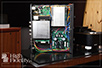
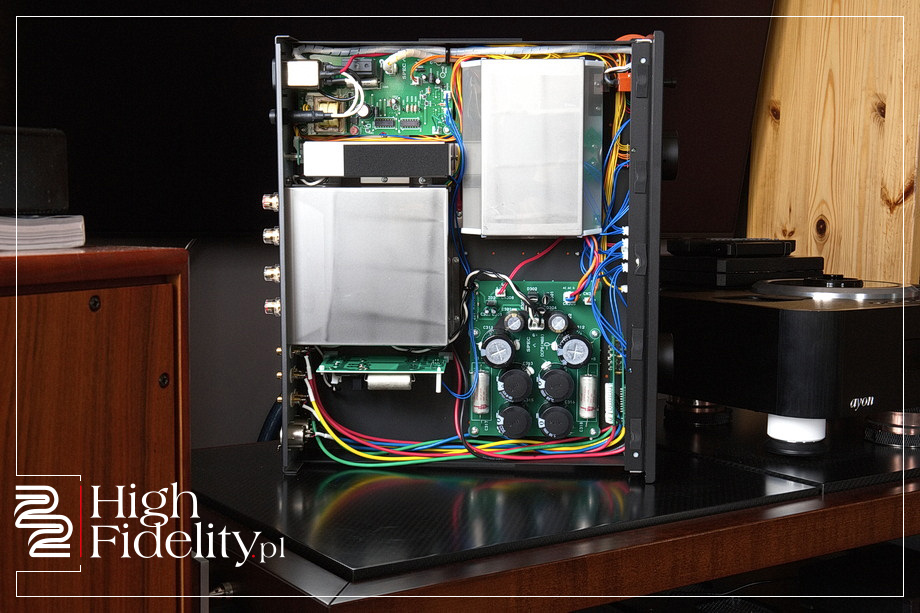
In the Pure Direct system, the music signal is sent to the power amplifier section at maximum level, allowing it to be transmitted and amplified without losing these subtle signals, while also controlling the speakers. It is precisely these subtle signals that play a key role in conveying the sound’s tonal character. When you try to lift the amplifier, you’ll find it’s really heavy - unlike most Class D amplifiers. This is due to its solid chassis and power supply. The power supply is linear, featuring a powerful R-core transformer. It works in conjunction with an elaborate power supply that utilizes several different types of capacitors connected in parallel. These include Arizona Capacitors oil capacitors, which were mentioned in connection with the output filter, as well as the rarely seen Nichicon “Hibikiichi” series electrolytic capacitors. The individual modules inside the amplifier are shielded, each separately. Circuits operating at high frequencies -as Class D does - generate a lot of noise, hence the need to minimize it. But they are also extremely sensitive to vibrations. That is why the design of the chassis is one of the most important issues for SPEC. 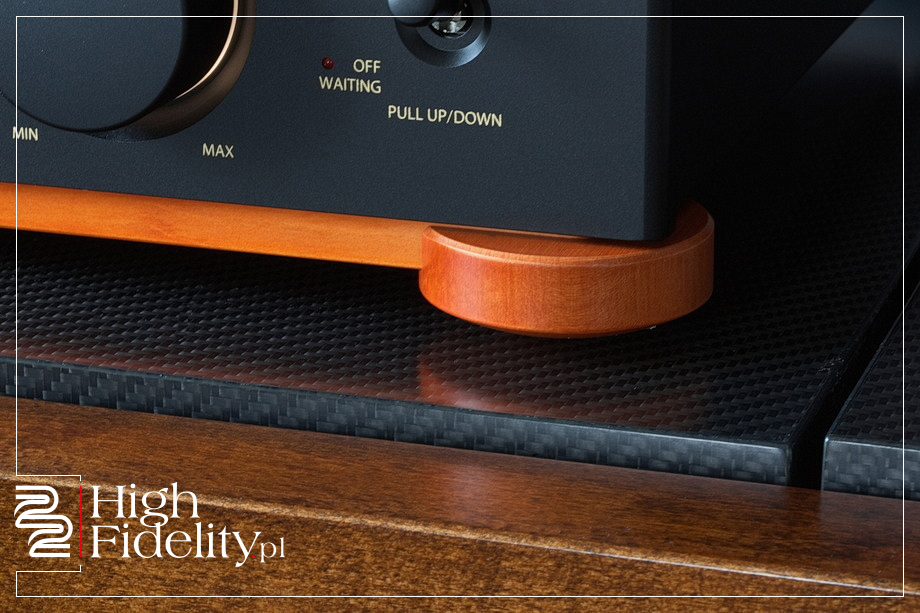
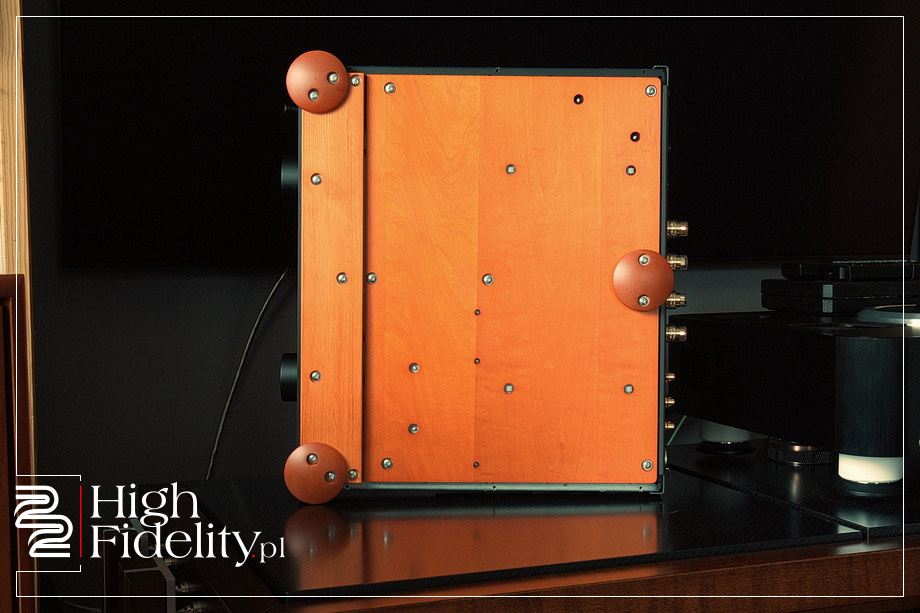
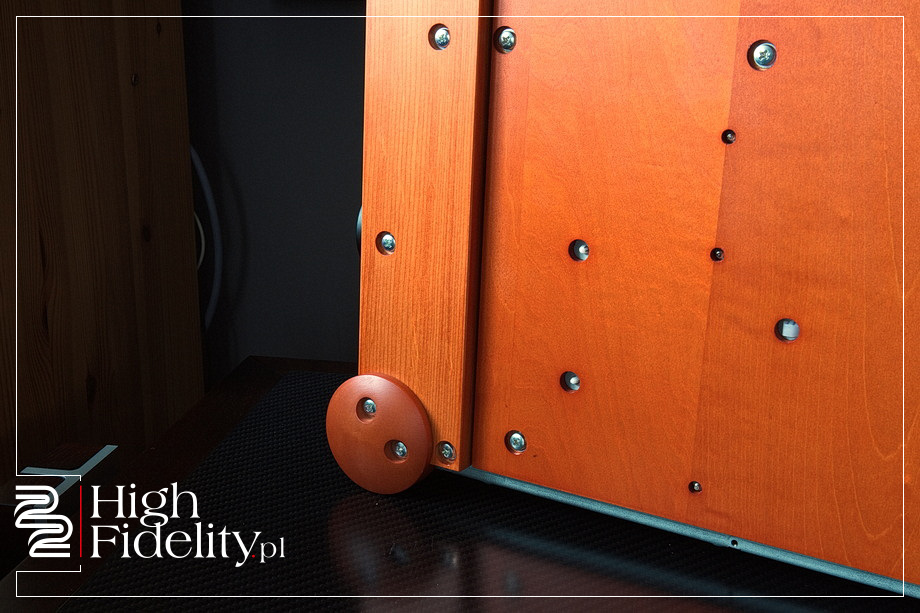
The main body is made of thick steel plates. In some of the more expensive models, these are sometimes replaced with aluminum plates. However, a vibration-minimizing system has been installed on the bottom, which is, in fact, an anti-vibration platform. It is made of three wooden elements: a main plate, a thicker beam at the front, and three feet. We read:
The base, crafted from a combination of different types of wood and integrated into the enclosure, delivers a rich and natural sound. During the amplifier’s design phase, we test various combinations of wood types - softwood, hardwood, wood with long damping times, vibration-absorbing wood, and wood with different resonance points - to achieve the desired sound. The spruce and maple we use are the same woods used to make the front and back plates of violins, which vibrate in response to the musical signal, producing a beautiful sound.
Maple was used to make the three wooden feet that support the chassis, and their contact points with the floor are spherical, allowing the entire cabinet to rest on three single points. The other two components are made of spruce. The wood is prepared by Oak Village, a Japanese manufacturer of furniture, wooden toys, and items such as barrels for the wine industry. ▓ SOUND HOW WE LISTENED • THE SPEC amplifier was tested in the HIGH FIDELITY reference system and was compared to a two-box system consisting of the Ayon Audio Spheris Evo tube preamplifier and the Soulution 710 solid-state power amplifier. The SPEC was placed on a Finite Elemente Master Reference Pagode Edition Mk II rack. 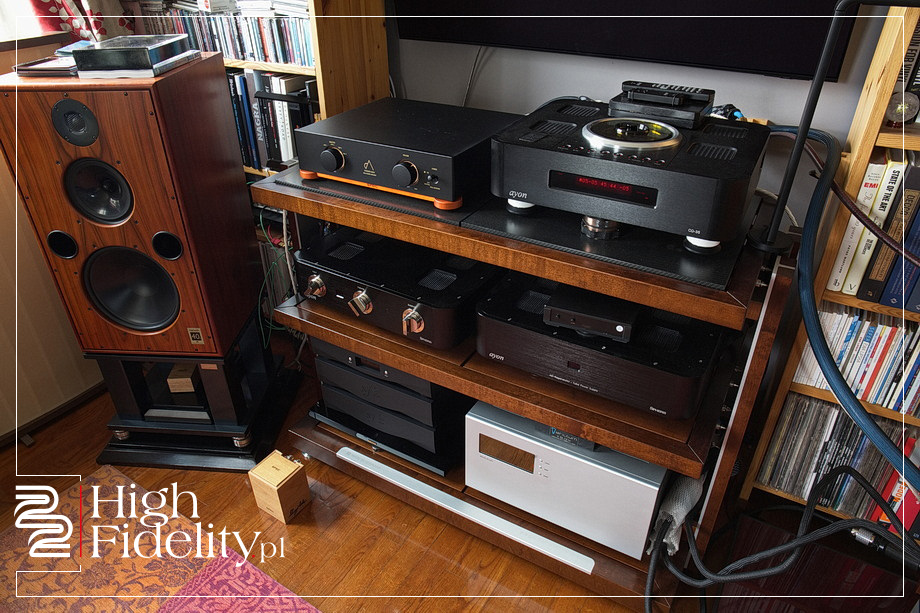
For the listening session, I used the Ayon Audio CD-35 HF SACD player. The line signal was transmitted via Crystal Cable Absolute Dream RCA interconnects. |
The amplifier was connected to the Harbeth M40.1 speakers using Art Series Da Vinci cables from the same manufacturer. The amplifier was powered using an Acrolink Mexcel 7N-PC9500 power cable. The system also included SPEC RSP-901EX speaker filters, which the manufacturer describes as a “Real-Sound Processor.” » RECORDINGS USED FOR THE TEST ⸜ a selection
• THE ALAN PARSONS PROJECT, Eye in the sky, Arista/Mobile Fidelity Sound Lab UDSACD 2 2221, Limited Edition № 7036, SACD/CD ⸜ 1971/2021. I DON'T KNOW EXACTLY WHERE this comes from, but among the products we’ve tested, there are some that I perceive differently than the readers of “High Fidelity” do. A reasonable explanation is to point to differences in taste - I like different things than you do; that’s clear. However, this seems like a weak argument to me, because there is, after all, such a thing as a consensus regarding the fundamental characteristics of sound - the way it “should be.” 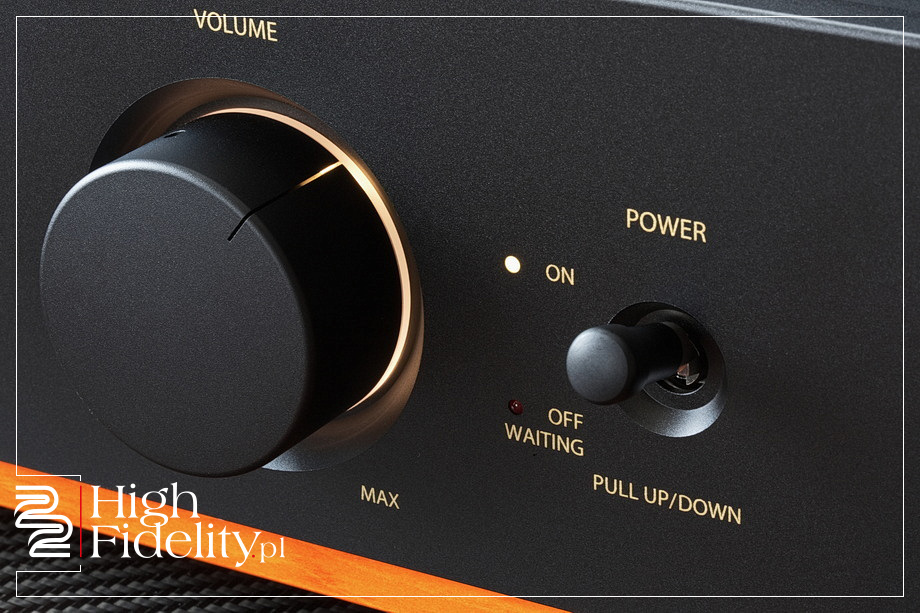
The second clue is differences in systems. It’s true that sometimes even a small change at the input leads to significant differences at the output. That is why, in every test, we present a reference system and describe how the test was conducted. This is meant to help readers understand the conditions under which the article was written. But that isn’t the whole answer either. The third reason for the discrepancies may, in my opinion, be differences in expectations. That is why, when I read in your emails - not often, but it happens - that the SPEC amplifier sounded “bright,” I immediately think: “Aha! Something’s off with the system, or it needs adjustment.” For in my opinion, this company’s amplifiers are far removed from brightness, just as brightness is from light, or good from evil, to stick with biblical language. At the same time, these opposites have much in common, entering into a dialogue and being inextricably linked. The thing is, when we play any track through a SPEC amplifier - in this case, the RSA-BW1EX - we get the impression of being fully immersed in the depth of the sound. I get a similar feeling when I turn on a tube amplifier with a warm and rich sound - I recently experienced this with the Audio Research i/70; review → HERE ˻PL˺. It’s not quite the “old” tube sound, but there are still elements that give the sound great volume, make it non-fatiguing, and provide very nice tonal colors. The amplifier under review sounds exactly like that - on the one hand tube-like, and on the other dynamic. The technology developed by SPEC is all about speed, dynamics, and warm tones. When Eric Woolfson sings “Don’t say words you’re gonna regret / Don’t let the fire rush to your head” in the second verse of ˻ 1 ˺ Eye in the sky, the title track from THE ALAN PARSONS PROJECT album, it’s both at the front of the stage, close to me, but it’s also slightly rounded, not very distinct. That’s why one might get the impression that it’s simply about warmth. But that is not the case. Let’s listen to ˻ 1 ˺ Silence And I and after the melancholic intro, we reach a fast, dynamic section, which the SPEC will reproduce with good pace and clearly. Still, not in a particularly selective way. This is a device with fantastic dynamics that starts up quickly and fades out the impulse just as fast, but without defining the attack or providing a clear outline. This creates a sense of control over the speakers, and yet Harbeths are not the kind of designs that would let just anyone (or anything) boss them around. As I mentioned, the amplifier from Japan brings the sound closer. The applause at the beginning of the album by KENNY BURRELL and ART BLAKEY On View At The Five Spot Cafe: The Complete Masters, just like the intro, felt right there - it was very tangible. The amplifier achieves this by boosting the lower midrange, rather than projecting the sound forward beyond the line connecting the speakers. It adds weight to the sound, so that both the drums and the saxophone, positioned in the right channel, had a distinct character of their own and a substantial presence. As I said, this isn’t about shifting the phantom images toward us. It’s more about boosting them where they are, in the exact spot where they were placed during the mix. The impression is strong, though - an impression of the instruments’ “presence,” almost a “wow!” moment that arises when we use this amplifier in a good system that works well with it. So the sound is boosted, and the bodies of instruments are large and tangible. At the same time, however, as I’ve already noted, the Japanese amplifier defines dynamics superbly. And it is this aspect, I believe, that results in a sound that seems warm but is actually internally differentiated. Warmth and “tube-like” character, in the stereotypical sense, are, after all, almost automatically associated with a blurring of differences, with homogeneity. The SPEC RSA-BW1EX is completely different in this respect. This is precisely where I would look for the differences between preconceptions about Class D and what SPEC has managed to achieve in its designs. From the very beginning, starting in 2010, these were intended to be equivalents of SET-type tube amplifiers, but with higher dynamics and current capabilities that even powerful amplifiers with tubes in the output state, that listeners would find perplexing. That’s why I wasn’t surprised when I heard how beautifully the reviewed amplifier differentiates low frequencies and how lovely their timbre is. The drums and bass on Parsons’ album, the double bass on the live recording from the Five Spot Cafe, recorded in 1960, and the acoustic guitar accompanying JONI MITCHELL in ˻ 1 ˺ All I Want, the opening track of her 1971 album Blue, all these instruments had a soft attack, but also the depth we usually expect from sophisticated products. Also, the bongos heard coming from the back, to the left of the singer, were given more weight and “richness.” 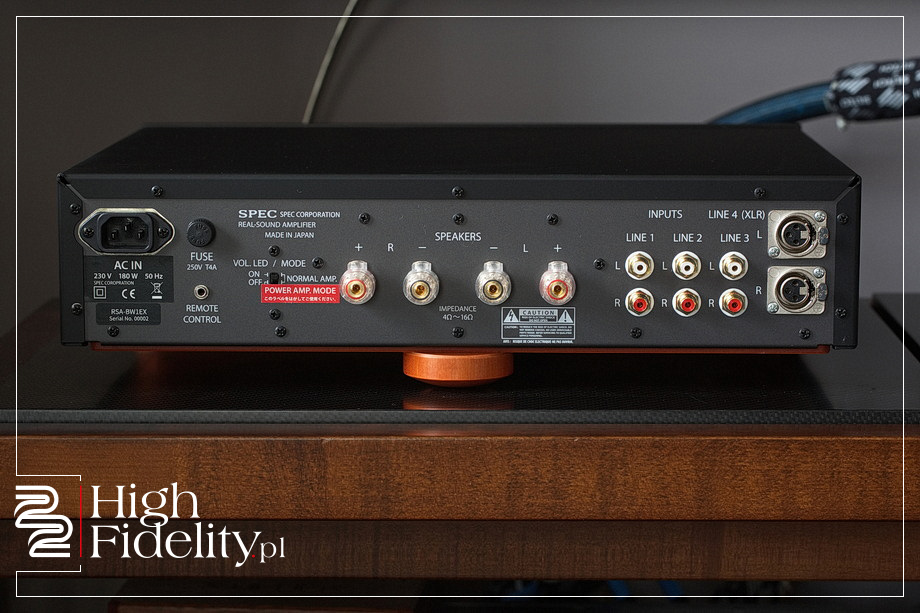
The sound, as a whole, remained clear, however. This is a brightly recorded album and quite brightly remastered, at least as far as the artist’s guitar is concerned. The amplifier did not alter this. And maybe that’s the point, sometimes, but it happens when readers write about the “bright” sound of the SPEC amplifier. The fact is that it’s simply credible and conveys the recording’s truth. If it’s bright, it sounds bright; if it’s dark, it sounds dark. However, it never brightens anything up; there are no “spikes” in it that make us grimace in disgust and reach for the remote to turn it down. ▲ Micro-review SPEC Price (when reviewed): 788 EUR
THE REAL-SOUND PROCESSOR, or RSP for short (as indicated in the name), is a circuit composed of capacitors, resistors, and inductors designed to minimize back-EMF generated by the woofer’s drive system. It was developed by SPEC during its design work on its own version of a Class D amplifier. Its purpose was to improve the amplifier’s control over the speakers, i.e., to ensure a more precise start and stop of the diaphragm. The components were enclosed in a wooden box with speaker terminals routed to the outside, which are connected in parallel to the speaker terminals of the speakers or the amplifier. They can be connected simultaneously in both locations. Regarding the latest, and also smallest, version, the manufacturer writes: The Real Sound Processor absorbs some of the electromotive force generated by the driver, making the diaphragm’s movement more ideal. As a result, the finest details are reproduced with extraordinary precision, creating a realistic musical space, as if a veil had been lifted. 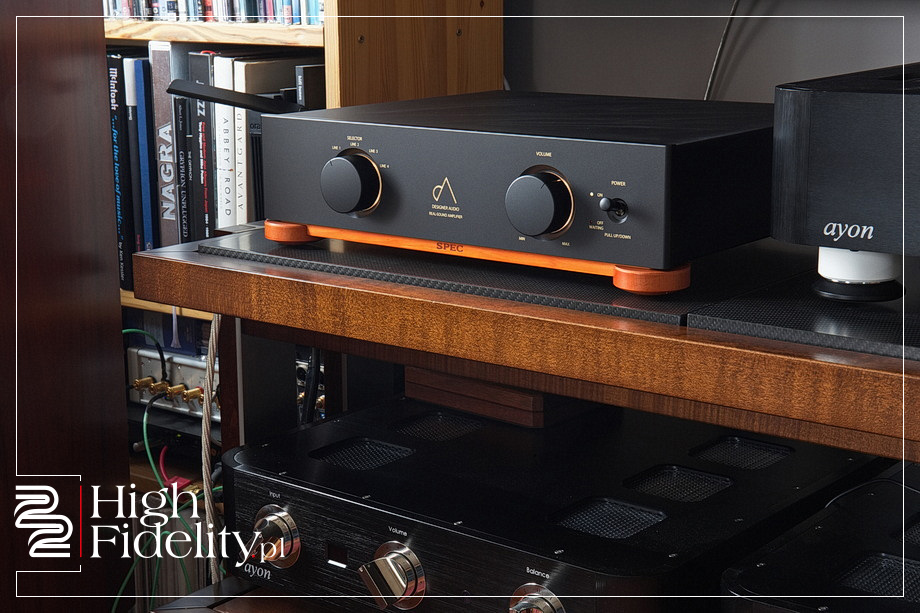
The “55E” model features only two components: a 0.68 μF polypropylene capacitor and a 5 W miniature molded resistor. They are housed in a small spruce wood enclosure. The manufacturer notes that this material is also used in the production of stringed instruments and “is characterized by excellent resonant properties.” And further: Spruce is a source of beautiful tonal colors. At the same time, spruce wood enhances the bass, ensuring a pleasant sound in the lower frequencies. On the other hand, the polypropylene capacitor is characterized by a very natural sound and faithfully reproduces the original sound. The polypropylene capacitor harmonizes with the spruce, enriching the musical expression. Recommended for those who prefer a realistic sound and natural spaciousness. The “mini” version of the Real-Sound Processor sounds darker than the full-size, two-module RSP-W1E version. It is also not as transparent, and the sound is projected closer to us. The differences are clear; let’s not kid ourselves. However, it is also true that this is exactly the direction our system, our amplifier, is heading when we help it by minimizing the back-EMF generated by the woofer’s drive system. The sound without them in the system is great, provided it is good on its own. However, I cannot ignore the fact that whenever I add the RSPs to the system, I hear “more” sounds. 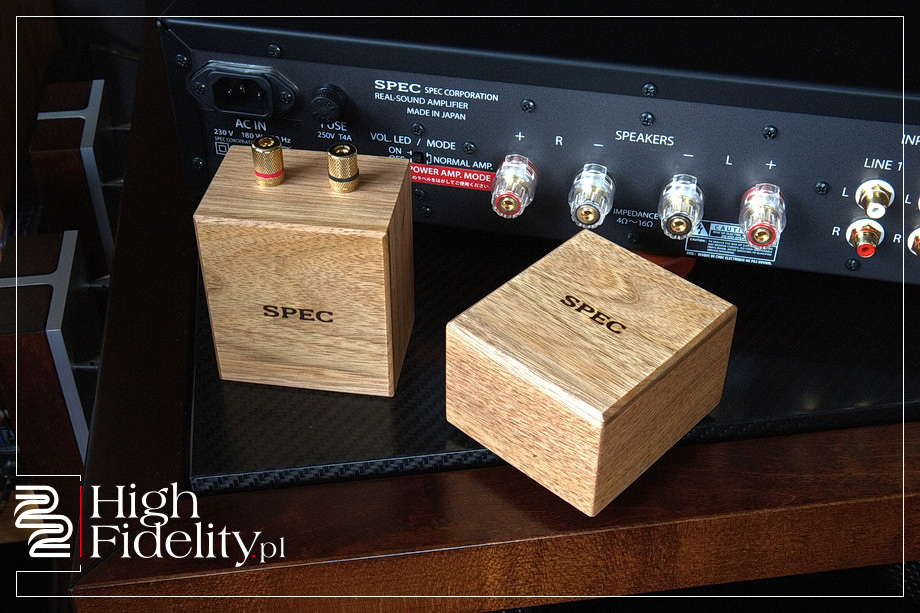
The same goes for the RSP-55EX. Without them, the system’s sound became slightly flat and “lifeless.” It wasn’t much of a difference; after a while, I got used to it, and I could have sworn everything was fine. However, all it took was connecting the filter to the speaker terminals to restore the fullness and density that were there before. You’ll hear this in any system, with any amplifier. The difference will be greatest, however, with tube designs and Class D amplifiers. ● ▒ Summary THIS JAPANESE AMPLIFIER delivers a sound that blends “tube warmth” with dynamics, warmth with openness, and richness with clarity. At first glance, the sound may not seem very selective, but once we get used to it, it opens a window, revealing a wealth of interesting details. Details that let us enjoy the music and listen to it without pressure, without an agenda. The RSA-BW1EX is a device that works wonderfully with “BBC-style” speakers. But not only those. I have the impression that many other designs will come to life with it. Its rated power is only fifty watts, but at a 4 Ω load it’s already a hundred, which means its current capabilities are better than those of many significantly more powerful - again, nominally - devices. 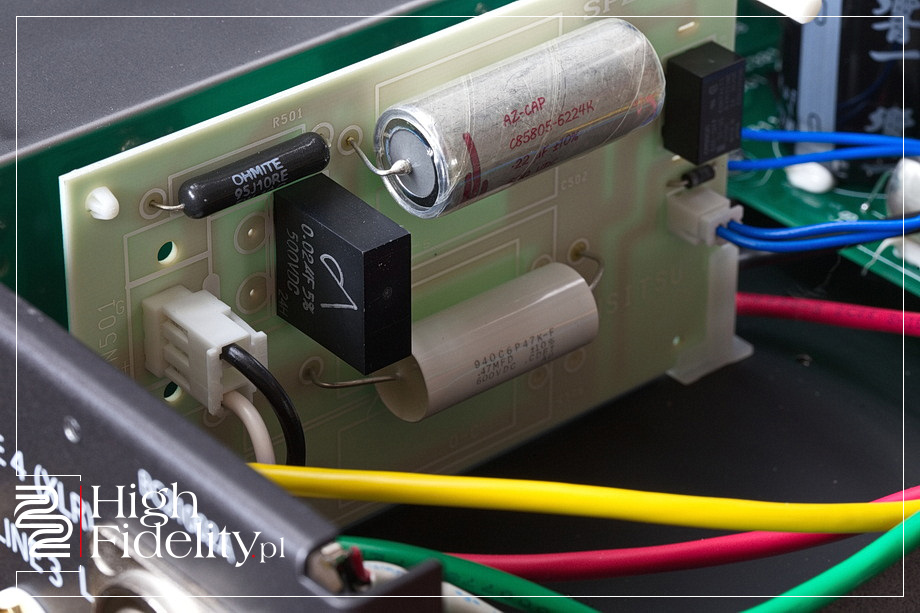
That is why, at the very end of the test, while listening to the incredible version of Kind of Blue, the MILES DAVIS album released by Audionautes Recordings on a Crystal Disc, I could not help but think of it as a modern version of the Naim The One amplifier. The little gem that defined perfectionist audio for years, has thus found a worthy successor. And a significantly better successor at that. A magnificent amplifier! ‖ WP ▒ Technical specifications (acc. to the manufacturer):
Maximum output: 2×100 W / 4 Ω, 2×75 W / 6 Ω, 2×50 W / 8 Ω 
THIS TEST HAS BEEN DESIGNED ACCORDING TO THE GUIDELINES adopted by the Association of International Audiophile Publications, an international audio press association concerned with ethical and professional standards in our industry, of which HIGH FIDELITY is a founding member. More about the association and its constituent titles → HERE. |
 |



|
Reference system 2026 |
|
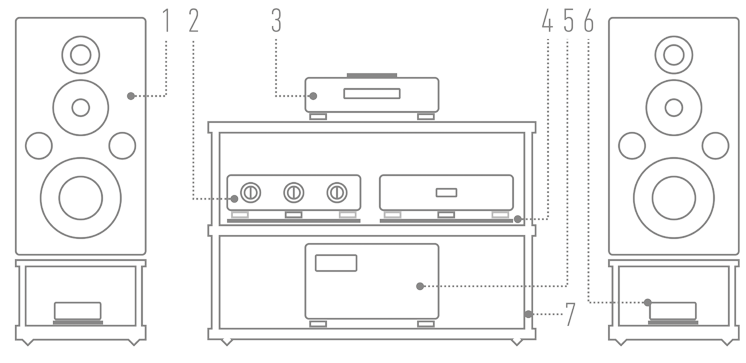 1) Loudspeakers: HARBETH M40.1 |REVIEW| 2) Line preamplifier: AYON AUDIO Spheris III Linestage |REVIEW| 3) Super Audio CD Player: AYON AUDIO CD-35 HF Edition No. 01/50 |REVIEW| 4) Stands (loudspeakers): ACOUSTIC REVIVE (custom) |ABOUT| 5) Power amplifier: SOULUTION 710 6) Loudspeaker filter: SPEC REAL-SOUND PROCESSOR RSP-AZ9EX (prototype) |REVIEW| 7) Hi-Fi rack: Hi-Fi rack: finite elemente MASTER REFERENCE PAGODE EDITION Mk II, more → HERE |
|

|
Cables Analog interconnect SACD Player - Line preamplifier: SILTECH Triple Crown (1 m) |ABOUT|» ANALOG INTERCONNECT Line preamplifier → Power amplifier: Siltech ROYAL SINLGE CROWN RCA; review → HERE Speaker cable: SILTECH Triple Crown (2.5 m) |ABOUT| |

|
AC Power Power cable | Mains Power Distribution Block - SACD Player: SILTECH Triple CrownPower (2 m) |ARTICLE| » POWER CABLE Mains Power Distribution Block → Line preamplifier: Acoustic Revive ABSOLUTE-POWER CORD, review → HERE » POWER CABLE Mains Power Distribution Block → Power amplifier: Acoustic Revive ABSOLUTE-POWER CORD, review → HERE Power cable | Power Receptacle - Mains Power Distribution Block: ACROLINK Mexcel 7N-PC9500 (2 m) |ARTICLE| Power Receptacle: Acoustic Revive RTP-4eu ULTIMATE |REVIEW| » ANTI-VIBRATION PLATFORM under Acoustic Revive RTP-4eu ULTIMATE: Graphite Audio CLASSIC 100 ULTRA, review → HERE Power Supply Conditioner: Acoustic Revive RPC-1 |REVIEW| Power Supply Conditioner: Acoustic Revive RAS-14 Triple-C |REVIEW| Passive filter EMI/RFI: VERICTUM Block |REVIEW| |

|
Anti-vibration Speaker stands: ACOUSTIC REVIVE (custom)Hi-Fi rack: finite elemente MASTER REFERENCE PAGODE EDITION Mk II, more → HERE Anti-vibration platforms: ACOUSTIC REVIVE RAF-48H |ARTICLE| » ANTI-VIBRATIONAL FEET: |

|
Analogue Phono preamplifier: Phono cartridges:
Clamp: PATHE WINGS Titanium PW-Ti 770 | Limited Edition Record mats:
|

|
Headphones » HEADPHONE AMPLIFIER: Leben CS-600X, review → HEREHeadphones: Headphone Cables: Forza AudioWorks NOIR HYBRID HPC |