


|
WIRELESS EARPHONES (IEM) FINAL AUDIO
Manufacturer: FINAL AUDIO |

 |
 |
 |
|
Review
text by WOJCIECH PACUŁA |

|
No 265 June 1, 2026 |
SHORTLY AFTER THE COLUMN on the Final Audio ZE8000 Jibun Dummy Head wireless Bluetooth headphones, which was published in HIGH FIDELITY on July 16, 2024, I received an email from one of the readers. Without much of an introduction, he asked me a question that seemed to really bother him - at least that’s how I interpreted the tone of the email - he wanted to know why the hell (my words :)) I was writing about headphones that no one else, or very few people, would ever be able to listen to. And that it didn’t make sense. 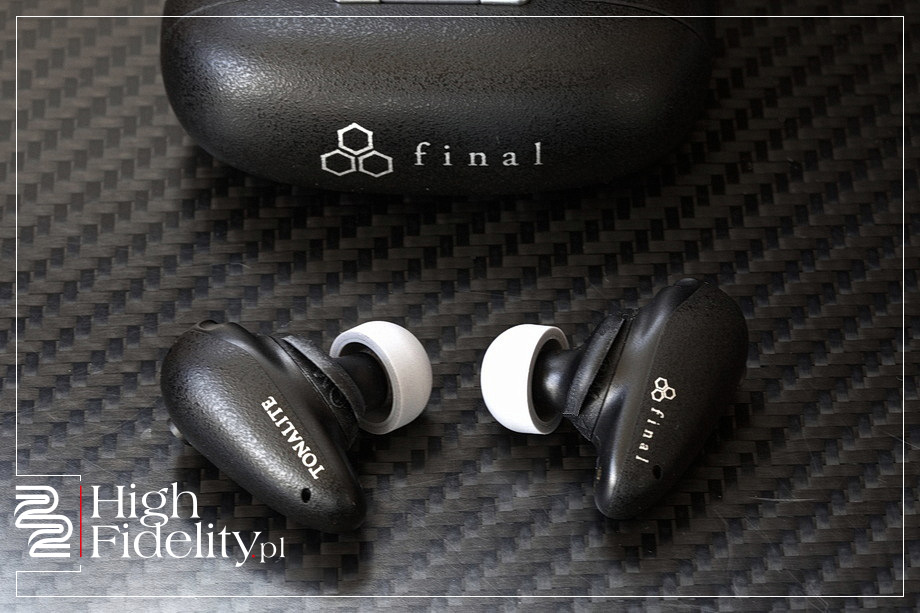
I answered in a way that seemed obvious, even though the manufacturer of those headphones hadn’t mentioned it yet: it was a concept model, a showcase for technology that - sooner or later - would find its way into products that anyone could buy. And that wouldn’t cost a fortune. The JDH version of the ZE8000 costs just under three thousand zlotys, or something like that. This price included the cost of the headphones themselves, as well as the cost of the customization service. However, that wasn’t the most important part at all. The main cost was a trip to Tokyo, because only there, at the company’s headquarters, could the necessary measurements be taken; more about the entire procedure → HERE. ▲ Jibun Dummy Head FINAL AUDIO ZE8000 HEADPHONES featuring the JDH abbreviation, were the entry-level version of the company’s ZE8000 model; review → HERE. The expansion of the abbreviation JDH, Jibun Dummy Head, loosely translated meant: “My own, personal dummy head”; ‘jibun’ – ‘someone’s’, ‘my own’, ‘your own’, depending on the context, and in one of them it has the same meaning as the distinctly masculine ‘watashi’. 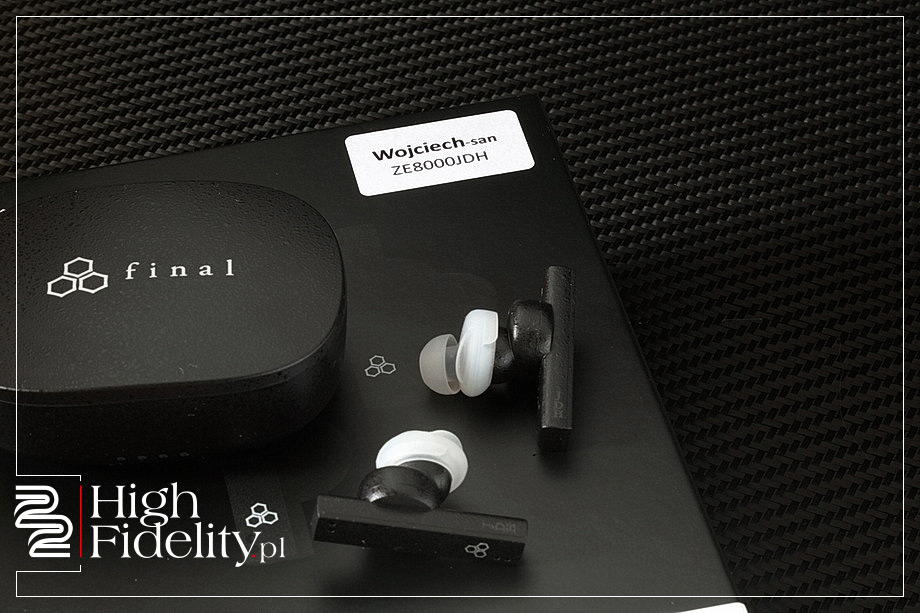
‖ ZE800 in JDH version bearing the company’s abbreviation What’s this all about? JDH is software designed to make listening through headphones feel more like the experience we get when listening to music through speakers. However, it’s not just a simple program that “spaces out” the sound. 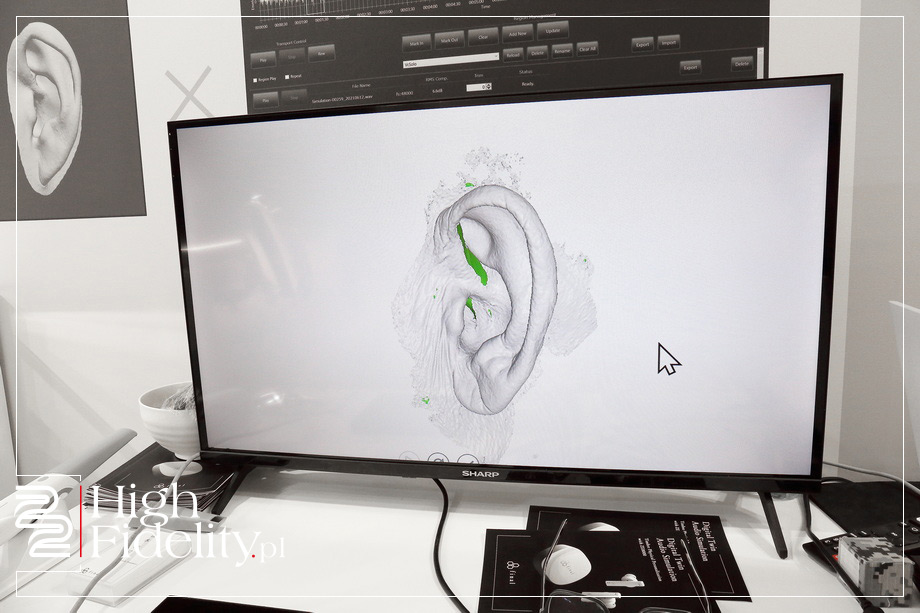
‖ A scan of the author's ear This is a complete simulation of the reflection, diffraction, masking, and amplification of sound waves that occur when listening to music through speakers. To achieve this the upper part of the listener’s torso must be scanned, followed by the outer ears themselves. A program specifically designed for this purpose allows these adjustments to be applied to the DSP processor in the headphones. This is how we get to a “Personal Dummy Head.” 
‖ The author wearing the cap that helped scan his head; behind me is Mr. Satoshi Yamamoto Mr. Satoshi Yamamoto, head of sales at Final, scanned my ear and took photos of my head during the Munich High End Show 2024; more → HERE. ● JUST AS I ANTICIPATED, work on a headphone model available to everyone but based on personalized sound - featuring head and earlobes scanning - began shortly after the ZE8000 JDH was unveiled. Perhaps even at the time I was writing to you about them, work was already underway. The most important data - namely, the correlation between measurements and sound - was provided to the company by specialists and journalists who underwent the measurements. This is invaluable knowledge, enabling the next step to be taken. That step was the development of a system that would allow for self-personalization, i.e., developing the appropriate algorithm. But even more important was securing funding. You see, from the outside, to the average consumer, all companies from Switzerland, Germany, or - as in this case - Japan are Croesuses rolling in money. However, this is obviously untrue; it is a projection of our own dreams and myths about the wealth of these countries and the dynamism of their industries. 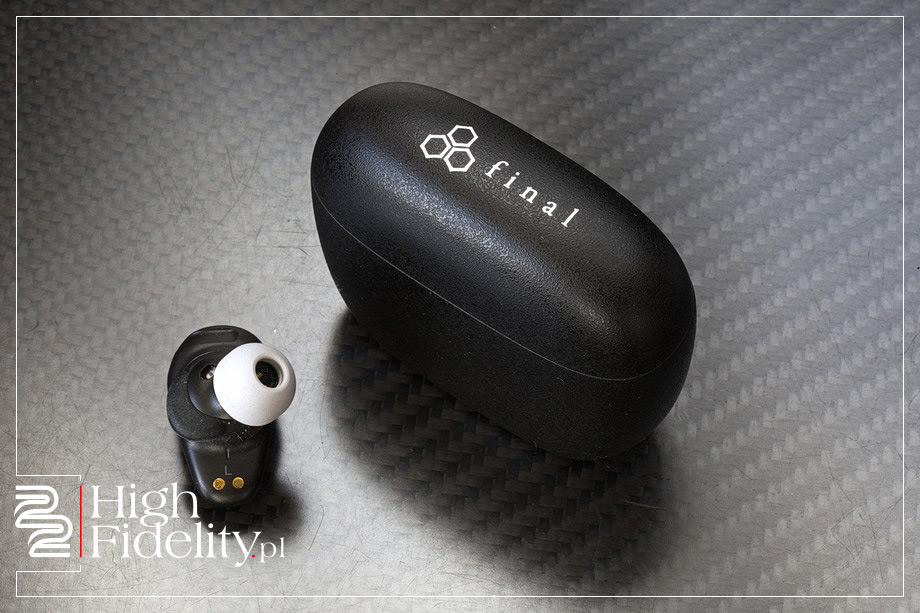
In reality, there are companies there that are wealthy, those just starting out, and those with absolutely no money. There are those that can allocate large sums to research - that is, to pay highly qualified specialists - and those for whom this is an impossible task; they are simply too small. Final Audio is just such a company, small, almost boutique-like. So it set about doing what other companies do in this situation: it launched a crowdfunding campaign on Kickstarter. In November 2025, the project was ready, and the magazine “Audio Express,” apparently unaware of Final Audio’s earlier experiments in this field, wrote:
The weirdest things continue to happen in the world of audio, particularly in the category of personal audio. Final, a high-end audio brand from Japan that continuously experiments with materials, designs, and technology in the world of headphones, earphones, and IEMs, has revived the personal HRTF approach for true wireless earbuds. The company's latest TONALITE are promoted as "the world's first" personalized TWS earbuds, using 3D head and ear scanning technology.
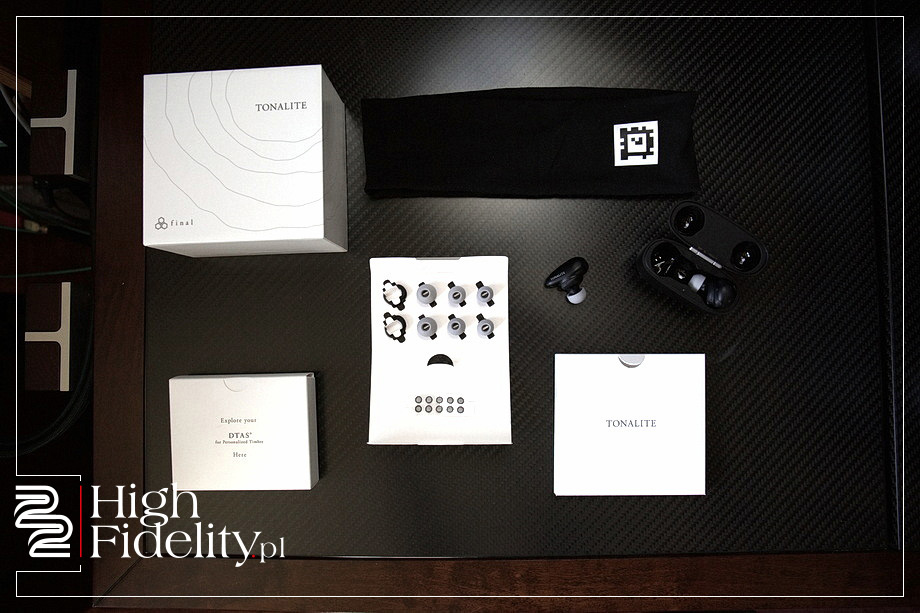
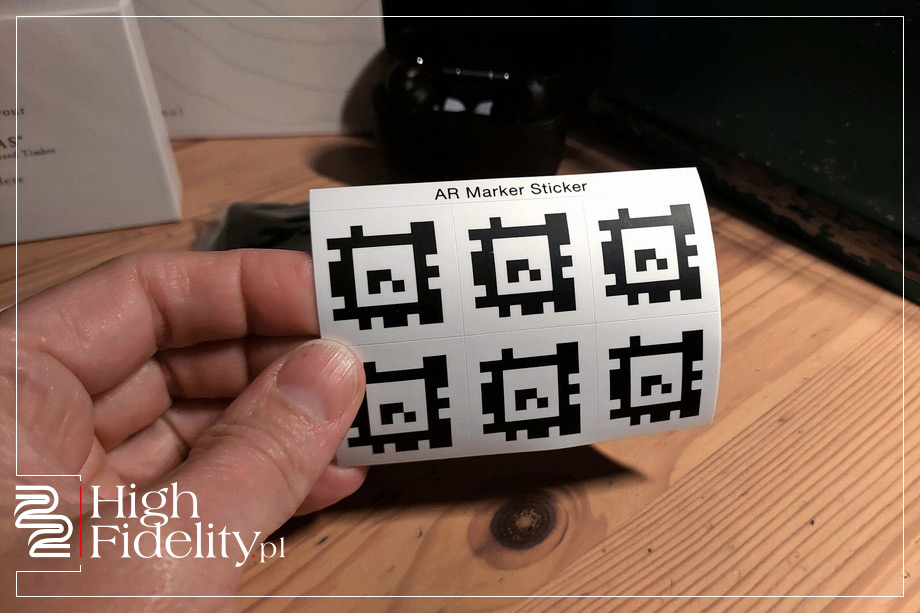
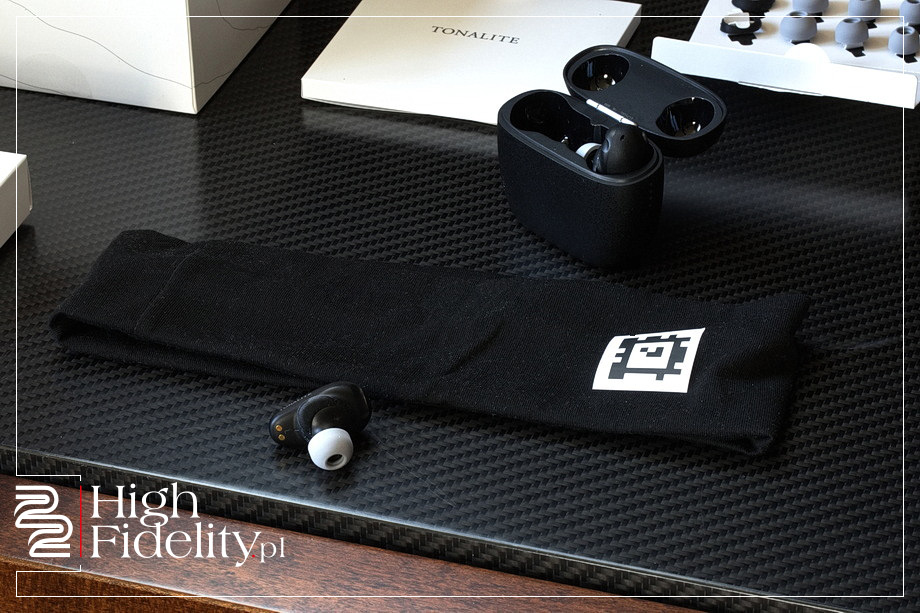
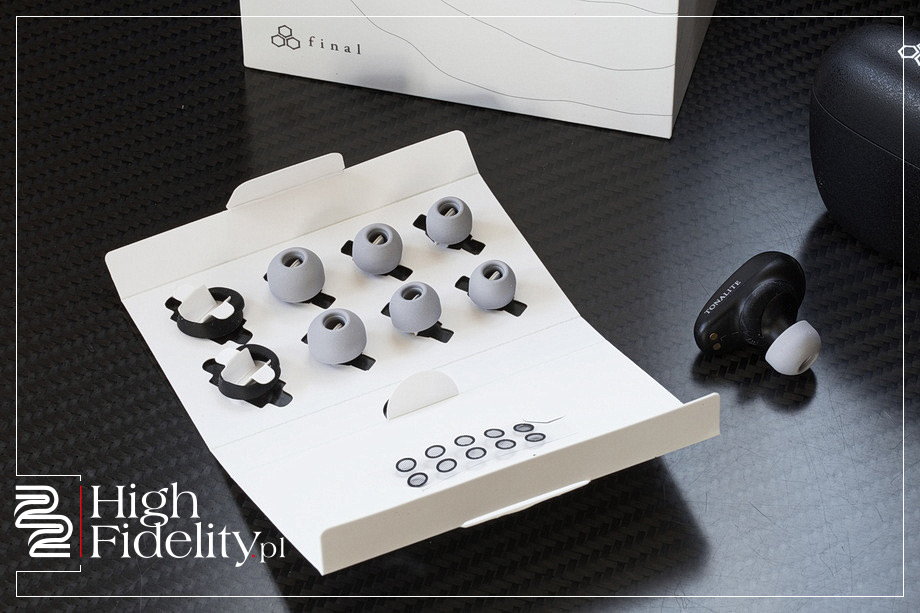
⸜ Wireless Earbuds Using 3D Head and Ear Scanning Technology, 11.11.2025, → AUDIOXPRESS.com, accessed: 24.04.2026. ▓ Tonalite TONALITE ARE wireless, in-ear earbuds that manufacturers refer to as “True Wireless.” This means that all cables have been eliminated - both between the earbuds and the audio source, and between the earbuds themselves. These are in-ears. They use Bluetooth 6.0 and support SBC, AAC, and - importantly - LDAC; the latter appears to be the best option currently available for high-resolution audio transmission. The battery in the earbuds has a capacity of approximately 100 mAh, and the battery in the case is 700 mAh. This means that the operating time is up to about nine hours on the earbuds, which can be extended by the power reserve in the case, sufficient for an additional twenty-seven hours. At the heart of the earbuds is the f-Core, a proprietary dynamic driver with a diameter of 6 mm, developed by Final Audio. It was designed from scratch to - as the company states - “ensure the highest precision, low distortion, and natural sound.” The manufacturer highlights the high precision of the build, noting that it was designed using “special production techniques” to ensure “sound consistency” and that it utilizes lightweight yet rigid materials to “ensure quick response and clear sound.” The earphones offer, as is standard for this class of products, hybrid active noise cancellation (ANC), as well as a “transparent” mode in which you can hear ambient sound. Interestingly, there is no provision for passive use. The absolute breakthrough, at least from my perspective, is what lies beneath the surface: DTAS (Digital Tone Adaptation System). It is the world’s first algorithm designed to adapt the sound characteristics of headphones - both in the time and amplitude domains - to each individual listener. The idea is to make the sound through the headphones resemble how we perceive the sound generated by speakers. To achieve this, a correction is needed that introduces changes to the signal based on the shape of our ears, head, and torso. DTAS • DTAS is an algorithm that allows the frequency response - in terms of time and amplitude - of headphones to be tailored to a specific individual. This requires a scan of the head and ears, which allows for the creation of a personalized acoustic profile tailored to the user’s anatomy. Thanks to this, the music, as we read - and I can confirm it - sounds “more natural, realistic, and clear - exactly as the artist intended.” The procedure turns out to be quite easy, though it takes up to forty minutes. At any time, we can take a break or postpone the rest for another day. If necessary, we can repeat the entire process. During the process, we put a headband with attached reference points on our head, and then take photos of our ears and face. The next step is the measurement, performed automatically using the headphones. At the end of the DTAS profile setup, the app will ask users to play tracks and select a brightness level to best match their individual preferences. It starts at +7, 0, and -7 dB, and in the next step, it refines the selection within a range of +/-2 dB. For users who want the most neutral/flat sound, it is recommended to select 0 dB in all rounds. Any other selection will affect the ~2-5 kHz range. The information collected in this way is sent to the manufacturer’s server and, after a short time, returns to our headphones as a software package. The sound-shaping algorithm is uploaded to the Sony CXD3784 DSP chip. The project lead for Final Audio was Mr. Keitaro Mori, who said in an interview with „Stereo Sound” magazine that they had long tried to develop the system “the hard way,” but at some point, after many setbacks, one of the younger engineers suggested AI assistance, a small but necessary step for quickly achieving results. This turned out to be a breakthrough. 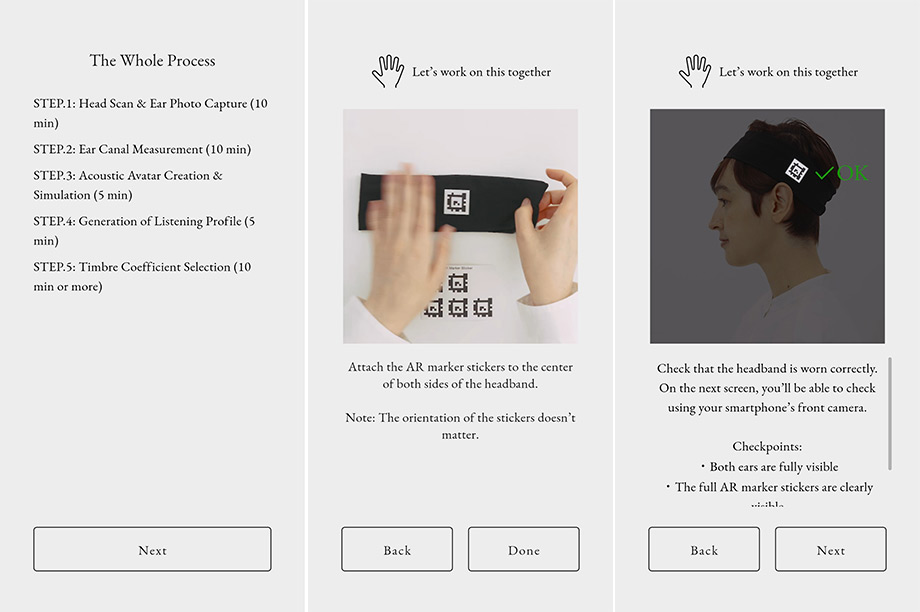
It’s worth noting that Mr. Mori mentions that their research was so thorough that they discovered a software bug in the chip in question, which Sony - a giant, after all - couldn’t believe. It wasn’t until Final compiled the full documentation and sent it to the chip manufacturer that the latter believed that such a small manufacturer was capable of improving something in its technology. |
▓ SOUND HOW WE LISTENED • The Final Tonalite headphones were tested using three signal sources: a Samsung A52 smartphone, a Dell Precision 3571 laptop running Foobar (Windows 11 Pro), and a Shanling EC Smart CD player; test → HERE ˻PL˺. 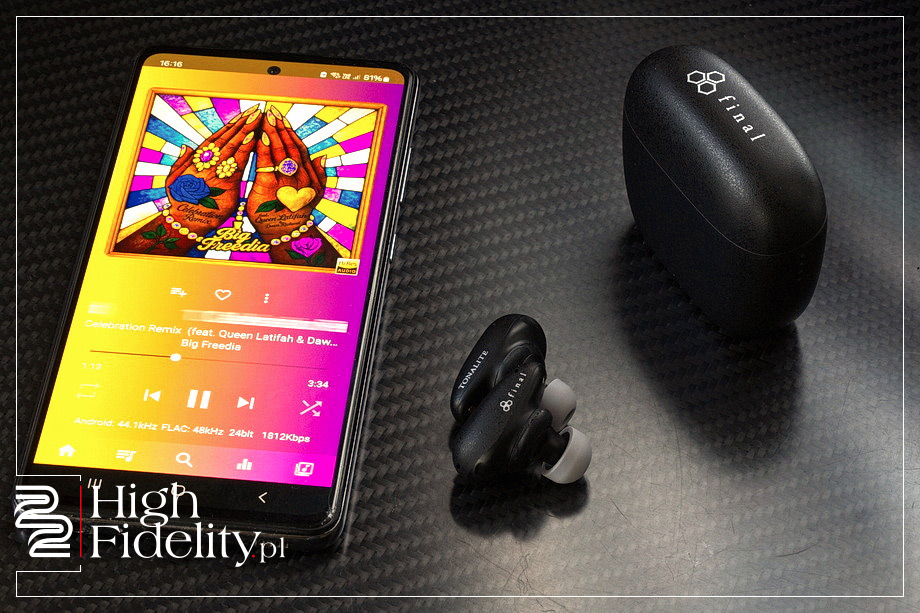
In the first case, I used the USB Audio Player Pro app by eXtream Software Development, which allows you to play music without changing the sample rate. When listening from my smartphone and computer, I used the Tidal streaming service, and on the computer I also used 24/96 and 24/192 FLAC files. The EC Smart, as a reminder, is a portable CD player equipped with a Bluetooth transmitter. 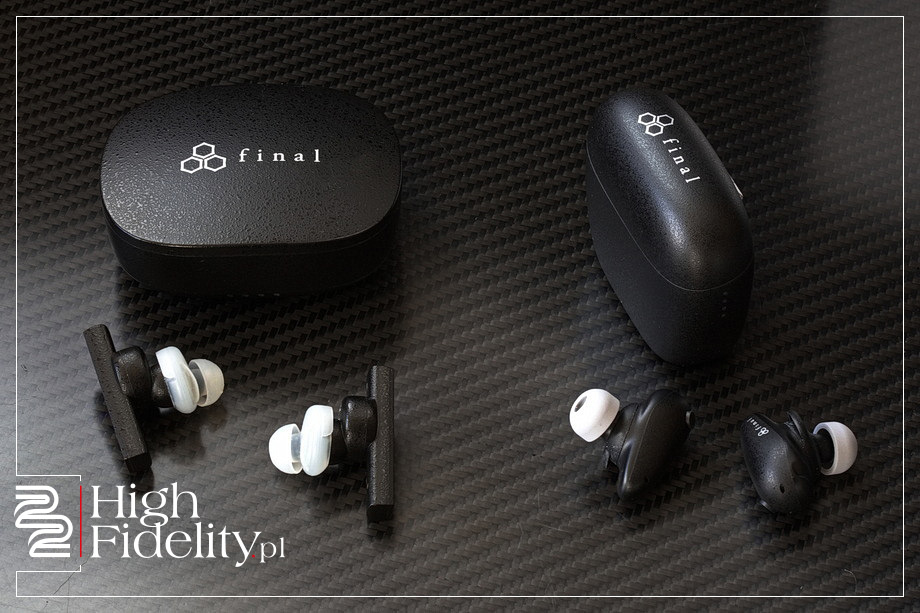
My reference points were wired and wireless headphones: Lime Ears Pneuma, review → HERE, Final ZE8000 Jibun Dummy Head, review → HERE and AKH N9 Hybrid, review → HERE ˻PL˺. » RECORDINGS USED FOR THE TEST ⸜ a selection
• FREDDIE HUBBARD, Red Clay, CTI | Sony Music Entertainemn/Tidal, FLAC 24/44,1 ⸜ 1970/2002. THERE IS NO WAY to separate the Tonalite earbuds themselves from the personalization process. It is impossible for these two elements - the product and our interaction with it - to function independently. Once we dive into this “water,” once we follow the instructions to adjust the algorithm to the shape of our ear and body, the image of this product as “ours” will be burned into our minds, and we won’t want to listen to music without the customization. Personalized means “mine.” That is, personal, even intimate. 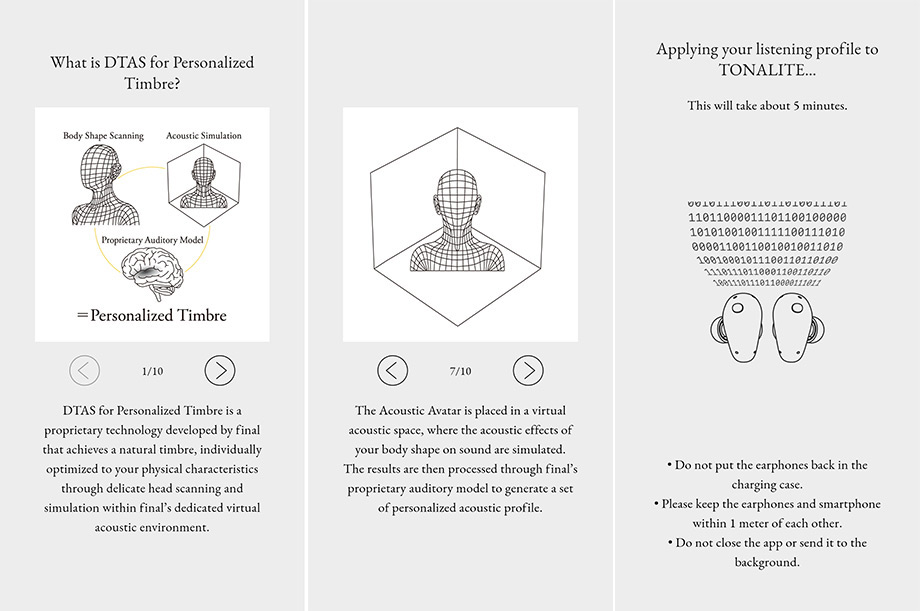
So it will be difficult, at least at first, to fully understand the changes that personalization introduces. The manufacturer has cleverly addressed this, as we have two buttons that allow us to switch between the sauté sound and the sound tailored to us. But even that doesn’t change what I’m saying: the Tonalite are headphones laden with the “baggage” of our emotions, making an objective assessment difficult. An assessment that, in the case of these attractive, cool, yet rather unassuming headphones, turns out wonderfully. The ZE8000 JDH I’ve been using for two years, and the Tonalite are separated by two years and an entire product generation. The new headphones have a better driver, a better Bluetooth codec, and draw on the knowledge accumulated during the JDH project. And in many respects, they are better. Plain and simple. I’ll say more: in some aspects, they are much better. The reader whose email prompted this article should therefore be satisfied: for a fraction of the cost, he can experience what I experienced in 2024 - and even “more.” The headphones I’m testing offer an incredibly accurate, precise, and clear sound. Plus, they’re insanely energetic. My ZE8000s sound a bit muffled in comparison. It’s as if there’s some kind of “cap” sitting on them. I’m exaggerating - that’s how it goes with comparisons - but that’s how I see it. It’s interesting, but I’ve never perceived it that way before. The previous generation of Final Audio custom earphones was so good - so far ahead of any Bluetooth model, regardless of price - that I considered them the gold standard. Wait, what? So all you need to do is to tinker with the EQ and balance the tonality? Is that what you think? Well, sort of, but that won’t improve the ZE8000’s selectivity, dynamics, and resolution - and it’s precisely in these areas that the new headphones blow them out of the water. They offer a sound that is incredibly mature in tone, but above all precise, like studio headphones. To be honest, I didn’t know that wireless models could sound like this. My impressions would therefore align with what Kimio Hamasaki, Final’s chief engineer, said in the aforementioned interview with „Stereo Sound” magazine: the listener is meant to experience the music exactly as it sounded in the recording studio, through studio monitors. Without the issues associated with headphones as physical devices and as a listening method. That, it seems to me, is exactly how the Tonalite headphones sound. They delve deep into the fabric of the sound, whether it’s contemporary club music or FREDDIE HUBBARD from the Red Clay. The latter, recorded in 1970, was his first album released by Creed Taylor’s CTI label and marked a shift toward a soul-jazz fusion sound. CTI released many excellent albums, and its covers are iconic, but the sound quality of these recordings wasn’t as good as that of Blue Note, Verve, or much of Columbia, not to mention Prestige. On Taylor’s label’s records, the sound is somewhat muffled and lacking in detail, often with flattened dynamics. But how tonally colorful it is! Let’s listen to the track ˻ 6 ˺ Red Clay – Alternate Version, closing the album, a live recording. There is a sense of distance from the stage and the audience’s cheers, but also energy - its flow between the musicians and the people below the stage. The Tonalite headphones precisely “pick up” on such nuances. It wasn’t just a flawless reproduction in terms of clarity and selectivity (within the limitations of the recording itself), it was like walking into a club, with sound bouncing off the walls, cigarette smoke, and a festive atmosphere. I could listen to the music loudly and for a long time. With contemporary pop, on the other hand, the sound was bright and a bit “harsh.” That’s how it was with the heavily compressed material from ROSALÍA’s album Lux, which is now available in the Complete Works edition. I had to turn the volume down because the upper midrange was too loud, which wasn’t pleasant. After balancing the SPL and adjusting it to my sensitivity, I got a wide soundstage, with sounds close or far away depending on how the sound engineer had positioned them. And powerful vocals, as in ˻ 1 ˺ Sexo, Violencia y Llantas. It seems to me that this was the closest to how this music was meant to sound according to the producers’ original vision. No warmth, zero softening of the attack: energy and melancholy. 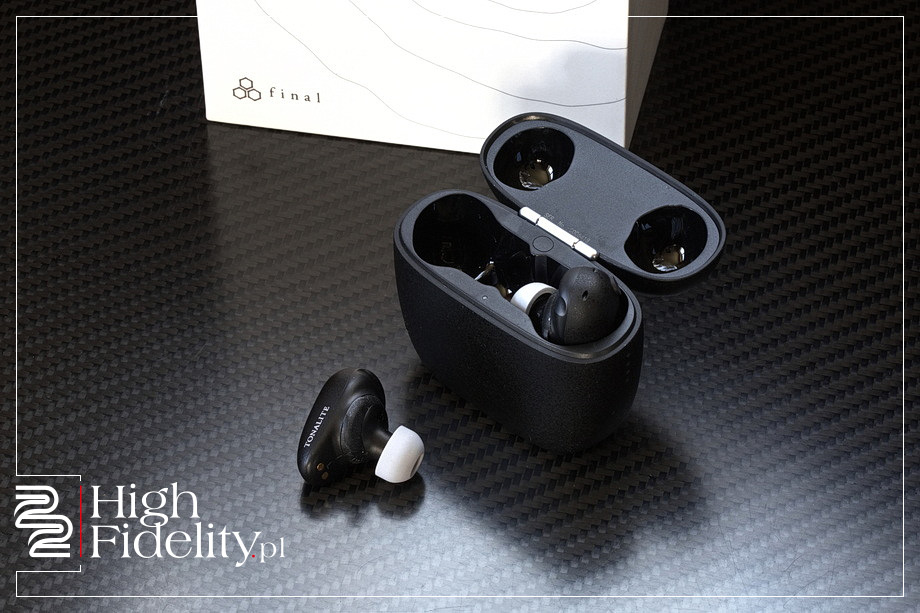
My ZE8000 JDHs lean toward making the sound more pleasant. They also offer outstanding resolution, but not quite to the same degree as the Tonalite. They are also less selective. It is precisely this characteristic that makes us, with these new headphones, listen to sounds we hadn’t heard before. They’re simply there. It’s a well-known audiophile cliché, but in this case, I even feel it’s an understatement. Thanks to this, we can hear what Tony Visconti was talking about when he discussed the album Heroes by DAVID BOWIE, which he recorded and produced, for example, the reverberations in the title track (˻ 3 ˺). The recording took place in the massive Hansa Studios hall, which could accommodate several dozen people, located near the Berlin Wall. Visconti placed a Neumann U47 tube microphone in front of the musician, a pair of U87s a few meters away, and another pair a few meters further on. He set up the ambient microphones so that they would only pick up sound during the louder passages - the ones furthest away in the loudest section, after 3:06. This creates an incredible sense of fullness and energy; read more in the “Sound On Sound” magazine article → HERE. I’m writing about this because, with the Final Audio headphones we’re testing, these details - these “significant” details - are clearly and distinctly audible. Just like, I’ll repeat, with studio headphones. Which, I must add, isn’t always necessarily pleasant. As it slowly dawned on me during the test, I was listening to music through headphones that were something other than a tool for “filling” the atmosphere. Through designs that demand that you focus, immerse yourself, and listen - not just hear. To get a handle on this and give myself a bit of a break when dealing with recordings that have a strong treble - which, with the Tonalite, is clear and incredibly resonant - I tried EQ settings. Yes, it actually works. However, we do lose some of the “magic” that the algorithm itself provides. By changing the tone, we also alter other elements of the sound, such as the intensity of the layers, their focus, their tangibility, and their spatiality. It’s never just a simple matter of “boosting” or cutting the highs or lows. Ultimately, then, as far as I’m concerned, it didn’t make sense. By the way, I’d much rather listen to music in “Ambient Sound” mode, i.e., without noise cancellation enabled. Usually, it’s the opposite, and the ZE8000s sound better that way. With the Tonalite, it’s the other way around. With noise cancellation, the sound becomes - just a little, but still - „glassy”, and thus less pleasant. Anyway, I think the designers saw it that way too, because the headphones come set to the “no” noise cancellation position. ▒ Summary JUST A FEW YEARS AGO, the sound of this caliber from wireless headphones would have been hard to imagine. Regardless of the price. Ever-improving drivers, a deeper understanding of how Bluetooth codecs work, and other advancements have pushed the technology behind these designs toward selectivity and resolution. And above all, dynamics. I see that only personalization allows us to take the next big step forward. It’s not about the sound profiles offered by headphone and headphone amplifier manufacturers, or spatialization effects, but about tailoring the sound to the listener’s anatomical structure. What until recently seemed impossible without precise measurements is now available for less than 1,500 PLN. And perhaps it is precisely this - the value for money - that makes such a stunning impression. And the Tonalite earphones themselves make a stunning impression. They sound like large studio headphones, distinguishing between recordings in a way that we would achieve using very expensive headphone systems. 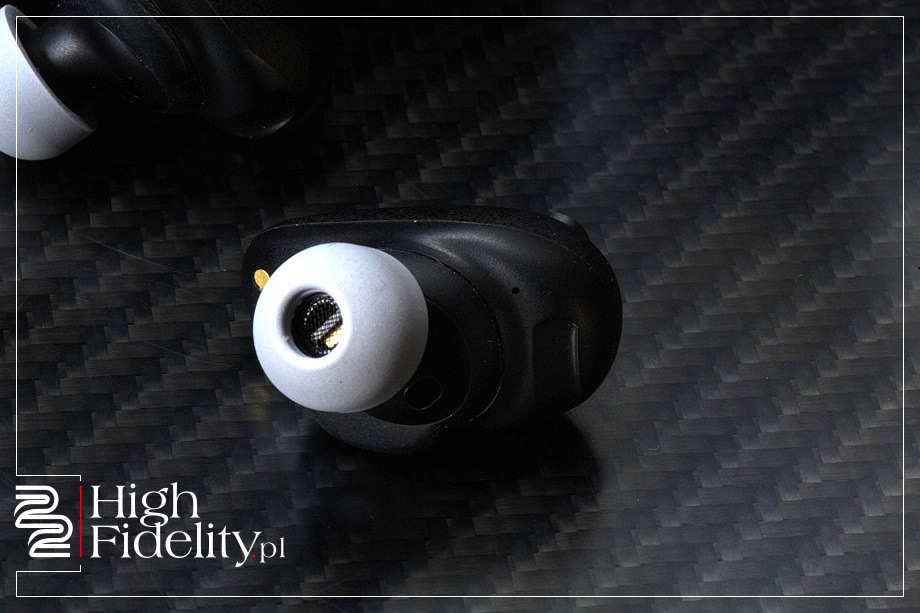
We’ll listen to them with equal enthusiasm to COLTRANE from Blue Train, the PET SHOP BOYS from Super, or BLACK SABBATH from Paranoid, with that fantastic electric guitar in the right channel and the bass slightly to the left in ˻ 1 ˺ War Pigs/Luke’s Wall. It won’t always be a comfortable listening experience because recordings aren’t always made that way. However, I guarantee that every time it will be a super-interesting listening experience. A well-deserved ˻ RED FINGERPRINT ˺. ‖ WP 
THIS TEST HAS BEEN DESIGNED ACCORDING TO THE GUIDELINES adopted by the Association of International Audiophile Publications, an international audio press association concerned with ethical and professional standards in our industry, of which HIGH FIDELITY is a founding member. More about the association and its constituent titles → HERE. |
 |





|
Reference system 2026 |
|
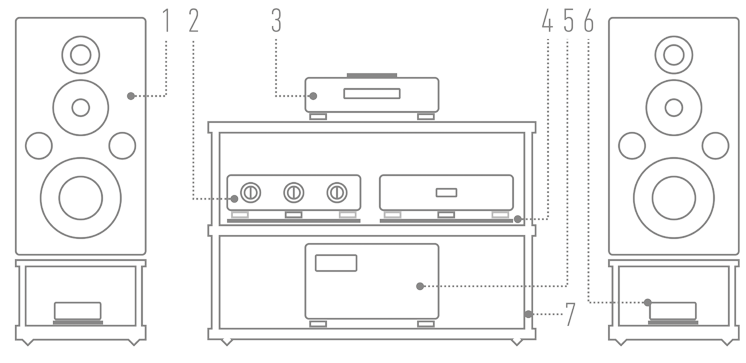 1) Loudspeakers: HARBETH M40.1 |REVIEW| 2) Line preamplifier: AYON AUDIO Spheris III Linestage |REVIEW| 3) Super Audio CD Player: AYON AUDIO CD-35 HF Edition No. 01/50 |REVIEW| 4) Stands (loudspeakers): ACOUSTIC REVIVE (custom) |ABOUT| 5) Power amplifier: SOULUTION 710 6) Loudspeaker filter: SPEC REAL-SOUND PROCESSOR RSP-AZ9EX (prototype) |REVIEW| 7) Hi-Fi rack: Hi-Fi rack: finite elemente MASTER REFERENCE PAGODE EDITION Mk II, more → HERE |
|

|
Cables Analog interconnect SACD Player - Line preamplifier: SILTECH Triple Crown (1 m) |ABOUT|» ANALOG INTERCONNECT Line preamplifier → Power amplifier: Siltech ROYAL SINLGE CROWN RCA; review → HERE Speaker cable: SILTECH Triple Crown (2.5 m) |ABOUT| |

|
AC Power Power cable | Mains Power Distribution Block - SACD Player: SILTECH Triple CrownPower (2 m) |ARTICLE| » POWER CABLE Mains Power Distribution Block → Line preamplifier: Acoustic Revive ABSOLUTE-POWER CORD, review → HERE » POWER CABLE Mains Power Distribution Block → Power amplifier: Acoustic Revive ABSOLUTE-POWER CORD, review → HERE Power cable | Power Receptacle - Mains Power Distribution Block: ACROLINK Mexcel 7N-PC9500 (2 m) |ARTICLE| Power Receptacle: Acoustic Revive RTP-4eu ULTIMATE |REVIEW| » ANTI-VIBRATION PLATFORM under Acoustic Revive RTP-4eu ULTIMATE: Graphite Audio CLASSIC 100 ULTRA, review → HERE Power Supply Conditioner: Acoustic Revive RPC-1 |REVIEW| Power Supply Conditioner: Acoustic Revive RAS-14 Triple-C |REVIEW| Passive filter EMI/RFI: VERICTUM Block |REVIEW| |

|
Anti-vibration Speaker stands: ACOUSTIC REVIVE (custom)Hi-Fi rack: finite elemente MASTER REFERENCE PAGODE EDITION Mk II, more → HERE Anti-vibration platforms: ACOUSTIC REVIVE RAF-48H |ARTICLE| » ANTI-VIBRATIONAL FEET: |

|
Analogue Phono preamplifier: Phono cartridges:
Clamp: PATHE WINGS Titanium PW-Ti 770 | Limited Edition Record mats:
|

|
Headphones » HEADPHONE AMPLIFIER: Leben CS-600X, review → HEREHeadphones: Headphone Cables: Forza AudioWorks NOIR HYBRID HPC |