


|
LINE PREAMPLIFIER AIR TIGHT
Manufacturer: A&M LIMITED |

 |
 |
 |
|
Review
text by WOJCIECH PACUŁA |

|
No 265 June 1, 2026 |
IT’S HARD TO TALK ABOUT JAPANESE HIGH-END AUDIO without eventually mentioning the Air Tight brand. It might come up after “Kondo” and before “Esoteric,” “Accuphase,” or “Leben,” but it could also come up at any point before “Soulnote,” “Acrolink,” “Sforzato,” or “Reimyo.” What is certain is that it will be part of this group of brands, the elite of the Japanese audio world, and thus, that’s a reality of life, of the high-end world in general. Founded in 1986 in Osaka, A&M Limited, the owner of the Air Tight brand, is a renowned Japanese manufacturer of audio equipment. It was founded by former Luxman engineer Atsushi “Jack” Miura and Masami Ishiguro. Its goal was to preserve the warmth of tube amplifiers’ sound in the face of the industry’s transition to semiconductor technology. Air Tight therefore specializes in hand-wired tube amplifiers. Its first product was the ATM-1 integrated amplifier, introduced in 1986. 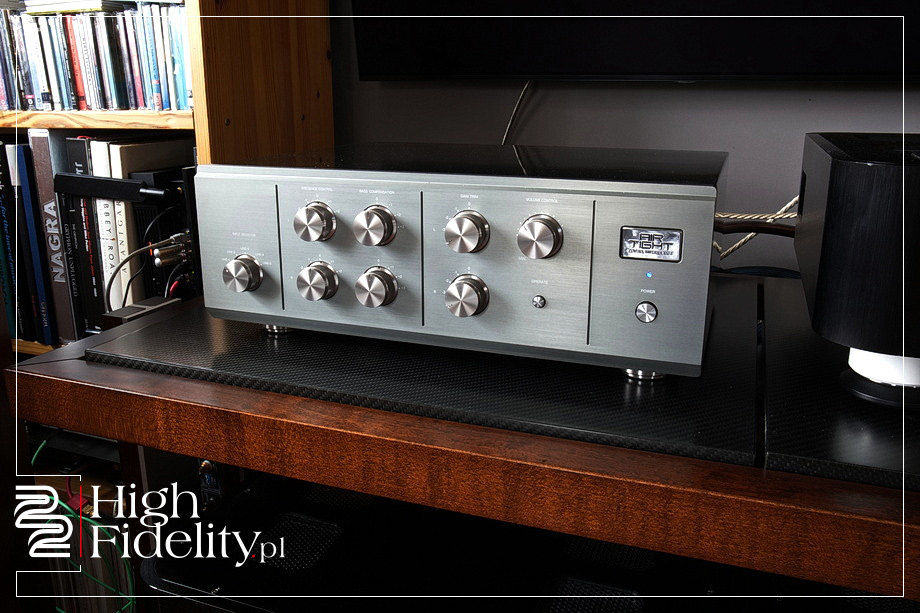
The ATC-7 line-level preamplifier under review is its latest product. It is also, it seems, the first device to be developed entirely under the auspices of Mr. Miura’s son (the founder passed away in 2022), Yutaka “Jack” Miura, who serves as the company’s acting president. And it is a beautiful debut. ▓ ATC-7 THE ATC-7 is a line-level preamplifier. The manufacturer refers to it as a “Control Amplifier” or “Stereo Line-Control Amplifier.” It offers five line inputs, two balanced XLRs and three unbalanced RCAs, as well as two pairs of line outputs, RCA only - the device is an unbalanced design. Air Tight is a deliberately conservative company, somewhat anachronistic, at least from the perspective of the modern audio market. This is because the ATC-7 is a tube device, featuring only analog line inputs; it features no phono preamp, headphone amplifier, DAC, or Bluetooth connectivity. It is also not a “streaming preamp,” i.e., a file player with volume control. There is no remote control either (ouch!). The company’s materials state:
These days, all the essential functions of audio equipment are integrated into the remote control, and it seems that one of the trends is controlling devices via Wi-Fi or Bluetooth using smartphones instead of infrared. While the operation of audio equipment is gradually being replaced by touch panels or mobile devices, Air Tight aims to restore the pleasure of direct interaction with the amplifier and the use of control knobs.
We remember that operating amplifiers with physical feedback was an important aspect of the pleasure of listening to music, one that is now fading away. With the “ATC-7” preamplifier, we wanted to restore the joy of directly adjusting the sound with your own fingers, so we redesigned the knobs, created a texture that feels good in the hand, and ensured a perfect sense of physicality in the knobs’ surfaces and their rotation. The device is medium-sized, though it is - for a preamplifier - quite tall. Its chassis is made of aluminum sheet metal and a 15 mm aluminum front panel, and inside you’ll find copper and copper-plated shielding elements for the tubes and passive components. The front panel has the steel-gray color characteristic of this manufacturer, and while the knobs are silver, they have a slight magenta tint. This creates a really cool effect. FEATURES • There are quite a few knobs, actually. The most important one, the volume control, is the one on the right. It is well calibrated, making it easy to use. Below there is the power switch with (unfortunately) a blue LED. To its left, there are knobs that are not typically found on audio equipment. First are the gain trim knobs, one for each channel. We are familiar with them, for example, from Nagra preamplifiers, and they are used to precisely set gain points - these are usually found at the beginning and end of the signal path. Each gain and master volume setting produces a slightly different sound, so it’s worth experimenting. The next four knobs, two per channel, are tone controls; they are labeled, respectively, Bass Compensator and Presence Control. We use them to adjust the amount of bass and treble. Their range differs from that of classic controls because they operate at the extremes of the frequency spectrum. The bass boost is centered between 3 and 20 Hz, and the treble boost between 30 and 50 kHz; please take a look at the diagram below. 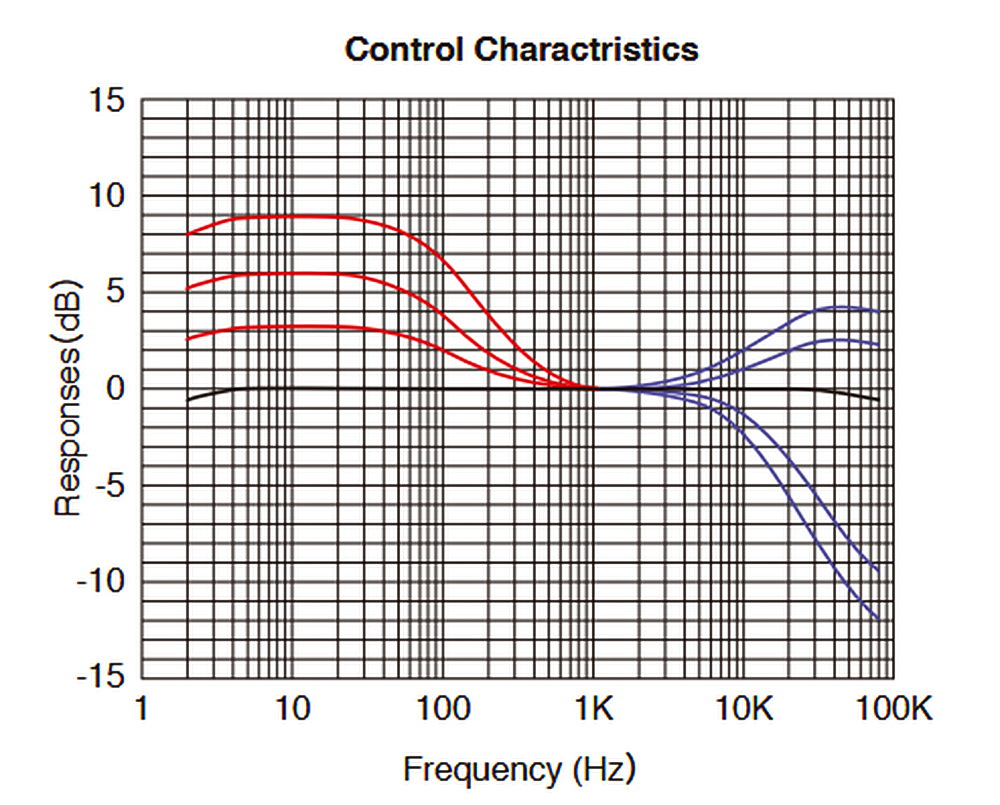
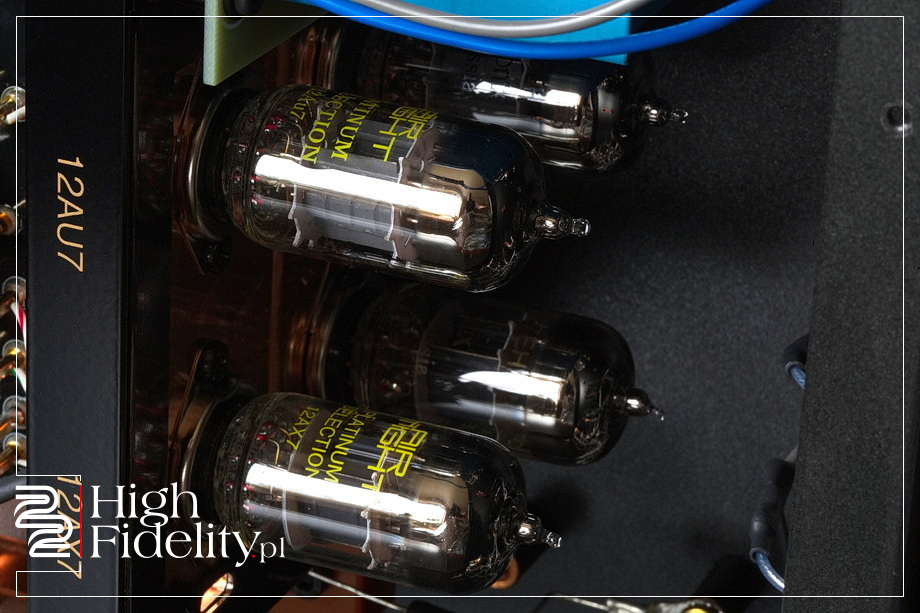
And there’s one more knob: the input selector. On the back, you’ll see a row of jacks - the RCA ones are nice and gold-plated. They feature a distinctive recessed design, with the same external shape as XLR connectors. This means you can’t use cables with thick plugs, such as the Siltech Triple Crown. Audio devices almost always use Neutrik jacks, but Air Tight chose the American company, Amphenol. ▲ AMPHENOL FOUNDED IN 1932, Amphenol has evolved from a local manufacturer of radio components in Chicago into one of the world’s largest suppliers of solutions in the fields of interconnect systems, sensors, and antennas. The company’s history is marked by continuous material innovation, a strategic role during World War II, and an aggressive acquisition strategy that shaped its current market position.The company was founded by Arthur J. Schmitt and named American Phenolic Corporation. A breakthrough came with the use of phenolic resins (Bakelite) to manufacture radio tube sockets, which allowed for faster and cheaper production compared with their ceramic counterparts. During World War II, the company became a key supplier for the U.S. military, producing AN (Army-Navy) series connectors and coaxial cables for the Air Force and the Navy. Fun fact – Amphenol is the inventor of BNC connectors (Bayonet Neill-Concelman). ● TECHNOLOGY • We’ve already mentioned this: the ATC-7 is a tube preamplifier. Let’s add now: with a solid-state power supply. Four tubes operate in the gain stage, two per channel - these are low-power dual triodes, 12AX7 and 12AU7. They are labeled “Air Tight” and “Platinum Selection.” This does not mean that the company manufactures them, but only that it sources them externally and then selects them with tight tolerances. These are likely re-branded models from Electro-Harmonix or another Russian manufacturer. 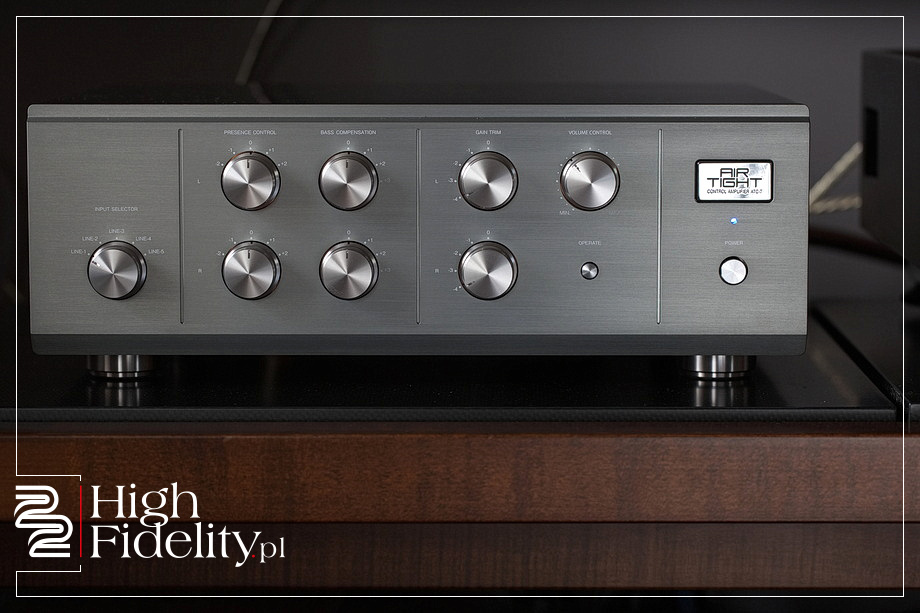
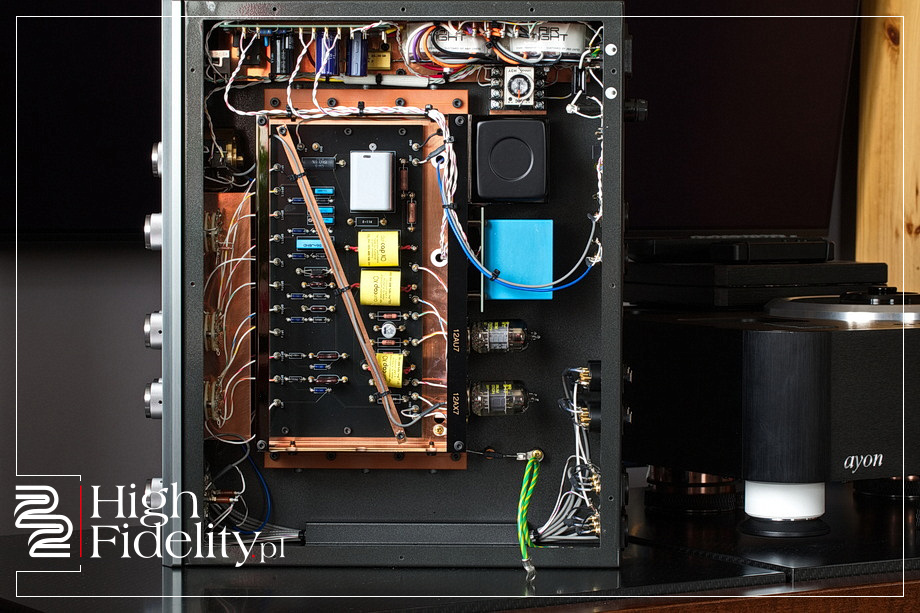
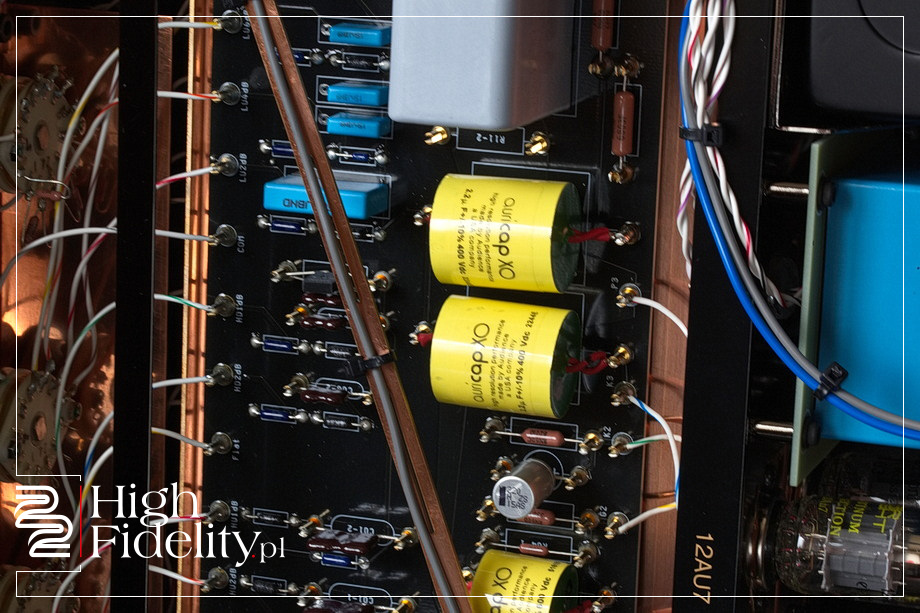
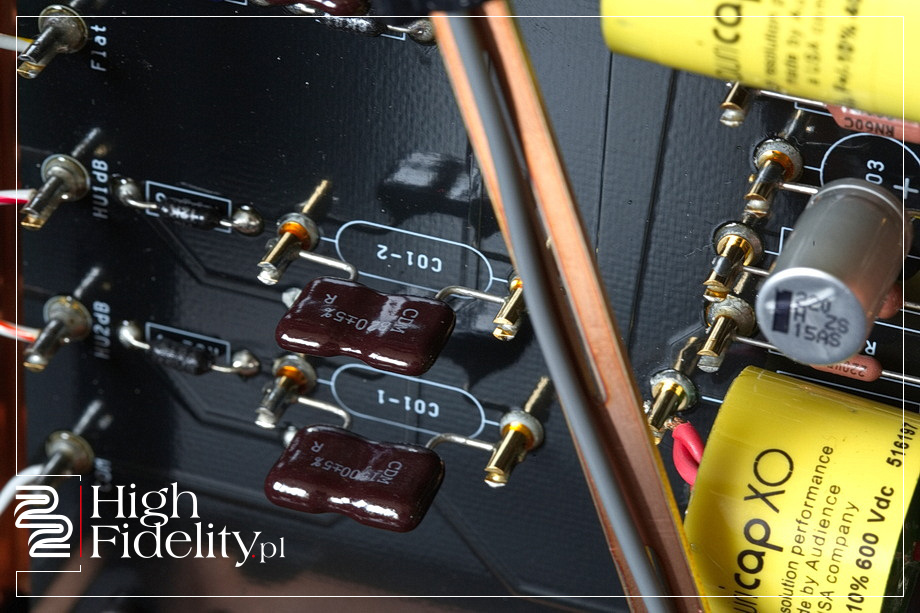
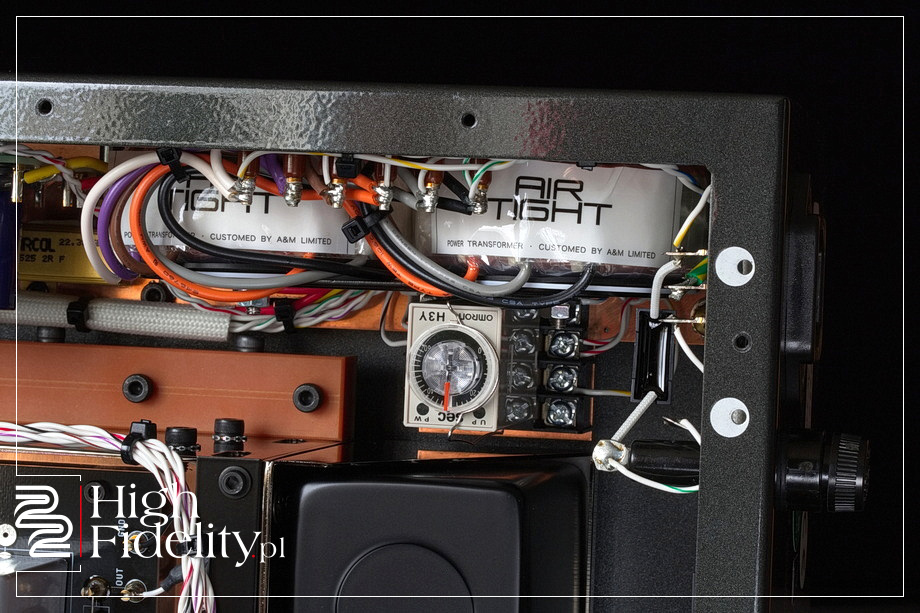
As stated by the manufacturer, this is a two-stage NF SRPP circuit (shunt-regulated push-pull) consisting of two triodes per channel. Their configuration is mirrored, and the L and R channel tubes are arranged symmetrically vertically. The amplifier section is housed in a black, chrome-plated inner chassis, and the circuit boards are mounted on a thick, “tube-shaped” base made of pure copper. The inner chassis is attached to the top of the monocoque chassis using a specially made Bakelite rod. This is intended to provide electrical isolation of the gain section from the main chassis. The preamplifier’s power supply section is exceptionally elaborate. It features two large toroidal transformers. One of them supplies the anode voltage, while the other provides the remaining voltages, primarily the filament voltages. They are rigidly mounted to the main chassis using thick pure copper washers. The power supply is fully adjustable and designed specifically for the ATC-7 model. The manufacturer states that this reduces the impact of voltage fluctuations found in commercial power supplies and “ensures a clean and stable power supply.” The power supply is, in general, very interesting. The anode power supply uses a Pi-type filter with a choke and polypropylene capacitors. In 99.9% of cases, these are electrolytic capacitors. Just like Ayon Audio in the Spheris preamplifier, Air Tight has opted for more expensive non-electrolytic capacitors instead. As stated, “electrolytic capacitors have been eliminated from both the signal and decoupling circuits, which contributes to the clarity of the sound.” The circuit features high-quality components, such as a high-end mechanical input selector, an Alps RK-501 attenuator, Audience Auricap XO coupling capacitors (metallized polypropylene, pure copper terminals, cryogenically treated), PTFE-dielectric wiring, and others. The assembly is point-to-point, even though the mounting points are on the printed circuit board. The exception is the power supply, which uses a classic printed circuit board. 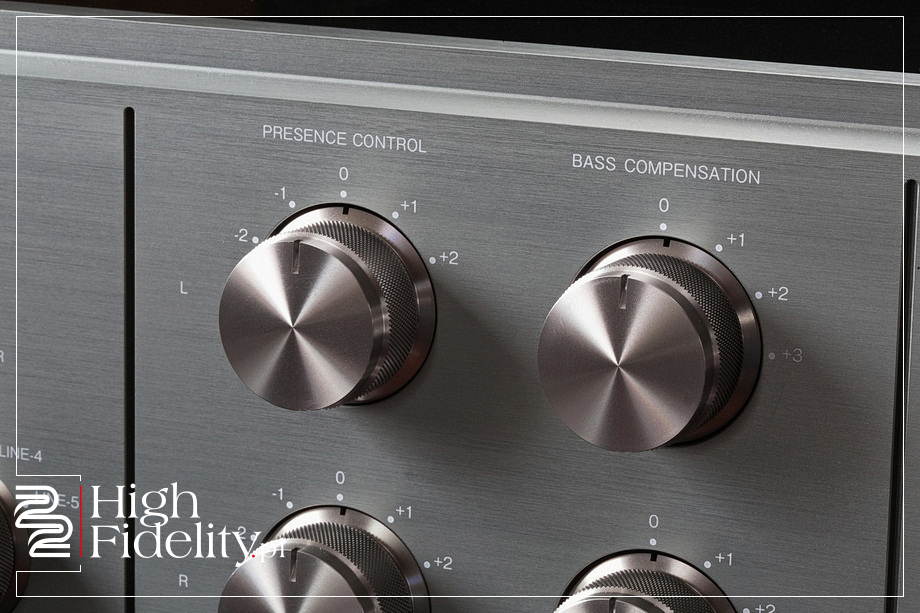
A beautifully built device. ▓ SOUND HOW WE LISTENED • The Air Tight ATC-7 preamplifier was tested in the HIGH FIDELITY reference system, where it was compared to the Ayon Audio Spheris Evo preamplifier, which is also a tube preamplifier. The test involved listening sessions and AA/BB/AA and BB/AA/BB comparisons, with A and B known. 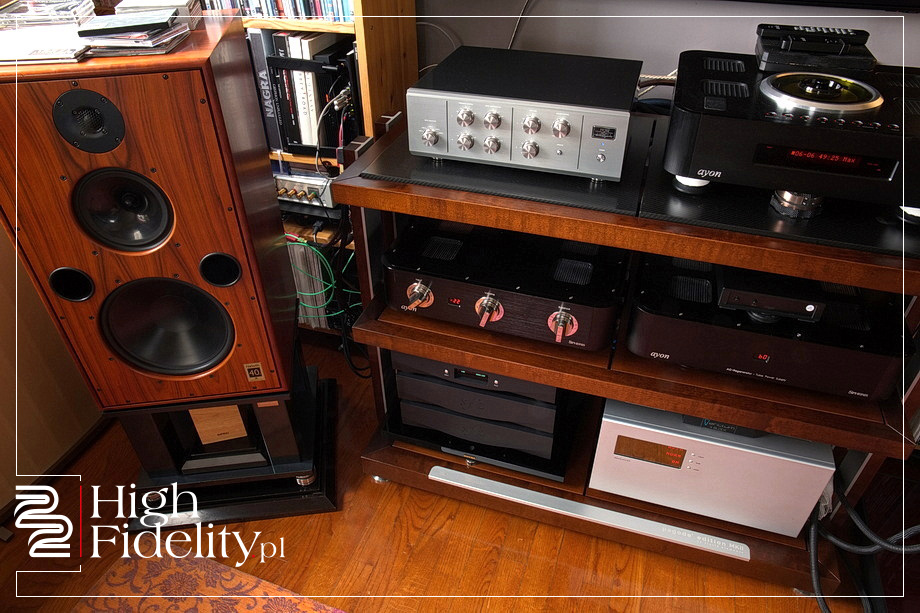
The preamplifier stood on its feet on the top shelf of the Finite Elemente Pagode Edition Mk II rack. The signal from the SACD player was transmitted via an RCA interconnect, namely the Crystal Cable Absolute Dream, and from the Sforzato DSP-05EX & PMC-05EX file player via a Siltech Single Crown RCA interconnect. The signal was also routed to the power amplifier via a Single Crown RCA interconnect. Power was supplied by an Acrolink Mexcel 7N-PC8500 cable. 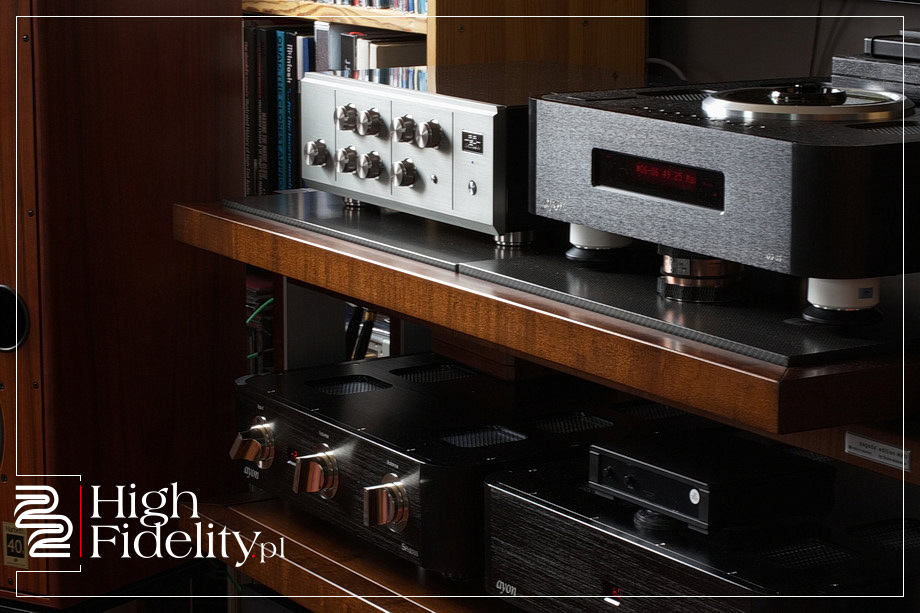
|
» RECORDINGS USED FOR THE TEST ⸜ a selection
• SETH MacFARLANE, Lush Life: The Lost Sinatra Arrangements, Verve Records | Republic Records 602478075445, CD ⸜ 2025. THE JAPANESE DEVICE discussed in this review belongs to the top tier of products of this type. Not because it excels at any one thing or is spectacular in any particular area, but because everything it does, it does very well, or rather, outstandingly. 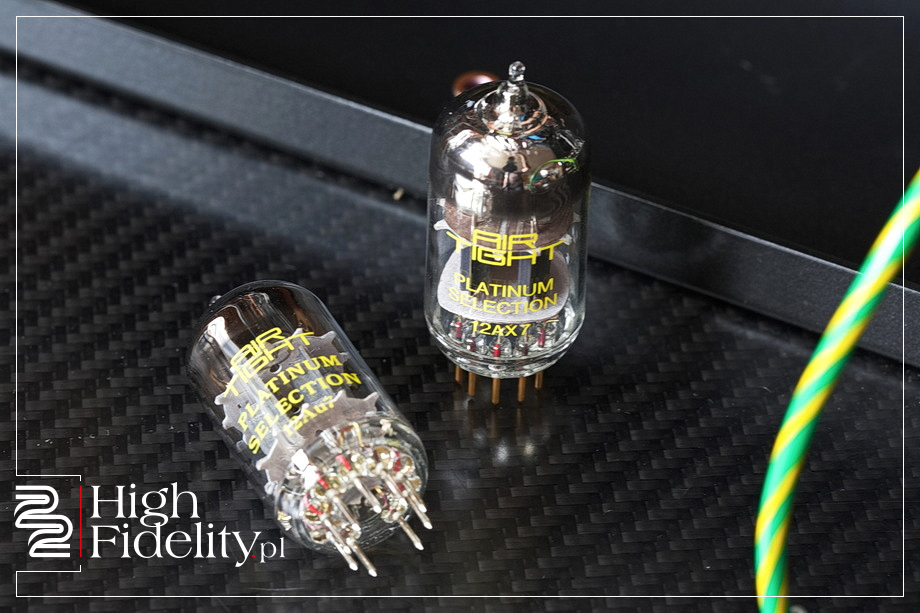
Let’s start with the tone. The tubes suggest a “tube-like” sound. We’ve been writing about this for years, repeating ourselves, reminding readers, and yet we still have to keep coming back to it: “tube-like” does not mean “warm” at all. It is a way of conveying music in which there is fullness of harmonics, there is fast leading edge, but above all, naturalness (“subtlety”). For quite some time now, let’s add, these characteristics have not been exclusive to devices of this type but also to solid-state ones. The ATC-7 preamplifier is exactly the kind of device I’m talking about: tube-based, but in a way that I consider appropriate. In this respect, it very, very much resembles the Ayon Audio Spheris Evo preamplifier I use. They don’t sound exactly the same - that’s not the point. However, they are close enough in terms of their approach to sound - their consideration of what is important and what is less so - that one could swap them in a system without much difference in its balance, speed, or clarity. The sound of this Japanese device is, in fact, both open and dark. This is a quality I look for in every product but rarely find, and when I do, it’s usually in a diluted, underdeveloped form. The Air Tight fits this description perfectly, settling into its spaces and lending it even greater weight. As if taking this combination a step further. That is why vocals will sound perfect with it. Not through warming or emphasis, but by revealing their range, tonal depth, and three-dimensional “body.” Like with SETH MacFARLAN singing in ˻ 1 ˺ Give Me The Simple Life, the opening track of the Lush Life: The Lost Sinatra Arrangements album. The album was recorded live on an analog multi-track tape recorder at George Lucas’s Skywalker Sound studio in California, featuring a 70-piece orchestra conducted by John Wilson. Produced by Joel McNeely, the 2025 album brought to life unreleased, archival arrangements by Nelson Riddle, Billy May, and Don Costa, acquired from the Sinatra family in 2018. It’s an excellent album, and the actor’s vocals - who, by the way, provided the voice for Ted in the films of the same title - are deep and simply beautiful. And there is an energy in them that the Japanese preamplifier conveyed instantly, without beating around the bush, a silky sheen, a “halo” around the sounds, or any other kind of correction aimed at smoothing out the attack. The preamplifier under review perfectly captures its leading edge, while maintaining a balance between it and the sound’s richness. It thus delivers a fast and immediate sense of energy, but without any harshness or brightness. I would even say that the device slightly tempers the more unruly slams. It just does so from a slightly different perspective than the Ayon preamplifier, and without interfering with the initial phase of the sound. Let me explain. The ATC-7 tends to build a deep soundstage and focus our attention on the listening axis. Everything is farther away from us than with the Spheris Evo, still precise and energetic, but on a distinctly narrower, yet deeper soundstage. And I’m not just talking about the awesome jazz reissues, which we’ll get back to in a moment, but about recordings that demand resolution, precision, and above all, tonal balance from the system. This is exactly what ˻ 5 ˺ Relax (Come Fighting), a track from the latest version of the FRANKIE GOES TO HOLLYWOOD album Welcome To The Pleasure Dome, released in 2025 on SHM-CDs, is about. It sounded explosive, energetic, and trance-like. Just as it should. The foreground was set back behind the line connecting the speakers, and Ryan Molloy’s vocals came from the depths of the mix. In other words - just as it should sound. As it turned out, the ATC-7 delivers everything in a more direct manner than the Ayon, or - for example - the Ypsilon PST 100 Mk II SE Anniversary, which we reviewed in the December issue of HF. It’s a bit more impassioned in its sound delivery. Which doesn’t really fit the stereotype of a “tube” device, does it? It’s a misleading stereotype because anyone who has heard studio tube equipment, whether vintage or modern, knows that it’s all about transparency and energy - its transfer - rather than warmth. Yes, tubes usually slightly smooth out the harsh elements of the attack, which is where their legend comes from. You can hear this in the Japanese preamp we’re discussing as well. However, this isn’t its main characteristic; rather, it is an afterimage - something inherent to its sound, yet secondary to something else: “presence” of the sound. Not through tangibility - here, the Ayon is king - but through the intensity of the sound. 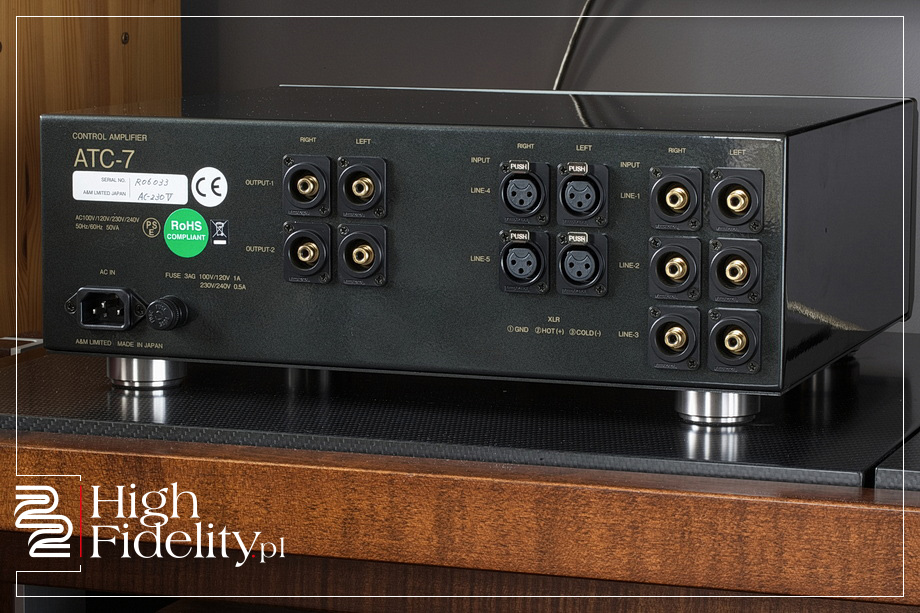
That’s why the three musicians playing alongside ART PEPPER on the album Art Pepper Meets The Rhythm Section, when listened to with the reviewed preamplifier, pushed, struck and created an incredible foundation for the saxophone. Recorded in 1957, the album has a stereo perspective typical of that era - the leader in one channel, and the other musicians in the other. It sounds incredibly good, though it shouldn’t. You can hear “cross-talk” between the microphones, so the instruments aren’t cut off completely. The Air Tight really highlighted this characteristic, because it is a highly resolving device. Fast and resolving. It also delivers rich tones, but it doesn’t push them forward or bring them closer. That’s why Pepper was positioned slightly further away than I’m used to. Not that too far - that’s relative - but further. And yet, as I said, I got plenty of powerful sound, without any dampening or a muddled attack. The preamp under review, by the way, tends to slightly favor the midrange, which is responsible for the aforementioned “presence.” CONTROL/COMPENSATION • This specific characteristic can be adjusted using the knobs that control the upper midrange and lower frequencies. It’s a cool and potentially useful feature. Let’s remember, however, that when we adjust the tone, we’re not just changing the tonal balance. We’re also changing - perhaps even more so - the balance between instruments, their size, placement, and intensity. Adding treble or bass is a significant intervention in the sonic fabric, where everything is interconnected. By adding bass, we increase the volume; by adjusting “presence,” we either push back or slightly emphasize the midrange - and thus the vocals. That is why you can use the knobs on the front panel of the ATC-7, but if it’s not necessary, I would suggest leaving them alone. On its own, the preamp has excellent tonal balance and requires no adjustments. If the room’s acoustics demand it - OK, why not. In any other case, it’s better to change something in the system. The preamp does not need any adjustments. ▒ Summary WHEN LISTENED TO THIS WAY, the AIR TIGHT ATC-7 will sound dark, yet distinct. It will reveal a clear outline of the instruments, without any warmth or veiling, yet without any irritating intensity. It will create a deep soundstage, thanks to which ECM recordings - such as THOMAS STRØNEN’s Off Stillness - will get the breathing room they need and the space they are capable of offering. The Japanese preamplifier also offers incredible dynamics, presented from the very bottom of the frequency range - truly low and deep - all the way up to the upper treble. At the same time, it delivers sound with a soft touch. It does not achieve this by rounding off the attack or smoothing out the edges, but by slightly pulling the sound back into the depth of the soundstage. At the same time, it retains excellent energy, because it neither hides nor romanticizes anything. The ATC-7 thus proves to be a thoroughly modern device - one that reproduces music with all its colors, complexities, and nuances. It does so without resorting to any adjustments, whether in tone or dynamics range. But it is also incredibly steeped in the past. I’m referring to the naturalness with which it engages the sound and the immediacy of the impact, whether from drums or piano, as in ˻ 1 ˺ Manhã de Carnaval from the album Miwaku by the MAYO NAKANO PIANO TRIO. 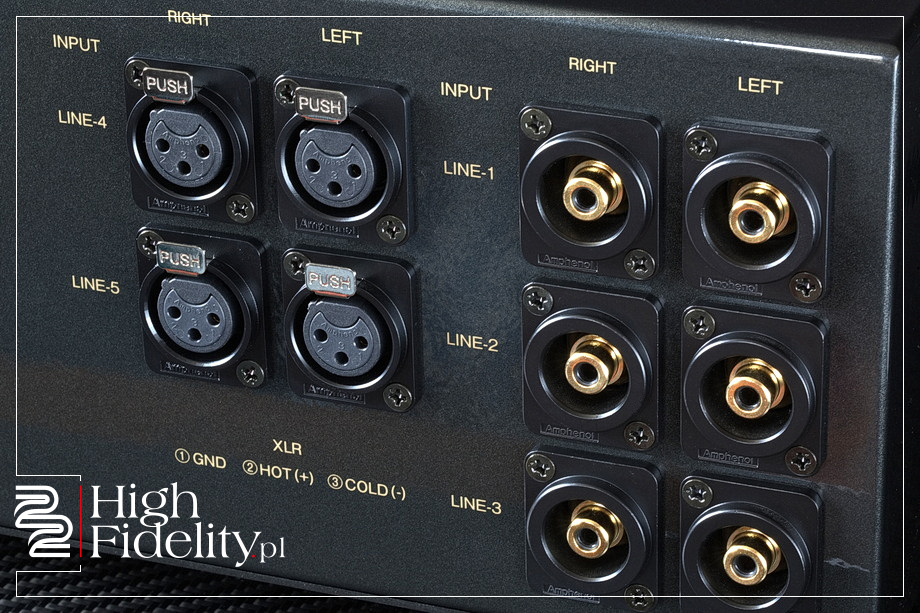
The also slightly “boosts” the mid-bass, which gives the music greater volume, but also a stronger “emphasis” on the double bass, electric bass, and kick drum than in the reference system. With the album Franky Goes…, this created a sense of “presence” and energy without any harshness or grit. With albums such as Miwaku, Art Pepper Meets…, and others of this kind, you get a physically palpable sound that stays with you for a long time. ‖ WP » The text contains an affiliate link to the CD JAPAN online store. ▒ Technical specifications (according to the manufacturer)
Tubes: 12AX7 x 2, 12AU7 x 2 
THIS TEST HAS BEEN DESIGNED ACCORDING TO THE GUIDELINES adopted by the Association of International Audiophile Publications, an international audio press association concerned with ethical and professional standards in our industry, of which HIGH FIDELITY is a founding member. More about the association and its constituent titles → HERE. |
 |

|
Reference system 2026 |
|
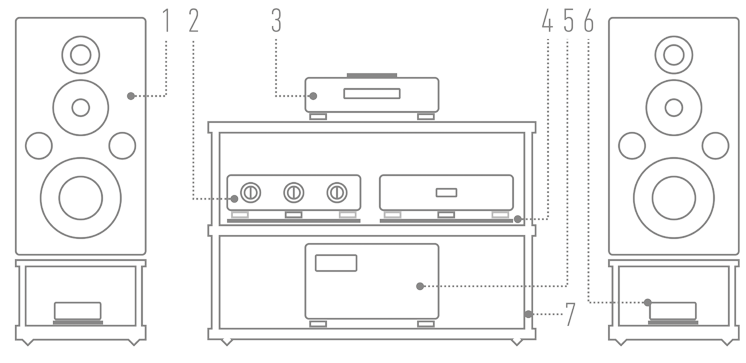 1) Loudspeakers: HARBETH M40.1 |REVIEW| 2) Line preamplifier: AYON AUDIO Spheris III Linestage |REVIEW| 3) Super Audio CD Player: AYON AUDIO CD-35 HF Edition No. 01/50 |REVIEW| 4) Stands (loudspeakers): ACOUSTIC REVIVE (custom) |ABOUT| 5) Power amplifier: SOULUTION 710 6) Loudspeaker filter: SPEC REAL-SOUND PROCESSOR RSP-AZ9EX (prototype) |REVIEW| 7) Hi-Fi rack: Hi-Fi rack: finite elemente MASTER REFERENCE PAGODE EDITION Mk II, more → HERE |
|

|
Cables Analog interconnect SACD Player - Line preamplifier: SILTECH Triple Crown (1 m) |ABOUT|» ANALOG INTERCONNECT Line preamplifier → Power amplifier: Siltech ROYAL SINLGE CROWN RCA; review → HERE Speaker cable: SILTECH Triple Crown (2.5 m) |ABOUT| |

|
AC Power Power cable | Mains Power Distribution Block - SACD Player: SILTECH Triple CrownPower (2 m) |ARTICLE| » POWER CABLE Mains Power Distribution Block → Line preamplifier: Acoustic Revive ABSOLUTE-POWER CORD, review → HERE » POWER CABLE Mains Power Distribution Block → Power amplifier: Acoustic Revive ABSOLUTE-POWER CORD, review → HERE Power cable | Power Receptacle - Mains Power Distribution Block: ACROLINK Mexcel 7N-PC9500 (2 m) |ARTICLE| Power Receptacle: Acoustic Revive RTP-4eu ULTIMATE |REVIEW| » ANTI-VIBRATION PLATFORM under Acoustic Revive RTP-4eu ULTIMATE: Graphite Audio CLASSIC 100 ULTRA, review → HERE Power Supply Conditioner: Acoustic Revive RPC-1 |REVIEW| Power Supply Conditioner: Acoustic Revive RAS-14 Triple-C |REVIEW| Passive filter EMI/RFI: VERICTUM Block |REVIEW| |

|
Anti-vibration Speaker stands: ACOUSTIC REVIVE (custom)Hi-Fi rack: finite elemente MASTER REFERENCE PAGODE EDITION Mk II, more → HERE Anti-vibration platforms: ACOUSTIC REVIVE RAF-48H |ARTICLE| » ANTI-VIBRATIONAL FEET: |

|
Analogue Phono preamplifier: Phono cartridges:
Clamp: PATHE WINGS Titanium PW-Ti 770 | Limited Edition Record mats:
|

|
Headphones » HEADPHONE AMPLIFIER: Leben CS-600X, review → HEREHeadphones: Headphone Cables: Forza AudioWorks NOIR HYBRID HPC |