

|
LAN CABLE & LAN FILTER ACOUSTIC REVIVE
Manufacturer: SEKIGUCHI MACHINE CO., Ltd. |

 |
 |
 |
|
Review
text by WOJCIECH PACUŁA |

|
No 265 June 1, 2026 |
ACOUSTIC REVIVE, a Japanese manufacturer of cables, filters, and anti-vibration accessories, was one of the first audiophile companies to offer specialized LAN cables. I tested them in March 2012, which sparked an avalanche of comments, accusations, and speculation about my mental health. Interestingly, no one asked at the time about the mental health of the manufacturer, or later that of nearly the entire audio community; review → HERE. 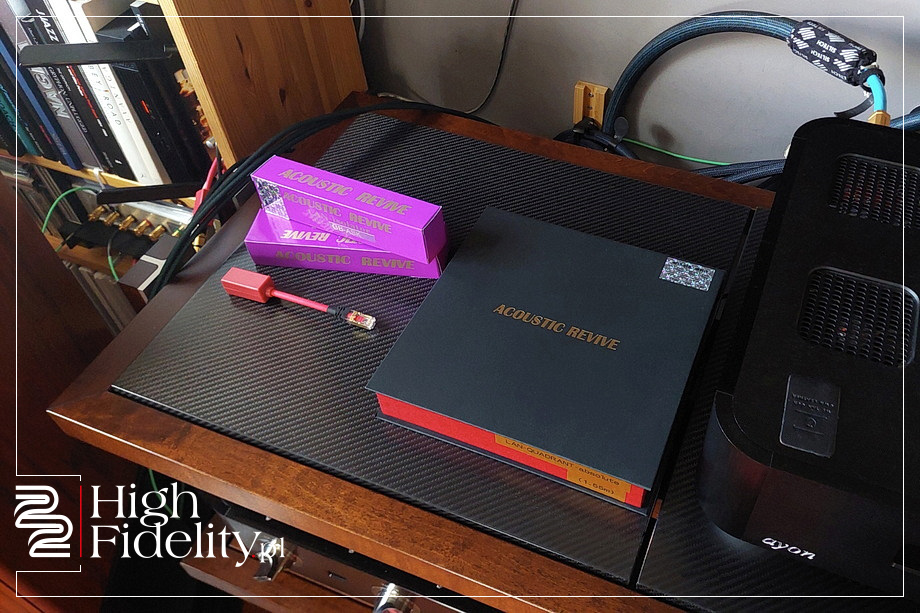
As it turned out, the integrity of computer data - and that is what packets of audio files are - depends to a large extent on the class of conductors and dielectrics, the method of shielding, and the topology. That is, on the very factors that determine the performance of regular analog cables. And this was precisely what people couldn’t wrap their heads around back then - people for whom “a bit is a bit,” and “a zero and a one are just a zero and a one.” Fourteen years have passed since then. During that time, we have witnessed several mini-revolutions in thinking about signal transmission, related - for example - to LAN switches and the filtering of this type of signal. As I wrote in my review of the Quadrant Triple-C LAN cable, which represented a significant shift from the purple “snake” cables of 2012, “today we are in a completely different place.” I was wrong. Maybe I am, maybe many of the readers are, and yet we still have to keep explaining that a LAN cable “makes a difference.” And it does, a big one. To demonstrate this, Acoustic Revive has prepared an expensive cable, a ridiculously expensive one. While it looks similar to the Quadrant Triple-C models and their successor, the Triple-C WB, it is a different proposition. As its head, Mr. Ken Ishiguro, says, the main component of the price is the cost of the conductor, which is completely out of this world. And that is what drives up the price. To complete the set, a new version of the LAN RLI-1 Triple-C passive filter has also been introduced, now in the “GB-ASK” version. Perhaps, sooner or later, an Absolute version will also be released. ▓ LAN Quadrant Absolute HISTORICALLY FIRST-EVER LAN (Local Area Network) cable by Acoustic Revive available worldwide, the LAN-1.0 PA, looked quite ordinary. It was a single-conductor cable with molded connectors, and its only external distinguishing feature were a larger diameter than typical cables of that type at the time and a bright purple color. Inside, however, something was happening that eluded the perception of most technology companies at the time, and which, years later, proved crucial for minimizing many of the distortions associated with file transmission. The cable was made of ultra-pure copper or Single Core PCOCC-A (Pure Copper Ohno Continuous Cast Advanced), and the dielectric was a material based on “fluorocarbon” (i.e., PFC). The LAN-1.0 Triple-C replaced its predecessor after 2014. The company’s more technologically advanced LAN cable didn’t arrive until 2022 - ten years later. The LAN Quadrant Triple-C model, made of Pure Copper-Continuous Crystal Construction but in a Gigabit (1 Gbit/s) version with four twisted pairs, thus leveraged the knowledge accumulated over that time. The primary goal was to minimize distortion caused by conductors placed too close together. The Japanese manufacturer, therefore, decided to separate them:
By adopting ACOUSTIC REVIVE's utility model patents - a four-part LAN cable structure and a two-part USB cable structure - interference between conductors is completely avoided, dramatically reducing jitter, the biggest factor in sound quality degradation in digital transmission.
This results in sound quality with excellent phase characteristics, free from muddiness and distortion, completely overturning the conventional concept of LAN and USB cables, where conductor interference is unavoidable. ⸜ LAN-Quadrant-Absolute, → ACOUSTICREVIVE.jp, accessed: 21.04.2026. The American company Wireworld took a similar approach to the problem, using ribbon-shaped conductors. This method is also frequently used by speaker cable manufacturers, who use separate runs for the positive and negative speaker terminals. And all because it is simple and effective. The downside of this approach is the high cost - instead of one cable, there are two, three, or, as in this case, four. 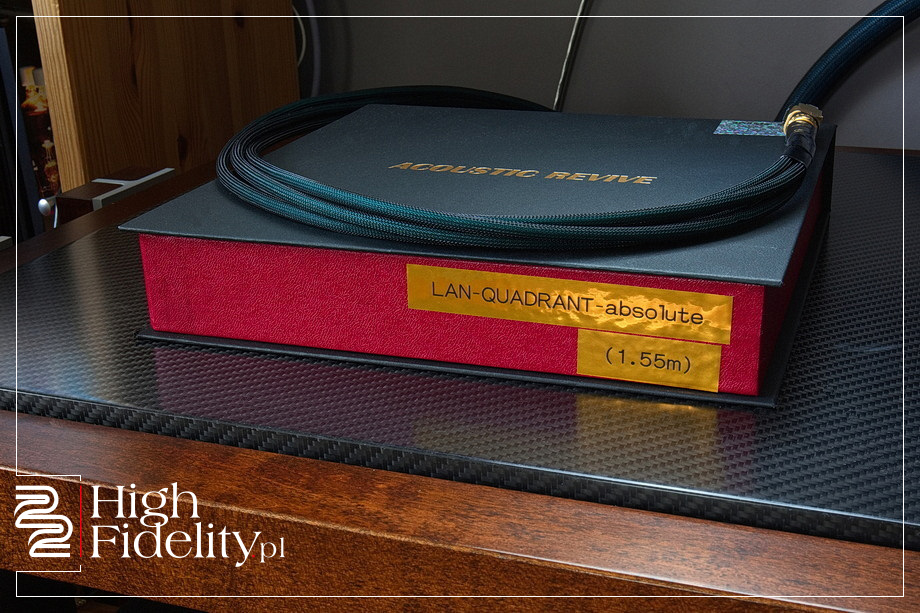
In the next version, marked “WB” and available starting in 2024, the design was exactly the same as before, but with different connectors and wires that were twice as thick - 1 mm instead of 0.5 mm. The latest cable, labeled “Absolute,” features a similar design, with the only change being the color, which is green (Triple-C cables were black, and Triple-C WB cables were burgundy). However, instead of PC Triple-C conductors they feature the PC Triple-C EX version. ▲ PC Triple-C EX PC-TRIPLE C (Pure Copper-Continuous Crystal Construction) cables are manufactured in Japan using a specialized forging process developed by a joint venture formed by FCM Co., Ltd. (a subsidiary of Furukawa Electric Co., Ltd.) and Promotion Works Co., Ltd. 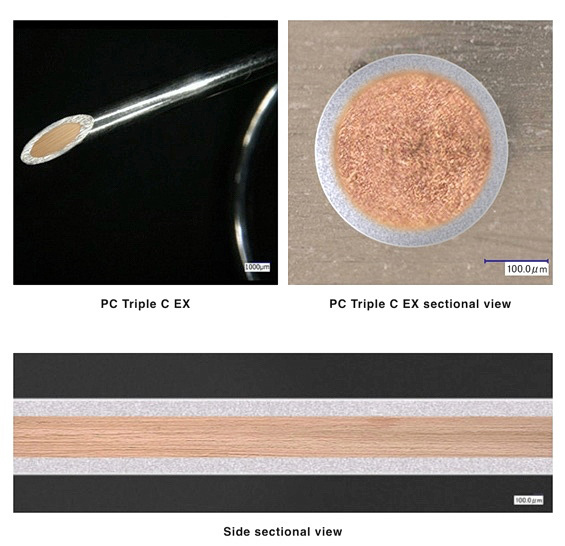
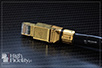
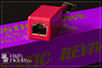
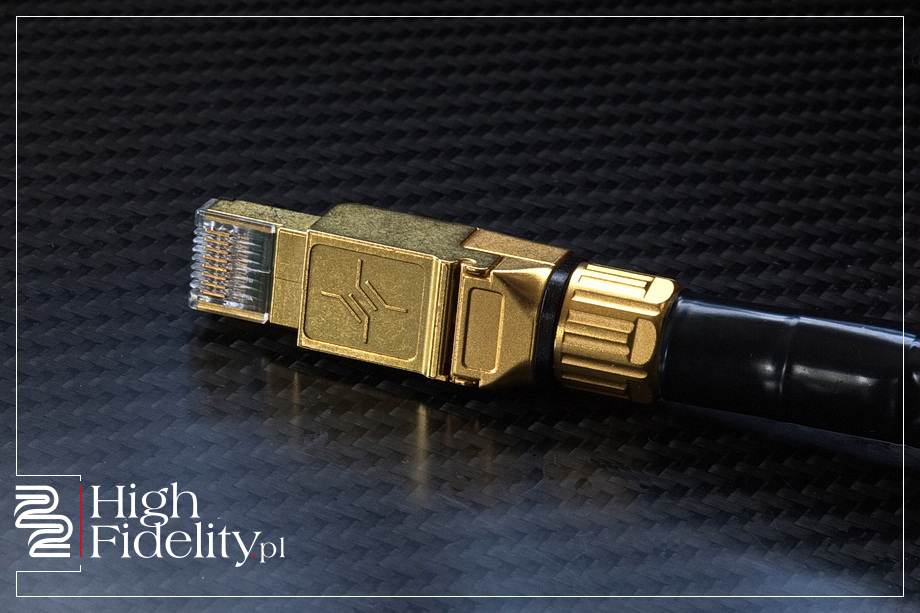
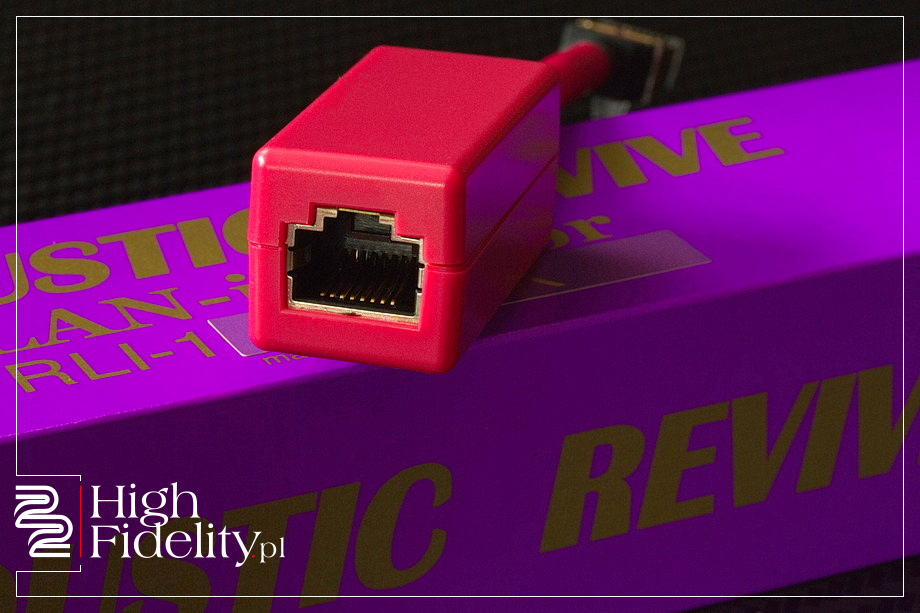
‖ The construction and cross-section of PC Triple-C EX cables. • Photo: Press materials In its flagship LAN cable, Acoustic Revive has used a version of the Triple-C conductors designated EX, that is very expensive to manufacture, rarely used, and produced in extremely small quantities. As a reminder, the material known as PC Triple-C, or Pure Copper-Continuous Crystal Construction, is produced through a process similar to forging, in which the wire is struck repeatedly. The strikes are delivered at a specific angle and direction, determined through experimentation. As a result of this process, the material’s volume is reduced by 70%. This is a clear reference to the Japanese tradition of sword forging, which is why Acoustic Revive’s advertisements once featured an image of a katana blade. Although this material does not have a particularly high purity level expressed in “N” (6N, 7N), in reality the barriers between the crystals are very low. Mr. Ishiguro even states that the transitions are less visible than in the best copper devised to date, namely PCOOC-A (Pure Copper Ohno Continuous Cast Advanced). Triple-C copper is produced in small quantities by a separate division of the Furukawa Group, Fine Chemicals & Materials (FCM). The EX version of Triple-C cables is even more advanced. It is a hybrid, forged conductor made of silver and copper, achieving a conductivity of 105% on the I.A.C.S. scale. 5N silver was formed into a tube, into which Triple-C copper was extruded. Thanks to the forging process, the silver and copper are permanently bonded, and the crystal structure is “aligned in the transverse direction in which the current flows.” The combination of silver on the outside and copper on the inside is intended to help with skin effect issues. And further: This hybrid structure of dissimilar metals eliminates the unique characteristics of silver and copper, resulting in the ultimate audio-dedicated conductor that delivers an extremely natural and lifelike tone and texture. (Ibidem) Currently, Triple-C cables are used exclusively by Japanese companies: SAEC, Acoustic Revive, Orb, Family Labo, and Furutech. Analog Relax uses them to manufacture interconnect cables for turntable tonearms. ● THE INSULATION OF THE TESTED CABLES is made of Teflon, and between it and the conductors there is also an intermediate layer of natural silk impregnated with tourmaline. Teflon is characterized by excellent dielectric constant and dielectric loss tangent, which is intended to ensure “incredible transmission speed.” To prevent the buildup of static electricity - the only drawback of this material - an intermediate layer consists of a sheath made of natural silk impregnated with tourmaline from Guiyang Prefecture and lithium tourmaline powder. This is intended to produce an “organic and fresh sound.” The cables feature dual EMI protection thanks to copper foil shielding and the entire assembly being housed in a CSF carbon tube. According to the manufacturer, CSF has “excellent high-frequency shielding properties” and exhibits anti-static effects. The ends are fitted with connectors from the German company Telegärtner with gold-plated contacts. This is a Category 6A, Class E connector providing transmission speeds of up to 10 Gb/s (up to 250 MHz). It has a very sturdy body and a convenient latch. However, since its dimensions are slightly larger than those of general-purpose connectors, you should check whether your router accepts it. As in the previous version, the only thing that doesn’t quite appeal to me is the connection between the cables and the connector - it’s made using a rather inelegant heat-shrink sleeve. ▓ RLI-1GB-ASK ALONG WITH ITS FIRST LAN CABLES, Acoustic Revive also introduced optional passive filters. These are galvanic isolators in the form of short cable runs with an RJ45 plug on one end and a socket on the other, housed in a small plastic box. The filter uses PC-Triple C copper as the conductor and fluororesin as the dielectric, which has a very good relative dielectric constant and, as stated in the manufacturer’s materials, enables ultra-fast transmission speeds. Shielding is provided by a copper foil. The design of the new filter version is very similar to that of the RLI-1 Triple-C. It is a short section of cable (164 mm) terminated on one end with a LAN plug and on the other with a small cuboid measuring 47 x 21 x 21 mm, which houses the filter elements. It contains a switching transformer designed to drastically reduce transmission noise exclusively, “without causing any side effects characteristic of optical isolation.” 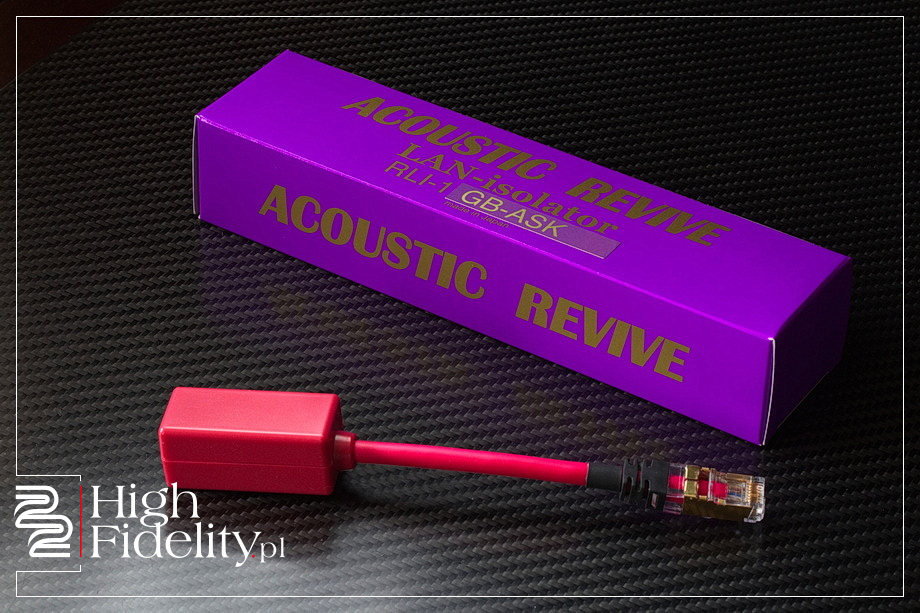
A small quartz disc - which the company uses in all its products - has been attached to the back of the transformer housing. But that’s not all. In the ASK version, the interior of the housing and the components inside have been painted with paint containing tourmaline:
The noise reduction unit is equipped with a natural quartz resonator, dramatically improving vibration-damping characteristics and preventing sound quality degradation due to vibration.
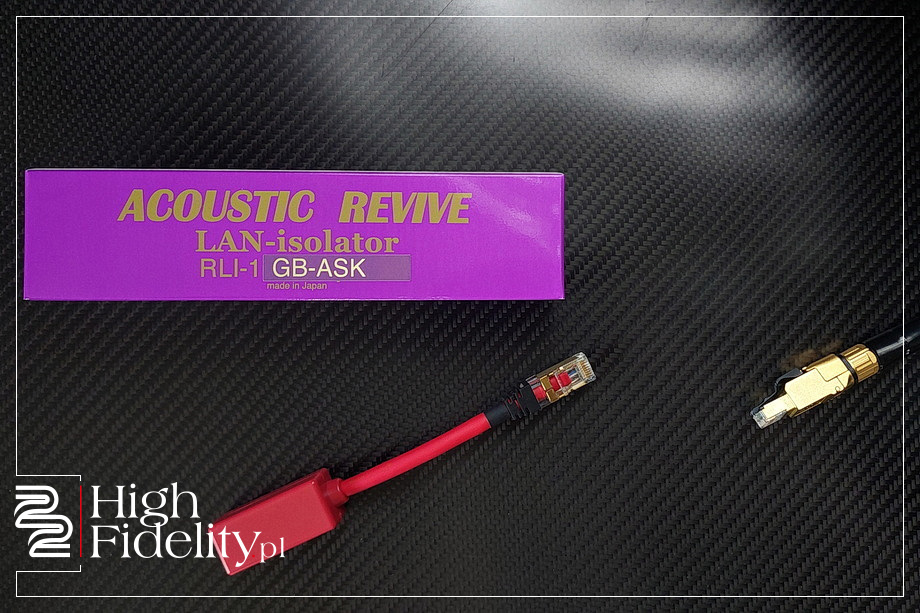
Furthermore, special treatment using various natural minerals such as Guiyangite, lithia tourmaline, and shungite eliminates the effects of static electricity and electromagnetic noise, greatly improving conductivity and sound quality. ⸜ RLI-1GB-ASK → ACOUSTICREVIVE.jp, accessed: 21.04.2026. The filter looks almost identical to the previous version, with the only difference being a short black piece of heat-shrink tubing near the RJ45 connector. |
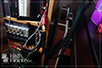
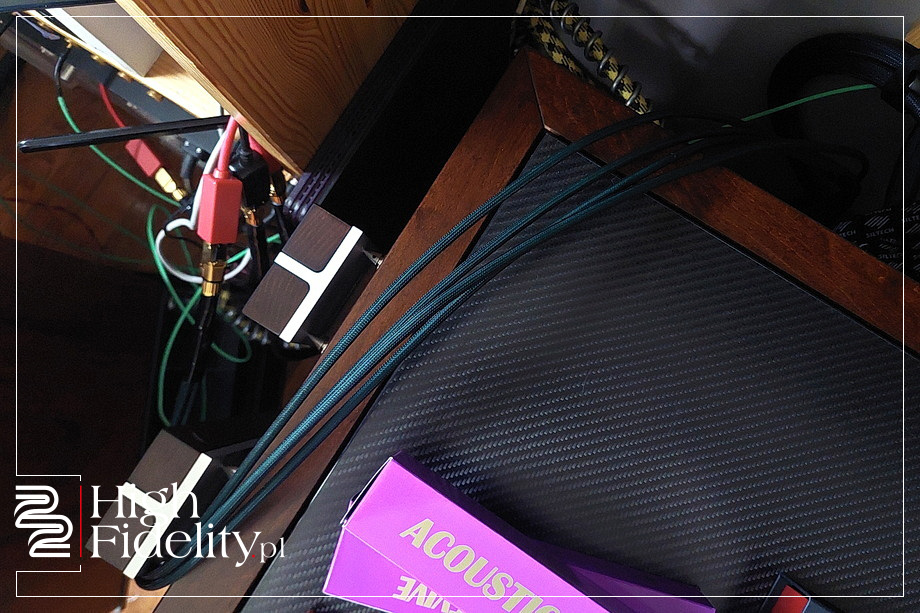
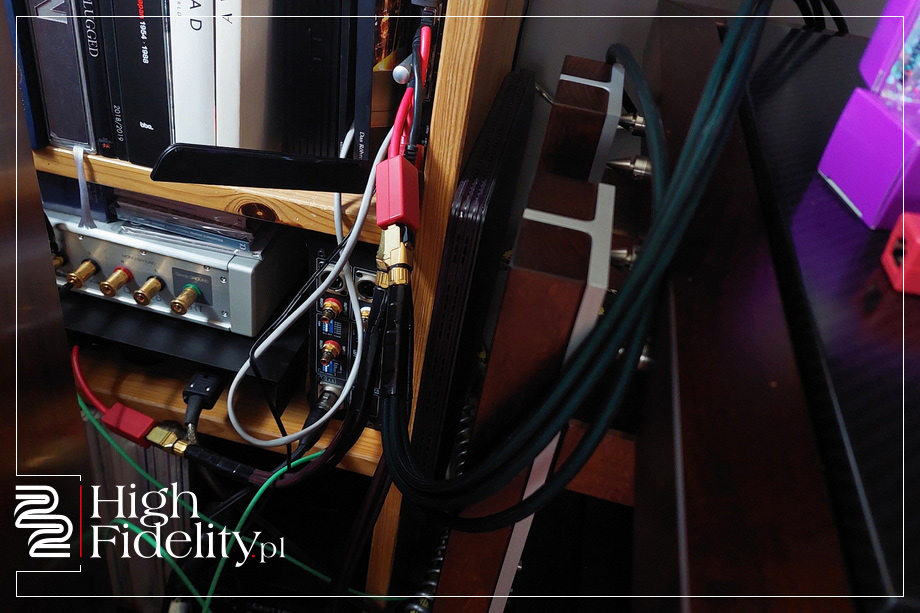
▓ SOUND HOW WE LISTENED• The Acoustic Revive cable and filter were tested in the HIGH FIDELITY reference system. The cable connected the MikroTik hAP ax³ router to the DSP-05EX & PMC-05EX media player. 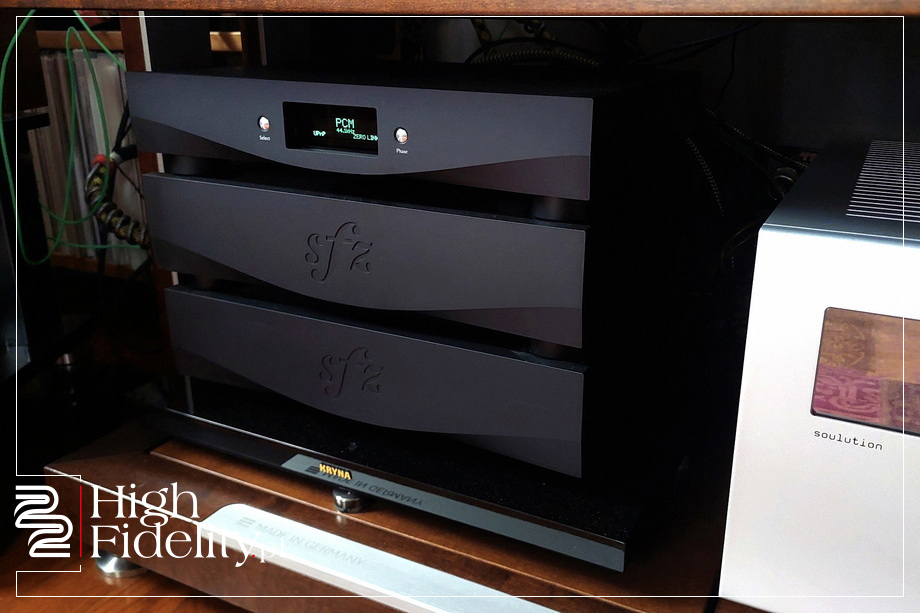
‖ Test was conducted using a 3-piece Sforzato audio file player I installed the RLI-1GB-ASK filter on the router side, and then added another one on the player side. As a test, I also connected three filters in series. 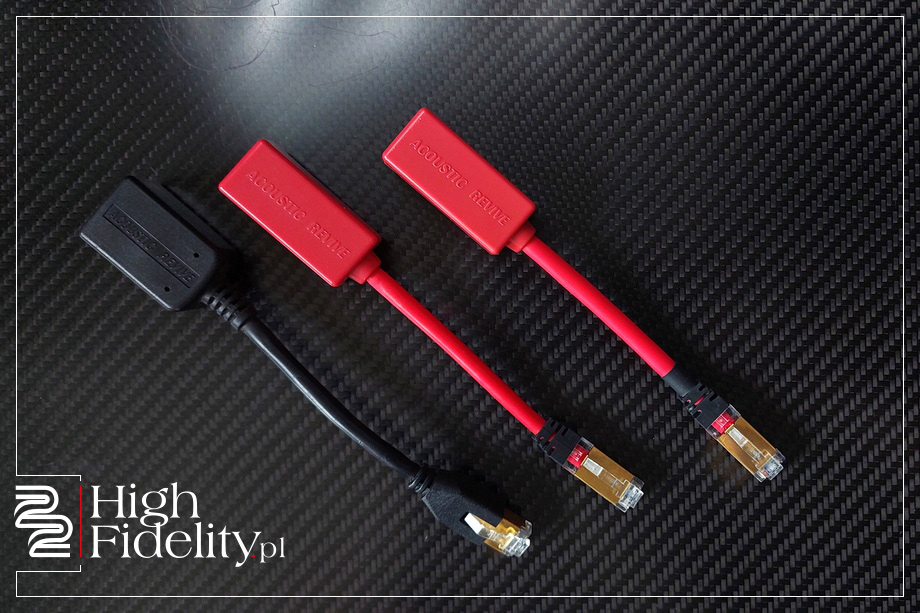
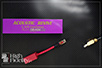
‖ Three generations of RLI filters (from the left): RLI-1 from 2012, RLI-1GB Triple-C from 2024, and the latest, RLI-GB ASK I compared the tested cable to the LAN Quadrant Triple-C WB and to a standard Cat8 LAN cable from Media Expert (29 zlotys per meter). The test involved a AA/BB/A and BB/AA/B comparison, with known A and B samples. 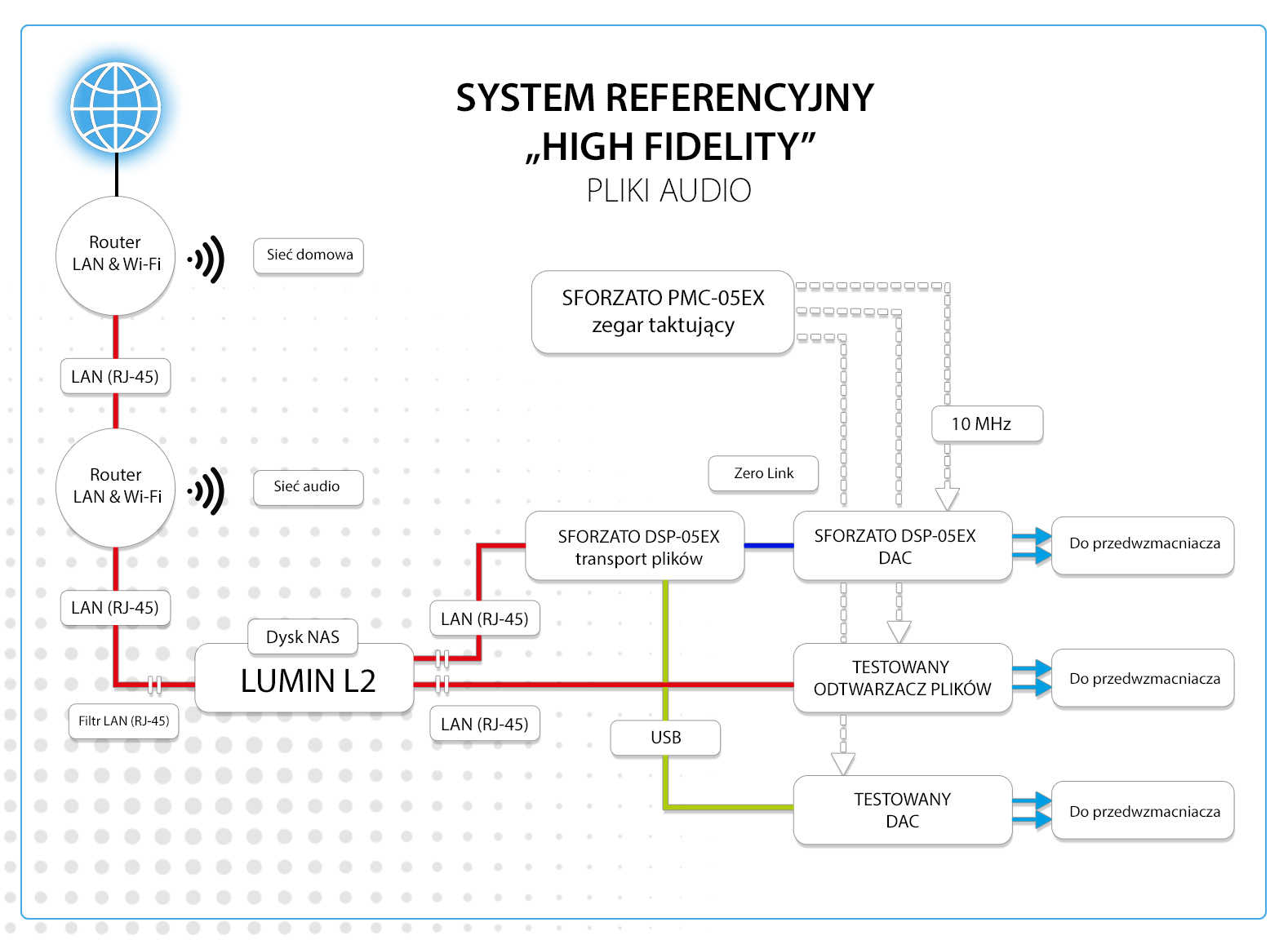
‖ Diagram of the HIGH FIDELITY audio files playing system » RECORDINGS USED FOR THE TEST ⸜ a selection
• RICHARD HAWLEY, Coles Corner, Parlophone Records Limited/Tidal, FLAC 16/44,1 ⸜ 2005. LADIES AND GENTLEMEN! You don’t have to be seasoned audiophiles or even consider yourselves people with a “good ear”: the differences in sound between the Triple-C WB and Absolute cables are so significant that anyone we sit in front of the speakers will notice them - whether it’s a colleague, a friend, a significant other, a child, or a dog, not to mention a cat (they have excellent hearing and are music lovers). We’re talking about changes that are significant in every respect. 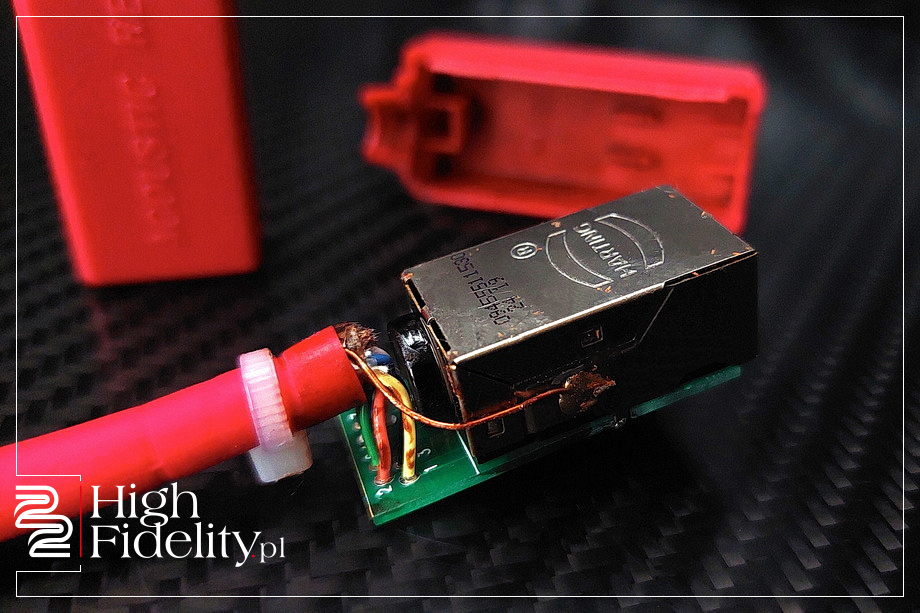
The new Acoustic Revive cable offers a different tonal balance. It has an open, fast, and resonant sound, whereas the previous cable - as well as all of this manufacturer’s older LAN cables - sounds warm and organic. The Absolute departs from this sound signature. Richard Hawley’s vocals on the ˻ 5 ˺ The Ocean ballad were further back in the soundstage and were also rendered more clearly. The same was true of the instruments, now perceived from a wider perspective. And yet it was a much more precise sound. That is, with a more precisely shaped attack and a clear decay. As if the attack had been cleansed of any residue and “overlays.” While these were very pleasant in the cheaper cable, they masked a lot of information. That is why the high, machine-transposed voice of JAMES BLAKE, opening the ˻ 1 ˺ Walk Out Music track, appeared so unexpectedly and so suddenly. The track in question begins with a warm, expansive synthesizer sound reminiscent of Angelo Badalamenti’s music from Twin Peaks, after which the vocal I’m referring to suddenly kicks in, soon joined by Blake’s actual voice. With the Absolute cable, these transitions, these changes were less jarring than with the “WB” cable. Interesting, isn’t it? It would seem that if something is clearer and more open, the result should be the opposite. However, I was dealing with a phenomenon we encounter in high-end audio, whereby a greater amount of information results in a smoother and more natural sound. This isn’t a warm sound, like with the older cable. This one is perfect at what it does, and I spent long hours listening to music from Tidal with it, just for the pleasure of it - it sounded so great, so good. The Absolute version brings a completely different perspective to this. The sound is more laid back, more distant, as I’ve already mentioned, but also clearer - I’ll repeat that once more. It’s also more nuanced and smoother - let me say that for the first time. There’s more happening “there”; the attack is sweeter and, at the same time, more resonant. This means it has a smooth flow, but also high energy. All the instruments on the version of Art Blakey’s Moanin’, recently released by Catalyst Records -which is faster and more energetic than the classic 1956 album of the same title, sounded richer in detail, but less rich in tone. It’s interesting, but I had a similar impression when comparing this company’s Absolute power cable and analog interconnect with its older Triple-C versions, which lacked silver. It therefore seems that the choice of material is key in this case. It is thanks to this that the sound with the LAN Quadrant Absolute cable expands so spectacularly into the depth of the soundstage. In a direct comparison, not only with this manufacturer’s WB version but also with other LAN cables, it seems less intense and quieter. It isn’t, but because we perceive everything from a greater distance - because the sound has time to unfold before reaching us - it is built across a larger space, and the presentation feels more relaxed. One of the characteristics of the cheaper Acoustic Revive cable was warmth and incredible bass fullness. These are features we won’t get with the Absolute. The low frequencies are extend lower with it, but in a less “pulsating” way. Though I should add, the bass hit on the pad in GOGO PENGUIN’S ˻ 4 ˺ What We Are and What We Are Meant to Be, and then the synthesizer, equally low, was less jarring with the new cable. Instead, it was cleaner and richer in tone. It was no longer just a slam, but a full impact. 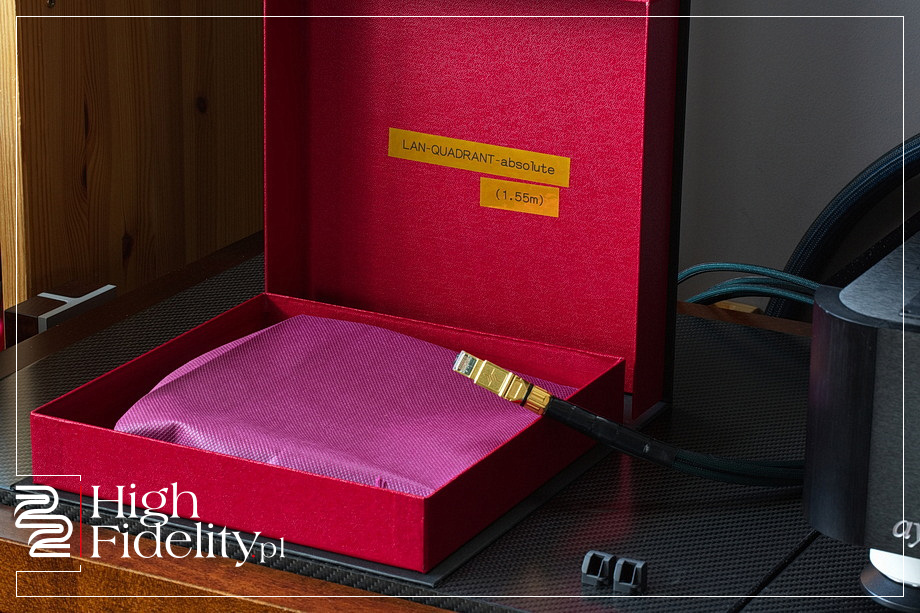
I had a similar impression of the exceptionally low bass notes in ˻ 8 ˺ Arp by VANDANA. With the Absolute they were nuanced, not all of them were the same. With the WB, they are nice and dense, but a bit monotonous. The new cable differentiates them in terms of space, tone, and dynamics. Paradoxically, this is precisely why the sound won’t be as “friendly.” Instead, it will be much more authentic. RLI-1GB-ASK • Upgrading to a newer filter seemed like a minor change to me. The cable, on the other hand, was a different story - different conductor, many times more expensive - so the expected changes should have been significant. And they were. However, switching to the LAN filter while still using the Absolute cable in the system brought about a shift that changed my perception of the cable itself. The new filter provides a much “blacker” background. This came out great at the beginning of the NANCY WILSON and CANNONBALL ADDERLEY’S track ˻ 1 ˺ Save Your Love For Me, when you can still hear the tape hiss and the instruments come in softly, as if emerging from the darkness. With the GB-ASK, it was better differentiated, simply more pleasing. Wilson’s vocals were also smoother, somehow more enjoyable. The Absolute cable itself is excellent, but - this was my impression - not every system will “get along” with it. With a new filter, preferably two, at both ends, it changes its character. Not the sound - it’s still exactly the same. However, it’s perceived differently, as nicer and more friendly. For me, better. The new Acoustic Revive filter will also work well with other cables, but I’m not sure if you need to replace the older version right away. You can, it will be a good change, but it’s optional. However, if you don’t have one yet, rent the RLI-1GB-ASK, and you’ll hear Tunguska by ASHBURY HEIGHTS in its bright, compressed version, but also with energy and depth. Just as it should sound. ▒ Summary ACOUSTIC REVIVE’S NEW LAN CABLE is completely different from all of the company’s previous LAN cables. It’s open, exceptionally transparent, and dynamic, with a soundstage that’s positioned away from the listener and extends far back. It also offers excellent resolution. It reveals the depth of recordings in a unique way, bringing streaming closer to what I hear on CDs and SACDs. What we won’t get with it is warmth and tangibility. If that’s what you’re looking for, it’s worth sticking with the Triple-C WB version. It’s also a great cable, and significantly cheaper. However, if you want something more - and something different - the Absolute awaits. I’ve never heard such resolution and sonority, such differentiation of micro-details in a streaming system before. 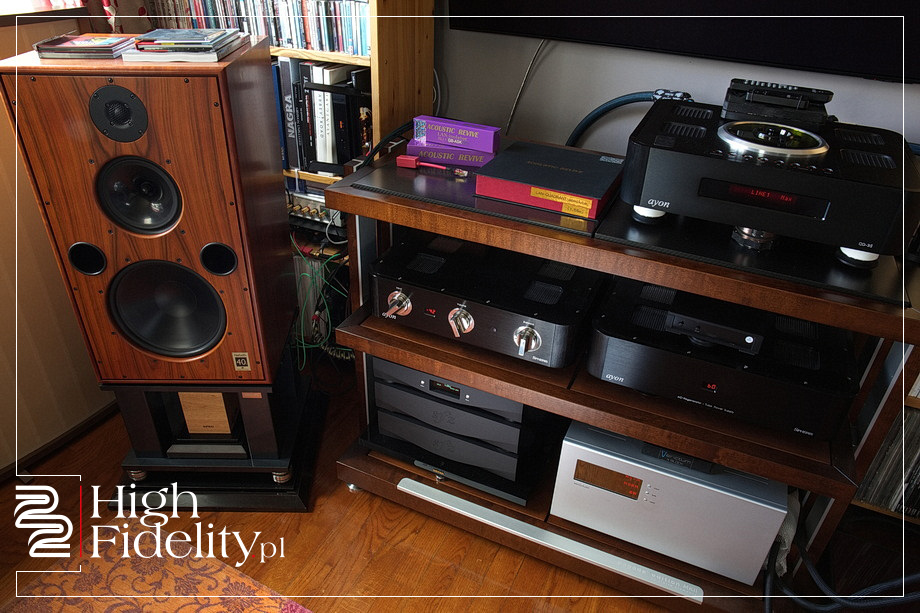
And on top of that, the new filters – let’s get them regardless of which cable we use; let’s get one, two, or more, and use them throughout the system. I also tried them in series - three, one after another - and the increase in resolution was even greater. Because this is an excellent cable and excellent filters that will remain a part of the HIGH FIDELITY system. ‖ WP 

THIS TEST HAS BEEN DESIGNED ACCORDING TO THE GUIDELINES adopted by the Association of International Audiophile Publications, an international audio press association concerned with ethical and professional standards in our industry, of which HIGH FIDELITY is a founding member. More about the association and its constituent titles → HERE. |
 |

|
Reference system 2026 |
|
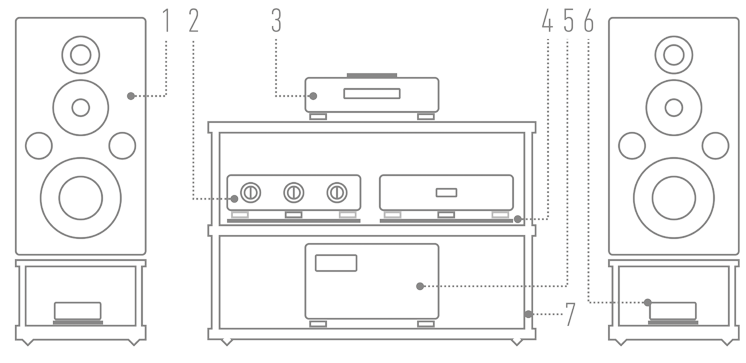 1) Loudspeakers: HARBETH M40.1 |REVIEW| 2) Line preamplifier: AYON AUDIO Spheris III Linestage |REVIEW| 3) Super Audio CD Player: AYON AUDIO CD-35 HF Edition No. 01/50 |REVIEW| 4) Stands (loudspeakers): ACOUSTIC REVIVE (custom) |ABOUT| 5) Power amplifier: SOULUTION 710 6) Loudspeaker filter: SPEC REAL-SOUND PROCESSOR RSP-AZ9EX (prototype) |REVIEW| 7) Hi-Fi rack: Hi-Fi rack: finite elemente MASTER REFERENCE PAGODE EDITION Mk II, more → HERE |
|

|
Cables Analog interconnect SACD Player - Line preamplifier: SILTECH Triple Crown (1 m) |ABOUT|» ANALOG INTERCONNECT Line preamplifier → Power amplifier: Siltech ROYAL SINLGE CROWN RCA; review → HERE Speaker cable: SILTECH Triple Crown (2.5 m) |ABOUT| |

|
AC Power Power cable | Mains Power Distribution Block - SACD Player: SILTECH Triple CrownPower (2 m) |ARTICLE| » POWER CABLE Mains Power Distribution Block → Line preamplifier: Acoustic Revive ABSOLUTE-POWER CORD, review → HERE » POWER CABLE Mains Power Distribution Block → Power amplifier: Acoustic Revive ABSOLUTE-POWER CORD, review → HERE Power cable | Power Receptacle - Mains Power Distribution Block: ACROLINK Mexcel 7N-PC9500 (2 m) |ARTICLE| Power Receptacle: Acoustic Revive RTP-4eu ULTIMATE |REVIEW| » ANTI-VIBRATION PLATFORM under Acoustic Revive RTP-4eu ULTIMATE: Graphite Audio CLASSIC 100 ULTRA, review → HERE Power Supply Conditioner: Acoustic Revive RPC-1 |REVIEW| Power Supply Conditioner: Acoustic Revive RAS-14 Triple-C |REVIEW| Passive filter EMI/RFI: VERICTUM Block |REVIEW| |

|
Anti-vibration Speaker stands: ACOUSTIC REVIVE (custom)Hi-Fi rack: finite elemente MASTER REFERENCE PAGODE EDITION Mk II, more → HERE Anti-vibration platforms: ACOUSTIC REVIVE RAF-48H |ARTICLE| » ANTI-VIBRATIONAL FEET: |

|
Analogue Phono preamplifier: Phono cartridges:
Clamp: PATHE WINGS Titanium PW-Ti 770 | Limited Edition Record mats:
|

|
Headphones » HEADPHONE AMPLIFIER: Leben CS-600X, review → HEREHeadphones: Headphone Cables: Forza AudioWorks NOIR HYBRID HPC |