


|
ANALOG INTERCONNECT RCA 聖HIJIRI
Manufacturer: COMBAK CORPORATION |

 |
 |
 |
|
Review
text by WOJCIECH PACUŁA |

|
No 265 June 1, 2026 |
USUALLY, there is a manufacturer who starts a company and gives it a name so they can sell what they produce. This company offers a product, usually under the company name, known by that brand. But it is not always so. It is also often the case that a company decides to create a brand with a different name than the parent company. This is the case, for example, with the Technics brand owned by Panasonic Corporation, or - this is an interesting example - the Acrolink brand, owned by Acro Japan Corporation, which in turn is part of Mitsubishi Cable Corporation, and that is part of Mitsubishi Materials Corporation, which is part of the Mitsubishi Group (Keiretsu) conglomerate. 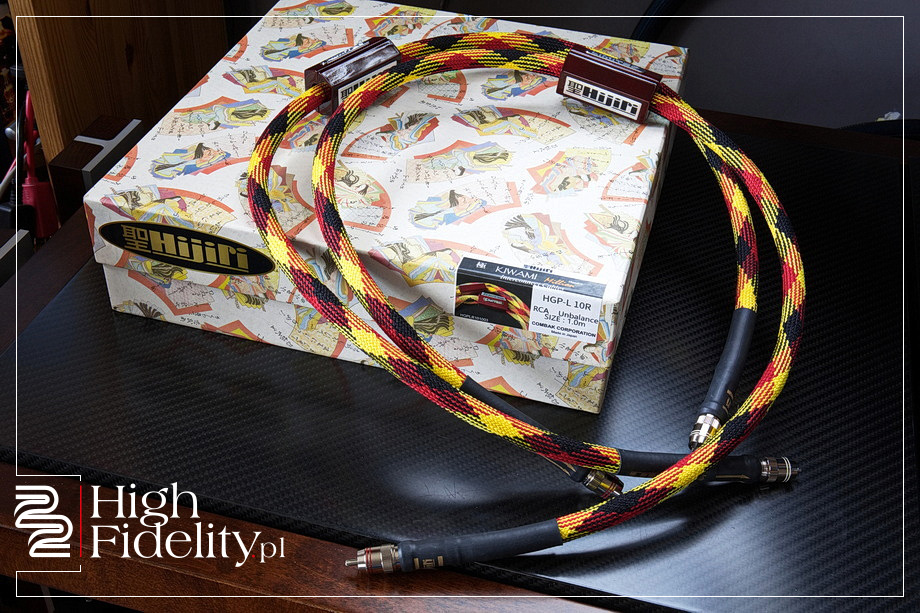
This is also the case with the HIJIRI (Jap. 聖) brand, whose Kiwami Million Maestro HGP-L 10R Limited interconnect we are testing. It belongs to Combak Corporation, a company founded and run by Mr. Kazuo Kiuchi. When we look at the company’s stationery - which is what the cable user manual is printed on - we see as many as five logos, each representing a separate brand: Harmonix, Reimyo, Encore, XRCD24 (yes, really!), and 聖Hijiri. The first were anti-vibration products sold under the Harmonix brand. It was thanks to them that Mr. Kiuchi gained recognition, which was soon solidified by cables under the same brand. Over time, a second brand, Reimyo, joined them, followed by a third, Encore, with loudspeakers. The Reimyo brand featured electronics - preamplifiers, power amplifiers, CD players, and DACs. The digital sources were unusual in that their main component was the K2 digital filter, later the K2HD, which was part of the patent the Japanese used to produce excellent CD versions and which forms the basis of the XRCD “package.” This one, in the XRCD24 version (24-bit super analog), belongs to Mr. Kiuchi. The 聖Hijiri brand is the newest. Its origins are easy to trace: it debuted alongside the unveiling of the HGP-10R Million Maestro interconnect at the High End 2015 in Munich, which we were among the first in the world to test; more → HERE. Even then, my inability to cope with the naming of this brand’s products made itself known. When describing the cable in the review, I didn’t know what the product name was, what the series name was, and what was something else entirely. But that’s just me; the naming itself is rooted in Japanese tradition. The company’s CEO is both an entrepreneur and an artist, and in the names he captures long associations and attributes that, in his opinion, are key to understanding a given product. ▒ HGP-L 10R Limited HIJIRI’S LATEST PRODUCT - and it’s been a long time since we’ve seen a new release from this brand - is a return to its first interconnect, but in a new form. The suffix “Limited” has been added to the product name, HGP-L 10R, to indicate a limited run and the special status that Mr. Kiuchi has bestowed upon it. But there is also the series name, “Million Maestro,” which speaks to the position this cable holds for its creator (“maestro for millions”), and there is another term that has since appeared on the HGP-L 10R interconnects - “Kiwami.” The combination of the words Hijiri and Kiwami (Jap. 聖 極) means “supreme master” or “supreme saint.” It is formed by combining the characters 聖 (hijiri – holy/master/guide) and 極 (kiwami – extreme/supreme/reaching the summit). Generally, this signifies the highest class, the pinnacle or highest level of product refinement; this term is often used in reference to premium Japanese audio cables or high-end Daiginjo sake. The history of high-end audio products is closely intertwined with artistry, small workshops, and high-class craftsmanship. Incidentally, Mr. Kiuchi is also a kendo master. All of this has shaped his approach to audio products, which he views as a fusion of technology and art. In an interview he gave us during his visit to Kraków and the Kraków Sonic Society back in 2005, he said:
It may be difficult for your readers to understand traditional Japanese martial arts, but in short, it is very important to me to act in the spirit of Japanese tradition. Concentration, stoicism, and situational awareness are integral to kendo.
Other important elements associated with kendo are truth, dignity, integrity, and respect - all of which must be mastered. The higher the rank I achieve, the harder it is to be a kendo master. That is the nature of kendo. When I develop a new product, this is what matters most to me. ⸜ Im wyższy stopień osiągam, tym trudniej jest być mistrzem kendo, Wojciech Pacuła interviews Kazuo Kiuchi, „High Fidelity” № 75, August 2005, → www.HIGHFIDELITY.pl, accessed: 14.04.2026 ˻PL˺. TECHNOLOGY • Perhaps that is why the products from the Combak Corporation come with a minimal technical description. I’ve spoken with r. Kiuchi about this many times, asking about this or that solution, and each time he would reply with a gentle smile: “Wojtek-san, don’t look for what’s on the surface, but for the music - that is, what lies deep within the product.” Perhaps that is why the manufacturer writes in the leaflet included with the cable:
This is the cable that is most faithful to the original sound, transmitting high-density information with excellent tonal balance, free of blurring and distortion across the entire frequency range, making the high frequencies as clear as a stream. Consonants and sibilants are exceptionally clear and free of harshness.
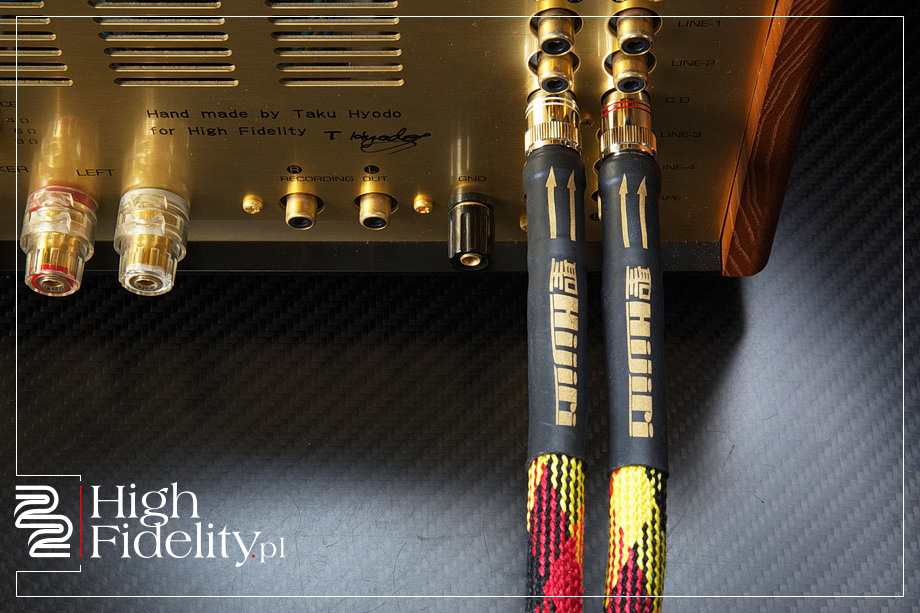
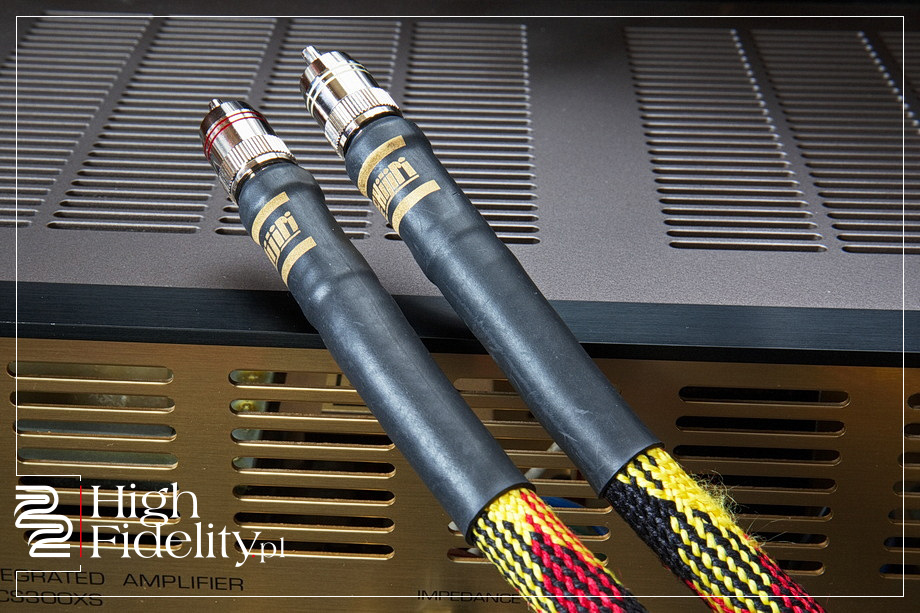
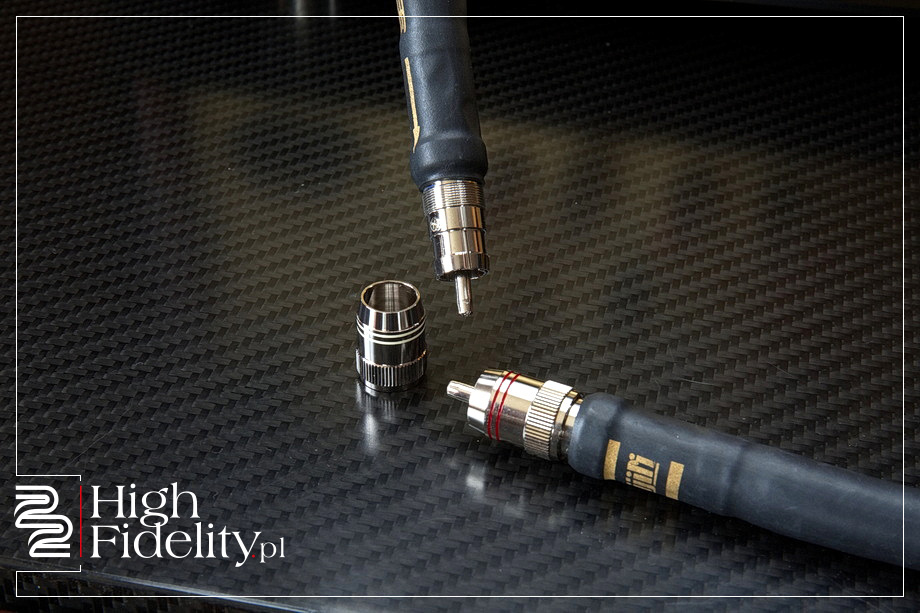
Be that as it may, there is something we do know about his products (as you can see, I haven’t quite listened to him all the way through…). The HGP-L 10R Limited is an unbalanced analog interconnect. It uses PCOCC (Pure Copper by Ohno Continuous Casting) wires, once manufactured primarily by Furukawa Electric, as well as - to a lesser extent - by Sumitomo Electric Industries. The Taiwanese Industrial Technology Research Institute had its own separate line; the rights to which were later purchased by Neotech. Harmonix cables, and later Hijiri cables, feature PCOCC copper from Furukawa Electric. There is very little of it on the market, as it has not been produced for a long time. That is why cables that use it are becoming increasingly rare and are produced in limited runs. In the interconnect under review, it features a proprietary weave and undergoes a treatment that the company’s materials cryptically refer to as a “secret manufacturing method.” Perhaps this is a heat treatment, such as cryogenic treatment. This copper is, by definition, directional. Technically trained engineers attached to basic cable types do not understand this, yet it is a fact - a technical and physical one. 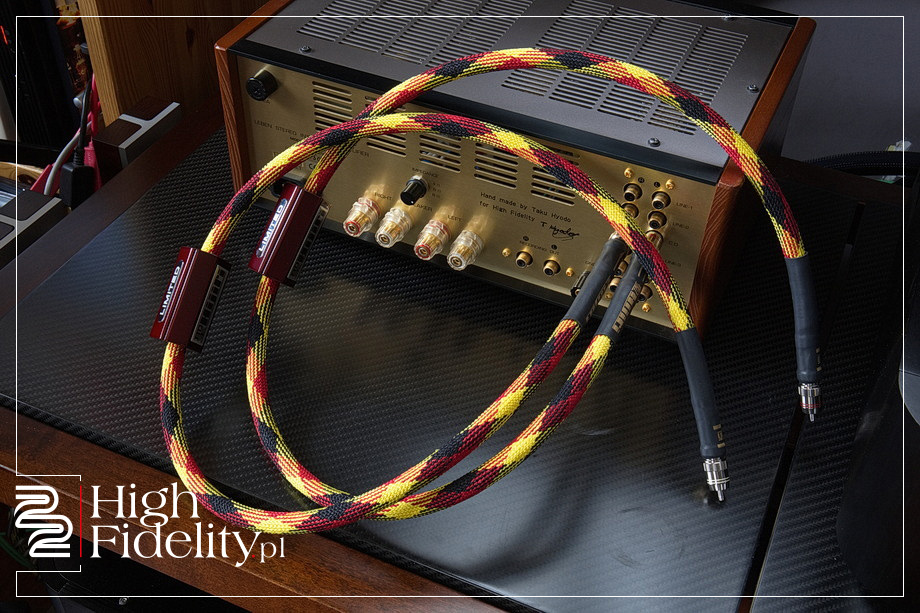
During the production of PCOCC cables, the grains in the metal align according to the direction in which it is drawn. Listening tests show a significant difference in sound between the two directions of signal transmission. Furukawa, in fact, conducted its own measurements, which confirmed this phenomenon. On the heat-shrink sleeves that are applied to the connectors of the tested cables, we therefore find arrows indicating the correct connection direction. Hijiri interconnects utilize three-layer shielding systems, which suppress RFI and EMI. Equally important is vibration damping - factor whose impact on sound quality has long been underestimated, yet one that has been a priority for Mr. Kiuchi from the very beginning. The design of the tested interconnect is therefore intended to minimize vibration and reduce resonance through the use of specialized materials, such as “hard fibers” and special braids. This is also aided by an inconspicuous wooden element in the center of the cable, on which the names and logos are found. Its material, shape, and placement were selected through experimentation. The cables are handmade, except for the outer jacket. They are terminated with rhodium-plated copper connectors. They arrive in a simple cardboard box with Japanese motifs - each box is unique. ▓ SOUND HOW WE LISTENED • The Kiwami Million Maestro HGP-L 10R Limited interconnect by 聖Hijiri was tested in the HIGH FIDELITY reference system. It was compared to the following reference interconnects: Siltech Triple Crown, Siltech Master Crown, and Crystal Cables Absolute Dream. 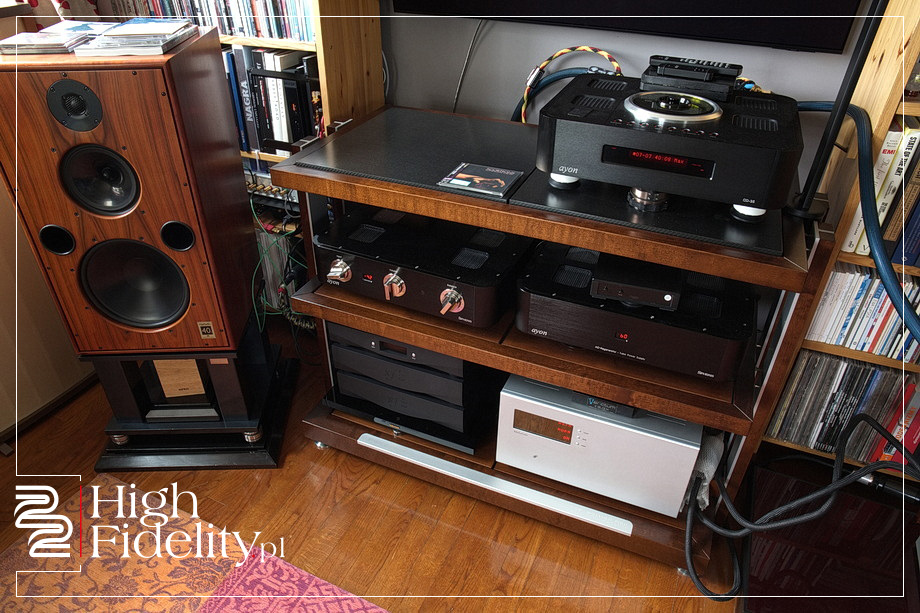
The cable connected the RCA output (gold-plated WBT Nextgen connectors) of the Ayon Audio CD-35 HF Edition SACD player to the line-level input of the Spheris Evo preamplifier from the same manufacturer (again, gold-plated WBT Nextgen connectors). The comparison sequences were AAA/BBBB/AAA and BBB/AA A/BBB with familiar A and B. The tracks were 1 to 2 minutes long. The comparison was not immediate - there were pauses of about ten seconds, needed to switch the connectors and change the input on the preamp. 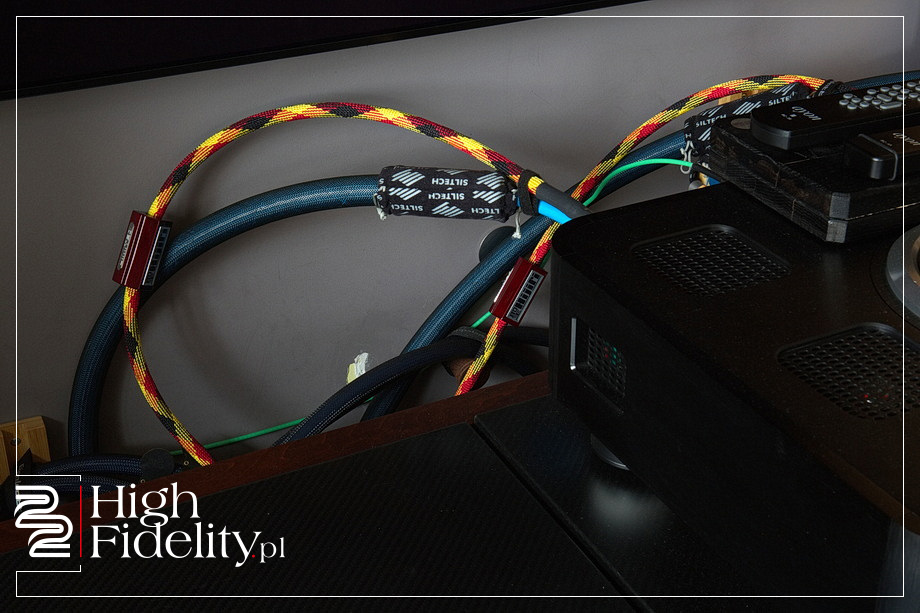
» RECORDINGS USED FOR THE TEST ⸜ a selection
• MILES DAVIS, Kind of Blue, Columbia Records/AudioNautes Recordings AN 2405 KD, Crystal Disc CD ⸜ 1959/2023. LISTENING TO MR. KIUCHI’S interconnect was, for me, something of a return to the best day of my youth. It was joyful, a bit nostalgic, and above all - it felt good. I felt as though I were immersing myself in a familiar setting without any sense of loss, longing, or regret. The return I’m talking about is, in fact, a transfer of those same feelings, but to “today,” to the “here and now.” Let me explain. The sound with the Hijiri interconnect is remarkably natural and fluid. These are the qualities for which I have valued this brand’s products, and the reason why, for so many years now, I have stubbornly used the Harmonix power cable to test - often incredibly expensive - amplifiers, DACs, file players, CD and SACD players, and preamps. The naturalness I am referring to manifests itself in the fact that when ˻ 2 ˺ Freddie Freeloader from MILES DAVIS’s album Kind of Blue begins, we enter this world “on the fly,” yet also “seamlessly.” There is a certain nervousness in this opening, stemming from the material itself - you can clearly hear that the beginning was edited from a longer passage, that something was cut out. That is why the trumpet sounds suddenly and is already in a sort of “full swing.” Hijiri didn’t add to the tension; it slightly distanced everything from me. At the same time, it conveyed that we are already at a certain point in the story. That is, it didn’t impose a strong attack or contours on me, but rather conveyed the energy of the piece. I also immediately noticed a characteristic that would recur throughout the rest of the listening session: the HGP-L 10R Limited plays legato, meaning smoothly, softly, and effortlessly. Just a few words, but they paint the same, coherent picture - a cable offering a sound that is relaxed on one hand because it’s viewed from a distance and precise on the other. The Siltech Triple Crown, for example, presents events much closer and more unambiguously. Interestingly, due to this sound, the Hijiri is closer to the Dutch company’s new flagship cable, the Master Crown. The depth of sound in the tested interconnect is extraordinary. Not just “for the price,” but in general. After all, the manufacturer doesn’t have the technological and research resources that Siltech can boast of, does it? Instead, it has exceptional taste and musical sensibility. And time. You can hear this in every moment of music played through the tested cable. Like when, in the aforementioned track, Coltrane’s saxophone enters in the right channel, playing higher. With the Hijiri, it is bright and clear, yet soft and silky. And at the same time, surrounded by plenty of air. It’s about the freedom I mentioned, about outstanding expressiveness - not intrusive, but “accompanying.” When, at 0:45, the cymbals suddenly strike harder, they are slightly distorted - for a moment, just a split second, but they are there. The Siltech conveyed this emphatically and powerfully - exactly as it is. The Japanese cable, on the other hand, approached this differently (I’m anthropomorphizing, but it’s easier for me to convey the emotions accompanying the listening experience this way). In a softer, more “sympathetic” way toward the music. 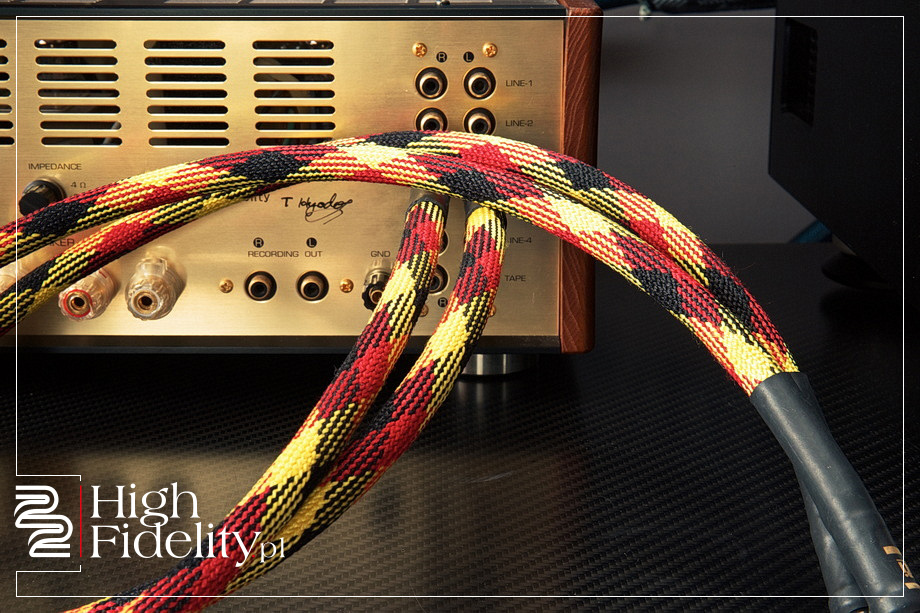
I’m not saying that Siltech lacks “soul” - that’s simply not true. However, the tested interconnect has something exceptionally captivating in its sound, making it dynamic, spacious, and expressive, and at the same time very, very relaxed. And that suggests greater depth, even if Siltech is better in this respect. In contrast, other cables seem a bit “tight” next to the Hijiri, as if they had to try harder. The Hijiri “doesn’t have to” do anything - that’s how I interpret what I hear. Maybe it wants to, and it does, but not out of obligation, but out of the pure joy of playing. |
And again - I’m speaking as if about a person, but that’s how I perceive it, as if I were “talking” to someone behind the sound. As if I were listening to what they have to say. All the more so because it’s really easy to transfer our everyday experiences to the subsequent listening sessions I conducted. What I mean is that when listening to music with a Japanese cable, you get the impression of listening to music “accompanied by,” rather than “with help from”. So the cable doesn’t take anything away from us, but merely enables experiencing music. This is due, as I understand it, to the softness and freedom of the sound, which I’ve already mentioned, as well as a slight “withdrawal” from the attack. You see, the Hijiri isn’t as detailed or selective, nor does it have as extended a frequency response as the Siltech Triple Crown, to which it was compared - not to mention the Master Crown. And it can’t - it’s in a completely different price level. The thing is, its overall characteristics mean it doesn’t need to do that; it’s exempt from that requirement. And yet, one gets the impression of participating in a slightly different yet equally interesting journey. 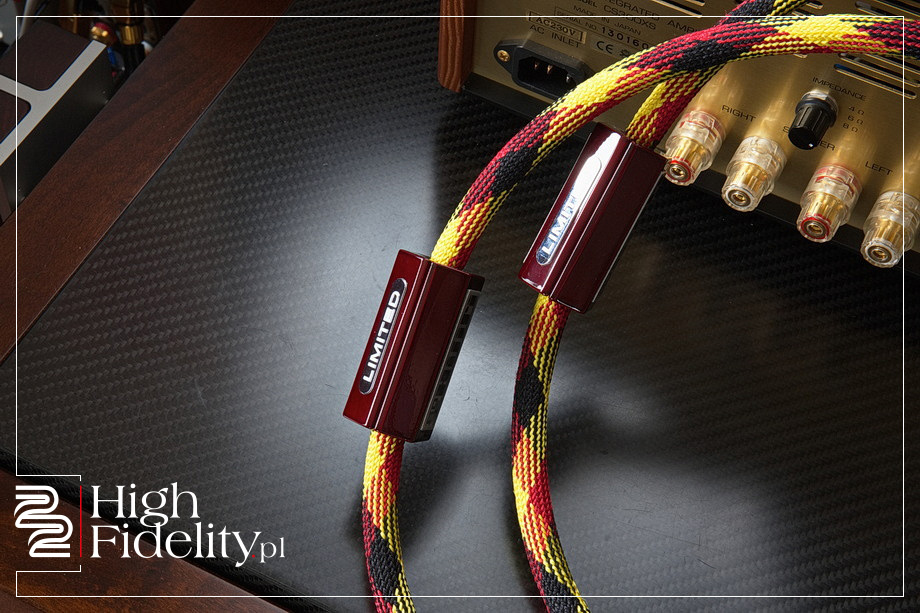
The accents are arranged in such a way that everything “flows” and draws you into the story. This was also the case, for example, with the analog electronic music of HIDEKI MATSUTAKE (Jap. 松武秀樹). Released in 1979, the album 007 Digital Moon (Jap. 007デジタル・ムーン) has just been reissued on Blu-spec CD2 (BSCD2). And it sounds incredible, fantastic. It features electronic arrangements from the James Bond films in versions I’ve never heard before. Right from the opening track ˻ 1 ˺ The James Bond Theme, it demonstrated that the Japanese cable handles tonal nuances superbly, but also that it conveys space perfectly. I tried to say this with the Davis recording, but now it’s simply more evident. This is a cable that paints a wide and deep soundstage. When necessary, as at the beginning of the aforementioned track, it also builds a deep environment behind us. On the one hand, it is a cable that sounds expressive, and on the other, soft. An extraordinary combination that made every subsequent track have a certain magic to it, something you could really savor. Perhaps this is because the HGP-L 10R Limited creates a large volume of sound and delivers a powerful presentation. Without a pronounced attack, yet still clear. Moreover, and just as importantly, it doesn’t matter what kind of music you listen to with it, because all these elements will be there. So when I listened to a few tracks from RIVERSIDE’s album ID.Entity there were no surprises. Released in 2023 in Japan, just like the previously mentioned album, on BSCD2, it is - in my opinion - the best album by this Warsaw-based prog-rock band, and also the best-recorded one. Its sound wasn’t as clear or expressive as that of the two previous albums. It’s more of a sound muted at the onset. But it’s deep in tone and energy. 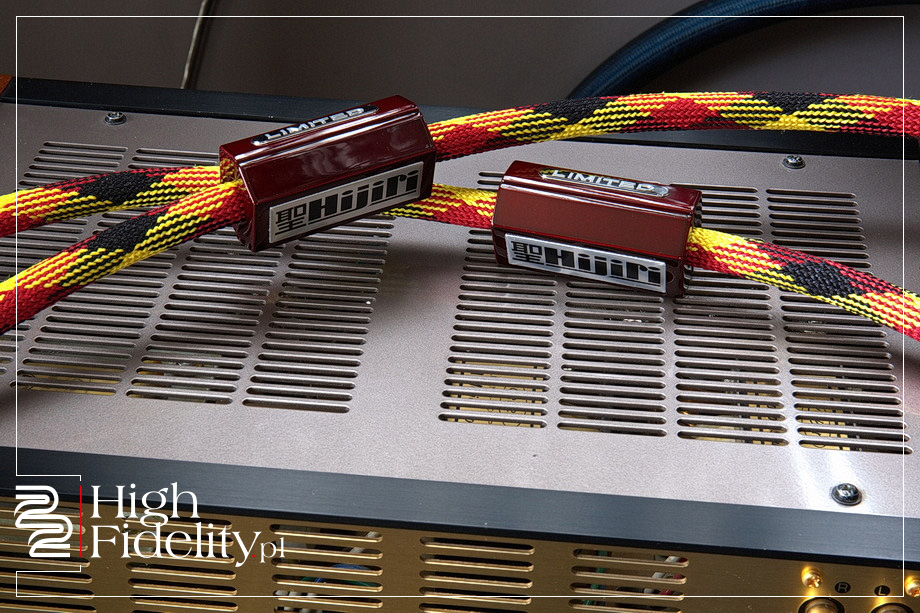
Hijiri didn’t deepen the roundness and haze, but delved deeper into the sound, revealing the texture of this performance. Although this is by no means an expensive cable - by high-end standards - it was still audible that the vocals retained a bit of “thickness” in the lower midrange, which typically occurs when the microphone is placed close to the performer. It sounded as if it were a stage microphone rather than a studio one. The Japanese cable’s ability to convey bass energy came out really well here. Mariusz Duda’s bass guitar is more distinctive, and in ˻ 1 ˺ Friend or Foe? it was obvious that it had punch and bite. And when, at the beginning of ˻ 2 ˺ Landmine Blast, there was a powerful guitar, even though it was slightly softened and made a bit more fluid by the reviewed interconnect, it retained its energy and punch. ▲ Micro-review SCORPIONS Brain/USM International UICY-16374 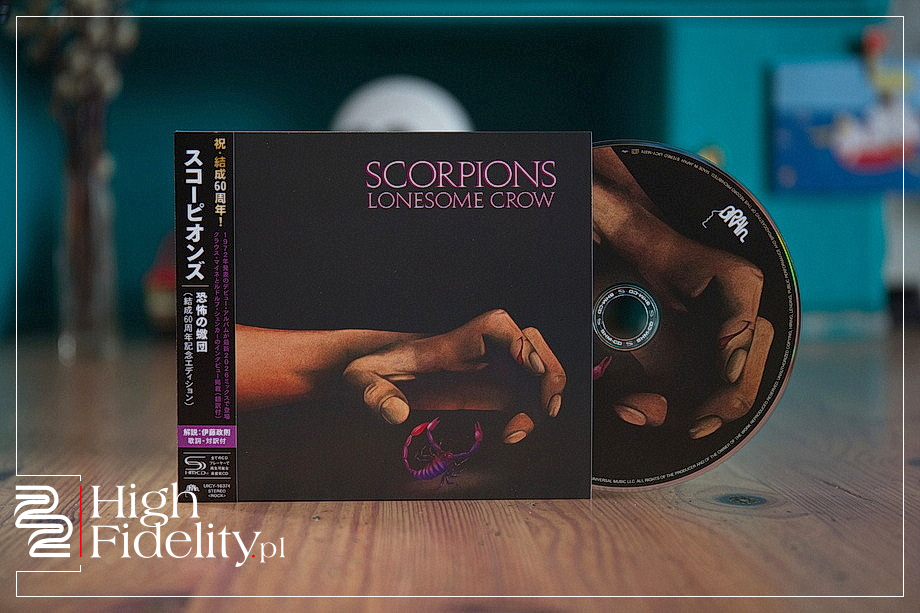
THE ALBUM BY THE GERMAN BAND Scorpions, titled Lonesome Crow, is their debut, released in 1972. It is widely regarded as the band’s greatest artistic achievement. The material for the album was recorded in October 1971 at Star Studio, Hamburg. The recording sessions lasted just one week and took place shortly after the Scorpions had formed. The band was exceptionally fortunate to have Conny Plank handling the recording and production. It is therefore no surprise that the music on the Scorpions’ debut album features elements of classic rock, prog-rock, and krautrock influences. The German producer and sound engineer, owner of Conny's Studio, born on May 3, 1940, in Hütschenhausen, died of cancer on December 18, 1987. Plank is best known as the producer of Kraftwerk's early albums and the man who helped shape their sound. In 1974, he built his legendary studio near Cologne, where he produced major krautrock bands such as Neu!, Cluster (almost becoming a member of the band), Ash Ra Tempel, Holger Czukay (Can), and Guru Guru. In a duo with Dieter Moebius, he recorded four albums, and in the 1980s, he supported a new generation of artists inspired by electronic music, such as Devo, Ultravox, Joy Division, Deutsch Amerikanische Freundschaft, and Eurythmics. He also produced pop and rock artists such as Clannad and Killing Joke; he was called the “Phil Spector of krautrock.” 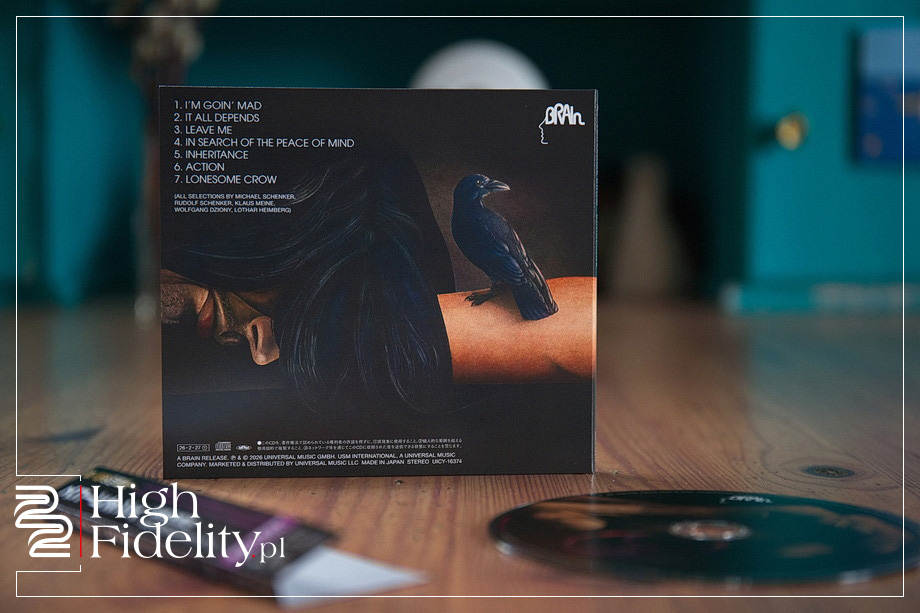
The version of the Scorpions album I’d like to encourage you to buy was released to mark the 60th anniversary of their debut, hence the title “60th Anniversary Edition”. The material on it was remixed this year from the original multi-track tapes from Plank’s studio by Hans-Martin Buff. The booklet includes an interview with Klaus Mayne and Rudolf Schenker from 2025 (translation: Masa Itoh). The Japanese version is a mini-LP with beautifully reproduced artwork. The disc was pressed not on a standard CD, but on an SHM-CD. The Scorpions’ debut album is one of the coolest albums of 1970s progressive hard rock. Its sound is excellent. Most recordings from this period are quite muffled and lacking in detail. The remix has brought out a great deal of that detail. That’s why the sound is incredibly vivid and energetic at the same time. There’s no emphasized attack, but it rushes forward. The soundstage is very spacious, not only due to the distribution of guitars across the channels or the drum patterns shifting between the left and right sides, but also thanks to excellent depth. The vocals are mixed fairly deep into the track - a sign of the times - but they remain clear and natural. And when in ˻ 2 ˺ It All Depends we hear the backing vocals, they are far back in the mix, yet still clear. By the way, this sounds very, very much like Niemen’s so-called “Red” album, which was released a year earlier (!). Which proves once again that he was a visionary. 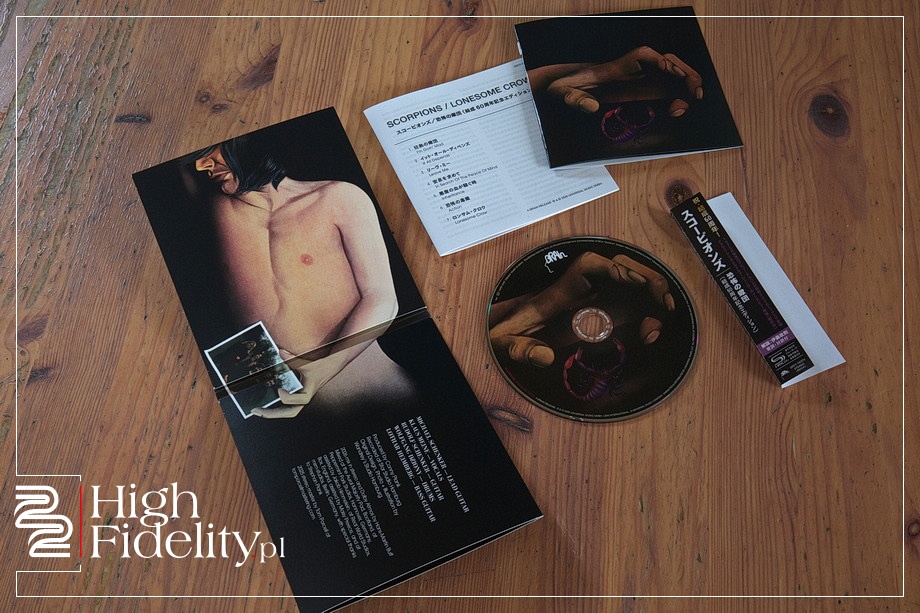
But getting back to Scorpions - it’s a great album, beautifully remastered, and simply exceptional musically. Spacious (that reverb on the vocals at the beginning of ˻ 3 ˺ Leave Me!, tonally deep and energetic, slightly muted in the attack phase, but that’s a good thing - nothing about it is annoying. ● » Sound quality: 8,5/10 ▒ Summary LET THE NAME BE SAID IN FULL: 聖Hijiri Kiwami Million Maestro HGP-L 10R Limited is an outstanding cable. It has a soft character, incredibly deep tones, and fantastic spatial depth. The latter, once again, surprised me as I listened to THOMAS KESSLER’s album Infinity Sky while writing these words (don’t you have it yet? – Please buy it right away, preferably the CD-R version). The sounds of the prepared, processed piano were powerful and dense, but I could also hear the sound of the resonating soundboard, hammers, etc., coming from behind me. The Japanese cable is like a beautiful sunset and a fresh morning all at once. Poetic? - Perhaps so, but no less informative for it. That’s how this cable sounds. It’s vivid, slightly pulling back the attack of the sound. It’s warm, but more through a lack of aggression than through warmth. Its frequency response is wide at both the upper and lower ends, because both Jimmy Cobb’s drum cymbals from the Davis album and - as mentioned a moment ago - Duda’s bass from the Riverside album had nerve and energy. 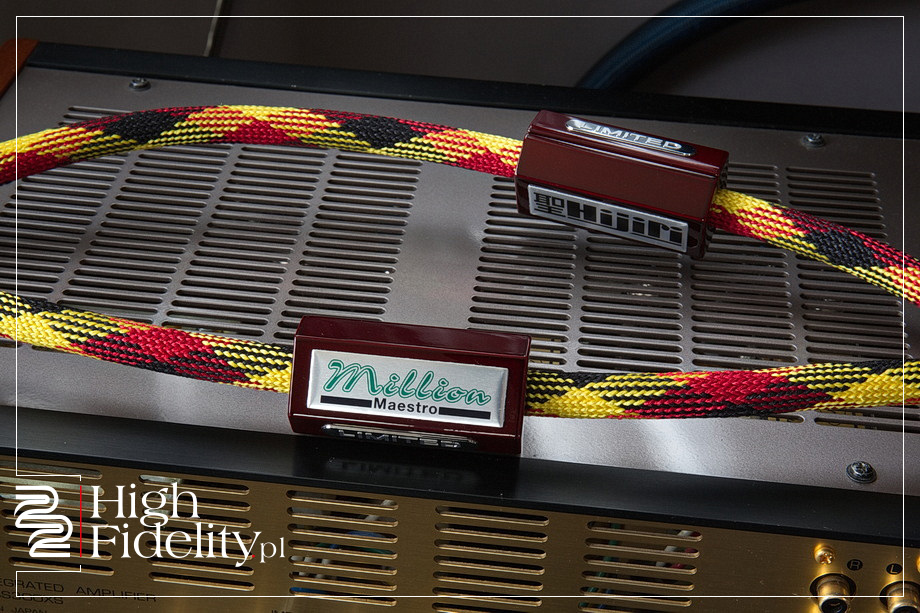
But after all that, what remains on the palate is a hint of warmth and rich tones. Yes, this is a cable that plays with tones, differentiating them, but above all, it prioritizes the fluidity of sound, its “duration.” That’s why it won’t appeal to those looking for an adrenaline rush- it’s not that “type.” However, if you are “connoisseurs of beauty,” so to speak (and we all feel that way a little, don’t we?), then listening to music with the 聖Hijiri Kiwami Million Maestro HGP-L 10R Limited will be something truly special for you, a slice of life, unforgettable. Fully deserved ˻ GOLD FINGERPRINT ˺. ‖ WP POST SCRIPTUM • As I unpacked the Hijiri cable I was genuinely moved. I am a fan of both this brand and the others under the Combak Corporation umbrella, and I also have great respect for its owner, Mr. Kiuchi. Ever since I tested the Harmonix X-DC350M2R Improved-Version AC power cable on May 1, 2012 (fourteen years ago!), I have been using it in my tests, often with extremely expensive products (review → HERE). 
The thing about Harmonix cables - and now Hijiri cables - is that, although they’re relatively affordable and handcrafted, there’s something in their sound that stays with you for a long time. And even though I currently have Siltech Triple Crown and Acoustic Revive Absolute Power power cables in my system, and I still reach for the Acrolink Mexcel 7N-PC9500 as well, the Harmonix X-DC350M2R Improved-Version remains a reliable anchor for me. I suspect it will be the same with the 聖Hijiri Kiwami Million Maestro HGP-L 10R Limited. It remains in the reference system as a full-fledged part of it. That’s how I’ve decided it: now both - the Harmonix and the Hijiri - will form the foundation of my LP listening sessions, powering and transmitting the signal from the RCM Audio phono preamp, another affordable gem that’s probably been in my system the longest. And although I will likely replace the phono preamplifier with something expensive in time, both cables will remain in the system, perhaps forever. ● 
THIS TEST HAS BEEN DESIGNED ACCORDING TO THE GUIDELINES adopted by the Association of International Audiophile Publications, an international audio press association concerned with ethical and professional standards in our industry, of which HIGH FIDELITY is a founding member. More about the association and its constituent titles → HERE. |
 |

|
Reference system 2026 |
|
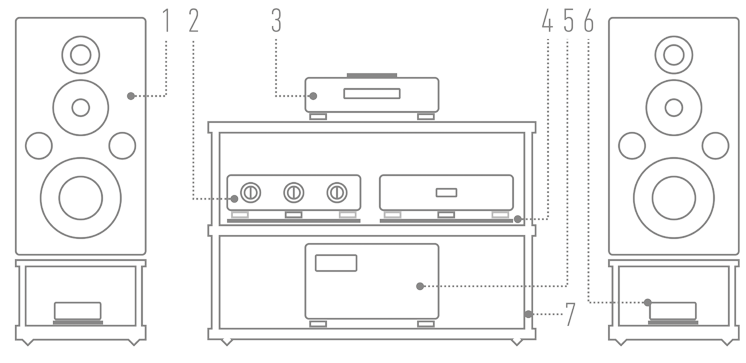 1) Loudspeakers: HARBETH M40.1 |REVIEW| 2) Line preamplifier: AYON AUDIO Spheris III Linestage |REVIEW| 3) Super Audio CD Player: AYON AUDIO CD-35 HF Edition No. 01/50 |REVIEW| 4) Stands (loudspeakers): ACOUSTIC REVIVE (custom) |ABOUT| 5) Power amplifier: SOULUTION 710 6) Loudspeaker filter: SPEC REAL-SOUND PROCESSOR RSP-AZ9EX (prototype) |REVIEW| 7) Hi-Fi rack: Hi-Fi rack: finite elemente MASTER REFERENCE PAGODE EDITION Mk II, more → HERE |
|

|
Cables Analog interconnect SACD Player - Line preamplifier: SILTECH Triple Crown (1 m) |ABOUT|» ANALOG INTERCONNECT Line preamplifier → Power amplifier: Siltech ROYAL SINLGE CROWN RCA; review → HERE Speaker cable: SILTECH Triple Crown (2.5 m) |ABOUT| |

|
AC Power Power cable | Mains Power Distribution Block - SACD Player: SILTECH Triple CrownPower (2 m) |ARTICLE| » POWER CABLE Mains Power Distribution Block → Line preamplifier: Acoustic Revive ABSOLUTE-POWER CORD, review → HERE » POWER CABLE Mains Power Distribution Block → Power amplifier: Acoustic Revive ABSOLUTE-POWER CORD, review → HERE Power cable | Power Receptacle - Mains Power Distribution Block: ACROLINK Mexcel 7N-PC9500 (2 m) |ARTICLE| Power Receptacle: Acoustic Revive RTP-4eu ULTIMATE |REVIEW| » ANTI-VIBRATION PLATFORM under Acoustic Revive RTP-4eu ULTIMATE: Graphite Audio CLASSIC 100 ULTRA, review → HERE Power Supply Conditioner: Acoustic Revive RPC-1 |REVIEW| Power Supply Conditioner: Acoustic Revive RAS-14 Triple-C |REVIEW| Passive filter EMI/RFI: VERICTUM Block |REVIEW| |

|
Anti-vibration Speaker stands: ACOUSTIC REVIVE (custom)Hi-Fi rack: finite elemente MASTER REFERENCE PAGODE EDITION Mk II, more → HERE Anti-vibration platforms: ACOUSTIC REVIVE RAF-48H |ARTICLE| » ANTI-VIBRATIONAL FEET: |

|
Analogue Phono preamplifier: Phono cartridges:
Clamp: PATHE WINGS Titanium PW-Ti 770 | Limited Edition Record mats:
|

|
Headphones » HEADPHONE AMPLIFIER: Leben CS-600X, review → HEREHeadphones: Headphone Cables: Forza AudioWorks NOIR HYBRID HPC |