


|
FILE PLAYER DAC PREAMPLIFIER LUMIN
Manufacturer: PIXEL MAGIC SYSTEMS Ltd. |

 |
 |
 |
|
Review
text by WOJCIECH PACUŁA |

|
No 264 May 1, 2026 |
THE FIRST DEVICE from Lumin to combine a file player and a line preamplifier was the P1 model; review → HERE. It was unveiled in the second half of 2021 and officially introduced for sale in December. This model was designed to fill the gap between the X1 and T2 models; in May 2024, a Mini version was released. Review → HERE. 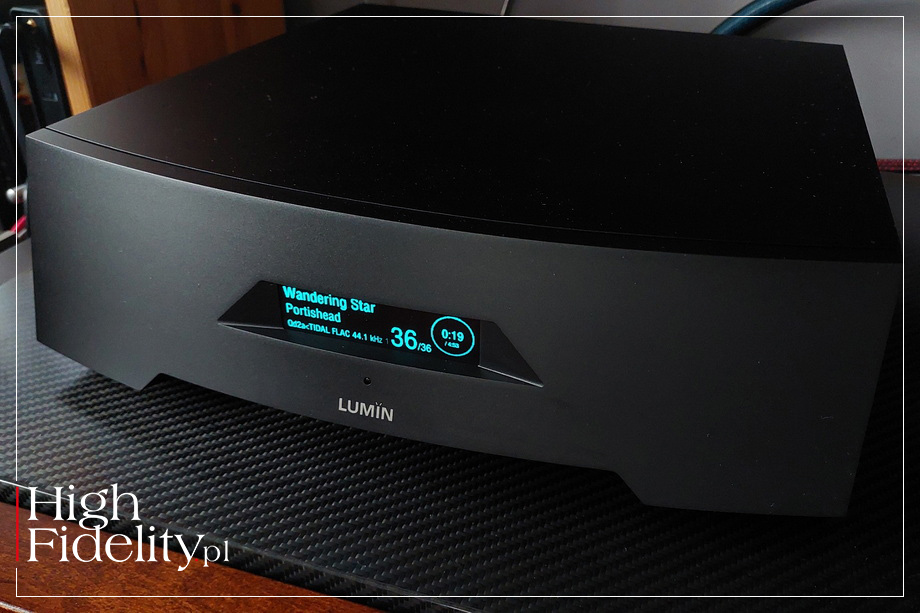
The P1 was unusual in that it was this manufacturer’s first attempt to expand the functionality of a file player with line inputs. While digital inputs, mainly USB, could be found in some products bearing the Lumin logo, RCA or XLR jacks for analog sources were a novelty for this company. Combined with the volume control offered by all of this manufacturer’s players, this effectively created a file player with a preamplifier. The latest product of this type is the P2. ▓ P2 THE HONG KONG BASED manufacturer describes its latest device as follows: The Definitive Music Hub. And further:
LUMIN P2, combining top-of-the-line digital and analog sections, is an uncompromising music center for all audio sources. (…) It is a truly versatile device - a world-class streaming player, DAC, and preamplifier all in one uncompromising chassis.
⸜ P2, → www.LUMINMUSIC.com, accessed: 7.04.2026. FEATURES • The P2 from LUMIN (the name is stylized as “Lumïn”) is an audio player and a full-featured line preamplifier. It can also function as a DAC with (or without) a preamplifier for external digital sources. The manufacturer offers three options for the P2:
˻ Option 1 ˺ FILE PLAYER
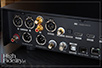
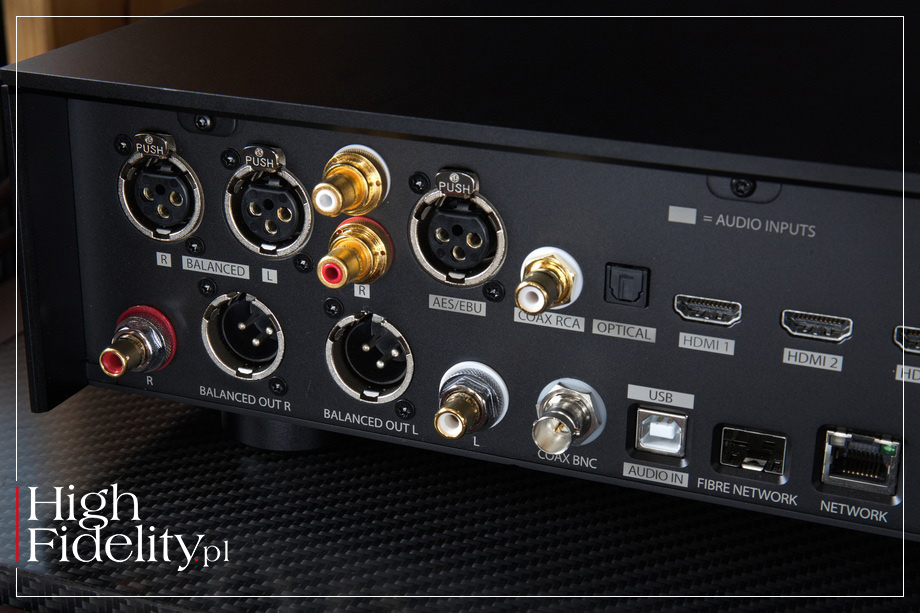
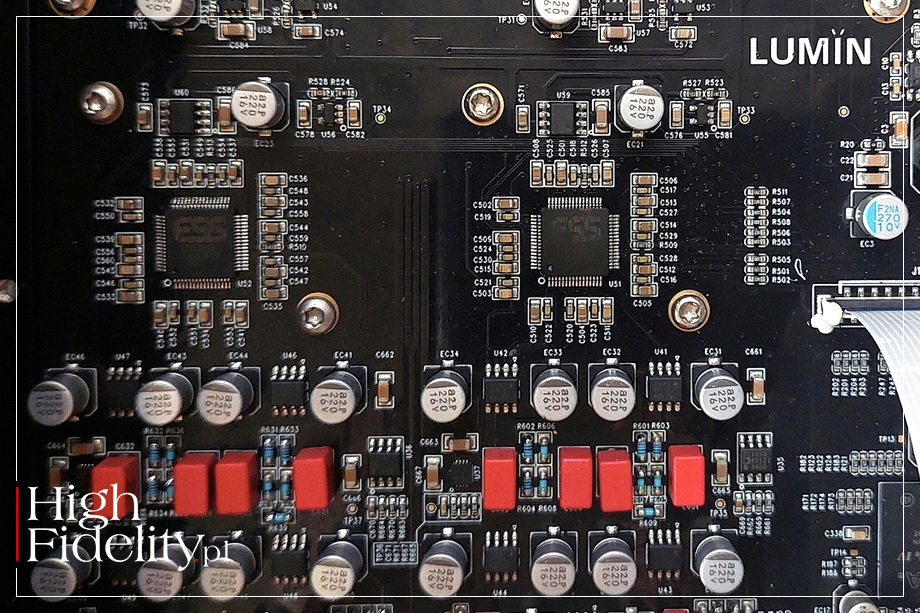
LUMIN P2 can be used like all other LUMIN players. With its ES9038PRO DAC chips, DSD512/PCM384 support, Femto Clock System, Fibre Networking, toroidal power supply, and Leedh Processing, P2 is second only to LUMIN X2 in pure streaming ability. ˻ Option 2 ˺ HI-FI HUB Connect all your stereo sources to LUMIN P2 and connect it to a power amplifier, and you’ll have everything you need for an incredible music system. ˻ Option 3 ˺ @-CHANNEL TV SYSTEM No need for an AV Receiver. Simply connect your HDMI sources to LUMIN P2 and P2 to your TV. With HDMI ARC, all your audio comes through your main speakers. (Ibidem) The device offers native playback of files up to DSD512 and 32-bit PCM384, PCM and DSD upsampling to DSD256, a USB digital output with a native DSD512 signal, a Femto Clock with FPGA distribution, a power supply with two sections for analog circuits - separate left and right channels - an SFP slot supporting optical networking and a built-in LAN selector, and Leedh Processing digital volume control. We can also enable the MQA digital filter called Qrono d2a. » More on Leedh Processing volume control → HERE The P2 features an extensive input section. It offers nine inputs, two of which are analog: RCA and XLR, while seven are digital: AES/EBU (XLR), S/PDIF (RCA, Toslink), USB, and three HDMI ports. The eighth and ninth inputs are used for file transfer (the others accept audio signals, which is not the same thing). One of them is an SFP optical port, and the other is a classic RJ45 (Ethernet) port. There are also two digital outputs: USB and BNC (PCM & DSD DoP). 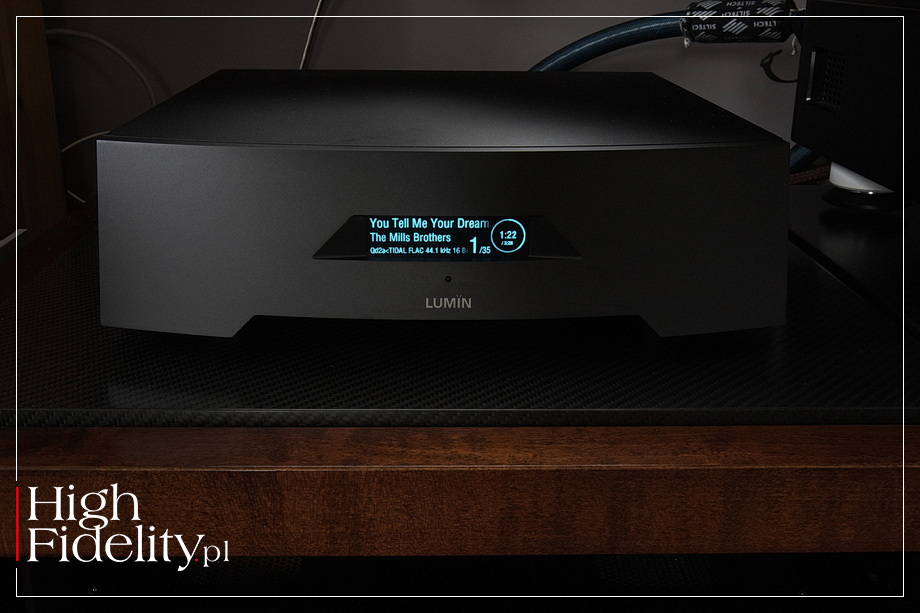
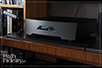
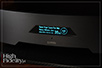
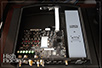
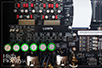
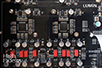
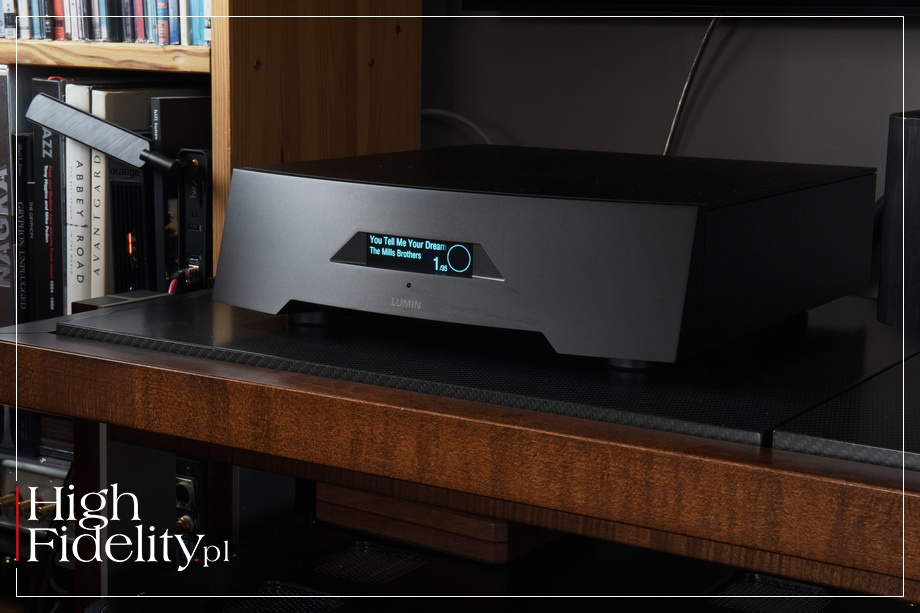
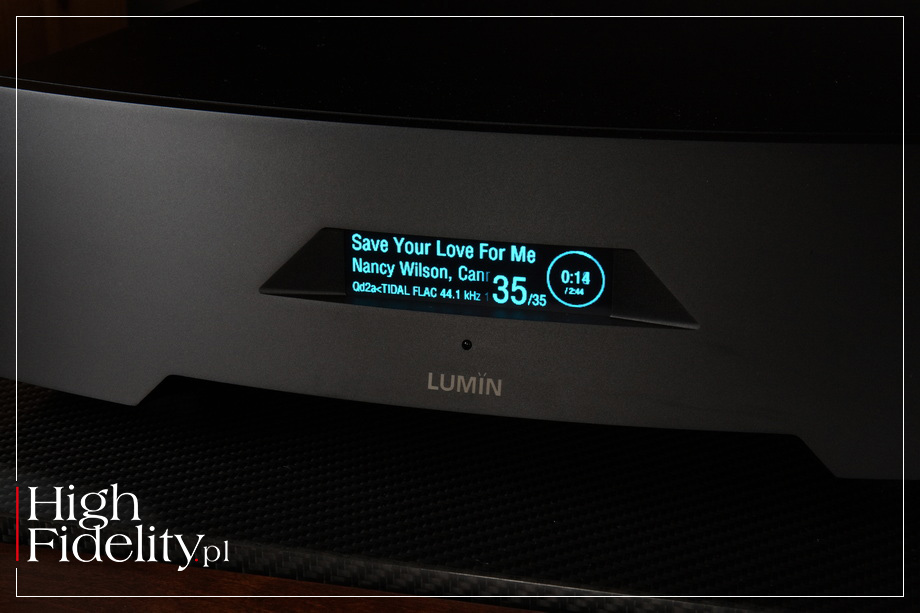
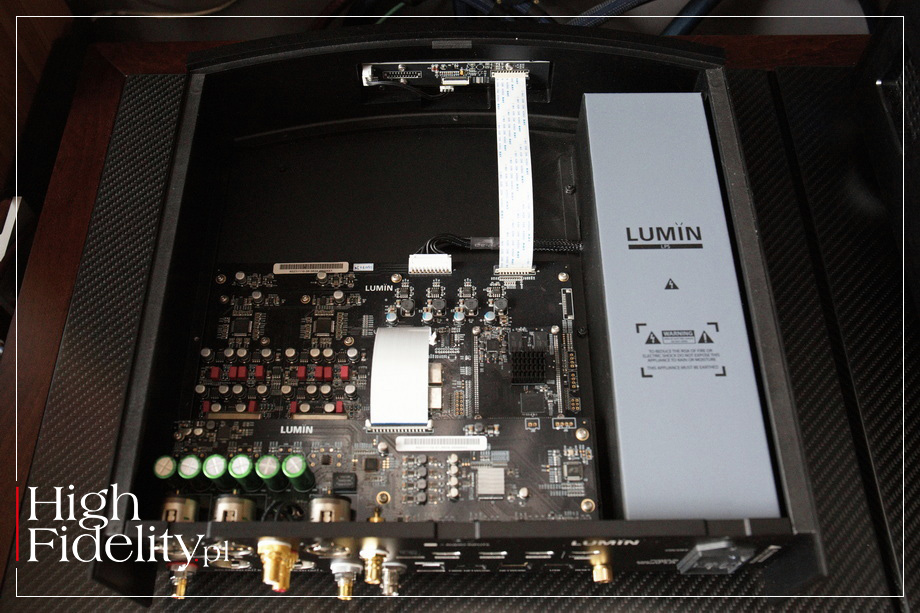
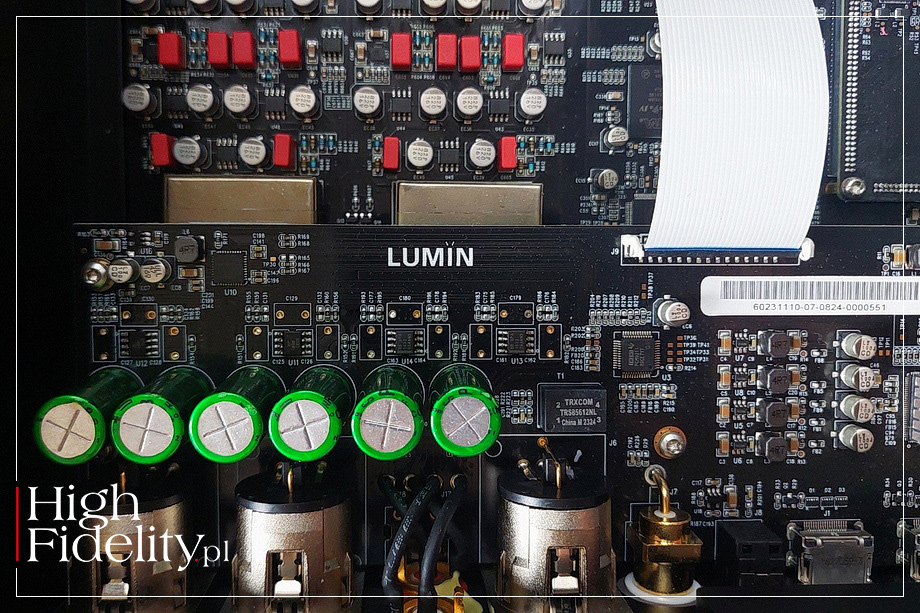
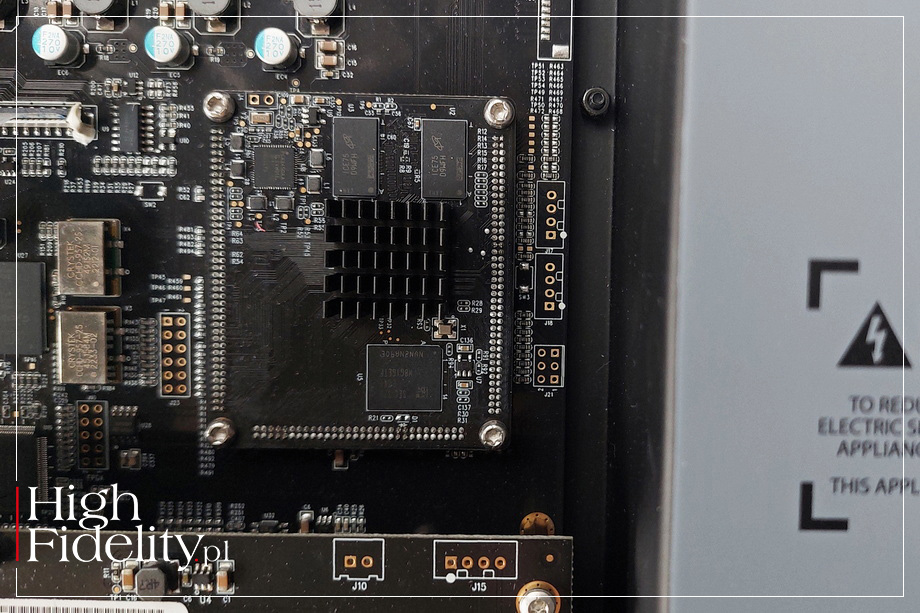
The AES/EBU and S/PDIF inputs accept PCM signals up to 24/192, as well as DSD DoP. You can therefore connect a SACD transport, such as the Onix Zenith XST20, to the Lumin and play SACD discs through it (review → HERE). Unfortunately, MQA-CDs cannot be decoded this way, as the MQA decoder only works with files. The HDMI inputs, along with the HDMI ARC output, accept two-channel audio signals and pass HDR, Dolby Vision, Dolby Atmos, and DTS signals to an external AV receiver. And then there’s the file player - thanks to the new processor, it can decode DSD signals up to DSD512 and PCM up to 32-bit, 384 kHz. The user interface hasn’t changed since the first model from 2013. It is minimalist, without the large OLED displays that most competitors boast. You can read track names, technical data, and volume levels on it. It is much more convenient and enjoyable to control the Lumin using its app. It’s a really good, handy system; I’ve been using it for years. The player can also be controlled using apps from Jplay - my current choice - as well as with the Roon. DAC • Compared to the P1 model, both the main processor - now more powerful - and the digital-to-analog converter have been updated. This isn’t a revolution - that distinction belongs to the X2 model’s discrete R2R DAC - but rather an evolution. In place of the ESS Technology ES9028Pro SABRE32, there is the top-of-the-line model, ES9038Pro SABRE32, previously used in the X1 model. Each channel employs one such chip, with all eight channels connected in mono mode. The output section is semiconductor-based, and unbalanced. The XLR outputs are buffered by Lundahl isolation transformers, which also balance the output. The output can deliver a fix or adjustable signal level. A Leedh Processing digital circuit is responsible for level adjustment. The signal from the analog inputs is thus converted to digital, its level is adjusted, and then it is converted back to analog. The DAC is a dual-mono design. TECHNOLOGY • Not only has the display remained unchanged since the company’s first player. The design of the manufacturer’s more expensive models has also remained the same. The chassis is made of aluminum, and its front panel has been milled from a single piece of aluminum; it has a semicircular profile. A slight modification was introduced with the P1. It was taller than the manufacturer’s other devices, and the bottom edge of the front panel was cut away so that the device wouldn’t look bulky. The P2 looks identical. Wouldn’t it be nice, though, to have the current model name on the front panel as well? The connectors on the back are of high quality, with gold-plated contacts and Teflon dielectrics. The player is based on an SMD layout, with components spread across several PCBs. Some components, however, are through-hole. The circuit boards are mounted traditionally, that is, to the bottom panel. Impedance-matching transformers are installed next to the digital jacks, and WIMA polypropylene capacitors are used in the DACs. There are also some nice electrolytic capacitors. In the output stages, that is, the I/U converters, manufacturer used Analog Devices integrated circuits. Since volume control is handled digitally, the analog signal must first be converted to digital. As in the P1 model, this task is performed by a 24-bit Burr-Brown PCM9211 chip with a sampling rate of 192 kHz. The Burr-Brown OPA1632 and JRC 5532 integrated circuits handle the amplification and buffering of the input signal. The device features a linear power supply and uses two toroidal transformers - one for the digital section and one for the analog section. The manufacturer describes it as follows:
The generous P2 chassis allows us to bring the X-series specification toroids inboard for a streamlined, single-box installation. This layout retains all the performance benefits of separate analog and digital power rails while achieving a cleaner, more integrated aesthetic. (Ibidem)
So it’s clear that this is a high-tech product, but it also incorporates elements developed over many years by audiophile companies. Take the chassis, for example. In the more expensive models, it is milled from a single piece of aluminum. In the “mid-range” models, such as the P2, it is assembled from aluminum plates. The connectors are also audiophile-grade. The XLRs have no markings, but their contacts appear to be rhodium-plated. The RCAs, on the other hand, come from two different manufacturers. The output jacks are made by Furutech, while the input jacks were purchased from the American company CMC (Charming Music Conductor); both have gold-plated contacts. REMOTE CONTROL • As we mentioned, the device can be controlled via an app. But that’s not the only choice - the remote control offers an equally convenient way to operate it. This isn’t just any remote; it’s a unique product - it’s attractive, reasonably ergonomic, and features acrylic buttons that are pleasant to use and have a distinct click. 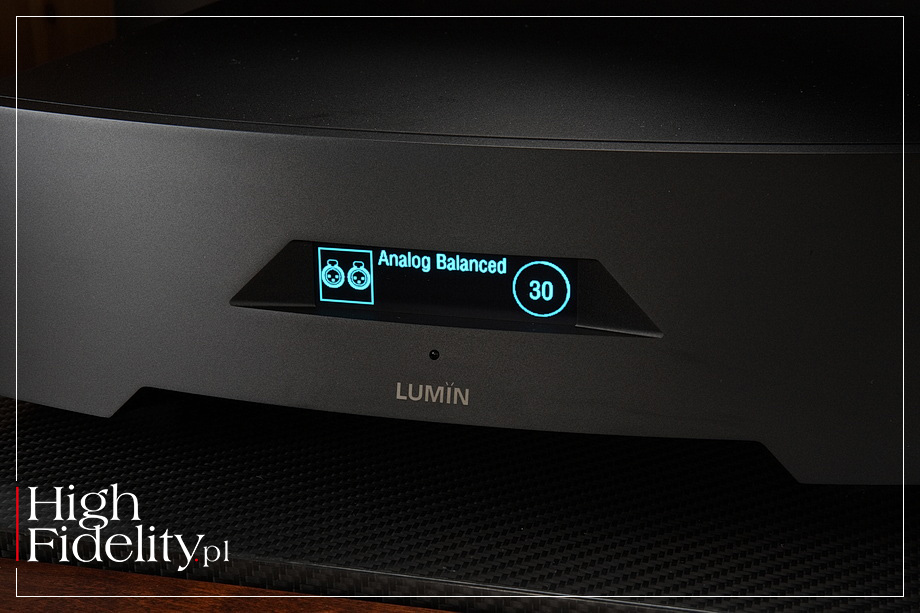
Most importantly, this isn’t a remote control bought from one of those specialized suppliers in China. It is manufactured by the Austrian company Ruwido, founded in 1969, and - as we’ve written before - it’s almost a work of art. The company has twice received the prestigious Red Dot Award for its products, in 2018 and 2025, plus awards for remotes designed for other brands. Almost identical remotes are used by Wadax Studio Player, review → HERE, and Soulnote for their amplifiers, for example, the A-2 ver. 2 model, review → HERE. ▓ SOUND THE TEST PROCEDURE • The Lumin P2 file player was tested in the HIGH FIDELITY reference system, where it was compared with the three-piece Sforzato DSP-05EX & PMC-05EX file player system connected to an Ayon Audio Spheris Evo preamplifier; this was a comparison of systems: file player/preamplifier. 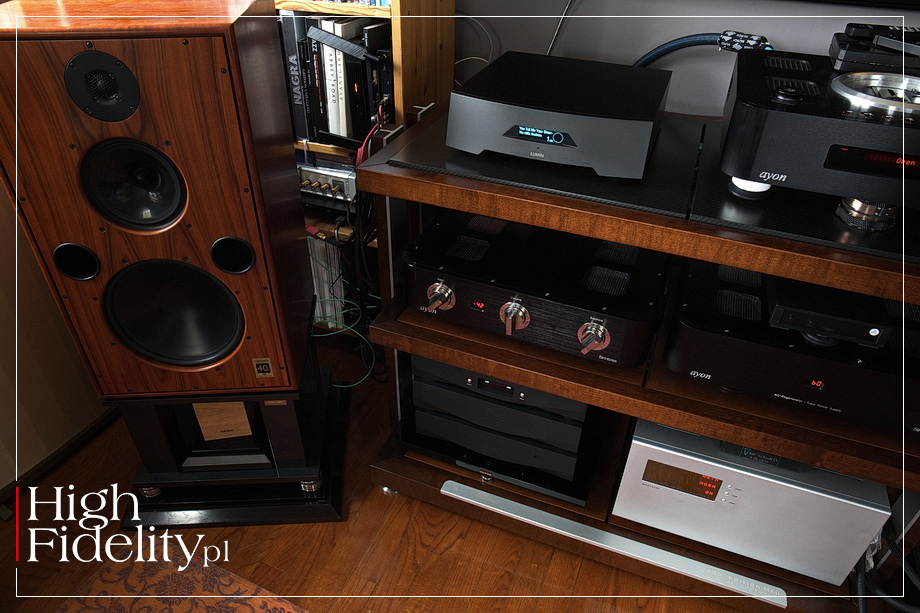
I also separately tested the SACD player Ayon Audio CD-35 HF, connecting it to both the RCA digital input and the unbalanced line inputs. The signal from the P2 output was sent via a balanced cable to the input of the Soulution 710 power amplifier. |
Both the Lumin and Sforzato file players were connected to the FunBox 3.0 router via Acoustic Revive LAN-Quadrant Triple-C WB digital cables with RLI-1GB Triple-C filters. 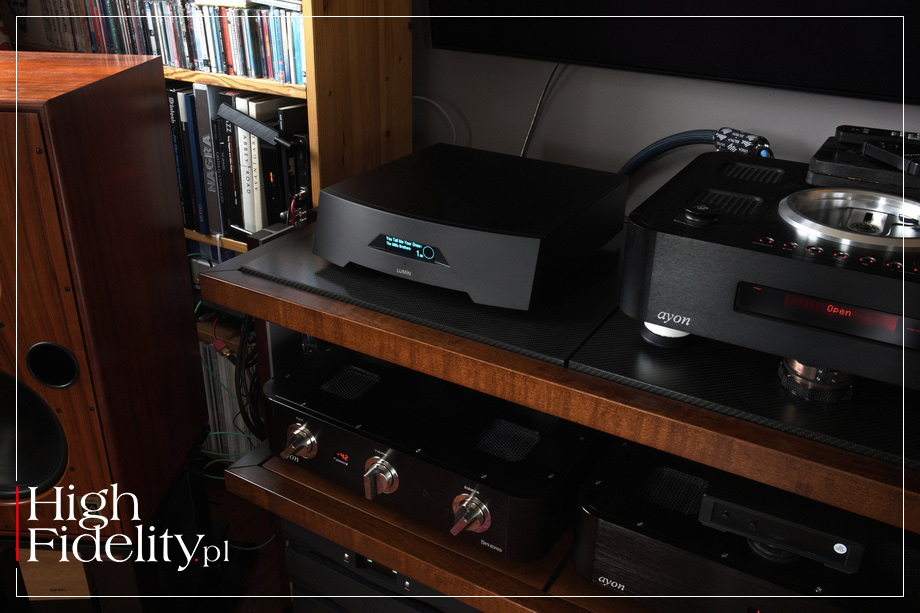
The player under review was placed on the top shelf of the Finite Elemente Master Reference Pagode Edition Mk II rack, standing on its own feet, next to the power supply. To prevent the power supply from sliding, its feet were placed on Acoustic Revive RKI-5005 pads. The device was powered by an Acrolink Mexcel 7N-PC9500 cable, and I connected the ground terminals - for both the main unit and the power supply - to the Nordost QKore artificial ground. » RECORDINGS USED FOR THE TEST ⸜ selectionr
• FRANK SINATRA, In The Wee Small Hours, Capitol Records/Tidal, FLAC 24/192, 1955/2014. LAST YEAR, BLUE NOTE reissued FRANK SINATRA’S album entitled In The Wee Small Hours. Kevin Gray was responsible for the new remaster. However, the 2014 version is still available on Tidal - and it’s an excellent 24/192 one. It’s really very good. Just like the sound I heard with the P2. 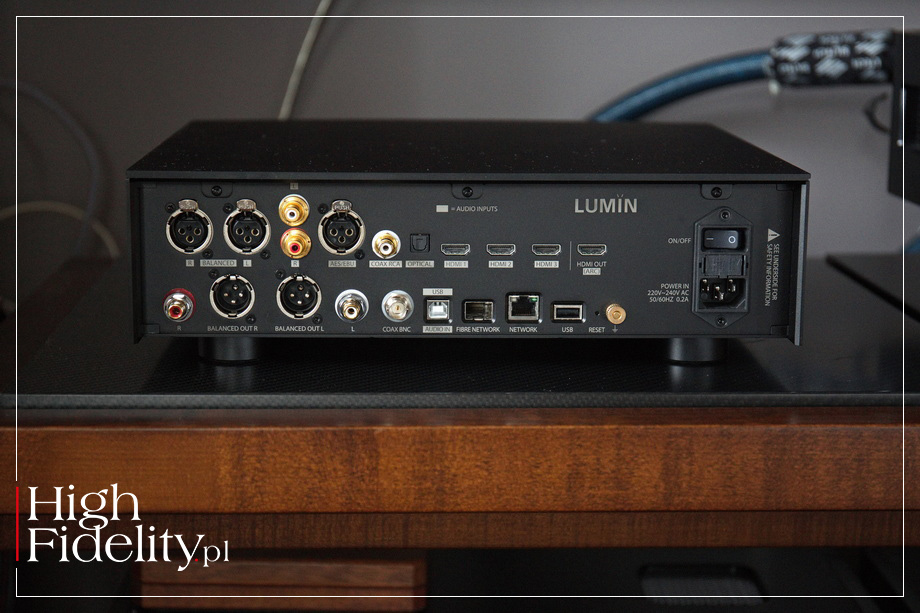
The vocals were presented in a big, tangible way, close to me - exactly as I expected. It wasn’t a very soft sound, not quite like that from the Sforzato player and Ayon Audio preamp, nor was it quite as detailed. But when I think that the Lumin player costs only a little more than the preamp’s power cord, it doesn’t hurt anymore. All the more so because, in the title track ˻ 1 ˺ In The Wee Small Hours Of The Morning, a ballad through and through, but also in ˻ 2 ˺ Mood Indigo, a track with a more swinging character, Lumin conveyed the music in a very beautiful, sensual way. It didn’t warm it up, P2 doesn’t do that, but it also didn’t strip away the underlying warmth that characterizes these recordings. I get the impression that everything is well-balanced in this device: highs and lows, micro- and macro-dynamics, tangibility, and perspective. That is why even in tracks as difficult to reproduce as THE MILLS BROTHERS’ Famous Barber Shop Ballads, Vol. 1, sounded so cool, intimate and dense. As I said, the P2 doesn’t warm up or soften anything. To be honest, it’s more defined than other players from this manufacturer released in the last - let’s say - two years. It’s also more “gutsy” and simply more interesting than the P1. That is to say, it’s more dense and presents better-defined large phantom images. The Mills brothers’ voices were therefore truly substantial and rich. They bore no resemblance to the thinness we’ve had to put up with for years while listening to many other transfers of this type. This kind of “sympathetic” yet precise playback will be particularly useful with material that is fundamentally lo-fi, but which can sound excellent even in top-tier audio systems. I’m referring to the 1994 PORTISHEAD album Dummy. Its creators recorded sections of material and samples, pressed LP records (like dubplates), and re-recorded them into samplers, which altered the sound once again. And again, and then yet again. It would seem like a disaster waiting to happen. The thing is, when listening to a track such as ˻ 4 ˺ It Could Be Sweet, it’s hard not to reflect on what we’re hearing and conclude that if someone possesses musical imagination of this caliber, then that incredibly deep bass will be rendered in a way that most artists recording in mainstream, top-tier studios can only dream of. The same goes for the precision of the bass and snare drum beats in ˻ 5 ˺ Wondering Stars. 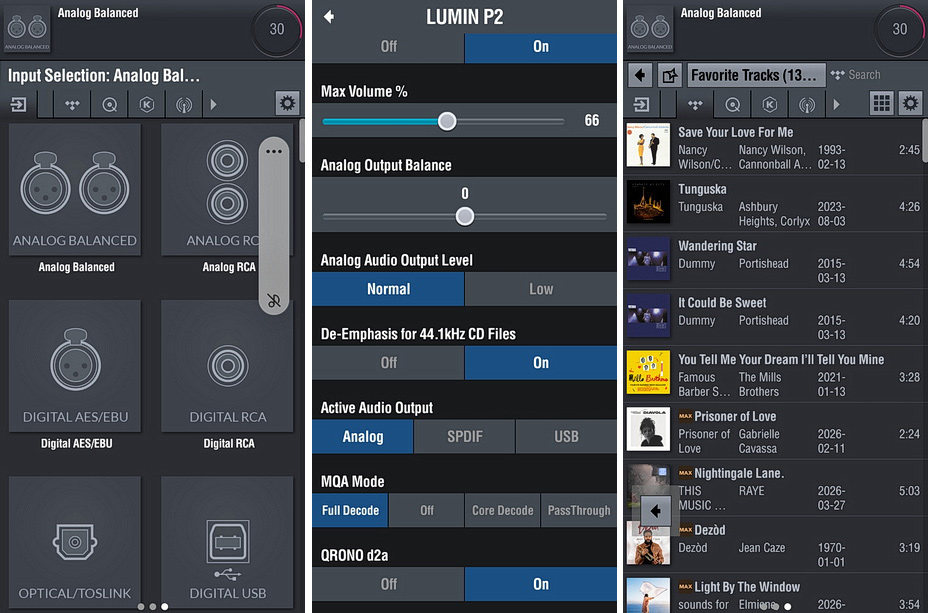
The Lumin P2 played this essentially monophonic album with an inner calm, without any pushing or intrusiveness. It wasn’t quite as internally soft and detailed as the reference system or the manufacturer’s X2, but it was truly very, very good. I think this is mainly thanks to the exceptionally well-controlled sound focus offered by this device. That is why even fast, short bass hits are rendered fully, both in timing and in tonal extension. With the Lumin, the music is precisely projected onto the wall in front of us, without blurring the edges. It was clear and free of vibration. The attack, therefore, does not need to be artificially sharpened. All the more so because the MQA Qrono d2a filter excels precisely at maintaining precision while simultaneously saturating the sound with mass, depth, and information about the instrument’s (or vocal’s) body. The upsampler offered by Lumin is also very good and produces a similar effect in DSD256 settings, but the former is simply better. Thanks to the filter and the character of the device itself, the sound opens up internally while remaining dense. The Hong Kong player is at its best when you need to highlight the close foreground. That is, everything that gives us big vocals, clear guitars, or synthesizers - as in ˻ 1 ˺ Oxygene (Part 1) by JEAN-MICHEL JARRE. It doesn’t quite hit the mark, but it’s the most important element. The depth is really good, but it’s not what builds the sound. Both the instruments on the MAYO NAKANO PIANO TRIO album and ART PEPPER from the …the way it was!, had very good definition, liveliness, and “presence.” But the tracks from both albums were also placed slightly behind the line connecting the speakers. Interestingly, I found it more enjoyable to listen to files from Tidal than from my local library, the Lumin L2, whether in PCM or DSD. CDs played through the Ayon via the RCA input also sounded great. And again, even though I rated the spatiality and tangibility of this presentation very highly, I chose files streamed from the music service. This is, in my opinion, the most important source for the P2. It’s as if the designers spent the most time on it. As if they anticipated that we, too, would make it our primary channel for music. It seems they were right. ▓ Summary The LUMIN P2 worked competently and professionally with all the music sources I tested it with. This device produces a big, full sound with excellent depth. The soundstage isn’t deep, but it is wide and very well organized. The player goes very, very low in the bass, which it delivers in an exceptionally pleasant way - both soft and with clearly defined edges. The upper end of the frequency range isn’t masked; it carries a lot of energy, yet it sounds sweet, almost warm. The device is both detailed and selective, which is why it will delight all those who don’t want to go overboard in one direction or the other - warmth or detail. The P2 is also very well balanced tonally. It does not favor any sub-range, nor does it create its own world. It is largely “transparent” to the material we feed into it. 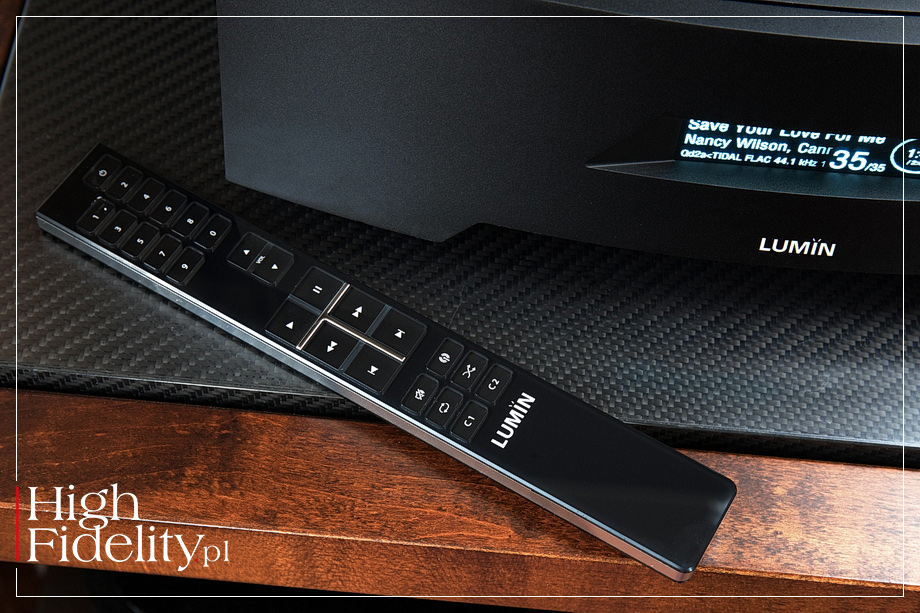
However, its most important feature is streaming files from music services - in my case, Tidal. It is in this scenario that we get a very nice soundstage, perspective, definition, and tonal balance. All at once. ‖ WP ▒ Technical specifications
Analog audio outputs: RCA 3 V, XLR 6 V 
THIS TEST HAS BEEN DESIGNED ACCORDING TO THE GUIDELINES adopted by the Association of International Audiophile Publications, an international audio press association concerned with ethical and professional standards in our industry, of which HIGH FIDELITY is a founding member. More about the association and its constituent titles → HERE. |
 |

|
Reference system 2026 |
|
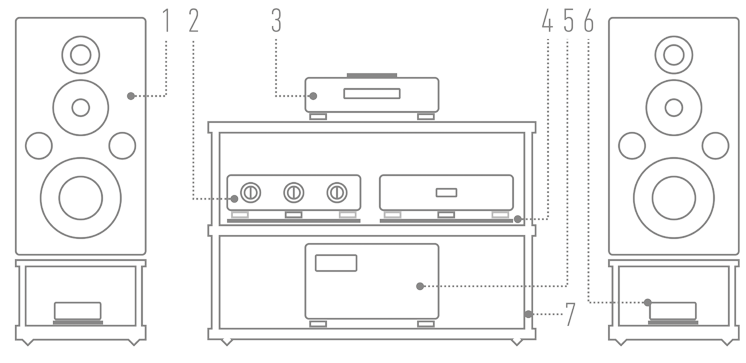 1) Loudspeakers: HARBETH M40.1 |REVIEW| 2) Line preamplifier: AYON AUDIO Spheris III Linestage |REVIEW| 3) Super Audio CD Player: AYON AUDIO CD-35 HF Edition No. 01/50 |REVIEW| 4) Stands (loudspeakers): ACOUSTIC REVIVE (custom) |ABOUT| 5) Power amplifier: SOULUTION 710 6) Loudspeaker filter: SPEC REAL-SOUND PROCESSOR RSP-AZ9EX (prototype) |REVIEW| 7) Hi-Fi rack: Hi-Fi rack: finite elemente MASTER REFERENCE PAGODE EDITION Mk II, more → HERE |
|

|
Cables Analog interconnect SACD Player - Line preamplifier: SILTECH Triple Crown (1 m) |ABOUT|» ANALOG INTERCONNECT Line preamplifier → Power amplifier: Siltech ROYAL SINLGE CROWN RCA; review → HERE Speaker cable: SILTECH Triple Crown (2.5 m) |ABOUT| |

|
AC Power Power cable | Mains Power Distribution Block - SACD Player: SILTECH Triple CrownPower (2 m) |ARTICLE| » POWER CABLE Mains Power Distribution Block → Line preamplifier: Acoustic Revive ABSOLUTE-POWER CORD, review → HERE » POWER CABLE Mains Power Distribution Block → Power amplifier: Acoustic Revive ABSOLUTE-POWER CORD, review → HERE Power cable | Power Receptacle - Mains Power Distribution Block: ACROLINK Mexcel 7N-PC9500 (2 m) |ARTICLE| Power Receptacle: Acoustic Revive RTP-4eu ULTIMATE |REVIEW| » ANTI-VIBRATION PLATFORM under Acoustic Revive RTP-4eu ULTIMATE: Graphite Audio CLASSIC 100 ULTRA, review → HERE Power Supply Conditioner: Acoustic Revive RPC-1 |REVIEW| Power Supply Conditioner: Acoustic Revive RAS-14 Triple-C |REVIEW| Passive filter EMI/RFI: VERICTUM Block |REVIEW| |

|
Anti-vibration Speaker stands: ACOUSTIC REVIVE (custom)Hi-Fi rack: finite elemente MASTER REFERENCE PAGODE EDITION Mk II, more → HERE Anti-vibration platforms: ACOUSTIC REVIVE RAF-48H |ARTICLE| » ANTI-VIBRATIONAL FEET: |

|
Analogue Phono preamplifier: Phono cartridges:
Clamp: PATHE WINGS Titanium PW-Ti 770 | Limited Edition Record mats:
|

|
Headphones » HEADPHONE AMPLIFIER: Leben CS-600X, review → HEREHeadphones: Headphone Cables: Forza AudioWorks NOIR HYBRID HPC |