


|
D/A CONVERTER / PREAMPLIFIER / HEADPHONE AMPLIFIER LAIV
Manufacturer: LAIV AUDIO Pte. Ltd. |

 |
 |
 |
|
Review
text by WOJCIECH PACUŁA |

|
No 264 May 1, 2026 |
THE VERSE, designed by the Singapore-based company Laiv Audio (the spelling is stylized as: LAiV), is one of its latest products. It belongs to the new Crescendo series, which is more affordable than the Harmony series. It was officially unveiled and launched on February 1st. of this year. It is a compact device that combines an R-2R digital-to-analog converter with volume control and a headphone amplifier. To date, it is the company’s most affordable DAC. 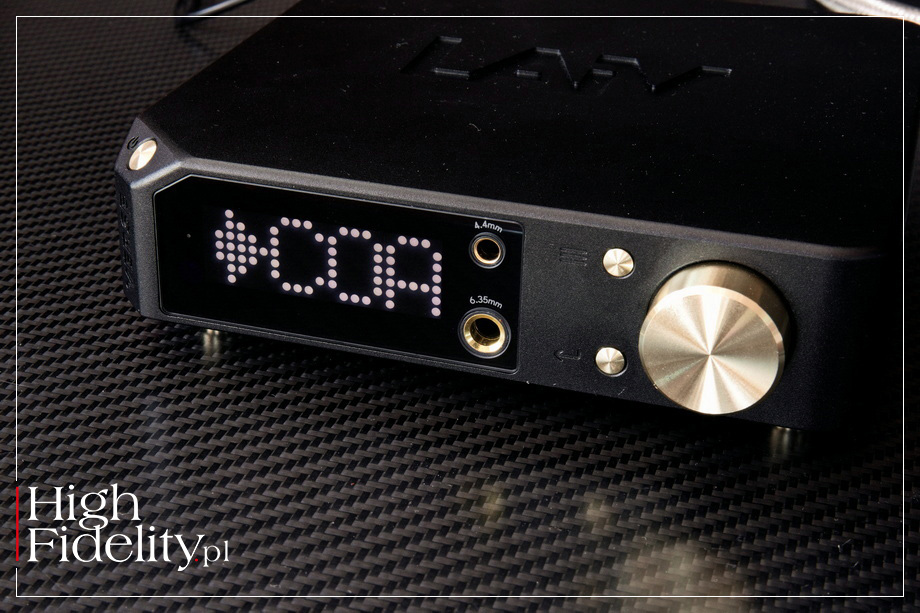
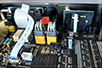
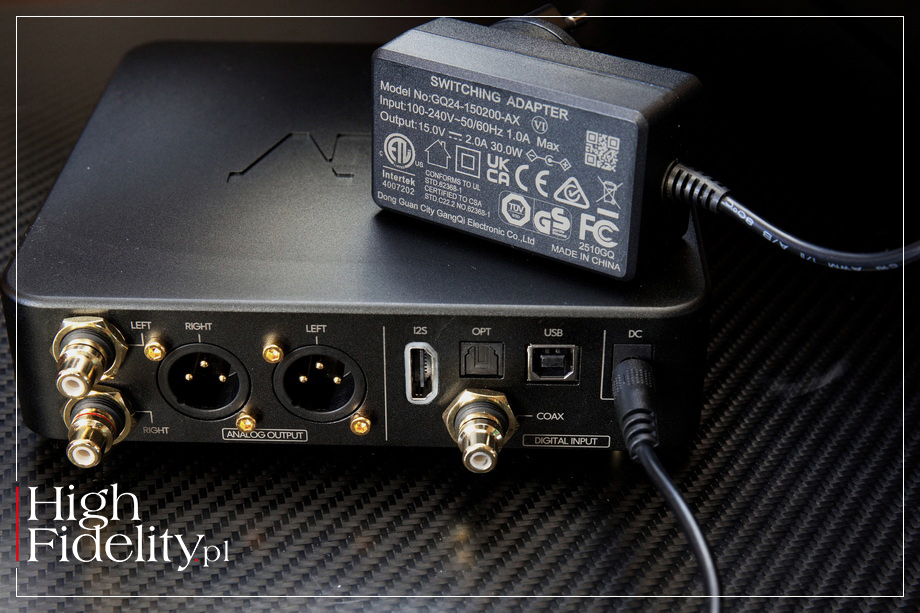
Devices from this manufacturer are small in size, but even compared with them, the Verse is tiny. Its dimensions are 168 × 188 × 50 mm, and it weighs less than one kilogram. It is truly a miniature DAC, yet it is simply superbly crafted. As the first journalist in Poland and one of the first in the world, I had the chance to hold the company’s debut product, the Harmony D/A converter, in my hands, and even then, I was aware that a new quality was emerging in audio; review → HERE. The Crescendo Verse confirms this intuition. Additionally, it brings the solutions seen back then into a price range previously occupied by manufacturers from mainland China. Against their backdrop, it appears like a visitor from another planet. ▓ Crescendo Verse THE CONVERTER IS, IN FACT, exceptionally well-built and simply looks great. A lot of time was clearly spent on getting the proportions and details just right. Its black or silver anodized housing is made of 3 mm thick, machined aluminum. It is a one-piece module with a screw-on bottom panel. As you might guess, the circuit boards are mounted “on the back,” similar to Lumin products. As we’ll see in a moment, the device offers extensive functionality, yet it features fewer controls than an electronic watch. This is because the front panel features a large, clearly visible dot-matrix display composed of white LED panels, which displays the menu. There, we can change the active input, output, headphone output gain, display brightness, and the sampling rate converter (SRC) mode. LED modules of this size are a good choice. They can be dimmed in three steps, and if there is no action on our part, the display dims completely. On the side, there is a gold-colored knob that adjusts the volume - for both line and headphone outputs - and is also used to navigate the menu. Next to it, there are two buttons that assist with this. In the lower-left corner, there is the power switch. And that’s it. FEATURES • The Crescendo Verse is three devices in one: a DAC, a preamp, and a headphone amplifier. However, the hierarchy is clear: the DAC is the foundation - you cannot use the other two without it, since there are no line inputs. Instead, there are several digital inputs: USB, optical, RCA, and I2S. The first and the last are the most versatile inputs, supporting PCM up to 24/768 kHz and DSD up to DSD256. The device also offers upsampling - PCM x 16 (705.6 for the 44.1 kHz input) and DSD up to DSD512 (in native mode). This is handled by the AKM AK4137 upsampler chip. The device can also be set to non-upsampling mode (NOS) - it was tested in this mode. 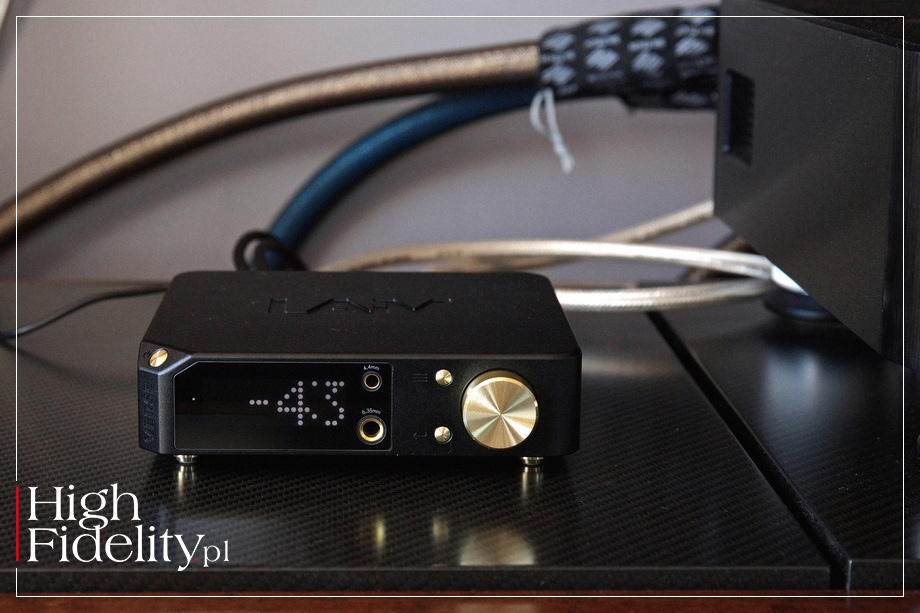
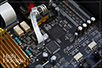
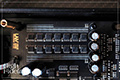
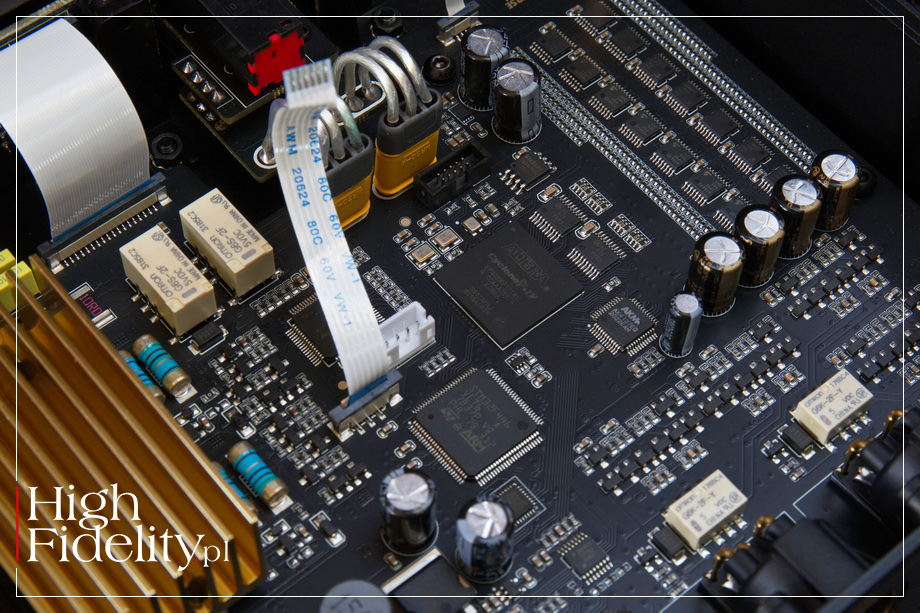
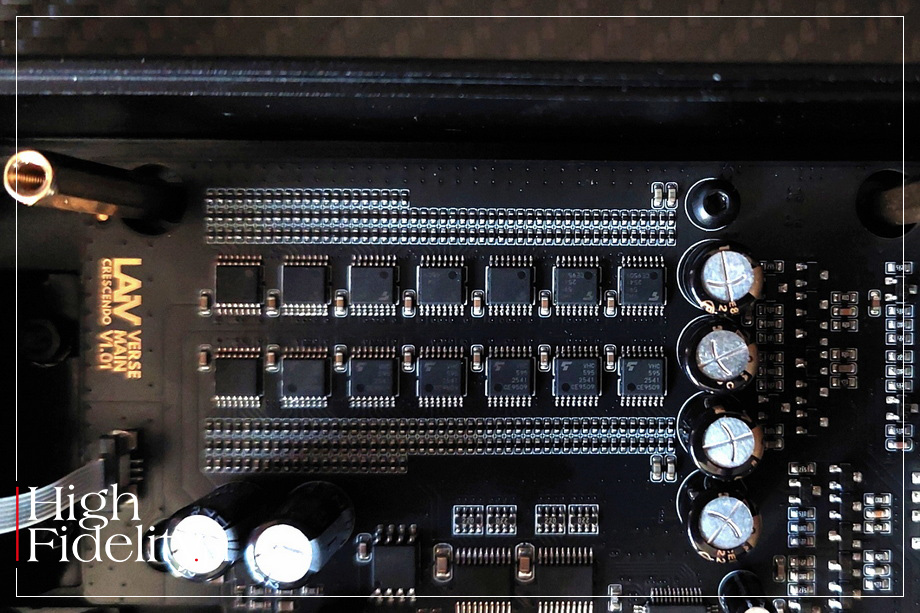
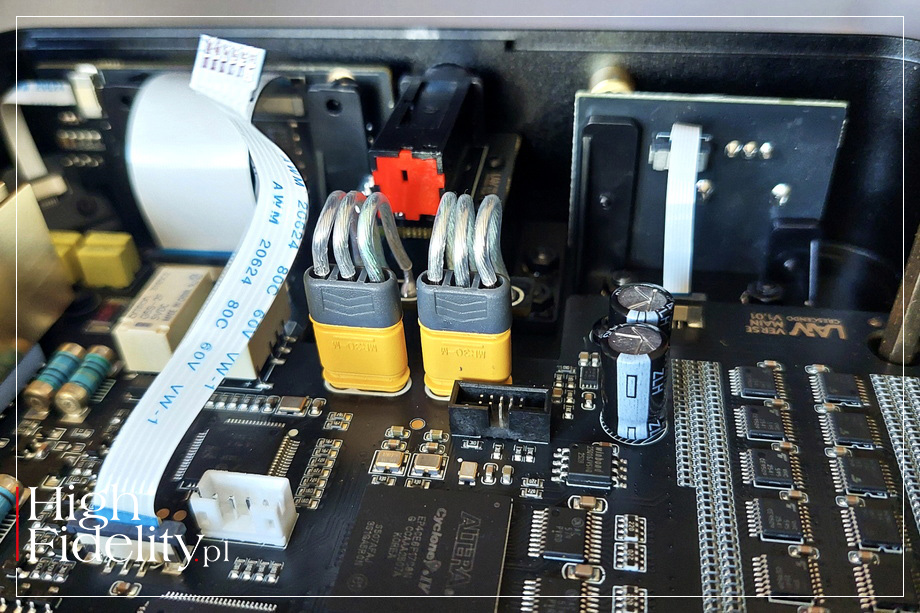
The digital-to-analog converter (DAC) module features a discrete R-2R architecture. It is built using separate resistors controlled by logic gates. This is a popular choice among Chinese manufacturers, including Laiv. It allows for flexible sound shaping through the user’s selection of digital filters stored in DSP chips. The manufacturer states:
An advanced audio technology that uses carefully arranged individual resistors with a tolerance of 0.05%, to achieve superior sound quality through a direct, natural signal path. By focusing on precision and quality, this technology delivers clear, accurate sound reproduction, stable stereo imaging, and a tonal character that feels true to the original recording, providing an immersive listening experience with exceptional detail and fidelity.
⸜ Crescendo Verse, → www.LAIV.audio, accessed: 18.03.2026. The signal is transmitted in balanced form, so there are two types of line outputs: RCA and XLR. According to the manufacturer, they utilize independent, discrete output buffers, so they can be used simultaneously. In the menu, you can choose whether the output has a fixed or adjustable voltage. The Verse can, in fact, function as a DAC with volume control. According to the manufacturer, it is “intuitive” and allows for “precise tuning.” You can adjust it either with the aforementioned knob or with a very handy remote control:
Combined with VERSE's built-in analog volume control, this discrete preamp stage allows VERSE to connect directly to power amplifiers or active speakers without the need for a separate preamplifier. Whether you are building a minimal desktop setup or a full-scale hi-fi system, VERSE will effortlessly adjust to your needs. (Ibidem)
The headphone amplifier, the third component of this device, also is also a balanced design. Laiv offers a separate headphone amplifier, the HP2A model, though it lacks a digital-to-analog converter; review → HERE. The reviewed device uses a discrete circuit, with three gain levels. In “High” mode, the Verse delivers up to 1100 mW per channel on the balanced output at 11 Vrms and up to 230 mW on the unbalanced output at 5.5 Vrms. That’s really quite a lot. There are two outputs - a balanced 4.4 mm (Pentaconn) and a 6.3 mm TRS (large jack). The headphone stage is protected by built-in safety circuits, including protection against overheating, overload, and DC. 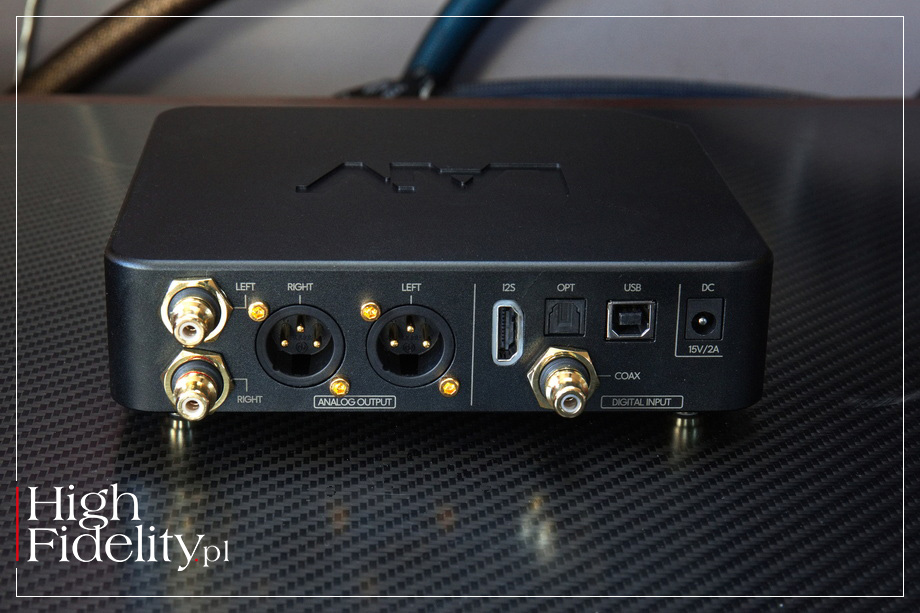
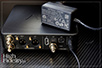
And then there’s the power supply. It’s an external switching mode unit in the form of a plug. It delivers 15 V DC (2 A). ▓ SOUND THE TEST PROCEDURE • The Crescendo Verse was tested in the HIGH FIDELITY reference system. It offers three options that we can choose from - and that’s exactly what we did. 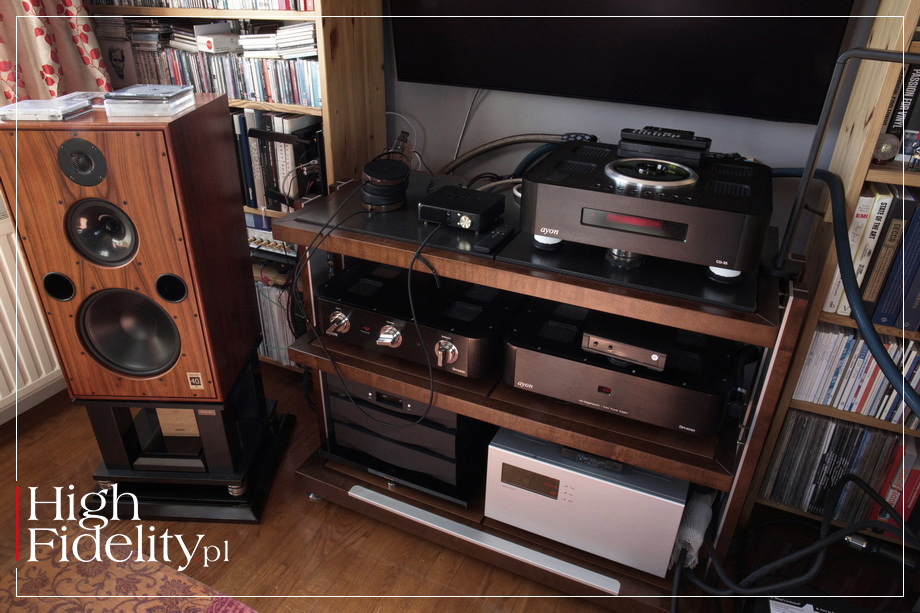
As a DAC it was compared to the outputs of the Ayon Audio CD-35 HF Edition SACD player and the Sforzato DSP-05EX & PMC-05EX. I connected its RCA analog output to the input of the Ayon Audio Spheris Evo preamplifier. The files were streamed from Tidal using a FunBox 3.0 router and Acoustic Revive LAN-Quadrant Triple-C WB digital cables, while the signal from the Ayon was transmitted via an Acrolink 7N-D6100 Mk II digital cable. 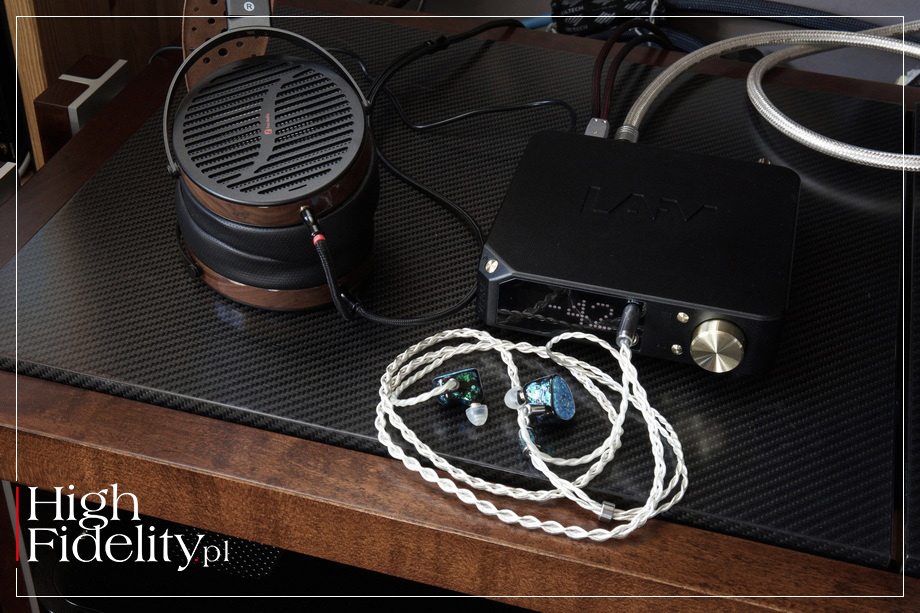
For this test, I used three different headphones: Lime Ears Anima → Pentaconn, Fosi Audio i5 → 6.35 mm jack, and Hifiman HE-1000 v2 → 6.35 mm jack. The device stood on its own feet on the top carbon platform of the Finite Elemente Master Reference Pagode Edition Mk II rack. » RECORDINGS USED FOR THE TEST ⸜ selection
→ COMPACT DISC |
THE CONVERTER WE'RE TESTING is beautifully crafted and looks fantastic. It’s a real gem. Its sound is equally refined - that’s the right word for it. It possesses all the advantages of discrete R-2R converters, but it doesn’t slip into the muddiness and lack of definition that is sometimes associated with them. I heard very good dynamics with it - almost explosive - whether with tracks from the Jazz Hi-Res CD Sampler (on which the publisher included MQA-encoded tracks) or with DIANA KRALL and her This Dream of You. The disc featuring sample tracks from the Universal Classic & Jazz catalog was not decoded - the Crescendo does not have a built-in MQA decoder - yet the sound was deep, dynamic, and lively. 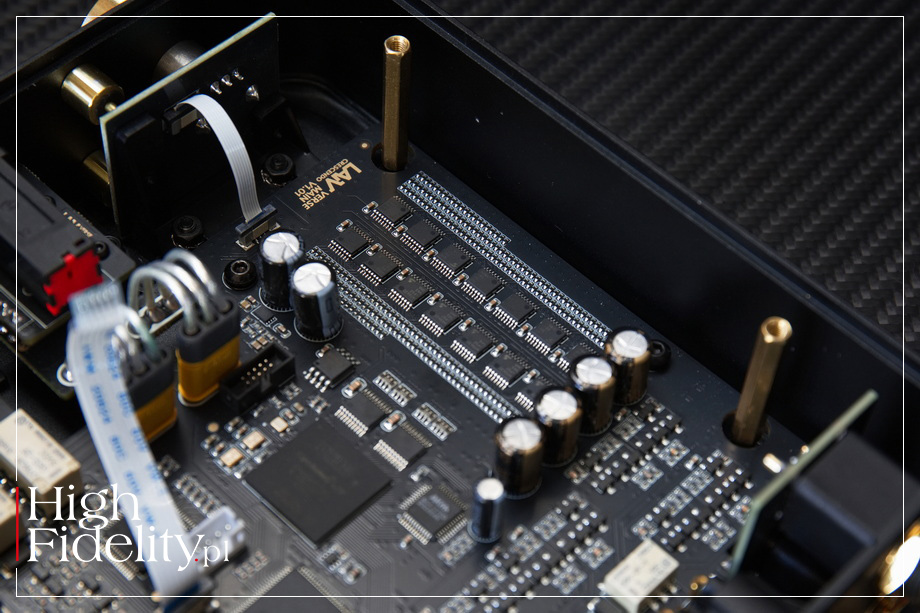
I had a similar impression of the sound on Krall’s album. Her voice had a more open upper end than with the reference player. The lower midrange wasn’t as richly saturated, and the bass was slightly rolled off. This is understandable; after all, the Laiv Audio DAC is an affordable device. However, it’s important to know that you won’t get a rich, tangible sound from it. Instead, the sound will be fast, transparent, and selective, with a distinct treble. Curious to see how this translates to albums with plenty of energy in the higher frequencies, I reached for the latest remaster of THE POLICE’s Synchronicity, released in 2024 on SHM-CD. With it, I heard what I heard with the Krall, though it was less noticeable with jazz - the Singapore-made DAC emphasizes the attack of the sound and prioritizes clarity. Not so much clarity as openness - to the sounds of instruments, reverberations, nuances, details, etc. After all, this is an R-2R converter, which gives it an advantage over even the best integrated circuits: vividness. Its sound is not only open but also soft, naturally coherent internally. That is why the bright remaster of The Police album was not too bright, but simply the way the producers of this reissue (I assume) intended it to be. The combination of these two characteristics produces an interesting effect: an open, yet naturally silky sound. It may not be in the “tube amp” style, but then again, not everything has to be - there are other ways to convey emotion to the listener. QUEEN, from the remix of their debut album released in 2024 - the same year as Synchronicity - played with power, drive, and aggression. It’s rock music, rather raw, and that’s how I heard it: powerful, raw, fast, and explosive. However, there is more to it than meets the eye (or ear, in this case). I mentioned at the beginning how well the jazz tracks sounded. These were recordings from over half a century ago, recorded and mixed in analog, so one could say that “that’s just how they are.” It turns out that the Laiv can do much more. With carefully recorded and released material, this device impresses with its resolution and sonic coherence, at least when you consider how much it costs. I couldn’t help but notice how well, how precisely the drums sounded on the album Off Stillness by THOMAS STRØNEN and his collective TIME IS A BLIND GUIDE, how clear the violins sound, and how precisely one can hear the spatial relationships between the musicians. The album was recorded at the legendary - and I’m not exaggerating - Rainbow Studio in 2011 and mixed in Munich in 2024. Located in Oslo, Rainbow Studio was founded in 1984 by Jan Erik Kongshaug (1944–2019), a Norwegian sound engineer. Its distinctive sound, known as The Kongshaug Sound, defined the sound of ECM Records. All the elements that make up the “ECM sound” were present here as well, with the Crescendo Verse DAC. It offers incredibly detailed and resolving sound plus long reverberations. The DAC almost celebrates spatial effects, as it tends to widen the soundstage. It isn’t ultra-precise in defining the contours of objects, nor does it clearly reveal their textures; rather, it blends them with the air around them. However, with good recordings, such as the ones in question, it impresses with its scale and grandeur. PREAMPLIFIER • Connecting the Crescendo Verse DAC directly to the power amplifier yielded some extremely interesting results. First and foremost, the sound became deeper and warmer. It wasn’t as detailed or selective as before, but it was better anchored in the bass. Strønen’s album fitted into a narrower perspective; it was no longer as expansive. On the other hand, it gained body - it was something closer to what I experience daily in my system. However, sound definition wasn’t as good. With an external preamp, the sound image was more solid and clearer. Also, the depth of the soundstage without the Ayon in the signal chain was no longer as impressive. And yet… As I listened to several albums, I came to a conclusion that had formed in my mind right from the start, but which I needed to confirm: you have a choice. And it is an equal choice. 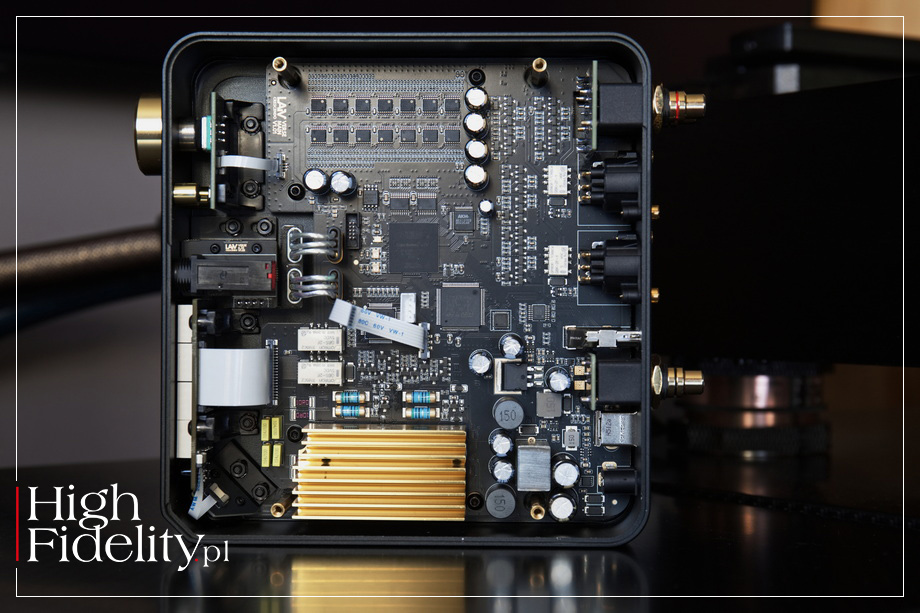
If you prefer a brighter, more precise, and open sound, choose a system with an integrated amplifier. If, on the other hand, you prefer a lower-frequency-based sound - perhaps not as lively or precise, but more pleasant - then a power amplifier will suffice. In both cases, you’ll get a surprisingly good, clear and dynamic sound. HEADPHONES • The Verse is first and foremost a digital-to-analog converter, then a DAC with volume control, and finally a headphone amplifier. That’s also the order of priority when it comes to sound. At least from an objective point of view. However, when I listened to this device on its own, in several sessions using only headphones, it dawned on me that it’s simply a very nice DAC with an equally nice headphone amplifier. Its sound in this mode is creamy and rich. It’s significantly darker than when using the line outputs and an external preamp, and closer to what I heard when I connected it directly to the Soulution 710 power amplifier. It was as if the volume control section itself was the element “shaping” the sound, rather than merely acting as an attenuator. Even with the ultra-precise Lime Ears Anima stage monitors, the sound was rich in detail, saturated, and dense. When I switched to planar headphones, whether Hifiman or Fosi Audio, the sound closed in slightly at the edges and the midrange became more pronounced. But in both this and the previous setup, everything in the Laiv’s presentation “made sense”; it was internally coherent. Perhaps without any very pronounced or selective opening of the sound at the top end, but with a very, truly very nice midrange. ▒ Summary LAIV AUDIO IS A COMPANY that knows what it’s doing, knows what it wants, and knows how to achieve it. In its tiny products lies a lot of heart and passion, giving them a professional edge. I see these devices as DIY products - the work of an enthusiast and a bit of a madman (audio isn’t an easy field) - yet also a bit like a professional, with a plan, a budget, and the ability to anticipate. A very rare combination. The Crescendo Verse sits right in the middle of these two extremes. It is compact, offers good functionality, and delivers a mature sound. With an external preamp (or integrated amplifier), it will be super-transparent and selective. The soundstage will then be perfectly expansive and spacious. And there will also be explosive, instantaneous dynamics. With the volume control activated, the Laiv sounds different - darker, warmer, and lower. It lacks that stunning, for the price, openness, but in return offers better-defined instrument shapes and a more richly saturated bass. It won’t be particularly meaty, but it will never be lacking. The same goes for headphones - the sound was great, maybe even better than from the line outputs. Because it’s detailed, clear, yet tangible, even silky. It’s better to choose the balanced output over the 6.3 mm jack, but the latter will also be perfectly fine. 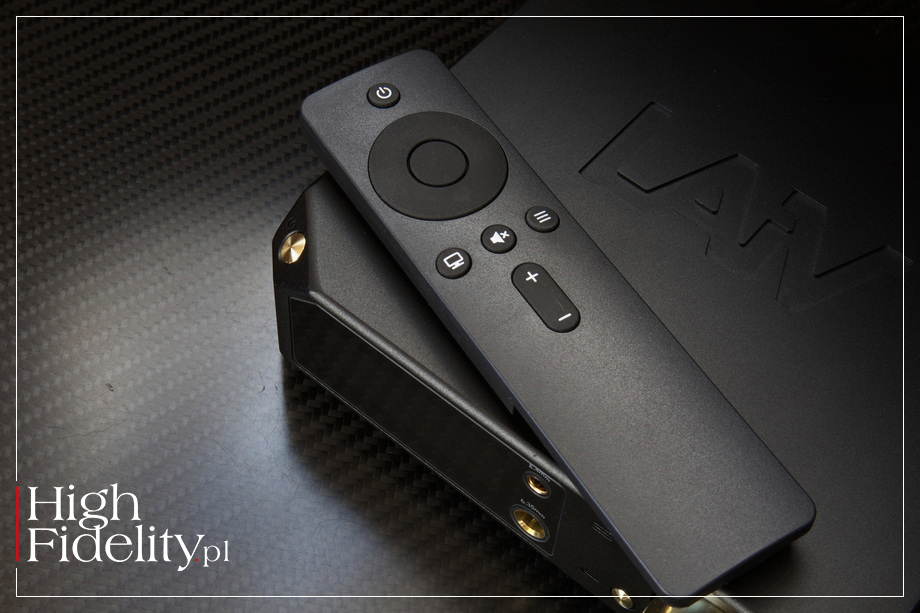
Yet another product from Laiv leaves me convinced that audio is not dead yet, it is doing well, and that new manufacturers are bringing technical solutions and a perspective on sound that enriches us and puts us in a better place. ‖ WP ▒ Technical specification
Chip: FPGA Intel Altera Cyclone 
THIS TEST HAS BEEN DESIGNED ACCORDING TO THE GUIDELINES adopted by the Association of International Audiophile Publications, an international audio press association concerned with ethical and professional standards in our industry, of which HIGH FIDELITY is a founding member. More about the association and its constituent titles → HERE. |
 |

|
Reference system 2026 |
|
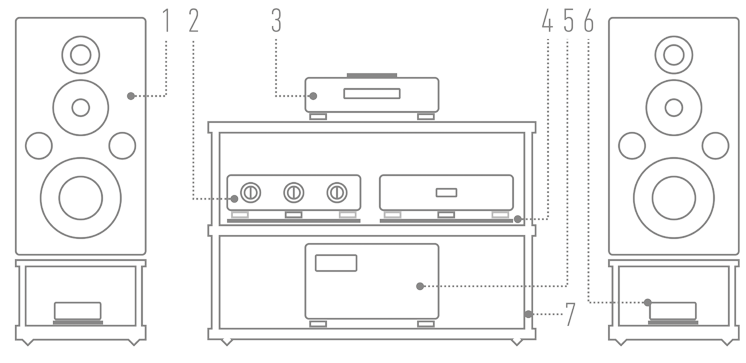 1) Loudspeakers: HARBETH M40.1 |REVIEW| 2) Line preamplifier: AYON AUDIO Spheris III Linestage |REVIEW| 3) Super Audio CD Player: AYON AUDIO CD-35 HF Edition No. 01/50 |REVIEW| 4) Stands (loudspeakers): ACOUSTIC REVIVE (custom) |ABOUT| 5) Power amplifier: SOULUTION 710 6) Loudspeaker filter: SPEC REAL-SOUND PROCESSOR RSP-AZ9EX (prototype) |REVIEW| 7) Hi-Fi rack: Hi-Fi rack: finite elemente MASTER REFERENCE PAGODE EDITION Mk II, more → HERE |
|

|
Cables Analog interconnect SACD Player - Line preamplifier: SILTECH Triple Crown (1 m) |ABOUT|» ANALOG INTERCONNECT Line preamplifier → Power amplifier: Siltech ROYAL SINLGE CROWN RCA; review → HERE Speaker cable: SILTECH Triple Crown (2.5 m) |ABOUT| |

|
AC Power Power cable | Mains Power Distribution Block - SACD Player: SILTECH Triple CrownPower (2 m) |ARTICLE| » POWER CABLE Mains Power Distribution Block → Line preamplifier: Acoustic Revive ABSOLUTE-POWER CORD, review → HERE » POWER CABLE Mains Power Distribution Block → Power amplifier: Acoustic Revive ABSOLUTE-POWER CORD, review → HERE Power cable | Power Receptacle - Mains Power Distribution Block: ACROLINK Mexcel 7N-PC9500 (2 m) |ARTICLE| Power Receptacle: Acoustic Revive RTP-4eu ULTIMATE |REVIEW| » ANTI-VIBRATION PLATFORM under Acoustic Revive RTP-4eu ULTIMATE: Graphite Audio CLASSIC 100 ULTRA, review → HERE Power Supply Conditioner: Acoustic Revive RPC-1 |REVIEW| Power Supply Conditioner: Acoustic Revive RAS-14 Triple-C |REVIEW| Passive filter EMI/RFI: VERICTUM Block |REVIEW| |

|
Anti-vibration Speaker stands: ACOUSTIC REVIVE (custom)Hi-Fi rack: finite elemente MASTER REFERENCE PAGODE EDITION Mk II, more → HERE Anti-vibration platforms: ACOUSTIC REVIVE RAF-48H |ARTICLE| » ANTI-VIBRATIONAL FEET: |

|
Analogue Phono preamplifier: Phono cartridges:
Clamp: PATHE WINGS Titanium PW-Ti 770 | Limited Edition Record mats:
|

|
Headphones » HEADPHONE AMPLIFIER: Leben CS-600X, review → HEREHeadphones: Headphone Cables: Forza AudioWorks NOIR HYBRID HPC |