


|
LOUDSPEAKERS • floor-standing KROMA ATELIER
Manufacturer: KROMA ATELIER |

 |
 |
 |
|
Review
text by WOJCIECH PACUŁA |
|
No 264 May 1, 2026 |
ONE OF THE HIGHLIGHTS of last year’s Audio Video Show in Warsaw was the presentation of the Maribel speakers by the Spanish company Kroma Atelier, each standing 200 cm tall and weighing 123 kg. Understandably, their price- nearly two million zlotys - was the main source of excitement. However, many visitors leaving the room shared by the Spanish and Greek representatives from Ypsilon were genuinely impressed by the sound of this flagship system; you can find our coverage of the show → HERE ˻PL˺ and → HERE. 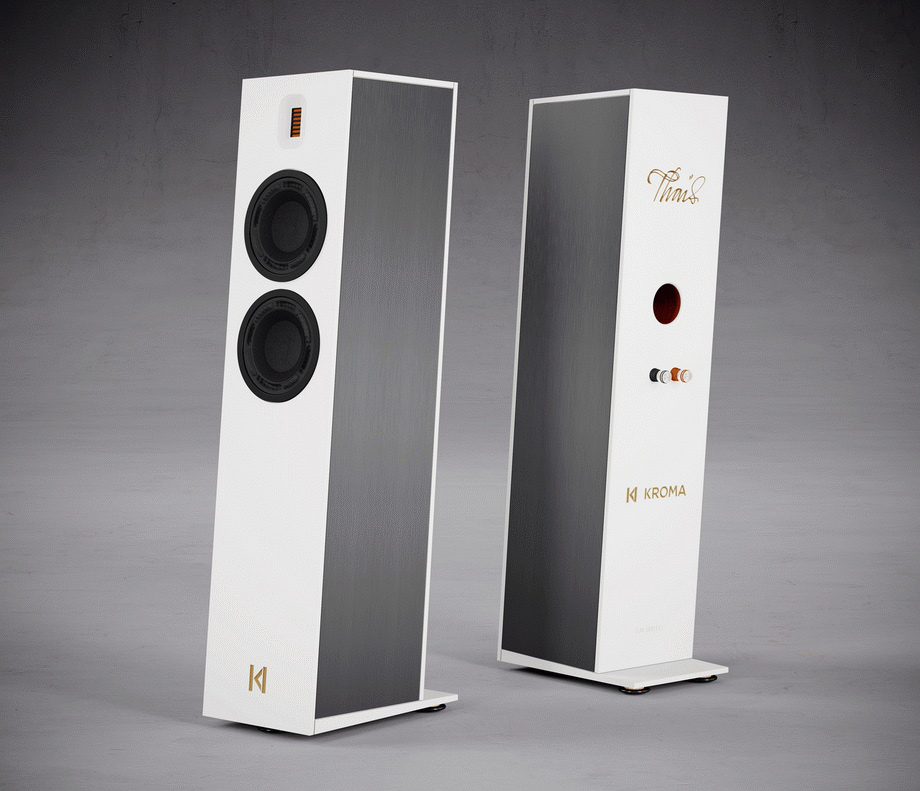
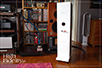
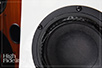
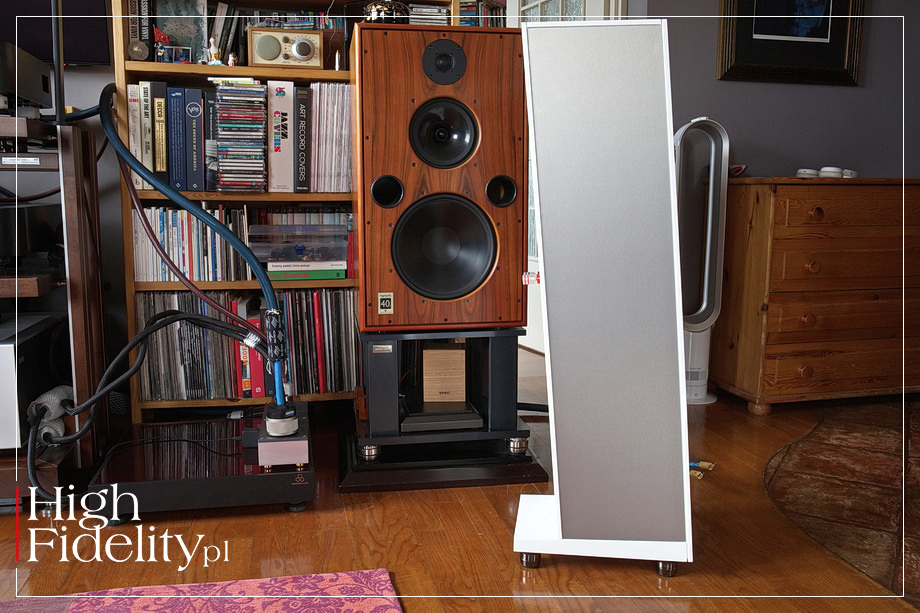
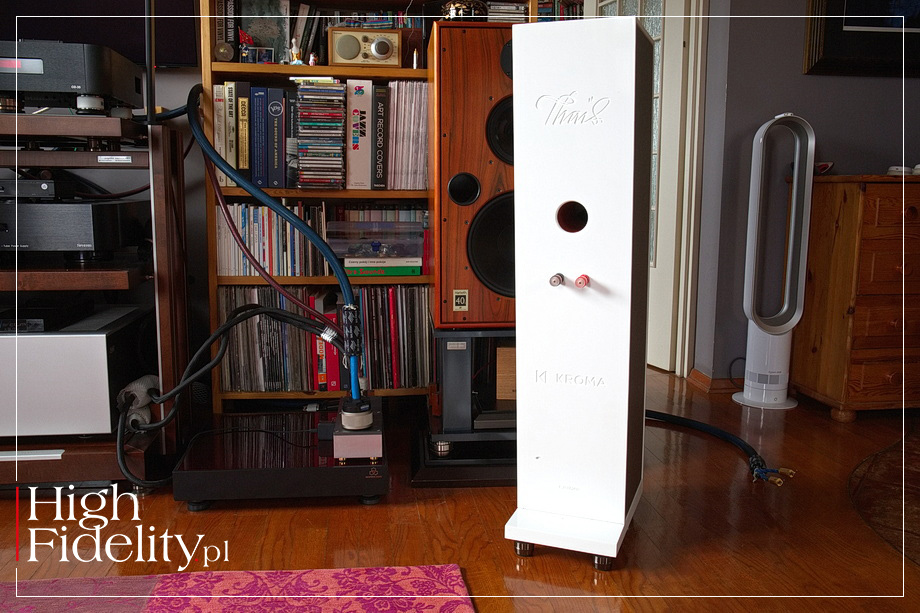
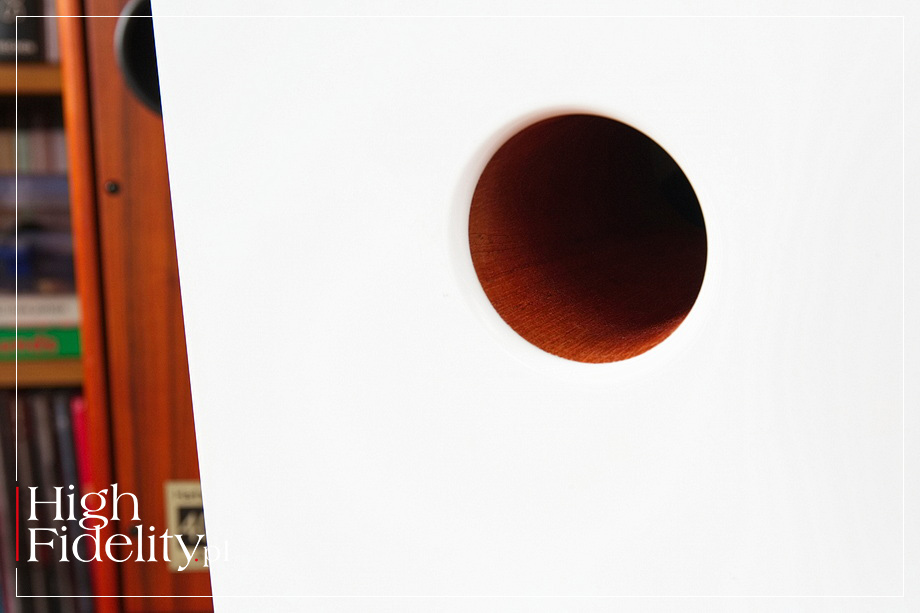
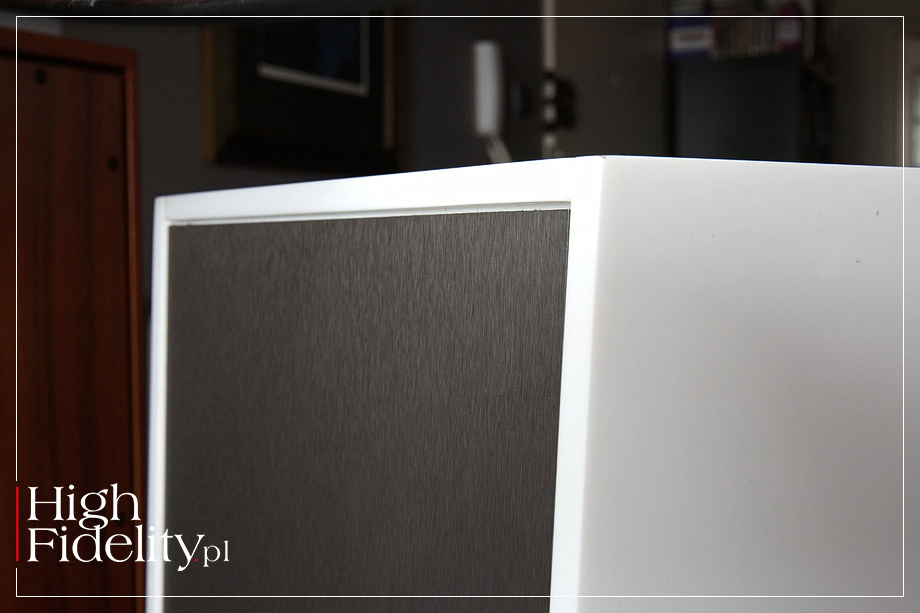
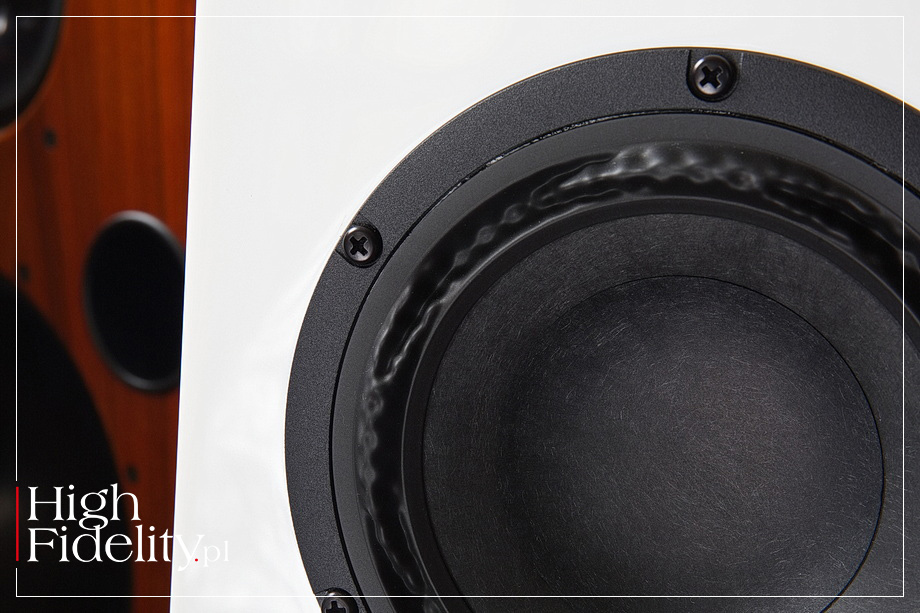
These are beautiful speakers. Perhaps this stems from the fact that their creators see themselves as both technicians and artists. This is also reflected in the model names, which reference opera titles, their heroines, or the performers of key arias. However, a glance at this company’s elegant designs - with their well-balanced proportions, clean lines, and meticulous details - suggests that design and sound are equally important to them. And rightly so; with prices starting just under 100,000 PLN per pair, there is really nothing to complain about. Customers certainly have plenty to choose from. The lineup is divided into three series: the entry-level Classic series, with five models; the mid-range Signature series, with four speakers; and the Reference series, the flagship line, also featuring four speakers. The first two series include both bookshelf and floor-standing models, while the Reference series features only the latter. In total, there are as many as thirteen models - a staggering number for a boutique manufacturer. Kroma Atelier speakers are highly sensitive and are often recommended for low-power (tube) amplifiers; they are manufactured using high-end components sourced from Mundorf and Duelund. Their speakers feature a “Silent Cavity” enclosure design - inspired by damper technology - which, according to the manufacturer, enables control of airflow and eliminates metal parts from the design. All Kroma Atelier speakers are handcrafted in Granada, Spain. ▓ Thaïs ALTHOUGH IT'S HARD TO BELIEVE, the Thaïs speakers - which cost over 100.000 PLN (per pair) - are actually only the second model from the bottom of the Classic series. However, this series incorporates many of the same design features that the company also applies to its most expensive models. The Thaïs are floor-standing speakers with three drivers in a two-and-a-half-way configuration. Their cabinet is vented via a bass-reflex port placed on the rear panel. The port is made of spruce wood and has a resonance frequency of 34 Hz. The manufacturer states that controlled low-frequency reproduction extends down to 30 Hz. One of the low-bass drivers operates from the bottom up to 250 Hz and is cut off by a second-order crossover, while the other stops at 2.2 kHz. High frequencies are reproduced by an AMT (Air Motion Transformer) driver, which works like a harmonica, compressing and expanding the sound. Drivers of this type have been a frequent choice among high-end manufacturers in recent years. To name just a few from the top of my head: Monitor Audio, Owl Audio, Esprit, Burmester, FinkTeam, and Audiovector. The ones used by Kroma Atelier are manufactured by the German company Mundorf, which also supplies crossover components and terminals. Below the tweeter, which is recessed slightly into the cabinet, are two identical 160 mm mid-bass drivers with cones made of paper fiber composite. They feature a very distinctive suspension. Instead of a smooth half-sphere, it is irregular, as if “spilled over.” This distinctive, irregular upper suspension of the Purifi Audio drivers used here is known by the company’s proprietary name, Neutral Surround Geometry. Its purpose - as the Danish manufacturer claims - is to “radically reduce harmonic distortion,” especially in the midrange, while maintaining high linearity of excursion and eliminating its natural resonances. The drivers are mounted on a rear-tilted baffle. This is typically done to improve the phase alignment of the speakers, but it also helps minimize standing waves inside the cabinet. Speaking of the cabinets. I don’t know if you’ve noticed, but nowhere on these speakers - or any others from this company - are there any visible screws. The surfaces are smooth not only on the sides and back, but also on the front, and the drivers mounts themselves are invisible. This is not only an excellent design choice (though my Harbeths, with their rows of screws, also look great), but a technical one as well. The manufacturer’s goal was to eliminate metal components from his speakers, which- as they put it - “distort the sound.” 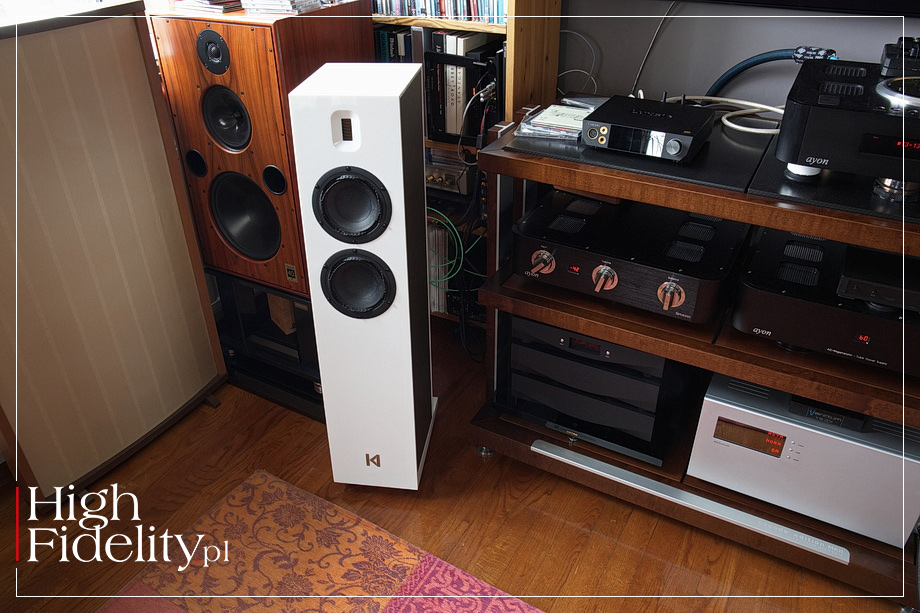
The appearance of the speakers is therefore closely linked to their construction. This also applies to the materials used in their design. Kroma Atelier opted for an unusual material, called Krion. It is produced in Spain by the Porcelanosa Group. Here’s what the manufacturer writes about its efforts regarding cabinet damping:
As a result of these measures, the cabinet was created with acoustic properties that are closer to those of stone or mineral composite structures than to those of wood. In terms of sound, this translates to extremely low cabinet interference, allowing the drivers to operate with minimal mechanical disturbance.
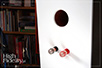
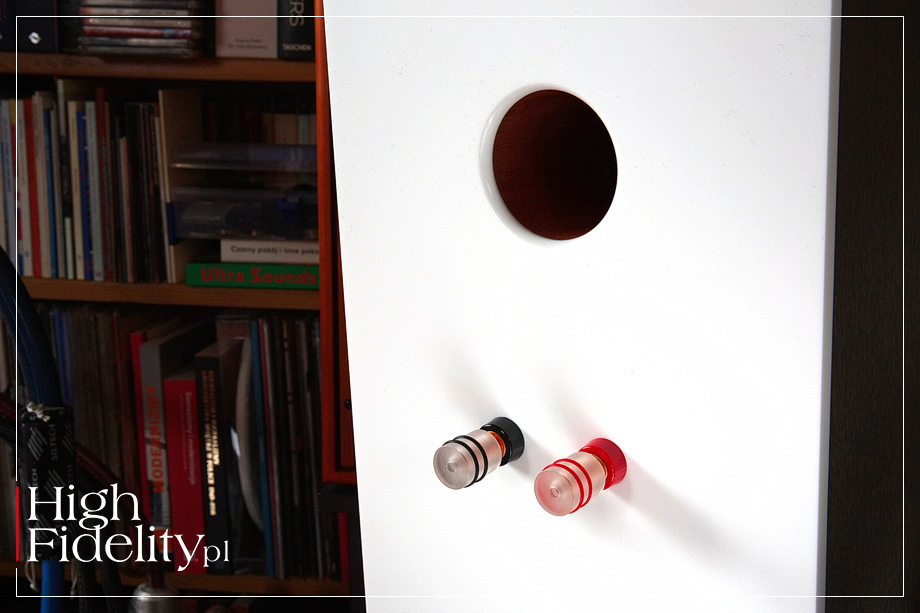
Krion is a mineral-based composite, chosen - according to the manufacturer - for its mechanical, non-conductive, and non-magnetic properties. It is dense, non-porous, and similar to Corian, which was also once used in audio equipment (for example, in the Chario Belong Type S speakers). Like Corian, Krion is widely used in construction, including for the production of kitchen and bathroom countertops. A rigid, low-resonance composite based on a mineral filler is nothing new in audio. Recall that companies such as Wilson Audio, Egglestonworks, Focal, Hansen Audio, and, recently, even Monitor Audio in their flagship Hyphn speakers use their own epoxy resins and fillers. Polish Pylon Audio also has its own models of this type. Despite its excellent properties, it is not a widely used material, as it is difficult to purposefully use. And, as it turns out, stiffness and high damping of the resins alone do not guarantee success. Perhaps this is why Kroma Audio assembles the cabinet modules not with screws, but with thermoplastic mounts. There are also reports that the company uses wood for additional damping, though I have not found any confirmation of this in official materials. It is known, however, that instead of ordinary spikes, the manufacturer uses feet from a specialist manufacturer, IsoAcoustics. This brings it closer to the giant, JBL, which uses IsoAcoustics’ Gaia I model in its Summit series speakers, for example in the Ama model we tested. You can find the review → HERE. The tested speakers are a compact and sleek design, measuring 100 cm tall, 23 cm wide, and 34.7 cm deep. Since they are mounted on a special base, when we refer to their depth, we are also referring to the base. Each weighs 33 kg. These are speakers designed to be compatible with tube amplifiers. This is suggested by their relatively high sensitivity of 90 dB, but the minimum impedance of 3.6 Ω and the rated impedance of 4 Ω mean that you’ll need to look for amplifiers with above-average current output. Thanks to the composite cabinets, the speakers can be easily painted. The Thaïs model is available as standard in several great-looking colors. In addition to the white with silver sides (White Krion) version we are testing, you can also get white with wood veneers on the sides, with carbon fiber panels, as well as fully painted in Martin Aston’s car-inspired colors: red, blue, green, and steel. However, you’ll have to pay extra for the “Premium” finishes. The model and company names are milled into the rear panel, and that is where the single speaker terminals are located, positioned quite high up. As we mentioned, they are made by Mundorf and feature copper contacts and polymer nuts. Finally, let’s add that the speaker’s name was taken from the world of opera. Thaïs is a three-act opera by the French composer Jules Massenet from 1894, based on a novel by Anatole France. It tells the dramatic love story of the monk Athanaël, who attempts to convert the beautiful Alexandrian courtesan Thaïs, only to ultimately succumb to her charms himself. This work, classified as part of the Orientalist genre, is characterized by lyricism and features the famous violin miniature: Méditation. On the occasion of its 2019 production, the Baltic Opera added: “Thaïs is a story about the passions that torment people, but also about the dangers arising from excessive religious fascination.” ▓ SOUND THE TEST PROCEDURE • The Kroma Atelier Thaïs speakers were placed almost exactly where the Harbeth M40.1 speakers have stood since the beginning - that is, since 2011 - in the mid-field, though I spaced them slightly wider apart. This means that they were positioned 250 cm from the listening position and 254 cm apart (measured from the center of the front baffle). They were 78 cm from the rear wall, measured from the center of their rear baffle (top panel). During the test, the speakers were toed-in so that the driver axes crossed exactly on my head. 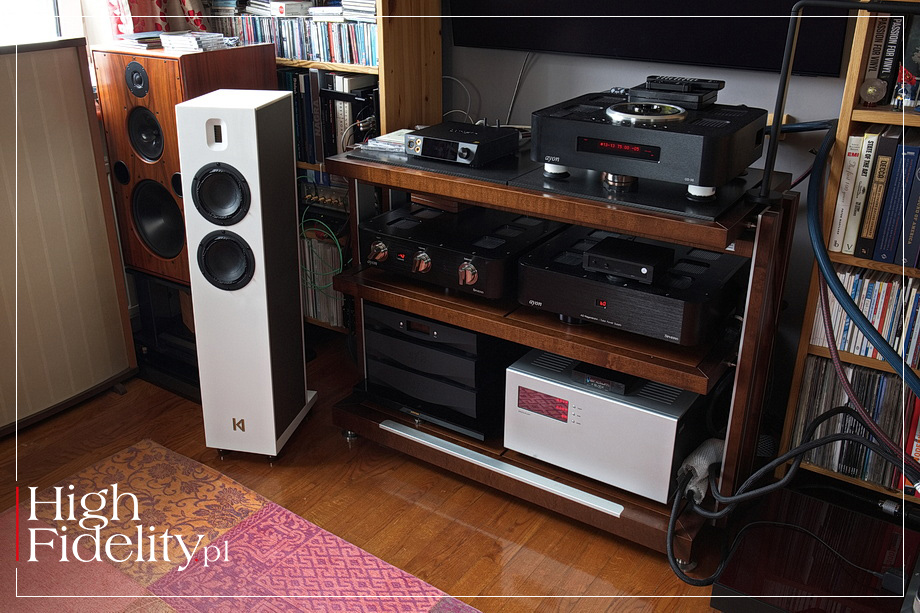
I determined the distance between the speakers and their level using a Bosch PLR 50 C device. More on speaker setup in the article Micro-tuning, or setting up speakers, HF No. 177, → HIGHFIDELITY.pl, accessed: 27.04.2026. For more on the acoustics of the HF listening room, see the article The “High Fidelity” Listening Room…, HF No. 189, → HIGHFIDELITY.pl, accessed: 27.04.2026. » RECORDINGS USED FOR THE TEST ⸜ selection
• STAN GETZ/JOÃO GILBERTO, Getz/Gilberto, Verve/Lasting Impression Music LIM K2HD 036, K2HD Mastering, „24 Gold Direct-from-Master Edition UDM”, Master CD-R ⸜ 1964/2009. LET'S BE HONEST: The THAÏS speakers neither look nor feel like they're worth over 100.000 PLN. They're superbly built, attractive, and every detail is meticulously crafted. However, neither the drivers used nor their size are enough to convince you to immediately transfer money to the seller’s account. The true value of these speakers lies hidden in the details that we cannot see - specifically, in the time spent tuning them. For in audio, time is the most expensive component in the development of any product. I am writing about this because these are speakers offering excellent sound. Truly excellent. Moreover, it is remarkably similar to what I hear every day with my Harbeth M40.1s. I don’t think there is any connection here, that Javier Millan, the owner and chief designer of the company, was inspired by BBC designs. But I know this from many other reviews: certain paths to achieving the desired results are common to many audio designers. It’s about thinking of sound and what makes us get goosebumps when listening to music, when it’s needed, or when we melt away into nothingness, submerged in a wave that has an electromechanical source but seems to be connected directly to our nervous system. That’s exactly how I felt with the Kroma Atelier speakers. In the sense that regardless of the album or medium being played, the Spanish designs remained true to the designer’s vision. And this vision is remarkably cohesive and easy to pinpoint. In fact, it is an utterly pleasant and controlled sound. Pleasant, because it is about pure sweetness, pure flow, saturating the room with sound, and controlled, because all of this is underpinned by a sort of iron spring that ensures the sound remains precise and well-defined. It is also controlled because I don’t hear any aspect of the sound left unchecked. 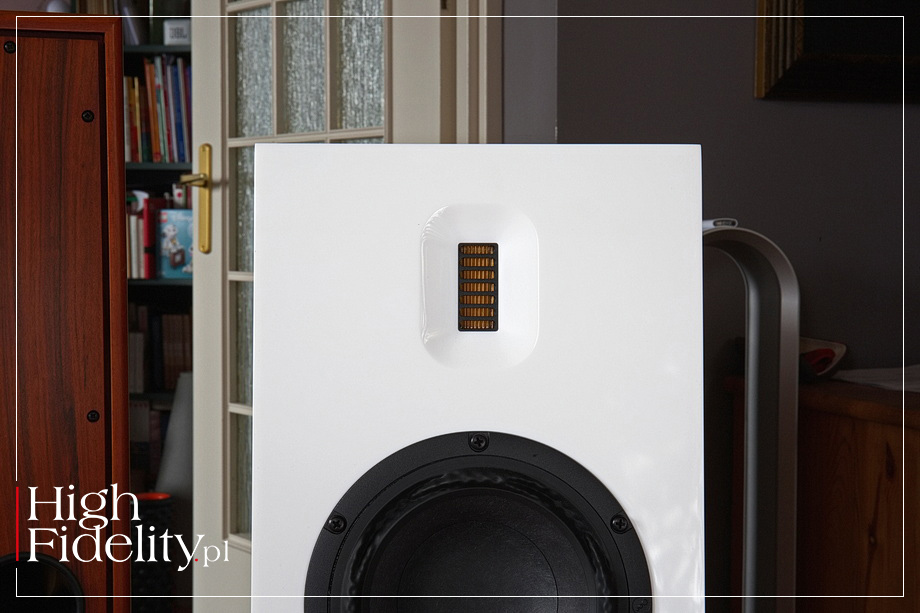
As I said, it’s a kind of “BBC” approach to sound, even if that wasn’t the goal. An approach that, for me, culminates in the Harbeth M40.1 speakers I use every day. Interestingly, in the new designs of the XD2 series, featuring Radial 4 drivers, the team behind this British brand has moved toward a more open and aggressive sound. It’s still a wonderful presentation, but different from what it used to be. Millan, on the other hand, chose the opposite direction, at least in the tested Thaïs speakers, closer to what Harbeth once offered. At first glance, these are warm sounding speakers. Perhaps even - very warm. João Gilberto’s vocals from the 1964 classic album Getz/Gilberto, recorded with Stan Getz, were thus mesmerizing, soft as silk, much like his guitar. His vocals were presented with great volume, yet without blurring the details. And this would be yet another “warm-sounding” design, were it not for the fact that both the vocals and the guitar were rendered with exceptional precision. |
The warmth I’m talking about didn’t come from blurred edges, because those edges clearly distinguish the tones, the space, and the dynamics. It is part of the resolution. There’s a wealth of information in this sound - all of it. That includes the details that subconsciously build a musical image in our minds. Because when a concert begins at the Pawnshop club in Stockholm, we feel as if we were there, as if the drummer had set up right in front of us. I had a similar experience with the Harbeth M40.5 XD2 speakers, which used to stand in the same spot as the Kroms, just to be clear. There, too, the kick drum beats seemed to come from my room, not from the recording. In the English monitors, however, this was more intense due to a stronger, better-defined attack. Here, the whole scene receded and felt more distant. Not emotionally, but physically - the performers stood farther away from me, making the tension between them and me less immediate. 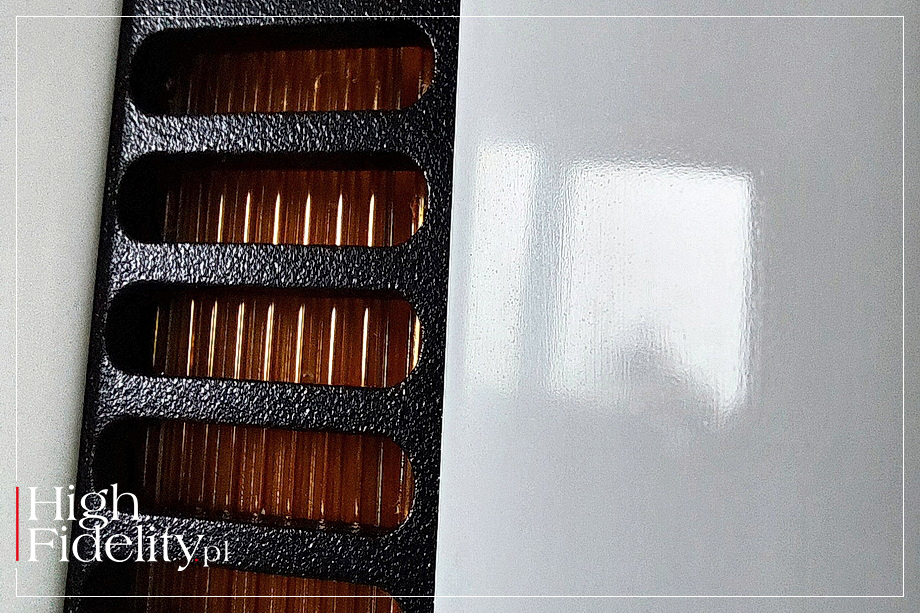
The Spanish speakers do something different. They saturate the space with a dense carpet of sound, weaving a thick fabric onto which they layer an incredible amount of detail. This reaches us all at once, rather than the details first and the fabric later. Perhaps this is precisely why the speakers completely disappear from the room - truly, as if they weren’t there - while simultaneously leaving behind a dense, compressible, internally electrified presentation. With recordings such as ˻ 1 ˺ Jazz At The Pawnshop by ARNE DOMNÉRUS, the result is an intense yet detached experience. In contrast, on ˻ 1 ˺ My Ideal, a track from WALTER SMITH III’s album Twio Vol. 2, the sound was right at my fingertips; it was “here and now.” Both experiences were credible, though each in a different way. This perfectly demonstrated the differences in the recording and mastering of these materials. But not by pointing them out as problems, but by presenting them as solutions. What I mean is that the speakers from Spain strive to deepen the sound, in every dimension: tonal, dynamic, and in terms of differentiation. They do not separate micro-events into distinct bursts of sound, but rather blend them together. In a way, this blurs the attack and the edges of the instruments. That’s not the case, at least not entirely; it’s partly an illusion, but a pretty powerful one. That is, it imposes a specific way of seeing things on us. That’s why albums recorded with heavy compression and intended mainly for headphones or car listening - let it be ˻ 3 ˺ Notre-Dame by MORRISSEY - a track inspired by the fire at the Paris cathedral, based on a heavy beat and a synth pad - will sound subdued. This track sounded dense, even weighted down. But it didn’t blend into a single “muddy mess,” as one might expect from “warm” speakers. The same was true, incidentally, of the track I played immediately afterward, ˻ 1 ˺ Opening Night by the ARCTIC MONKEYS. ▲ Micro-review ALEKSANDRA KRYŃSKA QUINTET Self-published, Compact Disc 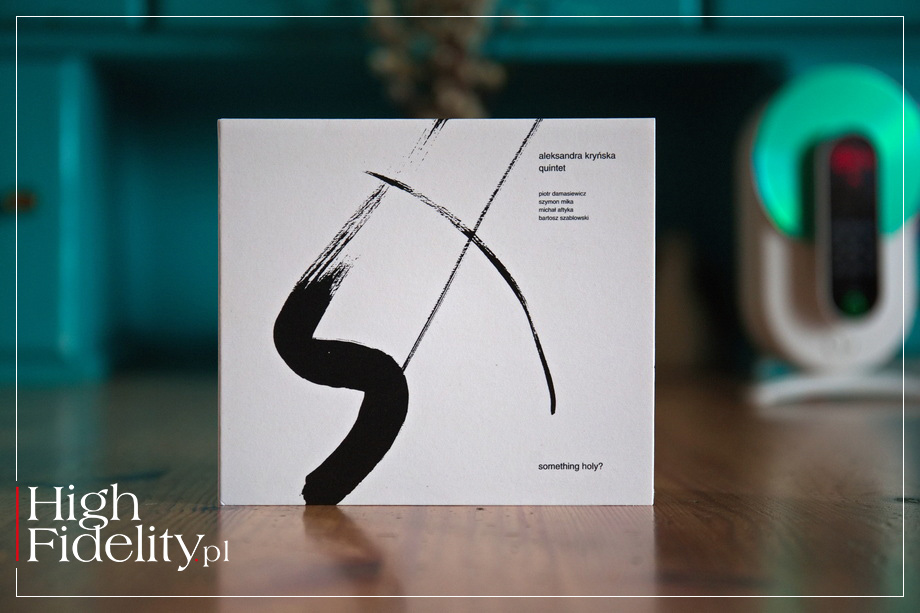
Something Holy? is the debut album by violinist Aleksandra Kryńska; she also wrote all the tracks featured on the album. The band she assembled includes trumpeter Piotr Damasiewicz, guitarist Szymon Mika, Michał Aftyka on double bass, and Bartosz Szablowski on drums. The album features jazz music, largely improvised, in which electronically processed violin and electric guitar sounds accompany the acoustic sounds of the instruments. As the publisher wrote, Aleksandra Kryńska’s debut album “explores the concept of chaos as a catalyst for music creation.” Kryńska herself says of the album: It took me a long time to decide to shift my focus to a different kind of music. I was very focused on classical music. But at some point, many things associated with it began to weigh on me, such as the fact that I simply had to play notes that someone had written down long ago. I also became increasingly aware that I had something to say, though for a long time I didn’t want to believe it. The album was recorded in March 2024, but its release was waiting for “the right moment.” The album artwork was created by Mat Kubaj. As the violinist said in an interview with Polish Radio, the cover of the album was created first, even before the music. This is important because the artwork is excellent and immediately evokes Japanese albums by jazz musicians, traditional music, and New Age. As the artist says in the aforementioned interview, “the tracks are contrasting, and I play with color in them, but I stuck with black and white because that also captured the essence of that moment when the music was being created.” 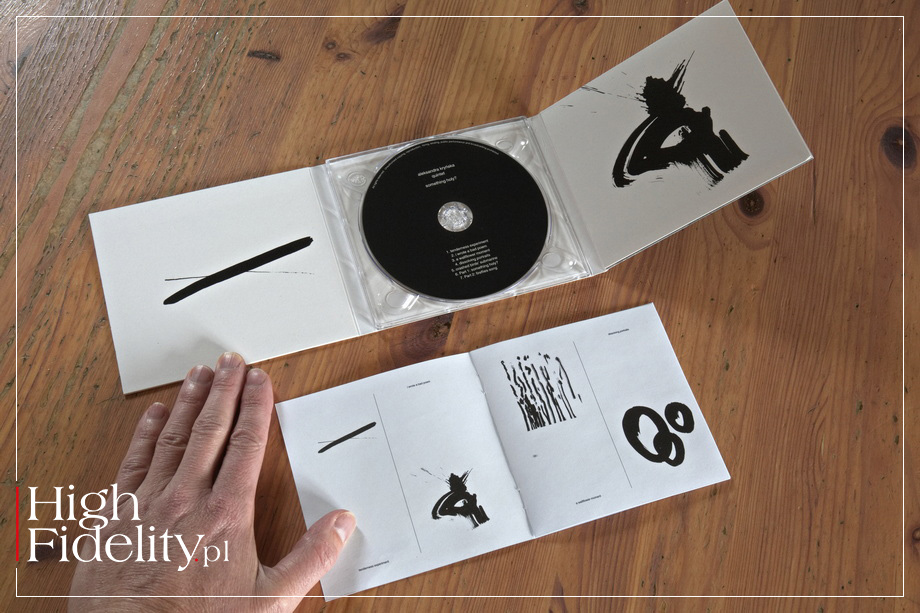
The material was recorded at Tonn Studio in Łódź by Maciej Staniecki. It is unclear whether it is an analog or digital recording - the studio has a Studer multi-track recorder - but it is known that an excellent SONY/MCI analog mixing console was used. The mix was done by Michał Aftyka, and the mastering by Tadeusz Mieczkowski. The album was released on Compact Disc, and is also available on streaming services - on Tidal as FLAC 24/44.1 files. The physical release is exceptionally tasteful. It’s admittedly just a digipack, but a three-panel one, made of uncoated paper and featuring a booklet with artwork. The sound is very pleasant, but also interesting. We’re talking about a fast, precise sound. It is immersed in a warm “halo” that provides depth and a natural and „friendly” sound. The frequency response isn’t particularly extended into the lower end; that is not the style here. It’s more about the richness of the midrange, which has great volume, than about laying down a dense “carpet” in the lower end. At the same time, it is an exceptionally musically interesting album. It is rare for the jazz idiom - ossified and largely museum-bound - to be refreshed so effectively. It reminds me of the work of the band EABS and their antics, both with acoustic and electronic instruments. Kryńska’s quintet’s album isn’t boring or sluggish. It’s fresh, even witty at times. Jazz played like this makes sense, and in this performance, and with this sound, all the more so. 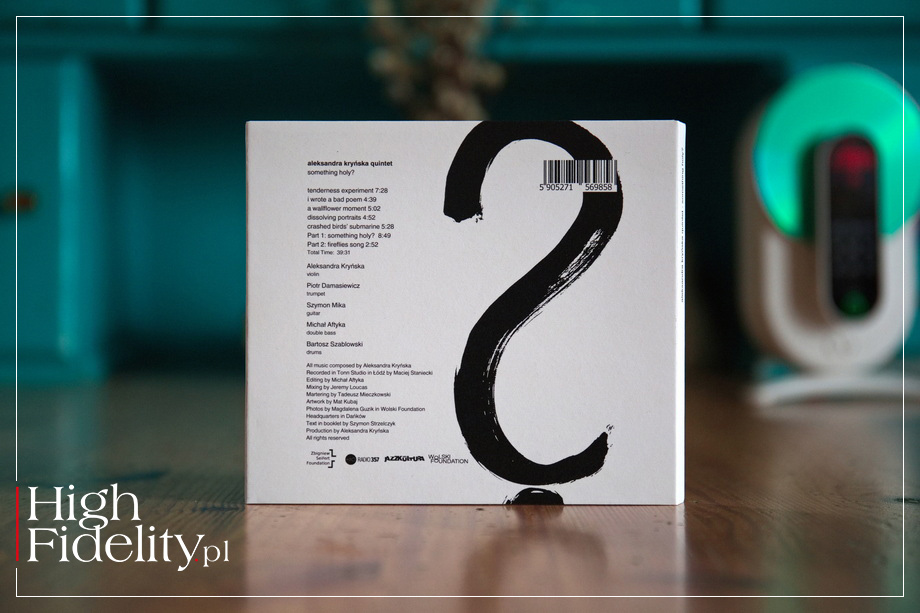
For that we offer our ˻ RED ˺ FINGERPRINT exactly for the excellent music combined with a high-quality sound. ● » Sound quality: 8/10 
WE WON’T GET a precise rendering of the instruments with these speakers, because that’s not the kind of sound they produce. I’m sure the company’s more expensive models will deliver even more of what I’m talking about, specifically with greater selectivity. That is, after all, the point of them: they are high-resolution speakers, but not very selective. They play with broader soundscapes rather than details. The details are there - there are plenty of them - but they reach us wrapped in a sort of “haze,” rather than standing alone. That is why with the Thaïs we get a big, dense, and nicely scaled sound. Scaled because it presents each recording differently, and dense and big because each one will be an event, an attraction, rather than just background noise. But also, it won’t be an intrusive sound or one that constantly presses down on us. The speakers offer a nice extension in the treble and bass, for speakers and drivers of this size, but we’ll only notice this when it comes to sound analysis. 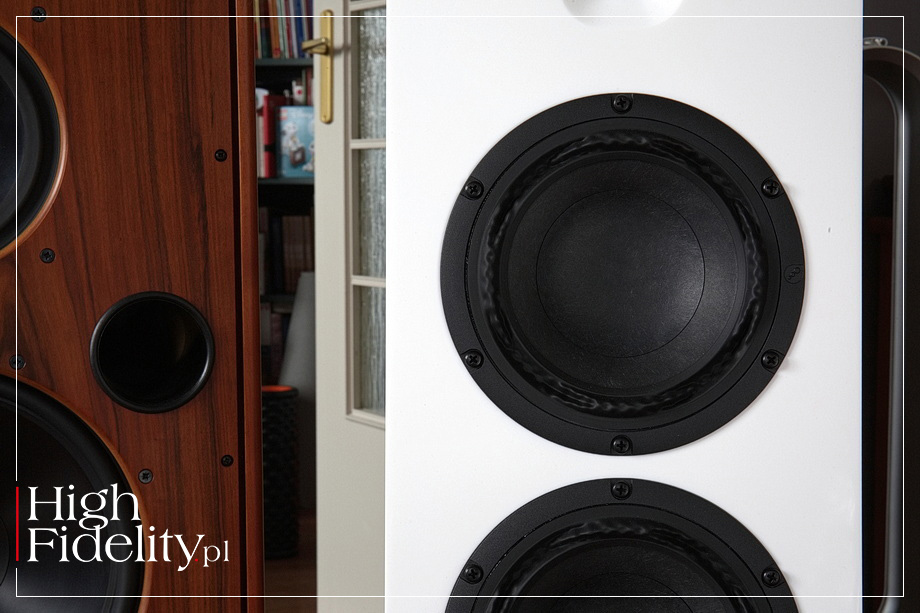
The scaling I’m talking about also applies to the volume at which we listen to music. Albums are recorded, mixed, and mastered at a specific SPL level (sound pressure level) and should be played back at that level as well. Only then are the levels, timbres, and other elements presented in the correct proportions; more in the article How loud? → HERE. Real life is different, however, because, first of all, we don’t know these values, and second, we listen in different ways - sometimes quietly, sometimes loudly. With the Kroma Atelier speakers, this won’t make much of a difference, as they retain most of their strengths even during very quiet listening. The tonal balance and detail level don’t change much when you turn the volume up or down. But there’s a catch: these speakers need a capable amplifier. It doesn’t have to be high-power one, but its power supply must allow it to handle fast transients. Then you’ll get what I’ve been describing. The speakers themselves are extremely “transparent” with regard to the recordings. And yet they impart their own “vibe,” as if imprimatur. It’s a presentation that never gets unpleasant. The sound we get is based on a lower midrange with deep bass, which worked out great, for example, with the ˻ 4 ˺ Sucker For Love by ROBYN, from her new album Sexistencial. ▓ Summary I LISTENED TO recordings from jazz clubs, stadiums, and studios both large and small on these Spanish speakers. Among them was an excellent reissue of the MILES DAVIS QUINTET’S ‘Round About Midnight on SACD and as a 7-inch release - and each time I was treated to a big, rich sound, which drew me in with its narrative. It was a sound that made these sleek, almost compact speakers sound as if they were much larger. There was a wealth of details in that sound; the dynamics were high, and yet these weren’t elements that drew undue attention to themselves. When something played louder, like the Hammond organ in ˻ 2 ˺ Delphii, a track from FREDDIE HUBBARD’s album Red Clay, it was presented with more power. But not on its own as nothing was “pushed” to the forefront. It will never be too powerful; details will never be pushed to the forefront of the mix just to impress us. I think the last thing you could say about these speakers is that they’re showy. They are the exact opposite of that. They play in an extremely balanced, thoughtful, controlled, and focused manner. So we don’t get a jumble of information that we have to sort out in our heads, but a fully organized and, in a way, “finished” sound - one might say - a “master.” I think Javier Millan’s goal was to create speakers that would not bring fatigue even during long listening sessions, but also not be boring. So these won’t be ultra-dynamic designs like the aforementioned Harbeth M40.5 XD2 (review → HERE) or ultra-precise like the YG Acoustics Vantage 3 (review → HERE), but rather a sound similar to that offered by the Fink Team Borg speakers (review → HERE). 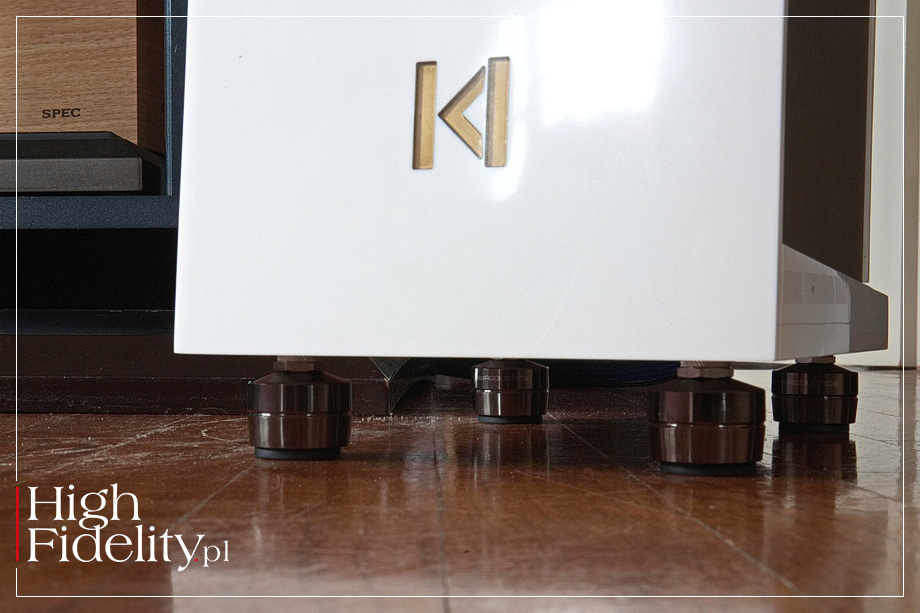
However, we can play any track from any album on any medium with them, and we’ll get a riot of colors and outstanding smoothness. It was an outstanding combination of these two elements. And on top of that - calmness stemming from certainty and control. ‖ WP ▒ Technical specifications
Design: floor-standing, 2.5-way, vented with bass-reflex 
THIS TEST HAS BEEN DESIGNED ACCORDING TO THE GUIDELINES adopted by the Association of International Audiophile Publications, an international audio press association concerned with ethical and professional standards in our industry, of which HIGH FIDELITY is a founding member. More about the association and its constituent titles → HERE. |
 |


|
Reference system 2026 |
|
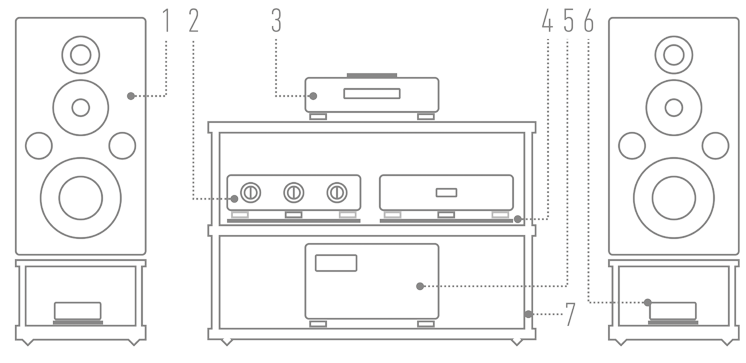 1) Loudspeakers: HARBETH M40.1 |REVIEW| 2) Line preamplifier: AYON AUDIO Spheris III Linestage |REVIEW| 3) Super Audio CD Player: AYON AUDIO CD-35 HF Edition No. 01/50 |REVIEW| 4) Stands (loudspeakers): ACOUSTIC REVIVE (custom) |ABOUT| 5) Power amplifier: SOULUTION 710 6) Loudspeaker filter: SPEC REAL-SOUND PROCESSOR RSP-AZ9EX (prototype) |REVIEW| 7) Hi-Fi rack: Hi-Fi rack: finite elemente MASTER REFERENCE PAGODE EDITION Mk II, more → HERE |
|

|
Cables Analog interconnect SACD Player - Line preamplifier: SILTECH Triple Crown (1 m) |ABOUT|» ANALOG INTERCONNECT Line preamplifier → Power amplifier: Siltech ROYAL SINLGE CROWN RCA; review → HERE Speaker cable: SILTECH Triple Crown (2.5 m) |ABOUT| |

|
AC Power Power cable | Mains Power Distribution Block - SACD Player: SILTECH Triple CrownPower (2 m) |ARTICLE| » POWER CABLE Mains Power Distribution Block → Line preamplifier: Acoustic Revive ABSOLUTE-POWER CORD, review → HERE » POWER CABLE Mains Power Distribution Block → Power amplifier: Acoustic Revive ABSOLUTE-POWER CORD, review → HERE Power cable | Power Receptacle - Mains Power Distribution Block: ACROLINK Mexcel 7N-PC9500 (2 m) |ARTICLE| Power Receptacle: Acoustic Revive RTP-4eu ULTIMATE |REVIEW| » ANTI-VIBRATION PLATFORM under Acoustic Revive RTP-4eu ULTIMATE: Graphite Audio CLASSIC 100 ULTRA, review → HERE Power Supply Conditioner: Acoustic Revive RPC-1 |REVIEW| Power Supply Conditioner: Acoustic Revive RAS-14 Triple-C |REVIEW| Passive filter EMI/RFI: VERICTUM Block |REVIEW| |

|
Anti-vibration Speaker stands: ACOUSTIC REVIVE (custom)Hi-Fi rack: finite elemente MASTER REFERENCE PAGODE EDITION Mk II, more → HERE Anti-vibration platforms: ACOUSTIC REVIVE RAF-48H |ARTICLE| » ANTI-VIBRATIONAL FEET: |

|
Analogue Phono preamplifier: Phono cartridges:
Clamp: PATHE WINGS Titanium PW-Ti 770 | Limited Edition Record mats:
|

|
Headphones » HEADPHONE AMPLIFIER: Leben CS-600X, review → HEREHeadphones: Headphone Cables: Forza AudioWorks NOIR HYBRID HPC |