


|
LOUDSPEAKERS • stand-mounted HARBETH
Manufacturer: HARBETH AUDIO Ltd. |

 |
 |
 |
|
Review
text by WOJCIECH PACUŁA |

|
No 264 May 1, 2026 |
THE HL5, ALONG WITH ITS SUBSEQUENT ITERATIONS, is Harbeth’s oldest model and remains part of its current lineup. Its history dates back nearly fifty years, beginning in 1977, when H.D. Harwood, a former BBC engineer, was the first to use polypropylene in driver membranes. We are now looking at the ninth version of this monitor. By the way, the abbreviation “HL” stands for the first names of Harwood and his wife, Elisabeth. ▓ From HL5 to Super HL5plus XD2 ORIGINAL HL MONITOR designs, ranging from the Mk 1 to the Mk 4, were manufactured between 1977 and 1988. They featured polypropylene-based low-midrange drivers, designed by Dudley Harwood and drawing on an idea by Spencer Hughes (Spendor), who was working at the time, that is, in 1969, as a BBC laboratory technician, and who designed and manufactured one of the first plastic woofer membranes to find practical application. 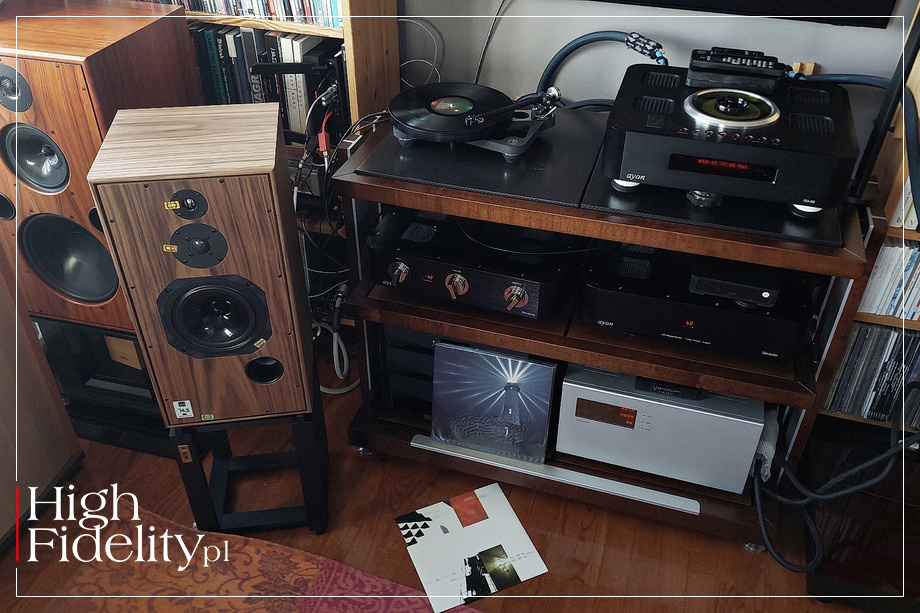
The HL Monitor Mk 4 was replaced by the HL5 Compact in 1988, shortly after Alan Shaw took over the company. Along with the HL5 Compact ES, these were the first models designed under Shaw’s leadership, still without a super-tweeter, but already featuring a new TPX cone, also made of plastic, invented by Audax in 1984. After Shaw acquired the company in 1986 research began on a new material for diaphragms, which in the mid-1990s led to the development of RADIAL (Research and Development In Advanced Loudspeakers) technology. RADIAL replaced the previously used polypropylene, offering higher stiffness at a lower weight. As a result, the driver behaved like a piston across a wider frequency range. The work proved difficult, as the first revisions - i.e., models with the new drivers - were not released until 1995. The crossovers were also changed along with them. Only the tweeters remained unchanged, manufactured to order by SEAS (the RADIAL tweeters are made in-house by Harbeth). The research in question was not abandoned at the time and continues to this day. Subsequent work resulted in an improved material formula, known as RADIAL2. And although Harbeth rarely updates the speakers in its lineup, it was decided that the advantages of the new membranes were significant enough to warrant their introduction into subsequent models. Thus, in 2014, the M40 was succeeded by the M40.1, the M30 evolved into the M30.1, and the Super HL5 gave way to the Super HL5plus. Its “anniversary” version, the Super HL5plus 40th Anniversary, was released in 2017. It was a special edition featuring improved next-generation WBT terminals, a new “super-tweeter” with protective mesh, and improved internal wiring. The Super HL5plus XD (Xtended Definition) featured further changes to the crossover and, in some versions, a new dust cap for the RADIAL2 driver. 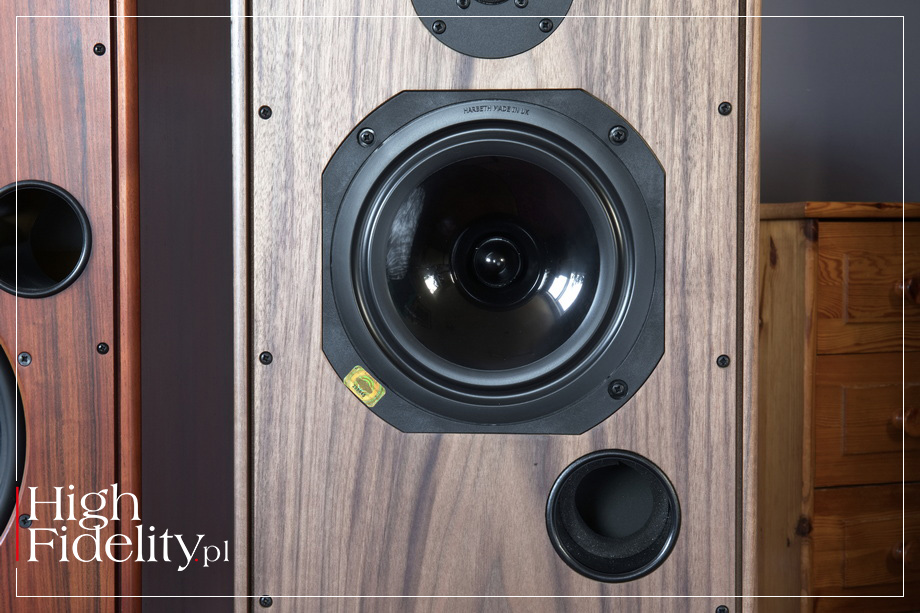
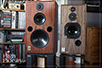
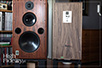
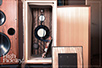
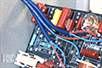
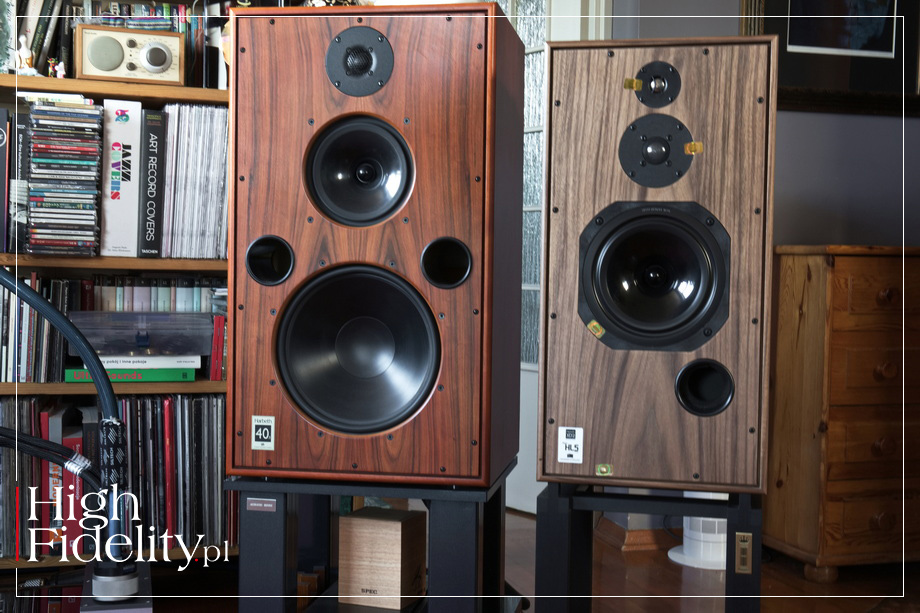
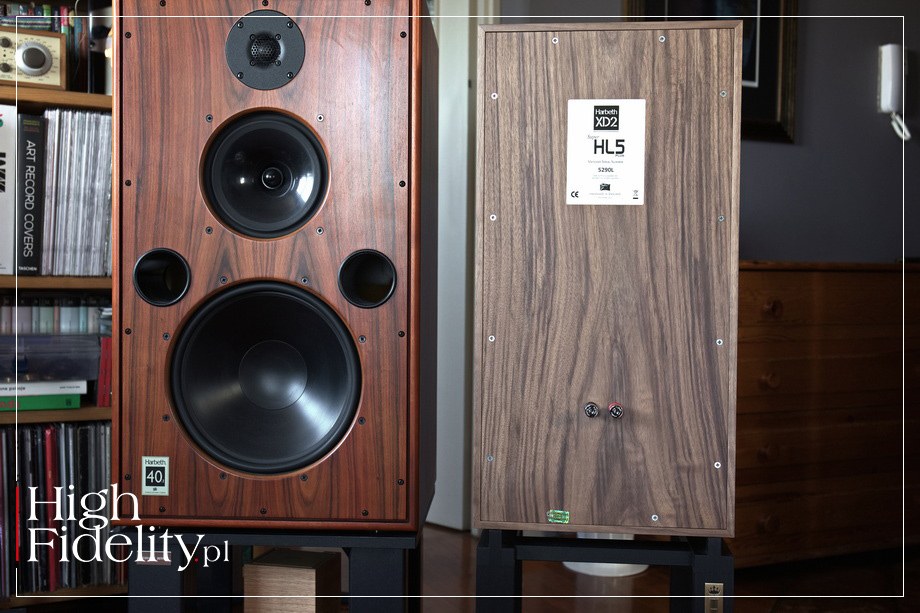
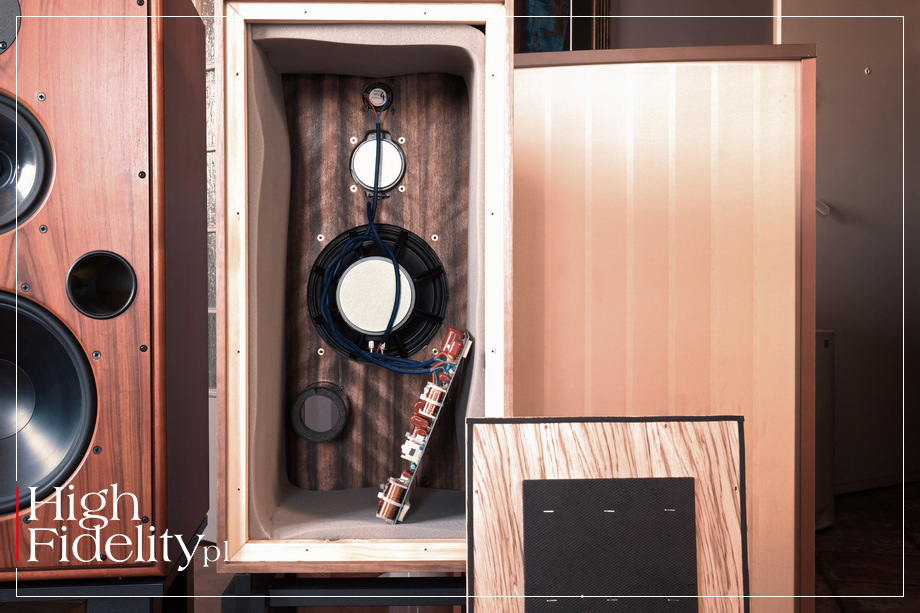
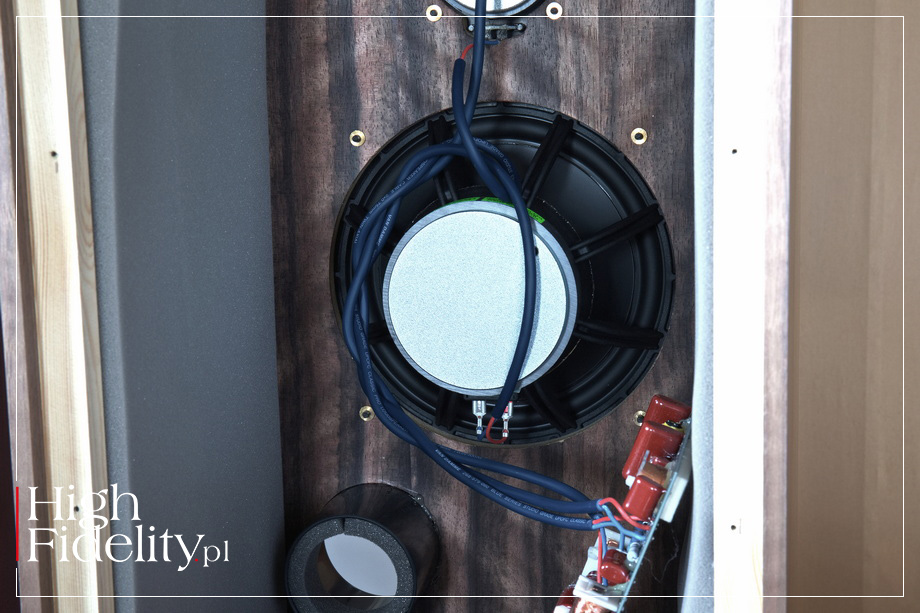
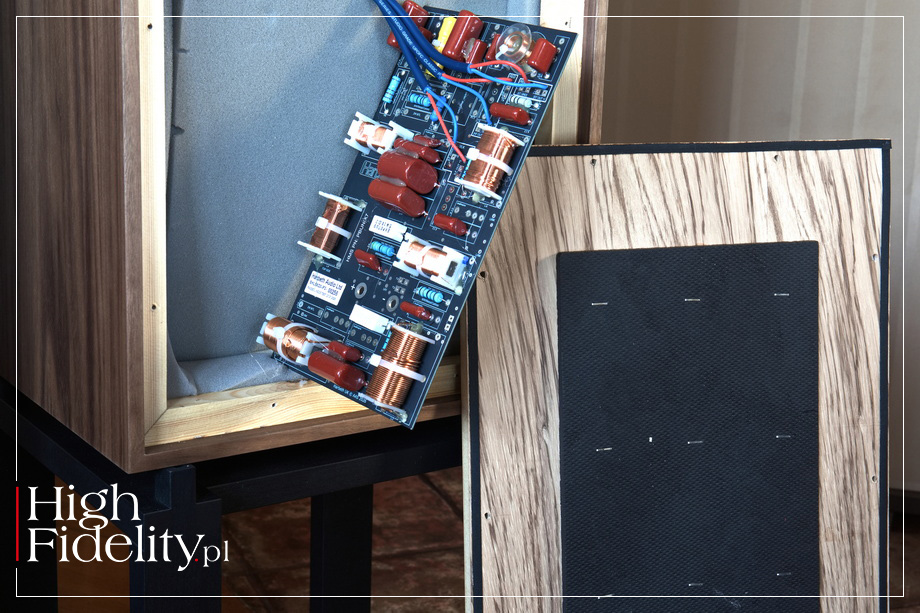
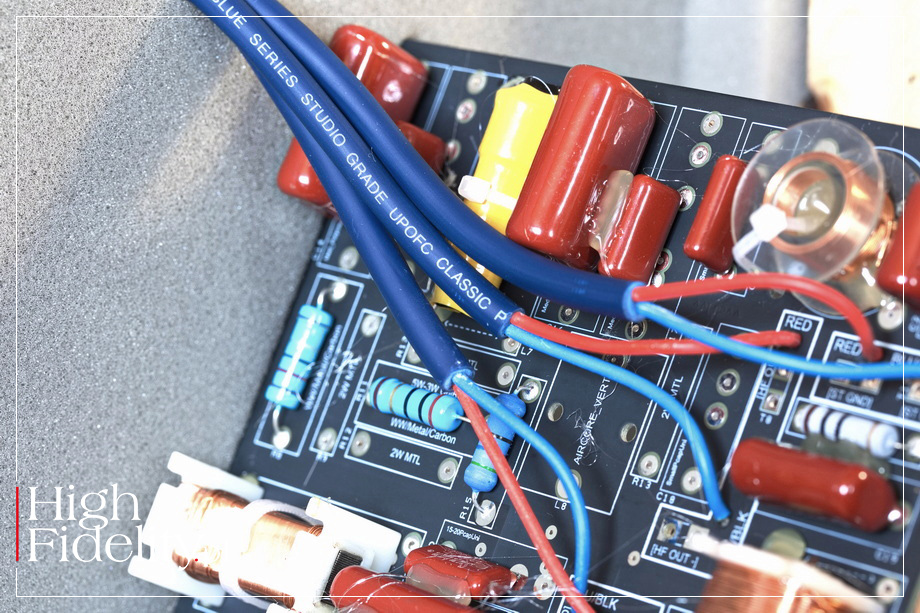
The latest version of these speakers, designated XD2, employs similar solutions but features a new low-midrange driver with a RADIAL4 cone. This technology was developed as a result of five years of research, partially funded by the UK government, to create a proprietary, next-generation polymer material for diaphragm production. This change took place in early 2025 and applied to all speaker models remaining in Harbeth’s lineup. ▓ SuperHL5plus XD2 WE CAN ALL SEE THAT, CAN’T WE? - The name of this model encapsulates the entire history of its evolution, much like the DNA helix, to which new segments were added over time, altering the structure and appearance of the organisms built from it. As we mentioned, “HL” stands for the creators' initials. The number “5” denoted the fifth version of the HL monitor, the prefix “Super” indicated the addition of a super-tweeter, “plus” referred to the RADIAL diaphragm, and XD and XD2 to versions “2” and “4.” The appearance and external construction of the speakers were finalized along with the Super HL5plus model. Thus, their latest version, designated XD2, is a large, three-way bookshelf monitor with a bass-reflex vented cabinet. Actually, one should say “two-and-a-half-way” or “two-way+”, which has been fashionable in recent years, and that would also be true. The bass-reflex port is located at the front and is damped by a thin layer of foam; the speakers are not symmetrical (!). Because of the new driver handling low and mid frequencies, the XD2 series speakers feature a new, improved crossover design, which - according to the manufacturer - “significantly improves the integration between bass, midrange, and treble.” It is mounted on a large printed circuit board and screwed directly to the terminals on the rear panel. It features a significant number of components, including film capacitors and air-core inductors. The crossover is connected to the drivers via OFC twisted-pair copper cables. They are manufactured for studio and stage use by Van Damme. The new speakers are based on two drivers: a 25 mm tweeter with an aluminum diaphragm, custom-made by SEAS for Harbeth, and a 200 mm RADIAL4 mid-bass driver produced in-house by this British company. The system is complemented by a 20 mm “SuperTweeter” with a titanium diaphragm, covering only part of the high frequencies. This division is intended to provide a wider dispersion pattern for the upper end of the range. The second distinguishing feature of Harbeth speakers, alongside the RADIAL diaphragm, is their cabinet. It is made of thin MDF panels, veneered on both sides. This concept originated in the 1960s at the BBC. Engineers argued that instead of damping vibrations, one should focus on utilizing them. The panels in the SHL5plus XD2 are damped with a bitumen sheet on the rear panel, like the original LS 3/5A, and heavily damped with sponge sheets on the sides and back. However, they are not reinforced. The manufacturer points out that the new generation of speakers is made even more meticulously than the previous ones:
We meticulously select only the finest, highest-quality veneers to craft our speakers, ensuring each piece not only performs to the highest of standards but also exudes timeless elegance. Each premium veneer is carefully sourced and meticulously inspected, reflecting our commitment to craftsmanship and attention to detail. The result is a speaker that not only delivers exceptional sound but also serves as a visually stunning addition to any listening space.
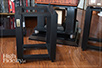
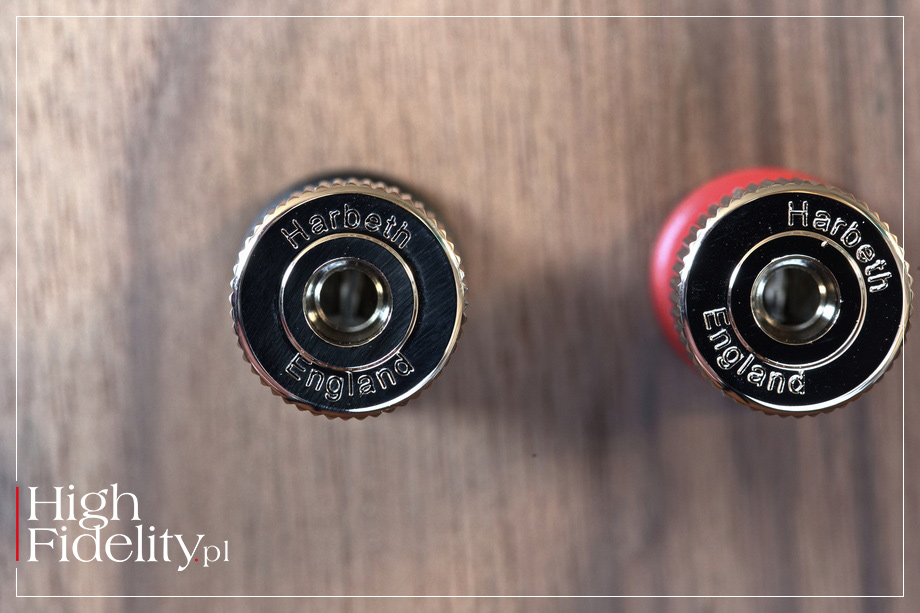
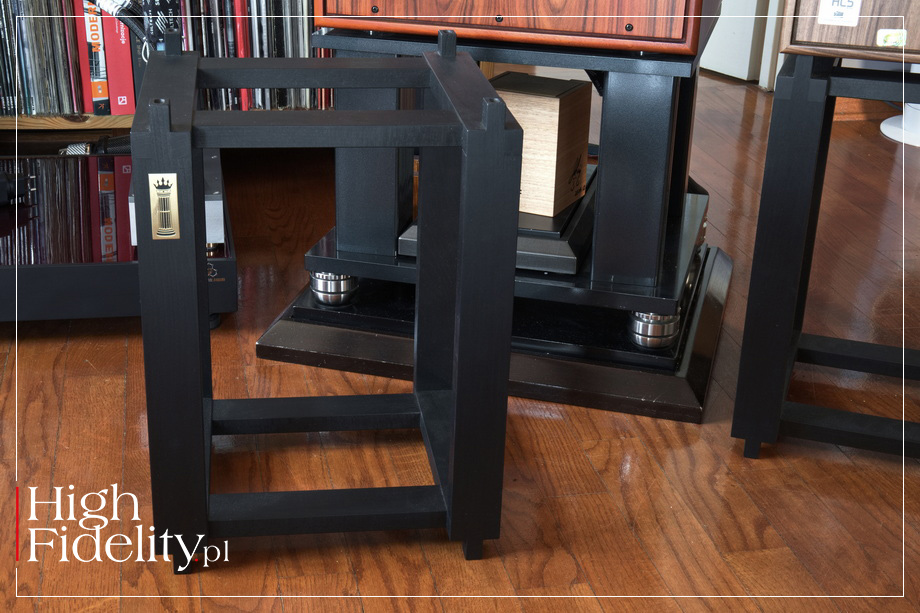
⸜ SHL5plus XD2, → HARBETH.co.uk, accessed: 11.03.2026. There are five veneer options to choose from: walnut, cherry, oak, rosewood, and black ash. A black grille, mounted on a metal frame, slides into the gap between the front panel and the side panels. The manufacturer recommends listening with the grille in place, as the speakers were tuned and measured with it installed. I prefer to see the drivers… The signal is connected to sturdy, single terminals. ▒ Stands HARBETH SPEAKER STANDS are a different story. The company doesn’t make them itself, so you have to decide for yourself whether you want heavy stands, like those from Rogoz Audio, or the ones I use -manufactured by Acoustic Revive - or openwork ones. Each of these solutions has its pros and cons. For years, the company promoted lightweight metal stands from Skyline. In turn, the Japanese distributor designed its own wooden stands that look like stools. Apparently, these have also earned Alan Shaw’s approval, as they are sold with the Harbeth logo. The German company TonTräger Audio followed a similar path. Its stands are wooden and openwork. They make contact with the floor and the speakers via four protrusions with milled recesses (“ToneBed”). The manufacturer refers to them as “extended tenons” and states that they are intended to replace spikes. 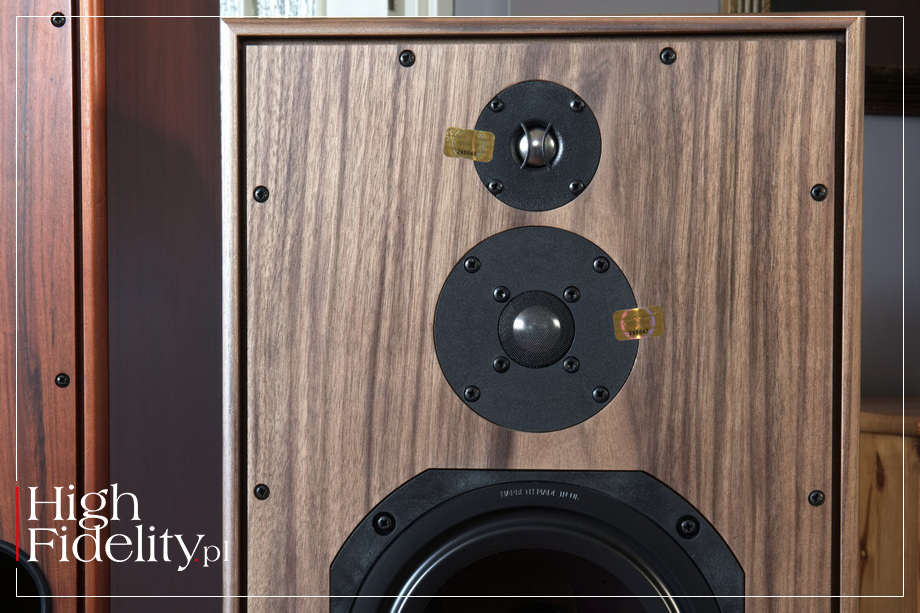
These are stands that look very nice. The company states that it uses only “FSC-certified wood from local forests.” I conducted the test using precisely these stands, the Reference HL5 model. ▓ SOUND THE TEST PROCEDURE • The Harbeth Super HL5plus XD2 speakers were placed exactly where the M40.1 speakers have stood since the beginning - that is, since 2011 - in the mid-field. This means that they were sitting 252 cm from the listening position and 232 cm apart (measured from the center of the front baffle). They were placed 78 cm from the wall behind them, measured from the center of their rear baffle. During the test, the speakers were toed-in so that the driver axes crossed exactly above my head. 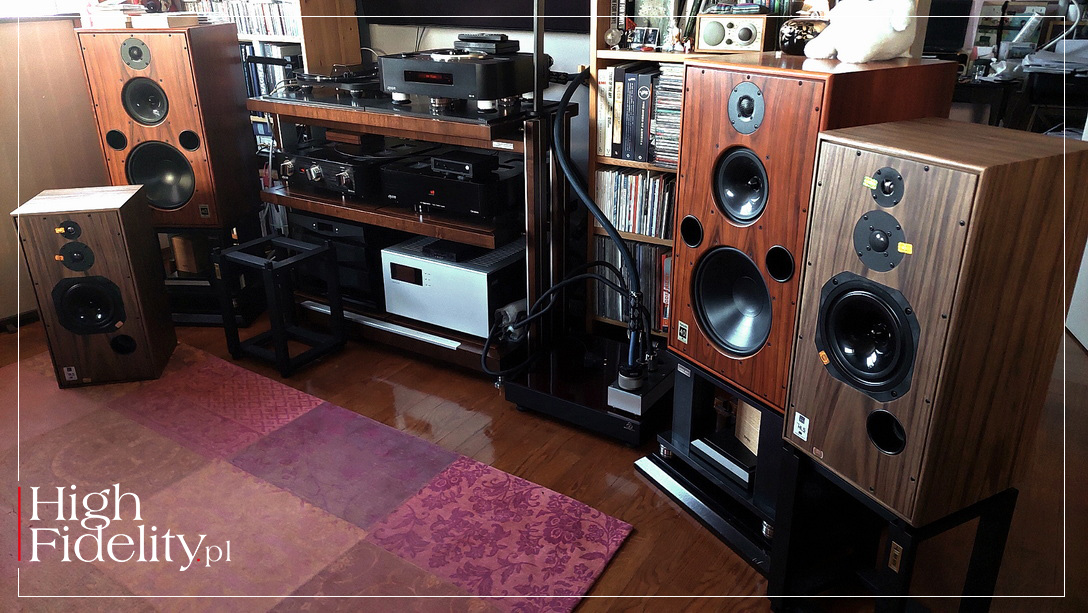
These speakers are sensitive to their surroundings, which is why I listened to them using SPEC’s speaker filters called Real-Sound Processor, a system consisting of RSP-W1EX and RSP-AZ9EX filters housed in the RSP-W1-CEX enclosure; more → HERE https://highfidelity.pl/@main-1490&lang=en . The Real-Sound Processor is one of the best methods for improving the sound of this type of speaker. I determined the distance between the speakers and their level using a Bosch PLR 50 C device. More on speaker setup in the article Micro-tuning, or setting up speakers, HF No. 177, → HIGHFIDELITY.pl, accessed: 27.04.2026. For more on the acoustics of the HF listening room, see the article The “High Fidelity” Listening Room…, HF No. 189, → HIGHFIDELITY.pl, accessed: 27.04.2026. 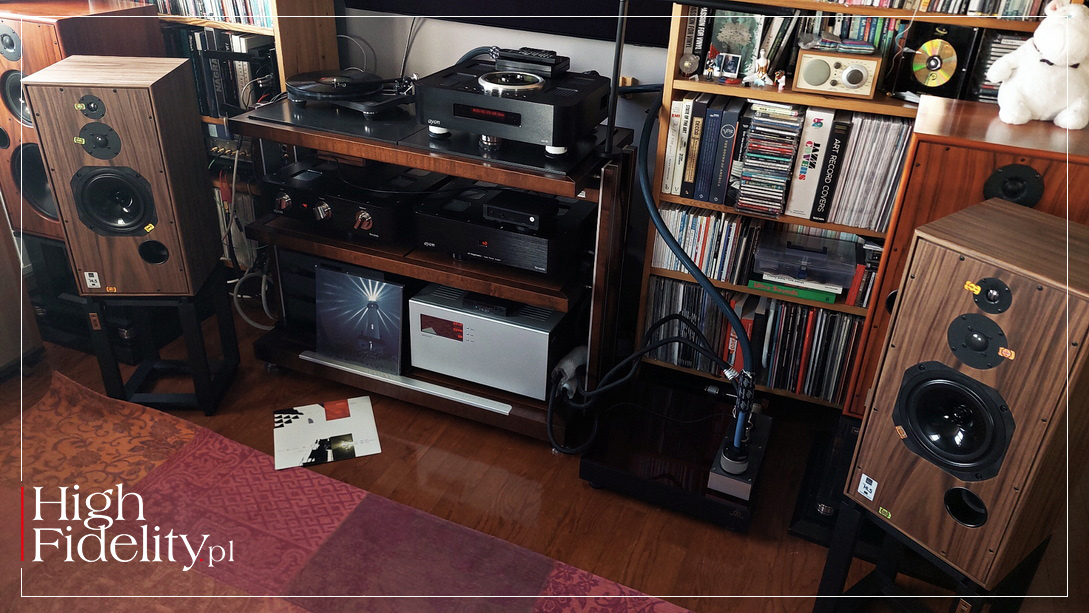
The speakers were driven by the Soulution 710 power amplifier, and the signal was transmitted via Siltech Triple Crown speaker cables. The reference speakers were the HARBETH M40.1 and JBL Summit Ama; review → HERE. Music was played through an Ayon Audio CD-35 HF SACD player and a Rega P8 turntable with a Denon DL-103R cartridge, along with an RCM Audio phono preamplifier. |
» RECORDINGS USED FOR THE TEST ⸜ selection
→ LONG PLAY THE FACT IS THAT EVERY audio brand, every manufacturer, offers speakers that offer the best balance between price and quality. These are usually models that are in some way linked to the company’s early days or to events or technologies that are significant to them. In the case of Harbeth, these are the SHL5plus XD2 speakers. 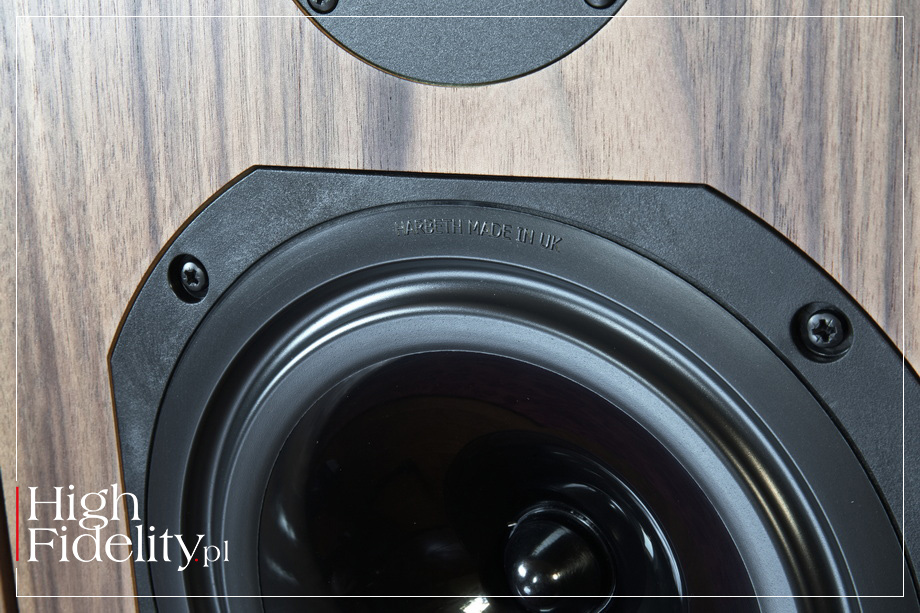
It doesn’t take much effort to hear the connection between them and the flagship M40.1 model to which they were compared. Obviously, there are differences as well, but more on that later; for now, let’s focus on the similarities. And these similarities are, above all, the powerful scale of the sound and how amazingly natural it is. Products based on the “BBC School” can do something right off the bat that even the most technologically and technically advanced products from the competition can achieve only with effort - and even then, not all of them. I am referring to the ability to produce a sound as a single, wonderfully functioning whole. One might even be tempted to say “working like a Swiss watch,” but that would be oversimplifying the matter. Precision is, after all, only one component of this presentation. The second is resolution. The Harbeths, and the SHL5 Plus XD2 as well, present sound both from the outside - delivering excellent definition and imaging - and from the inside, developing sounds into solid bodies and combining those into a larger, coherent whole. That is why ˻ A-1 ˺ Utopia, a track from BRENDAN PERRY’s album Ark, sounded so wonderful, in such an inspired way, yet at the same time rich and tangible. The tested monitors are capable of creating a deep sound stage while, at the same time, bringing the foreground close to us - closer than the reference speakers. Perry’s vocals, and later BILLIE HOLIDAY’S from the test pressing of the Body and Soul album, were thus placed close to me, almost within arm’s reach, while the entire arrangement reached deep into the back of the sound stage. Holiday’s voice on the title track ˻ A-1 ˺ Body and Soul was slightly hoarse; it hadn’t been smoothed out, and you could hear that the recording had been cut off at the lower end and featured an emphasized upper midrange. The 1996 Mobile Fidelity Sound Labs remaster, released on a gold CD, did not mitigate this either, and it sounds similar in the 2024 Verve reissue. The reviewed speakers revealed these details effortlessly, as they are highly resolving. They also rendered the midrange in a more open manner than the company’s reference speakers and older models. This is a change I also heard in the current flagship model, the M40.5 XD2, which I reviewed for you last April; more → HERE. It seems this stems from the use of a new driver design for the midrange (there) and the low-midrange (here). It might not seem like such a big change; yet, as it turns out, it is defining. It is faster and clearer in terms of sound definition. It lacks some of the silkiness of the RADIAL2, but this is balanced here by a greater amount of detail, which also provides the natural warmth that - ultimately - these speakers are all about. The Super HL5plus offer a warm, dense sound - no doubt about that. The new generation of these speakers, however, delves deeper into the nuances of the sound. It defines them better in time and space and shapes their attack more distinctly. The first track I listened to during the comparisons - Perry’s Utopia - revealed something I later heard on both Holiday’s album and MILES DAVIS’s Miles Davis And The Modern Jazz Giants, and which returned with even greater intensity on the incredible ˻ 1 ˺ Manhã de Carnaval from the Miwaku album by the MAYO NAKANO PIANO TRIO, played from a Hard Glass CD-R version. It’s all about the power, grandeur, and fullness of the sound. The point is that the tested speakers are so well-balanced that these elements are by no means any less intense than in the powerful M40.1. And thus they are better than 90% of other speakers, regardless of price. I can tell that the designers achieved this by slightly emphasizing the mid-bass. It is richer and deeper. That’s why the foreground sounds are closer to us, and why the sound is so lifelike. 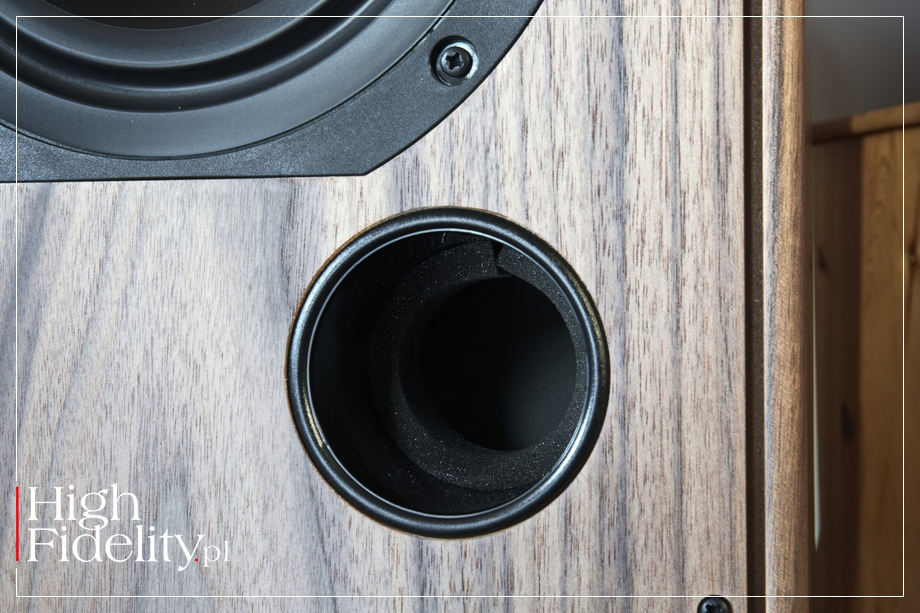
So, with the Harbeths we’re discussing, we get a true “time capsule”, in which “flesh-and-blood” musicians come into our room. I say this because the sound is incredibly natural. Fast, of course; open, that’s also a given; but above all, coherent. I’m talking about a sound that is internally organized, and in a way “focused” on the task at hand - namely, recreating a musical event in a place where it never actually took place. This is a total recreation. Meaning it encompasses all aspects - not just timbre and dynamics, or frequency response, but also space. The stereoscopic image created by the “BBC” speakers is, in my opinion, exemplary, and claims that speakers offering a wide sound stage cannot achieve this stem from errors in their setup and positioning - often due to poor design choices - rather than from inherent limitations. The SHL5plus XD2s reproduced all the previously mentioned albums in an expansive manner, both in terms of the listening axis and horizontally. The bass moving in at the beginning of ˻ 9 ˺ Frozen, as well as other spatial elements in this MADONNA’S track, were rendered by these speakers clearly, precisely, and with power. That is to say, they weren’t hollow, but dense sounds coming from behind my head, from the sides of the speakers, and from behind them. If I had to point out something that has changed in both the 40.5 XD2 and the tested model compared to earlier versions, it would primarily be the greater presence of the foreground, the opening up of the upper midrange, and the focus on the richness of detail. There is less warmth and “flowing” fluidity in this sound, and more energy. The energy in the new Harbeth speakers, including the ones tested here, is conveyed more strongly and in a more unambiguous way. They are therefore more versatile and better align with the contemporary understanding of high-end sound. It is not even about a different sound, but about a different interpretation of it. In the test, the Harbeths played ˻ 9 ˺ Get Back by THE BEATLES from Let It Be, in the new remix by Giles Martin and Sam Okell, with more power and a more aggressive edge. The attack was more pronounced with them, and the cymbals and guitars were clearer. It was truly rock-style playing, whereas the M40.1s presented the same material in a more relaxed manner, as if the musicians were more detached from what they were doing. ▓ Summary THE NEW HARBETH SPEAKERS seem easier to drive than older models. In audiophile lore, “BBC-style” speakers are considered a great match for tube amplifiers. That may be true, but there’s a “but”, a big “BUT”: it may work, but only in small rooms, only at moderate volumes, and only if the amplifier offers a high current and voltage output. It’s not even about the power output presented in watts, but about the ability to handle a difficult impedance curve. In reality, Harbeths need - let me say it - POWER! When we provide it, we get something like what you hear with the Super HL5plus XD2: fullness, energy, and density. And excellent resolution. There’s also room here for details, which is a novelty. I’m thinking of details that enhance the sound, not the kind of nitpicking that impoverishes it. The tested speakers deliver this feature in a truly honest way. What seems more important to me, however, is that they create a large, internally dense, and at the same time internally varied sound stage. Placed next to and in front of the Harbeth M40.1s - that is, huge speakers (I tested them in both setups) - they do not seem any smaller in their sound presentation. A slight emphasis on the mid-bass, a bit of boost in the lower midrange, and - voilà - we get a sound stage that is almost as expansive and all-encompassing as that of this manufacturer’s top-of-the-line speakers. 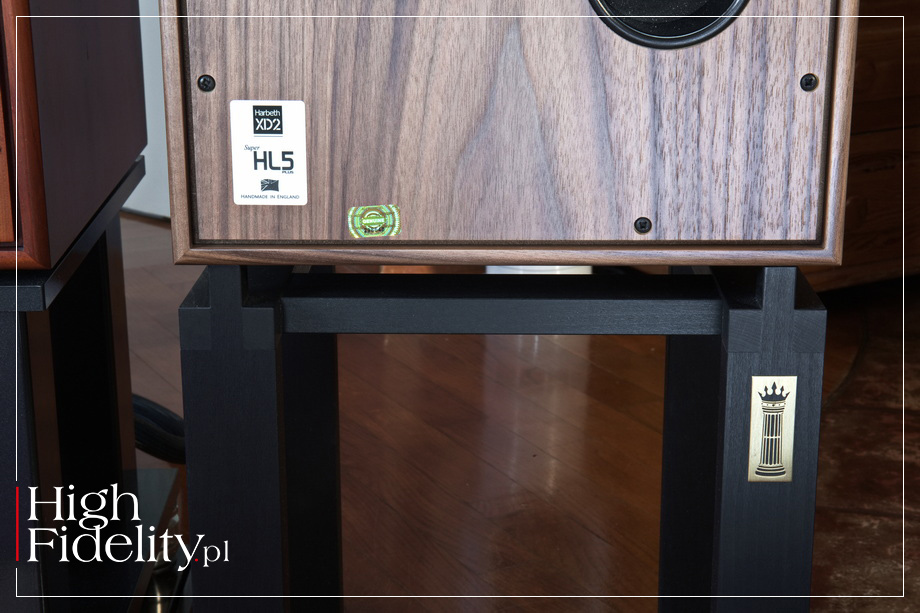
That’s why I consider the Super HL5 Plus XD2 to be the best version of this model ever and among the best in the manufacturer’s current lineup. To answer one more important question: yes, they do offer the best price/performance ratio, so they are the brand’s “golden mean”. ‖ WP ▒ Technical specifications
Drive units: 
THIS TEST HAS BEEN DESIGNED ACCORDING TO THE GUIDELINES adopted by the Association of International Audiophile Publications, an international audio press association concerned with ethical and professional standards in our industry, of which HIGH FIDELITY is a founding member. More about the association and its constituent titles → HERE. |
 |

|
Reference system 2026 |
|
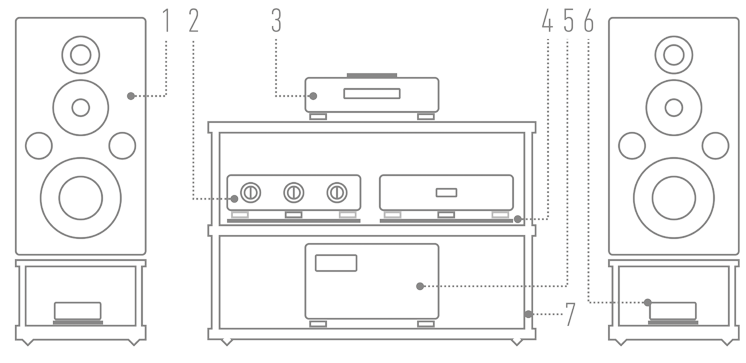 1) Loudspeakers: HARBETH M40.1 |REVIEW| 2) Line preamplifier: AYON AUDIO Spheris III Linestage |REVIEW| 3) Super Audio CD Player: AYON AUDIO CD-35 HF Edition No. 01/50 |REVIEW| 4) Stands (loudspeakers): ACOUSTIC REVIVE (custom) |ABOUT| 5) Power amplifier: SOULUTION 710 6) Loudspeaker filter: SPEC REAL-SOUND PROCESSOR RSP-AZ9EX (prototype) |REVIEW| 7) Hi-Fi rack: Hi-Fi rack: finite elemente MASTER REFERENCE PAGODE EDITION Mk II, more → HERE |
|

|
Cables Analog interconnect SACD Player - Line preamplifier: SILTECH Triple Crown (1 m) |ABOUT|» ANALOG INTERCONNECT Line preamplifier → Power amplifier: Siltech ROYAL SINLGE CROWN RCA; review → HERE Speaker cable: SILTECH Triple Crown (2.5 m) |ABOUT| |

|
AC Power Power cable | Mains Power Distribution Block - SACD Player: SILTECH Triple CrownPower (2 m) |ARTICLE| » POWER CABLE Mains Power Distribution Block → Line preamplifier: Acoustic Revive ABSOLUTE-POWER CORD, review → HERE » POWER CABLE Mains Power Distribution Block → Power amplifier: Acoustic Revive ABSOLUTE-POWER CORD, review → HERE Power cable | Power Receptacle - Mains Power Distribution Block: ACROLINK Mexcel 7N-PC9500 (2 m) |ARTICLE| Power Receptacle: Acoustic Revive RTP-4eu ULTIMATE |REVIEW| » ANTI-VIBRATION PLATFORM under Acoustic Revive RTP-4eu ULTIMATE: Graphite Audio CLASSIC 100 ULTRA, review → HERE Power Supply Conditioner: Acoustic Revive RPC-1 |REVIEW| Power Supply Conditioner: Acoustic Revive RAS-14 Triple-C |REVIEW| Passive filter EMI/RFI: VERICTUM Block |REVIEW| |

|
Anti-vibration Speaker stands: ACOUSTIC REVIVE (custom)Hi-Fi rack: finite elemente MASTER REFERENCE PAGODE EDITION Mk II, more → HERE Anti-vibration platforms: ACOUSTIC REVIVE RAF-48H |ARTICLE| » ANTI-VIBRATIONAL FEET: |

|
Analogue Phono preamplifier: Phono cartridges:
Clamp: PATHE WINGS Titanium PW-Ti 770 | Limited Edition Record mats:
|

|
Headphones » HEADPHONE AMPLIFIER: Leben CS-600X, review → HEREHeadphones: Headphone Cables: Forza AudioWorks NOIR HYBRID HPC |