


|
PREAMPLIFIER DIVALDI
Manufacturer: MEDIAM |

 |
 |
 |
|
Review
text by WOJCIECH PACUŁA |
|
No 264 May 1, 2026 |
|
˻ FIRST TEST ˼
THERE ARE no issues whatsoever with the naming of Divaldi’s GOLD series: the Gold In One integrated amplifier, the Gold Pa One power amplifier, and the latest addition, the Gold Pre One preamplifier. Gold is the series name, In/Pa/Pre denotes the device type, and One suggests that more models will likely be added in the future, perhaps Two, Three, and so on. 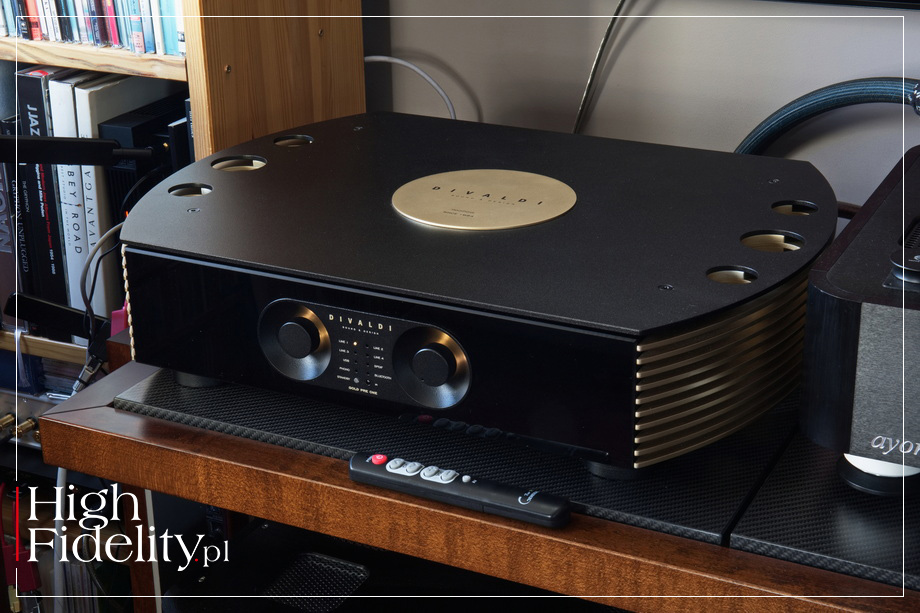
And maybe Zero someday, who knows… The Japanese company Techdas uses a similar naming convention for its turntables. By the way, I wonder if the series will ever include signal sources such as a file transport/player and CD (or SACD) players. Or perhaps an external phono preamp or DAC? All three devices from the “Gold” series share the same aesthetic, setting them apart from other products of this type. Piotr Jegiełłowicz, who collaborates with the company through his firm Jagiellowicz Design, is responsible for the visual design. He is a designer with numerous awards to his credit, including the Red Dot Award in 2015, 2018, and 2022; the iF Design Award in 2016 and 2017; and the A’ Design Award in 2023. The description of the tested device reads:
Visually, the GOLD series devices are an evolution of the original form designed by the renowned Polish designer Piotr Jagiełłowicz. Since there is no need for massive power transformers, the chassis is half as tall as that of the GOLD PA ONE power amplifier and the GOLD IN ONE integrated amplifier, while maintaining the same width.
⸜ Przedwzmacniacz GOLD PRE ONE, → DIVALDI.pl, accessed 4.03.2026. Regardless of whether any further products are released in this series, the Pre One preamplifier appears to round out the lineup, forming a split system with the Pa One power amplifier that can be expanded to include a preamplifier and two monoblocks. The Pre adds something else to the mix: a digital-to-analog converter and a phono preamp. These are two of several modules that can be added to this unit. The Pre is therefore not just a “line preamp,” but can serve as the heart of a truly extensive audio system. ▓ Gold Pre One YOU SIMPLY CAN NOT mistake this device for any other. It is big, it is solidly built, and it is, finally, almost ascetic when it comes to controls. This is because the glass front features only two knobs: volume and input selection. The latter is accompanied by eight white LEDs (a bit too bright, but that’s a minor detail). After all, we must remember that the Pre One is a complex system, not a simple ‘line preamp’. Its complexity stems from the fact that it is a modular device that can be configured according to your preferences and needs. The manufacturer writes:
To meet our customers’ expectations, we have created a fully modular design. A large, carefully designed base board allows for extensive expansion and customization of the device.
The GOLD PRE ONE is a preamplifier that is modern in its functionality yet is rooted in the finest traditions of audio equipment design. It offers a transparent, rich, and musical sound, making it an excellent addition to any high-end audio system. ⸜ Ibidem. The core components, common to all configurations, are its chassis, power supply, and main board; the manufacturer refers to it as the “base board.” It features several stages of regulated power supplies, separate for the digital section and separate for the analog circuit, for which, as stated, a set of capacitors with a total capacitance of approximately 30,000 µF and an R-Core transformer were used in the first stage of the power supply. The main board features gold-plated sockets for connecting modules and a specially designed mounting system. The basic version includes two RCA and two XLR inputs, a resistor ladder acting as an attenuator, and RCA and XLR analog outputs. To these features, you can add some more: an MM/MC phono preamp, a digital-to-analog converter, and a tape loop. We can do this at any time and in any order. This offers truly extensive customization options, much like in my favorite Burmester 808 preamplifier, now available in the Mk 5 version. FEATURES • In the basic configuration, we can select only line inputs and outputs. As we mentioned in previous reviews, Divaldi has its roots in professional audio systems. In that field, isolation transformers are a common solution, and they’re also featured in the Pre One. Thanks to them, we can send both balanced and unbalanced signals to the preamp, and each input is galvanically isolated from the preamp’s active stages. The manufacturer states that the use of input transformers also ensures “consistent performance of the entire module regardless of the various line-level signal sources connected.” Selection between unbalanced (two RCA inputs) and balanced (two XLR inputs) inputs is handled via relays with gold-plated contacts. If desired, we can add a phono preamp module to the four line inputs. This is a key component of the preamp, as it is one of the “specialties” of Waldemar Łuczkos, who is one of Divaldi’s designers and who brought the preamp to me. This is the first phono preamplifier in the company’s lineup. This is a preamplifier with RIAA equalization designed to work with MM and MC phono cartridges. The type of cartridge is selected using a switch on the rear panel of the unit, and the load impedance for the MC cartridge is adjusted using rotary controls (9, 10, 12, 14, 17, 20, 30, 40, 75, and 100 Ω). Upon request, the manufacturer can change these values according to the customer’s requirements. As we read, the first input stage is based on field-effect transistors (FETs) and an “audio-dedicated operational amplifier.” And further:
The role of the FET transistors is to set the voltage gain before the next stage and perform RIAA correction. The next stage of the amplifier shapes the signal into a linear form and feeds it to the input of the signal selector - the REC module.
⸜ Ibidem. The second important module is the D/A Converter. It offers three inputs: USB-B, S/PDIF (RCA), and Bluetooth. A simple Burr-Brown digital-to-analog converter was used for digital signal conversion - a complete solution that outputs a 2 V voltage signal. This chip was selected from among many options as the one that, according to the company, “meets [its] sonic expectations.” The digital signal from the USB and Bluetooth inputs is processed by a new-generation STM processor using proprietary software. To eliminate the influence of digital signals on the analog circuit, the digital module uses its own power supply circuit, including a transformer and several linear voltage regulators for each stage. The modules necessary for the operation of this type of device also include an attenuator and output circuits. The former is based on a resistor ladder switched by relays. Here, it is a fully analog circuit, but digitally controlled. Linear control is provided by a processor that converts the signal from the potentiometer via an A/D converter into a set of appropriately activated relays, thereby changing the volume level. The resulting signal is fed to the output module. 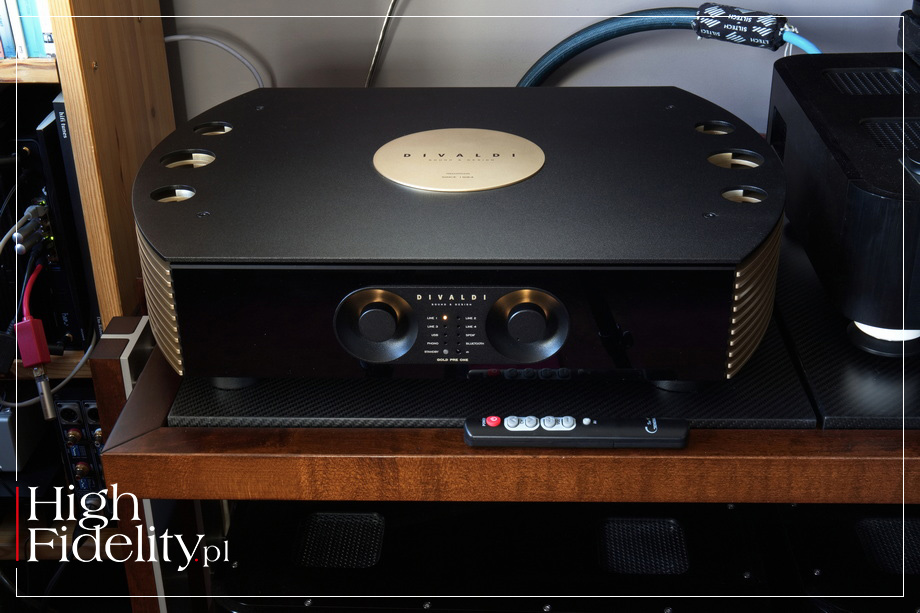
There are two output modules, one for the left channel and one for the right channel. They provide both balanced (XLR) and unbalanced (RCA) output signals. According to the company’s materials, they feature a “minimalist transistor design” in which the pair of transistors in the gain-setting stage are of the unipolar (FET) type. In turn, the voltage amplification stage is based on a single stage operating in a “unique and purist single-ended configuration with a reactive load.” Thanks to this, the company states, “exceptional linearity of the entire circuit is achieved, regardless of the signal level.” The output current stage consists of a pair of medium-power transistors operating in Class A. It is protected against transient conditions, which is to be implemented in a manner “transparent to the signal.” Finally, let’s add that there is one more module, which is interesting in light of the recent resurgence of interest in reel-to-reel and cassette tape recorders: “REC”:
This is a preamplifier stage that ensures the signal levels received from the line inputs, turntable, and digital inputs are matched to the same level, extracts the signal for the line output, and provides appropriate signal buffering for the volume control module.
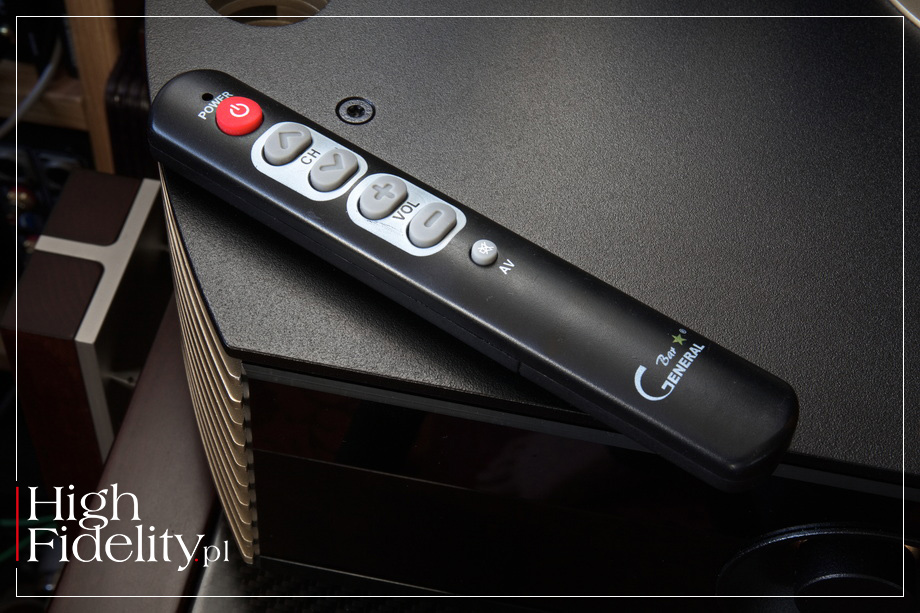
⸜ Ibidem. The terminals are of high quality and spaced far enough apart to accommodate even thick interconnects. Because they are recessed into the chassis, the plugs on the Siltech Triple Crown interconnects I usually use did not fit. The preamplifier is controlled via a remote control. During testing, only a simple plastic remote was available, which will be replaced in the future with a custom-designed model. The unit looks great, is extremely well-built, and looks nice, plain and simple. ▓ SOUND THE TEST PROCEDURE • The Divaldi Gold Pre One preamplifier was tested in the HIGH FIDELITY reference system. I compared it to the Ayon Audio Spheris Evo preamplifier, and the signal was sent to the Soulution 710 transistor power amplifier. During the test, the unit stood on its own feet on the top carbon-fiber shelf of the Finite Elemente Pagode Edition Mk II rack. 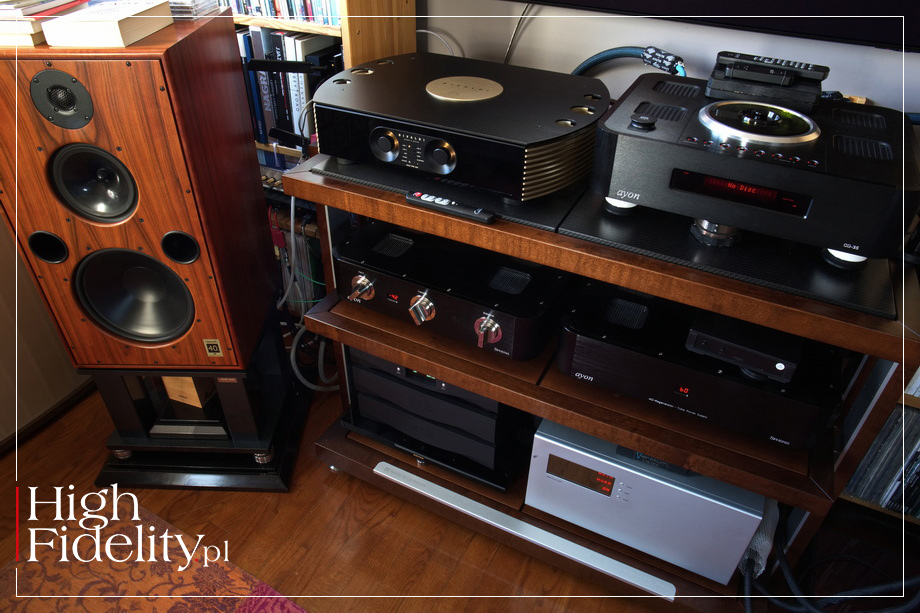
The signal sources were: 1) the Ayon Audio CD-35 HF Edition SACD player, 2) the Sforzato DSP-05 EX digital audio player with a PMC-05 EX clock, and 3) the Rega P8 turntable with a Denon DL-103R cartridge. The signal from the reviewed preamplifier to the power amplifier was sent via Siltech Single Crown cables, as was the signal from the digital player. In turn, the signal from the SACD player was transmitted via Crystal Cable Absolute Dream interconnects; in both cases, unbalanced (RCA) versions. 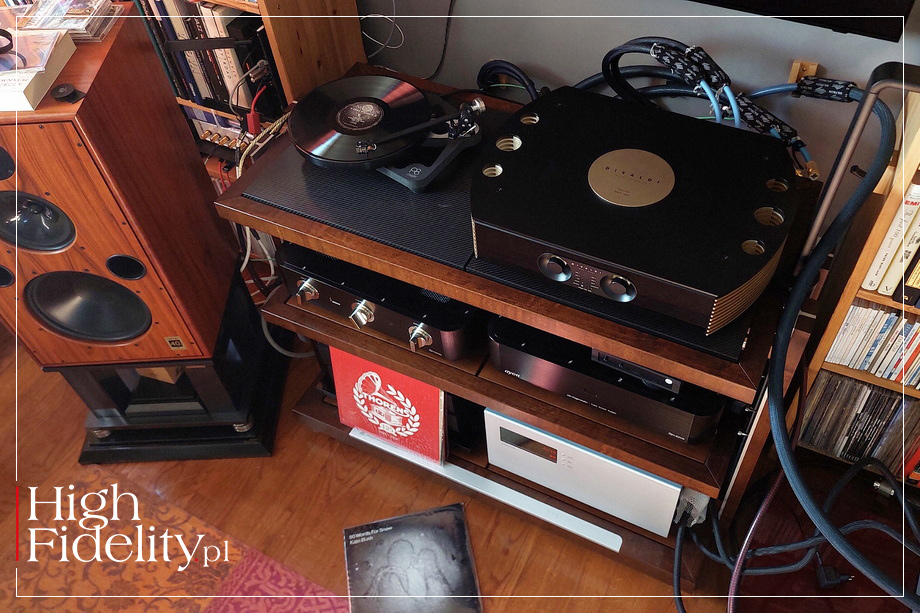
» RECORDINGS USED FOR THE TEST ⸜ selection
→ COMPACT DISC THE DIVALDI PREAMPLIFIER is not a device that will streamline, improve, or fix anything in your system. In other words, it doesn’t function like a filter, an equalizer, or whatever else we might call a component of this type. There is nothing wrong with such practices; in fact, this is the essence of the audiophile pursuit of perfection - selecting individual components of an audio system in such a way as to exploit their strengths and conceal their weaknesses. The Int One, however, is different. The preamplifier under review is different in that its sound is open, selective, and detailed. It neither warms up the sound nor opens it up. What I mean - and this should be clear by now - is that it is very linear. When added to the reference system’s signal path in place of the Ayon Audio Spheris Evo preamplifier, it proved to be a truly worthy replacement - not quite as detailed, not quite as rich in the lower frequencies, and yet - despite the significant price difference - very effective at conveying music. 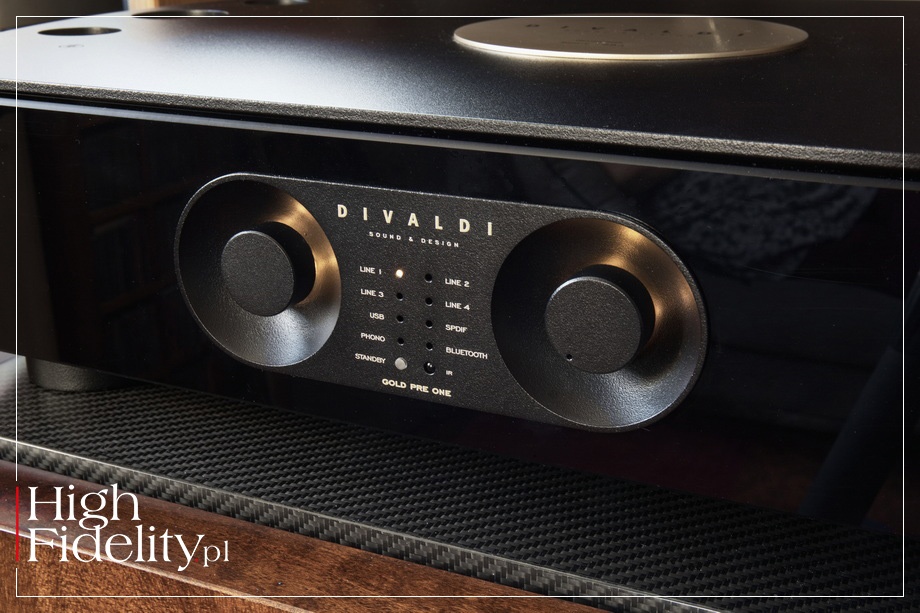
One of its characteristics is an open upper part of the range. This is a very interesting trait and even more desirable than linearity, provided it is executed as well as in the preamp under review. The high frequencies from the SIMPLY RED single Something Got Me Started, i.e., pop music, though without very heavy compression, were strong and clear. They lacked aggression or a bright attack, though the overall sound was more distinct and bold than with the reference preamp. This translated very nicely into the system’s clear distinction between the rather dark cymbals in the title track and Mick Hucknall’s fairly bright vocals. His voice was open, but it also had a lot of energy. The sighs mixed into the track came out superbly (for example, at 0:52, when we can hear, “Yes, I Would…”). These are quiet elements, but thanks to the long and high reverb, they carry and build a nice atmosphere. Divaldi did a great job of highlighting this element; it practically brought it out and polished it. It didn’t brighten up the sound in the process, which also came across nicely on the bonus track, ˻ 2 ˺ Come On In My Kitchen. It’s a completely unexpected track, written by bluesman Robert Johnson and sung a cappella by the leader of Simply Red. Ah, what a great voice he has! But it is precisely what I mentioned at the beginning - the clarity and openness of the sound - that allowed me to appreciate his vocal mastery without any harshness in the upper end. When, on the other hand, we play material with a much more refined sound, such as from FRANK SINATRA’s Songs for swingin’ lovers! in the Mobile Fidelity Labs reissue, we get a much creamier, one might even say: warmer, sound. I have nothing against Simply Red; it’s one of my favorite bands, simply excellent. And yet Sinatra’s class, the perfection of the orchestra led by Nelson Riddle, were not to be underestimated. The Polish preamp handled this sound perfectly, both in the fast and explosive ˻ 5 ˺ Too Marvelous For World, as well as in the swinging ˻ 6 ˺ Old Devil Moon. In both cases, the device conveyed the energetic richness of these recordings, along with truly excellent tonal differentiation. This is not a preamplifier that mimics a tube device, so don’t expect extra warmth or a rounded sound from it. |
You’ll get smoothness if it’s in the recording. But with the Gold, we also never reach a point where the sound becomes unpleasant. This is one of the device’s fundamental characteristics: an open, energetic sound with a strong upper end, and it is also a very elegant sound. So when in the ˻ 2 ˺ They Can’t Take That From Me track performed by BILLIE HOLIDAY from the Body and Soul album, after Berney Kassel’s warm guitar, a fairly bright, low-end-cut vocal comes in, the device immediately highlights this difference, yet without adding any harshness to it. ▲ Micro-review DANYA PILCHEN, KAIL ENSEMLE Moving Furniture Records MFRC013 
MOVING FURNITURE RECORDS is a label based in Amsterdam, the Netherlands, which was founded in October 2008. It specializes in releasing experimental electronic music and electroacoustic music. It has released recordings by well-known conceptual artists and projects in this field, including Bruno Duplant, Gareth Davis, Alvin Curran, and Anne Lockwood. One of its latest releases is the album Paper Braids. The album we have in hand is the result of a “long-standing artistic dialogue” - as we read - between composer Danya Pilchen and the Kali Ensemble. Pilchen, who lives in The Hague, is a Ukrainian composer, pianist, and “sound researcher,” as he describes himself, who is primarily interested in “the sound spectrum, modulated sine waves, and dynamic spatial environments.” 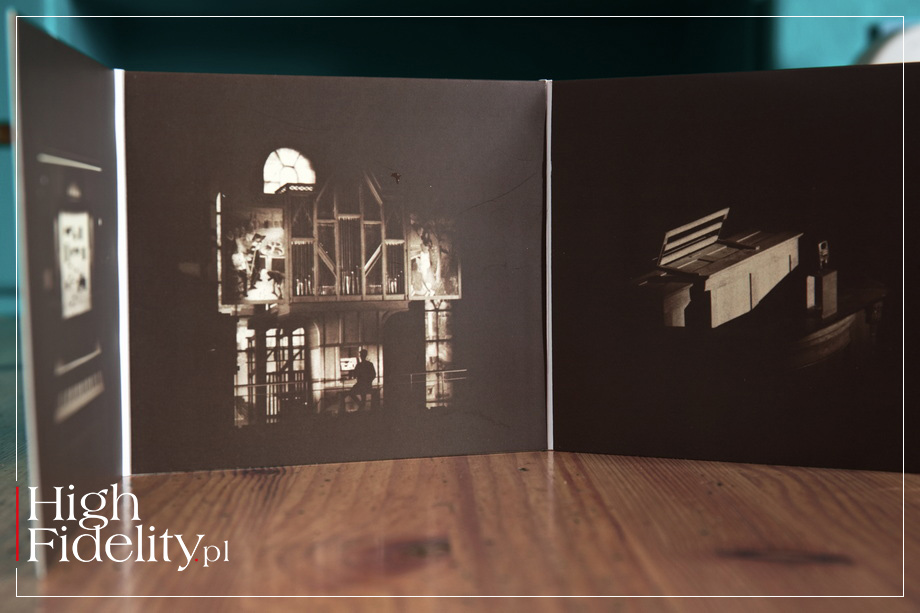
Paper Braids is described as “a slow reflection on the inner life of sound, constituting a meticulous exploration of space, microbial nuances, and the delicate poetry of sustained tones.” This was achieved through Pilchen’s performance on a large organ and electronic instruments operated by members of the Kail Ensemble music collective. The album was recorded live by Bert van Dijk during a performance on July 5, 2025, at Orgelpark in Amsterdam; the instruments and processed organ sound were mixed by Clare Gallagher. This is a challenging album. A single track stretching out for a full fifty-five minutes and seconds, usually a single sound drilling into your head, creeping under the collar of a freshly pressed shirt, seeking a gap in your clothing in the frosty air. Drone music is, at the same time, a riot of changes and colors. And yet something is mesmerizing about it - it’s like staring into an abyss which, to borrow a hackneyed cliché, is also staring back at us (I hope Joseph Conrad will forgive me for this clumsy borrowing). 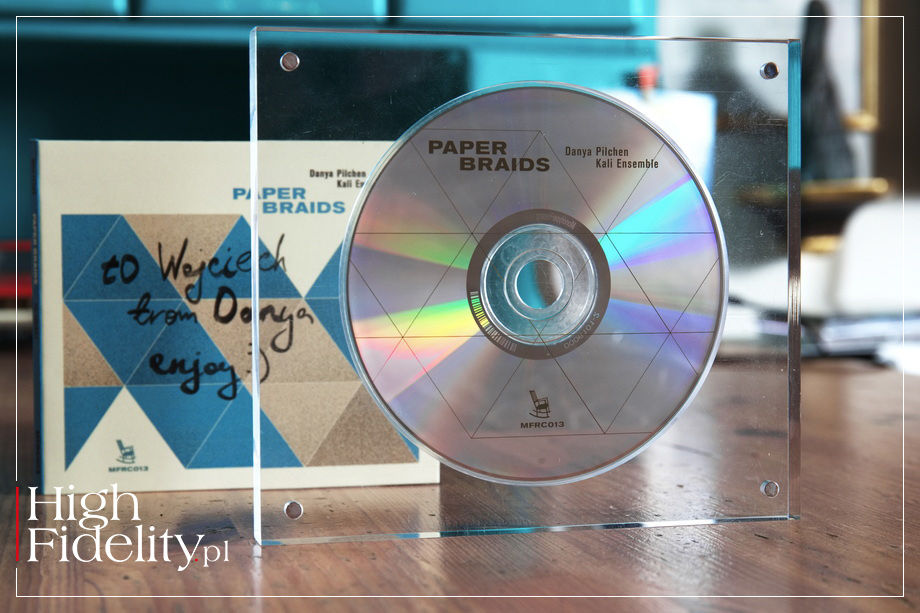
It’s hard to talk about sound quality, although I listened to the entire album twice and had no issues with the sonic field being overpowering; everything was subordinate to the music. The music is played mainly in the upper and mid-range registers, so it’s easy for the sound to become distorted or off-key. Here - everything is tight and focused. Difficult, unsettling music that comes back to us every now and then and compels us to listen again. I encourage you to give it a try; there’s a chance it will get under your skin. ● SUCH EXCELLENT DIFFERENTIATION and selectivity, while maintaining high-quality tonal reproduction, as mentioned above, is possible, I believe, because of how fast is the reviewed preamplifier. For if I were to point to any single element that is most important in what it offers, it would be how fast it is. It is not only about the excellent reproduction of the dynamics of the drum beats in ˻ 5 ˺ Comes Love, or the density of this instrument on DOMINIC MILLER’s album titled Vagabound, but about something beyond that, something broader and therefore more important. The fast sound alone, without coherence in the whole presentation, is merely showing off; nothing comes of it. But here, with the Gold Pre One, the result of such type of performance is a large, expansive sound with excellent energy and openness, yet a sound that is somehow internally creamy. The preamp isn’t particularly generous when it comes to saturating the lower end, and yet the last thing you can say about this sound is that it’s “light.” Every time I reached for another recording - I expected substance from it - that is, fidelity - and I got it. 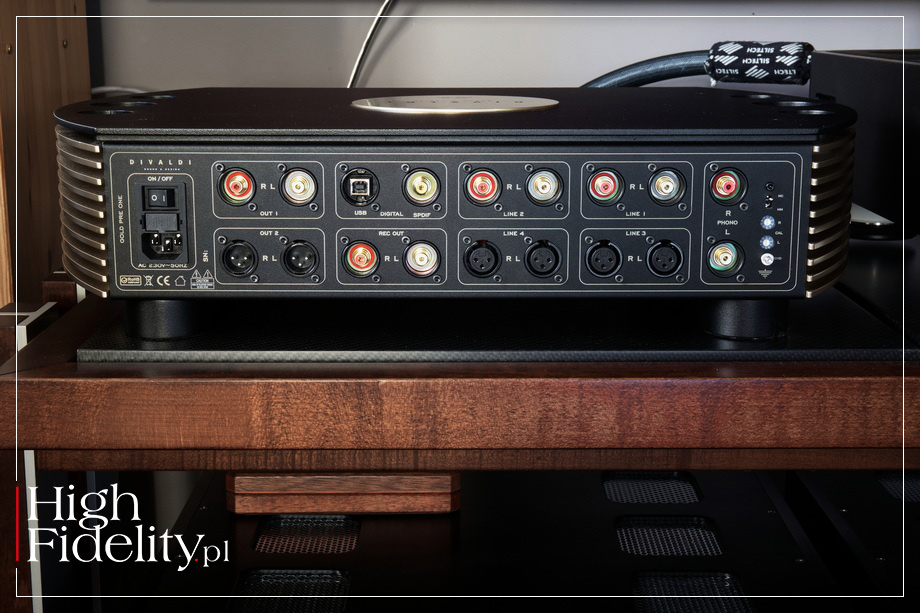
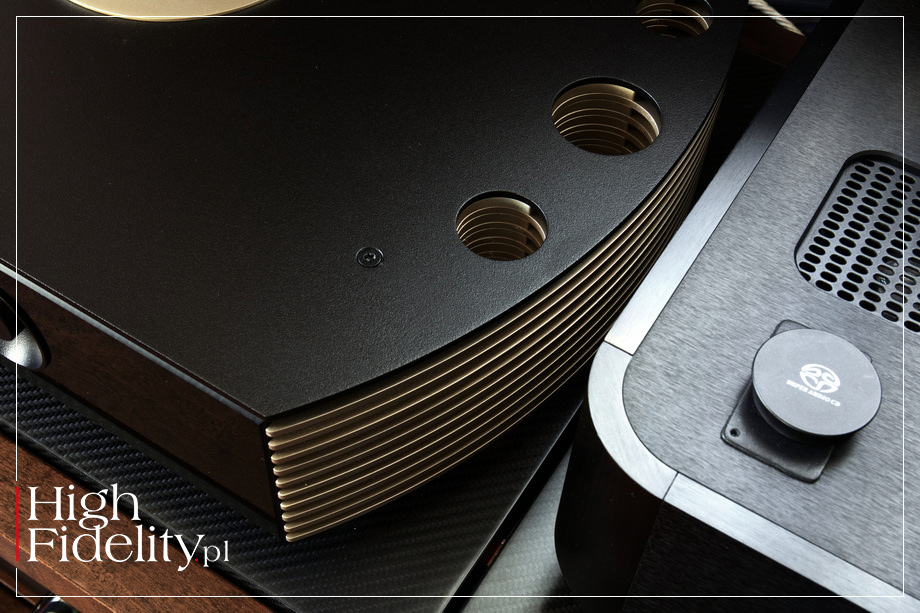
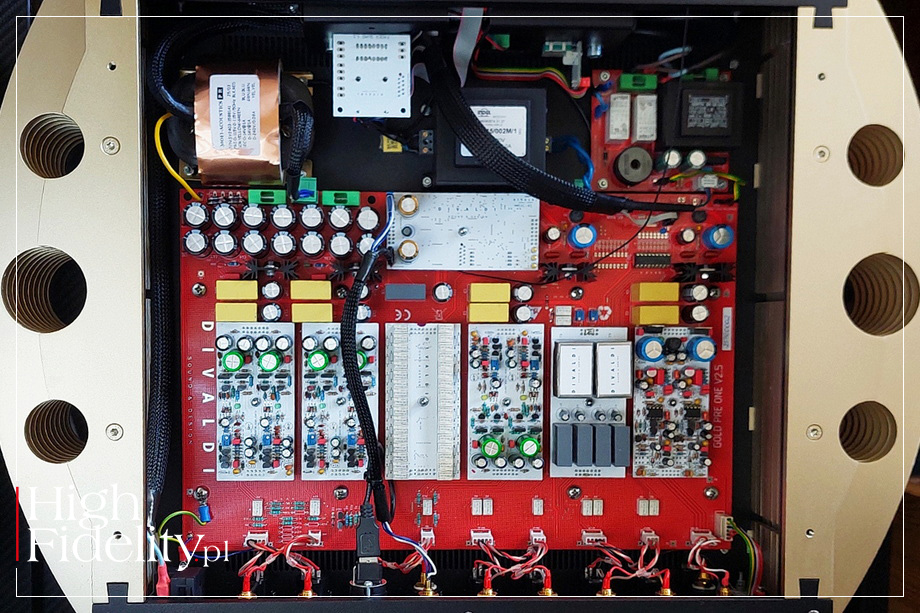
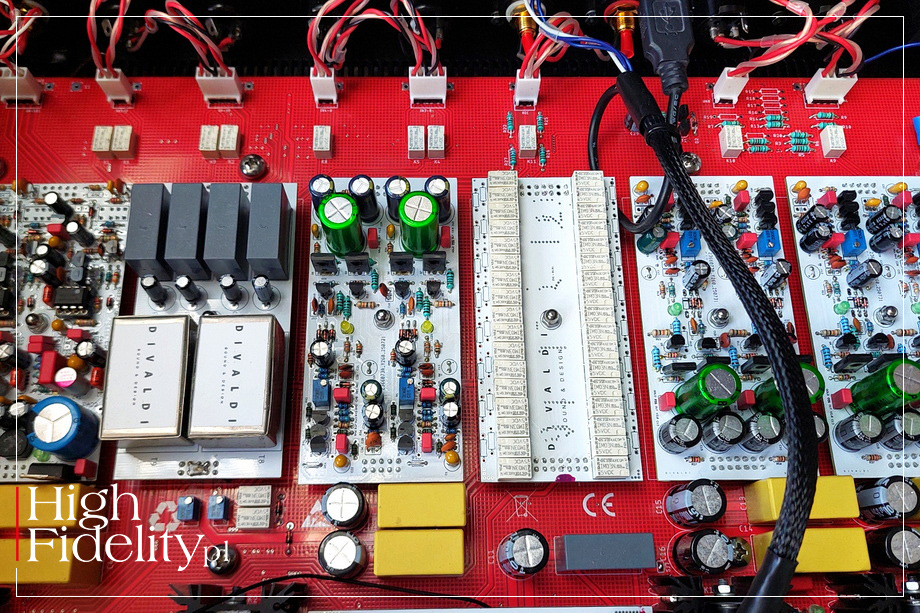
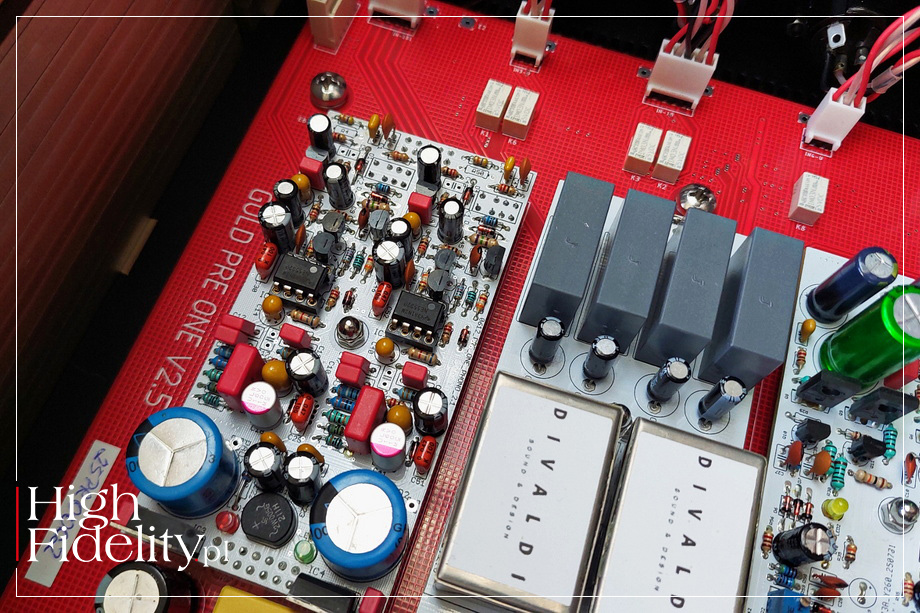
So this won’t be a rich, “gut-wrenching” sound - it’s not that kind of device. Instead, it will be a very well-balanced sound - both within the whole frequency range and the soundstage. Nothing in this presentation stands out or demands applause. It’s a sound where all elements perform at an equally high level. And something like this happens very rarely, and when it does, you have to pay six-figure sums (I’m talking about Polish zlotys) for it. DAC • The digital-to-analog converter used in the Int One is fairly simple in terms of the design. It is more of an add-on than a component equivalent to the DACs found in high-end players. Its resolution and selectivity are noticeably lower than in reference players, whether the Ayon or the Sforzato, and the overall sound isn’t as energetic either. Despite this, I listened to this sound for quite some time without feeling like I was missing out on anything. Yes, it’s obvious that when I compared it using quick AA/BB/AA switches between the sources, listening to ˻ 2 ˺ Freddie Freeloader, played from a Crystal Disc by Audionautes Records, the whole thing sounded “flat” when heard through the DAC in the preamp. It was less expressive and not as deep. However, when I listened to music in longer sessions, it wasn’t as obvious anymore. It seems to me that the DAC module has been tuned in such a way as not to lose any of the richness of the sound. There is a good attack here and decay; there is tonal differentiation, and there are also high dynamics. It’s all relative, as I mentioned, and yet really cool. The sound isn’t particularly weighted down, but that’s a feature of the preamp itself and its line inputs, and the DAC didn’t modify it - it fit right into that style. So the sound of the digital-to-analog converter in the Int One is really cool. On the other hand, the Bluetooth section surprised me with its low-set balance. With it, the bass is richer and denser. Maybe not exceptionally well-controlled, but that doesn’t matter. Its energy and tone, as in Vadana’s Arp or Everywhere I Go (Remind Me) by BNYX®, KID CUDI, and RÖYKSOPP, were excellent. And the slam! - It was exceptional! TURNTABLE • If we didn’t know what kind of sound and what approach to music playback Waldemar Łuczkoś - who co-designed this preamplifier and was the lead designer of the RIAA correction board - is a fan of, let’s give the phono preamp module a listen. Apart from the fact that the gain is a bit, in my opinion, too low, this will be the best money you’ve ever spent in your life. The sound of the phono preamp in the Pre One is simply magnificent. I can’t find another word to describe what I heard when playing either acoustic jazz or powerful electric rock. It’s a very detailed, deep, and slightly soft sound. This softness is a sign of naturalness, not a masking of the sound’s attack. The attack is fast and powerful, even immediate. The point is how it is presented - that is, “constructed” before us as a whole. The phono preamp’s sound is delivered to us in its full form, with a wide frequency response and low noise. Thus, both the jazz tracks from the Blue Note label featured on the 2008 album Thorens 125th Anniversary LP, and the powerful rock of THE CULT from my favorite album, produced by Rick Rubin, Electric, were rendered with power and density - fast, yet soft. ▒ Summary THE DIVALDI PREAMPLIFIER is an exceptionally good device. It exemplifies a combination of technical expertise, musical sensitivity, and audiophile intuition. Interestingly, it is very honest and faithful in all of this, as if the designers wanted to directly reference the idea of a “wire with gain.” It is a concept, not a real, achievable goal - but an extremely appealing one. The Pre One therefore plays quickly, with high resolution, and selectively. It doesn’t have a particularly rich lower midrange, which would give a sense of “tangibility.” This might put off those who prefer a “tube-like” sound. However, when we listen to music for longer, when we set aside stereotypes, it turns out that in this presentation, we find naturalness, softness, and precision. The soundstage was also exceptionally convincing, with distinct phantom images, yet never crossing the line into unnatural isolation from the background. An important feature of the preamp under review is its modularity. Among the available options, the phono preamp seems sensational to me, replacing expensive external devices costing - I won’t exaggerate when I say - up to ten thousand zlotys. The DAC is a nice addition, with a very good Bluetooth connection. But let’s not kid ourselves - a good CD (SACD) or file player does this better. However, if it’s meant to be a supplementary component - great, it’ll be fine. I really liked this device. It’s expensive, yet, in the high-end market, it might seem like a bargain. A superbly built product with such great sound that it brings a lot of joy - I highly recommend it! ▓ DESIGN FROM A MECHANICAL PERSPECTIVE, the design of the Gold Pre One preamplifier is nearly identical to what we’ve seen in the Int One integrated amplifier and the Pa One power amplifier. And it is this similarity that means we already have a clear opinion of Divaldi’s products even before we’ve heard them. The unit is wider than the standard 440 mm (the width of a so-called “rack,” i.e., a mounting cabinet in recording studios). This increased width stems from the fact that instead of classic heat sinks made from off-the-shelf or milled modules, those in the Pre are arranged horizontally. The top and bottom plates are painted black, and all the plates in between are gold. And it is precisely this combination of gold and black that defines the look of this device. The heat sink in question is a hand-assembled stack of aluminum plates to which a large copper element has been attached, and onto which the transistors are then mounted. According to the manufacturer, this solution “ensures virtually perfect heat dissipation and allows all key components to operate under the same operating conditions, which increases the amplifier’s resistance to temperature drift.” In the preamplifier, these components are only part of the mechanical structure. FRONT & REAR • The preamp's front panel is made of tempered, smoked glass. This panel is screwed onto an aluminum chassis. The unit has a minimalist design. Two small knobs - for input selection and volume control - are embedded in an aluminum element set into the glass panel. The selected input is indicated by a red LED, while the volume level is shown only by a painted indicator. There is also a red-backlit standby button. The rear panel is very conveniently laid out. The connectors used here, both XLR and RCA, come from Neutrik. The latter are mounted in sockets shaped like XLR connectors, which simplifies installation. Unlike usual, the left channel of the RCA inputs is green rather than white; a similar solution is also used by another Krakow-based company, Haiku-Audio; more → HERE. All connectors are gold-plated and Teflon is used as the dielectric. INSIDE • The electronic circuits are distributed between the main board and the modules; the latter feature high-quality laminate and are connected via multi-pin connectors. There are seven modules in the full configuration. Almost all of them, with the exception of the DAC and the attenuator, are assembled using traditional through-hole components rather than SMDs. 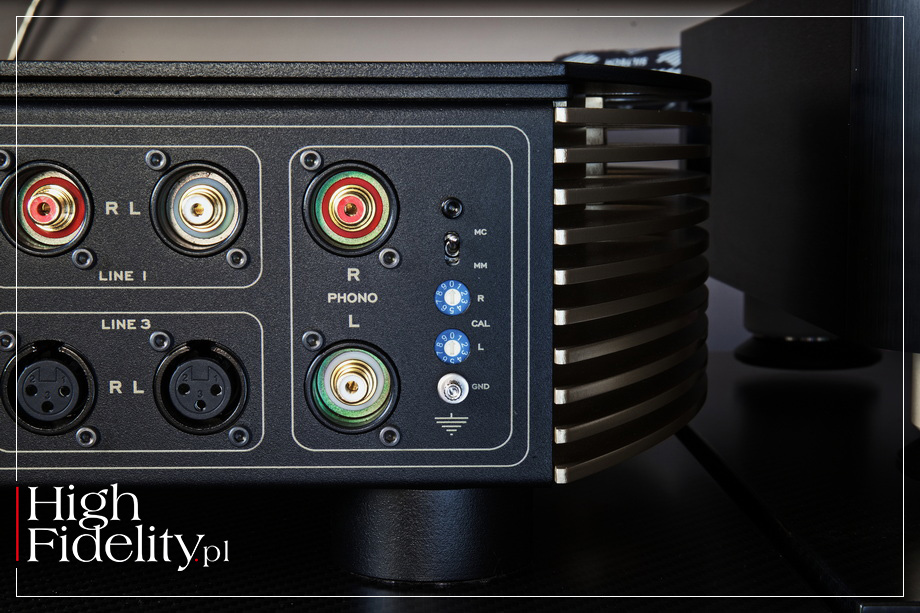
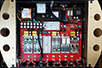
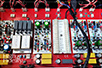
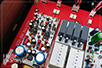
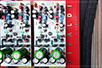
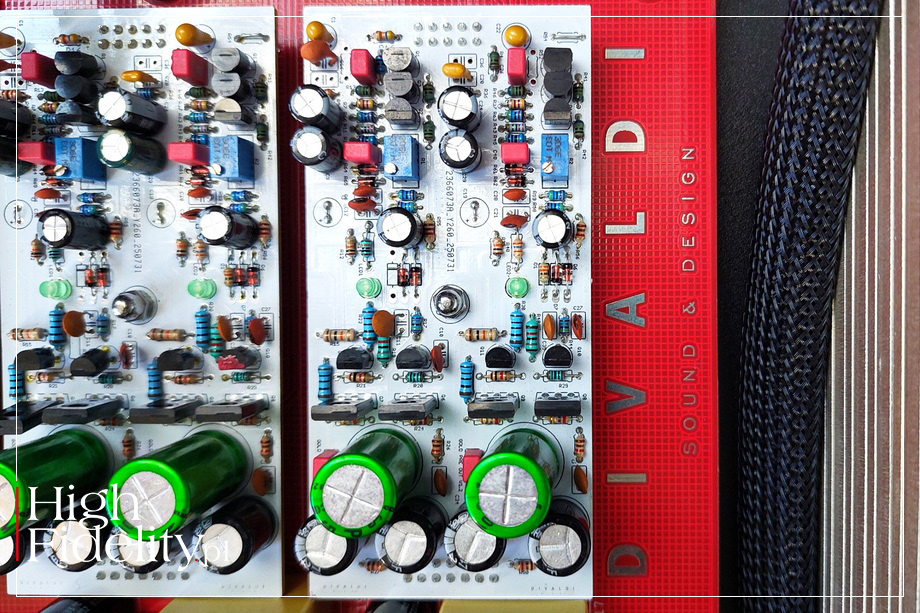
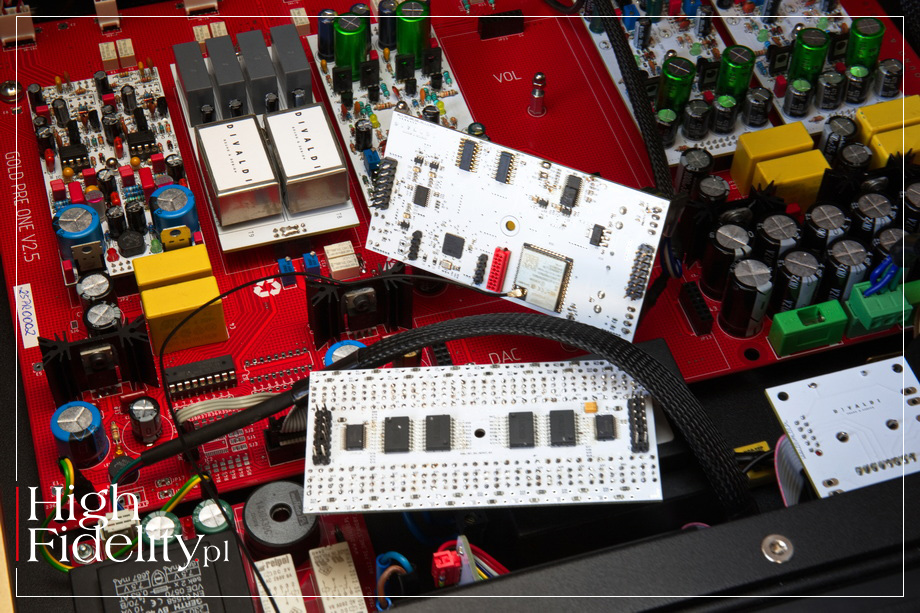
The line inputs are housed on two boards. One board features input transformers with the Divaldi logo affixed to them - so it is unclear who manufactured them; the other board houses the gain circuit. This circuit is based on transistors, precision resistors, and Wima capacitors. The phono preamp section, in turn, is a circuit with operational amplifiers. The classic NE5532 chips serve this role here. The same board also houses the complete power supply. In the center is the attenuator. It is based on relays and SMD resistors. The next two boards are the output circuits. There are two because each handles a separate channel. They are also based on transistors and look almost identical to the input boards (though they are not exactly the same). And there is one more board, deep inside the preamplifier, with a digital-to-analog converter. Quite long cables run to it from the back panel, and there’s also a small cable for the Bluetooth module’s antenna running to the front. The core of the circuit is the Burr-Brown PCM5102 converter with a 2 V RMS voltage output (no I/U circuit required) and an integrated PLL loop. Next to it, you can see the chip used for USB signal conversion and the Bluetooth receiver. On the main board, we find an extensive power supply. The digital modules, including the control modules, are powered separately, as are the analog modules. The former are powered by a classic transformer, while the latter use a large, stylish-looking transformer with an R-core. Another small transformer works with the standby circuit. There, we find many small capacitors that suppress mains ripple, as well as voltage stabilizer circuits. ‖ WP ▒ Technical specifications
Maximum output signal level: 10 V RMS 
THIS TEST HAS BEEN DESIGNED ACCORDING TO THE GUIDELINES adopted by the Association of International Audiophile Publications, an international audio press association concerned with ethical and professional standards in our industry, of which HIGH FIDELITY is a founding member. More about the association and its constituent titles → HERE. |
 |


|
Reference system 2026 |
|
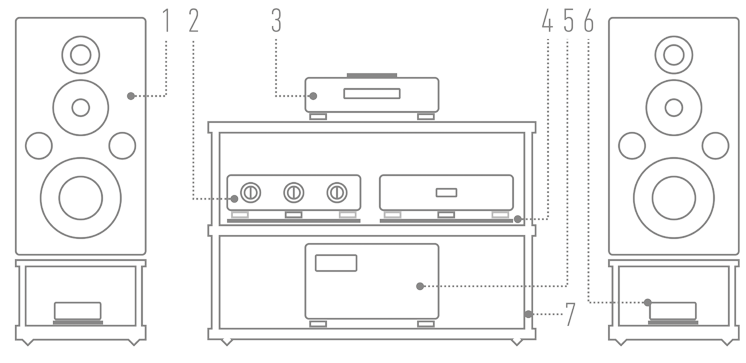 1) Loudspeakers: HARBETH M40.1 |REVIEW| 2) Line preamplifier: AYON AUDIO Spheris III Linestage |REVIEW| 3) Super Audio CD Player: AYON AUDIO CD-35 HF Edition No. 01/50 |REVIEW| 4) Stands (loudspeakers): ACOUSTIC REVIVE (custom) |ABOUT| 5) Power amplifier: SOULUTION 710 6) Loudspeaker filter: SPEC REAL-SOUND PROCESSOR RSP-AZ9EX (prototype) |REVIEW| 7) Hi-Fi rack: Hi-Fi rack: finite elemente MASTER REFERENCE PAGODE EDITION Mk II, more → HERE |
|

|
Cables Analog interconnect SACD Player - Line preamplifier: SILTECH Triple Crown (1 m) |ABOUT|» ANALOG INTERCONNECT Line preamplifier → Power amplifier: Siltech ROYAL SINLGE CROWN RCA; review → HERE Speaker cable: SILTECH Triple Crown (2.5 m) |ABOUT| |

|
AC Power Power cable | Mains Power Distribution Block - SACD Player: SILTECH Triple CrownPower (2 m) |ARTICLE| » POWER CABLE Mains Power Distribution Block → Line preamplifier: Acoustic Revive ABSOLUTE-POWER CORD, review → HERE » POWER CABLE Mains Power Distribution Block → Power amplifier: Acoustic Revive ABSOLUTE-POWER CORD, review → HERE Power cable | Power Receptacle - Mains Power Distribution Block: ACROLINK Mexcel 7N-PC9500 (2 m) |ARTICLE| Power Receptacle: Acoustic Revive RTP-4eu ULTIMATE |REVIEW| » ANTI-VIBRATION PLATFORM under Acoustic Revive RTP-4eu ULTIMATE: Graphite Audio CLASSIC 100 ULTRA, review → HERE Power Supply Conditioner: Acoustic Revive RPC-1 |REVIEW| Power Supply Conditioner: Acoustic Revive RAS-14 Triple-C |REVIEW| Passive filter EMI/RFI: VERICTUM Block |REVIEW| |

|
Anti-vibration Speaker stands: ACOUSTIC REVIVE (custom)Hi-Fi rack: finite elemente MASTER REFERENCE PAGODE EDITION Mk II, more → HERE Anti-vibration platforms: ACOUSTIC REVIVE RAF-48H |ARTICLE| » ANTI-VIBRATIONAL FEET: |

|
Analogue Phono preamplifier: Phono cartridges:
Clamp: PATHE WINGS Titanium PW-Ti 770 | Limited Edition Record mats:
|

|
Headphones » HEADPHONE AMPLIFIER: Leben CS-600X, review → HEREHeadphones: Headphone Cables: Forza AudioWorks NOIR HYBRID HPC |