


|
AUDIO FILE PLAYER LUMIN
Manufacturer: PIXEL MAGIC SYSTEMS Ltd. |

 |
 |
 |
|
Review
text by WOJCIECH PACUŁA |

|
No 262 March 1, 2026 |
LUMIN IS VERY FLEXIBLE in many aspects of its business. Using the technological, logistical, and management resources of Pixel Magic Systems, its parent company operating in the huge Chinese market with its extraordinary production capabilities, including in the field of high technology, it regularly introduces changes to its products, both in the file transfer software and in the hardware, in the power supply section, and in digital-to-analog converters. 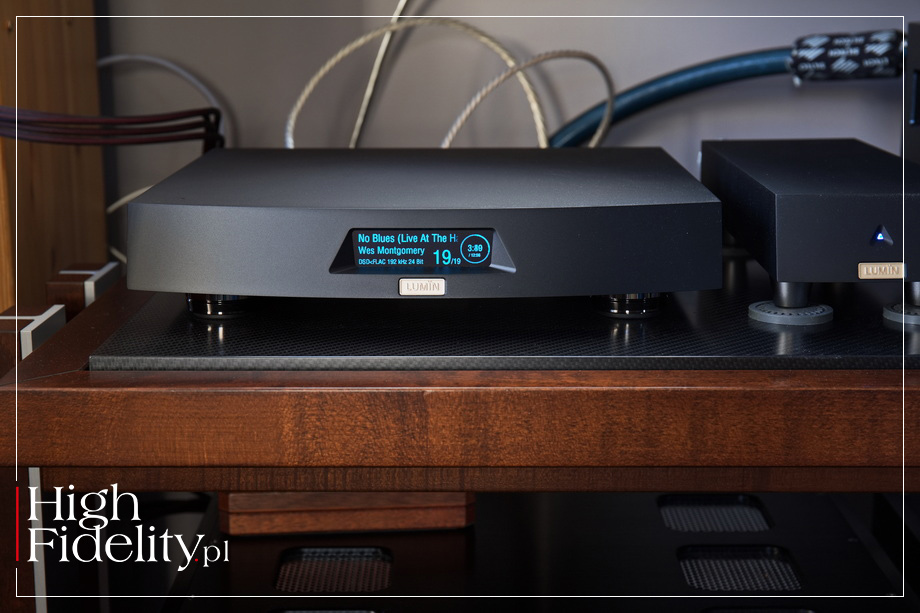
On the other hand, Lumin is extremely conservative when it comes to certain solutions – such as PCM to DSD upsampling or output voltage adjustment, and the external design of its products. In 2019, seven years ago, in a review of the X1 player, which has just been replaced by the X2, I wrote that if we were to compare the first player from the Hong Kong-based company Lumïn with its then-latest model, the X1, it would be difficult to spot the differences. That's not all. Apart from a nicer-looking power supply, the X1 was almost identical to the company's first player from 2012, when the manufacturer referred to it as “Lumïn” or “The Audiophile Network Music Player”; review → HERE. Such consistency may have various sources, but the first one seems to be hitting the “spot” with the design right from the start. And perhaps this is the case here, because the X2 model, presented in November last year, fourteen years after the original Lumïn, looks the same. Except that it is a completely different product. ▓ X2 FEATURES • Lumin’s X2 (its name is stylized as Lumïn) is a complete audio file player. It offers native playback of files up to DSD512 and 32-bit PCM768, PCM and DSD upsampling to DSD256, a digital USB output supporting native playback of DSD512 signals, a BNC output delivering PCM and DSD DoP signals, two Femto Clocks with precise FPGA distribution, a power supply with two sections for analog circuits – separate for the left and right channels, an SFP slot for optical network support, and a built-in LAN selector, and Leedh Processing digital volume control. The user interface is minimalistic, as it is a small display with a blue filter. However, it shows track titles, technical data, and volume levels if activated. It is much more convenient and enjoyable to control the Lumin using its app. It is a really cool system, and I have been using it for years. The player can also be controlled with apps from Jplay – my current choice – as well as with Roon. The device has a separate external power supply unit housed in an aluminum casing. DAC • Although it is “just” another player from this company, it is also a “small revolution”. As I wrote in this month's editorial, “revolutions” in audio are extremely rare. Over time, after an initial abundance of inventions, they became fewer and fewer, coming to an end with the announcement of the Compact Disc format in 1982. Everything that came after that, such as streaming, Bluetooth, etc., are practical implementation of much older ideas. Also, in the case of the X2, it is not a “REVOLUTION,” but rather a “revolution” that is significant enough to speak of a new direction in the development of this company and a completely different sound. This major change consists of three smaller ones, all of which are really important: a new DAC, the use of the MQA QRONO d2a digital filter, and placing the device on specialized anti-vibration feet. The most important thing is the new DAC. For the first time, this Hong Kong manufacturer has used a discrete R-2R digital-to-analog converter in its device, composed of separate resistors. Historically, there have been two patterns in the changes introduced by Lumin to its products: new generations of processors with file playback software and changes to digital-to-analog converters. 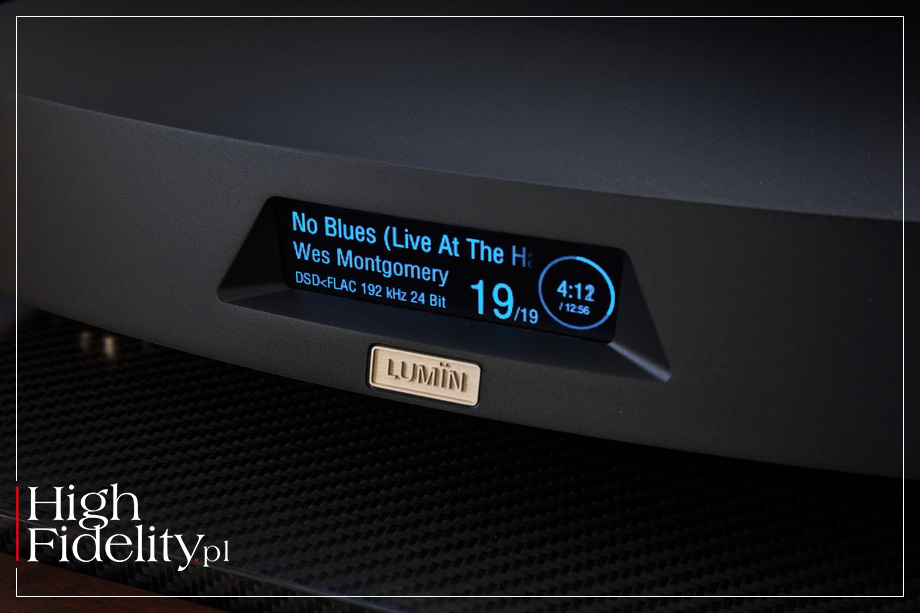
In the X1 model, the focus was primarily on the new processor, which provided native DSD512 and PCM768 files playback and almost equally high signal upsampling capabilities. This was a big change from previous generations of devices, as it provided enough power to play even basic file types with lower noise levels and, therefore, offered better sound. On the converter side, Lumin remained faithful to the choice made at the very beginning, i.e., in 2012, regarding Wolfson Microelectronics chips; in the first model, these were WM8741 chips, one per channel. The change came only around 2018. It was then that Lumin introduced ESS Technology's ES928Pro SABRE chips to the A1 and T1 players. The X1 also features this company's ES9038Pro SABRE converters, used in a dual-mono configuration. Here’s what Lumin says about its latest choice, shown for the first time in the X2 model:
After years of dedicated in-house R&D, LUMIN X2 introduces our brand-new discrete DAC! The introduction of a fully discrete DAC architecture marks a milestone in LUMIN’s digital evolution.
By building the converter from individually selected components, every aspect of the digital-to-analog process can be precisely optimized — from circuit topology and power delivery to clocking and signal integrity. ⸜ X2. A New LUMIN Core, → www.LUMINMUSIC.com, accessed: 2.02.2026. As the manufacturer emphasizes, this chip was built independently by Lumin. The company also programmed the digital filters itself, it seems. The DAC chip is based on a network of resistors controlled by two FGPA chips; it is a dual-mono converter. As we read, this allows the system to operate under controlled conditions and produce lower noise. The discrete architecture was also intended to enable Lumin to “directly implement clocking and conversion stages without intermediate frequency dividers,” thus ensuring “precise clocking and reduced irregularities throughout the signal path.” As I said, the digital filters implemented in Lumin X2 were stored in FGPA circuits and written by its research and development department. But we also have the option of using a completely different filter. Interestingly, the company mentions this in small print instead of highlighting it right at the beginning in bold and italics: “This is a player that uses MQA QRONO d2a filters.” You can enable or disable them in the device menu. I suggest keeping them enabled at all times... ▲ MQA QRONO d2a 
WHEN, ON SEPTEMBER 19, 2023, the Lenbrook Group announced the acquisition of MQA Ltd.'s assets, including MQA patents, technologies (such as SCL6), and employees, it was not entirely clear why it was doing so. MQA FLAC files had been used as the basis for hi-res streaming via Tidal and less frequently on MQA-CDs. So when Tidal stopped encoding files in this way, it seemed that the technology was “dead.” It turns out that this was not the case. Lenbrook, which includes NAD Electronics, PSB Speakers, and the BluOS streaming platform, was interested in access to the unique technology of digital filters “embedded” in MQA codecs. It is thanks to these filters, by the way, that MQA-CDs sound so good. This is because they are designed to reduce the time distortion of the signal. When we look at the impulse response graphs shown in the White Paper entitled Digital Audio with an Analogue Soul. How QRONO d2a Improves Digital Audio Playback, we can see that the minimization of post-signal oscillations (or ringing) is incredible. 
MQA Labs says: MQA QRONO d2a is a digital-to-analog conversion technology developed by MQA Labs to improve sound quality by correcting synchronization errors (time blur) characteristic of DAC circuits. It uses specialized filters and noise shaping to improve impulse response and transparency, aiming to provide a more natural, “analog” sound across all sampling frequencies, which is particularly beneficial for lower frequency audio. The goal of MQA Labs was therefore to solve the problem of “time blurring” in digital-to-analog converters, focusing on the human hearing sensitivity threshold of 7 microseconds to, as we read, “improve, for example, sound with a sampling frequency of 44.1 kHz so that it sounds more like sound with a frequency of 96 kHz.” To this end, optimized digital filters and noise shaping algorithms are used instead of standard D/A circuit filtering. ● FEET • This brings us to the third change and the literal foundation, i.e. the anti-vibration feet, on which the player stands. This is another manufacturer, after the mighty JBL, to use feet from the Canadian company Isoacoustics (the name is stylized as IsoAcoustics). The idea itself is not new, but it clearly has its roots in audio. Let us recall that Ayon Audio already used feet from the Polish manufacturer Franc Audio Accessories in its CD-35 HF Edition player in 2017, and repeated this in 2020 in the CD-35 II HF Edition model. However, these were special, limited versions, and therefore – in theory – unique. Meanwhile, the X2, although expensive, is a mass-produced product, not a “special version.” As I mentioned at the beginning, this is an important change in the approach to vibration damping in audio devices from manufacturers described as “engineering-oriented.” In other words, they are not very keen on using audiophile “inventions.” And yet, in digital devices, their impact on noise is really significant. The better the circuit is protected from them, the “darker” the sound we get, a sound with much better resolution. The sight of such good feet in the X2 is, therefore, interesting and encouraging. ▓ SOUND HOW WE LISTENED • The Lumin U2x file player was tested in the HIGH FIDELITY reference system, where it was compared to the three-box Sforzato DSP-05EX & PMC-05EX file player and to CDs and SACDs. I connected its RCA analog output to the input of the Ayon Audio Spheris Evo preamplifier. Files were streamed from Tidal using a FunBox 3.0 router and Acoustic Revive LAN-Quadrant Triple-C WB digital cables. 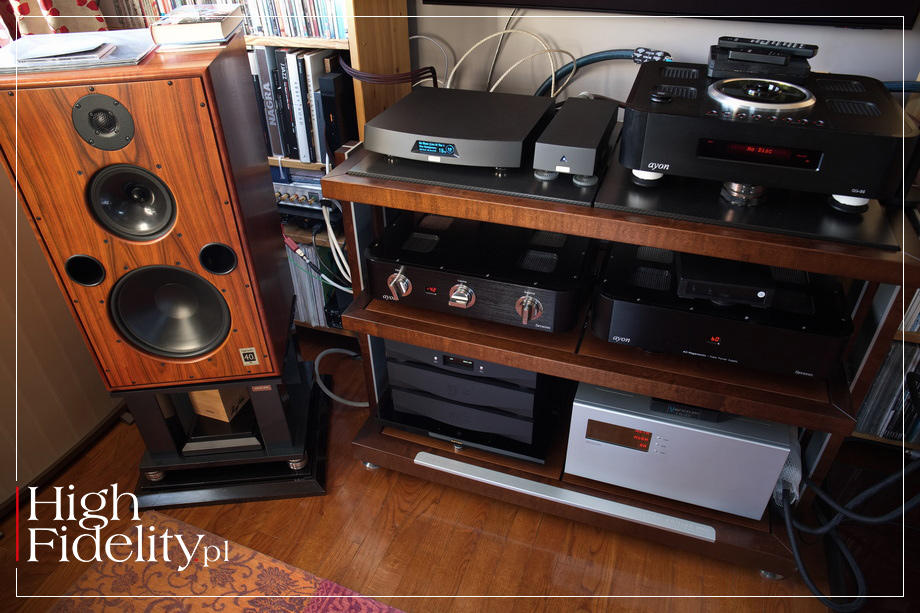
The tested player was placed on the top shelf of the Finite Elemente Master Reference Pagode Edition Mk II rack on its feet, next to the power supply. To prevent the power supply from slipping, its feet were placed on Acoustic Revive RKI-5005 pads. The device was powered by an Acrolink Mexcel 7N-PC9500 cable, and I connected the ground terminals of both the main device and the power supply to a Nordost QKore artificial ground. 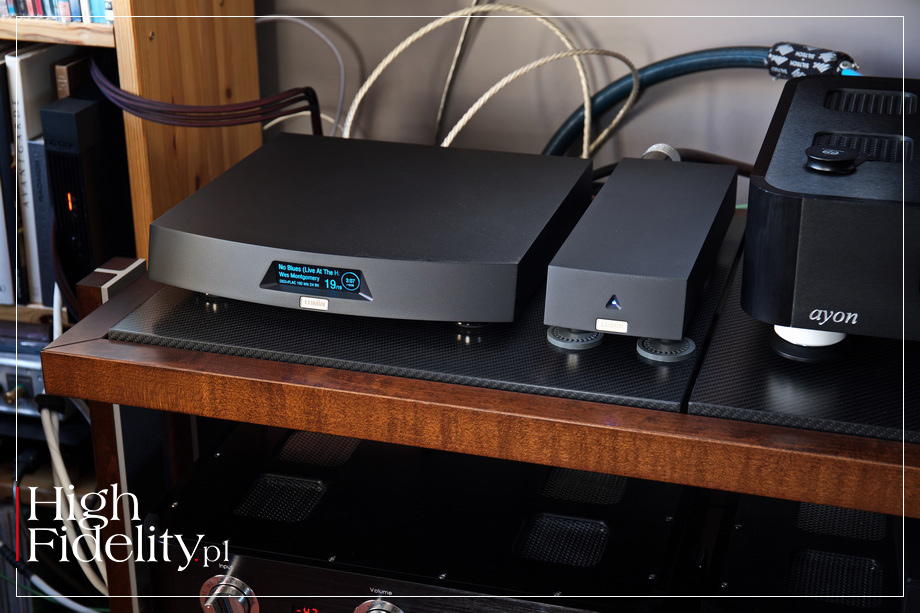
I used Jplay app to control playback. » ALBUMS USED FOR THE TEST ⸜a selection
⸜ TERRY CALLIER, The New Folk Sound, Prestige/Craft Recordings/Tidal, FLAC 24/96 ⸜ 1968/2018. |
I WAS TALKING ABOUT A SMALL REVOLUTION, right? – Well, while it may not be particularly groundbreaking in terms of technology, it is much more important when it comes to sound. I don't know if you remember, but I wrote about two types of devices from this company. Let me remind you. The point was that some of them sound open and selective, while others sound warmer and fuller. Each has its advantages and fans. What we get with the X2 is different. 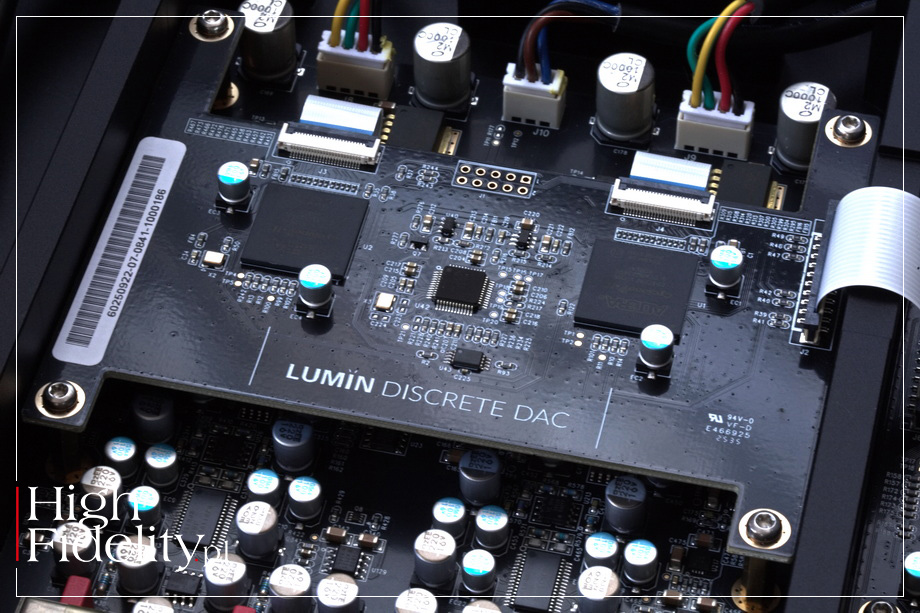
It is such a different proposition that we can talk about a new beginning for this manufacturer. It is a combination of both approaches. But not in a forced way; rather, freely, as if it were meant to be that way from the very beginning. And I didn't have to listen carefully, examine, or dissect the sound to hear what I'm talking about. The first strum of the strings and BAM! – I knew that I was in a completely different world from the “Lumin” one that the company had accustomed us to. TERRY CALLIER's acoustic guitar in 900 Miles, followed by a similar instrument in AMERICA's A Horse with No Name, sounded very authentic. Open, raw, sonorous, three-dimensional. I remember perfectly well the sound of the first player from this company, which did not yet have an official name – that came later – and how surprising it was for me that files could be played in such a rich, smooth way. At the time, it was a real change of direction for the part of the audio industry involved in file playback. I perceive the changes I hear now in a similar spirit, with the X2. Maybe even more so... Except that it is a completely different sound from the one I heard fourteen years ago. All the adjectives I just used are, in a way, new to Lumin. At least in terms of their intensity and co-occurrence. In addition, they occur with such good filling. But it is neither a warm nor a bright sound, neither heavy nor dry. It is, I repeat, a credible sound. You could say that it is selective, but the word differentiating better describes what we hear. Because each of the elements that make up the dense mix of A Horse… was clear, placed in its own acoustic envelope. And at the same time, everything was tied together with a long reverberation that saturates the sound, making it “shiny” as if smeared with oil. This is a good sign. And that's why the large band accompanying PEGGY LEE in Ain’t We Got Fun was so well-coordinated, so wonderfully swinging. Although the orchestra itself is excellent, led by Nelson Riddle, who is responsible for the sound of Sinatra's best albums, it was Lumin who “took care of it all.” He arranged the instruments in a large space, connecting them with a kind of “agreement,” as if we could see the musicians glancing at each other and at the conductor. 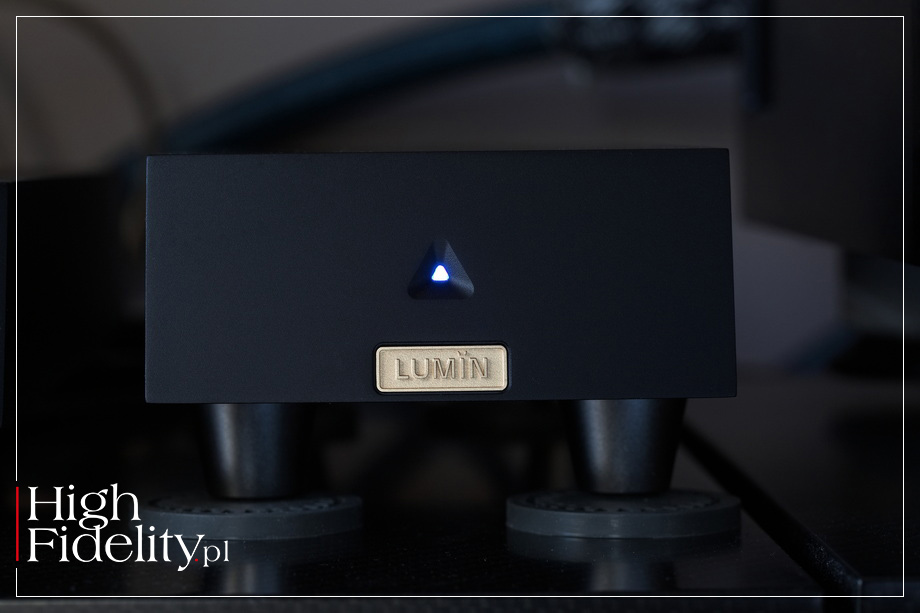
It is also a deep sound with great momentum. Something like this is rarely heard from files, regardless of price, and I strive for something like this when comparing the sound of file players and transports with CD and SACD players. Lumin gives it to you right away. It is not as high-resolution as physical media. However, as with my Sforzato system and the Xact N1 transport, it only takes a moment without comparison to get drawn into this world. It's a world with a perfectly black “background,” which came out nicely with Fleetwood Mac's “Albatross.” Coming from the far back of the stage, every now and then, the electric guitar was shown very, very far away; it was quiet yet clear, nice, and important. It had a nice, warm tone, and yet it was exceptionally clear. Similarly, the pulse was provided by the bass guitar in one channel and the drums in the other. These two instruments had both warmth and selectivity. In other words, something we get from the best audio products. When the sound is bright and open, like the guitar opening in All I Want from JONI MITCHELL's album Blue, it does not go too far into the bright side. Her vocals are also not very saturated, but the upper end of the spectrum is cut off, as if muted. This gives it more midrange, which makes it stand out clearly against the guitars set in both channels. The drumbeats heard in the background are delicate but perfectly clear. What strikes you after a while, when you calm down, is the speed of the sound and its naturalness. This speed is not shown for the sake of speed itself because there is no emphasized attack here. What we get is a dynamically presented whole, not an attack followed by the rest. The sound of the X2 is not perceived as a collection but as harmony of sounds. And it doesn't matter what kind of music it is because that's how the phenomenal album DUDU TASSA, recorded with JOHNNY GREENWOOD, the guitarist of Radiohead, sounded. It was powerful, it was low, it was dense. Sforzato pushes the lower midrange and upper bass harder, making the sound grow more and have greater volume. Lumin does it differently. It is almost as resolving, but more clearly shapes the instruments. It is also a 3D image, but more accurate and refined. The Japanese player saturates the sound with harmonics more nicely, but also slightly overdoes it. The Hong Kong device is more accurate, but this does not make it any less saturated. This is what I started this test with and what accompanied me in my listening sessions from the very beginning. The X2 combines saturation with speed, wonderfully nuancing the sound layers and combining this with a clear imaging of the instruments. So we get a beautiful, wide, and very deep soundstage with very low bass. Listen to the double bass in Autumn Leaves performed by AROOJ AFTAB, and you will know what I am talking about. 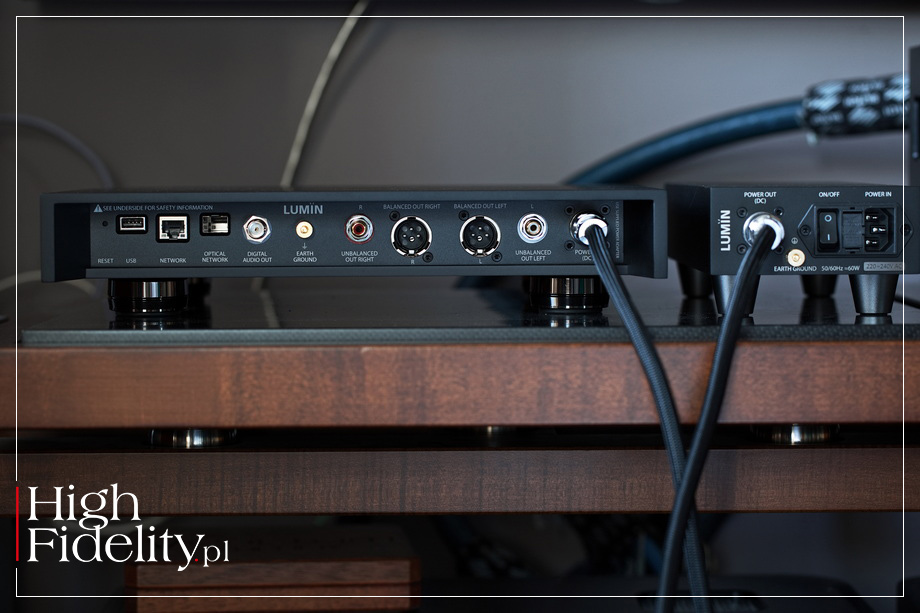
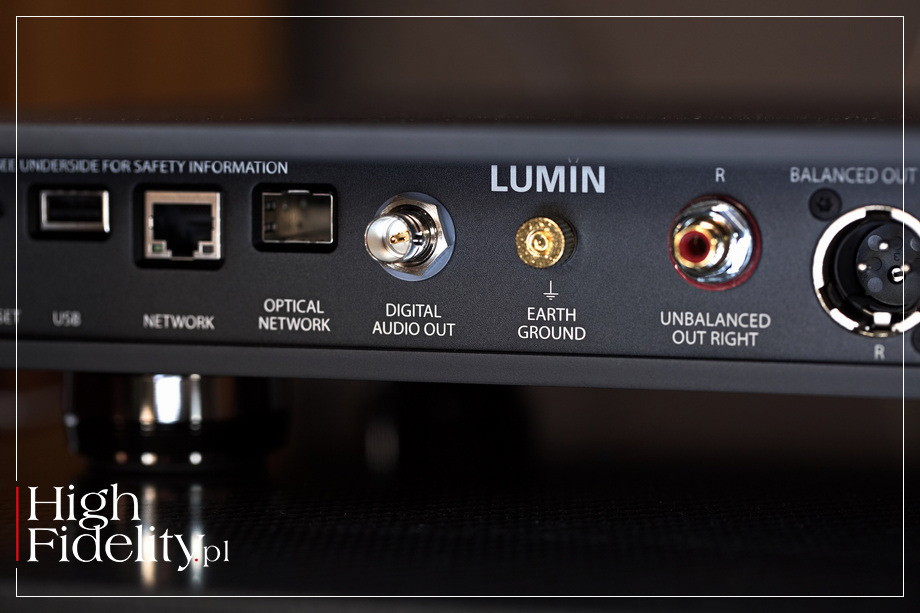
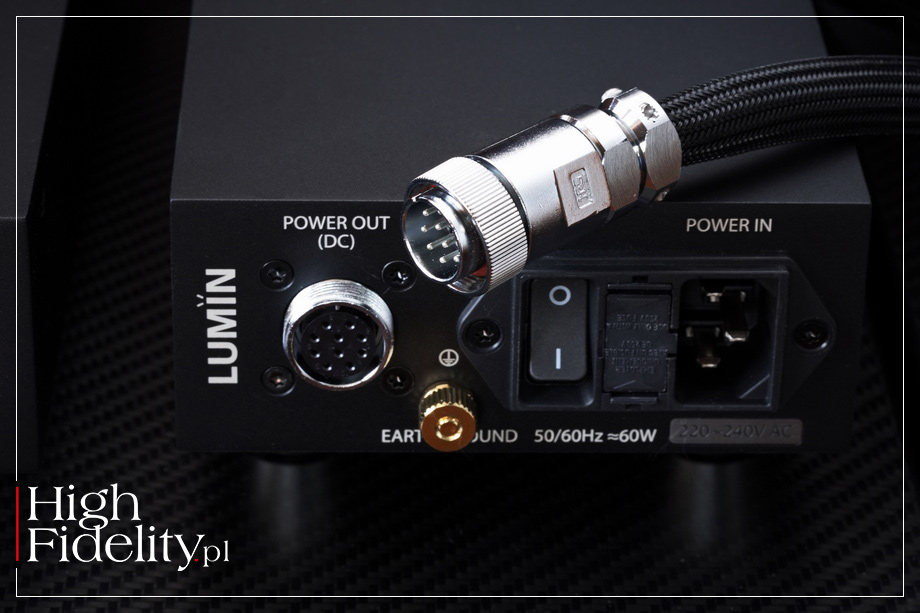
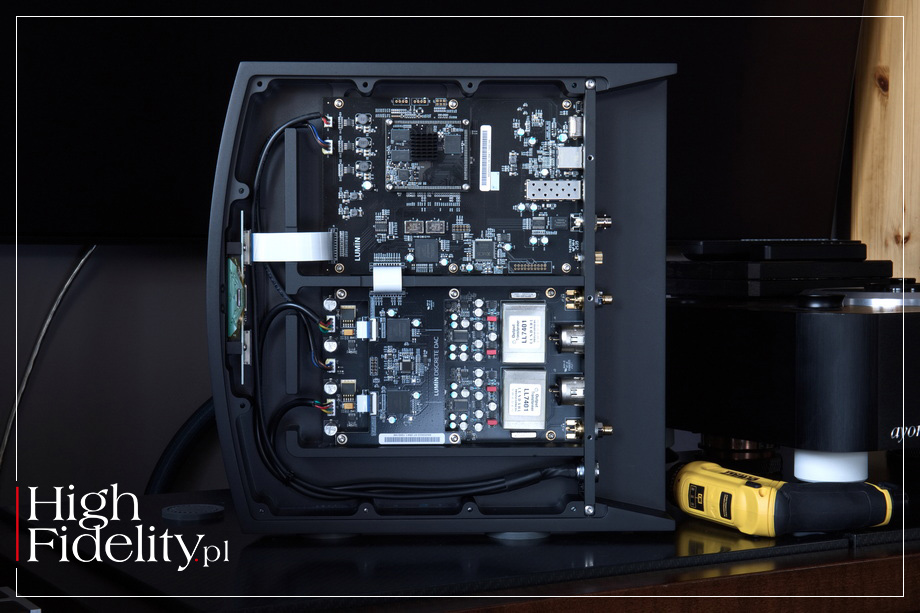
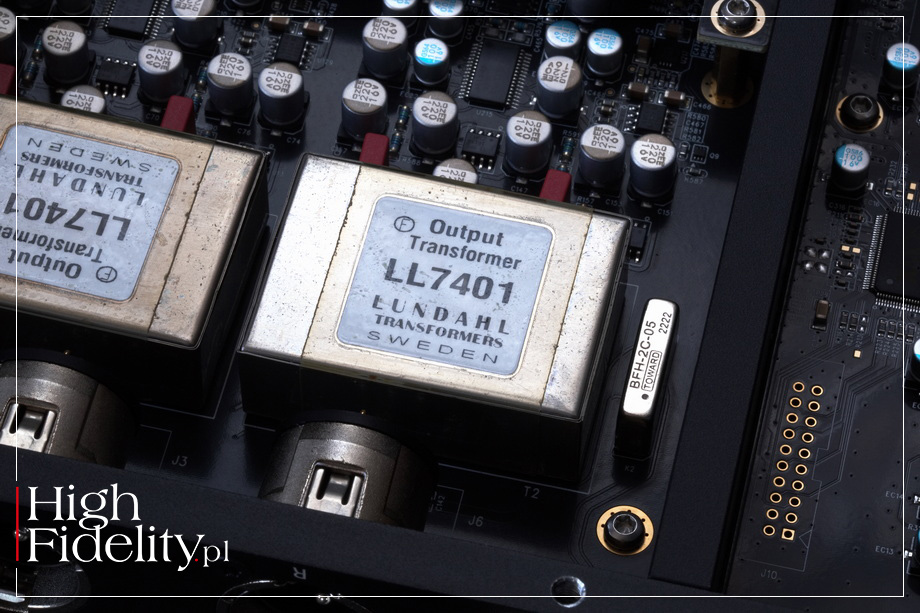
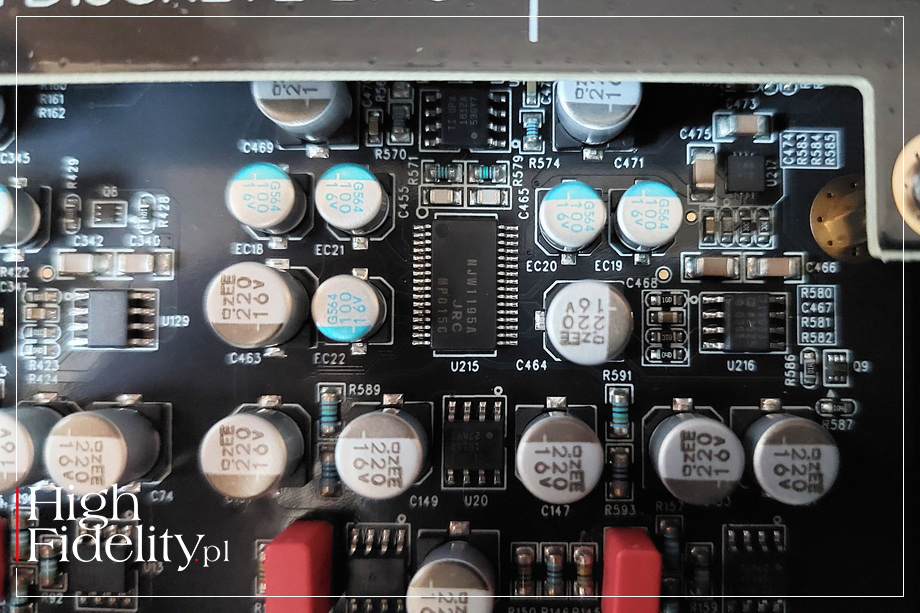
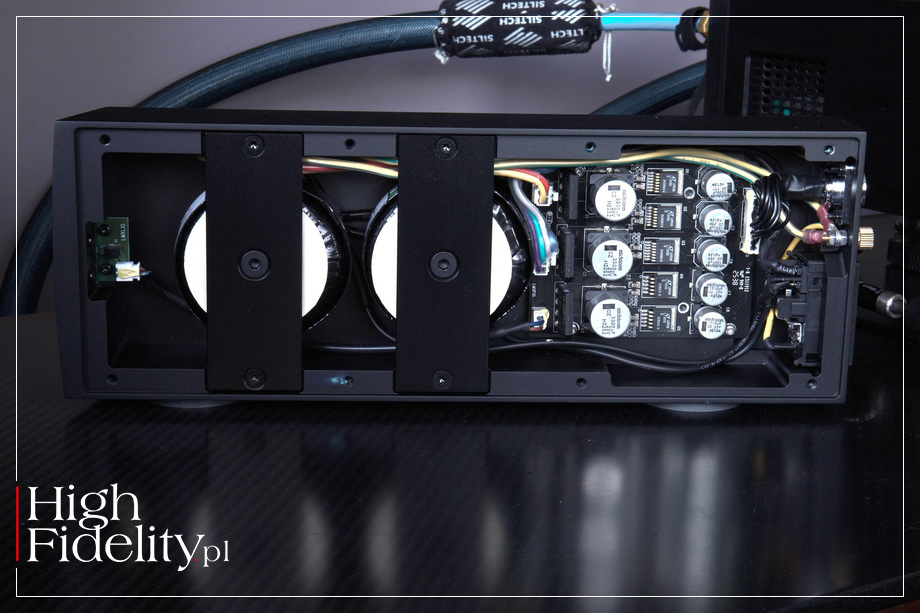
Far in the background, there is a ugur, a metal percussion instrument, and closer to the front, the Hammond organ. They operate in a similar frequency range, rather at the top of the band, but to be presented in such a credible way as here, they also need perfectly conducted bass. And Lumin provides it. Because even with such a dense double bass sound as here, the clarity of both instruments was not compromised. MQA Qrono d2a • The MQA Qrono d2a filter application in the Lumin player seems to me to be just as important as the discrete DAC and feet. It's not that the sound is bad with Lumin’s proprietary filter. On the contrary, it will also be perfect. However, the MQA filter, in my opinion, complements the converter's performance, completing what it has to offer. Its effect on the sound can best be compared to taking a deep breath after an exhausting day. We fill our lungs with air and can almost feel the stress leaving us. And that's exactly what I heard when I turned on the filter. With it, the sound is better organized internally and, therefore, easier to comprehend in your head. It is also slightly heavier in the lower midrange. This gives it a larger scale. Not much, but in the most important elements. It worked very well with old recordings, where there is not much information, and every bit of it is worth its weight in gold. But its effect is also wonderful on the sound of modern electronics. Turning it on takes the sound from good to captivating. You can live without this filter, to paraphrase a poet. But, I would add, why bother? ▒ Summary SO I WAS NOT SURPRISED by how low, dense, and saturated the soft bass from TAMINO's song Babylon was. His voice floated in front of me, just like the voices of Callier, Lee, and the members of America had done earlier. Lumin presents vocals as separate entities firmly embedded in the acoustics of the recording. Large, clear, three-dimensional entities. And saturated. But this richness does not lead to a shift in sound toward low frequencies. It is still clear, selective performance, but on a large scale and with excellent dynamics. It is fast and accurate, but these elements are never dominant. They serve to showcase the instruments and vocals in a powerful space with perfectly preserved proportions. And each time, it will be the sound appropriate for a given album. There is no imitation or playing in a single, monotonous way. After all, songs like Babylon resonate with us in a completely different way than Autumn Leaves performed by CANNONBALL ADDERLEY, and yet another way with Joni Mitchell or the Tassa/Greenwood duo. That's why we listen to music with the Lumin X2 as if we were hearing it for the first time every time. Because it is surprising and interesting. Surprising because it is different, and interesting because it has so much energy and desire to play that we want to be part of it too. An excellent product, one of the best complete file players currently available on the market. It is definitely the best Lumin has ever made. A well-deserved ˻ GOLD FINGERPRINT ˺. ▓ DESIGN The X2 FILE PLAYER is a small, neat product offering a refined design in terms of both mechanics and electronics. The device consists of two parts – the player itself and a linear power supply; they are connected by a fairly long, attractive cable terminated with multi-pin plugs. FRONT AND REAR • The player is a low-profile device, and its front panel is not flat. It has a protruding bottom edge and is rounded at the same time. It is made from a milled aluminum block. An opening has been cut out on its front, with a display and a filter placed underneath. This idea was already used in the original “Lumin” and is still used today in the manufacturer's more expensive series. There are quite a few sockets on the back panel. They are hidden from above by a recessed top panel. This is to help hide them, but it is also a nuisance when frequently reconnecting cables – there is not much room for your fingers. The sockets are solid, gold-plated, and screwed on. There is also a gold-plated terminal that can be used to ground the enclosure. The device stands on four Isoacoustics feet with Sorbothane spacers. The only thing I found lacking was damping on the bottom panel. INSIDE • From the very beginning, Lumin products have been built similarly to tube amplifiers – the electronics are screwed onto the top panel. In the case of players, the idea is that they should be connected to the stiffest part of the enclosure. In the Lumin X2 and other top-of-the-line products from this manufacturer, it is milled, along with the front and side panels, from a single block of aluminum. The screens dividing the interior into three parts are also milled along with them: the front with the display, the DAC, and the file transport with inputs. The transport section is based on a fast FPGA chip programmed by Pixel Magic Systems. It is a small board plugged into the main board. Next to it are two high-end Crystek Femto clocks, separate for the 44.1 and 48 kHz families. Right next to them is another FPGA chip from Altera, this time the “IV” model. It is used to distribute clock signals throughout the system. On the other side of the screen is a digital-to-analog converter. This is the company's first R-2R device, i.e., a resistor ladder controlled by logic circuits. Again, it is an Altera FPGA – here “II” – one per channel. The entire system is a dual-mono design, starting with the power supply. The DAC is mounted on a separate board that plugs into the main board. Behind it, you can see two JRC NJW1195A chips. These are four-channel resistor ladders used to adjust the volume – as I assume, this is part of Leedh Processing. The I/U conversion and output amplifier were built using integrated circuits. In front of the output sockets, there are two large Lundahl LL7401 coupling transformers. Transformer coupling is a technique known today mainly from recording studios, but it has been widely used since the early days of audio. These transformers do not amplify or balance the signal, but are designed to ensure the “true analog character” of the device, according to the manufacturer. Lumin has been using them in its players since the very beginning, starting with the A1 model. The reed switches located next to them allow you to change the output voltage between 1.5 and 3 V (for RCA). POWER SUPPLY • The power supply features a separate housing in the shape of a long cuboid. It is also milled from aluminum and has a rounded front panel. A blue LED with a different shade than the display is placed in a triangular cutout. 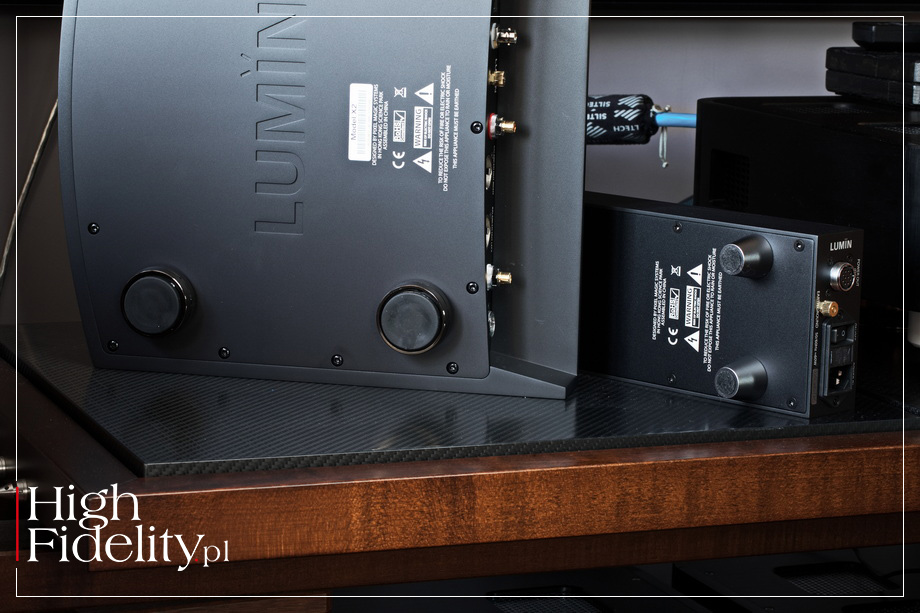
To me, the power supply looks almost identical to the one in the X1. It is based on two toroidal transformers sourced from Noratel. One is used to power digital circuits, and the other analog circuits; however, it features two secondary windings for the left and right channels. Immediately behind them are rectifier and voltage stabilizer circuits. They feature nice Nichicon capacitors and Analog Devices integrated stabilizers. Further stabilization stages are located right next to the powered circuits. The manufacturer draws attention to them in the device description, referring to a “two-stage dual-mono linear regulator.” It is designed to ensure low noise and “maximum channel separation.” The power supply also stands on four feet. Unfortunately, these are not Isoacoustics feet, which is a shame. Here, they are simply aluminum cones with felt underneath, which causes the whole thing to slide around mercilessly. ‖ WP ▒ Technical specifications (according to the manufacturer)
Max output voltage: RCA 3 V; XLR 6 V 
THIS TEST HAS BEEN DESIGNED ACCORDING TO THE GUIDELINES adopted by the Association of International Audiophile Publications, an international audio press association concerned with ethical and professional standards in our industry, of which HIGH FIDELITY is a founding member. More about the association and its constituent titles → HERE. |
 |





|
Reference system 2026 |
|
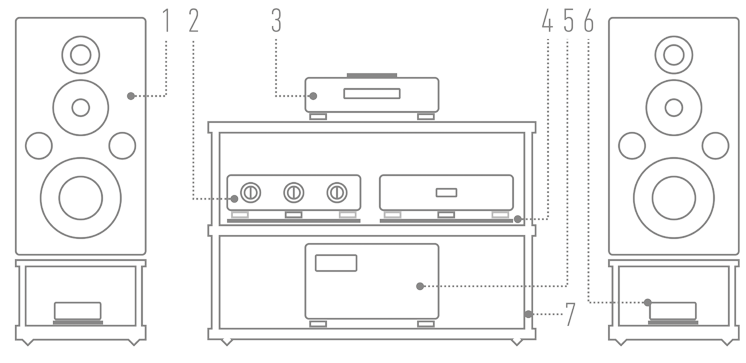 1) Loudspeakers: HARBETH M40.1 |REVIEW| 2) Line preamplifier: AYON AUDIO Spheris III Linestage |REVIEW| 3) Super Audio CD Player: AYON AUDIO CD-35 HF Edition No. 01/50 |REVIEW| 4) Stands (loudspeakers): ACOUSTIC REVIVE (custom) |ABOUT| 5) Power amplifier: SOULUTION 710 6) Loudspeaker filter: SPEC REAL-SOUND PROCESSOR RSP-AZ9EX (prototype) |REVIEW| 7) Hi-Fi rack: Hi-Fi rack: finite elemente MASTER REFERENCE PAGODE EDITION Mk II, more → HERE |
|

|
Cables Analog interconnect SACD Player - Line preamplifier: SILTECH Triple Crown (1 m) |ABOUT|» ANALOG INTERCONNECT Line preamplifier → Power amplifier: Siltech ROYAL SINLGE CROWN RCA; review → HERE Speaker cable: SILTECH Triple Crown (2.5 m) |ABOUT| |

|
AC Power Power cable | Mains Power Distribution Block - SACD Player: SILTECH Triple CrownPower (2 m) |ARTICLE| » POWER CABLE Mains Power Distribution Block → Line preamplifier: Acoustic Revive ABSOLUTE-POWER CORD, review → HERE » POWER CABLE Mains Power Distribution Block → Power amplifier: Acoustic Revive ABSOLUTE-POWER CORD, review → HERE Power cable | Power Receptacle - Mains Power Distribution Block: ACROLINK Mexcel 7N-PC9500 (2 m) |ARTICLE| Power Receptacle: Acoustic Revive RTP-4eu ULTIMATE |REVIEW| » ANTI-VIBRATION PLATFORM under Acoustic Revive RTP-4eu ULTIMATE: Graphite Audio CLASSIC 100 ULTRA, review → HERE Power Supply Conditioner: Acoustic Revive RPC-1 |REVIEW| Power Supply Conditioner: Acoustic Revive RAS-14 Triple-C |REVIEW| Passive filter EMI/RFI: VERICTUM Block |REVIEW| |

|
Anti-vibration Speaker stands: ACOUSTIC REVIVE (custom)Hi-Fi rack: finite elemente MASTER REFERENCE PAGODE EDITION Mk II, more → HERE Anti-vibration platforms: ACOUSTIC REVIVE RAF-48H |ARTICLE| » ANTI-VIBRATIONAL FEET: |

|
Analogue Phono preamplifier: Phono cartridges:
Clamp: PATHE WINGS Titanium PW-Ti 770 | Limited Edition Record mats:
|

|
Headphones » HEADPHONE AMPLIFIER: Leben CS-600X, review → HEREHeadphones: Headphone Cables: Forza AudioWorks NOIR HYBRID HPC |