

|
LAN FILTER AB-TECH
Manufacturer: |

 |
 |
 |
|
Review
text by WOJCIECH PACUŁA |

|
No 262 March 1, 2026 |
I THINK ALEXANDER BLADELIUS has accurately identified the main problem of modern audio systems: contamination with high-frequency noise. This noise is bothersome in both analog and digital domains, but the latter seems more difficult to deal with. This is because there is still no consensus among engineers and academics on exactly how it modifies the audio signal and how much harm it does. 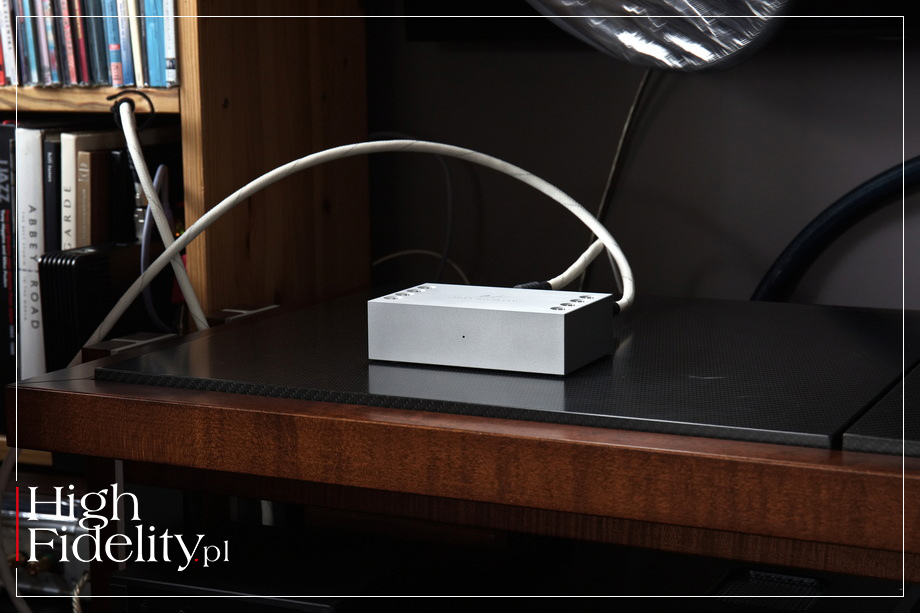
The fact that it exists is obvious – that's basic knowledge. However, the interpretation of measurements and their translation into real changes in sound is still, to a large extent, terra incognita and a field of activity for both engineers seeking answers and swindlers and dishonest manufacturers. However, this should not be a reason to haughtily refuse to participate in this race. In order to achieve any results, one must make the effort and combine knowledge based on the so-called present state of research with the results of listening tests, i.e., examination by inspection, which is the basic method of conducting science. Solutions used in audio are rarely exclusive to our field and are usually modified patents that have already been tested. But they are always, always modifications. Experience teaches us that a simple, direct transfer of these products to an audio system does not bring the expected results and often even causes more harm than good. As an example, I usually cite the story of the Acoustic Revive RPC-1K power supply filter. It won't hurt to do it again. The RPC-1K filter circuit is based on research conducted by Mr. Jun Shibata. Mr. Shibata is a very interesting person – he developed the prototype of the infrared optical computer mouse that almost all of us use today. While working on it, he found that high-frequency noise in AC power lines was significantly hindering the development of the prototype. As I wrote when testing the first version of the filter, based on his observations, Mr. Shibata-san built a filter that eliminated these interferences. The same applies to LAN filters. From a technical point of view, this is nothing new; such products are used as standard in all network (computer) systems susceptible to interference. However, industrial solutions do not work well in audio. Fortunately, there are manufacturers in our industry who have taken up this challenge – with success, we might add. These companies have many years of experience in products of this type and usually collaborate with local universities and engineers associated with the industry. But some rely on their knowledge and experience, aided by good hearing. Among them, the most important, at least for me, seem to be: the Japanese company Acoustic Revive, the Polish JCAT, and the American Audioquest, with British companies iFi Audio and English Electric also showing significant activity in this field. AB-Tech fits nicely into this elite group. ▲ A few simple words… ALEXANDER BLADELIUS 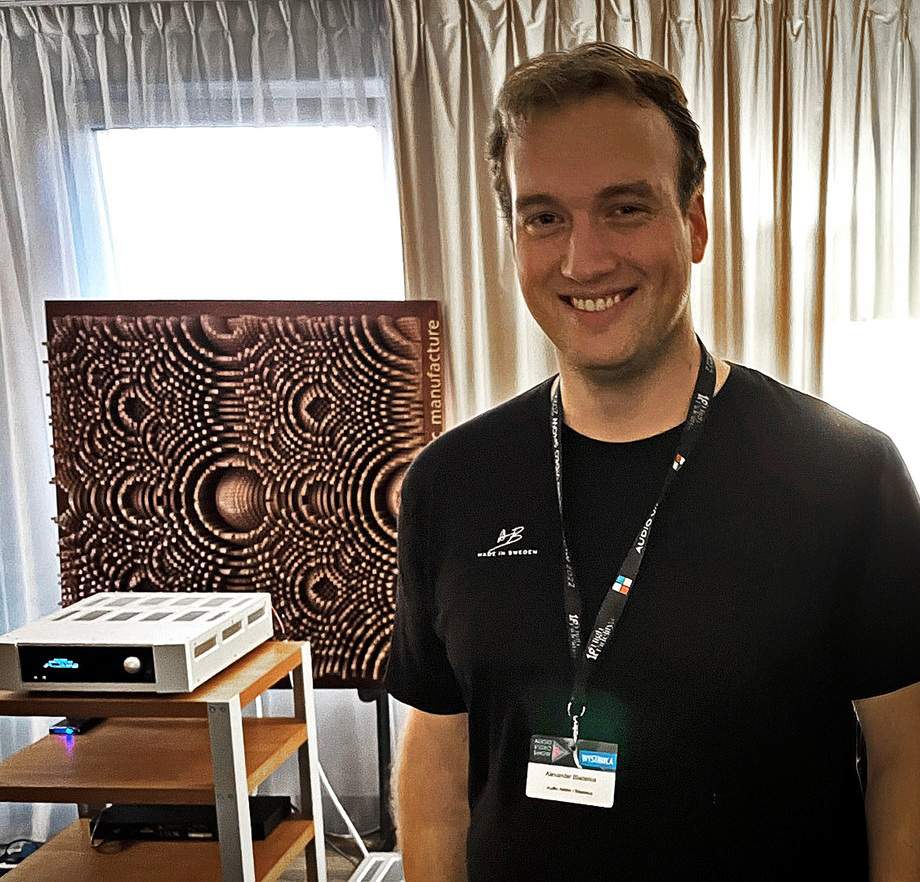
| Alexander Bladelius at the 2020 Warsaw Audio Video Show MY CHILDHOOD was not like most. I grew up with amplifiers with no lid, sitting on the floor for burn-in, listening to music in the sound room, and having vacations in cities where some audio show was taking place. As a child, I was more interested in listening to music than anything else. I remember helping with listening to different prototypes to determine what should go into production from an early age, and later I started working in the Bladelius production. It was first in my early twenties that I actually started working more and more with development. 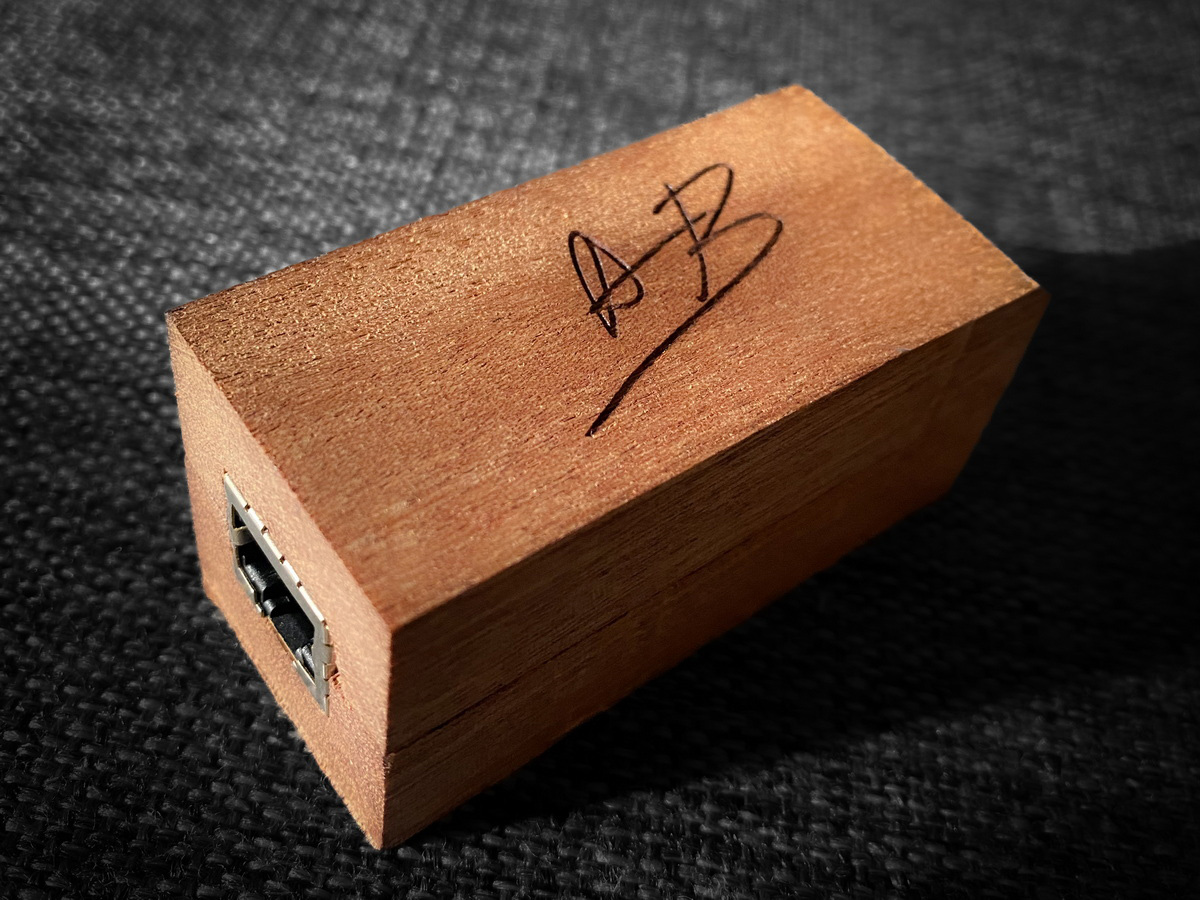
| Early prototype of the REN filter, still in its wooden casing The AB Tech brand started out with us needing something to improve the sound at shows (where there is always a lot of noise). So I came up with an Ethernet isolator to eliminate noise and ground issues. It was never intended as a product that would go into production, but the feedback I received was so great that I decided to go for it and launched the first product, REN. 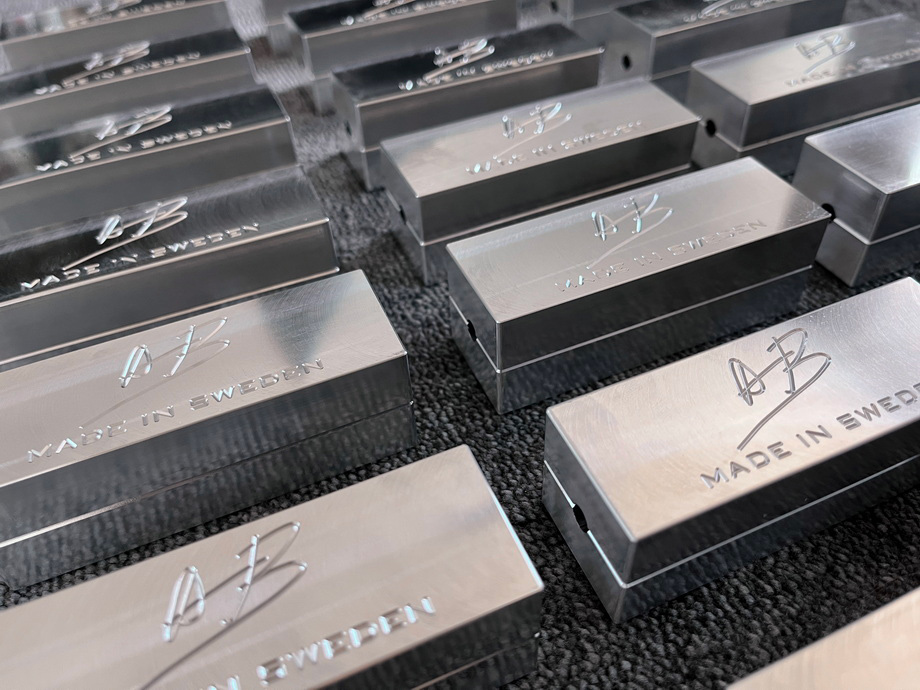
| The final aluminum housing for the REN filter A few years and a few different products later, I wanted to see if it was possible to take that first product and try to make it better. The new Ethernet isolator STILL, is a completely new design with multi-stepped galvanic isolation (that significantly lowers the noise floor in each step) for both signal and ground paths, and a high-frequency filter to eliminate noise. This removes jitter, EMI, RFI, and ground-loop artifacts, ensuring nothing but the actual signal is being transferred. 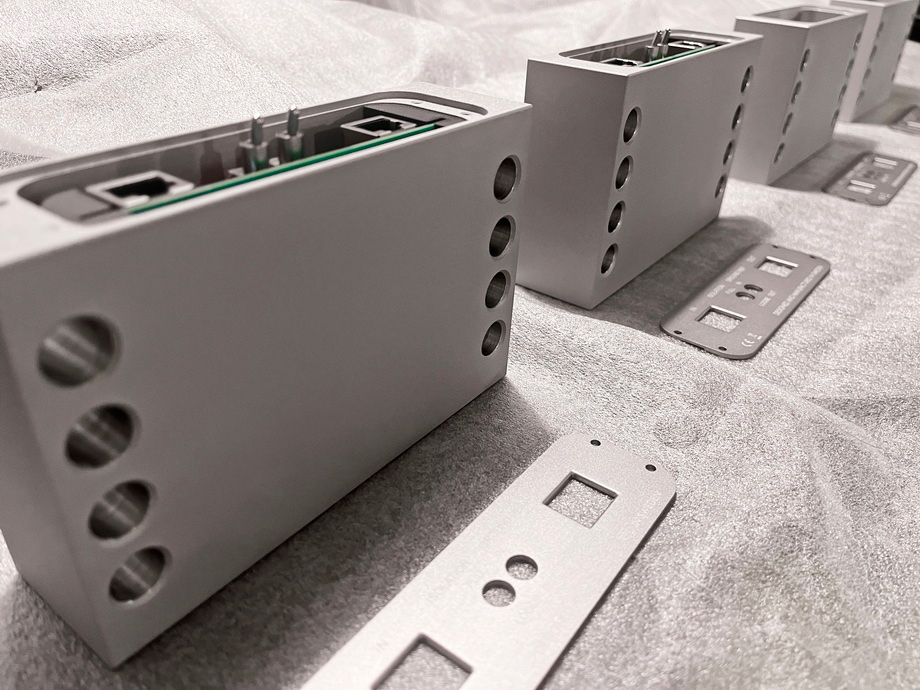
| For comparison, a production version of the Still housing. The user can choose between full and ‘loose’ isolation, as well as choose either in or out as the ground reference, with switches on the back. This allows the user to customize it to what their system needs and get the best possible sound. »AB ▓ Still A GLANCE AT AB-Tech's latest product, a LAN filter called Still, makes you want to take a closer look at this company. Although many people refer to this product as an accessory, it is made just like any other full-fledged component of an audio system. 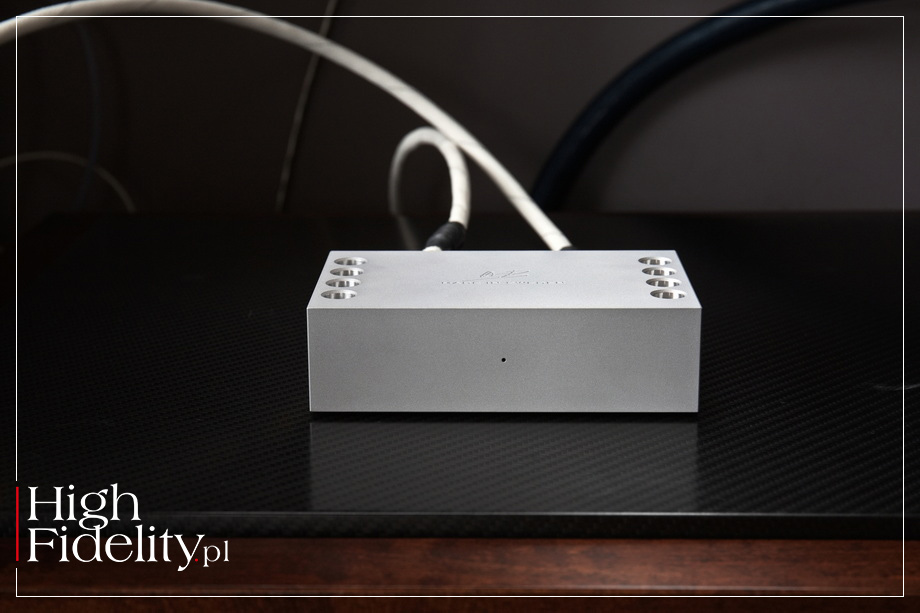
Still is used to suppress high-frequency noise originating from the LAN. It is designed as an interface between a router (or LAN switch) and a player/file transport. When you take it out of the shipping box, you are holding a solid piece of aluminum. It is a small but solidly built, really nice device measuring 149 x 42 x 93 mm and is surprisingly heavy. It features two RJ45 (LAN) ports: input and output. Between them are two switches that extend its functionality and help us adapt it to a specific system. Switch No. 1 allows you to select the reference point for shielding (input – “IN” or output – ‘OUT’), enabling users to define the ground reference point to “optimize noise suppression and system stability.” Switch No. 2, on the other hand, allows users to select the isolation level (“Loose” or ‘Full’), enabling them to “adjust the degree of signal separation to achieve the desired transmission quality in different audio environments.” In the quick start guide, Alexander writes that it is best to start with the “OUT” and “Full” settings and then experiment with different combinations of all available settings. From the very beginning, the AB-Tech brand has been recognized for the great importance that Alexander, the chief engineer and founder of the company, attaches to the mechanical aspects of his products. These are not plastic Acoustic Revive filters or metal, but small products from iFi Audio, Audioquest, and other manufacturers of this type. Still is different. And before we start turning up our noses, let's remember how much we spend on anti-vibration products in audio systems, and then it will put things into perspective. Therefore, the information that the electronic circuitry is flooded with resin, which insulates it from the enclosure, should come as no surprise. Nowadays, this is a rare method because it makes servicing difficult, but it used to be popular among loudspeaker manufacturers, who used it to protect crossovers. 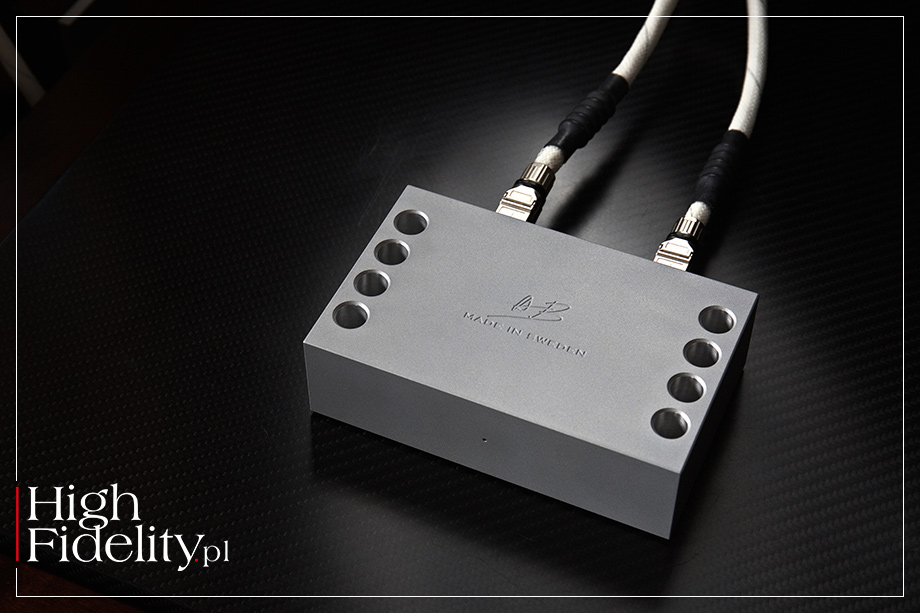
Still is small, but for a passive device, it is really big. And what's really cool, it resembles the powerful Bladelius amplifiers, both in terms of proportions and the holes that look like heat sinks in the company's Class-A Oden II; more about this device → HERE. The manufacturer writes about the filter’s housing:
Milled from a single block of non-magnetic, high-grade aluminum, the unibody chassis provides robust shielding against external EMI/RFI while facilitating efficient thermal management. The internal assembly is suspended in a proprietary viscoelastic damping material to suppress mechanical vibrations and microphonics, reducing resonance-induced noise in the audio chain.
⸜ Still, → www.AB-TECH.se, accessed: 4.12.2025. |
I repeat: is it exaggeration? – I don’t think so… The device is delivered not in just any box, but in a sturdy case, similar to the one in which Dirk Sommer and I present the Statement in High Fidelity awards, and shooting enthusiasts transport their pistols. And since there are no coincidences, this year's award went to Alexander's father, Mike Bladelius; more → HERE. 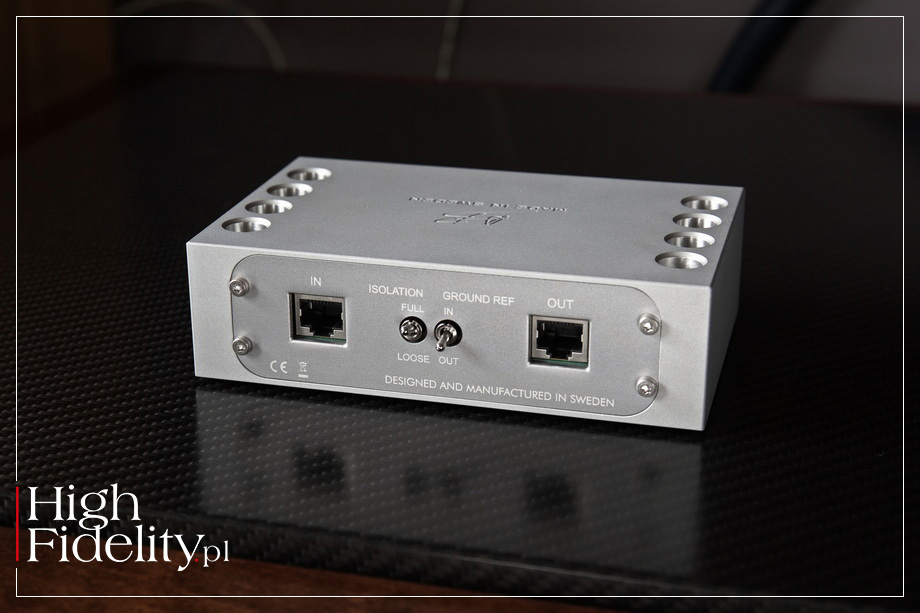
AB-Tech Still is a mature, very well-made product. And really expensive... ▓ SOUND HOW WE LISTENED • The AB-Tech Still filter was tested in the HIGH FIDELITY reference system. Files were played from the Lumin X2 player. The signal was fed directly from the FunBox 3.0 router via an Acoustic Revive LAN-Quadrant Triple-C WB LAN cable (system ˻ I˺). After connecting the Still filter to the system, the signal was fed to it from the router and to the file player using the same cable. 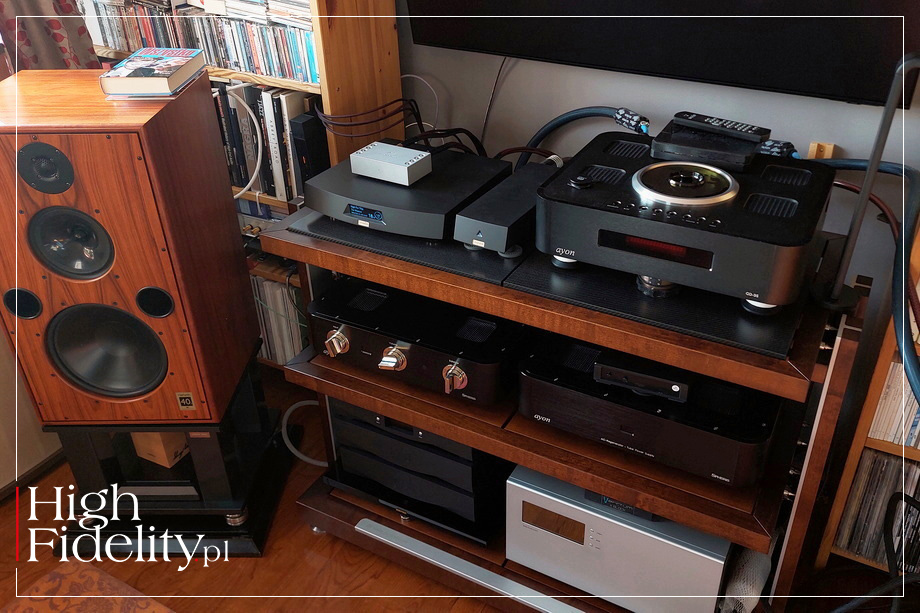
The test system, therefore, looked like this:
SYSTEM ˻I ˺ 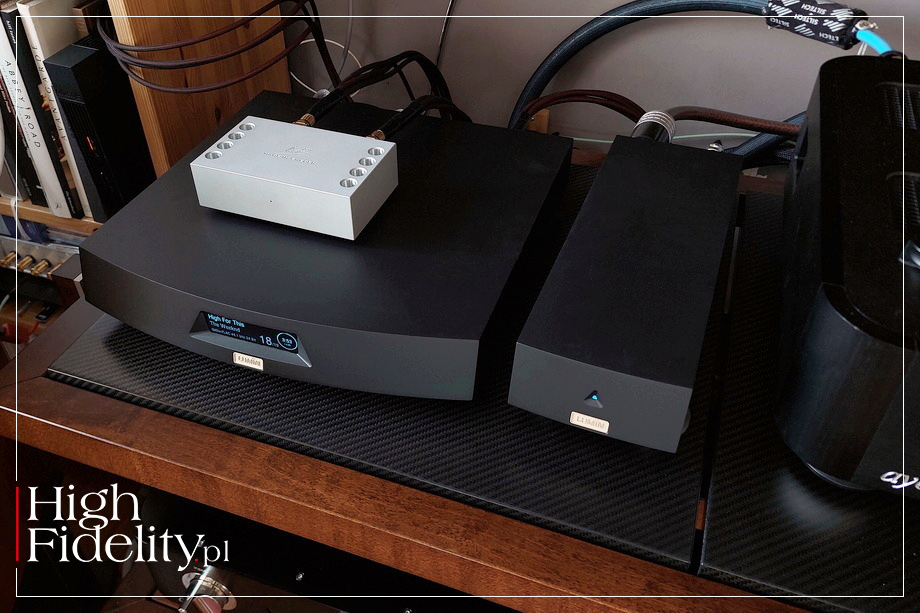
» RECORDINGS USED FOR THE TEST ⸜ a selection
⸜ VERA LYNN, Silver Memories: Our Vera, Decca Music Group/Tidal, FLAC 16/44,1 ⸜ 2016. TO BE HONEST, I expected the AB-Tech filter to deliver results similar to those offered by LAN switches. Ultimately, in both cases, it is about “conditioning” the way audio files are transmitted and removing artifacts, mainly noise, from them. Interestingly, Still did something different than, for example, the Xact or Silent Angel switches that I listened to in my system. 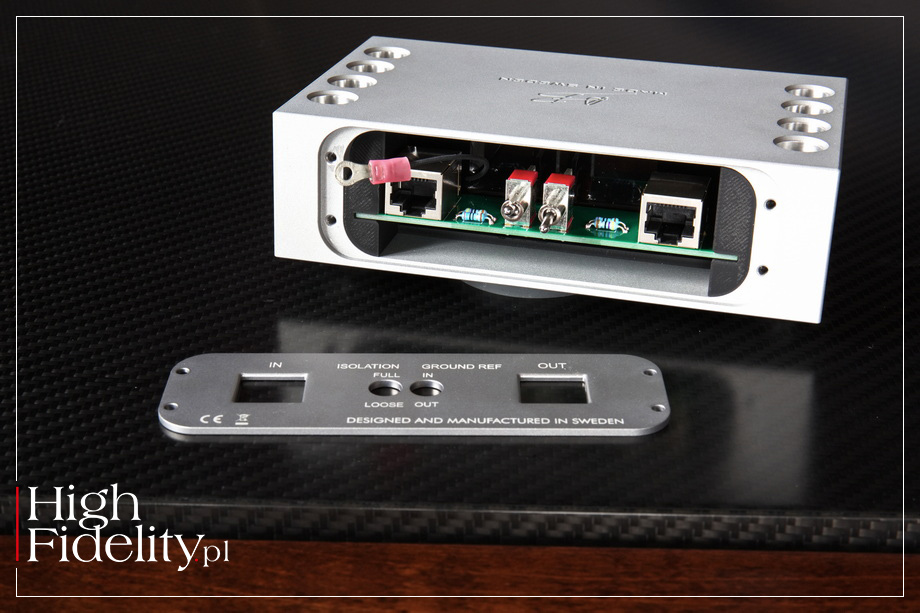
First of all, the sound with the filter was not warmer. Yes, it was a more pleasant sound, but not because of the elimination of artifacts caused by noise, which is the case with LAN switches. That was not the case here either, but the tonal balance did not change. I even felt that the sound had opened up. This is an entirely subjective impression because VERY LYNN's voice from the archival recording ˻ 2 ˺ We’ll Meet Again, dating back to 1939, was smoother, prettier, and also more accurate. That is, it was more clearly marked that she was not standing in one place with the orchestra or the choir, which was about to join in. So I could listen to music a little louder without the unpleasant “shrillness” effect that can be a problem with older recordings. But only if something in the system (or the recording transfer) went wrong. In the system without the filter from Sweden, Lynn's vocals sounded perfect. They had high energy, nice phrasing, and were not muted. But with Still, it gained refinement – because that's probably how I would describe it. Not by covering anything up, not by cleaning up the background, but by increasing the resolution. LAN switches also carry sound in this direction, but via a different route. With the tested filter, it seems shorter and simpler. It's as if we were getting more of everything without changing the character of the recording. First and foremost, as I said, more energy, but also momentum. Yes, the momentum with the filter was greater, as was the tangibility of the sound. The latter was improved not by bringing it closer to us, which is not the case here, but by emphasizing the momentum more strongly and conducting the sound as a whole more clearly. That's why the processed vocals in ˻ 2 ˺ The Game of Love by DAFT PUNK from Random Access Memories album were clearer and more engaging with AB-Tech. And the bass, which was already very low, gained in terms of fullness. This did not change the tonal balance; what I said about it at the beginning remains true. However, there was something “more” – not “more” in terms of quantity, but rather intensity. It was as if there were more sounds in the bass, not more fullness. It was as if the sound had become saturated, but not through emphasis. 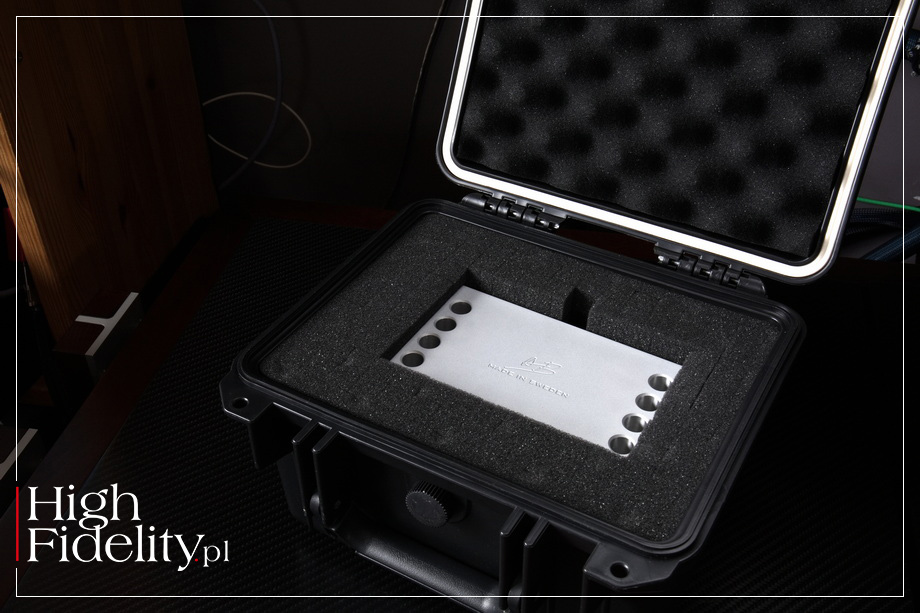
As far as I can tell, this is the main principle behind this filter. Even with such an excellent player as the Lumin X2, Alexander's little box gives a feeling of freshness and fullness. And it does so without “contouring” the sound or brightening it. This is how ˻ 1 ˺ Moanin’, the title track from ART BLAKEY's album, sounded. I know it really well because I have been listening to it on various devices for years. And it was with this track that what I wrote came out best. When the entire Jazz Messengers band struck right before the number “one” appeared on the player's display on the time bar, the strike with the filter in the system had more energy; it was stronger. It didn't pull the sound to the bright side, but I had the impression that everything was clearer, that everything was unfolding more precisely in front of me. And it wasn't even an emphasis on the attack. This can be done quite easily; just replace the AC power cable with a generic one, and you will get a clearer picture. But also a sound without body and flat in dynamics. With the Still filter, the effect seemed similar because the sound was more “jerky.” But it was completely different because there was also better filling and differentiation. And the sound was somehow more mature. The latter became apparent immediately when I played ˻ 1 ˺ Autumn Leaves from CANNONBALL ADDERLEY's album entitled Somethin' Else (as you can see, apostrophes play an important role in jazz titles...). Hank Jones' piano, previously strong and full, gained mass with the filter in the track, as did the rhythm section of Sam Jones and Art Blakey. Interestingly, Davis' trumpet, which introduces the main theme of the song, seemed more delicate, as if more melancholic. I think there was simply more emotion in it. It was a richer and, at the same time, clearer, more energetic sound. I heard it every time, with every subsequent song. Also with ˻ 1 ˺ Everything in Its Right Place by RADIOHEAD. The low pulse of the bass underneath, Yorke's fairly high vocals, sampled voices across the channels, the atmosphere of “something” coming around me – all this was emphasized and brought out by the Swedish filter. ▓ Summary IT IS AMAZING how much work needs to be done to make file playback realistic and get good sound out of it. This task is almost as time-consuming and costly as working with a turntable. Compared to them, CDs seem almost maintenance-free. But when done right, the results can be truly excellent. 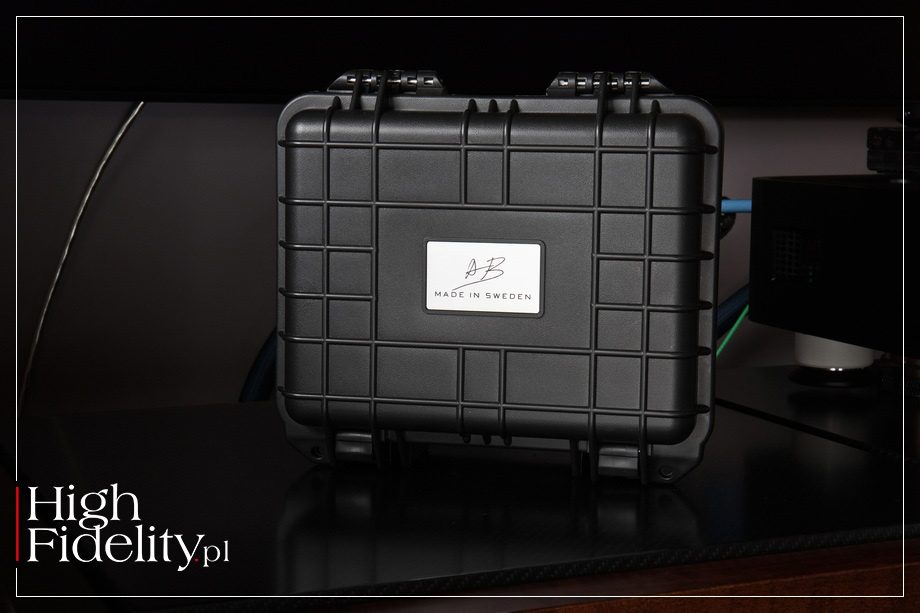
The AB-Tech filter can help us with this. It adds energy, power, and clarity to the sound. It does not brighten it but rather complements it. It even fills it out, although the tone of the sound does not change. The fullness and even the weight that I heard must, therefore, result from the greater amount of information we receive due to filter’s presence in the setup. It's simply better performance, better sound, and a more satisfying experience. What’s more, we can achieve that by using a device that can be plugged into the system at any time without changing its (the system's) character. It will simply get better. And more interesting. ● 
THIS TEST HAS BEEN DESIGNED ACCORDING TO THE GUIDELINES adopted by the Association of International Audiophile Publications, an international audio press association concerned with ethical and professional standards in our industry, of which HIGH FIDELITY is a founding member. More about the association and its constituent titles → HERE. |
 |
|
Reference system 2026 |
|
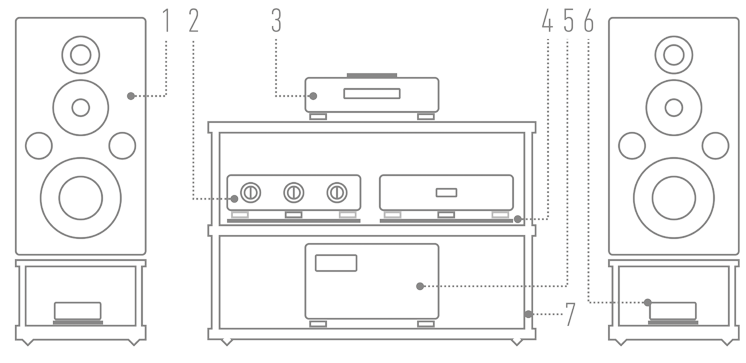 1) Loudspeakers: HARBETH M40.1 |REVIEW| 2) Line preamplifier: AYON AUDIO Spheris III Linestage |REVIEW| 3) Super Audio CD Player: AYON AUDIO CD-35 HF Edition No. 01/50 |REVIEW| 4) Stands (loudspeakers): ACOUSTIC REVIVE (custom) |ABOUT| 5) Power amplifier: SOULUTION 710 6) Loudspeaker filter: SPEC REAL-SOUND PROCESSOR RSP-AZ9EX (prototype) |REVIEW| 7) Hi-Fi rack: Hi-Fi rack: finite elemente MASTER REFERENCE PAGODE EDITION Mk II, more → HERE |
|

|
Cables Analog interconnect SACD Player - Line preamplifier: SILTECH Triple Crown (1 m) |ABOUT|» ANALOG INTERCONNECT Line preamplifier → Power amplifier: Siltech ROYAL SINLGE CROWN RCA; review → HERE Speaker cable: SILTECH Triple Crown (2.5 m) |ABOUT| |

|
AC Power Power cable | Mains Power Distribution Block - SACD Player: SILTECH Triple CrownPower (2 m) |ARTICLE| » POWER CABLE Mains Power Distribution Block → Line preamplifier: Acoustic Revive ABSOLUTE-POWER CORD, review → HERE » POWER CABLE Mains Power Distribution Block → Power amplifier: Acoustic Revive ABSOLUTE-POWER CORD, review → HERE Power cable | Power Receptacle - Mains Power Distribution Block: ACROLINK Mexcel 7N-PC9500 (2 m) |ARTICLE| Power Receptacle: Acoustic Revive RTP-4eu ULTIMATE |REVIEW| » ANTI-VIBRATION PLATFORM under Acoustic Revive RTP-4eu ULTIMATE: Graphite Audio CLASSIC 100 ULTRA, review → HERE Power Supply Conditioner: Acoustic Revive RPC-1 |REVIEW| Power Supply Conditioner: Acoustic Revive RAS-14 Triple-C |REVIEW| Passive filter EMI/RFI: VERICTUM Block |REVIEW| |

|
Anti-vibration Speaker stands: ACOUSTIC REVIVE (custom)Hi-Fi rack: finite elemente MASTER REFERENCE PAGODE EDITION Mk II, more → HERE Anti-vibration platforms: ACOUSTIC REVIVE RAF-48H |ARTICLE| » ANTI-VIBRATIONAL FEET: |

|
Analogue Phono preamplifier: Phono cartridges:
Clamp: PATHE WINGS Titanium PW-Ti 770 | Limited Edition Record mats:
|

|
Headphones » HEADPHONE AMPLIFIER: Leben CS-600X, review → HEREHeadphones: Headphone Cables: Forza AudioWorks NOIR HYBRID HPC |