


|
DIGITAL TO ANALOG CONVERTER GARLUBIDOR
Manufacturer: DENAFRIPS |

 |
 |
 |
|
Review
text by WOJCIECH PACUŁA |

|
No 260 January 1, 2026 |
⌈ GARLUBIDOR is a new brand, a subsidiary of Denafrips, established this year (2025). Denafrips itself also belongs to a larger entity, but it is not known which one. We are testing the more expensive of the two currently available D/A converters, the Divinity. ⌋ I AM SURE THAT WE ARE WITNESSING something like a breakthrough. There are quite a few brands with Chinese roots on Western markets, but this is only a fraction of what is sold in China itself or, more broadly, in Asia. The breakthrough I am thinking of is the rapid increase in the presence of companies from the Middle Kingdom, as the Chinese think of themselves, in European and US markets. Everyone agrees that the quiet development of this superpower has come to an end and a phase of open expansion is beginning. 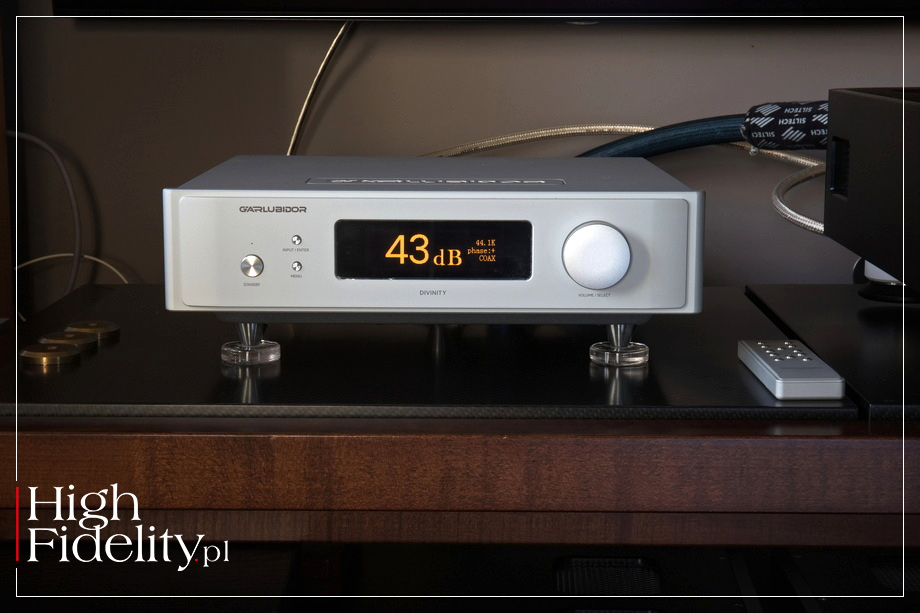
This is all the more likely given that products labeled “Made in China” have long been not only as good as their “domestic” counterparts, which we have known for years, but often better made, more neatly finished, ingeniously and securely packaged, and—importantly—cheaper. This does not mean that they are always cheap, as the market is very diverse, but they are cheaper than their direct competitors manufactured locally in Italy, the UK, Poland, Australia, or the US. Interestingly, Chinese companies themselves are looking for opportunities to expand by developing their offers not only vertically, i.e., building them around price, but also horizontally, developing side projects. Like the one we are talking about. We read:
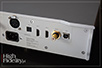
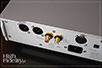
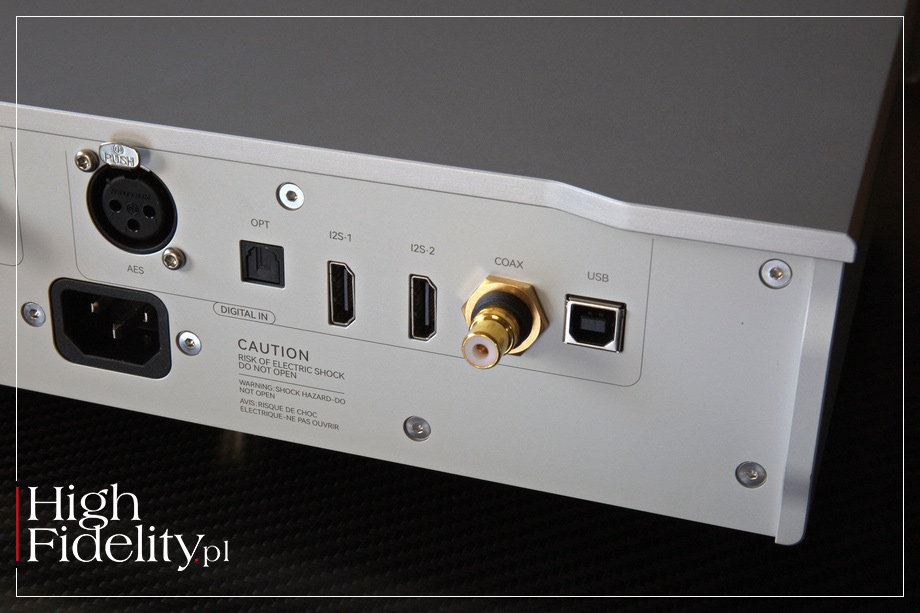
Unlike companies from Europe, our knowledge of manufacturers from the PRC is poor because they create an extremely complex, opaque financial system. In addition, there is an overlap between the competences of private investors and the state. An example of this is the fact that we usually cannot even find their address-es, let alone their financial results. This is also the case with the new brand we are talking about. That is why, for some time, Garlubidor presented itself as an independent manufacturer, as can be seen in the “About us” tab I quoted above. In reality, it is a subsidiary brand, part of Denafrips, which we know for its excellent digital-to-analog converters, such as → TERMINATOR PLUS, which we tested in 2021, or → ARES, which we tested back in 2019. It should be added that the owner-founder of this company and its chief designer is Mr. Zhao Bing Ran. ▌ Divinity DIVINITY IS A DIGITAL-TO-ANALOG CONVERTER (DAC). It features six digital inputs, including USB, coaxial RCA, optical Toslink, AES/EBU, and two I2S (HDMI sockets). The digital signal is clocked by two, as the manufacturer assures, “high-end” clocks, independently for frequencies of 45.1584 MHz and 49.152 MHz, which are characterized by “low phase noise”. These are nice-looking VDC, or Voltage-Controlled Oscilla-tor (VCO). The DAC also uses a digital FIFO input buffer in which the signal is overclocked (“re-clocking tech-nology”) based on algorithms stored in the FPGA. The USB input is also a proprietary solution that uses an STM32F446 USB controller with ARM architecture. The USB and I2S inputs accept PCM signals up to 24 bits, 1536 kHz, and DSD up to DSD1024. The other inputs accept PCM signals up to 24 bits, 192 kHz, and DSD (as DoP) up to DSD64. 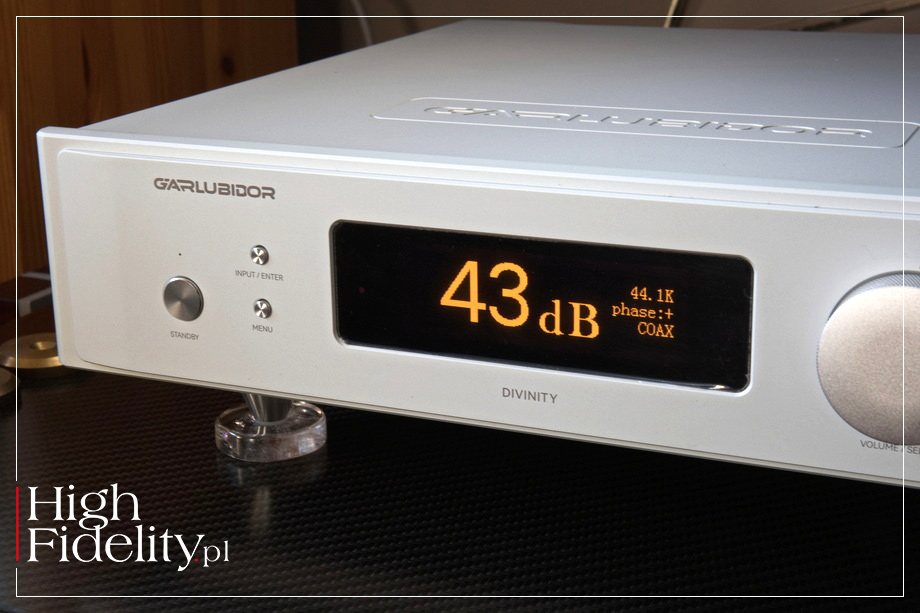
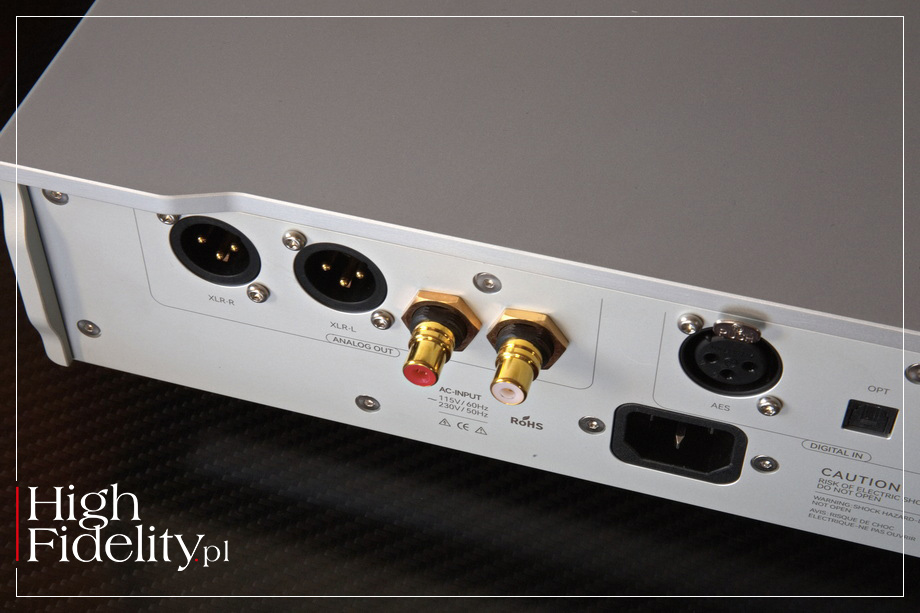
Low-noise integrated circuits are used in the analog output. The signal can be sent externally either from a bal-anced XLR or an unbalanced RCA outputs. The entire circuit, including the R-2R circuit, is a balanced de-sign. Volume control is performed in the converter circuit, but it is not known whether this is done in the dig-ital or analog domain. If the tested device did not have a label with its name, it could easily be confused with products from the parent company. However, it differs from them in two key respects: there is a display on the front panel in-stead of LEDs, and thanks to the output voltage (volume) control, the DAC can be connected directly to a pow-er amplifier or active speakers. The manufacturer presents its converter as follows:
And we already know that the most important information is how the digital signal is decoded. This is not done in integrated circuits from Cirrus Logic, Burr-Brown, AKM or ESS Technology, but in in-house-made discrete circuits. These are circuits containing separate resistors with switches controlled by an FPGA chip with a proprietary algorithm. Let's add that this is a converter that does not use oversampling, called NOS. ▲ (Non)Oversampling 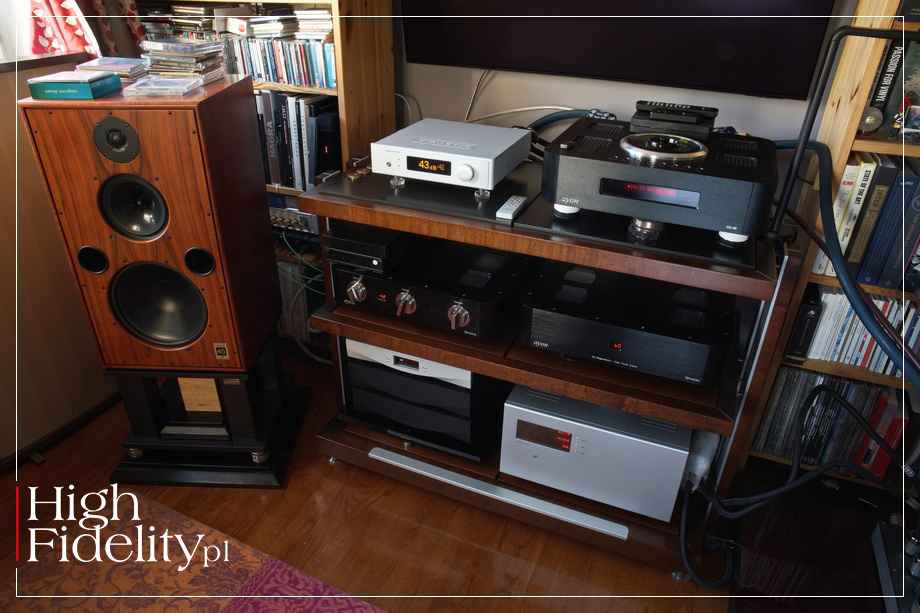
WIKIPEDIA SAYS that oversampling is the process of sampling a signal at a sampling frequency significantly higher than the Nyquist frequency. And further:
This technique was invented because engineers needed a way to overcome the limitations of steep analog filters and the inaccuracy of early digital-to-analog converters. Wikipedia emphasizes that it was also about reducing the cost of D/A circuits. In the early years of “digital” audio, converting digital signals to analog required filters that were difficult to build and often degraded sound quality through phase problems and unnatural “ringing” of the digital signal. Oversampling shifted these problems to a much higher frequency range, allowing designers to use gentler filters while reducing noise and distortion. However, something was lost in the process. Non-oversampling (NOS) digital-to-analog converters, while technically imperfect, eliminate certain artifacts by eliminating digital filters at the input, resulting in a generally more pleasant, warmer sound. ● FROM A TECHNICAL POINT OF VIEW, this solution is called R-2R. It is the core around which Mr. Zhao Bing Ran has been building subsequent devices since 2012. Each channel of the tested device is equipped with an in-dependent high-speed CPLD (Complex Programmable Logic Device) and four sets of resistor networks with a tolerance of 0.005%, which allows for “ultra-low distortion and minimal background noise”. It is a 24-bit (multi-bit) chip for PCM signals and a 6-bit chip for DSD (32-level FIR filter). The converter from China looks really nice. Its casing is made of solid aluminum plates and stands on three aluminum cones. As I mentioned, its distinguishing feature is a large, attractive, easy-to-read – simply cool – 3.12-inch OLED screen that makes it easy to manage the converter's functions. Next to it there is a knob that controls the output voltage; the Divinity can be connected directly to a power amplifier or active speakers, bypassing an external preamplifier. The manufacturer writes about it:
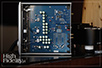
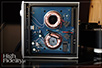
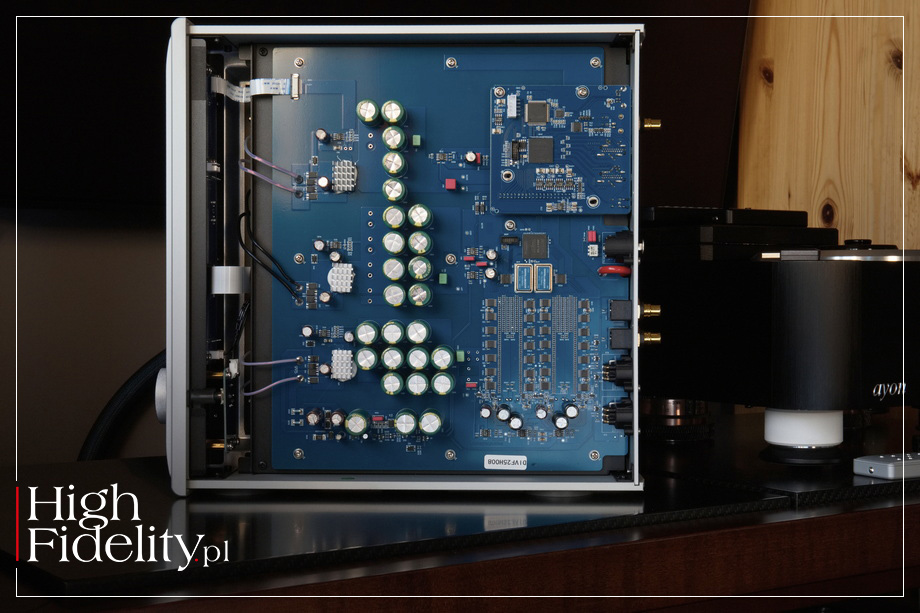
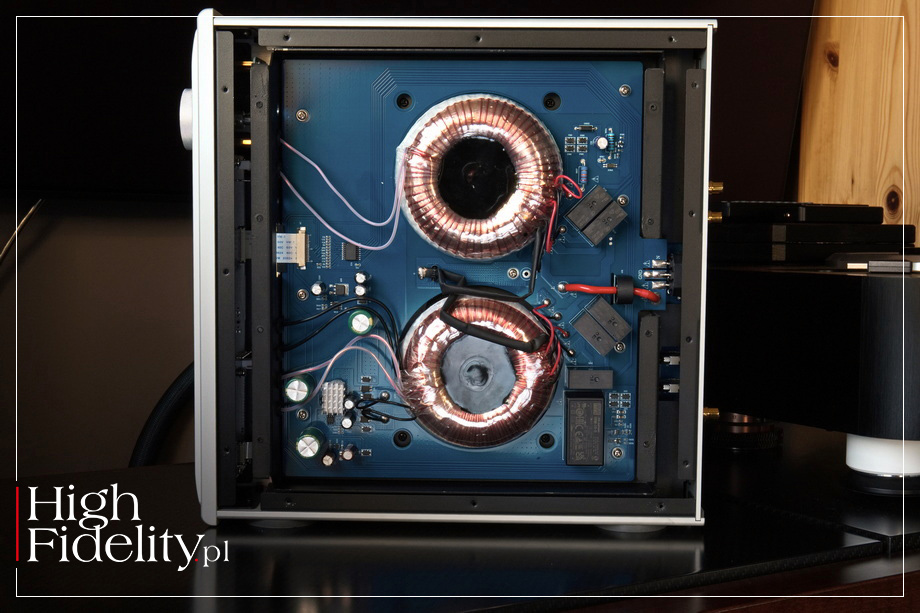
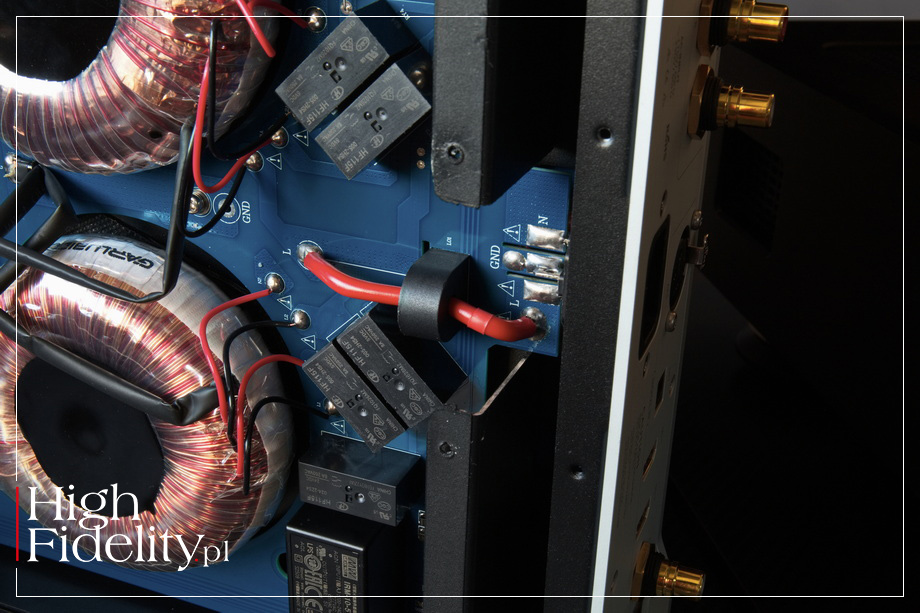
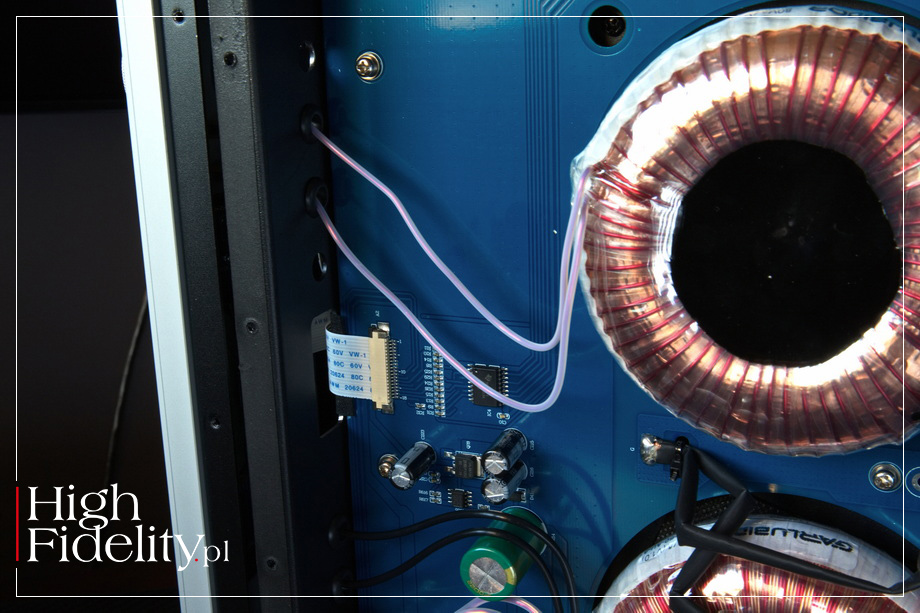
Using the button and knob, we can navigate through the menu, where we can change the absolute phase, swap channels, and mute the input. The device can also be controlled using a small, somewhat crowded remote control labeled GRC-2. The device is very well-made and features attractive components, such as capacitors in the power sup-ply made for this brand, marked “for Audio”, and two large toroidal transformers, which enable independent power supply to the digital and analog sections, also custom-made for this manufacturer. Capacitors, it should be added, have a large combined capacity, there are many of them and they are small. This is an increasingly popular choice, aimed at improving charging and discharging speeds. The power supply has multi-stage regulation, and the capacitors have a low ESR (Equivalent Series Resistance), i.e., internal, real resistance. 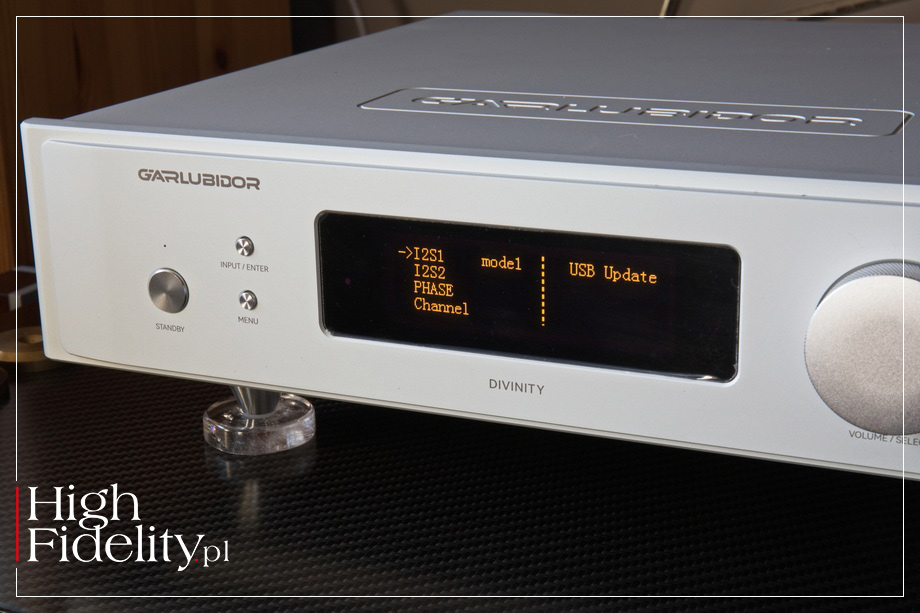
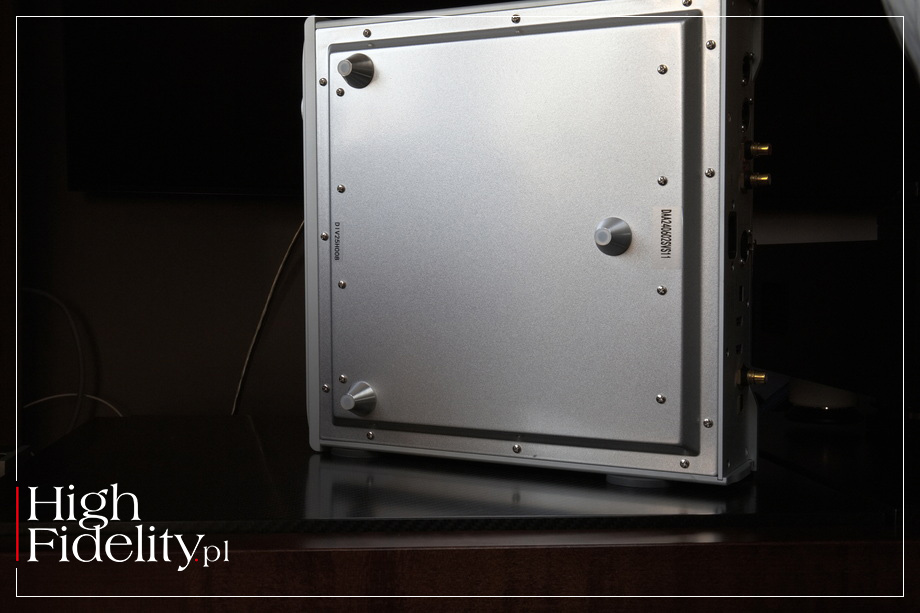
The chassis is exceptionally complex, as there are steel screens inside the aluminum shell that divide the interior into two parts. The manufacturer refers to this arrangement as “box-in-box” concept, with the power supply hidden in an additional structure made of 1.5 mm steel sheet. This protects the main circuit from power supply interference. According to the manufacturer, where present, the wiring is made of pure silver. The device stands on three aluminum cones with silicone pads underneath. An audio circuit board is mounted in the upper part, and a power supply in the lower one. The components of the latter are also on the main board. And again, the details: the ground is carried by a thick cable with a high-frequency filter, the transformer cables are long, so there is no need to “splice” them, etc. Truly – top class design. ▌ SOUND HOW WE LISTENED • The Garlubidor Divinity digital-to-analog converter was tested in the HIGH FIDELITY reference system. It was compared to the D/A section of the Ayon Au-dio CD-35 HF Edition SACD player, which also functioned as a transport. The external signal was sent via Crys-tal Cable Absolute Dream unbalanced interconnects. I performed a separate listening test by connecting its out-put directly to the input of the Soulution 710 power amplifier via unbalanced Siltech Single Crown intercon-nects. 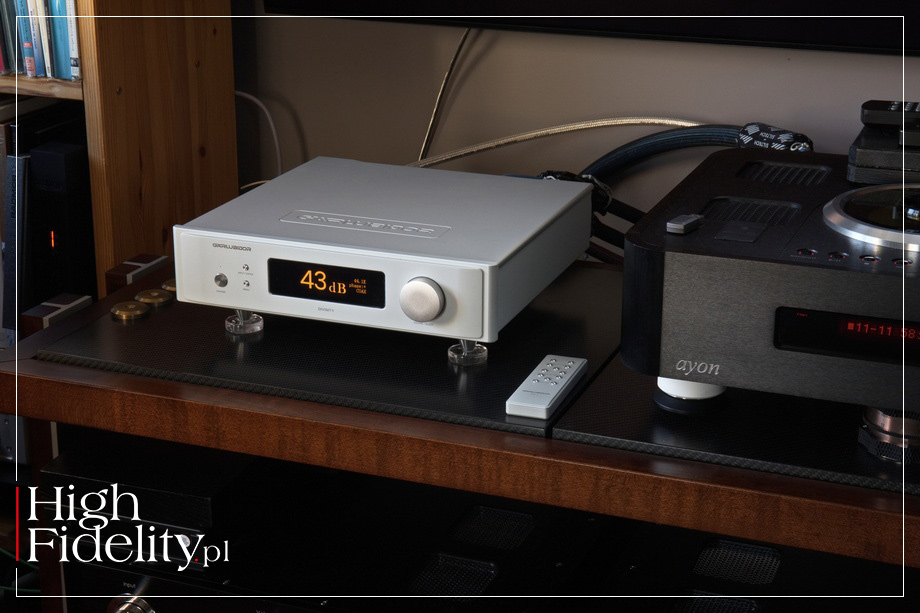
The digital output of the Ayon with the converter input was connected with an RCA → RCA Acrolink Mex-cel 7N-DA6100 II digital interconnect. The DAC was powered using an Acrolink Mexcel 7N-PC9100 cable and placed on the top shelf of the Finite Elemente Master Reference Pagode Edition Mk II rack. » RECORDINGS USED FOR THE TEST ⸜ a selection
⸜ FRANK SINATRA, Duets II, Capitol Records C2 7243 8 28103 2 2, Reference CD-R ⸜ 1994. |
D/A CONVERTERS FEATURING DISCRETE R-2R CIRCUITRY share a common approach to sound. They differ from each other depending on how they have been applied, even significantly, but the “core” is the same for all of them. In short, it is sweetness. Especially when combined with the lack of oversampling, as in Divinity. This is a captivating device, as in its performance there is no trace of aggression. When in ˻ 2 ˺ Come Fly With Me, a song from FRANK SINATRA's album Duets II, in which he sings with Luis Miguel, the full orchestra strikes, and with the tested device it is large and pow-erful. But it also has a gentle attack and a smooth sound. It's as if we had wrapped everything in silk. This is im-portant – not plush, but silk. 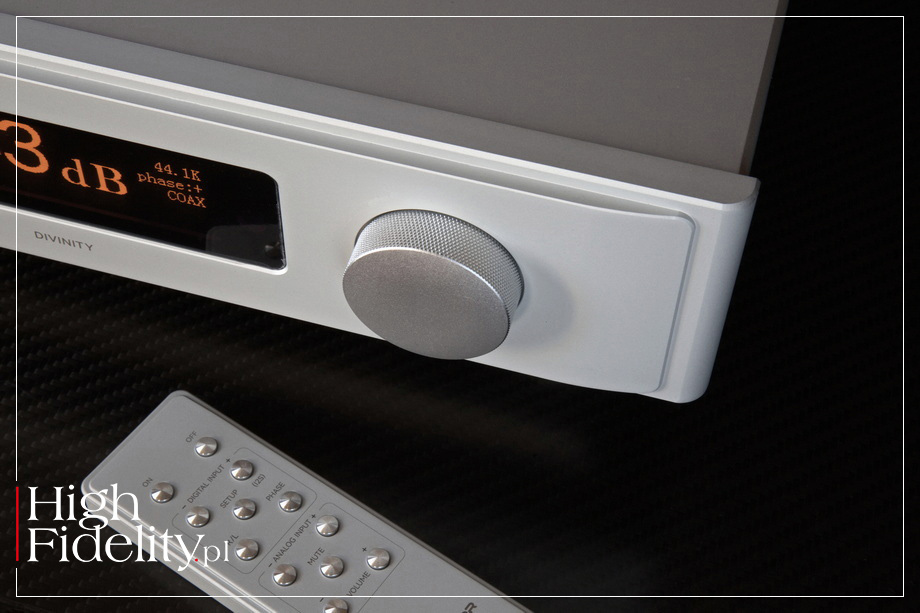
It's not so much about reducing the amount of high frequencies, because there are plenty of them, as can be heard in the next track on the album, ˻ 2 ˺ Bewitched. Patti La-belle sings very high at the very end, which was not softened by the withdrawal of this range. It sounded expressive and resonant. That's why I emphasized the difference between smoothing and dulling (plush) and smoothing with shine and smooth openness (silk). The Chinese converter tends to arrange everything on stage in a nice way. In the sense that when I hear a slight brightening in Sinatra's voice with the Ayon, for example in ˻ 5 ˺ Moonlight in Vermont, it is toned down with the Garlubidor. And that's how I would generally perceive it – as neat playing. That is, nice, pleasant, internally organized and – another important feature – very clean. Interestingly, these are not big changes, yet they significantly affect the final result. The edges of the band seem to be withdrawn in relation to the midrange, but – again – only slightly. And yet we get the impression that Divinity is all about the dense, saturated, actually warm middle of the band. The energy of the high and low frequencies is high, so it's not about taming the “momentum”. It's more about their consistency, which is full and at the same time restrained. That is why, when the TSUYOSHI YAMAMOTO TRIO strikes the cymbals in the title track ˻ 1 ˺ Blues for Tee, the cymbals strike, they are clear and give the whole piece its ”drive“. The double bass in the right channel also ”swings", playing in a way that suggests the possibility of dancing (which was, in fact, the origin of jazz). The piano had a good, clear attack. In fact, the upper midrange is delivered by the tested DAC clearly and powerfully. More clearly than with the Ayon. That is why this smooth and warm sound is not muted, but – as a whole – has a lot of energy. When, at the end of JEAN-MICHEL JARRE's album entitled Electronica 1: The Time Machine, per-formed with JJ Lang, somewhere around 0:32, a bright sound comes in behind and above us, the Chinese DAC shows it more clearly, more powerfully, more unambiguously than most of the converters I have tested recently. This is not important in itself, but it shows how the device shapes the presentation. It is not the most selective DAC in this price range, but it has very high resolution. The low tones are dense and massive, which in this track translates into a large scale. But still, it is the midrange, including its upper range, that seems more im-portant, with more information in it. The vocals of Wojciech Waglewski from the album Za niebawem, the aforementioned voice of Sinatra, but also the Beatles from the sampler released on the occasion of the premiere of the 2009 remasters, were all smooth, pleasant, but not at all muted. ▲ Micro-test ACOUSTIC REVIVE QSB-3810 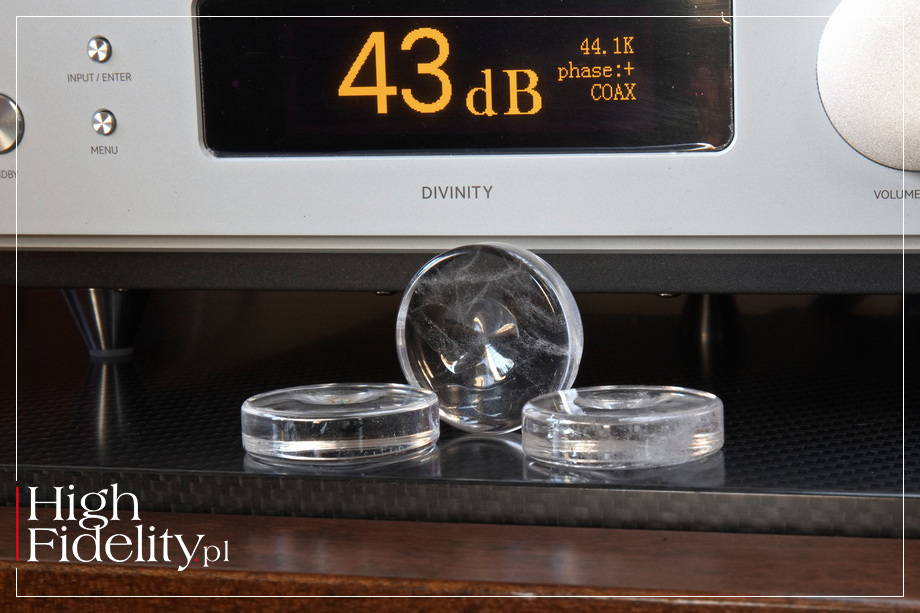
YOU CAN LAUGH, I encourage you to do so – laughter is good for us. However, I cannot pretend that I do not hear what I hear: Acoustic Revive's spike pads change the sound. I am familiar with this effect, as I have been using the company's RIQ-5010 quartz discs for years. And yet, every time I have the opportunity to hear something new like this, I wonder how much we still don't know and how much can be improved in sound. Even if we previously thought that everything was OK with it. That is why placing the QSB-3810 under the feet of the Garlubidor Divinity DAC changed what came out of the speakers. It improved the sound, let's add. It became denser and more resolving. I listened and listened, put discs in and took them out, and each time I got the same result – denser, warmer, lower. And at the same time, more resolving. As if there were more sounds “there”. 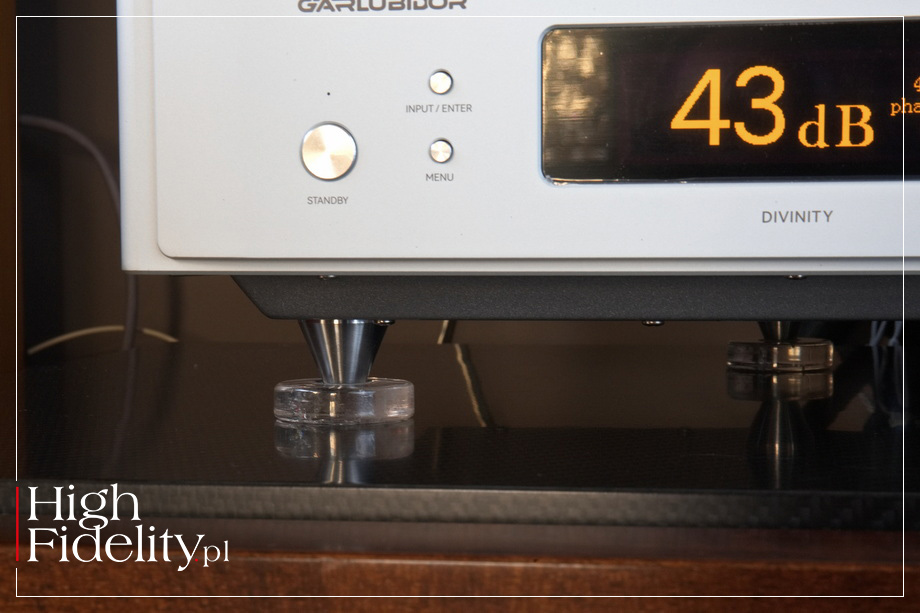
Duke Ellington's piano from the album The Great Summit, recorded with Louis Armstrong, was stronger and more resonant, but also less “bright”. I don't know how else to put it, but that's how I per-ceive it. As if everything had become more serious, more mature. It's not that it was bad without Acoustic Re-vive pads. But with them, it was better, in my opinion – much better. And the cool thing is that it's a clear change, which everyone will hear, regardless of what kind of mu-sic they listen to and whether they've ever had any contact with audiophile equipment. In fact, this might be a good tip – ask someone who doesn't really understand your passion but likes music to listen to a song “with” and “without” these pads. You will see that listening to their impact on the sound without prejudice and in good faith will open your eyes. 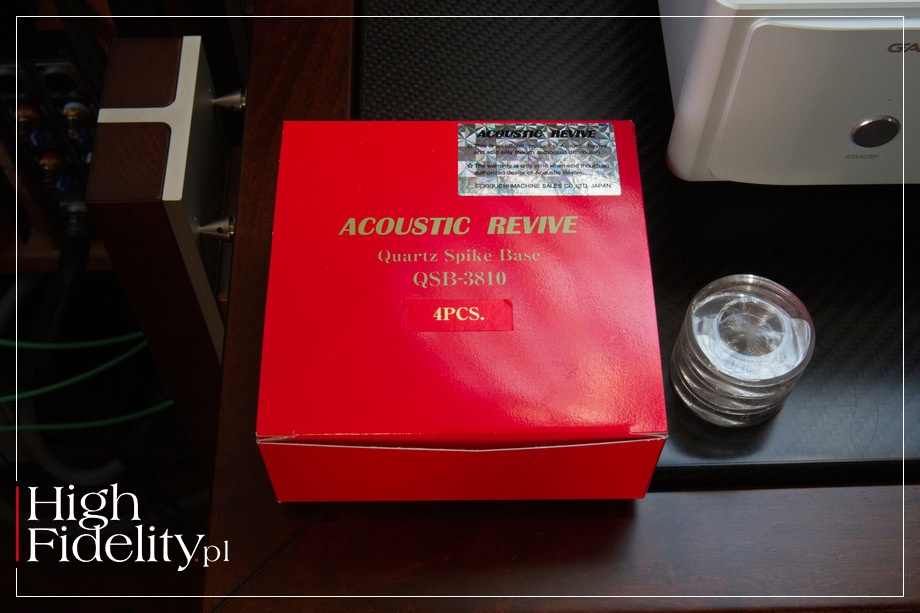
Finally, let's add that the discs are sold in boxes of three or four pieces, with a diameter of 38 mm and a height of 10 mm. In the center, there is a 3-millimeter, fairly wide recess that fits both sharp-ended and ampule cones. In my case, the QSB-3810s will work under the feet of the Sforzato PMC-05EX clock. I can sincerely recommend them. ● ALL EVENTS ON STAGE are shown legato with the tested Converter. They flow rather than fol-low, if you know what I mean. The fairly clear remastering of the Beatles' album, which I mentioned a moment ago, was somehow ‘maintained’ by the tested converter. This is because the vocals were presented as a larger whole, without being clearly categorized and itemized. It was a group, not individual voices. But when the powerful drums kick in at the very beginning of track ˻ 4 ˺ Things We Said Today, Divine presented them in just that way – powerful, almost aggressive. The same goes for the electric guitar that appears briefly in the right channel. It was even more powerful than with the ref-erence player, which was particularly noticeable with the tambourine, which was more biting and clearer. 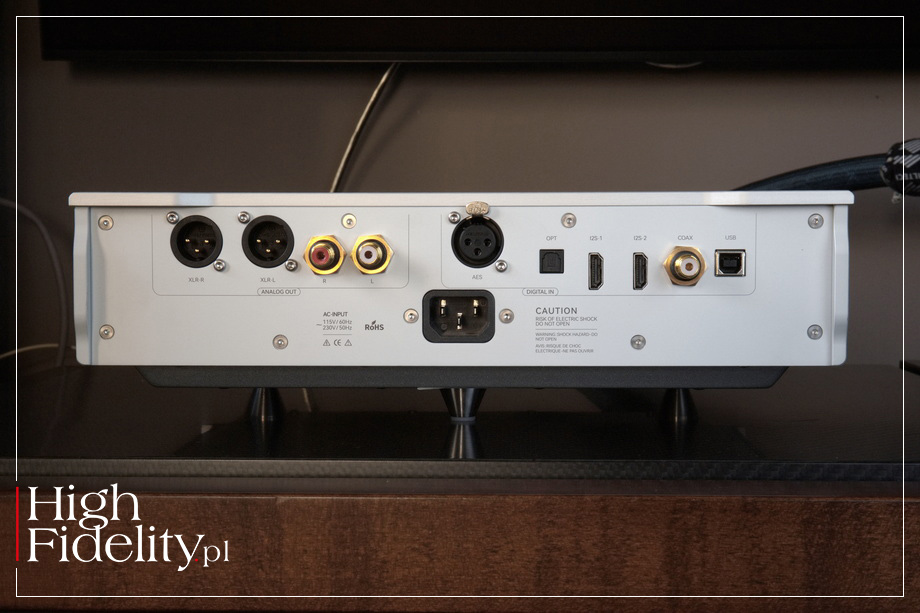
That is why I was surprised by the conclusion I reached after some time, that the tested device sounded best, most “on point”, with recordings that cause problems for other converters, i.e., rock and pop record-ings. On the one hand, it smooths out their aggressive attack, and on the other, it boosts the upper midrange, leaving a strong, warm mid-part. As in ˻ 13 ˺ Layla, Clapton's iconic song from the album DEREK AND THE DOMINOS The Layla Sessions. It's a rare combination, don't you agree? It may not have as many details as other DACs in this price range, but the whole thing will be more interesting. The whole album played fast, seemingly clearly, yet smoothly with the Garlubidor. The device showed the foreground slightly closer than the reference player, and the background pulled forward. This is not a DAC that would in any particular way celebrate the differences in the position of sound sources or clearly separate them from each other. When they are strongly separated, as in the closing track of the aforementioned album, 14 ˺ Thorn Three on the Garden, that is how they will be presented. But even so, there will be a kind of “glue” between them that connects them rather than separates them. PREAMPLIFIER • Removing the expensive preamplifier always “makes a dif-ference”, for the worse. This was also the case here. The sound stage narrowed and flattened, and the differentiation between instruments was less clear. But at the same time, the characteristics represented by the DAC itself, i.e., smoothness, clarity, and fluidity, did not disappear. In other words, one could call it tube sound. The DAC without an external preamplifier demonstrated a full bandwidth, deep bass, and powerful treble. It was not, as usual, thin or more anemic. On the contrary, the attack was clearer and more contoured. The whole thing was lively, energetic, and powerful. The space was also good, although an external preamp would probably help the most in this respect. But it is not as necessary as it usually is. In most mid-range systems, you can easily connect a power amplifier to Divine and it will be really cool. Try, for example, Norse Audio X1 with X5 power supply (a new brand by Mike Bladelius) – it will be a perfect combination! ▌ Summary The TESTED digital-to-analog converter produces a rich sound. At the same time, it is open and based on a dense midrange. Its lower range is full, and when Armstrong sings, as on the album The Great Summit, his voice is slightly deepened, somewhat drawn out in the low registers. 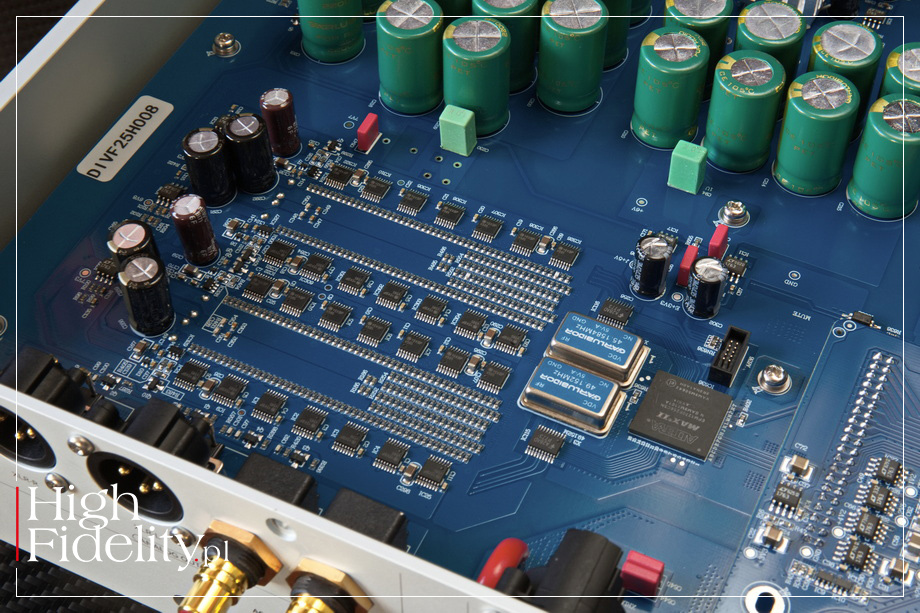
And it is a smooth sound. Not selective, not expressive, but smooth. In other words, it must finally be said, very pleasant. It does not impose itself on anything, thanks to which not only cool jazz tracks, but also electronic and rock music sound great with this converter. The latter two types of albums should be particularly appealing. The sound will be powerful, close to us, clean, smooth, and open. And it is a smooth sound. Not selective, not expressive, but smooth. In other words, it must finally be said, very pleasant. It does not impose itself on anything, thanks to which not only cool jazz tracks, but also electronic and rock music sound great with this converter. The latter two types of albums should be particularly appealing. The sound will be powerful, close to us, clean, smooth, and open. ▌ Technical specifications (according to the manufacturer):
Digital inputs: USB, optical, coaxial RCA, AES/EBU, 2 x I2S (HDMI): 
THIS TEST HAS BEEN DESIGNED ACCORDING TO THE GUIDELINES adopted by the Association of International Audiophile Publications, an international audio press association concerned with ethical and professional standards in our industry, of which HIGH FIDELITY is a founding member. More about the association and its constituent titles → HERE. |

 |



|
Reference system 2025 |
|
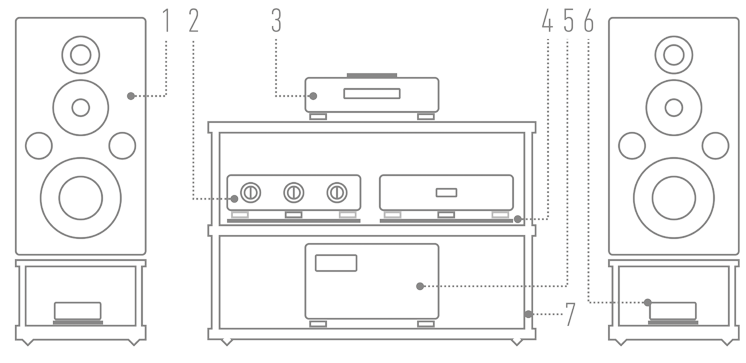 1) Loudspeakers: HARBETH M40.1 |REVIEW| 2) Line preamplifier: AYON AUDIO Spheris III Linestage |REVIEW| 3) Super Audio CD Player: AYON AUDIO CD-35 HF Edition No. 01/50 |REVIEW| 4) Stands (loudspeakers): ACOUSTIC REVIVE (custom) |ABOUT| 5) Power amplifier: SOULUTION 710 6) Loudspeaker filter: SPEC REAL-SOUND PROCESSOR RSP-AZ9EX (prototype) |REVIEW| 7) Hi-Fi rack: Hi-Fi rack: finite elemente MASTER REFERENCE PAGODE EDITION Mk II, more → HERE |
|

|
Cables Analog interconnect SACD Player - Line preamplifier: SILTECH Triple Crown (1 m) |ABOUT|» ANALOG INTERCONNECT Line preamplifier → Power amplifier: Siltech ROYAL SINLGE CROWN RCA; review → HERE Speaker cable: SILTECH Triple Crown (2.5 m) |ABOUT| |

|
AC Power Power cable | Mains Power Distribution Block - SACD Player: SILTECH Triple CrownPower (2 m) |ARTICLE| » POWER CABLE Mains Power Distribution Block → Line preamplifier: Acoustic Revive ABSOLUTE-POWER CORD, review → HERE » POWER CABLE Mains Power Distribution Block → Power amplifier: Acoustic Revive ABSOLUTE-POWER CORD, review → HERE Power cable | Power Receptacle - Mains Power Distribution Block: ACROLINK Mexcel 7N-PC9500 (2 m) |ARTICLE| Power Receptacle: Acoustic Revive RTP-4eu ULTIMATE |REVIEW| » ANTI-VIBRATION PLATFORM under Acoustic Revive RTP-4eu ULTIMATE: Graphite Audio CLASSIC 100 ULTRA, review → HERE Power Supply Conditioner: Acoustic Revive RPC-1 |REVIEW| Power Supply Conditioner: Acoustic Revive RAS-14 Triple-C |REVIEW| Passive filter EMI/RFI: VERICTUM Block |REVIEW| |

|
Anti-vibration Speaker stands: ACOUSTIC REVIVE (custom)Hi-Fi rack: finite elemente MASTER REFERENCE PAGODE EDITION Mk II, more → HERE Anti-vibration platforms: ACOUSTIC REVIVE RAF-48H |ARTICLE| » ANTI-VIBRATIONAL FEET: |

|
Analogue Phono preamplifier: Phono cartridges:
Clamp: PATHE WINGS Titanium PW-Ti 770 | Limited Edition Record mats:
|

|
Headphones » HEADPHONE AMPLIFIER: Leben CS-600X, review → HEREHeadphones: Headphone Cables: Forza AudioWorks NOIR HYBRID HPC |