


|
ANALOG INTERCONNECT RCA WK AUDIO
Manufacturer: WK AUDIO |

 |
 |
 |
|
Review
text by WOJCIECH PACUŁA |

|
No 259 December 1, 2025 |
|
˻ PREMIERE REVIEW ˼ ⌈ WK AUDIO is Witold Kamiński's company, established in 2017 in Plichtów, near Łódź. An architect by profession, music enthusiast, and author of columns in “High Fidelity” on culture in the broad sense, he offers three series of cables: the top-of-the-line TheRed, the mid-range TheRay, and the entry-level TheOne. We are testing the RCA Basic analog interconnect from the mid-range TheRay series for the first time. ⌋ IT MIGHT SEEM that developing new cables is incredibly easy. We look for a good cable manufacturer, i.e., one that offers high-quality products and is not overly expensive, we find a mesh sleeve for these cables to hide their origin, maybe we even remove the labels unless we can get a version without them, find good plugs or plugs that audiophiles consider reliable, and we're done! 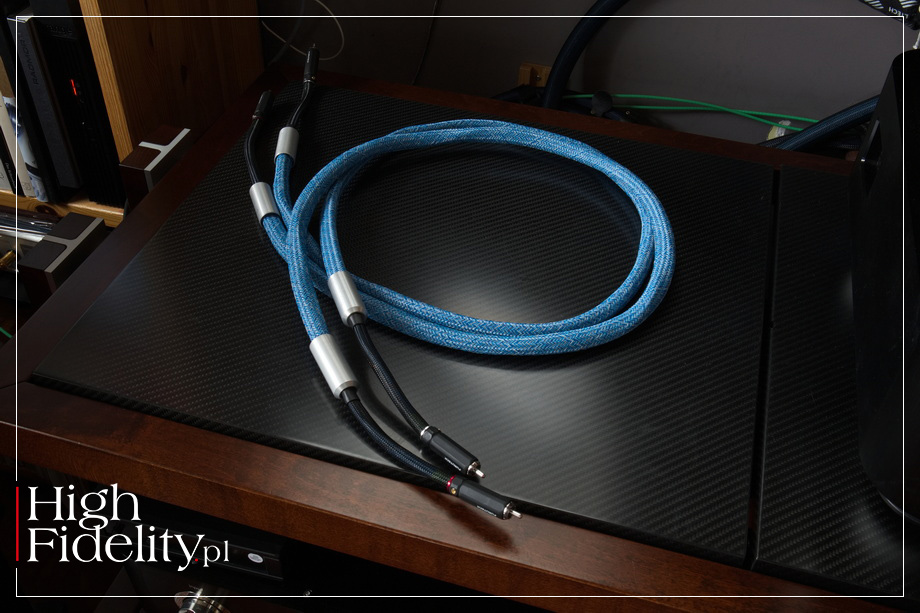
It must be said that this is not reprehensible in itself. Among many mediocre products, we occasionally find really cool combinations. Each cable with each plug introduces different changes to the signal it transmits, which means – as we say in audio – it sounds different. However, such a product will never be better than its components, and may even be worse if we do not approach the matter honestly and listen to the available options first, but instead do it blindly. This is how Frankenstein is created. Interestingly, the largest manufacturers operate in a similar manner. However, “similar” does not mean “the same”. This is because they control both the components of the cable – conductors, anti-vibration elements, filters, temperature treatment (cryogenic or heating) – and the plugs. Examples of this approach are Furutech, Oyaide, and Siltech. Usually, most of them are made in-house. So it's a completely different level – not even a level, but a whole different universe. But there is yet another way. This is the domain of small, boutique manufacturers, but real ones. They buy the conductors or cables to get conductors from them. Sometimes they order short series of conductors, but this is rare. They choose specific solutions from the available range that they find interesting and then select the dielectric of their choice. These are usually Teflon tubes or silk – the latter is mainly used in Japan. And finally, the most important thing – the cables prepared in this way are braided or arranged in a way that has been developed by the manufacturer, covered with a shielding layer(s) or not, anti-vibration elements are added, an external jacket (which also affects the sound), and finally terminated with plugs chosen based on experiments. This is how a noble, handcrafted work looks like. This is also how WK Audio cables, the “brainchild” of Witek Kamiński, are made. ▲ A few simple words… WITOLD KAMIŃSKI
owner & designer 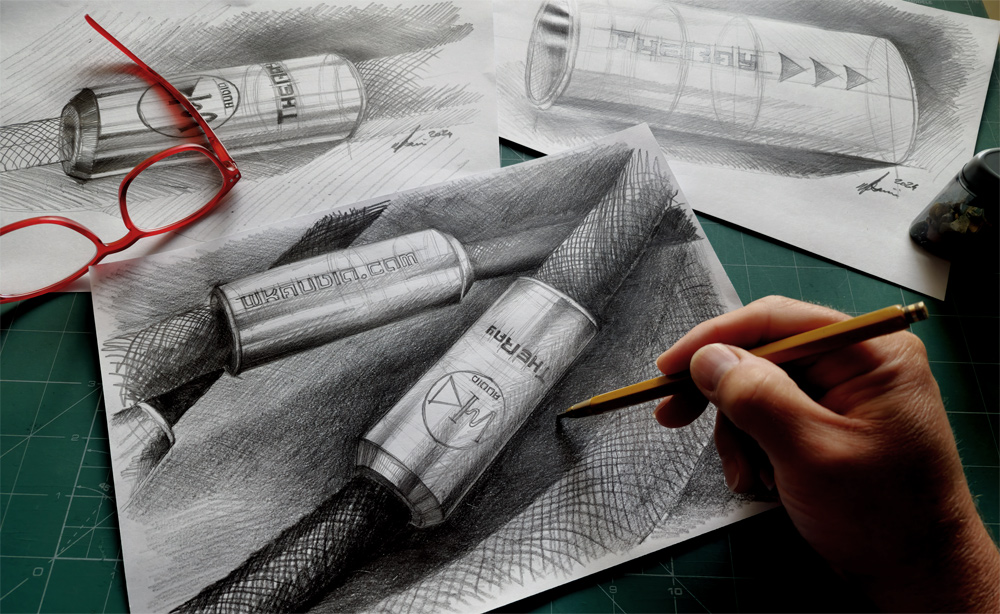
THE EXPERIENCE GAINED during work on the top-of-the-line TheRed series was utilized in the design process of TheRay interconnect cable. Many materials and solutions were also taken from TheRed series. TheRay RCA interconnect, like the cables from the top-of-the-line TheRed series, is an absolutely original design, 100% handmade, using only original solutions and materials. Great emphasis was placed on selecting the optimal cable geometry and special vibration-damping materials, matched to the materials used as conductors. 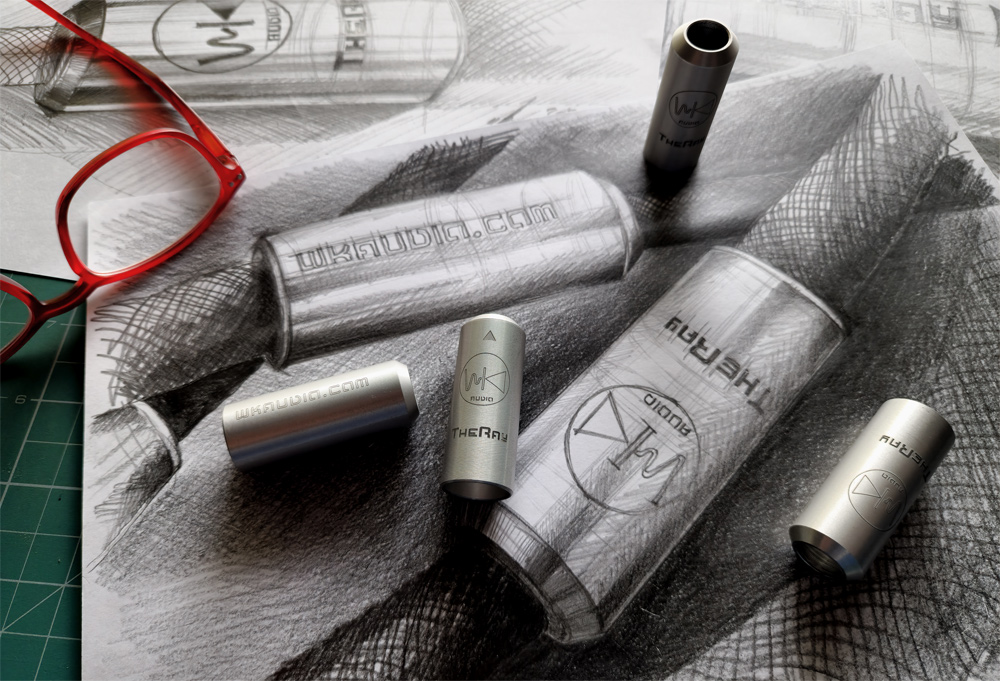
The signal is transmitted via pure silver wires. Silver-plated oxygen-free copper and very high purity copper were also used in the construction of the cable. This original mixture allows for maximum utilization of the sound potential of silver, while eliminating the typical symptoms of this material, such as sharpness, brightening, and “thinning” of the sound. TheRay RCA interconnect cable is double shielded. The inner shield is made of silver-plated OFC copper, and the outer shield is made of high-purity copper. WK THERAY SERIES CABLES can be found in the WK Audio range below the top-of-the-line TheRed. The company's materials say the following about them:
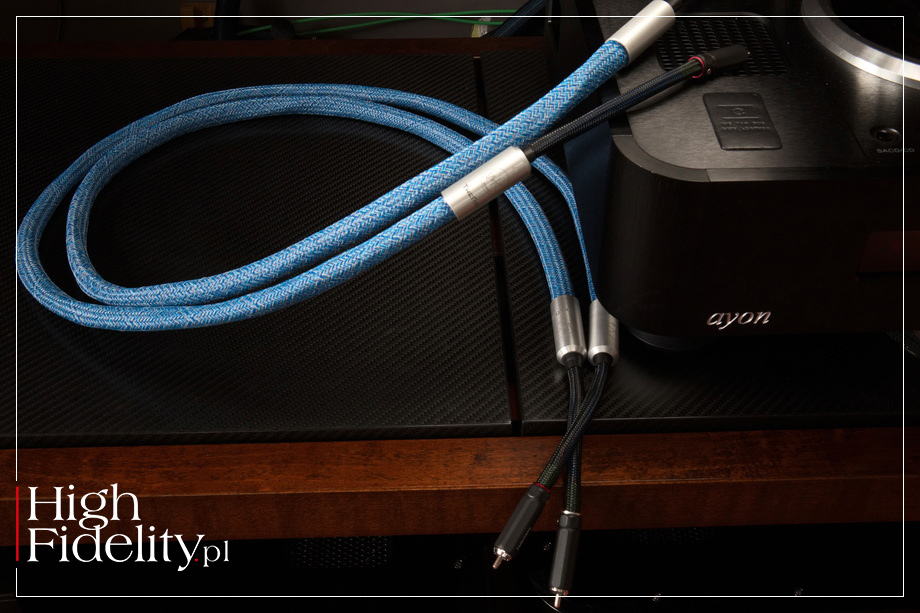
The manufacturer also adds that the design process was about achieving a specific sound: “The rays of the underwater sun reflecting off the crystal-clear surface of the water. Energy and transparency blending together.” This blend is intended to produce a “neutral-sounding cable with very high resolution, dynamics, and vitality.” A cable, we read further, that “shows music from its energetic and emotional side, without forgetting the details and nuances hidden within it.” To achieve this goal, Witek Kamiński reached for a silver conductor. However, as we have read, he believes that silver as such thins and sharpens the sound. I completely disagree with this opinion, as I have had different experiences with cables of this type. I attribute this behavior of silver simply to bad designs and poor conductors. But I understand that the WK Audio designer wanted to bring out a sound with special characteristics, at the opposite end of the spectrum from “thinness”, but still transparent and vibrant, hence his comments. That is why he added silver-plated OFC copper to the silver conductors. The manufacturer does not disclose the cable's construction because he does not want it to be copied. After all, it is the result of many hours of listening and prototyping. So we do not know what role copper plays here, since the signal is carried by a silver conductor. What we do know is that the cables feature a proprietary braid and are hand-braided in a proprietary topology. The conductors are protected from EM and RF interference by a double shield. The inner shield is made of silver-plated OFC copper, and the outer shield is made of “high-purity” copper. As I once wrote in my review of TheRed interconnect, classic interconnects were and still are coaxial, i.e. concentric designs with one or more conductor run(s) placed inside an outer shield. This is a proven method of eliminating the impact of high-frequency interference on the signal. However, it has its problems, related to the fact that such a cable behaves like a low-pass filter. That is why many companies have moved away from this type of design and eliminate interference through their own geometry of insulated conductors, signal and ground. It seems that WK Audio cables are manufactured using this solution. A mesh in a “marine” color was used as an external jacket of TheRay interconnect. “Ray” in English means a stingray, but in this case it was meant to refer to its other meaning: a ray (of light, of hope). The sections of the vibration-protected cable are finished with attractive metal sleeves engraved with the logo, series name, and connection direction. According to Witek, their production was preceded not only by various designs, but also by listening tests to confirm the selection. 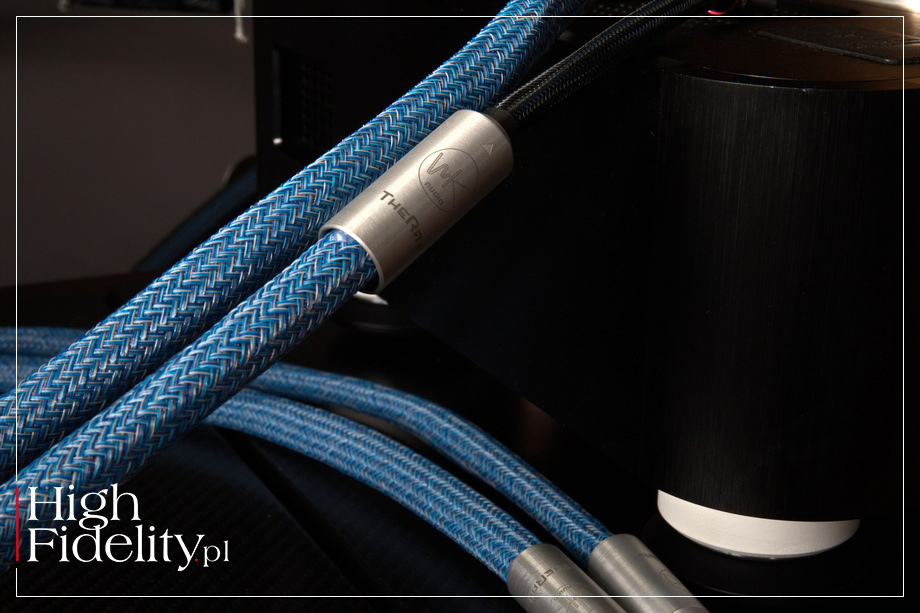
The cable is normally offered in a length of 1.5 m, but other lengths are also available on request. This may surprise some of you, because 1.5 m is a long interconnect and, as some readers may have guessed, a cable half that length would be much cheaper. And that would probably be the case, but WK Audio, like several other companies, conducted listening tests with many cable lengths and chose the ones that sounded best. Because, truth be told, short cables, whether interconnects, power cables, or even speaker cables, sound worse. The basis for these beliefs was provided by the company owner's listening sessions conducted as part of the Plichtowskie Spotkania Soniczne („PSS Społem”) meetings, during which he and the participants examined the impact of cable length on sound; more → HERE. |
Finally, let us add that TheRay is available in two versions. The cable is the same in both versions, but it is terminated with different plugs. The tested Basic version features classic Furutech FP-10 R RCA plugs with rhodium-plated contacts, while the Exclusive version features CF-102 NCF R plugs from the same company. They differ in the presence of NCF technology. The Exclusive interconnect costs €3,300 for a 1.5 m section, and the Basic version costs €3,000. According to the manufacturer, all components are made of non-magnetic materials – the central pin is made of OCC copper coated with a layer of silver and rhodium, subjected to the Alpha cryogenic process. It is separated from the body, which is also made of rhodium-coated copper alloy, by a Teflon insulator. The plugs are clamped onto the socket, but in the opposite way to usual – by unscrewing the outer sleeves rather than screwing them on. 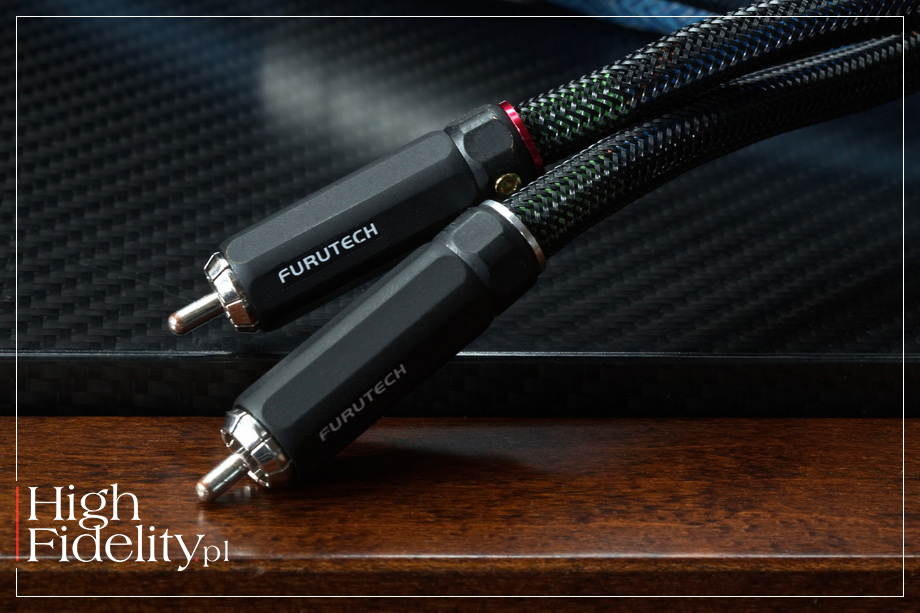
The cable is packed in a wooden box with a sliding lid. It bears the company logo, and a label with the series and cable name is affixed to the front. TheRay cables are directional, which is probably due to their design. The connection direction is marked on the aluminum sleeves that end the thicker vibration-damping jacket. ▌ SOUND HOW WE LISTENED • The WK Audio TheRay analog interconnect was tested in the “High Fidelity” reference system, connecting the RCA output (WBT Nextgen sockets, gold-plated) of the Ayon Audio CD-35 HF Edition SACD player and the input of the Spheris Evo line preamplifier from the same company (again WBT Nextgen sockets, gold-plated). The test was a AAA/BBB/AAA comparison with known A and B, and Siltech Triple Crown interconnects (approx. PLN 80,000) playing the role of ‘B’. 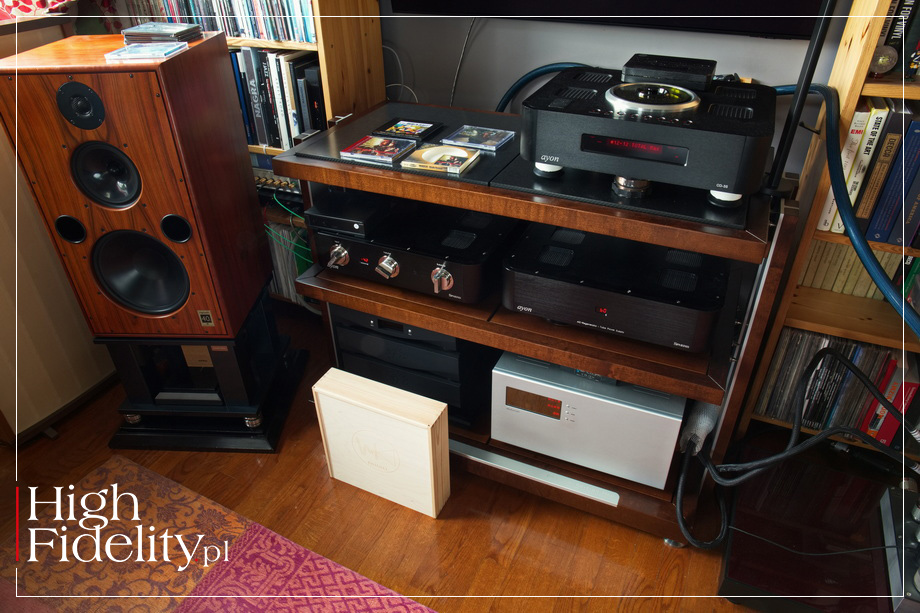
» ALBUMS USED IN THE TEST ⸜ a selection
• ABBEY LINCOLN, Abbey Sings Abbey, Verve Records | Universal Music France 0602498470305, CD ⸜ 2007. By switching during the test between the tested TheRay cable and the reference cable, Siltech Triple Crown, I was able to verify Witek Kamiński's claims regarding the “sound” of silver and the modifications he introduced to his design in order to extract as much goodness as possible from it, while avoiding the pitfalls that stand in the way of reckless manufacturers. First and foremost: the Polish cable produces an organic sound. Although the assessment of the timbre – based on the manufacturer's website – was obvious, it was only after the first notes of Larry Campbell's acoustic guitar opening ˻ 3 ˺ And It’s Supposed To Be Love, a song written by Abbey Lincoln from her album Abbey Sings Abbey, I noticed above all the density and resolution of the sound. These two elements, when combined in similar proportions, produce the kind of non-mechanical sound that we refer to as “organic”. It's midrange-focused playing, but with an open top end, if you know what I mean. What I mean is that we sit in front of the speakers and nothing distracts us from the sound. We hear the character of the instruments, for example, that Shawn Pelton plays the drums with his hands in the first part of the song, and not with sticks, which he switches to in the second part, but we hear it as part of a larger whole, it is not strongly emphasized. The still guitar, placed by the mixing engineer more in the left channel in this track, was clear with the WK Audio interconnect, but it was not brightened. The openness of the treble I mentioned was not about emphasizing it, but about even distribution and slight withdrawal of the upper midrange. This resulted in a slight, but still noticeable, withdrawal of the sound behind the line connecting the speakers. That is why with TheRay we get a sound that is vibrant on the one hand and sort of calm on the other. 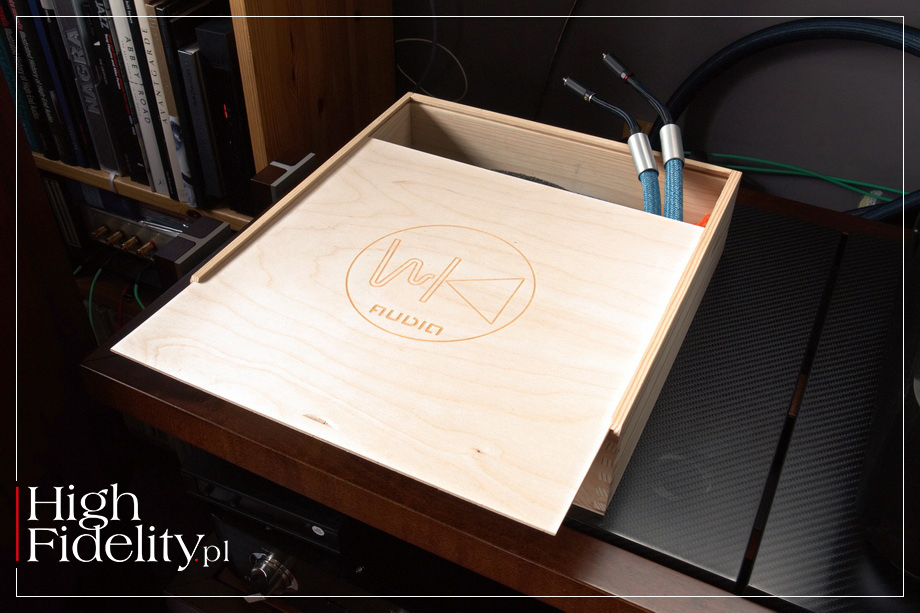
I don't say “calm” because nothing in this presentation is calmed down – neither the energy nor the sound attack. The aforementioned warming, because that's what it's about, of the upper midrange shifted the sound to the back of the stage, but also opened it up in terms of scale. This shift was not about – again – a calming down of the sound, but a change of perspective. That is why the explosive mix of funk and jazz from GEORGE KAWAGUCHI's album The Big 4, originally released by Three Blind Mice in 1976, was exciting, powerful, vibrant, and energetic with the Witek cable. This is not a “sleepy” cable. However, it is a cable that prefers warm sounds. But when, at the end of the fifth minute and the beginning of the sixth minute of track ˻ 1 ˺ Invider, there is a drum solo, with the Polish cable it will be powerful, explosive, yet controlled. Because control is another important term that describes this interconnect, right after organicity. There is nothing irritating or tiring about this sound, because everything is organized and has its place. And it doesn't have to be jazz music, because rock also sounds great with TheRay cable – powerful, but also presented in an orderly manner. The opening track of the 1997 BLUR’S album, with its guitar in ˻ 1 ˺ Beetlebum was presented powerfully, but with a certain restraint that characterizes the entire album. That is, without exaggerating the biting attack, but rather with a sense of fullness. The Beatles-esque backing vocals that joined in a moment later filled the center of the stage, but without taking over. So there was powerful guitar, backing vocals, and drums and bass guitar further back on stage, all with very good tonal balance. Listening to another track on the Britpop pioneers' album, ˻ 2 ˺ Song 2, one could conclude that there is a hint of sweetness in it. Perhaps more of a mist than a distinct addition, but it is there. The vocals in ˻ 1 ˺ That Old Feeling from CHET BAKER's album entitled Chet Baker Sings were warm and big – just as they should be. And there was no excess warmth in them. That is, they did not sink into the background. Nevertheless, I had the impression of a thickening in the lower midrange, as if the cable slightly weighted this part of the band. It's also a resolving sound. Both the slight distortion of the trumpet at the beginning of the song and the tape problems audible at the beginning of the next song on the album, ˻ 2 ˺ It’s Always You, were clearly audible. They were not softened or smoothed out. And yet... And yet it is a smooth-sounding cable. This is not achieved by excluding information from the picture, but by warming up the midrange. That is why all the albums I listened to with it were engaging but not tiring, open in tone but also slightly warmed up. And the Polish cable is very spacious. The foreground was slightly further away from me than with the reference cable, and it didn't have such a stereoscopic view of the events on stage. But it's also a different price range, let's remember that. In its weight class, TheRay sounds great in this respect. The soundscapes created by VANGELIS on Blade Runner Owere vast and deep. But also perfectly three-dimensional. Yes, this is the kind of cable that combines precise localisation and scale. It owes this to its strong low-end. This is the final element that builds its sound. The bass is deep, nice, colourful and dense. Its lowest range is not as well controlled as with the reference cable, and TheRay will not be a cable that will discipline anything in our system. That is, it is not suitable for "fixing" it. On the other hand, it easily reproduces the really low frequencies of the electronics in ˻ 2 ˺ Blush Response, with the power and "purr" that only large speakers can show. ▌ Summary WITEK KAMINSKI DID a VERY, VERY good job with this cable. On the one hand, its sound is open and resonant, and on the other, it is "safe" with a warm midrange. The bass goes very low and is multi-coloured, changing over time. It is not tightly controlled, but this is simply a feature, not a flaw. All this results in an organic sound, which is deep in tone on the one hand and orderly and natural on the other. 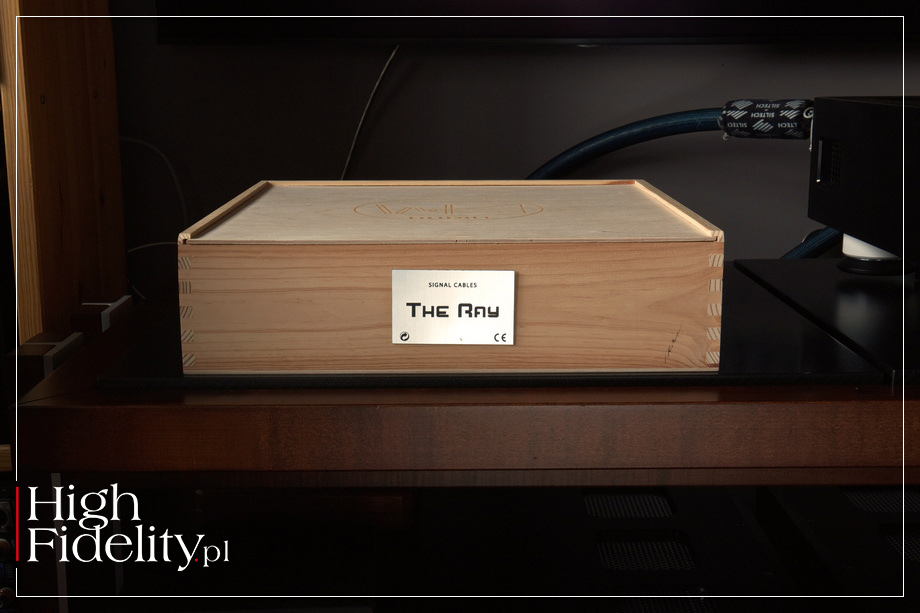
The space with the tested cable is wide and deep. The foreground starts behind the line connecting the speakers, but the background stretches really far. They are not super clearly separated, but rather create an “aura” behind what is happening in front of us. With this cable, you can listen to music for a long time without getting tired, but also without the danger of falling asleep – it is not a sluggish sound. It is simply a nice, and really good sound. ● 
THIS TEST HAS BEEN DESIGNED ACCORDING TO THE GUIDELINES adopted by the Association of International Audiophile Publications, an international audio press association concerned with ethical and professional standards in our industry, of which HIGH FIDELITY is a founding member. More about the association and its constituent titles → HERE. |

 |
|
Reference system 2025 |
|
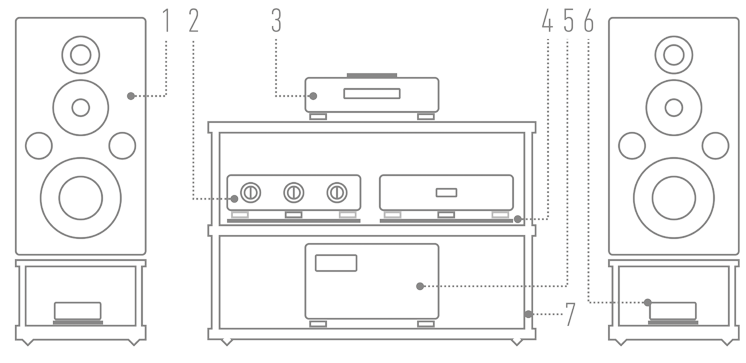 1) Loudspeakers: HARBETH M40.1 |REVIEW| 2) Line preamplifier: AYON AUDIO Spheris III Linestage |REVIEW| 3) Super Audio CD Player: AYON AUDIO CD-35 HF Edition No. 01/50 |REVIEW| 4) Stands (loudspeakers): ACOUSTIC REVIVE (custom) |ABOUT| 5) Power amplifier: SOULUTION 710 6) Loudspeaker filter: SPEC REAL-SOUND PROCESSOR RSP-AZ9EX (prototype) |REVIEW| 7) Hi-Fi rack: Hi-Fi rack: finite elemente MASTER REFERENCE PAGODE EDITION Mk II, more → HERE |
|

|
Cables Analog interconnect SACD Player - Line preamplifier: SILTECH Triple Crown (1 m) |ABOUT|» ANALOG INTERCONNECT Line preamplifier → Power amplifier: Siltech ROYAL SINLGE CROWN RCA; review → HERE Speaker cable: SILTECH Triple Crown (2.5 m) |ABOUT| |

|
AC Power Power cable | Mains Power Distribution Block - SACD Player: SILTECH Triple CrownPower (2 m) |ARTICLE| » POWER CABLE Mains Power Distribution Block → Line preamplifier: Acoustic Revive ABSOLUTE-POWER CORD, review → HERE » POWER CABLE Mains Power Distribution Block → Power amplifier: Acoustic Revive ABSOLUTE-POWER CORD, review → HERE Power cable | Power Receptacle - Mains Power Distribution Block: ACROLINK Mexcel 7N-PC9500 (2 m) |ARTICLE| Power Receptacle: Acoustic Revive RTP-4eu ULTIMATE |REVIEW| » ANTI-VIBRATION PLATFORM under Acoustic Revive RTP-4eu ULTIMATE: Graphite Audio CLASSIC 100 ULTRA, review → HERE Power Supply Conditioner: Acoustic Revive RPC-1 |REVIEW| Power Supply Conditioner: Acoustic Revive RAS-14 Triple-C |REVIEW| Passive filter EMI/RFI: VERICTUM Block |REVIEW| |

|
Anti-vibration Speaker stands: ACOUSTIC REVIVE (custom)Hi-Fi rack: finite elemente MASTER REFERENCE PAGODE EDITION Mk II, more → HERE Anti-vibration platforms: ACOUSTIC REVIVE RAF-48H |ARTICLE| » ANTI-VIBRATIONAL FEET: |

|
Analogue Phono preamplifier: Phono cartridges:
Clamp: PATHE WINGS Titanium PW-Ti 770 | Limited Edition Record mats:
|

|
Headphones » HEADPHONE AMPLIFIER: Leben CS-600X, review → HEREHeadphones: Headphone Cables: Forza AudioWorks NOIR HYBRID HPC |