


|
ANTI-VIBRATION PLATFORM/GROUND HUB THUNDER MELODY
Manufacturer: INNOVACOM sp. z o.o. |

 |
 |
 |
|
Review
text by WOJCIECH PACUŁA |

|
No 259 December 1, 2025 |
|
˻ PREMIERE ˼ ⌈ THUNDER MELODY is a Polish audio brand established in 2020. It was founded by KONRAD RAŚ and RAFAŁ HŁADZIAK and specializes in anti-vibration, noise reduction, and power conditioning products. We are testing its product, which is a combination of an anti-vibration platform and artificial ground, in the Black version, which is the top-quality version. This is its PREMIERE. ⌋ MY FIRST CONTACT WITH Thunder Melody took place during testing of the Monument anti-vibration plat-form, almost exactly five years ago; test → HERE. The company had just been established, was completely unknown, did not even have a website yet – which would not change for several years – and was already offering a very expensive and mechanically advanced product. And it has remained in this market segment ever since. 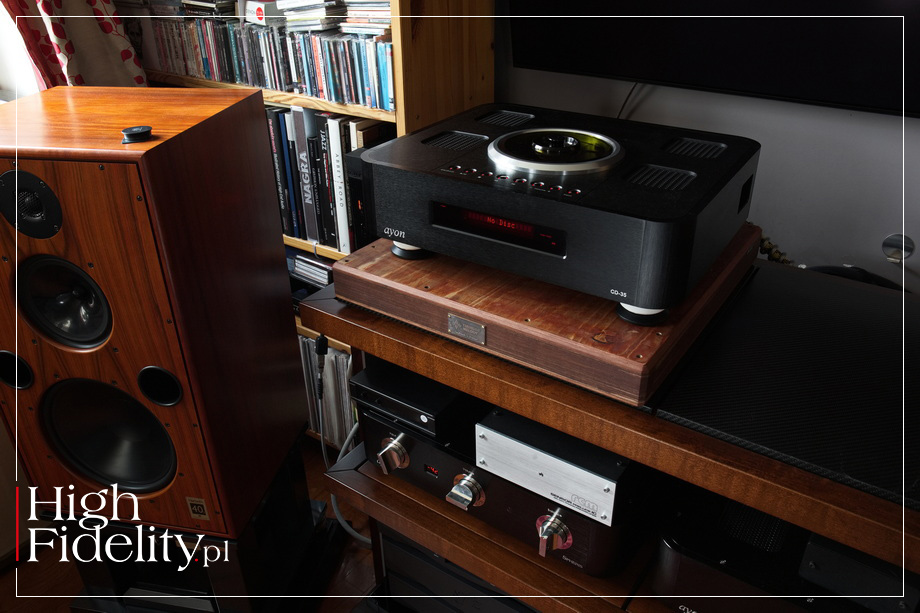
Today, it is an established manufacturer, offering both individual components and complete systems, including custom ones designed for specific systems and customers. It also has a comprehensive portfolio that combines its expertise in vibration reduction and noise minimization. The latter seems to be the most important in its approach to audio, in the sense that it is both key to achieving high-quality sound and the most difficult to eliminate in a way that would give the desired results. This is because it involves both mechanical and electrical noise. Thunder Melody's latest offering, the Ground Hub Black Edition, combines these two approaches, of-fering both an anti-vibration platform and artificial ground in a single housing. ▲ A few simple words... KONRAD RAŚ, RAFAŁ HŁADZIAK 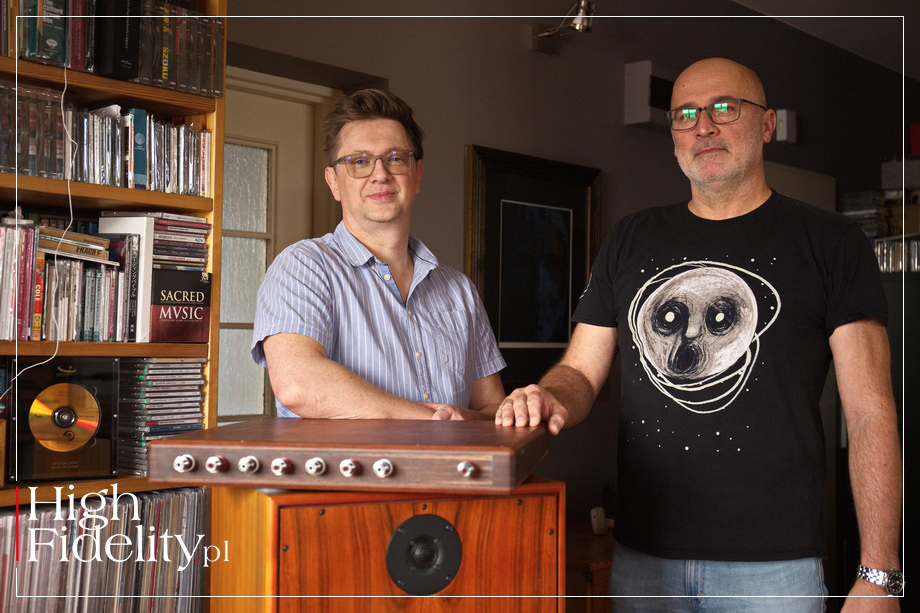
Artificial ground (ground conditioner) is another component in the Thunder Melody range. It is, in fact, the central device in our entire architecture of noise reduction and conditioning devices for audio equip-ment. Our other devices, such as the anti-vibration platform (Monument), current accelerators (nanoGrall), sig-nal accelerators (accXLR, accRCA), power conditioners (GRAAL), generators (LFG), and cabling, e.g., ATTO Speaker cables, feature a connector for an external ground. If you have individual components, they can be grounded separately, but in the case of a broader grounding ar-chitecture, it is worth considering centralizing the grounding system, taking advantage of the synergis-tic noise reduction effects of each of its components. The same applies to the grounding outputs of amplifiers, streamers, CD Players, and other devices, as long as they have such connection capabilities. As you can see, the number of components to be connected can vary greatly, which is why scaling of such ground conditioners is necessary. The smallest Ground Hub in the Silver version can offer 3-4 input ports and 1 output port and be the size of a B5 notebook, but it can also be the size of an audio device and also serve as an anti-vibration platform for it, or as an audio rack’s shelf with a width of 110-140 cm - all listed in the Sil-ver versions with upgrade options to Black level. 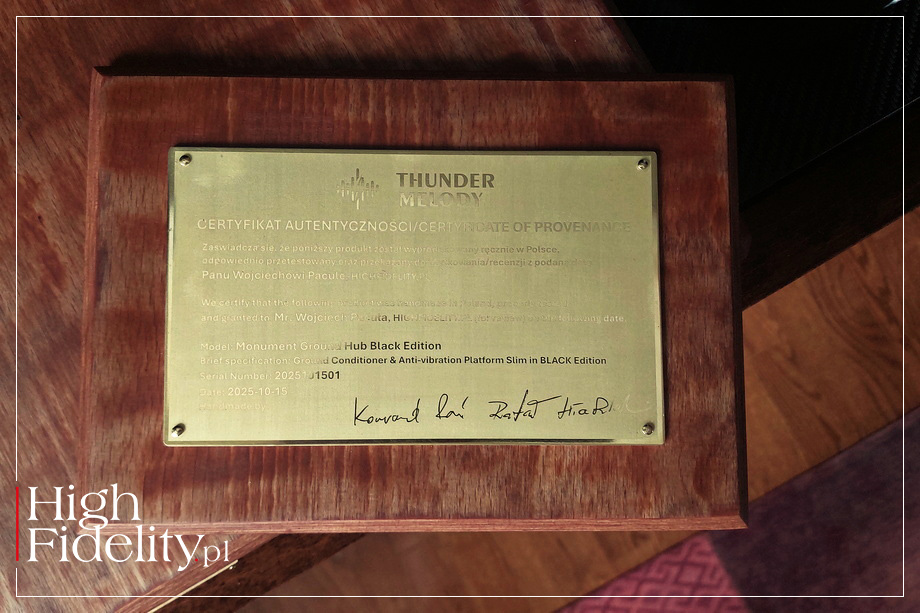
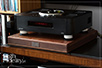
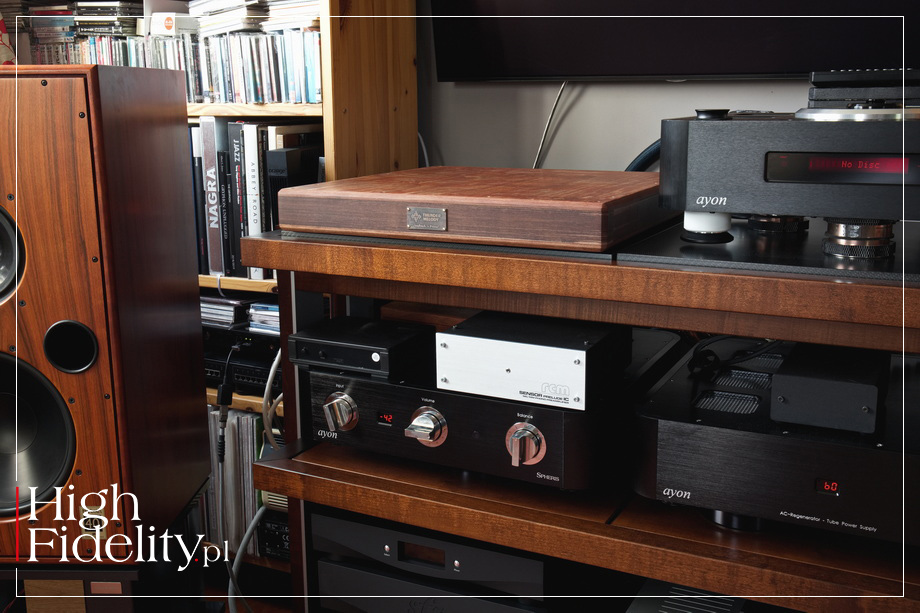
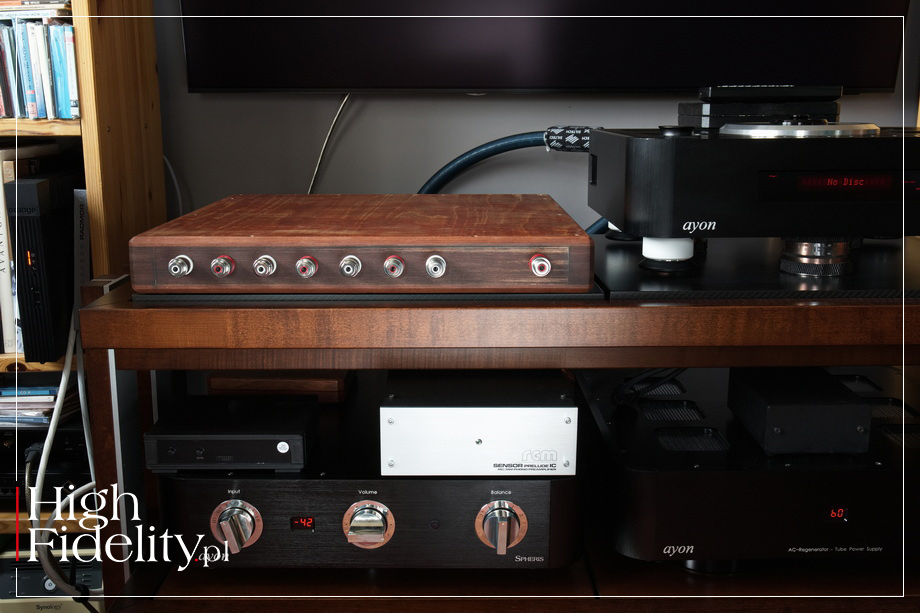
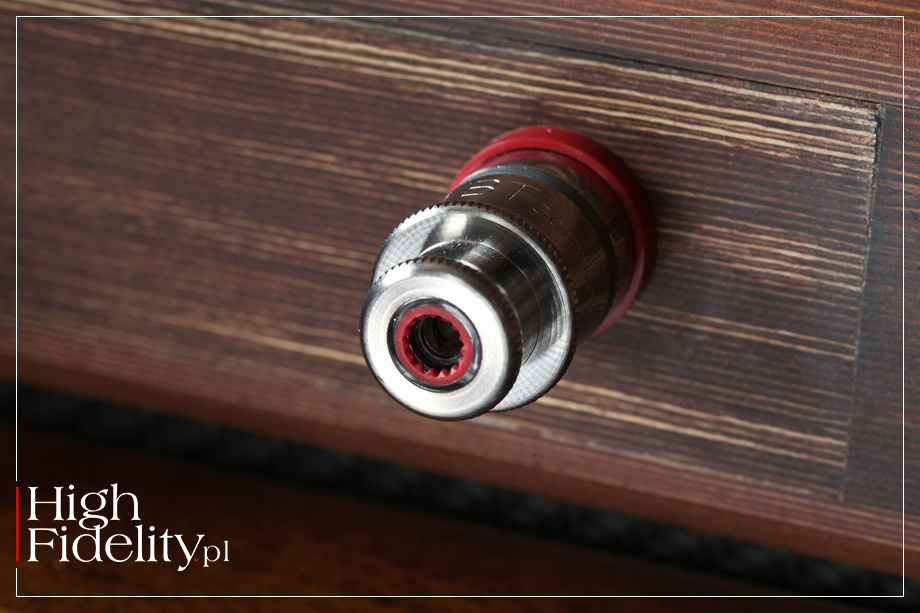
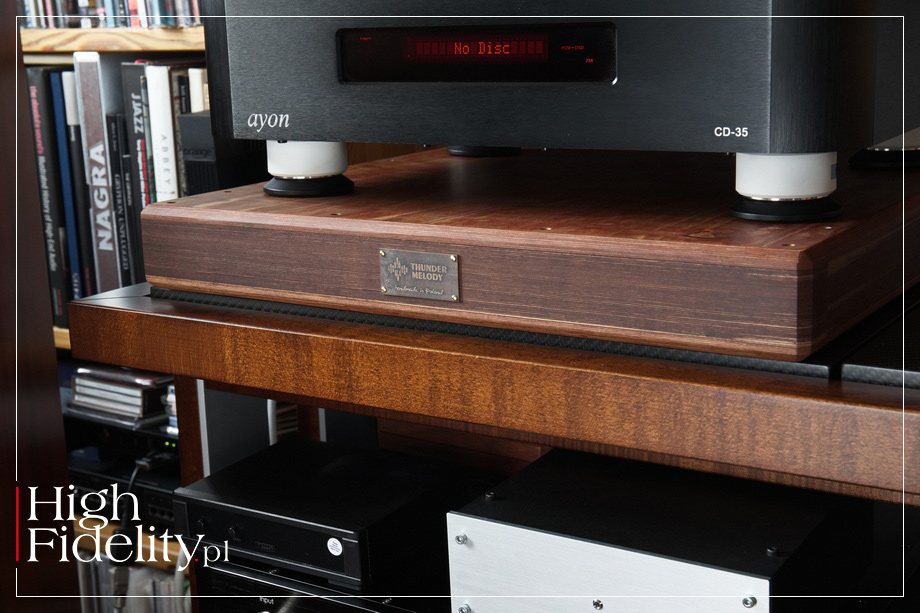
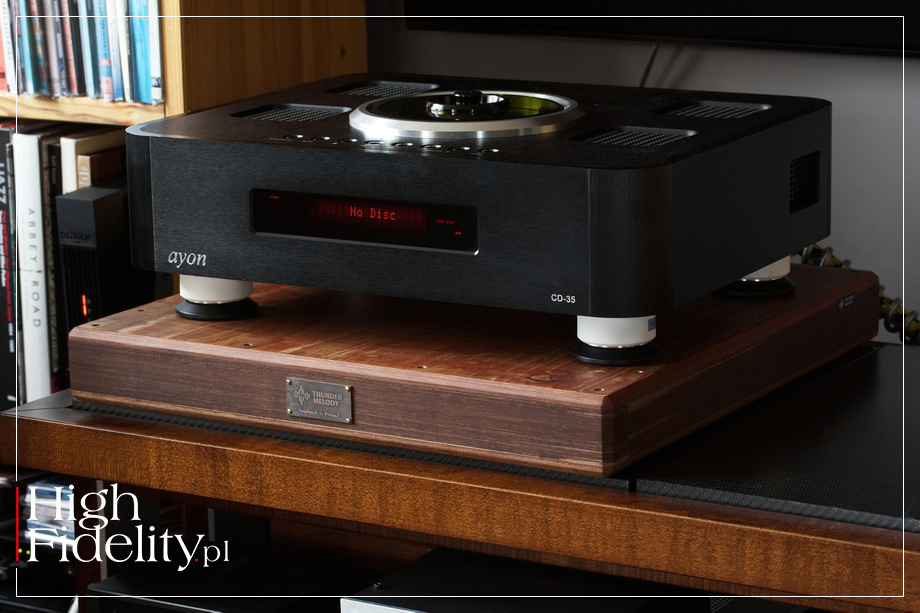
For this review, we present an intermediate scaling solution (i.e., a platform with artificial ground), in the top-of-the-line Black configuration—with seven input ports and one output port. It is not the largest solution in terms of size, but it makes maximum use of the inputs. The platform itself is a Monument Black version with a width of 50 cm, a depth of 50 cm, a height of 6 cm (Slim version), and a weight of approx. 18 kg. It is the current version for 2025, even more advanced compared to the Monument when it was launched in 2020. The presented version of the platform features seven conditioning modules featuring WBT Ag speaker plugs. We recommend connecting one device per port for best results, but you can also use the option of con-necting a banana plug together with a spade plug. The only thing is that you will not achieve ground separation in a configuration other than the recommended one. The complexity of the configuration options is reflected in the components of the final price. The ver-sion submitted for review consists of: 1. Monument Black (2025) – 1 x 45 000 PLN. Costs are calculated on a case-by-case basis according to the needs agreed with the customer. » TM ▌ Ground Hub Black Edition GROUND HUB BLACK EDITION is two-in-one product. As Mr. Raś said, the idea was to reduce the number of components in the system without losing the advantages of using separate products for vibration and noise reduction. The platform (as I will refer to it for short) looks very nice, which is a big improvement over the first Monument. It has quite large footprint of 50 x 50 cm, but it is much lower than the original, at only 6 cm. This is important because in many systems, the height of audio rack shelves does not allow for the use of high elements under the devices. It also looks better. Mr. Hładziak, who is responsible for production, says that this was achieved by sourcing material from another manufacturer with similar parameters but lower thickness. The housing is made of Panzerholz. It is a type of plywood with anti-vibration properties, in a dry ver-sion, which is produced for this brand on, as its creators say, “strictly defined order”. It is a specialized material, which is why the company receives it approximately 3-4 months after ordering. The material is seasoned imme-diately after production and after fabrication in order to preserve its properties for many years. As I have learned, the price of this component has been growing very fast - its price has increased by over 100%, which is more than gold. 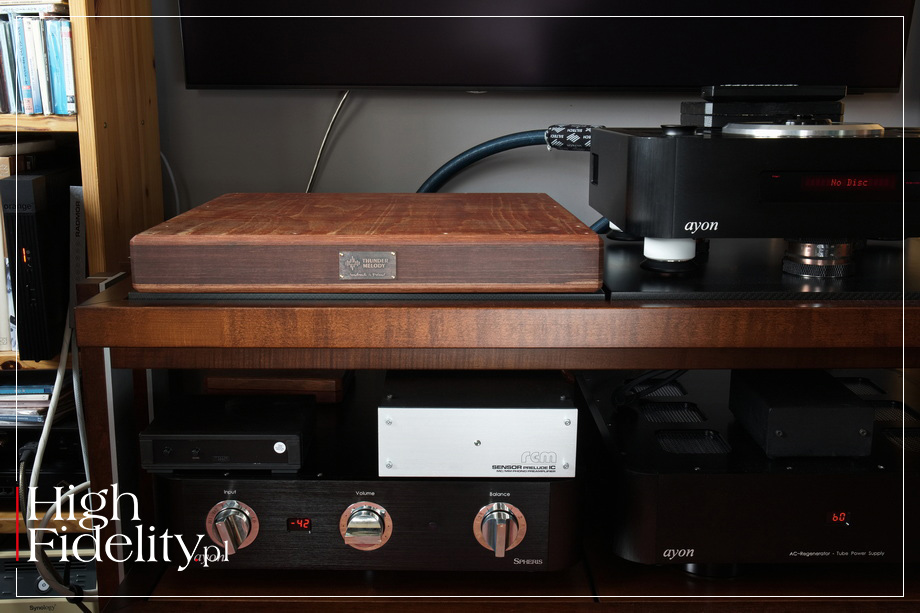
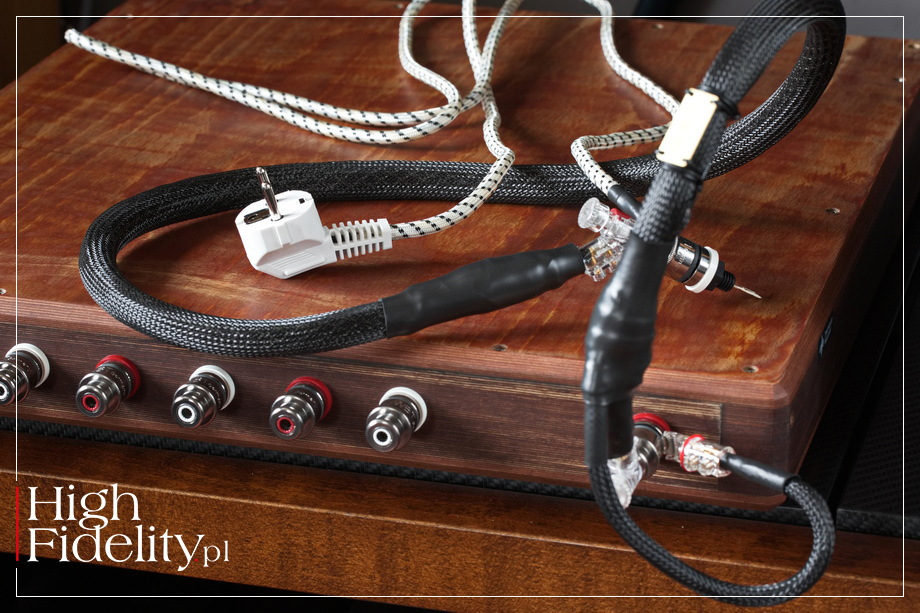
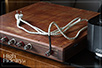
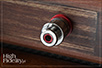
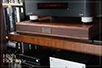
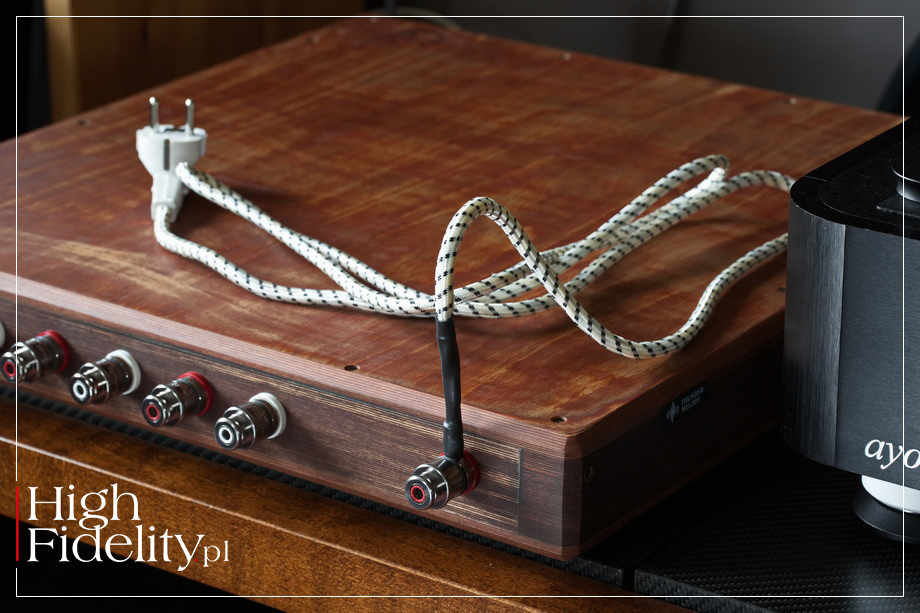
The external surface of the platform is finished with wax. A brass plate with the manufacturer's name and logo is attached to the front, and grounding sockets are located at the back. These are top-of-the-line silver WBT sockets, model 0705 Ag, with palladium-coated external components. It belongs to the Nextgen se-ries, which means that the amount of metal has been minimized in it. The reduction of metal around the con-ductor is intended to prevent eddy currents. On the left side, there is a socket that discharges the electrical charg-es “collected” from the connected devices. Inside, there are materials used to accumulate and minimize them. As the company owners said during the Monument test, it is “a proprietary blend of rare materials of the highest quality, which are the company's intellectual property secret”. I assume that they are used in some form in industry. The first products in which they used this technology were the LFG generator, AC power filters, and conditioner. As they went on to say, “We have already mastered the technology and are now applying it to other products. Everything we use in them has common features, as it is supposed to be one common concept.” The grounding terminal must be connected to the so-called “ground,” i.e., a point with zero potential. In a home environment, the closest available ground is the protective cable in a wall outlet. The set includes a cable that connects to the platform on one end and plugs into a free electric outlet on the other. For the test, I re-ceived a specially prepared “iron” cable to show that even such a grounding device is effective. However, if you want everything to be top-notch, you will also need to order a Thunder Melody grounding cable. ▌ SOUND HOW WE LISTENED • The Ground Hub Black Edition was tested in the High Fidelity reference system. It was placed on the top shelf of the Finite Elemente Master Reference Pagode Edition Mk II rack. The test consisted of listening to the Ayon Audio CD-35 HF Edition SACD player, which was placed first on the tested platform and then directly on the top shelf of the Finite Elemente. This was a multiple comparison in AA/BB/AA and BB/AA/BB sequence, with known A and B. 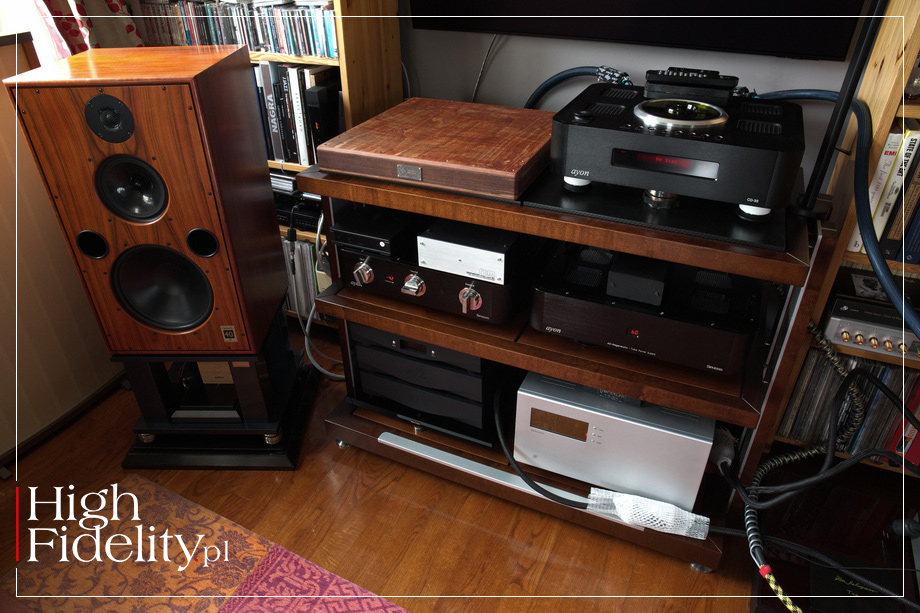
On a daily basis, the Ayon player is connected to a power strip and a preamplifier using a power cable and a Siltech Triple Crown RCA interconnect, respectively. These are rigid cables, which makes it impossible to move the player. Therefore, in the test, I replaced them with much more flexible ones – the Harmonix X-DC350M2R Improved-Version power cable and the Crystal Cable Absolute Dream RCA interconnect. Due to the fact that the tested solution is a combination of two products – (1) a mass conditioner in (2) an anti-vibration platform, it is possible and even advisable to start up and test the capabilities of each of them sep-arately. I started with tests of the ˻ I ˺ the platform, and later added to this the effect of ˻ II ˺ grounding all components in the system – the SACD player, preamplifier, and power amplifier. 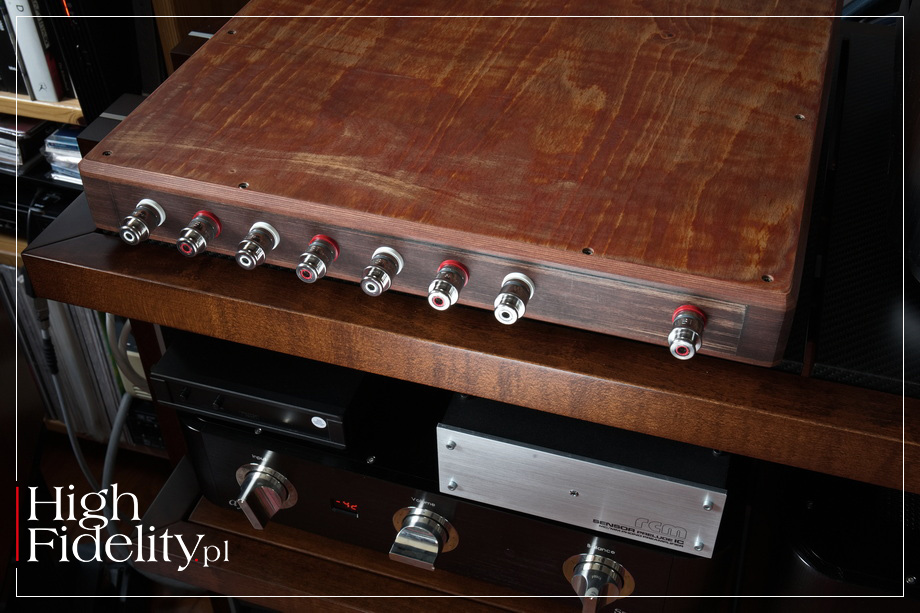
The test was conducted with a ‘generic’ cable (PE socket), which, according to Mr. Raś, deliberately does not allow you to overestimate the performance of the tested devices. He says that connecting the best possible grounding cable instead will show “even broader and deeper capabilities of the tested devices”. Therefore, the top-of-the-line grounding cable Thunder Melody Atto Black (1.2 m, PLN 17,000) was also provided
The company recommends that after starting the target configuration, you leave everything on over-night and check how much filtering work has been done during this longer period. During the start-up itself, due to the nature of the system ‘cleaning’, which is spread over time, it also suggests that subsequent partial lis-tening sessions should be performed after 5, 10, or preferably 15 minutes of silence (without “eavesdropping”). The filtration effects are supposed to appear immediately, but over time it will reveal its other “faces”, with maximum changes to be achieved in 3-4 days. According to the company, this also works the other way around: after disconnecting the mass, the effect disappears over time, not immediately. To describe this ef-fect, Thunder Melody uses a comparison with an aquarium water filter: “The water in the aquarium will not be purified immediately when we turn on the pump, and it will not become cloudy the moment we disconnect it.” |
I acted as instructed. » RECORDINGS USED FOR THE TEST ⸜ a selection
• CHET BAKER, The making of Chet Baker Sings, Jazz Images Records 83310, CD ⸜ 1956/2021. ˻ I ˺ PLATFORM THE ALBUM I STARTED LISTENING TO, Pyramid BY THE MODERN JAZZ QUARTET, is rec-orded high. This means that the center of gravity is placed in an open space, with the cymbals surrounded by a lot of air. This has nothing to do with clarity, but it does make the sound of this album somewhat ethereal. That is why the changes that the platform introduces to the sound, because I started with the Ground Hub Black Edition test in this role, seemed so significant and important to me. This is because, without changing the tone, it presented a much more compact, fuller image of the in-struments, which were thus clearer and more tangible. This greater amount of sound was not intrusive, but rather perceived as an internal richness. In other words, it was not tiresome, but positively exciting. In addition, the change was perfectly clear and occurred both when I moved the player to the platform – A/B comparison – and when it returned to the shelf of the table – B/A comparison. 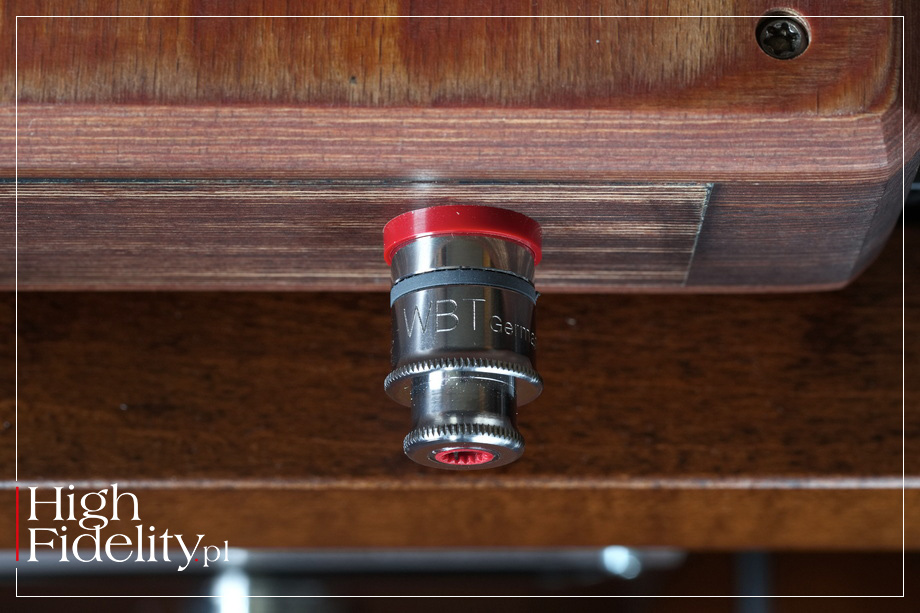
Even though (damn it) the Finite Elemente Master Edition Pagode Edition Mk II rack, with its Heavy Duty car-bon fiber-finished top shelves, is in itself a work of engineering art and the foundation (literally and figuratively) of my system. And yet, placing the Ayon on the Thunder Melody platform changed the perspective from which I viewed the music. It was no longer an ethereal sound, but a “carrying” sound. It now had more mass, was more saturated and better illuminated – all at once. One thing are the aforementioned better defined bodies on the soundstage. The other is the significantly greater energy of the entire spectrum. Not of the individual sounds, but the entire “cloud” of them. And yet, the last thing that can be said about the impact of the Ground Hub Black Edition on the sound, still in its role as a platform, is its “emphasis”, its forceful enlargement. I would say that it did two things at once that should be mutually exclusive: it weighted the sound down internally and at the same time freed it from a kind of “haze” that had previously blurred the edges. However, this bringing out of details did not lead to brightening, but to darkening. This is a characteristic feature of all products from this company and, generally speaking, of all good audio products: they display more information against a “blacker” background. It's a cliché, but it's true. This came across perfectly, really brilliantly, in the first words sung by CHET BAKER in ˻ 1 ˺ That Old Feeling, the opening track on the Chet Baker Sings: “I saw you last night and got that old feeling”... I have several versions of it, but the one that appeared in the series The making of..., which includes a booklet describing its creation, seems very interesting to me, also because of the sound. It is as good as the high. After moving the player to the platform, Baker's vocals became bigger, denser, and finally more intelligi-ble. His diction, which is not this artist's strongest point (he is a trumpeter, not a singer, after all), seemed to me to be better, as if he had taken a few quick lessons in the meantime, undergone an accelerated course in speech therapy and voice projection. It was not a quantitative change, everything seemed to be the same, but a qualitative one. Although the same, it was better. To tell the truth, when comparing the sound “with” and “without” the platform, there was no compari-son. It's a special thing, such discoveries in audio. We think everything is cool, that it's all good, great and everything, and then a product like the Ground Hub Black Edition comes along and it turns out that there's still so much room for improvement. Which begs the question: Where is the end? A hothead will say, “Well, here, I've just caught God by the feet and I'm in heaven.” However, experience tells us something else – “this is just a stop, a transitional moment.” In a moment, it may get even better. However, in the case of products such as Thunder Melody, it turns out to be a hub, not a simple “throughway”, but a place where different routes intersect. And the impression of its importance does not apply only to jazz or classical music recordings, but to all albums in general. The less “audiophile” the recording, the more “realistic” it is, the more strongly we will feel these changes right from the start. High-quality recordings, on the other hand, will develop after some time. And they will simply develop towards much higher resolution. The “blackness” I mentioned is ‘absence’ rather than “presence” – the absence of noise that blurs and stifles the lowest amplitude signals, which are what determine whether a recording seems credible to us. This deepening of the sound does not occur by boosting any part of the band. As I said, the tonal balance does not change at all. What changes is the scale of the sound and its “weight.” It worked perfectly, so perfectly, at the beginning of TALK TALK's album Laughing Stock, in the ˻ 1 ˺ Myrhman song. It was because of this track, with its experi-mental repertoire, half jazz, half contemporary music, that the band lost their contract with their previous record label. But a masterpiece was created. And what's more, a masterpiece that begins with a sixteen-second record-ing of noise and the hum of a guitar amp. There is noise, a characteristic “wave” that is a distortion, and only in the seventeenth second, in the right channel, does a powerful guitar come in. Using the platform meant that waiting for the sound was not just noise, but immersion in the tense atmosphere of the studio, where the musician, with his left hand already on the fretboard and his right hand holding a pick, was waiting to strum the strings in an E minor chord. We are there, we are with him, and we too are infected by this atmosphere of suspense, full of potential music. It speaks in a moment, and it is stronger, fuller, and deeper than when the Ayon player was playing on its feet. 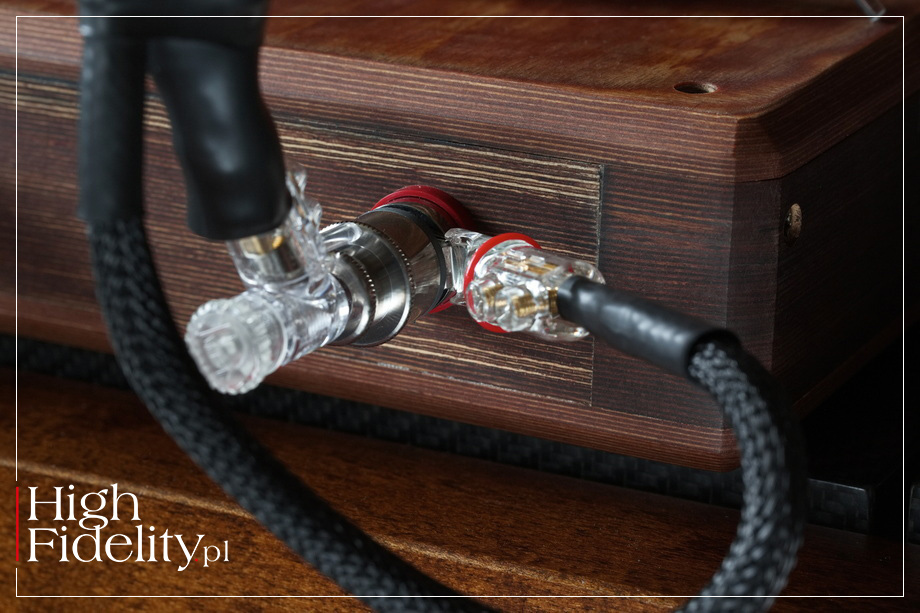
Sometimes this transformation occurs in the opposite direction, that is, opening up and energizing the presenta-tion as if it was previously somewhat muted. This was the case with the ULTRAVOX album Lament, remastered in 2009 by Steve Rooke at Abbey Road Studios in London. The opening track, ˻ 1 ˺ White China begins with a rapid run of automatic drums, and after this short fragment I knew that Thunder Melody was not playing the same over and over again, but was responding empathetically to the music. Because it was stronger, more open, bigger, and clearer. It's classic 80s sound, but not bright or harsh at all. I would say it's creamy. The platform not only didn't destroy this creaminess, it emphasized it. And yet everything was clearer, more selective. The depth of the soundstage also improved, and the foreground was bigger and stronger. But it wasn’t brought closer, because the TM platform does not do it, so there was no problem with the sound being too “big”, which not everyone likes. Incidentally, this reissue of the Ultravox album was pressed in Poland by the Takt label. ˻ II ˺ PLATFORM & ARTIFICIAL GROUND WHILE MOVING the Player from the Finite Elemente top-shelf to the Thunder Melody platform resulted in immediate, clear, and distinct changes, connecting the system to the integrated artificial ground system meant waiting for the effects to manifest. Both in terms of its impact on the sound and my understanding of what had actually changed. And it was the latter that I found more interesting. This is because the artificial ground in the Ground Hub Black Edition has an even stronger effect than the platform itself, but first, the player was already standing on it, so it benefited from its influence, and second, these changes went even deeper into the sound. The instruments with it, in the full, reviewed system, are reproduced in a powerful and clear way in their bodies. The ethereal sounds from the Modern Jazz Quartet album, as I said, were now firmly anchored on the stage, and the double bass got a kind of “turbo charge” in terms of how energetically it was presented. The bass itself was not louder, but the instrument was clearly larger and more “present”. Whereas before the background had suddenly receded and the ‘tingling’ in the background of the sounds had faded, now, against this deeper background, the instruments were presented in a more distinct, much more varied way. The platform itself made me feel like I was “there”. But this artificial ground, as it turned out (remember what I said about “certainty” and how it is interrupted by comparisons?), was a game changer. Because there was also better focus. The monophonic recordings from Baker's album were shown further away from me than before. But everything also extended deeper into the scene. Vocals in front, then piano and drums with double bass – in that order. And it really was in order. Because the slight instability that I hadn't noticed before also disappeared. I will remember it later, but until I knew it was “there”, it was as if it wasn't there. And Thunder Melody showed it and corrected it. Surely, that’s life, it can be probably shown even better, but for now, I don't know how. Interestingly, at the same time, the sound was more pastel than before and less internally tense. The platform handled this perfectly, but even it couldn't untangle everything in the presentation. With the artificial ground section, the sound seemed a bit quieter, so it could be turned up by 1 dB, returning to the same subjective volume level, while at the same time achieving higher dynamics. The percussion captured on the Talk Talk album with an ambient microphone, i.e., visible in the depth of the stage, in a matte way, gained energy. This was due to stronger sonority and “presence”, still in the same place, in the same acoustics. I saved the “icing on the cake”, as the designers at Thunder Melody called this cable, for the very end of my listening session: the company's grounding cable. There were no surprises – the sound was even better. This time, it was about greater plasticity, a stronger “push” of the sound in its middle part, perhaps even with a slight rounding of the attack. 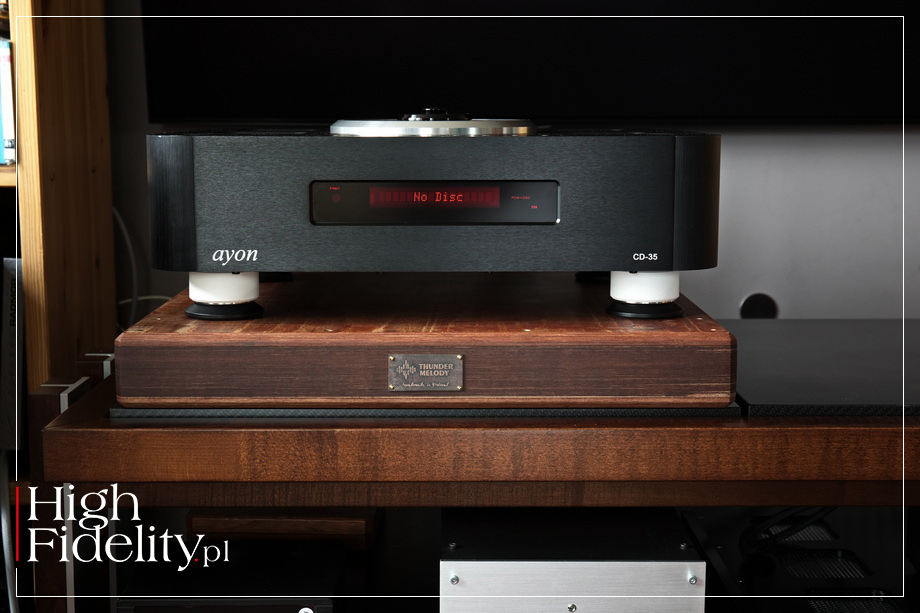
Powerfully, superbly recorded at Avatar Studios by Jay Newland, mastered by Mark Wilder, ABBEY LIN-COLN's album Abbey Sings Abbey, which I had bought shortly before at Pauls' Butique Record Store in Krakow's Kazimierz district for fifteen zlotys, sounded smooth, warm, clear, distinct, selective, and spacious. And in an orderly, fluid way, as if I were listening to a different release, some kind of a fancy XRCD or Blu-spec CD. ▌ Summary I WON'T KEEP ON GOING, as everything has already been said. I will only add that this is the best product in the Thunder Melody range that I have tested, and therefore one of the best on the market. It's better than my Nordost artificial ground, and better than most of the platforms I've tested, except perhaps the Divine Acoustics Cassini (more → HERE). What's more, it combines two elements in one product. Yes, it's a s..tl..d of money. But it's also a s..tl..d lot of good sound. And that's all there is to it. No other choice but a ˻ GOLD FINGERPRINT ˺. ●. 
THIS TEST HAS BEEN DESIGNED ACCORDING TO THE GUIDELINES adopted by the Association of International Audiophile Publications, an international audio press association concerned with ethical and professional standards in our industry, of which HIGH FIDELITY is a founding member. More about the association and its constituent titles → HERE. |

 |

|
Reference system 2025 |
|
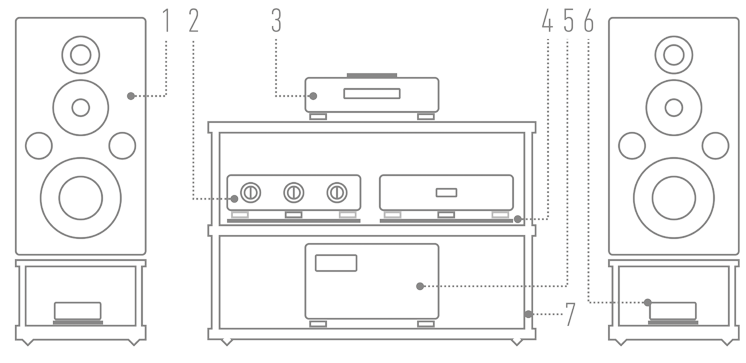 1) Loudspeakers: HARBETH M40.1 |REVIEW| 2) Line preamplifier: AYON AUDIO Spheris III Linestage |REVIEW| 3) Super Audio CD Player: AYON AUDIO CD-35 HF Edition No. 01/50 |REVIEW| 4) Stands (loudspeakers): ACOUSTIC REVIVE (custom) |ABOUT| 5) Power amplifier: SOULUTION 710 6) Loudspeaker filter: SPEC REAL-SOUND PROCESSOR RSP-AZ9EX (prototype) |REVIEW| 7) Hi-Fi rack: Hi-Fi rack: finite elemente MASTER REFERENCE PAGODE EDITION Mk II, more → HERE |
|

|
Cables Analog interconnect SACD Player - Line preamplifier: SILTECH Triple Crown (1 m) |ABOUT|» ANALOG INTERCONNECT Line preamplifier → Power amplifier: Siltech ROYAL SINLGE CROWN RCA; review → HERE Speaker cable: SILTECH Triple Crown (2.5 m) |ABOUT| |

|
AC Power Power cable | Mains Power Distribution Block - SACD Player: SILTECH Triple CrownPower (2 m) |ARTICLE| » POWER CABLE Mains Power Distribution Block → Line preamplifier: Acoustic Revive ABSOLUTE-POWER CORD, review → HERE » POWER CABLE Mains Power Distribution Block → Power amplifier: Acoustic Revive ABSOLUTE-POWER CORD, review → HERE Power cable | Power Receptacle - Mains Power Distribution Block: ACROLINK Mexcel 7N-PC9500 (2 m) |ARTICLE| Power Receptacle: Acoustic Revive RTP-4eu ULTIMATE |REVIEW| » ANTI-VIBRATION PLATFORM under Acoustic Revive RTP-4eu ULTIMATE: Graphite Audio CLASSIC 100 ULTRA, review → HERE Power Supply Conditioner: Acoustic Revive RPC-1 |REVIEW| Power Supply Conditioner: Acoustic Revive RAS-14 Triple-C |REVIEW| Passive filter EMI/RFI: VERICTUM Block |REVIEW| |

|
Anti-vibration Speaker stands: ACOUSTIC REVIVE (custom)Hi-Fi rack: finite elemente MASTER REFERENCE PAGODE EDITION Mk II, more → HERE Anti-vibration platforms: ACOUSTIC REVIVE RAF-48H |ARTICLE| » ANTI-VIBRATIONAL FEET: |

|
Analogue Phono preamplifier: Phono cartridges:
Clamp: PATHE WINGS Titanium PW-Ti 770 | Limited Edition Record mats:
|

|
Headphones » HEADPHONE AMPLIFIER: Leben CS-600X, review → HEREHeadphones: Headphone Cables: Forza AudioWorks NOIR HYBRID HPC |