


|
ANTI-VIBRATION FEET TiGLON
Manufacturer: TIGLON CO., Ltd. |

 |
 |
 |
|
Review
text by WOJCIECH PACUŁA |

|
No 259 December 1, 2025 |
⌈ The Japanese company TiGLON was established in 2008. Initially, it was called Kryna Pro, and changed its name to Tiglon (stylised as “TiGLON”) in 2010. Its founder and chief designer is Mr KENTARO OKINO. We are testing the company's new insulators, model MZ-Grande (full Mg). ⌋ THE LATEST PRODUCT from Tiglon is the MZ-Grande anti-vibration feet, which are an upgraded version of the MZX-4 feet that we tested in 2023. In both cases, a combination of diode (mechanical) and lossy coupling is used. However, what seems more important is the use of pure magnesium, from which part of the bases are made in the case of MZX-4, or all of them in the case of MZ-Grande. 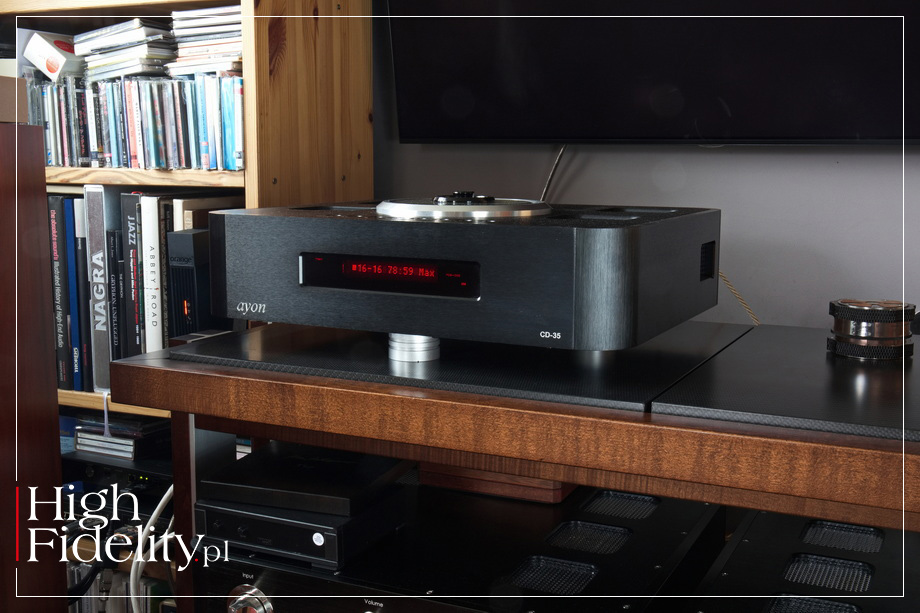
Let us remind you that this material is used by Mr Okino primarily in cables, as filters and screens, but also in products designed to reduce vibrations; more → HERE. The company's materials state: ‘Unlike aluminium and copper, magnesium has high internal damping, so it does not have the metallic “ringing” that accompanies other metals.’ This position is supported by measurements provided by the Japan Electric Cable Technology Centre (JECTEC). ▌ MZ-Grande MZ-Grande INSULATORS are one of three products from this company designed to replace the company's feet in audio products, stands and tables. The other two, the MZ-1 pads and the MZ-2 spikes, can be used separately or together. Launched in February 2022, the earlier MZX-4 model was placed by the manufacturer in the ‘Tuning Accessories’ section with the subtitle ‘Hybrid Insulators’. The MZ-Grande can also be found there. Seemingly the same, yet different. When referring to previous ‘hybrid’ feet, the manufacturer meant that they were made of two different materials – magnesium and bulletproof plywood. MZ differs from them in that it uses an element made of the same metal as the interior instead of a plywood body, which is why it is listed in the ‘Magnesium Insulator’ section, and the manufacturer refers to it as ‘full Mg’ in its company materials. ▲ A few simple words with... KENTARO OKINO 
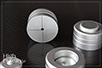
MZ-GRANDE insulators were conceived as an evolution of the previous MZX series, moving from a wooden body to a magnesium one, thus becoming a fully magnesium isolator. While MZX uses a hybrid structure of wood and magnesium – utilising the mutual cancellation of each material's unique characteristics to achieve a neutral sound field – the MZ-Grande features a pure magnesium cup treated with the new Magnetic ZERO process, maximising the potential of magnesium and allowing it to deliver perfect sound on its own. In addition, they feature a patented D-REN ring that controls resonance across a wide frequency range. As a result, while maintaining the high resolution of the previous model, the MZ-Grande achieves greater weight in the low frequencies, more open mid and high frequencies, and a more natural, expansive sound. In terms of appearance, the MZ-Grande is finished in a luxurious manner that gives it a strong visual impact. » KO THE NEW MZ-Grande INSULATORS were launched in July this year. They are used to mechanically isolate audio products, both devices and speakers, from the ground, minimising vibration transfer in both directions. They are 34.5 mm high, 53 mm in diameter, and each foot can support up to 25 kg. Three can therefore be placed under a device (or speakers) weighing up to 75 kg, and four up to 100 kg. MZ-Grande are sold in sets of three, under the name MZ-Grande/3, or four – MZ-Grande/4. 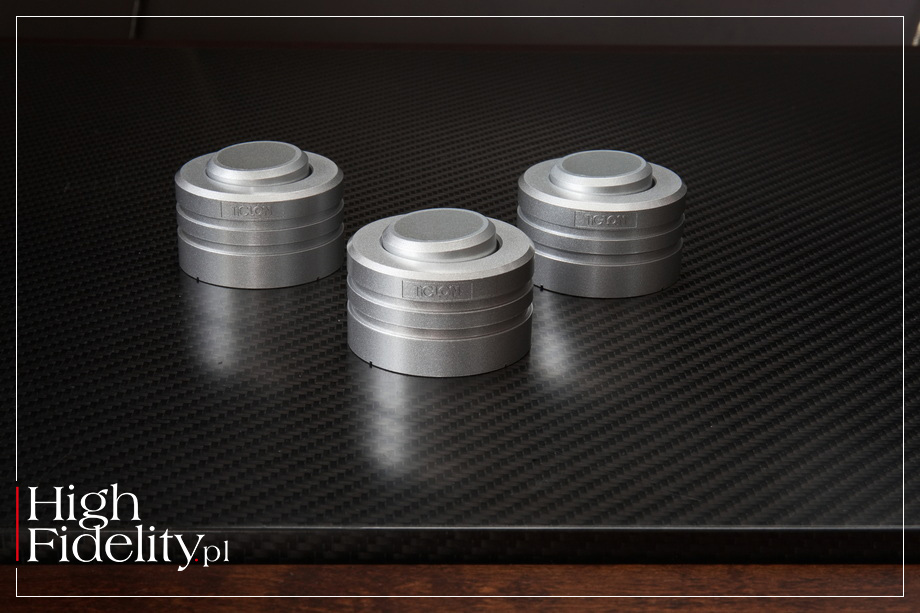
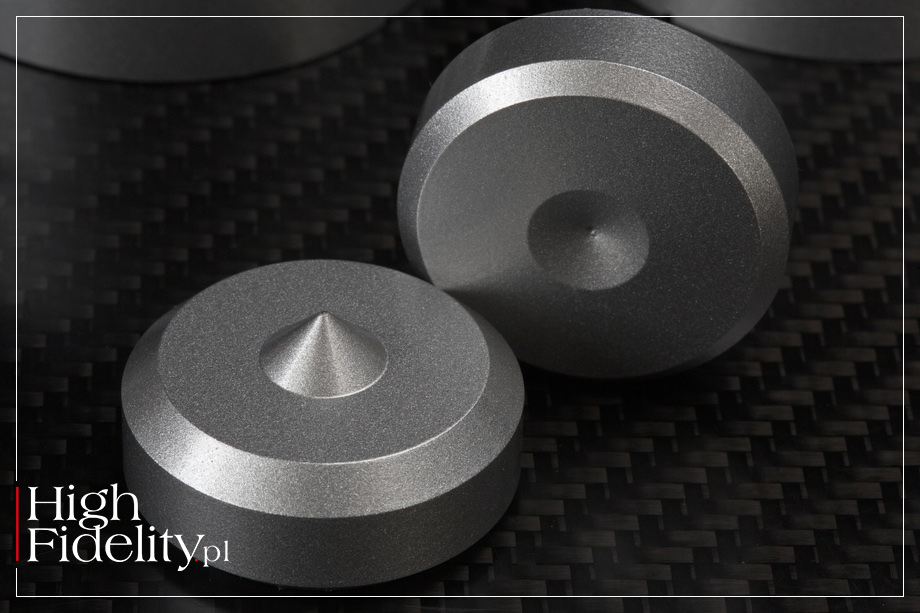
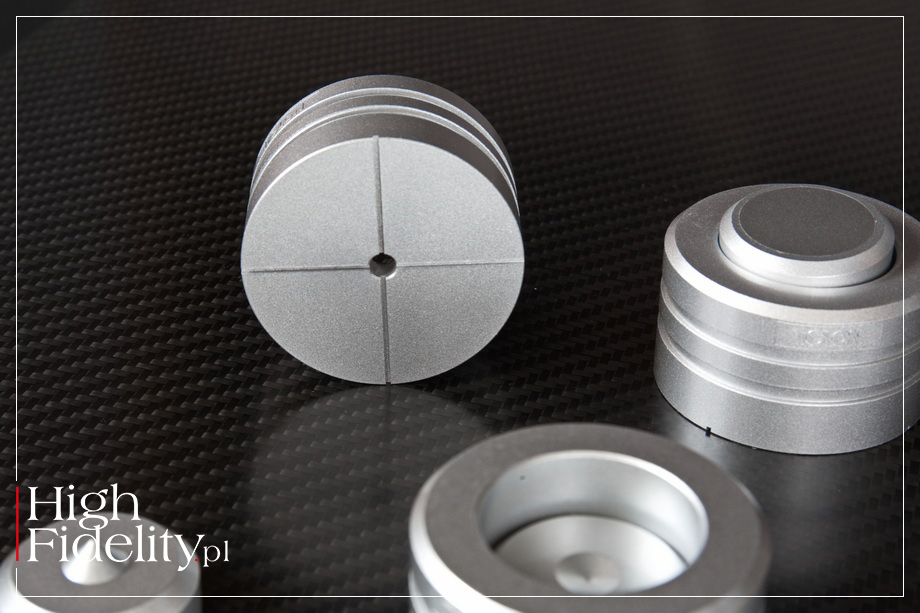
The legs consist of four elements: the body, the base and the cone – which are, in fact, MZ-1 pads and MZ-2 spikes – and a rubber O-ring that decouples the MZ-1/MZ-2 from the body. The last element seems to be the most important, with the cone pointing downwards and the base with a milled recess (cup). Both are made of an aluminium and magnesium alloy. It is a mechanically simple assembly based on damping vibrations by dissipating them from the upper part through a mechanical ‘diode’ (the aforementioned blade). The second layer of vibration damping is the body in which the aforementioned ‘diode’ is placed. This is a new element, also made of magnesium, with a hole drilled from the bottom and shallow ‘cross’ milling cuts, also from the bottom. The base and cone fit entirely inside the body – previously they protruded from it. The manufacturer writes:
The LED system is additionally decoupled with an O-ring. This element is called the D-REN Tuning Ring in the company's terminology and was first used in the flagship GMR insulator. In short, it is a disc that is placed on the feet of the company's top-of-the-line rack. Its name suggests its purpose: it is designed to dissipate vibrations to the outside and discharge electrostatic charges. Here, the ring has been inserted into the base. And, of course, this is not just any ‘ring’, but a specially selected material; Tiglon has a patent for it, obtained back in 2019. 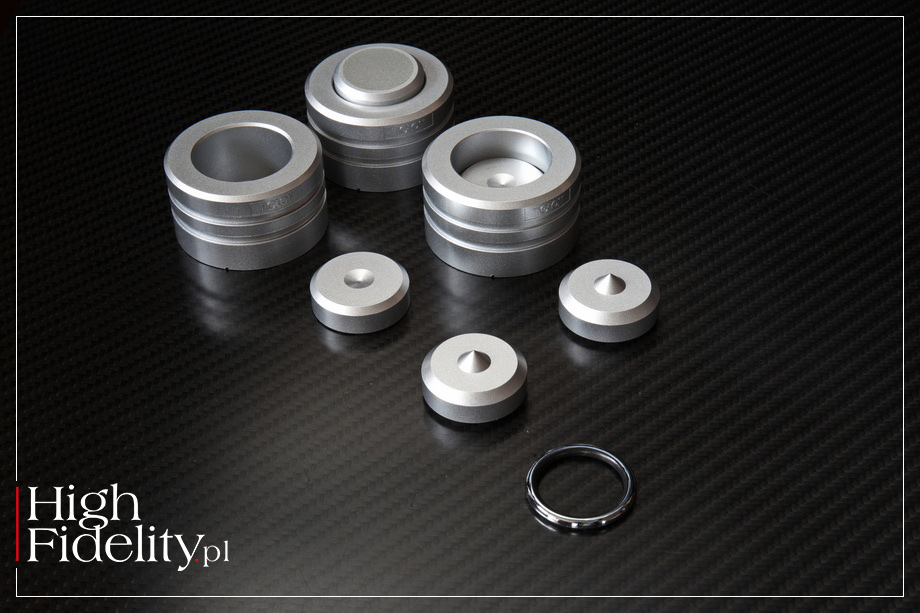
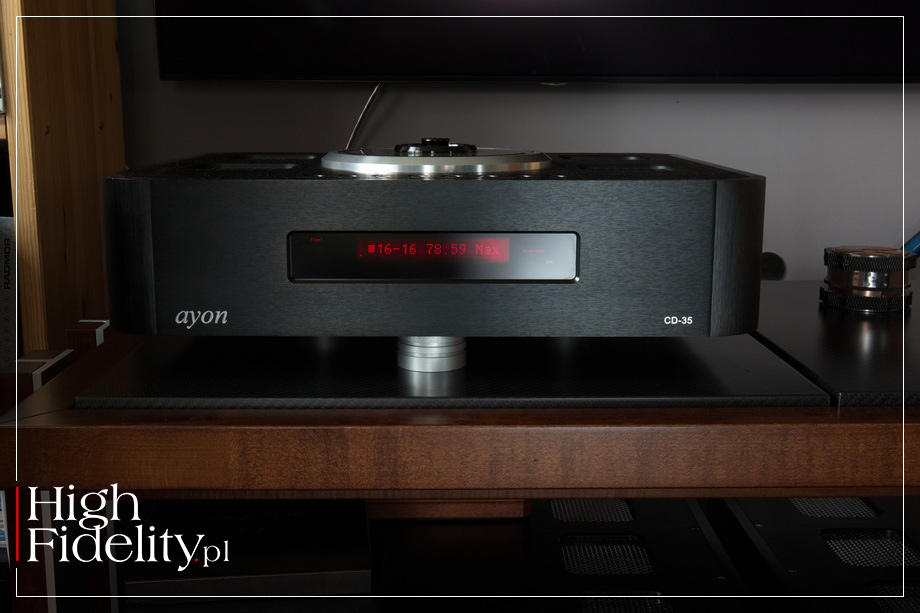
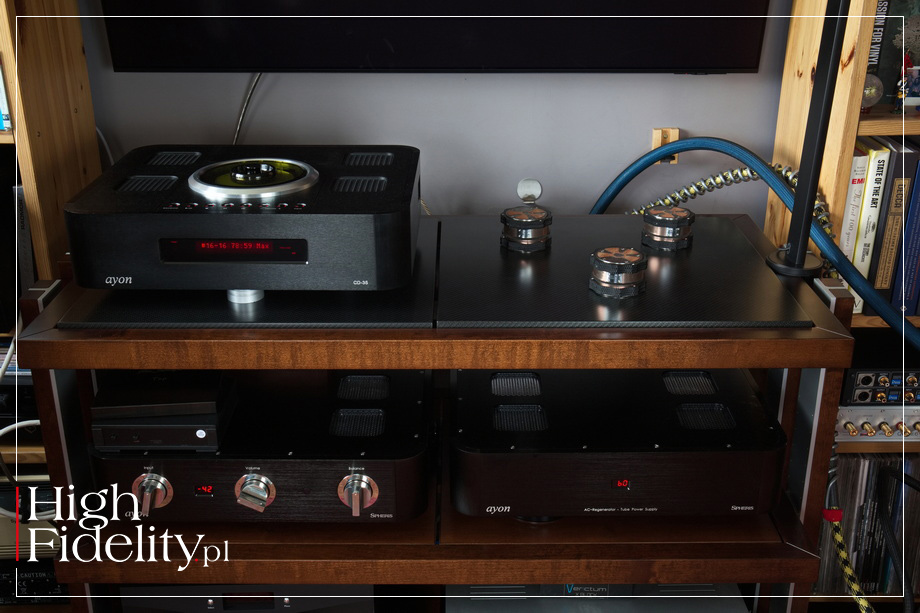
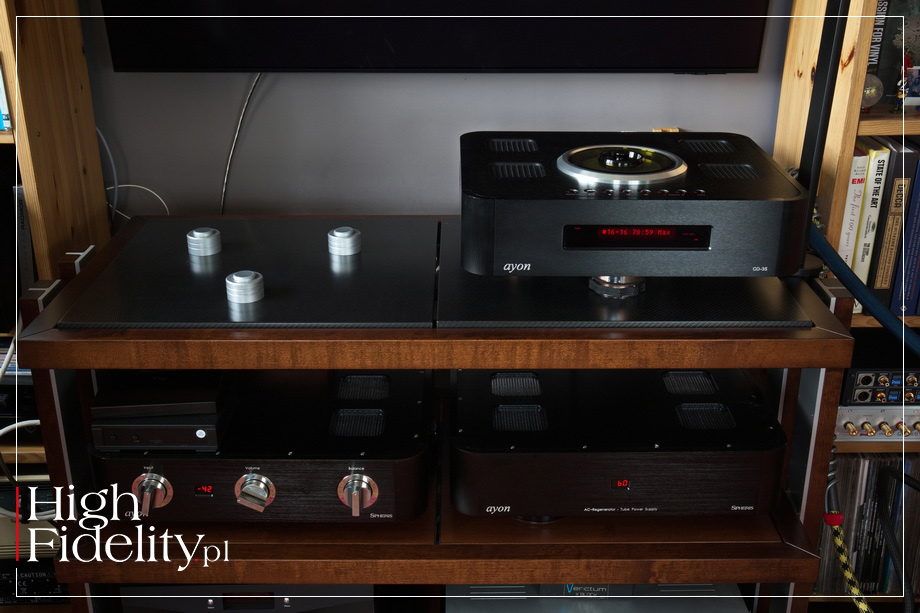
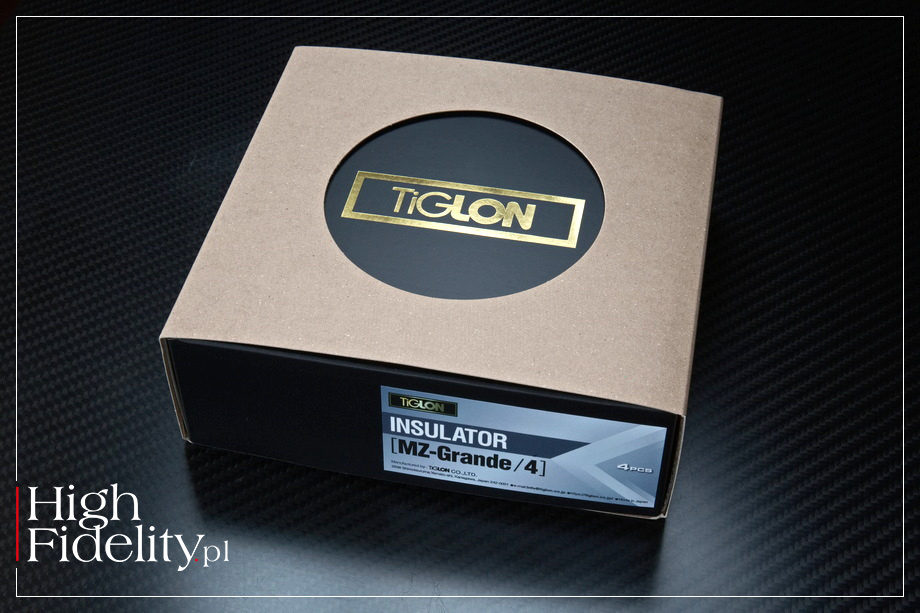
The feet are packed in modest but attractive, aesthetic cardboard boxes. They are both hi-tech and nice. ▌ THE LISTENING SESSION THE WAY WE LISTENED • Tiglon insulators have been tested in the ‘High Fidelity’ reference system. I always test insulators in my system in the same way – under the signal source, sometimes with the help of other devices. This time, I tested them under the Ayon Audio CD-35 HF Edition SACD player. 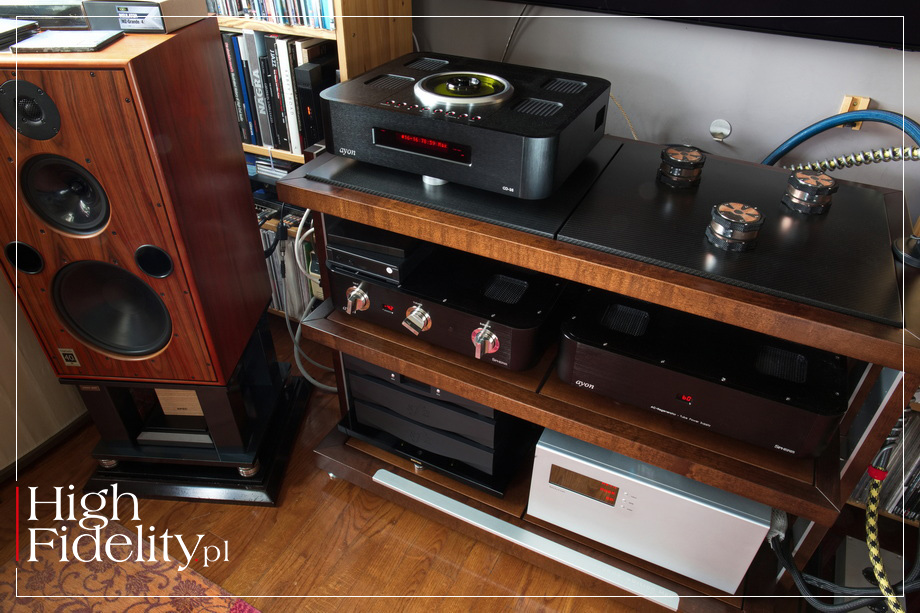
During testing, I move the player around, so its connections need to be flexible. For this purpose, I use Crystal Cable Absolute Dream interconnects and a Harmonix X-DC350M2R Improved-Version power cable. The comparison consisted of listening to the same 2-minute fragment of a song on reference feet and then transferring it to the tested insulators: AAA/BBB/AAA, with the known A → DIVINE ACOUSTICS GALILEO – and B → TIGLON MZ-GRANDE. » ALBUMS USED IN THE TEST ⸜ a selection
⸜ ISAO SUZUKI, Blow Up 2, JazzFine JFIS-XR-001, XRCD24 + DVD ⸜ 2003. THERE ARE CERTAIN FEATURES OF THE TECHNOLOGY used by Tiglon that affect the sound regardless of whether we are talking about analogue interconnects, power cables or, finally, anti-vibration components. It is as if the material chosen by the manufacturer, combined with his own musical taste, produces a sound with selected, repeatable characteristics. I can also hear this with the GZ-Grande insulators. I am thinking mainly of something like warmth, which is not warmth per se, but which gives that impression. It is something that organises this message from within. But not by enlarging the sound sources or bringing them closer. After replacing the Ayon Audio player's Divine Acoustics feet, which are mechanically assembled, large components made by a Polish company, with Tiglona insulators, the sound reduced its scale slightly. It was not a big change, but it was there. Roland’s synthesizer opening the track ˻ 2 ˺ What a Wonderful World from the album Blow Up 2 by ISAO SUZUKI, had weight, scale and a nice tone. But, just like the double bass entering halfway through the first minute, significantly overscaled and with a strong delay, it was a bit further away from me and seemed calmer. I listened to this fragment several times to understand what was actually going on, because on the one hand the effect I am talking about was clear, and on the other hand I did not feel a ‘loss’, but only a ‘shift’ of attention. |
It seems that the point is that Tiglona's insulators are turning towards smoothing out the attack and harmonising the individual elements. The instruments in the mix were absolutely clear, because both the piano and the double bass player's rumblings were strong and distinct. But they were also more ‘together’, less selective than with the reference feet. It was as if the magnesium and other treatments used by this Japanese manufacturer led us towards greater saturation of the midrange along with its discharge. 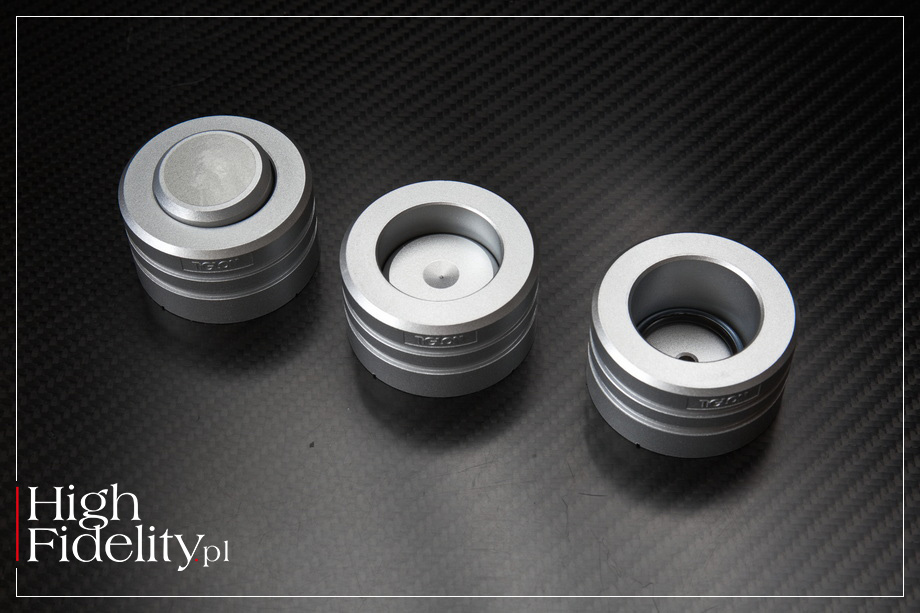
It's a bit like switching from a transistor amplifier to a tube amplifier. I use this stereotype deliberately because it really captures how Tiglona's feet work. It's not about dulling the highs, but rather complementing the low mids and rounding off the attack of the sound. Not muddiness – but roundness, if you know what I mean. GARY DAVIS's guitar and vocals in ˻ 1 ˺ Samson And Delilah from his album Harlem Street Singer, released in 1960 by Prestige Bluesville, were thus warmed up and more focused on the listening axis. The reverb, clear and distinct with the reference feet, was shorter and not as open. When I talk about shortening reverberations, I don't mean to disparage this sound. The fact is, I really like it. It wasn't as clear as before, but it wasn't any poorer for that. Because now, with the MZ-Grande, it had an incredible charm. The album in question was recorded by Rudy Van Gelder, who, let me remind you, specialised in jazz recordings. But he also had a great ear for classical music and blues. So, he preserved the character of this performance, that of a preacher playing for the faithful during a service. The Tiglon insulators shifted the perception of this music slightly towards listening to it at home, as if they were coordinating the small elements in the sound, resulting in smoothness and fullness. It should now be clear that this Japanese product has a wonderful effect on the density of the sound. Although I said that the scale is smaller with it than with the reference feet, I did not add at the time that the latter are above average, even outstanding in this respect. Compared to the feet on which the vast majority of audio products, often very expensive ones, stand, the MZ-Grande will seem like a ‘generator’ of scale. ▲ Our albums BLIND GARY DAVI 
AS BRUCE BASTIN WRITES, Reverend (Blind) Gary Davis was a great gospel and folk blues singer and a masterful acoustic guitarist, ‘one of the greatest talents to emerge from the Piedmont tradition.’ (Red River Blues: The Blues Tradition in the Southeast, Urbana: University of Illinois Press, 1986, p. 330). His profile on the Appeal for Cultural Equity website adds that, as a street musician, Davis made relatively few recordings in his early career, but his virtuoso fingerpicking had a significant influence on other regional musicians, particularly Blind Boy Fuller, the leading exponent of the Piedmont guitar style in the 1930s. In the 1950s and 1960s, Davis taught and performed in New York City, becoming a beloved mentor to urban folk and rock legends such as Ramblin' Jack Elliot, Dave Van Ronk, and Bob Dylan. Unlike some of his peers, Davis could play in any key; more → HERE. 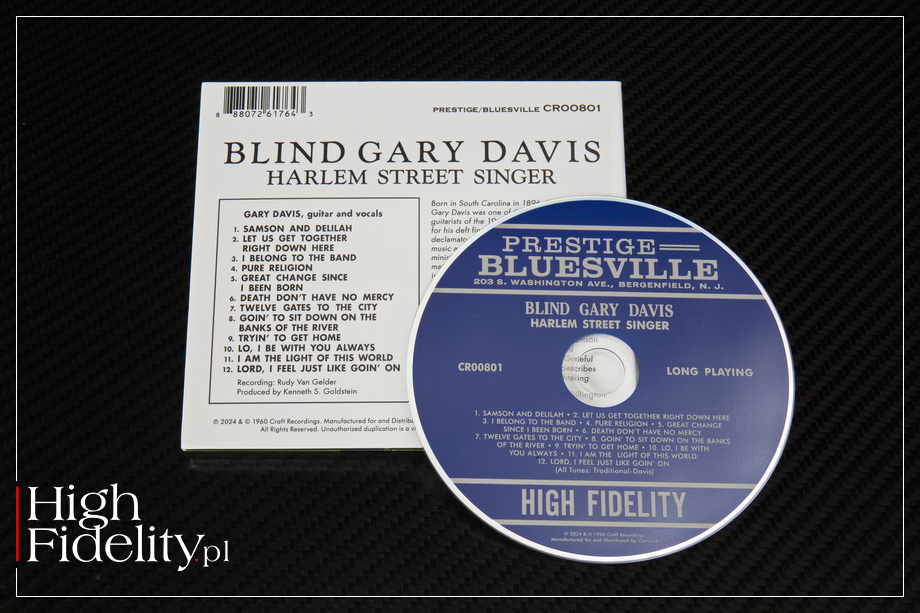
The album Harlem Street Singer It was recorded in a single day, on 24 August 1960, and released by Bluesville, part of Prestige, in December of the same year. It includes what is probably Davis's best-known song, Death Don't Have No Mercy. For a former street musician, he found himself on an excellent label that provided him with an outstanding sound engineer. The album was recorded by Rudy Van Gelder at his Engelwood Cliffs studio in New York. Originally released in mono, it was later made available in stereo. For the Craft Recordings release, the latter version was remastered by Matthew Lutthans at The Mastering Lab and released in the ‘Bluesville Acoustic Sounds Series’. The sound of these recordings is very raw. Although Van Gelder occasionally makes heavier use of reverb, specifically the plate reverb (Plate Reverberator) from the German company EMT, model 140, he usually leaves the Reverend's vocals in close perspective, as well as his guitar. The latter can be heard slightly to the left, but due to the studio's reverberation, it can also be heard in the vocalist's microphone. It is wonderful, simple music with a complex interior, which can also be said about the recording and remastering. It is careful and did not warm up this clean, direct recording. This album, we should add, is available in both CD and LP formats – both versions have been remastered in analogue. (AAA). ● » Sound quality: 7,5/10 BUT IT'S NOT ABOUT THE SCALE ITSELF, because that's not a problem. There are no problems at all, as if the tested insulators were pushing them aside like a snow plough. And even with dense recordings, whether it's the black metal band HELHEIM, whose album Hrabnar / Ad Vesa I bought during my holiday in Oslo, or the sophisticated, warm sound of the FERIT ODMAN’s big band, the Japanese insulators did the same thing: they smoothed, polished and warmed the sound (I can't help it, that's not the point, but the effect is similar). 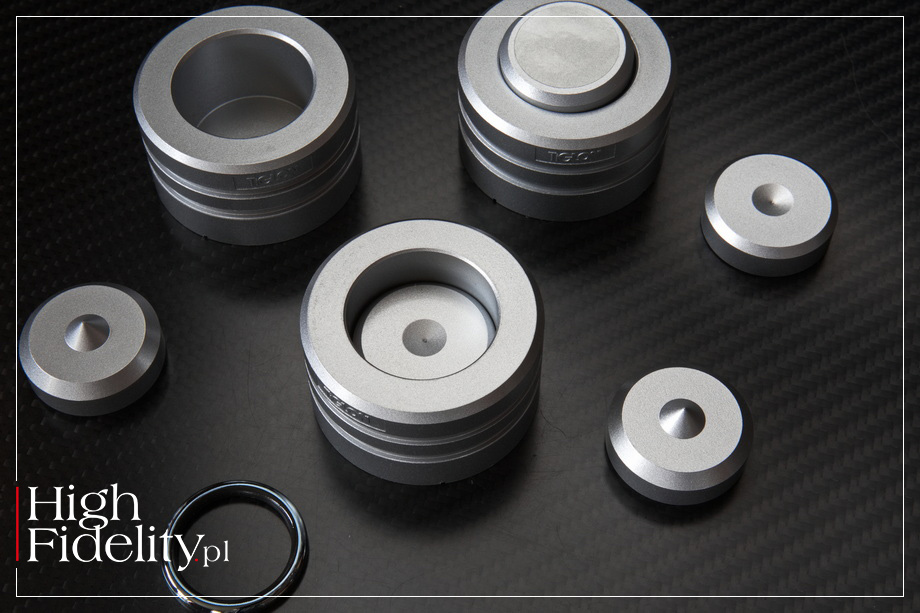
The album Dameronia With Strings, beautifully released on XRCD24 by Kazuo Kiuchi's Master Music label, features a lot of cymbals, although they are usually played with brushes – this is ‘salon jazz’. But sometimes they strike harder and then the ‘brass’ comes through. And it was this transition that was shown very well, even when the player was standing on feet from Japan. They do not dampen the high frequencies or round off the low frequencies. The edges of the spectrum acquire a kind of ‘patina’ and warmth, but are not dominated by it. It's just that any music sounds better with them. The insulators integrate and smooth out the sound. But, as I said, they do not dampen it; they allow energy to be transmitted, only in a directed manner. The crackling of the vinyl record at the beginning of KENDRICK LAMAR's To Pimp a Butterfly was clearly spatial, and the low bass descents that followed were rendered with power and force. This perception is aided by the fact that we can turn up the volume by 1 or 2 dB compared to regular feet, and the sound does not become aggressive, but rather ‘sticks’ better. ▌ Conclusions TIGLON MZ-GRANDE INSULATORS are an example of how sound can be shaped in an elegant way while maintaining high fidelity. These are elements that warm up the sound and saturate it. They do not dampen the extremes of the frequency range, because there is a lot of energy there. It is our attention that is focused on the smooth, dense middle of the frequency range, hence the impression. Therefore, they do not offer a momentary adrenaline rush in a single peak, but a ‘delayed’ rush, more evenly distributed over time. 
The music flows nicely, calmly and pleasantly with them. You can listen to it without stress, in comfort. It's as if we've entered a slightly different universe where we don't have to fear anything. If we are looking for something that emphasises selectivity, something that will go deep into the mix of recordings, it is better to look elsewhere. The Japanese insulators do something else that is equally difficult to achieve: they make us want to listen to music all the time. What is more, they do it in a way that is neither tiring nor boring. Cool, isn't it? ● 
THIS TEST HAS BEEN DESIGNED ACCORDING TO THE GUIDELINES adopted by the Association of International Audiophile Publications, an international audio press association concerned with ethical and professional standards in our industry, of which HIGH FIDELITY is a founding member. More about the association and its constituent titles → HERE. |

 |



|
Reference system 2025 |
|
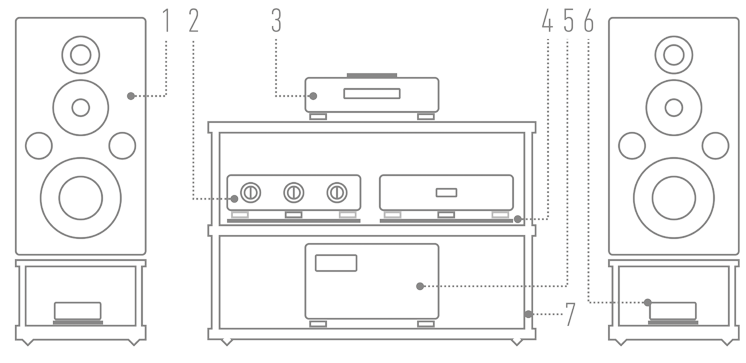 1) Loudspeakers: HARBETH M40.1 |REVIEW| 2) Line preamplifier: AYON AUDIO Spheris III Linestage |REVIEW| 3) Super Audio CD Player: AYON AUDIO CD-35 HF Edition No. 01/50 |REVIEW| 4) Stands (loudspeakers): ACOUSTIC REVIVE (custom) |ABOUT| 5) Power amplifier: SOULUTION 710 6) Loudspeaker filter: SPEC REAL-SOUND PROCESSOR RSP-AZ9EX (prototype) |REVIEW| 7) Hi-Fi rack: Hi-Fi rack: finite elemente MASTER REFERENCE PAGODE EDITION Mk II, more → HERE |
|

|
Cables Analog interconnect SACD Player - Line preamplifier: SILTECH Triple Crown (1 m) |ABOUT|» ANALOG INTERCONNECT Line preamplifier → Power amplifier: Siltech ROYAL SINLGE CROWN RCA; review → HERE Speaker cable: SILTECH Triple Crown (2.5 m) |ABOUT| |

|
AC Power Power cable | Mains Power Distribution Block - SACD Player: SILTECH Triple CrownPower (2 m) |ARTICLE| » POWER CABLE Mains Power Distribution Block → Line preamplifier: Acoustic Revive ABSOLUTE-POWER CORD, review → HERE » POWER CABLE Mains Power Distribution Block → Power amplifier: Acoustic Revive ABSOLUTE-POWER CORD, review → HERE Power cable | Power Receptacle - Mains Power Distribution Block: ACROLINK Mexcel 7N-PC9500 (2 m) |ARTICLE| Power Receptacle: Acoustic Revive RTP-4eu ULTIMATE |REVIEW| » ANTI-VIBRATION PLATFORM under Acoustic Revive RTP-4eu ULTIMATE: Graphite Audio CLASSIC 100 ULTRA, review → HERE Power Supply Conditioner: Acoustic Revive RPC-1 |REVIEW| Power Supply Conditioner: Acoustic Revive RAS-14 Triple-C |REVIEW| Passive filter EMI/RFI: VERICTUM Block |REVIEW| |

|
Anti-vibration Speaker stands: ACOUSTIC REVIVE (custom)Hi-Fi rack: finite elemente MASTER REFERENCE PAGODE EDITION Mk II, more → HERE Anti-vibration platforms: ACOUSTIC REVIVE RAF-48H |ARTICLE| » ANTI-VIBRATIONAL FEET: |

|
Analogue Phono preamplifier: Phono cartridges:
Clamp: PATHE WINGS Titanium PW-Ti 770 | Limited Edition Record mats:
|

|
Headphones » HEADPHONE AMPLIFIER: Leben CS-600X, review → HEREHeadphones: Headphone Cables: Forza AudioWorks NOIR HYBRID HPC |