

|
COMPACT DISC PLAYER ANCIENT AUDIO
Manufacturer: ANCIENT AUDIO |

 |
 |
 |
|
Review
text by WOJCIECH PACUŁA |
|
No 259 December 1, 2025 |
|
˻ PREMIERE ˼ ⌈ Founded in 1995, ANCIENT AUDIO is a Polish company based in Krakow, specializing in high-end electronics, particularly tube devices. Its product range also includes speakers and semiconductor devices. This year, the company is celebrating its 30th anniversary with a commemorative CD player model. ⌋ I THINK THAT EVERYONE reading “High Fidelity” will respond to the name of a company that has been es-tablished on the audio scene for years, well-known and respected, with a spontaneous association with a specific product. We say “SME” and we see a turntable (although twenty years ago it would probably have been a tonearm), we say ‘Naim’ and we see an amplifier, just as when we think of “Accuphase.” We mention the name Harbeth and the company's angular monitors materialize. 
As far as I am concerned, the name Ancient Audio brings to mind primarily Compact Disc Players. The Lektor Prime, Air, Air V-Edition, and above all the top-of-the-line Grand models set the benchmark for many other boutique manufacturers. They had a distinctive shape, simple mechanical construction, and elec-tronics that were well thought out in every detail and tested in hundreds of listening sessions (really!). All of them were based on Philips mechanics, the CD-Pro2 model, and a proprietary tube output stage. Their special feature was the presence of analog volume control and an analog input, which allowed them to be the center of a simple audio system, with power amplifiers, speakers, and an additional signal source. The tested Lektor 30th Anniversary player is a continuation of these solutions. It is also the cheapest product of this type from Ancient Audio in years and part of its 30th anniversary celebrations. And it is completely different. ▲ A few simple words… JAROMIR WASZCZYSZYN 
⸜ JAROMIR WASZCZYSZYN with Lektor 30th Anniversary at „High Fidelity” THE STORY BEGINS IN 1998. Ancient Audio was already an well-established company when it pre-sented a system consisting of a CD player and monoblocks based on 211 triodes at the Warsaw Audio Show. The idea was simple: to create a CD player that resembled a turntable in appearance – everything had to be ret-ro, “ancient”. This is where the concept of a top-loader came from. In practice, this was not easy to achieve, as the flap closing the disc in most such players resembled a tank hatch – it was equally armored and ‘easy’ to use. The first Lektor therefore featured a glass cover sliding on three ball bearings. I would say that this was the most labor-intensive part of the player. But seeing the CD on the bare mechanism, I was captivated by it. 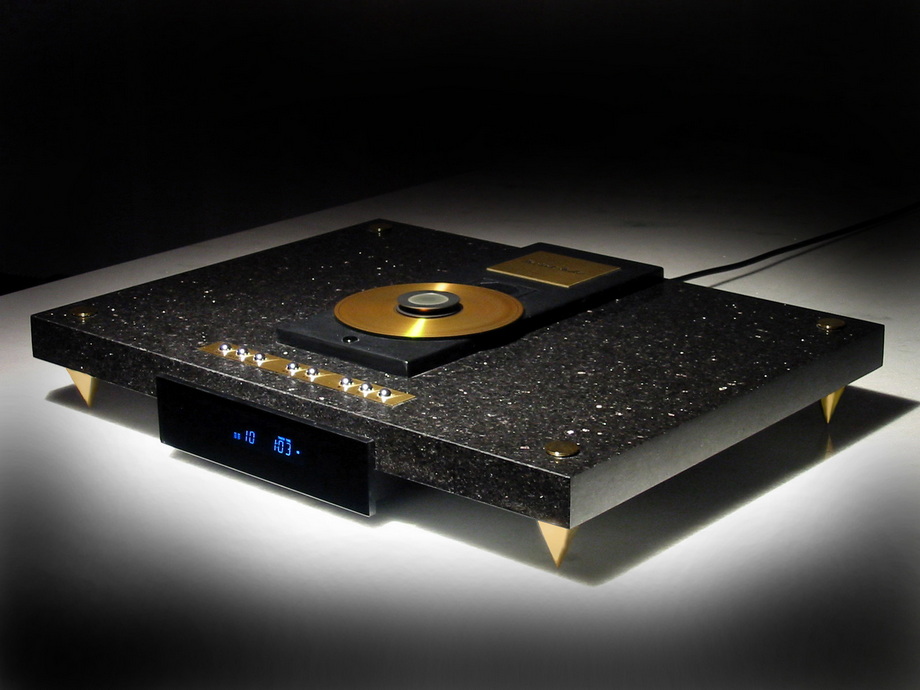
⸜ Lektor Galaxy Player The decision to use a fully accessible disc, like in a turntable, except silver instead of black, was there-fore only a matter of time. This is how the Lektor II was created, along with a complete system called the Gal-axy System, weighing half a ton audio set encased in granite. This paved the way for the Lektor III, with an output tube and gain control. It was followed by the Lektor IV, with a Philips CD-Pro2 mechanism, and its im-proved version, the Lektor V. At the same time, the most sophisticated Lektors were developed: Grand, Prime, and Air. 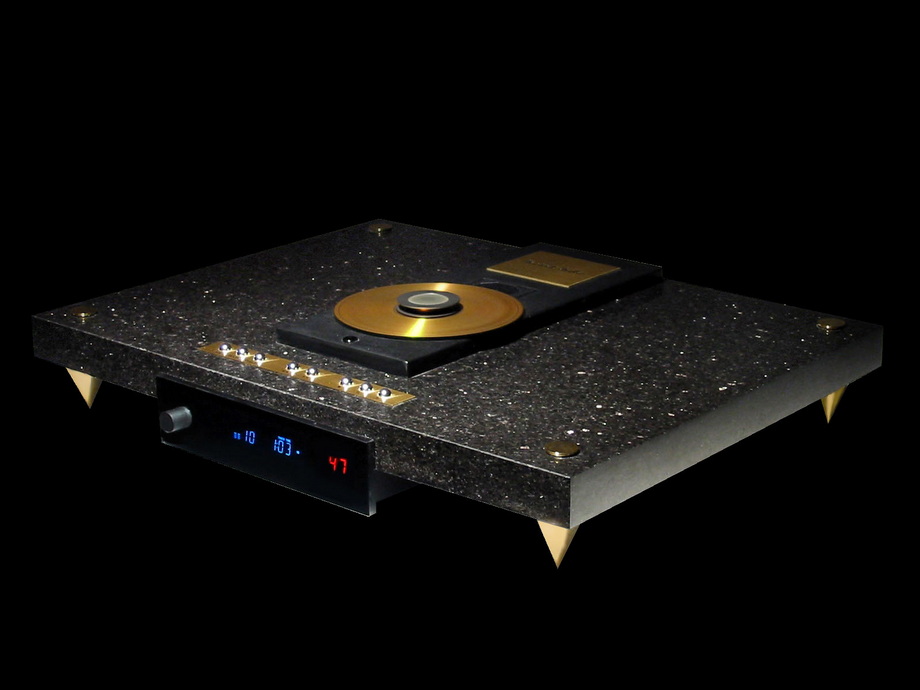
⸜ Lektor III Player This was followed by a long break, as Philips stopped producing mechanisms, the heart of the player. Several years passed, and the friendly Austrians took up the gauntlet, with the help of Philips' elderly engineers. The new CD-Pro8 drive proved to be better than its predecessor in every respect, and most importantly, it was readily available. With it in hand, I was able to get to work, resulting in the Lektor Joy model, the sum of the company's experience, honored with many awards, and the current flagship model. 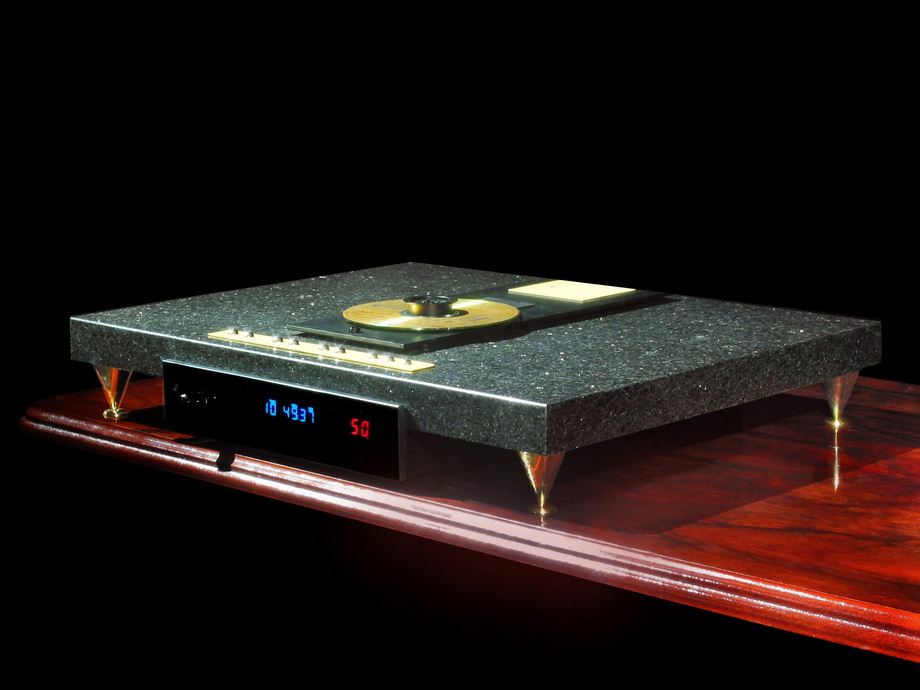
⸜ Lektor IV Player And so we smoothly reached the company's 30th anniversary. Since most components produced by the com-pany were CD players and they built its reputation, the anniversary product had to be a CD player. Ancient Audio has a rather original design concept. Namely, we focus on the most sophisticated product. It's a bit like taking your first steps in the mountains starting with K2, Mount Everest, or Olympus. It's a daunting task, but then you can see all the paths from above. It is then easy to create simpler, attractive models. Based on the Joy Lektor, it was possible to design something cheaper, but still attractive, with the help of an accountant's calculations. I wanted the anniversary Lektor to be available to a wider circle of CD addicts. 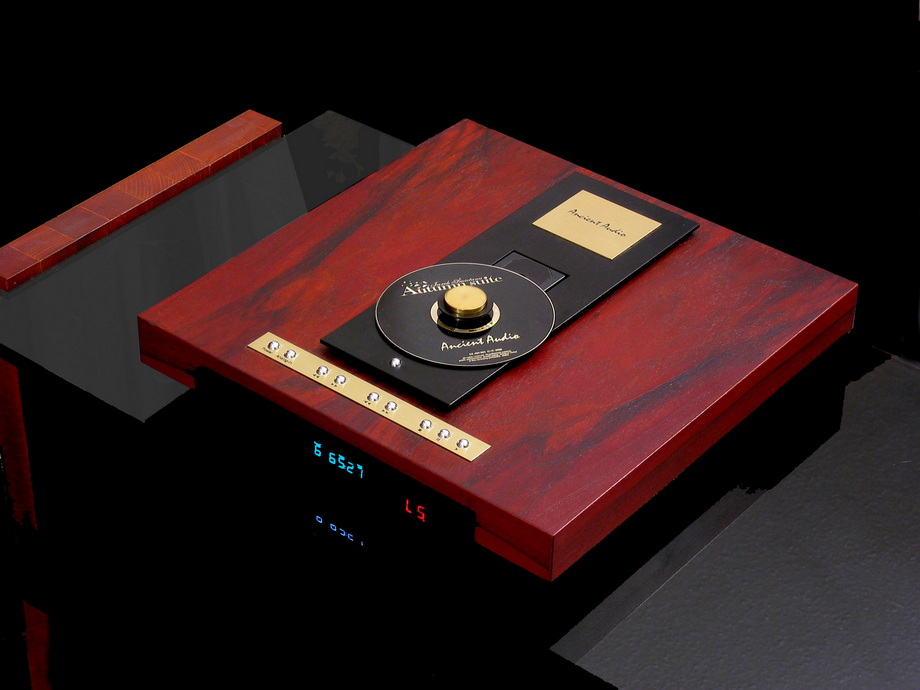
⸜ Lektor V Player I wanted to preserve as much quality as possible in the Lektor 30 Anniversary, while reducing costs as much as possible. So it does not feature a metal chassis, painstakingly carved from a single piece of aluminum, a Tent Labs word clock, V-Cap capacitors, analog inputs, two transformers, or XLR outputs. However, it does use the same mechanism, converter circuit (in stereo mode), clock, and analog output. All in all, it is a simplified flagship. As a result, the player looks attractive – the glass and aluminum sandwich construction is very durable, highly rigid, and free of resonance. And it is three times cheaper than the flagship model. » JW ▌ Lektor 30th Anniversary WE NOW KNOW THAT THE FIRST DEVICE of the new generation capable of reading Compact Discs was the Lektor Transport, unveiled in 2023; test → HERE. It cost almost PLN 30,000, was based on mechanics that were a “descendant” of Philips' idea, and had a metal chassis. A year later, a complete player, the Joy model, was ready; test → HERE. As the designer said at the time, its concept was derived from the company's most popular model, the Air. Looking for a way to present the brand in the best possible light in this anniversary year, Jarek Waszczyszyn did not launch a high-end “rocket,” but decided to distill his experience and offer a device that more people could afford. The result of this reflection was the Lektor 30th Anniversary. In a note sent at the beginning of October, the designer wrote:
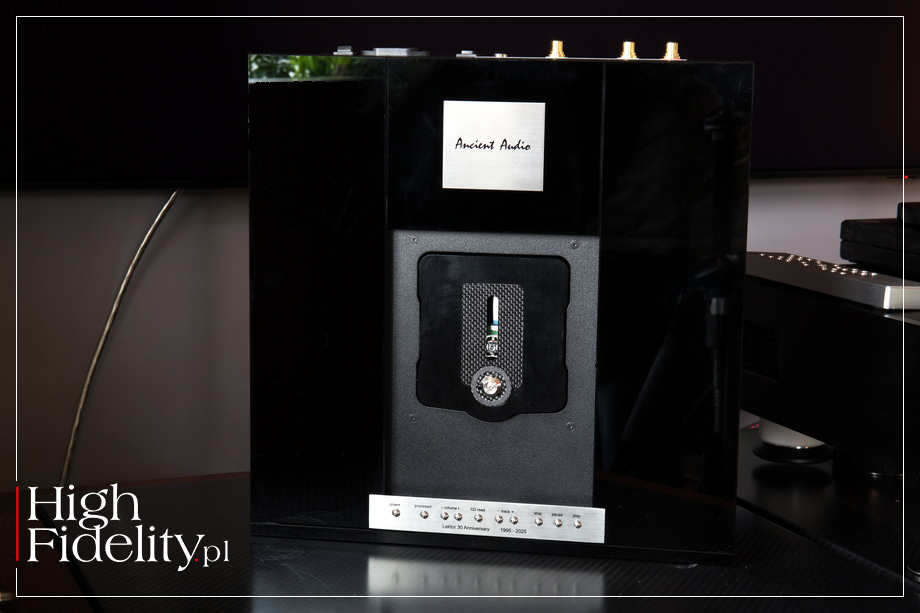
FEATURES • The 30th Anniversary model is a complete Compact Disc player. It has a clear display on the front, and the disc is placed directly on the motor axis; this device is a so-called top-loader. The disc is pressed down by a small ring, and the disc contents, known as the TOC (Table of Contents), are loaded by pressing a button; in other devices, this happens automatically when the tray or disc cover is closed. 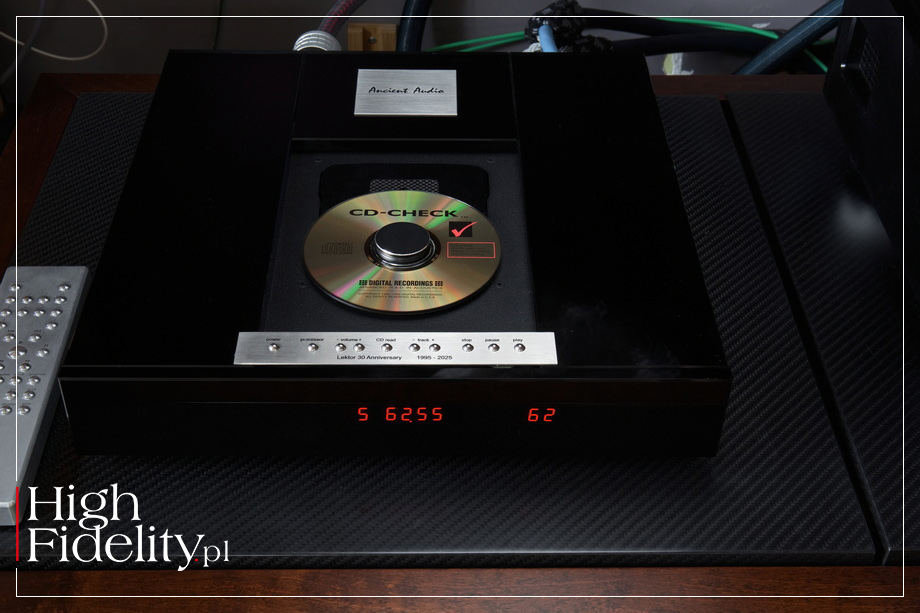
The device is an unbalanced design and RCA analog outputs. It also features an RCA digital output (S/PDIF) if you want to use an external digital-to-analog converter. However, it does not feature the analog in-puts offered by other models from this manufacturer. On the other hand, it retains the ability to adjust the vol-ume within a range of 100 dB, in 1 dB increments. This means that it can be connected directly to a power am-plifier or active speakers. This is also possible thanks to the high output voltage level, which is 5 V in the “high” position. To better adapt the device to a specific system, we can change the circuit gain to a lower value, resulting in an output voltage of 2 V. And 2 V, let us remind you, is the voltage recommended in the Red Book, a collection of licens-ing regulations for the Compact Disc format. The nominal value, without attenuation, is obtained at the “100” position on the display. Unlike all previous devices from this company, which used analog volume control in integrated circuits with re-sistor ladders, the Lektor 30th Anniversary uses digital control implemented in a digital-to-analog con-verter from ESS Technology. As Jarek said during a meeting of the Krakow Sonic Society, he conducted many comparative tests and concluded that this solution is so good that in this case, an additional stage in the circuit can be omitted. This device is a “pure” CD player, without any additional inputs. The only exception is the option to add a Digital Speaker Processor, which, according to the description, “eliminates the imperfections of speakers and headphones.” At the back, there is a mechanical switch that allows you to select the current pro-gram – for example, for speakers or headphones. TECHNOLOGY • The Lektor Joy Player was used as the basis for the anniversary model, although the chassis resembles what Jarek made for the Step player. The new, cheaper model uses the same mechanism – CD-Pro8, D/A converter – ESS Technology ES9038 Pro – analog output stage and control module as the flagship model. The form of the device remains similar, but it is not the same. Instead of an expensive aluminum chas-sis, elements made of hard tempered mineral glass and aluminum were used. The sandwich construction is de-signed to ensure “high rigidity and high vibration damping” and is supposed to be “both aesthetic and durable in normal use.” To be honest, I really like this version. As we mentioned, similar to the three previous new-generation Ancient’s products – apart from Transport and Joy, the company also offers the Step model – a new mechanism has been used here, the CD-Pro8 mod-el from the Austrian company SUOS-HiFi. It is a separate part of StreamUnlimited, a manufacturer spe-cializing in transports and file, CD, and SACD players. We owe CD-Pro8 to a company that you would not expect to love “digital” – Austrian Pro-Ject. It in-vested a lot of money in developing a new mechanism with its CD players in mind. StreamUnlimited was re-sponsible for the development and implementation of the mechanism into production. If the name of this solu-tion reminds you of the CD-Pro2 mechanism, you are right – both transports were designed by the same people, former Philips engineers. 
The latest version features an aluminum frame to which the optics carriage is bolted which is nothing new. The whole thing is decoupled from the base, which we are also familiar with. What is new, however, is the upper wall section with a laser cutout, made here of carbon fiber braid (Philips uses plastic), as well as the plate to which the whole unit is bolted, also made of carbon fiber braid. The control system is also completely new – it is a Blue Tiger CD-84 module, but with software developed for this specific drive. Quite quickly, audio companies that appreciated this solution began to use it in their own devices. One of them was the Danish company Gryphon. We wrote about this when testing the → ETHOS, costing a staggering PLN 170,000, and Pro-Ject's inexpensive (in this context) CD transport → CD BOX RS2 T ˻PL˺, and the French Totaldac in the d1-CD model; more → HERE . Each of these manufacturers used it in their own way, with different casings and slightly different software. StreamUnlimited Optical Storage offers full documentation of its solution, but, as Jarek says, it is difficult to navigate and contains many minor errors. That is why he asked a friend, a Polish engineer, to write a program for his version. So, Lektor players feature his original version. This can be seen in the tests I conducted using the CD-Check disc from the American company Digital Recordings. The best transports, including CD-Pro2, pass through the entire process without any problems. CD-Pro8, used in the Pro-Ject transport, passed four tracks and only stuttered on the fifth. Interestingly, the transport in Gryphon had no problems with this and played all five tracks without any issues. Ancient Audio transports, on the other hand, pass four tracks without any problems and only stutter on the fifth, not permanently, but the sound is in-terrupted. This is still a really good result. |
And so we come to what I believe to be the most important change compared to the first generation of Lektors. I am referring to the analog circuitry. As Jarek wrote in the review of the Joy model, the sound of this section was largely “responsible for the success of the Lektors.” He went on to say:

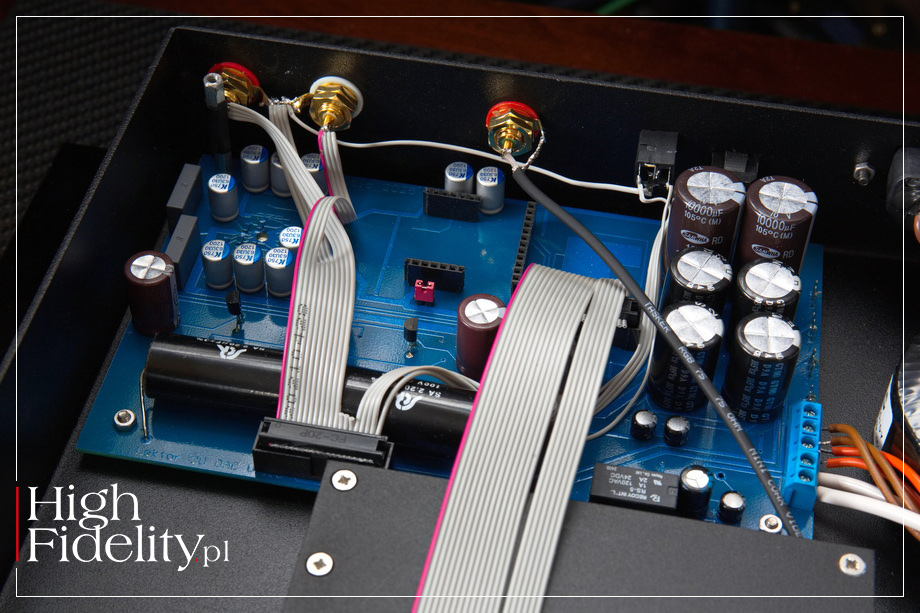
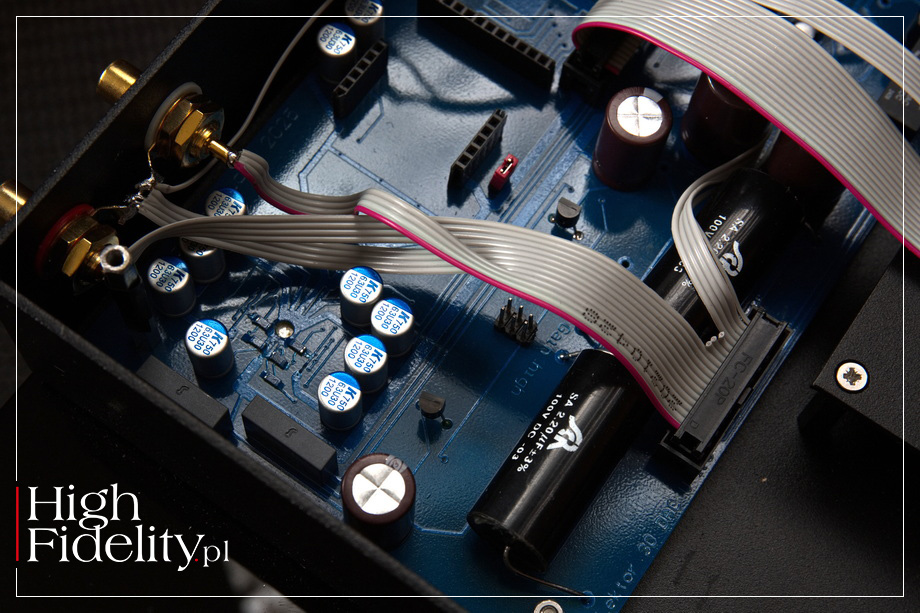
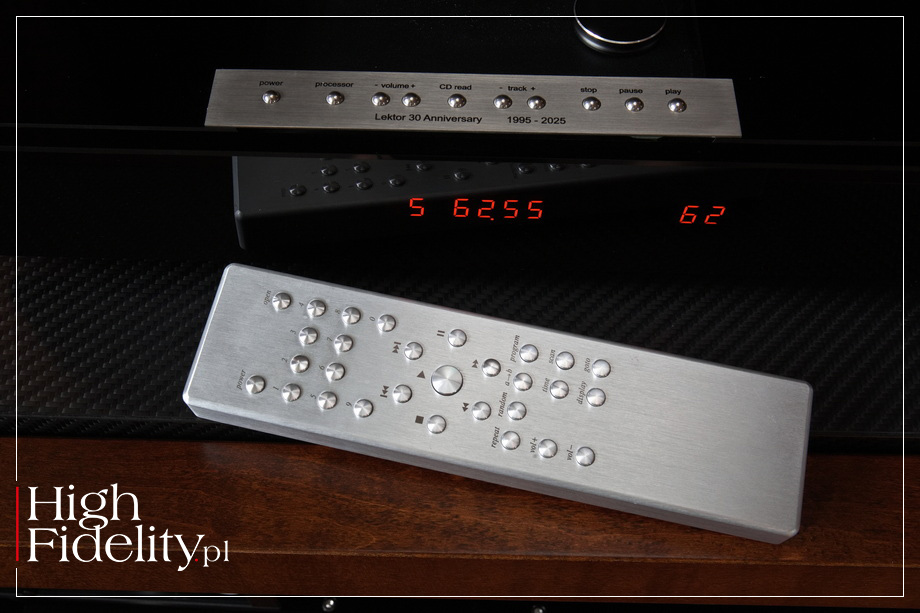
The new players are therefore based on MOSFET field-effect transistors. This is a cheaper solution, which made it possible to create the 30th Anniversary model. The power supply was also simpler, based on a single, small transformer from Toroidy.pl, with several secondary windings. It should be added that the coupling of the circuit with the outputs is handled by polypropylene capacitors from the French company SRC. CONTROL • The player is controlled using the manufacturer's signature buttons placed above the display. There is also a mechanical power switch and a processor switch (if installed) located on the rear panel. But we also get a remote control. It is made of aluminum with many but-tons, which, in my opinion, does not suit the elegant Ancient players at all. A simple controller with basic com-mands and large, easily accessible volume up/down buttons would suffice. The remote control is silver, and the player is black. The player looks nice, and the recess for the disc below the top surface is a good design feature. The workman-ship is typical of a small craft manufacturer – simple but solid. The only thing that definitely needs to be re-placed are the feet. Those in the Lektor should be treated like the AC power cables that come with the devices. It is worth considering buying some decent after market feet to replace them. And one more thing – as usual, I did not see the box in which the Lektor is sold, nor the user manual, two elements that are an important part of the premium market, with which Jarek's company has been in ideological dispute for years :) ▌ SOUND HOW WE LISTENED • The Ancient Audio Lektor 30th Anniversary Compact Disc player was tested in the “High Fidelity” reference system. It stood on its feet on the upper carbon shelf of the Finite Elemente Grand Master Pagode Edition Mk II rack. It was compared to the Ayon Audio CD-35 HF Edition SACD player. The system also included the Ayon Audio Spheris Evo line preamplifier and the Soulution 710 power amplifier. 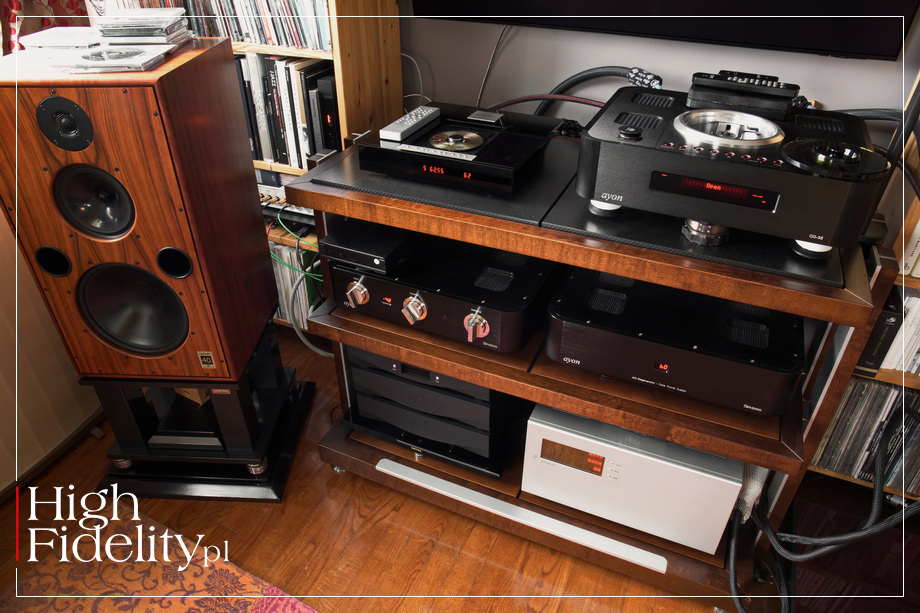
The signal between the player and the preamplifier was transmitted via Siltech Single Crown RCA interconnect. The signal to the Harbeth M40.1 speakers was sent via Siltech Triple Crown speaker cable. The player was powered using Acrolink Mexcel 7N-PC9100 cable.
» ALBUMS USED IN THE TEST ⸜ a selection
⸜ MICHAEL JACKSON, Thriller, Epic | Sony Music/Mobile Fidelity Sound Lab UDASCD 2251, SACD/CD ⸜ 1982/2022. THE USE OF TUBE TECHNOLOGY by a given manufacturer, which is also ostentatiously presented as a mod-el for semiconductor designs, refers us to the stereotype of sound associated with these tubes. That is, warmth, density, saturation, but also clarity and, in the case of the best products, resolution. In the case of An-cient Audio, however, it is not that simple. Its amplifiers using 300B tubes, considered by many to be “reference tubes,” did not sound that way at all. That is, maybe they did, but those characteristics were not what stood out. Rather, it was speed, dynamics, clarity, and resolution. The same was true for Ancient CD players. The more expensive the product, the more sophisticated and at-tractive these components were. But it was difficult to point out a “tube warmth” as a feature in their case. So when such a manufacturer talks about a “tube FET output,” stereotypes and brand awareness collide in our minds. Neither of these components seems less important. And only listening allows us to verify the first of these two associations and assess which one prevails. As it turns out, the Lektor 30th Anniversary is a device that leans toward “tube sound” in the sense that most audiophiles understand it. It's a presentation filled with large images, with warm and vivid sound. The automatic percussion that opens ˻ 1 ˺ Wanna Be Startin’ Somethin’, a track from MI-CHAEL JACKSON's album Thriller, had a dense texture and low sound. This is one of the more famous uses of the Linn LM-2 drum machine, to which Paulinho da Costa added live fragments. It is also important that the accompanying bass is also synthetic. Lektor played these two elements in a powerful, dense way, which sounded really cool. It was also immediately apparent that the device plays high frequencies in a dense, sweet way, in a very “sunny” manner. Because it was not muted, but filtered through blinds, and not bright, yet energetic. Be-cause this is energetic presentation! The song in question has an extremely strong internal pulse and a fairly fast tempo. Ancient’s Player brought out the layers, many layers, on which it was built. And although Jackson's vo-cals were placed quite far in the mix, a little further than with Ayon, they were still clear, as was the warmer brass section in this version. 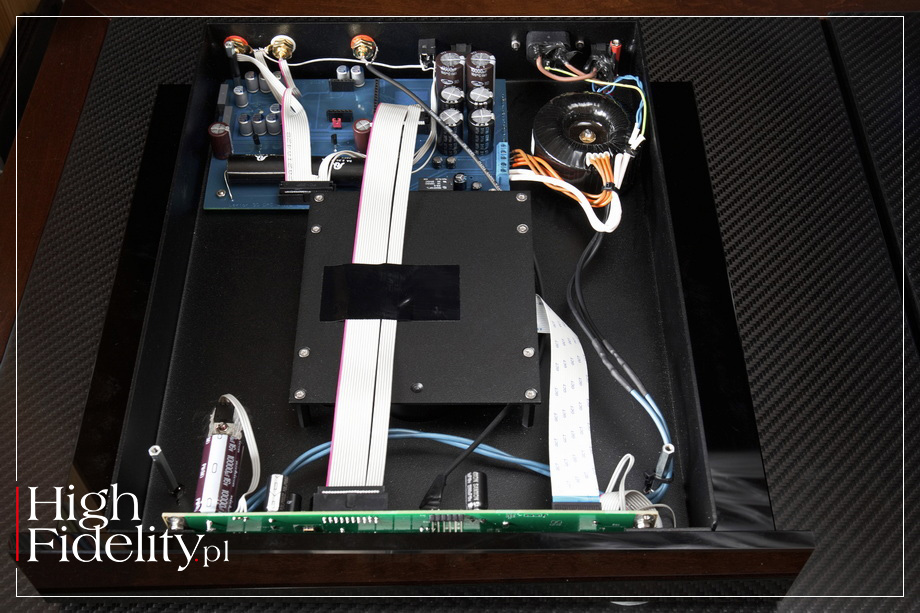
This is, in general, a CD player that celebrates bass. Its sound is not bass-heavy, but it is based on that range. When we hear the bass line played on a Minimoog synthesizer, programmed by Anthony Marinelli, in the next track on the album, ˻ 2 ˺ Baby Be Mine, it is cool – dense and low. The vocals, as before, have no clear contours, they are more of a blur than a distinct shape, but that's how it was recorded. Importantly, in this quest to weigh down the sound, I found no trace of Jackson's voice be-ing muffled. It seems that the drum machine is also the basis for the sound of MADONNA's song ˻ 1 ˺ Music, which opens her eighth album of the same title. Described as “a song in the electropop, disco, electro-funk and dance-pop genres in a static G minor key,” it has a hypnotic rhythm, similar to Jackson's Wanna Be.... And yet it is a completely different sound – open, dense, low. The anniversary Lektor showed this difference, which is obvious, as we are talking about a high end device. It also presented it in its own way. When the low bass came in at 0:40, the player deepened and complemented it. It didn't drag it out or flooded everything with bass, but it did go in the direction of complementing or enriching the lower range. It was interesting that the strong cymbals remained strong and slightly in front of the mix. But Madonna's vocals were also clear. In this warm sound, there is a lot of information that “carries” the sound. Like when, just before 2:40, the rhythm stops for a moment and the sound begins to come from behind our heads – the Ancient showed this with grace, effortlessly. And precisely. This is a sound with an enlarged foreground that is being moved toward us. Not by much, without af-fecting the coherence of the sound, but still. That is why Shohji Yokouchi's acoustic guitar, accompanying TAKESHI INOMATA's drums on his album Dialogue in a song with the surprising title ˻ 5 ˺ The Dialogue With Guitar, was so powerful, so full, so cool. It was ener-getic playing, not audiophile nonsense. Because this is not that kind of album, even though Japan is widely known for testing audio equipment in its most sophisticated form. Although imitators of this album distorted the idea of albums with jazz dialogues, which audiophiles now listen to, listening to it on a device such as the Lektor 30th Anniversary shows that it was about the meeting of two personalities, not about the sound itself – the incredible sound here is the result, not the goal. I heard this in the dense and “gutsy” sound of guitar and in the powerful sound of the drums. Both instruments were closer to me than with the Ayon player. And it's not that I was comparing the SACD (Ayon) and CD (Ancient) layers, although I was, but about the real difference. The Polish CD player is for those who appreciate the tangibility and energy of sound. With the new Lektor, they will get not only that, but also fullness. The entire mid-low range is dense and warm. This translates into a large sound scale and exceptional energy. These sound characteristics can be heard not only in pop and rock music, but also in top-quality productions such as the aforementioned album Dialogue by Audio Lab Record or the wonderful, almost transcendental album All In My Mind by DR. LONNIE SMITH. This album was released by Blue Note Records on the occasion of the organist's 75th birthday, although his age is absolutely not “audible.” Perhaps only in experience, in the remarkably dense sound of the Hammond B-3 organ. The recording was made at the Jazz Standard club in New York, although the audience is not often heard. The energy of the performance is outstanding, which the player from Krakow reproduced as fullness, density, darkness, lowness, and “bigness.” The cymbals and higher components of the organ sound were strong and almost biting, but also sweet, which is one of the characteristics of this device. The guitar sounded similar at the beginning of the second track on the album, namely ˻ 2 ˺ Devika. It had a low sound and was large, even though the guitar amp was shown from a certain perspective, in a fairly narrow strip of space (the space is generated by the distri-bution of percussion across channels). But even this narrow section vibrated with energy and swirled with emo-tion. You didn't have to listen closely to hear the details of the performance, because this is an exceptionally high-resolution player. Except that it is moderately selective. Forget about clear boundaries between sounds, razor-sharp edg-es, and hard, relentless bass hits—that's not how it is. The tested device has completely different priorities, and precise, expressive presentation of instruments, sounds, and layers does not belong to them. Differentiation is achieved here by color and dynamic resolution, not by leading edge and attack. PREAMPLIFIER • Doing away with an external preamplifier and relying on digital volume control changes the sound in several ways. First of all, it is more open. It's not a big change, but it's there. The high drum sounds on Dave Brubeck's quartet album Time Out were brighter and clearer. Paradoxically, they also had less energy. The bass was less saturated, but also slightly less con-trolled. It is therefore worth remembering that when connecting the Lektor to a power amplifier, it should be more contoured than warm. The midrange saturation was also lower. However, it is very strong in this device, so none of the densi-ty of its sound was lost. If we want to get the most out of it, an external preamplifier is required. Without it, the sound will still be rich, but less so. By adding some cool, active device with analog volume control will get us more ‘meat’ and density, that's for sure. But you will have to pay a lot for it to make sense. 
Generally speaking, it was a lighter sound, though still low and dense, because that's how this player sounds. And you could hear that Jarek listened to the tested Lektor in just such a system. I was also aware that giving up the preamplifier did not turn everything upside down, nor did it deprive the Lektor of its main ad-vantages. ▌ Summary THE ANNIVERSARY CD PLAYER by Ancient Audio seems to me to be a nod to people looking for an “analog” approach to sound. Earlier devices from this manufacturer were more “analog” in how they treated music than many turntables (I'm not kidding), but this was not for show, but the result of excellent resolution and superb energy transfer. Both features are also present the tested player, only now in a different setting. The sound is warm, dense, saturated, golden. The bass is really important here, because that's where a large part of the energy is locat-ed. It is big, perhaps without a particularly clear attack, but also without adding a tail to the sound. Its energy is excellent, so the sound is agile and comes together in an instant. At the same time, you get the impression that this device is in no hurry, as if it had enough time to convey everything it has to say to us. It's a very, very good and cool sounding player from a man who knows a lot about digital technology and knows how to share it with us using components such as the Lektor 30th Anniversary. Happy birthday Ancient Audio! ● ▌ Technical specifications (acc. to the manufacturer)
CD-Pro 8, drive mechanism made of metal and carbon fiber 
THIS TEST HAS BEEN DESIGNED ACCORDING TO THE GUIDELINES adopted by the Association of International Audiophile Publications, an international audio press association concerned with ethical and professional standards in our industry, of which HIGH FIDELITY is a founding member. More about the association and its constituent titles → HERE. |

 |

|
Reference system 2025 |
|
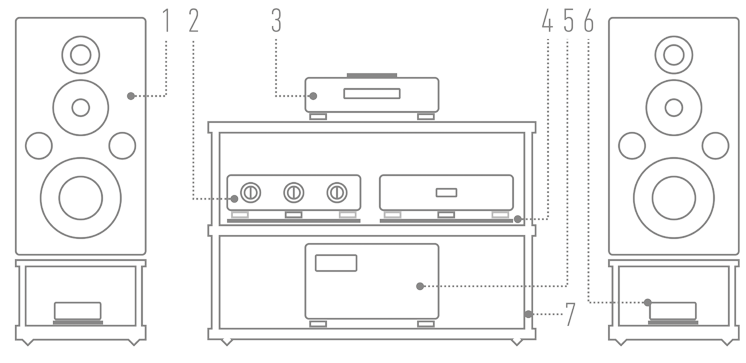 1) Loudspeakers: HARBETH M40.1 |REVIEW| 2) Line preamplifier: AYON AUDIO Spheris III Linestage |REVIEW| 3) Super Audio CD Player: AYON AUDIO CD-35 HF Edition No. 01/50 |REVIEW| 4) Stands (loudspeakers): ACOUSTIC REVIVE (custom) |ABOUT| 5) Power amplifier: SOULUTION 710 6) Loudspeaker filter: SPEC REAL-SOUND PROCESSOR RSP-AZ9EX (prototype) |REVIEW| 7) Hi-Fi rack: Hi-Fi rack: finite elemente MASTER REFERENCE PAGODE EDITION Mk II, more → HERE |
|

|
Cables Analog interconnect SACD Player - Line preamplifier: SILTECH Triple Crown (1 m) |ABOUT|» ANALOG INTERCONNECT Line preamplifier → Power amplifier: Siltech ROYAL SINLGE CROWN RCA; review → HERE Speaker cable: SILTECH Triple Crown (2.5 m) |ABOUT| |

|
AC Power Power cable | Mains Power Distribution Block - SACD Player: SILTECH Triple CrownPower (2 m) |ARTICLE| » POWER CABLE Mains Power Distribution Block → Line preamplifier: Acoustic Revive ABSOLUTE-POWER CORD, review → HERE » POWER CABLE Mains Power Distribution Block → Power amplifier: Acoustic Revive ABSOLUTE-POWER CORD, review → HERE Power cable | Power Receptacle - Mains Power Distribution Block: ACROLINK Mexcel 7N-PC9500 (2 m) |ARTICLE| Power Receptacle: Acoustic Revive RTP-4eu ULTIMATE |REVIEW| » ANTI-VIBRATION PLATFORM under Acoustic Revive RTP-4eu ULTIMATE: Graphite Audio CLASSIC 100 ULTRA, review → HERE Power Supply Conditioner: Acoustic Revive RPC-1 |REVIEW| Power Supply Conditioner: Acoustic Revive RAS-14 Triple-C |REVIEW| Passive filter EMI/RFI: VERICTUM Block |REVIEW| |

|
Anti-vibration Speaker stands: ACOUSTIC REVIVE (custom)Hi-Fi rack: finite elemente MASTER REFERENCE PAGODE EDITION Mk II, more → HERE Anti-vibration platforms: ACOUSTIC REVIVE RAF-48H |ARTICLE| » ANTI-VIBRATIONAL FEET: |

|
Analogue Phono preamplifier: Phono cartridges:
Clamp: PATHE WINGS Titanium PW-Ti 770 | Limited Edition Record mats:
|

|
Headphones » HEADPHONE AMPLIFIER: Leben CS-600X, review → HEREHeadphones: Headphone Cables: Forza AudioWorks NOIR HYBRID HPC |