


|
CARTRIDGE MOVING PERMALOY NAGAOKA
Manufacturer: NAGAOKA Co. Ltd. |

 |
 |
 |
|
Review
text by MAREK DYBA |

|
No 265 June 1, 2026 |
I ADMIT THAT FOR ME, a vinyl enthusiast for some forty-five years now, testing the MP-700 is my first encounter with this well-established brand in my system. Well, not quite - a few times, when choosing inner sleeves for my records, I opted for this brand’s products. Alongside MoFi, Nagaoka sleeves are among my favorites and some of the best on the market. Nevertheless, over all these years, I have never owned or tested any of its phono cartridges. 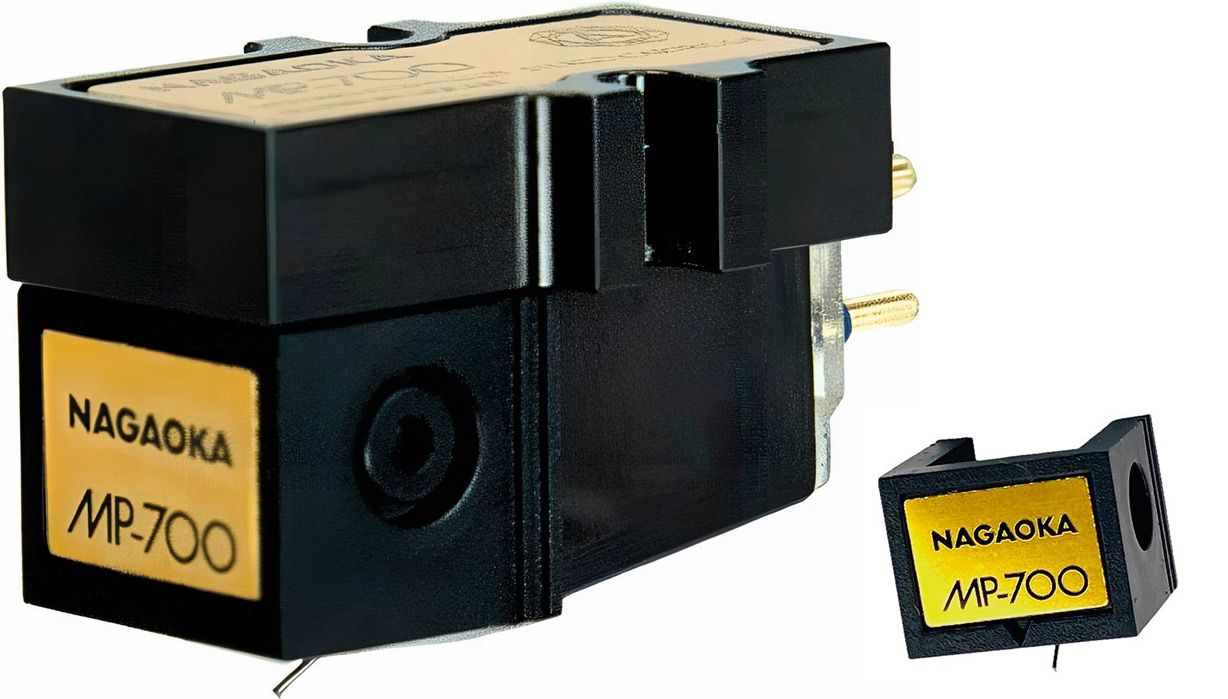
One reason is that their lineup includes two types of cartridges: MM, or moving magnet, and MP, or moving permalloy. For many years now, I have used exclusively moving coil cartridges (or MC). In the vast majority of cases - if I had to guess, I’d say about 94% - I test this type. I’m not trying to start a war or even a debate about the superiority of one kind over the other - both have their own advantages and strengths in specific areas and applications. I am merely stating the facts, which is why Nagaoka cartridges have never been the focus of my interest. Having said that, I’ll also admit, that I have seen a lot of positive reviews and feedback from users, for example, about the almost “iconic” MP-110, which, thanks to its attractive price, excellent value for money, and inexpensive, easy-to-replace needles, has gained immense popularity among vinyl enthusiasts. We’ll return to the design of the MP-700 later, but for now I’ll just mention that the “MP” designation comes from the use of permalloy - an alloy consisting of approximately 80% nickel and 20% iron. A small piece of this material is placed at the end of the cantilever. This alloy is likely familiar to many audio enthusiasts, though probably it is more often associated with cores of high-end transformers rather than phono cartridges. Importantly, the parameters - namely the signal level provided by MP-type cartridges, as well as the suggested impedance load (47 kΩ), and even the suggested capacitance (100 pF), mean that they are used in a similar way to MM cartridges and with phono preamps designed for moving-magnet cartridges. This, in turn, explains why they didn’t make it onto my radar as an MC fan. Horizon Trading Prague, the distributor of the Nagaoka brand for the Polish, Czech, and Slovak markets, which provided us with the cartridge for testing, describes Nagaoka as follows:
NAGAOKA is absolutely unique in the industry. NAGAOKA has always striven to produce the highest quality phono cartridges possible, meeting the high expectations of true vinyl connoisseurs, bringing the highest musical and creative expression from the concert hall to the comfort of your home. Thanks to its long history, improving technology and developing innovative solutions, NAGAOKA has achieved the perfect construction of its phono cartridges.
Each phono cartridge is manufactured under strict quality control throughout the entire production process, right up to the final test. Since NAGAOKA brand manufactures almost all parts in-house, it has 100% control over the quality of all its products. Sharing a passion for analog sound reproduction, NAGAOKA also produces vinyl accessories and packaging to preserve the authentic analog sound. Let me remind you once more, that MP-700 was developed to celebrate company’s 85-th anniversary. ▓ MP-700 NAGAOKA MP-700 is an MP-type cartridge. Its specifications - a 4 mV output signal, a required impedance load of 47 kΩ, and a capacitive load of 100 pF - mean that, from a practical standpoint, it is a direct replacement for an MM cartridge. It is worth noting, however, that while manufacturers typically specify a recommended tracking force range, Nagaoka provides a very specific and, for an MM cartridge, low value of 1.4 g, and the cartridge itself weighs a mere 8 g. The MP-700 comes in a very nice, dark blue cardboard box with gold lettering. Inside there is another box, this one made of transparent plastic, which effectively protects the contents during transport. The cartridge’s sturdy body is made of ultra-duraluminium, ensuring adequate structural rigidity. Its surface is finished with three layers of different materials: nickel, black tin, and an insulating protective layer. According to the manufacturer, this solution ensures reduction in the buildup of static electricity on the body, increases the durability of the black-and-gold finish, and ensures an elegant appearance. The cartridge is equipped with a removable plastic cover. Mounting is done executed, using two screws. Unfortunately, at least from my perspective, the holes are not threaded, so nuts are required. The older I get, the more and louder I complain when I see this solution, and surely everyone who frequently installs cartridges in tonearms understands me perfectly. If you want to avoid it and use a proper arm, you can order the H version, i.e., one that comes together with the company’s head-shell with a standard SME mount. If you use interchangeable head-shells, the way the cartridge is mounted isn’t that important, but when you need to install it on a tonearm that already sits on a deck, things get complicated because working with tiny screws and nuts can be quite a hassle. This feature is partially offset by the body’s regular shape and the arrow on the front indicating the center of the bottom edge of the body, which facilitates precise alignment. The cantilever material is boron, which ensures adequate stiffness and lightness. A high-quality micro-ridge diamond stylus is mounted at one end. Importantly, just as with MM cartridges, the stylus can be easily replaced by the user. This means there is no need to send the cartridge back to the manufacturer for retipping, and the cost is significantly lower than for MC cartridges. According to the manufacturer, one of the features of the MP series - the result of years of research and development of advanced technology—is its design with a tension wire. This solution reduces the impact of changes in tracking force caused by warped records and increases groove-tracking precision. 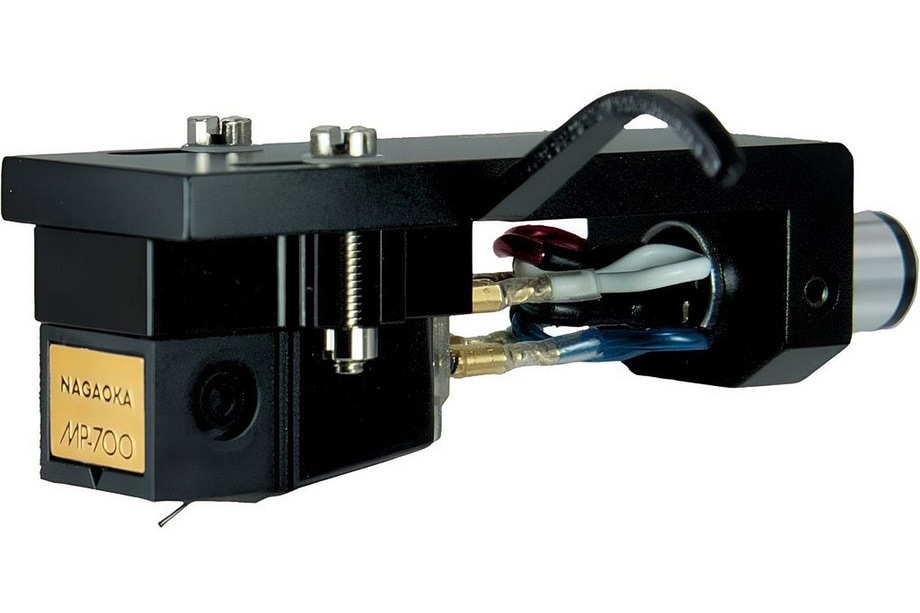
As I mentioned earlier, in the MP-700, an exceptionally lightweight permalloy component is used at the other end of the cantilever. This is the main difference compared to MM cartridges, where a magnet is located in this spot, which significantly increases the moving mass of the stylus (or the system: stylus + cantilever + magnet). In the tested cartridge, both the magnet and the coils are attached to the cartridge body. This solution significantly reduces the moving mass of the system that transmits vibrations from the record groove to the generator, thereby increasing - at least in theory - the precision of information retrieval. The manufacturer also notes that, compared to older models, the MP-700 features slightly softer needle suspension. In the generator, a magnetic flux-inducing plate has also been added. This is intended to increase the magnetic flux density around the permalloy at the rear end of the cantilever, improving sensitivity to subtle vibrations. All these improved and added elements are intended to translate into a sound that combines the characteristics known from MM and MC cartridges. A lighter moving system (as in MC cartridges) should allow for more precise tracking of the groove and information retrieval, while the high output level (as in MMs) means that you don’t need to use as much gain in a phono preamplifier. And all this is offered at a quite reasonable price, though for fans of MM cartridges it will likely seem less attractive than for those who use MC models on a daily basis. The question is whether the benefits of the solutions used in the MP-700 will encourage fans of classic MM cartridges to spend a slightly higher amount on the Japanese flagship. ▓ SOUND HOW WE LISTENED • I installed the Nagaoka MP-700 cartridge on the J.Sikora KV12 Max tonearm, which is used on a turntable from the same manufacturer, the J.Sikora Standard Max. For most of the test, the signal was routed via the manufacturer’s own interconnect (using Soyaton conductors, i.e., gold-plated copper) to the GrandiNote Celio Mk IV phono preamp, which I replaced toward the end of the test with van den Hul’s flagship model, The Grail Mk III. 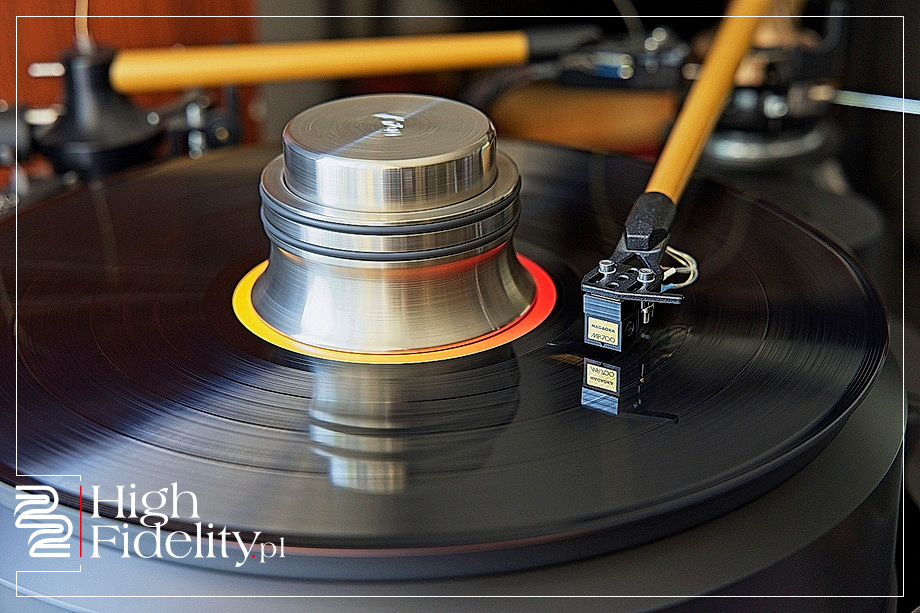
From each of these phono preamps, the signal traveled via a Bastanis Imperial unbalanced interconnect to the GrandiNote Shinai integrated amplifier (and for a short time also to the ArtAudio Symphony II), which drove the GrandiNote MACH4 speakers via Soyaton Benchmark Mk 2 speaker cables. AFTER INSTALLING AND SETTING UP THE CARTRIDGE, I played my first record, and after just a few seconds, I concluded that the unit I received was likely new, or nearly new. In any case, it didn’t seem ready for critical listening. So I spent the first two days “breaking in” the cartridge. The first few records seemed to confirm that this was a brand-new unit, as the sound was quite “closed off.” It lacked not only openness and air but also resolution and clarity left much to be desired - this is how cartridges usually sound before they’ve had time to break in. So I played one familiar record after another, suffering a bit as the sound wasn’t quite what I expected, waiting for it to finally “get there.” This is one of the characteristics of analog components - you can’t set playback to repeat while waiting for a given component to break in. You simply have to play record after record, giving the cartridge’s mechanics time to settle in. The process can be sped up a bit with the help of specialized records, and since I own one of these, I didn’t hesitate to use it, which shortened the time needed to achieve optimal sound. 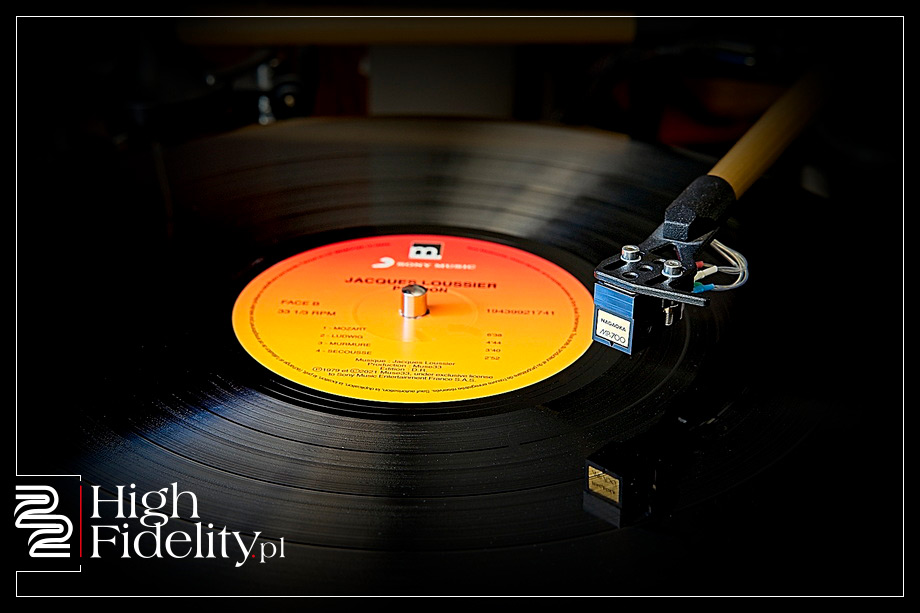
The first breakthrough came that very same day, when, after the break-in disc, I returned to “normal” ones, and the improvement turned out to be significant. Later, the next day, I heard further improvement, though the gains were getting smaller and smaller; but in reality, by the end of the first day, the sound was already good enough that I listened to what the Nagaoka had to offer with interest. By the end of the second day, I thought it was ready for some serious listening. One of the first albums I played was the OLEŚ brothers’ Spirit of Nadir. I’d mentioned this recording many times before, as I often use it when testing cartridges, turntables, and phono preamps. Percussion instruments plus double bass, all set within a large, even vast and convincing soundstage. This is music without fireworks - calm, somewhat “dreamy” - inviting you to immerse yourself in it and forget the entire world around. The MP-700 performed really well when playing this album, conveying its unique, captivating atmosphere, though it offered me a slightly different interpretation of this material than the one I’m used to. I mentioned that I rarely deal with moving-magnet cartridges, but it does happen sometimes, so part of my experience with this album also comes from listening with MMs. Usually, they demonstrate their advantages on this record in the tightness of the drums, the power of the stick strikes, the springy, resonant string plucks, the higher energy of the performance, or the more pronounced rhythm. |
Nagaoka presented all of this in a way that reminded me of several very good MM cartridges, perhaps even better than them at emphasizing the rhythm. However, it combined this - which in my experience is uncommon for MM cartridges - with a very good rendering of the vast space surrounding the musicians and their instruments. What’s more, it rendered subtle elements - such as tonal and dynamic contrasts on micro level, or numerous fine details (without overemphasizing them), and it did it better than most cartridges of this type, giving me better and easier access to the many subtleties of the performance captured in this recording. That is something, that is typically the domain of good MC cartridges. 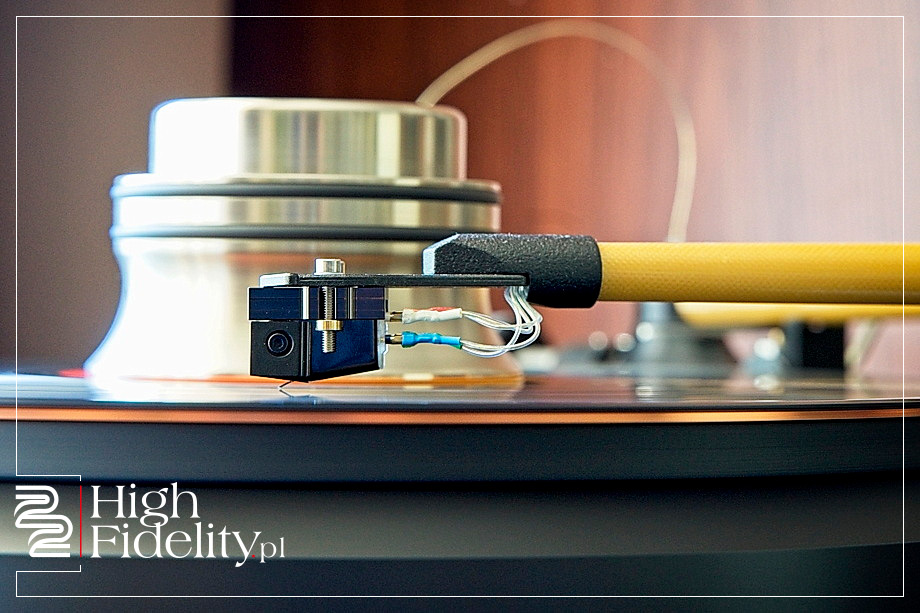
The treble range, as later recordings confirmed, was also closer to what I know from moving-coil cartridges, meaning there was more refinement and a certain delicacy there than the directness and hardness (not necessarily excessive) I’m familiar with from most, even very good MM cartridges. The differentiation in this sub-range wasn’t as good as with my Air Tight or even my LeSon, but it was still really good. Knowing well how these recordings sounded like with better (and significantly more expensive) MC cartridges, I knew that there was even more information in the high-frequency range that could be rendered more clearly and precisely. Still, Nagaoka did it well enough, to offer me a real pleasure and fully engage me in the whole experience. I also enjoyed listening with MP-700 in my system to another frequent flyer in my phono cartridge reviews: JACQUES LOUSSIER’s album Pulsion. This time, alongside the drums, the maestro played the piano instead of the double bass (as on the Oles Brothers album). Listening to this record, it’s hard to believe that such a vast amount of such intense musical content is played by just two musicians. The album impresses with its high dynamics, which the Japanese cartridge rendered perfectly; it sounds clean and the energy level of the music is quite high. The sound is open, airy, and fast, while remaining quite dense. This is one of those albums you can use instead of an espresso, at least if your system can reproduce it properly, because it stimulates the listener just as effectively. My system usually does an excellent job of capturing the essence of this record (no surprise - J. Sikora’s tonearms and turntable all but guarantee it), but this time, right at the very beginning, at the critical point where information is read from the record groove, there was a relatively inexpensive Nagaoka cartridge. As it quickly turned out, it performed its task flawlessly. You will read more than once in this text about how the MP-700 combines the advantages (commonly associated with) MM cartridges with those typically attributed to MC cartridges but that’s a thought that came to my mind many times during the assessment. Tempo, high energy, almost explosive macro-dynamics, an enthusiastic and energetic sound - all these are characteristics more commonly associated with moving-magnet cartridges, delivered by the tested Nagaoka as if effortlessly. However, the tested cartridge also gave me a good insight into both the mastery of Loussier himself (and his accompanist Heller) and that of his instrument. It provided me with (I would say surprisingly) high resolution, good differentiation, and above-average dynamics on the micro-, not just the macro-dynamics typically associated with MM cartridges. The sound was relaxed, effortless, delivered with flair, high-octane, yet at the same time offering a good insight into the subtleties, details, and deeper layers of the recordings. The cymbals, though powerful, quite hard, and resonant, sounded natural, with no trace of artificial harshness or sharpness. At the lower end of the frequency range, which was tight and quite well-defined, the key factor was the tautness rather than the hardness of the drumheads. That is why the overall sound came across in a more refined, more MC-style manner than is usually the case with MM cartridges, which tend to simplify the subtleties. Records with natural (as opposed to console-created) soundstage, such as the classic ARNE DOMNÉRUS Jazz At The Pawnshop, Live at the Checkerboard Lounge, Chicago 1981 by MUDDY WATERS, or my favorite Carmen with Leontyne Price conducted by von Karajan, confirmed that in terms of reproducing the spatial aspects captured in the recordings - the phantom images placement, their size and tangibility, reverberation, and ambiance - Nagaoka again was closer to the standards of good MC cartridges than MM. Out of all these excellent recordings, the Japanese cartridge was able to bring out a wealth of details regarding the acoustics of the venues where the recordings took place, showcase the singers and choirs in motion (Carmen), and capture the tightly packed yet well-separated musicians (Live... ), as well as sounds coming directly from the audience (Jazz... and Live...). All of this delivered in an organized, clear, yet absolutely unforced manner. While Jazz at the Pawnshop is a rather “intimate” recording (which, in a way, favors the use of MC), the Checkerboard Lounge’s stage - crowded with filled with electric guitars and musicians with big egos - and even more so the orchestral performance, the grandeur, and the scale of the performance in Carmen gave the MP-700 cartridge a chance to showcase its slightly more “MM-like” strengths. After all, such cartridges are, on the one hand, often the choice of fans of rock, metal, or electric blues, and on the other, not infrequently also fans of grand classical music. The former appreciate the ability to capture or convey the raw energy and dynamics generated by electric guitars, basses, and powerful rock drumming, while the latter appreciate the momentum and power of the performance - something that cheaper moving-coil cartridges don’t always handle well. The Nagaoka performed exceptionally well with both the more intimate sounds of a Swedish club and the guitar-driven madness of an American one; it even interpreted my favorite opera in such a way that I had to listen to it in its entirety. The tested Nagaoka, on the aforementioned albums, demonstrated its strengths, but also that its ability to combine the advantages of both main types of cartridges. After all, Carmen with the fantastic Leontyne Price, as well as Live... featuring Muddy Waters and Mick Jagger, gave me an idea of how the MP-700 handles vocals, and it does so better than most MM cartridges I’d ever tested. However, to make sure this wasn’t a fluke and that it actually performed just as well as comparably priced MC cartridges, I turned to, among others, PATRICIA BARBER’s Companion. It quickly became clear that the Japanese cartridge can enrich its presentation with a slightly greater dose of tangibility and expression than the MM cartridges I’m familiar with. 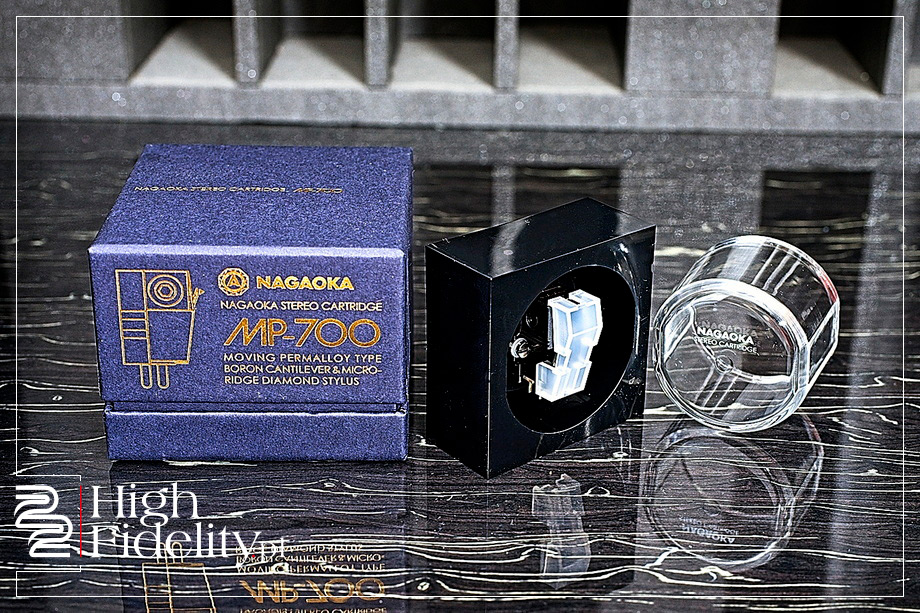
It doesn’t provide quite as good an insight into the timbre and texture of voices, nor does it create quite as perfect an impression of presence as high-end Moving Coil cartridges, but it still makes the listener almost unconsciously form an emotional bond with the performers, making it easy to get drawn into the world created by the vocalists - something that is a much greater challenge for Moving Magnet cartridges. Another significant advantage of the Nagaoka was the natural presentation of sibilants, which are not lacking in Barber’s voice. They were presented in a way that made them an element, a characteristic feature (one of many) of the artist’s voice, rather than a flaw that spoils the listening pleasure. ▒ Summary I’VE HAD VARIOUS experiences with the tested components. Some make a strong first impression, which is later either confirmed, or their initially impressive sound turns out to be tiring in the long run. Others start off quietly, slowly building up, until they eventually leave me wanting more, craving for a little more time with them. Distributors and manufacturers usually send me brand new units for reviews or ones that have been played very little. So the beginning is almost always difficult, and that was the case this time. However, the longer I listened to the Nagaoka MP-700, the more I liked it. It’s not the best cartridge I’ve ever listened to, but simplifying, perhaps the best “MM” I’ve ever dealt with. Simplifying because its specifications are identical to those of many moving-magnet cartridges, although the magnet and coils are permanently mounted in this case, and it is the permalloy element that moves. The solution proposed by Nagaoka is, in practice, something of a “hybrid amplifier.” The latter, in theory, combine the advantages of tubes and transistors (with varying results) to satisfy or reconcile fans of both solutions. The MP-700 offers not only high output and a 47 kΩ load, but also a range of benefits associated with moving-magnet cartridges. It will perform great playing rock recordings, electric blues, and even classical music - especially the grand stuff - which will delight you with its grandeur, dynamics, powerful, deep-reaching, well-controlled bass, and energy. But when you move on to sophisticated jazz, vocals, or acoustic music, Nagaoka won’t disappoint either, including fans of moving-coil cartridges. With it, you’ll hear a level of sophistication rarely found in moving-magnet cartridges, good resolution, and an open, resonant yet not harsh, smooth treble. In the lower part of the range, there will be plenty of energy and deep extension, but the bass will be fast and responsive. Apart from one case I’m aware of (LeSon sold directly by the manufacturer), the Nagaoka MP-700 will offer you a more complete and versatile sound than similarly priced competitors with moving coils and magnets. It’s not a cheap cartridge, but it offers excellent value for money. You’ll use it with an MM preamp, and once you get to know it better, you might find that you’re in no hurry to switch to MC. 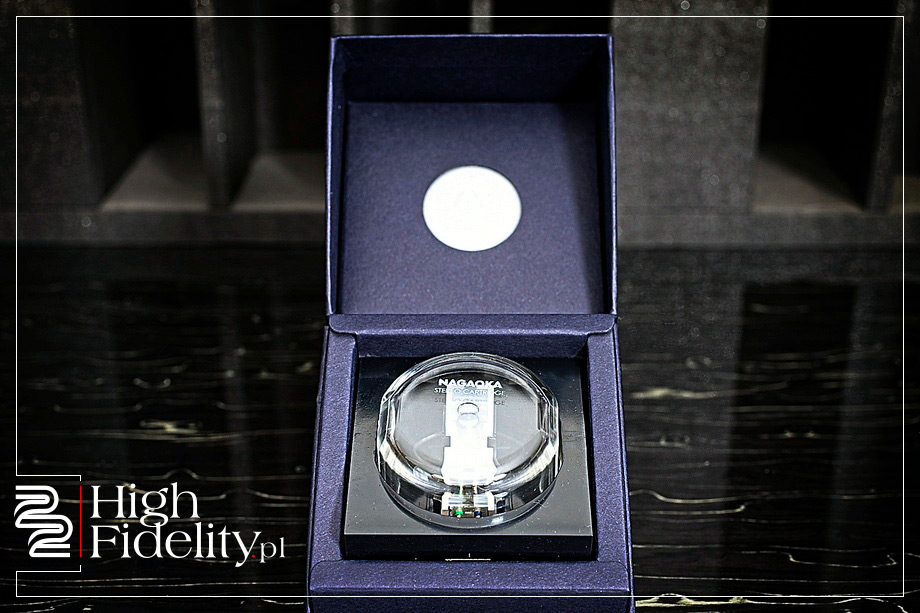
The Nagaoka MP-700 is an excellent product at a reasonable price, not just for MM fans. ‖ MD ▒ Technical specifications (according to the manufacturer)
· Type: Moving Permalloy (MP) | Distributor
HORIZON TRADING PRAGUE 
THIS TEST HAS BEEN DESIGNED ACCORDING TO THE GUIDELINES adopted by the Association of International Audiophile Publications, an international audio press association concerned with ethical and professional standards in our industry, of which HIGH FIDELITY is a founding member. More about the association and its constituent titles → HERE. |
 |
|
|
