


|
MUSIC ⸜ column HISAO NATSUME presents: Part 4 ‖ “Il pleure dans mon cœur” ~ DEBUSSY’s piano
HISAO NATSUME, piano music researcher, collector of 78 rpm shellac records and founder of the Sakuraphon label, invites us to the world of the great pianists of the 19th and early 20th centuries. |

 |
 |
 |
|
MUSIC ⸜ column
text HISAO NATSUME |
|
No 265 June 1, 2026 |
IT IS SAID THAT THOSE who had the opportunity to hear Claude Debussy perform Frédéric Chopin were said never to forget, throughout their lives, the velvet touch, that made one unaware of the hammer, and the sound that flowed forth like a spring. This is hardly surprising: Debussy studied the piano with Madame Fléville, herself a pupil of Chopin. It is easy to imagine that Debussy’s talent absorbed many of the secrets of Chopin performance from this lady. 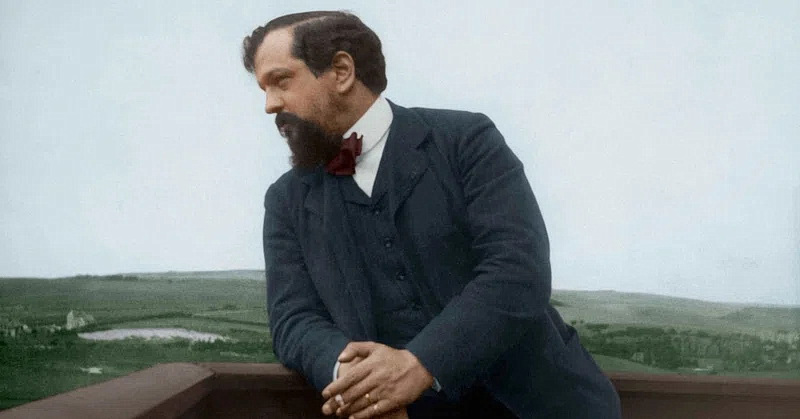
‖ Claude Debussy’s photo • photo: Wikipedia CC Indeed, even the mere thought of Debussy playing Chopin is dazzling; yet unfortunately, for those of us born later, no means remain but to indulge in imagination. Nevertheless, in 1904 Debussy did leave behind firm evidence of his pianism in six sides of 10-inch discs for Gramophone & Typewriter Ltd. (G&T) in France. On these records, Debussy performs as accompanist to the Scottish-born American singer Mary Garden (1874–1967), who created the role of Mélisande in the opera Pelléas et Mélisande. By the way, it was once believed that the piano accompaniment on Julia Culp’s recording of Starry Night was played by Debussy; however, this has been revealed to be a miscredit, and the accompanist is in fact Conrad van Bos. It is, in its way, a rather curious episode. ▲ CLAUDE DEBUSSY – at the piano 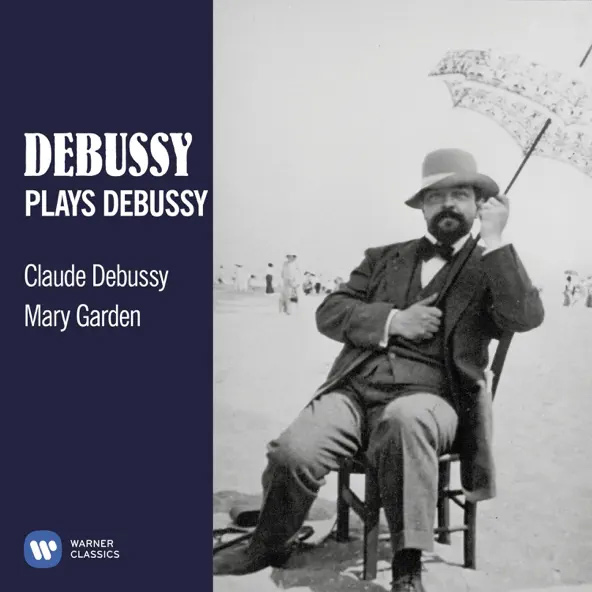
‖ Warner Classic CD reissue • photo: Warner Classic press materials Acoustic G&Ts, Recorded London, 1904 – all 10-inch discs:• 33447: Mes longs cheveux from "Pelleas et Melisande" • 33448: Ariette No.1 - C'est l'extase (*) • 33449: Ariette No.5 - Green • 33450: Ariette No.3 - L'ombre des arbres • 33451: Ariette No.4 - Paysage belges (*) • 33452: Ariette No.2 - Il pleure dans mon coeur (*Probably undiscovered) AT PRESENT, FOUR SIDES of these recordings are readily obtainable on various CD issues (*the remaining sides have yet to be reissued, and the sources appear still undiscovered). The difficulty of listening, caused by the wow and flutter – typical of early G&T recordings – has, however, been mitigated through restoration software on modern computers. 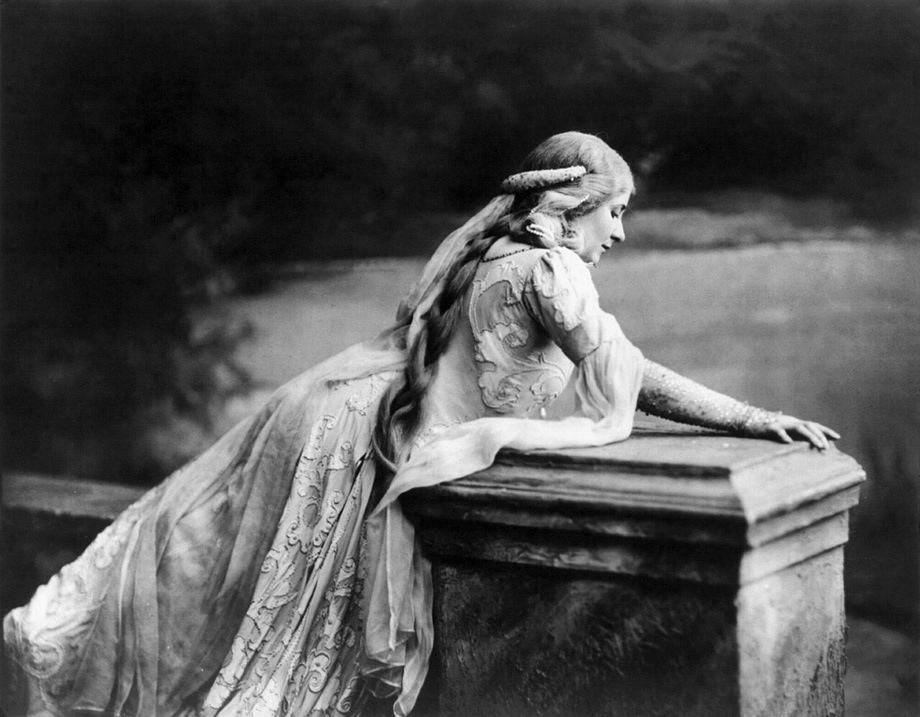
‖ Mary Garden as Mélisande in the opera Pelléas et Mélisande by Claude Debussy • photo: The Prints & Photographs Division of the Library of Congress, after: Wikipedia CC Moreover, as the voice takes precedence, the piano is recorded at a rather subdued level; yet in the introductions to ariettas such as Green and Il pleure dans mon coeur, one can unmistakably enjoy the piano played by Claude Debussy. Even setting aside any antiquarian value of these discs, I regard the sound itself – noise included – as purely beautiful. Debussy’s music is often associated with French Impressionist painters such as Claude Monet; however, the Debussy heard on these records reveals an entirely different aspect of his music. Rather than the pale, pure, and fleeting imagery of Monet’s Water Lilies, it evokes something eerie, even grotesquely fantastical. 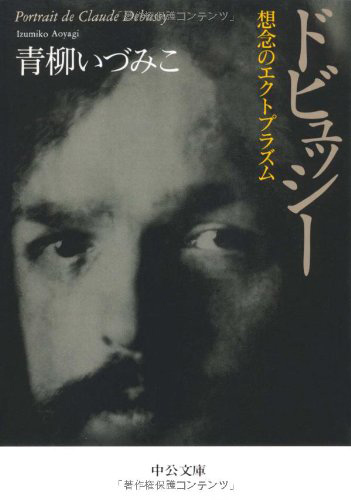
|
The pianist and writer Izumiko Aoyagi, in her book Debussy: The Ectoplasm of Ideas (Chūkō Bunko) perceptively captures this essential image of Debussy (Aoyagi herself being a pupil of Kazuko Yasukawa and Pierre Barbizet). While the somber tone of Mary Garden’s voice may also contribute, it is perhaps above all Debussy’s harmonic sensibility in his song compositions that gives rise to this effect. One strongly senses affinity with the visions of Alphonse Mucha (Mary Garden seems almost to have stepped out of one of his paintings), Henri de Toulouse-Lautrec, Émile Gallé, or Aubrey Beardsley, as well as the decadent aesthetic of the Viennese fin de siècle exemplified by Gustav Klimt. It recalls that same Belle Époque – from the mysterious fin de siècle to the First World War – when figures such as the filmmaker Georges Méliès, the writer Théophile Gautier, the Art Nouveau muse and actress Sarah Bernhardt, and the photographer Eugène Atget were active. The records of 1904 preserve, as an aural documentary, that radiant yet faintly decadent atmosphere exactly as it was. It is much to be regretted that no piano solos performed by Claude Debussy himself were ever preserved on disc recordings. In 1913, however, a considerable body of his playing was captured on piano rolls for Welte-Mignon, including the complete Children’s Corner, the Préludes Book I, La plus que lente and La soirée dans Grenade, among others. 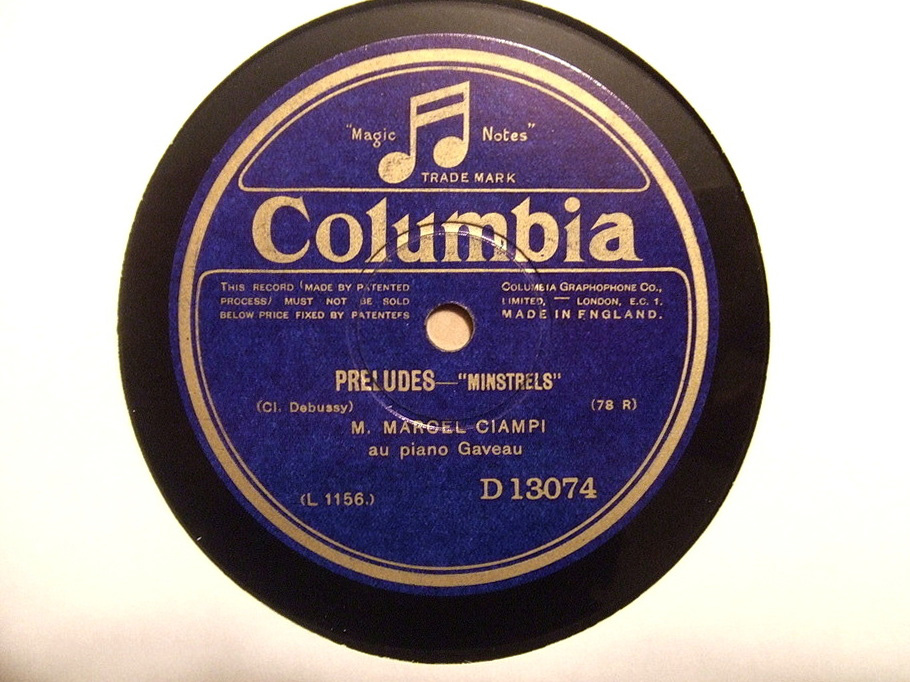
A smaller number of rolls also survive on labels such as Pleyela and Artecho. It seems likely that Debussy, disliking the severe noise of acoustic recordings, chose the piano roll as a means of preserving his pianism. From the perspective of later generations, however, this can only be regarded as a deeply unfortunate decision. Having listened to these rolls in various reissues, I have found myself utterly at a loss as to which aspects might serve as a reliable basis for imagining Debussy’s actual piano playing. The reason is clear enough: Debussy’s pianism, characterized by its extreme delicacy of touch and subtle nuance, lay precisely in those domains that piano rolls were least capable of recording or reproducing. 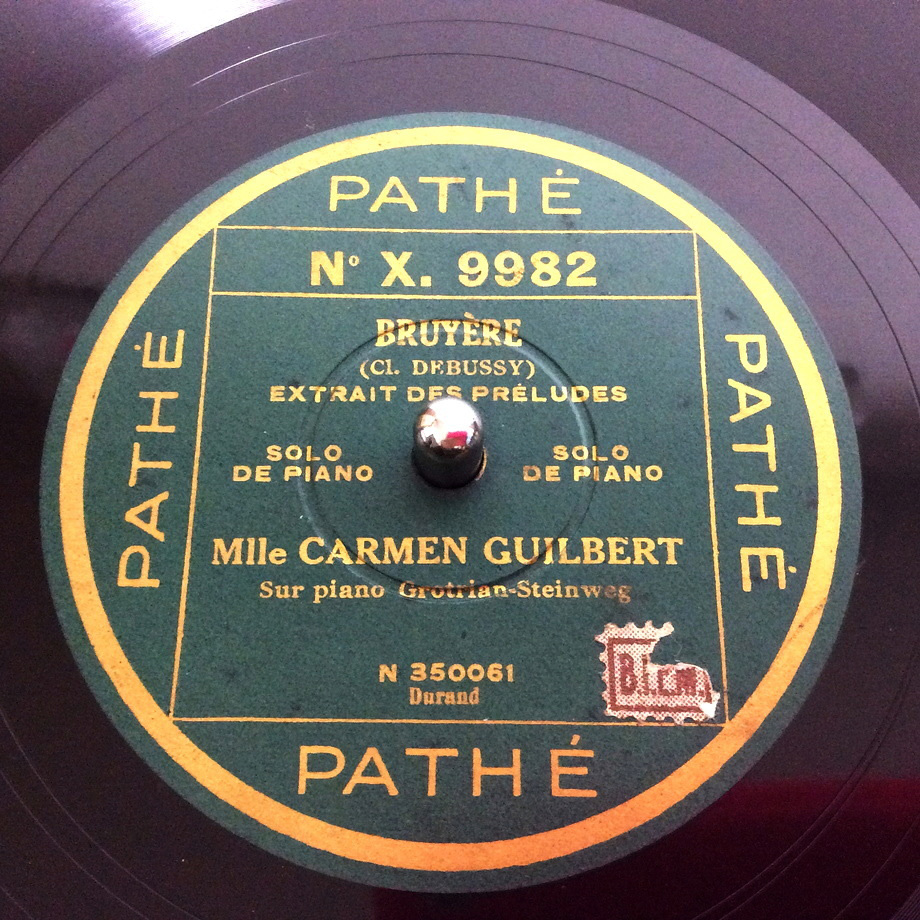
From the acoustic recording era pianists who performed and recorded Debussy include Eugen d’Albert, a distinguished pupil of Franz Liszt, in Jardins sous la pluie (Polydor, Germany); Mark Hambourg of the Theodor Leschetizky school in La plus que lente, Danse and Prélude à l’après-midi d’un faune (HMV, England); Alfred Grünfeld in Golliwogg’s Cakewalk (Gramophone Monarch); Irene Scharrer in Arabesque No. 1 (HMV, England); Walter Gieseking (Homochord, Germany) and D. Collet in Golliwogg’s Cakewalk (Tokyo Record, Japan), Alfred Cortot and others. With the advent of electrical recording, pianists such as Ricardo Viñes, Marguerite Long, Lucien Würmser, Marius-François Gaillard, Ennemond Trillat, Denise Molié, Elie Robert Schmitz, Marcel Ciampi, Janine Weil, Magda Tagliaferro, Robert Casadesus and Gaby Casadesus, Jean Doyen, Jean Dennery, Jacqueline Blancard, Jacqueline Eymar, Marie-Thérèse Fourneau, and Kazuko Yasukawa, among others, left a wealth of distinguished performances. When one surveys these names, it is highly symbolic that – apart from notable exceptions such as Ricardo Viñes and Walter Gieseking – the overwhelming majority are French pianists. This perhaps speaks to the very essence of the French esprit. One cannot help but reflect: French pianism runs deep. 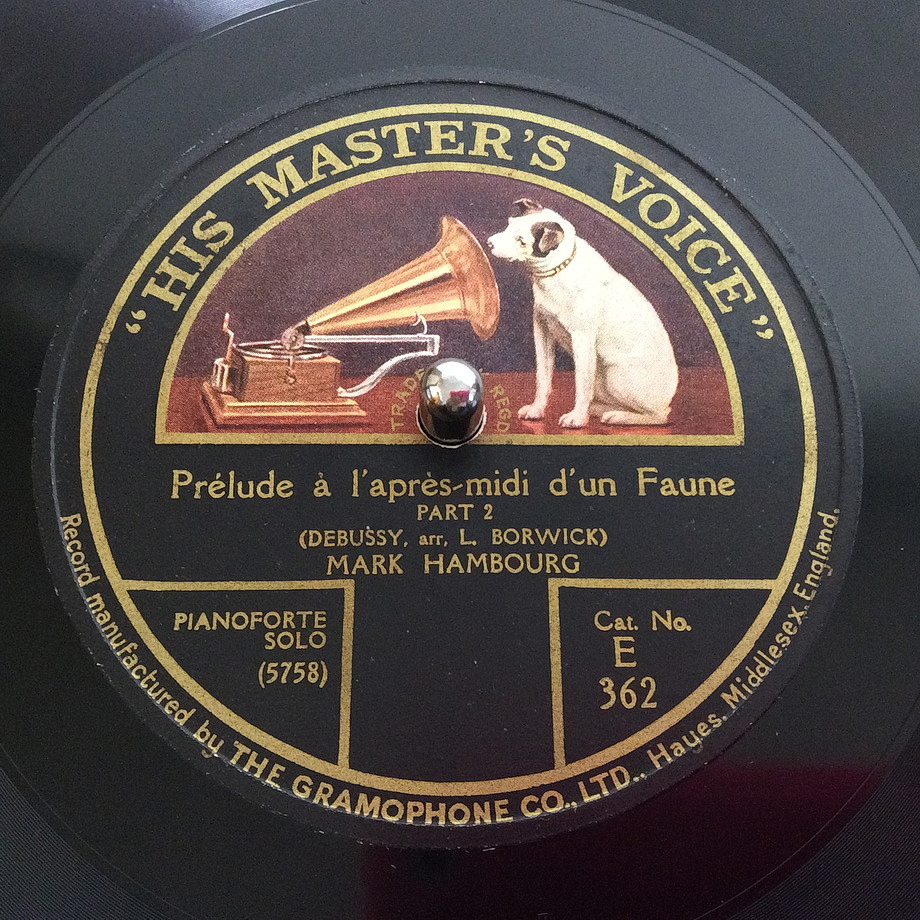
The great Brazilian composer Antônio Carlos Jobim, a founding figure of bossa nova, openly acknowledged his devotion to Claude Debussy in matters of harmony. Ryuichi Sakamoto, who once remarked that in his youth he believed himself to be a reincarnation of Debussy, may in turn be said to have inherited something of Jobim’s musical blood through Brazilian music. The eminent Brazilian guitarist Baden Powell encountered the French musician Pierre Barouh and helped convey the spirit of saudade to France. Music, casting only a sidelong glance at politics, lives on with ease, as it transcends national borders. ● HISAO NATSUME ░ About the author HISAO NATSUME was born in 1967 in Tokyo, Japan, where he lives. He is a piano music researcher, mastering engineer, composer, musician and graphic designer. He founded and runs the Sakuraphon label, which aims to reissue the more than 5,000 78 rpm shellac records he has collected over the past 30 years. More about the author and the Sakuraphon label → HERE. |
 |